Quotulatiousness

January 27, 2014

FATCA and the “toxic citizen” problem for Americans working abroad

Filed under: Bureaucracy, Law, USA — Tags: , , , , — Nicholas @ 11:04

Emma Elliott Freire explains why she and other Americans living and working in other countries feel like they’re being treated as “toxic citizens”:

The [travel] books tend to emphasize romance and adventure. As an American who is actually living abroad, though, I’ve found that the reality is quite different. My fellow Americans back home sometimes regard me with suspicion, and I feel like my government considers me a “toxic citizen.”

The US is one of two countries in the world that taxes its citizens on the income they earn while living abroad. The other is Eritrea. Every single other country bases its taxation on residency, i.e., you only pay taxes where you live and work.

Americans are required to file an annual tax return with the IRS when they’re abroad — even if they don’t owe any money. They’re also required to file a form called an FBAR to declare their foreign bank accounts. An undeclared account incurs a $10,000 fine.

As you might expect, international tax accountants get a lot of business from Americans. One tax accountant based in Amsterdam told me his American clients take their filings very seriously. “If they get the IRS going after them, they have a real problem,” he says.

His clients are the savvy ones, though. In my experience, many Americans who move abroad are not aware that they need to file. The US government does precious little to inform its citizens of their obligations in this area. Over several years, I’ve been informally asking Americans I meet abroad if they file their US taxes. Most of them told me they don’t. They only file and pay taxes in their country of residency. They assume that’s enough. But, in fact, they have unwittingly become lawbreakers. If they move back to America, they could find themselves in quite a bit of trouble.

The IRS is enforcing new rules passed in 2010, which extend US taxation laws to non-US banks that deal with American citizens. To no great surprise (except perhaps to the legislators themselves), a side-effect of this is that many banks are closing existing accounts and refusing to accept new business from American would-be customers:

The IRS is currently implementing a new law called the Foreign Account Tax Compliance Act (FATCA). Basically, FATCA requires every bank in the entire world to report the account information of its American clients. So every bank in the world is becoming an agent of the US government. It’s still unclear how FATCA can be implemented because in some countries it violates national privacy laws. However, FATCA stipulates that any foreign bank that fails to comply will be subject to a 30 percent withholding tax on its US income.

HSBC now requires “Mother, May I” letters from British customers for large withdrawals

Filed under: Britain, Business — Tags: , — Nicholas @ 09:32

HSBC has irritated some of their British customers with a new requirement for justifying why large cash withdrawals are necessary before authorizing them:

Stephen Cotton went to his local HSBC branch this month to withdraw £7,000 from his instant access savings account to pay back a loan from his mother.

A year before, he had withdrawn a larger sum in cash from HSBC without a problem.

But this time it was different, as he told Money Box: “When we presented them with the withdrawal slip, they declined to give us the money because we could not provide them with a satisfactory explanation for what the money was for. They wanted a letter from the person involved.”

Mr Cotton says the staff refused to tell him how much he could have: “So I wrote out a few slips. I said, ‘Can I have £5,000?’ They said no. I said, ‘Can I have £4,000?’ They said no. And then I wrote one out for £3,000 and they said, ‘OK, we’ll give you that.’ ”

He asked if he could return later that day to withdraw another £3,000, but he was told he could not do the same thing twice in one day.

He wrote to complain to HSBC about the new rules and also that he had not been informed of any change.

The bank said it did not have to tell him. “As this was not a change to the Terms and Conditions of your bank account, we had no need to pre-notify customers of the change,” HSBC wrote.

As you might imagine, this new policy drew strong criticism, so the bank issued the following statement yesterday:

As a responsible bank we must track all financial transactions. Cash presents more risk, and in particular financial crime risk, than other payment methods. It also leaves customers with very little protection if things go wrong. Therefore, we need to monitor particularly closely movements of cash in and out of the banking system. This is why we ask our customers about the purpose of large cash withdrawals when they are unusual and out of keeping with the normal running of their account.

Since last November, in some instances we may have also asked these customers to show us evidence of what the cash is required for. However, it is not mandatory for customers to provide documentary evidence for large cash withdrawals, and on its own, failure to show evidence is not a reason to refuse a withdrawal. We apologise to any customer who has been given incorrect information and inconvenienced.

H/T to BenK for the links.

December 18, 2013

Bank of England switching to plastic from paper

Filed under: Britain — Tags: , , — Nicholas @ 09:41

Following the example of Australia (and more recently, Canada), the Bank of England will be printing bank notes on plastic from 2016 onwards:

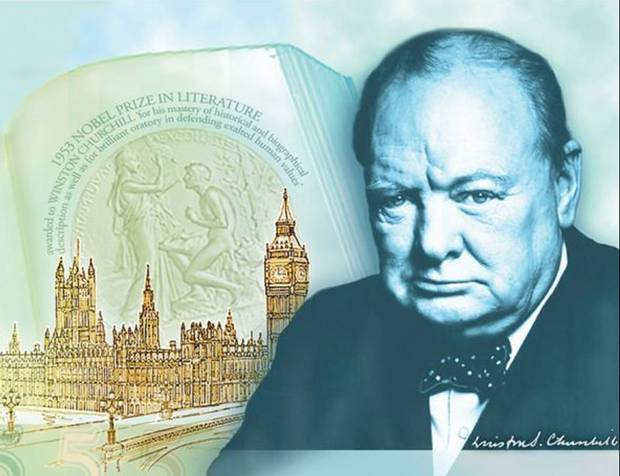
Winston Churchill concept art for 5 pound note

Mark Carney, the governor of the Bank of England, has formally announced that Britain will switch to using plastic banknotes in 2016, ending 320 years of paper money.

After a public consultation in which 87% of the 13,000 respondents backed the new-style currency, the Bank said it would introduce “polymer” notes, as it prefers to call them, in two years’ time, starting with the new £5 note featuring Winston Churchill in 2016 and the Jane Austen £10 a year later.

Speaking at a press conference in the Bank’s Threadneedle Street headquarters, Carney said: “Our polymer notes will combine the best of progress and tradition. They will be more secure from counterfeiting and more resistant to damage while celebrating the history and tradition that is important both to the Bank and the nation as a whole.”

The move follows Carney’s native Canada, where plastic notes are being rolled out, and Australia, where they have been in circulation for more than two decades.

Carney launched a public consultation on polymer banknotes, seen as cleaner and more durable, shortly after arriving at the Bank this summer. However, the Bank’s notes division has been considering plastic money for several years.

I’m still not convinced about the Canadian polymer banknotes: they tend to stick together much more than the paper notes did and they are reportedly susceptible to “fusing” together in high heat.

December 15, 2013

Wall Street’s dream matchup in 2016 – Christie vs Clinton

Filed under: Business, Politics, USA — Tags: , , , , — Nicholas @ 10:27

Sheldon Richman says the big money folks on Wall Street know who they’d like to see at the top of the tickets for the 2016 presidential election, and they might just get their way:

If you share my belief that the major obstacle to the free society is the national-security/corporate state, 2016 is shaping up to be a year of apprehension. The Wall Streeters, who are among the biggest advocates of partnership between big government and big business, are looking forward to a presidential contest between Hillary Clinton and Chris Christie, a contest the bankers can’t lose.

They have already discounted any populist rhetoric Clinton may need to fight off a primary challenge from, say, Sen. Elizabeth Warren. As “one well-placed Democrat” told Politico, “Wall Street folks are so happy about [having Clinton run] that they won’t care what she says.”

[…]

In Clinton, then, we have a friend of the bankers and a friend of the military-industrial complex, since as secretary of state she was an advocate of a muscular foreign policy, including intervention in Libya. (When she was in the Senate she voted to give George W. Bush a blank check to invade Iraq, and when she was first lady, she pushed Bill Clinton to drop bombs on the Balkans).

“And if the banking class is delighted with Clinton lately,” Politico notes, “the feeling appears mutual.”

Wall Street’s first choice on the GOP side is apparently Chris Christie, the governor of New Jersey. He had his own meeting with the big-money crowd in July 2011. Politico calls him “the candidate with the best chances at winning the support of bankers in the next presidential election.”

At that 2011 meeting: “Henry Kissinger [!], the former secretary of state, stood and pleaded with the governor to enter the presidential race for the good of his country. Christie would, of course, resist their pleas, becoming perhaps even more alluring to those on Wall Street as a prospect for 2016.”

November 10, 2013

Latest federal initiative shows “patronising contempt, arrogant presumption and impressive stupidity”

Filed under: Cancon, Economics, Government — Tags: , , , — Nicholas @ 13:39

The federal government is launching a program to help “ordinary Canadians” become better at managing their finances. Richard Anderson points out the amusing aspect of this:

I sometimes wonder if the hacks who put out these releases aren’t giggling to themselves the whole time, amazed at what they’re getting away with. You work for a Conservative government that wades through a sea of red ink every year. This same government has no credible plan to deal with the entitlement crisis, except point out how we’re less screwed than the Yanks. So naturally you go about lecturing the common folk on how to balance their chequebooks. This is like the morbidly obese diet coach of legend.

We see here a unique combination of patronising contempt and arrogant presumption that does not, so far as we have been able to determine, exist outside of Ottawa. Even the Soviets assumed that an ordinary adult could balance their personal budgets without being lectured to by a full time commissar. Then again they were communists, not nannies. Herein lies the great difference between the totalitarian projects of the last century and the petty authoritarianism of this one, the end result. The communist, fascists and Nazis envision a new man who would change the world. Note the underlying assumption: Man.

At some point, after rigorous indoctrination, the boy would become a man. The modern nanny state assumes that the boy never becomes a man, he’s always a boy needing to be hectored to and monitored. As the press release notes: “…brushing up on the basics of money management at any age and will include events for Canadians of all ages.” No matter how old you get, the federal government will be there to tell you how to manage your affairs. That generations of Canadians did this quite well without government involvement never comes up.

Growth forecasts continue to over-estimate Canada’s actual economic progress

Filed under: Cancon, Economics — Tags: , , , , — Nicholas @ 12:12

In Maclean’s, Debbie Downer Colin Campbell takes a survey of the state of Canada’s economy:

A key qualification for landing a job at the Bank of Canada, it seems, is an unfailing sense of optimism. In 2009, the bank forecast the economy would grow 3.3 per cent in 2011. It grew 2.5 per cent. In 2011, it said the economy would grow 2.9 per cent in 2013. It will likely be just 1.6 per cent. Now it says the economy will grow 2.3 per cent next year. How likely is that? The bank has consistently viewed the economy through rose-coloured glasses in recent years, perhaps believing its low-interest-rate policy will eventually bear fruit. Rates have been held at one per cent for three years now. But the economy seems only to be getting worse.

It grew 0.3 per cent in August, Statistics Canada said last week — mostly attributed to a familiar crutch, the oil business. Elsewhere, things aren’t looking up. A new TD Bank report said corporate Canada is “in a slump,” with profits down 16 per cent from their post-recession peak in 2011. Some observers point out that Canada is still doing better than Europe and Japan. But so are most countries that aren’t in a recession, from South Africa and New Zealand to Equatorial Guinea and Guatemala. After breezing through the recession, Canada is back to old habits: hoping its fortunes (i.e., exports) will rise along with America’s comeback. But the U.S., too, is back in a rut. Last week, the Federal Reserve said it would continue with its $85-billion-a-month bond-buying stimulus program.

With the economy sputtering, Ottawa has meanwhile remained preoccupied with fiscal restraint and balancing the budget within two years. So, with neither low interest rates nor government spending providing a boost, the outcome seems predictable: Official growth forecasts will look nice, but will keep missing the mark.

November 2, 2013

FATCA may have significant (negative) influence on Canadian law

Filed under: Business, Cancon, Law, USA — Tags: , , , , — Nicholas @ 11:00

In Maclean’s, Erica Alini tries to explain just what the US Foreign Account Tax Compliance Act (FATCA) is, and why Canadians should be very concerned about it:

To say that FATCA is controversial is an understatement. The law is so complex and onerous to implement that some foreign banks have reportedly kicked out their U.S. clients in order to avoid dealing with it. Americans living abroad are queuing to give up their U.S. passports over it. The other problem with FATCA is that it asks foreign banks to do things that are often illegal in their home countries, such as passing on certain private information.

It has caused a stir in Canada as well, but the press here generally portrays it as something that affects only dual citizens and green-card holders. Given the number of Americans who live in Canada, that would be enough to make it a big issue (and a big headache for Ottawa). But the truth is FATCA has the potential to touch a much larger number of unsuspecting Canadians.

[…]

In general, what you get for signing an agreement to enforce FATCA is a pledge that the U.S. will do its best to share some of its information on your country’s potential tax cheats. You read that right: Not a duty to reciprocate your efforts, but a lame “we’ll try hard” promise. That’s because the U.S. government does not, at the moment, have permission to force U.S. banks to share information with foreign governments. Only Congress can change that.

That sounds bad enough, but it gets worse for Canada. We are the exception — the only country with which the U.S. has an automatic information-sharing agreement. Now, the trouble with FATCA is that it demands some new information: Not about the Canadian assets and incomes of people who live in the U.S. but about the assets and incomes of people who live in Canada but might have some ties to the U.S. While Canadian taxation, thankfully, is based on residency — you owe the CRA if you’ve been living in Canada — the U.S. has started demanding that its citizens file taxes regardless of where they live.

One of the unforeseen effects of this legislation is that it’s been making it much harder for US citizens to do business in other countries or to work in other countries for extended periods of time. If foreign banks refuse to allow US citizens to open accounts, you’re imposing significant costs and extra inconvenience on people who are in no way attempting to hide assets or income from the IRS. As with so many government initiatives, it probably won’t inconvenience actual criminals all that much, but will primarily impact ordinary — innocent — US citizens.

October 8, 2013

In defence of savings

Filed under: Books, Economics, Government, History — Tags: — Nicholas @ 10:49

Keynes notoriously thought savings were bad … that a penny saved was a penny “prevented” from working its “magic” in the economy. Gregory Bresiger explains why Keynes’ notion has become the unspoken understanding of most Americans:

Our grandparents believed in the value of thrift, but many of their grandchildren don’t.

That’s because cultural and economic values have changed dramatically over the last generations as political and media elites have convinced many Americans that saving is passé. So today, under the influence of Keynesian economists who champion government spending and high levels of consumption, thrift has been devalued.

“The growth in wealth, so far from being dependent on the abstinence [savings] of the rich, as is commonly supposed, is more likely to be impeded by it,” according to John Maynard Keynes’s The General Theory of Employment, Interest and Money.

“The more virtuous we are, the more determinedly thrifty, the more obstinately orthodox in our national and personal finance, the more incomes will have to fall,” he writes. “Saving,” Keynes wrote in his Treatise on Money, “is the act of the individual consumer and consists in the negative act of refraining from spending the whole of his current income on consumption.”

But saving, pace Keynes, isn’t “negative.” It is deferred consumption. “The great producing countries are the great consuming countries,” writes Benjamin Anderson in Economics and the Public Welfare. More importantly, high rates of savings will lead to higher productivity, which would benefit our children and grandchildren, classical and Austrian economists have explained.

“We are the lucky heirs of our fathers and forefathers whose saving has accumulated the capital goods with the aid of which we are working today,” wrote Ludwig von Mises in Human Action. Saving, ultimately, is consumption, writes Detley S. Schlichter in Paper Money Collapse. “By setting aside some resources for meeting financial consumption needs, we invest them.”

Nevertheless, Keynesian ideas dominate the Obama administration and mass media. Most politicians, including Republicans who often pretend to be friends of thrift and self-improvement, are tacit or overt Keynesians. That’s because politicians, whether they have studied Keynes or not, generally love the idea of cheap money. Most delight in spending taxpayer dollars. They believe this is the way elections are won.

October 7, 2013

Even the “revised” official Chinese economic stats are dodgy

Filed under: China, Economics — Tags: , , — Nicholas @ 09:23

In a survey of China’s military and economic status, Strategy Page mentions the perennial issue of unreliable official economic statistics for China:

Chinese officials are becoming more open about the problems they have getting accurate economic information for such things like annual GDP and unemployment rates. Apparently Chinese GDP has not been growing steadily at near ten percent a year for decades. Chinese officials do eventually (months or years later) get more accurate data and while Chinese GDP has actually been steadily growing over the last three decades the annual growth has actually varied from 5-15 percent. Chinese official policy was to keep everyone calm by issuing less variable annual growth rates. In short, the official numbers were doctored. For more accurate and immediate indicators of economic activity Chinese and foreign economists and business leaders use things like electricity production, railroad traffic and similar data that cannot be manipulated by local officials to make their city or province look more successful. Many financial exerts inside and outside China fear that all this official manipulation of economic data (an ancient practice in China) is masking some serious economic problems that could go sideways at any time and cause a banking crises that would paralyze the economy for a while and cause political chaos. It’s very much a crouching tiger and hidden dragon. This is an ancient phrase warning that behind seeming success and talent lurks the possibility of imminent disaster. Chinese are ever mindful of these bits of ancient wisdom.

September 25, 2013

Corporate culture, entitlement and unearned benefits

Filed under: Business — Tags: , , , — Nicholas @ 08:09

I’ve never worked in the investment banking world, but even at the tech companies I’ve worked for over the years, I saw smaller versions of the kind of behaviour that Chris Tell says are sure-fire signs of a toxic corporate culture:

It was the late 90′s, markets were booming and the only thing that seemed to be flowing faster than the pints on a typical Thursday night in the city of London’s watering holes, was of course the money.

Living it up … great food, expensive cocktails — in fact the more expensive the better — that was the prevailing attitude. Never on your own dime of course.

This wasn’t unique to Lehman, who I was with at the time, or to any other bank for that matter. I contracted to a handful of the big names, and they were all abusers.

It was, and still is deeply ingrained in much of the investment banking corporate culture. It’s also been a cancer in many of the businesses I’ve researched over the years.

I now have zero tolerance for it as an investor and business owner, despite the fact that I was more impressionable when younger.

Back then, being young and naive, working for a fancy-pants IB, I was awestruck by my bosses spending hundreds of pounds in a drinking session. As I look back I’m embarrassed for thinking that these wealthy parasites where gods of some kind. The more they spent … the bigger an asshole they were … the more they were idolized and revered!

As far as I could tell most of my fellow inmates had applied to an ad that read something like: Arrogant, obnoxious, self-aggrandizing types being accepted now.

[…]

Humans have a desire for fairness but also love a free lunch. These two aspects work against each other.

Soon one manager sees another manager ordering lobster at lunch and thinks to himself, “Screw it, if he’s getting it so should I.” Rapidly a culture of entitlement develops where mysteriously, corporate travel, apartments, dinners, drinks and other things that have little to no ROI start burning up the expense accounts. These folks rarely stop to consider the impact of their actions, while somehow believing that they have “earned it” and indeed “deserve it.”

I was never able to put my finger on it at the time, but having subsequently spent the majority of my adult life researching and investing in early-stage businesses, I now have a keen eye for spotting this, and will never invest in businesses which allow this type of culture to gain footing.

Once let in the door it grows like a cancer and completely destroys shareholder value.

Incidentally, it’s not distinctly different to how career politicians view themselves. They actually believe that what the do, day in and day out is worth something more than it is. That it’s somehow more than just community service, and they should be compensated in the fashion that they (currently — hopefully temporarily) are.

August 30, 2013

Economic Darwinism – you’re soaking in it

Filed under: Economics, Government — Tags: , , , — Nicholas @ 09:19

Charles Hugh Smith on the next big financial crisis and the way we’ve carefully put the worst people in place to cope with it:

Brenton Smith (no relation) recently identified a key driver of the next financial crisis: Economic Darwinism. Just as natural selection selects for traits that improve the odds of success/survival in the natural world, Economic Darwinism advances people and policies that boost profits and power within the dominant environment.

As Brenton explains in his essay The One Phrase That Explains the Great Recession, “The Federal Reserve’s 20-year policy of easy money created an environment virtually assured to select bankers, bureaucrats, educators, and elected officials who least understood the consequences of a credit crisis.

In other words, a hyper-financialized environment of near-zero interest and abundant credit rewarded those people and policies that succeed in that environment. Once the environment changes from “risk-on” to “risk-off,” the people and policies in charge are the worst possible choices for leadership, as the traits that enable successful management of credit crises have been selected out of the leadership pool.

This has political as well as financial consequences. As Brenton noted in an email exchange, Economic Darwinism creates an “incestuous relationship between Wall Street and Washington D.C., where success on Wall Street leads to a career in D.C.” This is a self-reinforcing process, as all those who are unwilling to keep dancing during the risk-on speculative orgy are weeded out of both the financial and political sectors, while those who dance the hardest gain political power, which they use to keep the music playing regardless of the increasing risks or consequences to the nation.

August 14, 2013

If there’s a conspiracy, it’s a pretty ineffectual, incompetent one

Filed under: Economics, Government, USA — Tags: , , , , , — Nicholas @ 08:20

Jeff Thomas asks whether the gold market is being manipulated by shadowy conspiracies of governments, big banks, and international bodies:

… we are reminded that, no matter how evil we think a given government may be, no matter how greedy we think a given banker may be, both the world’s governments and the worlds banks have proven time and time again to be guilty of overreach; that is, they assume that their position of power will assure that, if they attempt to control a market, they will succeed.

However, history shows that both governments and banks have a patchwork quilt as a record for effectiveness in this regard. Both exhibit a history of misinterpretation of market drivers, inadequate planning and inadequate execution, to say nothing of a penchant for betraying one another. (The admission by Barclays Bank that they manipulated LIBOR is a good example.)

As such, the concept of a finely-tuned conspiracy of bankers and governments in which all the players (including the egotistical heads of countries) all agree on every facet of a “Grand Plan” is unlikely in the extreme. On the other hand, it is highly likely that an endless series of deals between any two or more parties will crop up along the way. They will succeed or fail to varying degrees. (And we should not overlook the likelihood that, whatever one group should attempt, another group may, inadvertently or not, spoil that attempt through their own plan, which may well be a different one.)

By arguing whether or not gold manipulation exists, we may find that we are wasting our brain cells on the question. A better question, and one that we might choose to monitor on a regular basis, might be, “To what degree is successful manipulation taking place?” We might then use the on-going answer as a guide, to inform our reasoning going forward, as to what impact any perceived manipulation is likely to have with regard to our precious metals investment.

July 23, 2013

The real aftermath of Iceland’s banking collapse

Filed under: Economics, Government — Tags: , , , , — Nicholas @ 09:01

Simon Black contradicts the media narrative that Iceland has “recovered” from the melt-down of their banking sector:

It was a spectacular collapse. And the first of many. Ireland, Greece, Cyprus, etc. were soon to follow.

Yet unlike the bankrupt countries of southern Europe, Iceland dealt with its economic emergency in a completely different way.

Politicians here are proud that they never resorted to austere budget cuts that are so prevalent in Europe.

They imposed capital controls. They let the banks fail. And, as is so commonly trumpeted in the press, they ‘jailed their bankers and bailed out their people.’

Today, Iceland is held up as the model of recovery. Famous economists like Paul Krugman praise the government for rapidly rebuilding the economy without having to resort to austerity.

This morning’s headline from The Telegraph newspaper sums it up: “Iceland has taken its medicine and is off the critical list”.

It turns out, most of these claims are dead wrong.

[…]

Meanwhile, the government ended up taking on massive amounts of debt in order to bail out the biggest bank of all – Iceland’s CENTRAL BANK.

This was a bit different than the way things played out in the US and Europe.

In the US, the Fed conjures money out of thin air and funnels it to the government.

In Iceland, since the Kronor is not a global reserve currency, the government had to go into debt in order to funnel money to the Central Bank, all so that the currency wouldn’t collapse.

As a result, Iceland’s state debt tripled, almost overnight, in 2008. And from 2007 until now, it has increased nearly 5-fold.

Today, the government is spending a back-breaking 17.3% of its tax revenue just to pay interest on the debt.

And this is real interest, too. Iceland’s central bank owns very little of the government debt. The rest is owed to foreign creditors… putting the country in an extremely difficult financial position.

At the end of the day, the Icelandic people are responsible for this. They were never bailed out. They were stuck with the bill.

Meanwhile, although unemployment in Iceland is low, wages are even lower. And the weak currency has brought on double-digit inflation.

So while people do have jobs, they can hardly afford anything.

This is most prevalent in the housing market, most of which is underwater. Interest rates have jumped so much that many Icelanders are now on negative amortization schedules, i.e. their mortgage balances are actually INCREASING with each payment.

July 19, 2013

Blaming the bankers and absolving the politicians

Filed under: Economics, Government — Tags: , , — Nicholas @ 08:23

Daniel Ben-Ami points out that current campaigns to vilify bankers (“banksters”) over their role in the economic crisis that began in 2007-2008 conveniently ignores the politicians’ dirty hands:

There is at least one area where mainstream politicians can legitimately claim considerable success: they have offloaded much of the blame for the economic crisis from themselves and on to banks and other financial institutions.

Much of the public has accepted the premise that greedy bankers were largely responsible for the economic turmoil that emerged in 2007-8. There is little discussion of the government’s role in creating the conditions for the financial crash, let alone any examination of the economy’s underlying weaknesses.

Criticism of the government’s economic policy is usually confined to it being heartless or ill thought out. Often the two are combined, in the accusation that the government is obeying the diktat of its banker friends by imposing cuts. Campaigners also often allege that a shady global financial network is the real power in the world. In this conspiratorial worldview, a labyrinth of offshore tax havens helps the rootless rich evade the power of national authorities.

[. . .]

But in truth, politicians on both sides of the Atlantic bear a large share of the blame for the crisis. To understand their culpability, it is necessary to go back at least to the early 1980s rather than just to 2007. For decades it was clear that investment and innovation were insufficient. Yet rather than tackle these underlying problems, the authorities pursued policies that ended up creating a credit bubble.

Public spending was kept high and interest rates artificially low. Often, governments also used additional measures to ease the supply of credit, such as reforming the financial markets. The hope was that such moves would keep the market ticking over in the short term and the economy would somehow correct itself in the longer term.

This was the backdrop to the financial crisis that emerged in 2007-8. Bankers certainly played a role, but governments created the conditions for the credit bubble to emerge. Underlying this development was the failure of politicians to tackle or even recognise structural economic weaknesses.

[. . .]

Underlying anti-banking campaigns is the common assumption that financial institutions are part of a giant global conspiracy to undermine nation states.

This view was most vividly put forward by Matt Taibbi, a campaigning American journalist, in a 2009 article in Rolling Stone magazine and in a subsequent book. He famously condemned Goldman Sachs, a top Wall Street investment bank, as ‘a giant vampire squid wrapped around the face of humanity, relentlessly jamming its blood funnel into anything that smells like money’. In the UK, the New Economics Foundation, a think tank, adopted the image with a short video entitled Taming the Vampire Squid: Take Back Our Banks.

There are several reasons to object to such imagery and the conspiratorial worldview that underlies it. For one thing it is strongly reminiscent of Nazi imagery of Jews as central to an international financial conspiracy. For example, in Mein Kampf, Adolf Hitler talked of Jews as being ‘like leeches… they were slowly sucking the blood from the pores of the national body’.

July 14, 2013

Signs of an economic Sharknado

Filed under: Economics, Government, Media — Tags: , , , , — Nicholas @ 11:51

Feeling positive about the economy? Michael Snyder has ten reasons to change your mind:

Have you ever seen a disaster movie that is so bad that it is actually good? Well, that is exactly what Syfy’s new television movie entitled Sharknado is. In the movie, wild weather patterns actually cause man-eating sharks to come flying out of the sky. It sounds absolutely ridiculous, and it is. You can view the trailer for the movie right here. Unfortunately, we are witnessing something just as ridiculous in the real world right now. In the United States, the mainstream media is breathlessly proclaiming that the U.S. economy is in great shape because job growth is “accelerating” (even though we actually lost 240,000 full-time jobs last month) and because the U.S. stock market set new all-time highs this week. The mainstream media seems to be absolutely oblivious to all of the financial storm clouds that are gathering on the horizon. The conditions for a “perfect storm” are rapidly developing, and by the time this is all over we may be wishing that flying sharks were all that we had to deal with. The following are 10 reasons why the global economy is about to experience its own version of Sharknado

#1 The financial situation in Portugal continues to deteriorate thanks to an emerging political crisis. […]

#2 The economic depression in Greece continues to deepen, and it is being reported that Greece will not even come close to hitting the austerity targets that it was supposed to hit this year […]

#3 The economic crisis in the third largest country in the eurozone, Italy, has taken another turn for the worse. […]

#4 There are rumors that some of the biggest banks in the world are in very serious trouble. […]

#5 Just before the financial crisis of 2008, the price of oil spiked dramatically. […]

#6 Mortgage rates are absolutely skyrocketing right now […]

#7 This upcoming corporate earnings season is shaping up to be an extremely disappointing one. […]

#8 U.S. stocks are massively overextended right now. […]

#9 Rapidly rising interest rates are causing the bond market to begin to come apart at the seams. […]

#10 Rapidly rising interest rates could cause an implosion of the derivatives market at any moment. […]

Most Americans don’t realize that Wall Street has been transformed into the largest casino in the history of the world. Most Americans don’t realize that the major banks are literally walking a financial tightrope each and every day.

All it is going to take is one false step and we will be looking at a financial crisis even worse than what happened back in 2008.

So enjoy this little bubble of false prosperity while you can.

It is not going to last for too much longer.

« Newer PostsOlder Posts »

Powered by WordPress