
Published on 14 Nov 2016
Romania is sometimes overlooked when talking about World War 1, but they had their own military tradition. As a smaller player in Europe, equipping the army was even more a challenge than it already was for the world powers.
November 15, 2016
Romanian Uniforms of World War 1 I THE GREAT WAR Special
Comments Off on Romanian Uniforms of World War 1 I THE GREAT WAR Special
November 11, 2016
In memoriam
A simple recognition of some of our family members who served in the First and Second World Wars:
The Great War
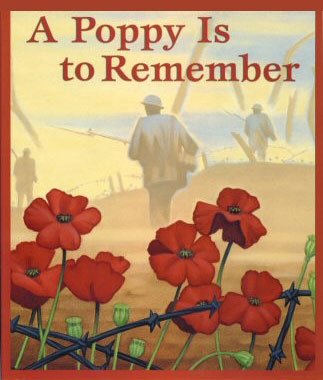 Private William Penman, Scots Guards, died 1915 at Le Touret, age 25
(Elizabeth’s great uncle)- Private David Buller, Highland Light Infantry, died 1915 at Loos, age 35
(Elizabeth’s great grandfather) - Private Walter Porteous, Northumberland Fusiliers, died 1917 at Passchendaele, age 18
(my great uncle) - Corporal John Mulholland, Royal Tank Corps, died 1918 at Harbonnieres, age 24
(Elizabeth’s great uncle)
The Second World War
- Flying Officer Richard Porteous, RAF, survived the defeat in Malaya and lived through the war
(my great uncle) - Able Seaman John Penman, RN, served in the Defensively Equipped Merchant fleet on the Murmansk Run (and other convoy routes), lived through the war
(Elizabeth’s father) - Private Archie Black (commissioned after the war and retired as a Major), Gordon Highlanders, captured at Singapore (aged 15) and survived a Japanese POW camp
(Elizabeth’s uncle) - Elizabeth Buller, “Lumberjill” in the Women’s Land Army in Scotland through the war.
(Elizabeth’s mother) - Trooper Leslie Taplan Russon, 3rd Royal Tank Regiment, died at Tobruk, 19 December, 1942 (aged 23).
A recently discovered relative. Leslie was my father’s first cousin, once removed (and therefore my first cousin, twice removed).
In Flanders fields the poppies blow
Between the crosses row on row,
That mark our place; and in the sky
The larks, still bravely singing, fly
Scarce heard amid the guns below.We are the Dead. Short days ago
We lived, felt dawn, saw sunset glow,
Loved and were loved, and now we lie
In Flanders fields.Take up our quarrel with the foe:
To you from failing hands we throw
The torch; be yours to hold it high.
If ye break faith with us who die
We shall not sleep, though poppies grow
In Flanders fields.Lieutenant Colonel John McCrae, MD Canadian Army Medical Corps (1872-1918)
November 8, 2016
Operational analysis: The Battle of the Pelennor Fields
The Angry Staff Officer analyzes the Battle of the Pelennor Fields (called by some the Battle of Minas Tirith) in terms of the six warfighting functions:
… Which leads me to my problem statement for this impromptu mission analysis that I am forcing you into: how did the forces of Gondor wage unified land operations versus the forces of Sauron at the Battle of Minas Tirith? More specifically, how can a primarily infantry force defend against a numerically superior enemy that possesses significant air assets, fires superiority, and freedom of movement and maneuver?
Couched in these terms, the problem statement resembles the complex situation faced by our brigade combat teams in a potential peer-to-peer engagement.
The situation – for those who do not remember it – is as follows: the forces of Gondor have been driven back from their forward defensive strongpoints along the Anduin River in the population center of Osgiliath. The withdrawal had been conducted in an orderly manner until the rear guard covering the retreat came under air attack by the Nazgul, which used their air superiority to drive the defenders into a panic. Most significantly, this air sortie wounded the primary land component commander, Faramir, depriving the forces of Gondor of their most effective warfighter.
More than 30,000 orcs and men of the forces of Sauron then enveloped the battle positions around Minas Tirith and began a siege of the 4,000 or so defenders of the city, which was primarily an infantry force with little in the way of cavalry or artillery. Significantly, the defenders possessed virtually no anti-air defenses, allowing the Nazgul freedom of movement around the battlefield – a dangerous proposition as the Nazgul also wielded considerable psychological damage (not unlike the sound of Stuka dive bombers in World War II). The greatest asset for Gondor was the wizard Gandalf – a force multiplier by any definition of the term – who was serving as the principle mission command adviser to Denethor. The objective for Gondor was to maintain their battle positions and hold out until reinforcements could arrive. However, lines of communication were cut during the siege and Gondor could not be sure that cavalry reinforcements from neighboring Rohan could arrive in time to save the city. This uncertainty weighed heavily on the forces of Gondor.
As a good staff officer, I turn to Army Doctrinal Publication 3-0, Unified Land Operations to understand the problem through the six warfighting functions. And given that J.R.R. Tolkien himself was a British signal officer during World War I, it would be appropriate to start out with mission command.
I imagine the author was grinning when he got to this section:
Luckily for Gondor, Gandalf then assumed command of all land forces, despite his position as a primary staff advisor to Denethor.
Yeah, that’s right, a staff officer took over operations.
Gandalf immediately provided vision and direction to the city’s defenders at a critical moment, as the forces of Sauron were conducting a breaching operation on the gates of Minas Tirith utilizing a battering ram named Grond. Arriving at the enemy point of breach, Gandalf rallied the forces in the engagement area, organized the defense, and directly opposed the primary enemy air and land component commander, the Witch-king of Angmar. The Witch-king was Sauron’s chief captain and commander of the Nazgul. Under his supervision, Sauron’s forces breached the main perimeter to the city and the Witch-king moved through the point of penetration into the far side of the breach, where he was confronted by Gandalf. The two land component commanders were prevented from close combat by the arrival of the primary maneuver element: the forces of Rohan.
H/T to John Donovan for the link.
Comments Off on Operational analysis: The Battle of the Pelennor Fields
October 4, 2016
Russian Uniforms of WW1 I THE GREAT WAR Special
Published on 3 Oct 2016
The Russian Army of World War 1 fielded a great variety of troops and equipment. This was especially true for the different uniforms. In our special episode, we will talk about some of the most common items, tunics and gear the soldiers would wear into battle.
Comments Off on Russian Uniforms of WW1 I THE GREAT WAR Special
September 25, 2016
The Lorne Scots 150th anniversary
Yesterday I drove out to the wilds of Brampton to attend the Trooping of the Colours for the Lorne Scots (Peel, Dufferin and Halton Regiment). Given how hot this summer has been, they had a great day for the event. I’m sporting a bit of a sunburn on the right side of my head, but the temperatures were much more comfortable than they’d have been on pretty much any weekend since June. Elizabeth and I sat in the second row of seats, which meant that a lot of my photos were constrained (or even bookended) by the heads and shoulders of the folks sitting immediately in front of us. It was still a great trip down memory lane.
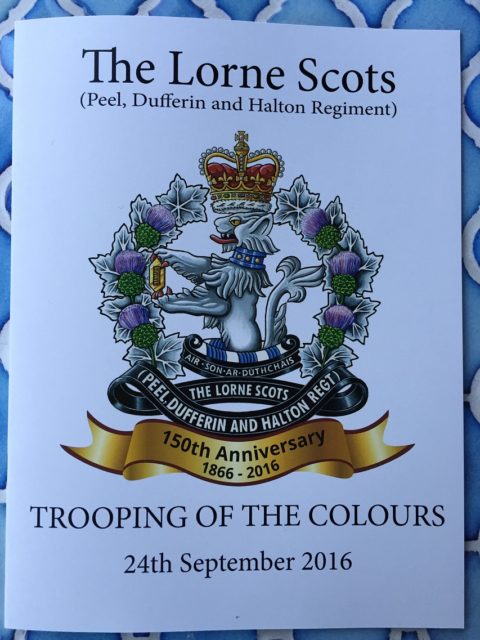
If you’re on Facebook, you can see a selection of photos from the event here (unless Facebook is making it awkward for non-members to see albums posted as “public”, which is always a consideration). If you can’t see ’em, let me know in the comments and I’ll repost at least a few of them here.
Comments Off on The Lorne Scots 150th anniversary
QotD: Canada’s “Potemkin village” tactics
Some of us, in another forum, were discussing why UN peacekeeping seems to go so very wrong, so very often ~ not always, I hasten to add, just usually ~ and I quipped, with just a wee bit of hyperbole, that “Simple human decency says that a country like Canada should have dropped a light brigade into South Sudan and destroyed the South Sudanese Army in a short, brutal campaign of exemplary speed and violence … should have if we could have, but, of course, the Canadian Army is a fat, overstaffed, poorly managed corporal’s guard, that cannot deploy any brigade anywhere because we don’t have any nearly fully staffed brigades and even if we did they don’t have enough logistical “lift,” so they are useless once they have marched more than 15 km out of the camp gate … unless a country with a real army (you know, one with trucks and people a to drive them) decides to support and sustain us.“
Sadly no one, not even officers who have, fairly recently, commanded brigades in the regular army, challenged my assertion that the Canadian Army has been hollowed out until, now, it is a sort of military Potemkin village in which bits and pieces are deployed and redeployed to create the (entirely false) impression that we, Canadians, are getting a real army for the $20 billion or so that we spend, year after year after year, on out national defences.
The process began, in earnest, in about 1970, when, in response to quite draconian cuts imposed by Pierre Trudeau (but not, it has been suggested, as deep as he wished) the Canadian Forces began to try to “make do” with a “pint sized” brigade in Germany ~ when a full sized (6,500± soldiers) one was need by promising (and practising) to augment it with “fly-over” troops from Canada who were trained and equipped and could move, fairly quickly on to “pre-positioned” equipment … if it was properly maintained. It worked well enough, in a peacetime/training situation, except for the fact that we, eventually (early 1980s), understood that we could not sustain a brigade in Germany with “fly overs” when we needed the same troops to “fly over” to Norway to keep another promise, made to try to placate our allies about our deep defence cuts, and by the late 1980s the Norway task (promise) was quietly shelved (broken) about twenty years after it was started, and after a quite disastrous “test” (Exercise BRAVE LION) proved to civilian planners and military commanders alike that the Canadian Army (which was much larger than it is today) simply did not have the where-with-all (especially the logistical “tail”) needed to sustain “fly over” missions to Europe. But the damage was done … in twenty years, almost a generation, the Army, especially, had gotten used to “faking” its combat effectiveness with Potemkin village tactics.
Ted Campbell, “A Canadian Potemkin Village”, Ted Campbell’s Point of View, 2016-09-15.
Comments Off on QotD: Canada’s “Potemkin village” tactics
September 18, 2016
Officer and Soldier Relationships – Treatment of Criminals I OUT OF THE TRENCHES
Published on 17 Sep 2016
Sitting in the Chair of Temporary Insanity, Indy talks about officers tricking their own men, the relationships between them and how criminals were treated in the first world war.
Comments Off on Officer and Soldier Relationships – Treatment of Criminals I OUT OF THE TRENCHES
September 16, 2016
Beasts of Steel – The First Tanks On The Battlefield I THE GREAT WAR Week 112
Published on 15 Sep 2016
For years the British had developed the idea of the “landship” or tank and now it was finally ready for the first deployment during the Battle of Flers-Courcelette. And even though technical problems plagued the new invention, the British leadership was confident that this new weapon would break the stalemate at the Western Front for good. In the meantime Germany was focusing all offensive efforts on the Romanian front to mercilessly crush the new enemy.
Comments Off on Beasts of Steel – The First Tanks On The Battlefield I THE GREAT WAR Week 112
September 13, 2016
Tank Development in World War 1 I THE GREAT WAR Special
Published on 12 Sep 2016
The idea for an armoured vehicle that could withstand fire and travel across battlefields was already developed in 1914 after the Race to the Sea. The British “Landship Committee” developed the tank weapon in secrecy. The French were also trying out different designs at the same time. Learn all about the development and the invention of the tank in our special episode.
Comments Off on Tank Development in World War 1 I THE GREAT WAR Special
QotD: Junior officers
Most leaders let their people do their thing, watch them, critique them, and then train them some more so when the time comes, you feel confident in knowing you can do your job. The second lieutenant you’re following might get your whole fucking platoon killed, but you know your job, and because of that you’ll know what to do when the L-T walks out of the tent to take a piss and ends up in a minefield.*
* I actually had a lieutenant get lost at night walking out of the tent to go piss and walked in to a simulated minefield at JRTC (big Army playground, essentially) once during a field exercise. Never leave lieutenants unsupervised, kids. Ever.
Because lieutenants, man.
Ted Glover, “Your Moment Of Zim Tzu: Startless In Seattle”, Daily Norseman, 2016-08-19.
Comments Off on QotD: Junior officers
August 1, 2016
A new flag for the Canadian Army
Chris Banks posted a link to this article in the Lorne Scots Facebook group:
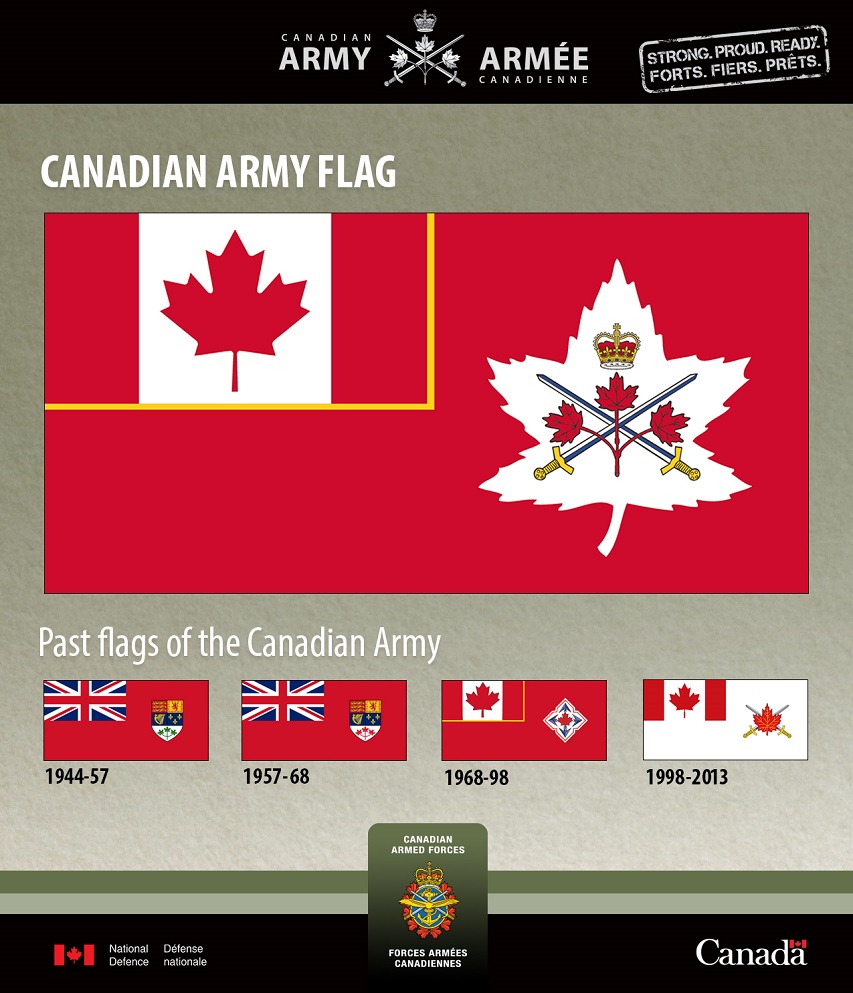
The Canadian Army (CA) will advance into the future under a new flag that nods to its proud past.
The flag was unveiled July 14, 2016, during a ceremony on Parliament Hill in which CA members welcomed their new Commander, Lieutenant-General Paul Wynnyk.
The new design features the Canadian flag and a white, stylized maple leaf against a red background. Superimposed on the white maple leaf is the badge that members used during the Second World War and the Korean conflict, consisting of three maple leaves over a pair of crossed swords. Sitting atop the centre leaf is an image of St. Edward’s Crown, a symbol that has been used in coronation ceremonies for over 300 years.
The maple leaf was worn on the collars of Canadian soldiers who fought in the Battle of Vimy Ridge during the First World War, and was included on the new flag to honour the 100th anniversary of the battle, which will be marked in 2017. The same maple leaf flew on the Headquarters flags of the fighting Divisions during the Second World War and still flies across Canada at the CA’s various Division Headquarters.
Comments Off on A new flag for the Canadian Army
July 26, 2016
The British Uniforms of World War 1 I THE GREAT WAR Special
Published on 25 Jul 2016
Matthew Moss helped us with this episode, check out his website: http://www.historicalfirearms.info
The British Army was probably the best equipped at the beginning of the war. They already transitioned to the more practical khaki colour, faded out the differences between infantry and other branches and developed uniforms for different climates. But of course World War 1 brought its own number of problems for the British Army.
Comments Off on The British Uniforms of World War 1 I THE GREAT WAR Special
QotD: Natural born killers? Not so much…
One of the most dangerous errors of our time is the belief that human beings are uniquely violent animals, barely restrained from committing atrocities on each other by the constraints of ethics, religion, and the state.
It may seem odd to some to dispute this, given the apparently ceaseless flow of atrocity reports from Bosnia, Somalia, Lebanon and Los Angeles that we suffer every day. But, in fact, a very little study of animal ethology (and some application of ethological methods to human behavior) suffices to show the unbiased mind that human beings are not especially violent animals.
Desmond Morris, in his fascinating book Manwatching, for example, shows that the instinctive fighting style of human beings seems to be rather carefully optimized to keep us from injuring one another. Films of street scuffles show that “instinctive” fighting consists largely of shoving and overhand blows to the head/shoulders/ribcage area.
It is remarkably difficult to seriously injure a human being this way; the preferred target areas are mostly bone, and the instinctive striking style delivers rather little force for given effort. It is enlightening to compare this fumbling behavior to the focussed soft-tissue strike of a martial artist, who (having learned to override instinct) can easily kill with one blow.
It is also a fact, well-known to military planners, that somewhere around 70% of troops in their first combat-fire situation find themselves frozen, unable to trigger lethal weapons at a live enemy. It takes training and intense re-socialization to make soldiers out of raw recruits. And it is a notable point, to which we shall return later, that said socialization has to concentrate on getting a trainee to obey orders and identify with the group. (Major David Pierson of the U.S. Army wrote an illuminating essay on this topic in the June 1999 Military Review).
Criminal violence is strongly correlated with overcrowding and stress, conditions that any biologist knows can make even a laboratory mouse crazy. To see the contrast clearly, compare an urban riot with post-hurricane or -flood responses in rural areas. Faced with common disaster, it is more typical of humans to pull together than pull apart.
Individual human beings, outside of a tiny minority of sociopaths and psychopaths, are simply not natural killers. Why, then, is the belief in innate human viciousness so pervasive in our culture? And what is this belief costing us?
Eric S. Raymond, “The Myth of Man the Killer”, Armed and Dangerous, 2003-07-15.
Comments Off on QotD: Natural born killers? Not so much…
July 25, 2016
The Evolution of German Infantry Tactics I OUT OF THE ETHER
Published on 24 Jul 2016
Indy sits on the Chair of Wisdom and reads out some of the best comments we get every month. This week, we deal with the evolution of German Infantry Tactics.
Comments Off on The Evolution of German Infantry Tactics I OUT OF THE ETHER
July 19, 2016
The Best Sniper Of World War 1 – Francis Pegahmagabow I WHO DID WHAT IN WW1?
Published on 18 Jul 2016
Francis Pegahmagabow was not only the most successful sniper of World War 1, but he is also among the most decorated aboriginal soldiers in history. He joined the Canadian Army in 1914 and quickly made a name for himself as a sniper during reconnaissance missions.
Comments Off on The Best Sniper Of World War 1 – Francis Pegahmagabow I WHO DID WHAT IN WW1?


