
Real Engineering
Published on 27 May 2017Listen to our new podcast at:
Showmakers YouTube channel at: https://goo.gl/Ks1WMpItunes: https://itun.es/us/YGA_ib.c
RSS and Libsyn Audio is available on our site: https://www.showmakers.fm/Patreon:
https://www.patreon.com/user?u=282505…
Twitter:
https://twitter.com/Fiosracht
Website:
www.RealEngineering.netThank you to my patreon supporters: Adam Flohr, darth patron, Zoltan Gramantik, Josh Levent, Henning Basma, Karl Andersson, Mark Govea, Mershal Alshammari, Hank Green, Tony Kuchta, Sam Stockdale, Jason A. Diegmueller, Chris Plays Games, Peter Hogan-De Paul, William Leu, Frejden Jarrett, Vincent Mooney & Ian Dundore
Once again thank you to Maeson for his amazing music. Check out his soundcloud here: https://soundcloud.com/maeson-1/tracks
February 1, 2019
How Russia Stopped The Blitzkrieg
January 31, 2019
Urban Combat: Fighting Positions
Military History Visualized
Published on 22 Sep 2017Some basic introduction on Fighting Positions in Urbanized Terrain according to a US Marine Corps Manual.
»» SUPPORT MHV ««
» patreon – https://www.patreon.com/mhv
» paypal donation – https://www.paypal.com/cgi-bin/webscr…»» SOCIAL MEDIA ««
» minds.com – https://www.minds.com/militaryhistory…
» twitter – https://twitter.com/MilHiVisualized
» twitch – https://www.twitch.tv/militaryhistory…
» RallyPoint – https://www.rallypoint.com/organizati…Military History Visualized provides a series of short narrative and visual presentations like documentaries based on academic literature or sometimes primary sources. Videos are intended as introduction to military history, but also contain a lot of details for history buffs. Since the aim is to keep the episodes short and comprehensive some details are often cut.
» SOURCES «
Military Operation on Urbanized Terrain (MOUT) or MCWP 3-35.3 –
» DISCLAIMER «
Amazon Associates Program: “Bernhard Kast is a participant in the Amazon Services LLC Associates Program, an affiliate advertising program designed to provide a means for sites to earn advertising fees by advertising and linking to amazon.com.”Bernhard Kast ist Teilnehmer des Partnerprogramms von Amazon Europe S.à.r.l. und Partner des Werbeprogramms, das zur Bereitstellung eines Mediums für Websites konzipiert wurde, mittels dessen durch die Platzierung von Werbeanzeigen und Links zu amazon.de Werbekostenerstattung verdient werden können. »
TOOL CHAIN « PowerPoint 2016, Word, Excel, Tile Mill, QGIS, Processing 3, Adobe Illustrator, Adobe Premiere, Adobe Audition, Adobe Photoshop, Adobe After Effects, Adobe Animate.
January 29, 2019
The T-26 and Tank Warfare in Finland and China – WORLD WAR TWO Special
World War Two
Published on 28 Jan 2019The T-26 tank was one of the most frequently used tanks during the first battles of World War Two. It saw action in the Soviet Union, Finland and China. In our first collaborative video with the Tank Museum in Bovington, UK, David Willey and David Fletcher talk about the development, production and action of the this tank.
Check out the Tank Talk about the T-26 to hear David Fletcher explain some more about the T-26 on The Tank Museum YouTube Channel: https://youtu.be/EaBlg5pxe-4
Join us on Patreon: https://www.patreon.com/TimeGhostHistory
Or join The TimeGhost Army directly at: https://timeghost.tvFollow WW2 day by day on Instagram @World_war_two_realtime https://www.instagram.com/world_war_t…
Between 2 Wars: https://www.youtube.com/playlist?list…
Written and Hosted by: David Willey and David Fletcher
Produced by: Spartacus Olsson and Astrid Deinhard
Executive Producers: Bodo Rittenauer, Astrid Deinhard, Indy Neidell, Spartacus Olsson
Creative Producer: Joram Appel
Research by: The Tank Museum
Edited by: Joram Appel and Wieke KapteijnsPhotos of the Winter War are mostly from the Finnish Wartime Photograph Archive (SA-Kuva).
Archive by Screenocean/Reuters: https://www.screenocean.comA TimeGhost chronological documentary produced by OnLion Entertainment GmbH
January 27, 2019
Churchill Tank vs German 88 – Tunisia 1943
Mark Felton Productions
Published on 19 Dec 2018The Battle of Steamroller Farm in Tunisia in 1943 is notable for how much damage a pair of British Churchill tanks managed to inflict on the Germans, whom they surprised after climbing a ‘tank-proof’ ridge. Find out the full thrilling story of the tough Churchill in action.
Help support Mark’s channel:
https://www.paypal.me/markfeltonprodu…
https://www.patreon.com/markfeltonpro…
January 26, 2019
The US Army’s tank development and “The Emergency” in Eire
A discussion on the TimeGhost forums the other day included a link to this fascinating article by World of Tanks writer The Chieftain:
Wouldn’t it have been a terrible thing if, in the middle of WW2, the people responsible for training and equipping the US Army’s armored force were taken prisoner? Well, they were.
Wait, what? I’m sure we’d have heard all about this if it had really happened, and it’s certainly news to me, so he’s just pulling the long bow here, right? Well, no, he’s not. It really did happen, but there were several reasons why it didn’t become even a nine-day wonder in 1942, because it happened in what had been the Irish Free State but known after 1937 as Éire. Ireland was neutral in WW2, and had a policy of interning combatant personnel who found themselves in Ireland during the war. Keep this in mind, as it’s the key point of the story.
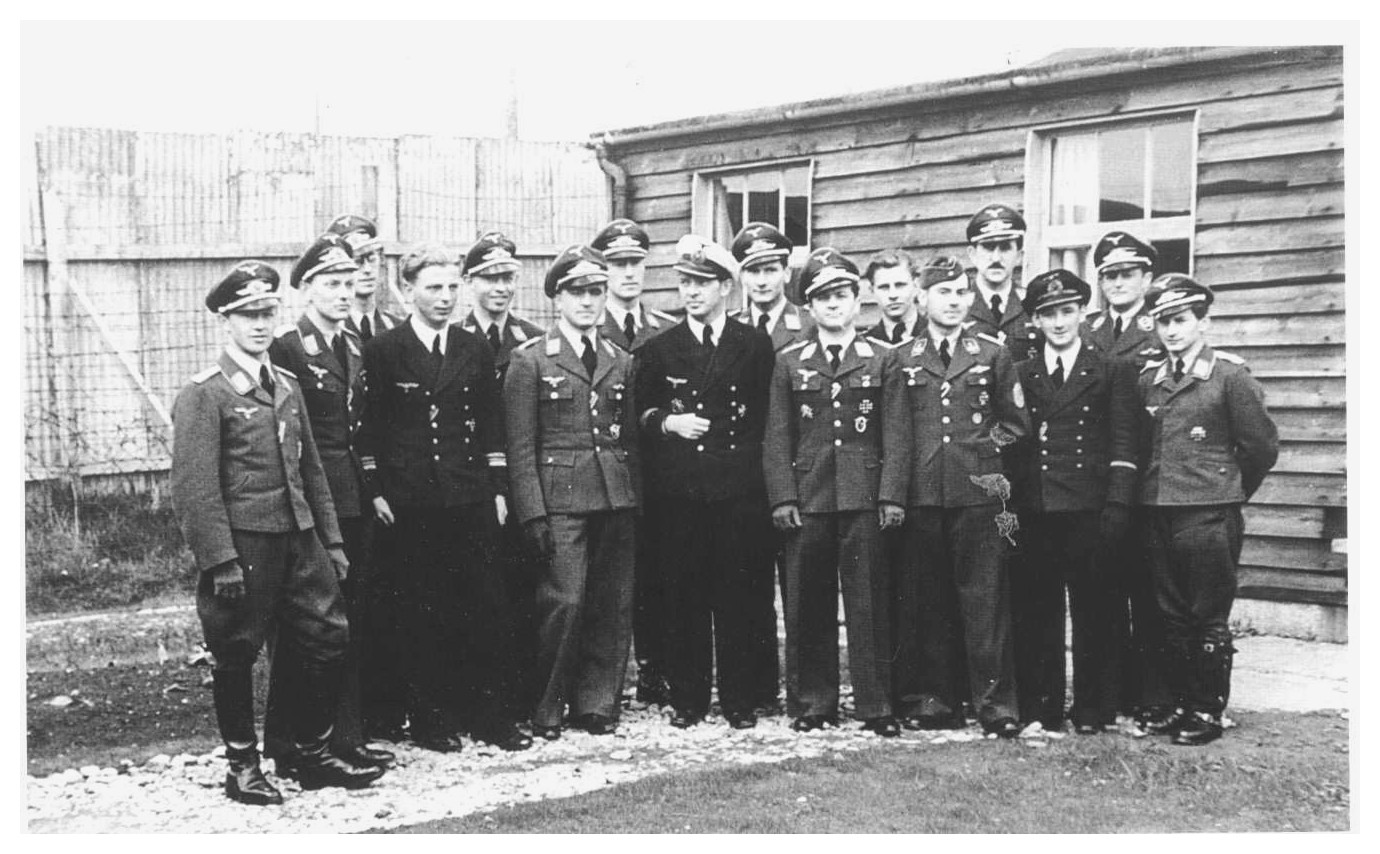
Interned German military personnel at the K-Lines Internment Camp in the Curragh.
Going on another brief tangent, you may be aware of the fact that what we know as “World War II” […] is not known by that name universally. Over on the former Soviet side of the house, it’s “The Great Patriotic War”. (Well, OK, they do distinguish between WWII and TGPW, but not in everyday conversation). The Soviet Union wasn’t the only country to give the conflict a less common name: In Eire, (Ireland), it was known as “The Emergency”
The background to this is that the Irish government wanted to enact emergency powers due to the unusual state of affairs which obtained in Europe in September 1939. The Irish Constitution granted the government such emergency powers in case of war, but it wasn’t entirely sure if the war in Europe counted. So the First Amendment to the Irish Constitution was approved, to add, in effect, that “state of war” could include “wars of which Ireland is not a part if the government thinks it’s important enough.” Once that little clarification was made, the Oireachtas (Parliament) passed its declaration of a state of emergency with the Emergency Powers Act. As a general rule, the Irish ruling bodies were not fans of the concept of acknowledging that there was a war going on which they had chosen not to be a part of. It went so far that when the son of a notable member of the Irish gentry in Malahide was killed when HMS Hood was sunk, his death was noted in the Irish Times as being due to a boating incident. As a result, the entire period 1939-1946 is known as “The Emergency.”
In this, as in so many other things, Ireland is a weird place. But we digress.
In December of 1942, Lieutenant General Jacob Devers, head of the Armored Force, decided to go on a fact-finding mission to the European Theatre of Operations to see how the tank units were holding up. Well, actually, it was mainly the North African Theatre of Operations, as European tank combat hadn’t really gotten off the ground. So he took with him a couple of colleagues, including one Major General Edward Brook, two Brigadier Generals named Gladeon Barnes and William Palmer, a Colonel William Thaddeus Sexton, and to carry the baggage, a Major Earl Hormell. They set off on December 14th, going south to Brazil, Ascension, The Gold Coast, Nigeria and Sudan, arriving Cairo five days later after a distance of 11,140 miles. After spending a little time with the British, they hopped over to Algeria, Tunisia and Morocco. At the end of trip, they went to Gibraltar for a week to consolidate their findings 7-14 January. The result of all this flying around and taking people away from their jobs for a month was one page and a quarter of conclusions, and one half-page of recommendations (the other half is six signature blocks).
[…]
Their duty from their trip being completed, they took advantage of the fact that they were already on the other side of the Atlantic to go to the UK to check in with the goings-on there.
So they boarded their aircraft, a B-17 converted to a VIP transport role, departed Gibraltar, and set off North up the Atlantic’s Eastern edge, looping around to the West of France to avoid German interception. Their B-17 was named “Stinky”.
You can probably guess where this is going.
The daily diary of the Devers mission reads as follows:
“At 2:00pm, January 15th, departed from Gibraltar, weather splendid. At approximately 10:00am, just after daylight, sighted land which navigator described as Lundy Island. From the map, this island appeared to be 100 miles north of the point at which the plane should have turned east towards Port Reath. Retracing south, the contour of the coastline did not correspond to that on available maps. Searched for approximately two hours without finding a familiar landmark. The radio operator was unable to contact any stations. The navigator admitted that he was lost. The ground consisted of small grass fields traversed by stone walls. With the gasoline supply nearly exhausted, a crash landing was made near Athenry at 11:50am. The size of the field was such that after hitting the ground, the plane crashed through a stone wall at approximately 70 miles per hour. Although the plane was wrecked, the members of the party were uninjured. The plane was immediately surrounded by Irish civilians and members of the Home Guard. The local inhabitants were very friendly, offered food and any medical assistance necessary. Shortly thereafter, representatives of the Eire Army arrived and took charge of the situation”
Er, oops? Read the whole thing for the full story.
January 21, 2019
M551 “Sheridan” AR/AAV | DESIGN DISASTER!
Matsimus
Published on 24 Dec 2018The M551 Sheridan was a light reconnaissance tank developed by the American company General Motors in May 1960 under the designation XM551. In November 1965 approval was given for the type classification of the XM551 as Limited Production and a four-year production contract was awarded to the Allison Motor Car Division of General Motors Corporation. In May 1966 the Sheridan was classified as Standard A and by this time production was well under way with the first production vehicle being completed in June 1966. Production continued until 1970 by when 1700 M551S (or General Sheridans) had been built, of which 1570 were still in service with the US Army in 1970. The role of the M551. as originally conceived, is to function as the main reconnaissance vehicle for armour, infantry and airborne operations and arms teams not employing main battle tanks. Late in 1978, it was announced that the M551 would be phased out of service and replaced by the M60A1 MBT, apart from those vehicles allocated to the 82nd Airborne Division (57) and Arkansas National Guard (12), 330 have been assigned to the National training Center at Fort Irwin, California. These are essentially basic M551s but with visual modifications to the outside to disguise them as “OPFOR force” vehicles such as BMP-1 and ZSU-23-4.
Hope you enjoy!!
💰 Want to support my channel? Check out my Patreon Donation page! https://www.patreon.com/user?u=3081754
My PO Box: Matthew James 210A – 12A Street N Suite #135 Lethbridge Alberta Canada T1H2J
DISCORD: https://discord.gg/B7cbXgy
🐦Twitter: https://twitter.com/MatsimusGaming(DISCLAIMER: This video is for entertainment purposes only. The views and opinion come from personal experience or information from public accessible sources.)
January 18, 2019
Tank Chats #41 Sherman Firefly | The Tank Museum
The Tank Museum
Published on 28 Jul 2017A Tank Chat from David Fletcher on an inspired British modification. As an all-round, general purpose tank the Sherman was one of the best of World War II, but by 1943 it was getting past its prime. An officer at Lulworth Camp, near Bovington, came up with the idea of fitting a better gun, the British 76.2mm, known as the 17 pounder. The new design would be known as the Sherman Firefly.
Support the work of The Tank Museum on Patreon: ► https://www.patreon.com/tankmuseum
Or donate http://tankmuseum.org/support-us/donateSUBSCRIBE to The Tank Museum YouTube channel: ► http://www.youtube.com/channel/UChl-X…
Press the little bell above to enable NOTIFICATIONS so you don’t miss the latest Tank Museum videos.
Twitter: ► https://twitter.com/TankMuseum
Tiger Tank Blog: ► http://blog.tiger-tank.com/
Tank 100 First World War Centenary Blog: ► http://tank100.com/ #tankmuseum #tanks
January 17, 2019
How effective was the Tiger really?
Military History Visualized
Published on 18 Dec 2018There are quite many debates about the Panzerkampfwagen VI Ausführung E & B – the Tiger & Königstiger – tanks, so in this video we look at how effective or ineffective these panzers were in combat. This means we look at doctrine, kill to loss ratios, mission accomplishment and various other issues.
»» SUPPORT MHV ««
» patreon – https://www.patreon.com/mhv
» subscribe star – https://www.subscribestar.com/mhv»» SOCIAL MEDIA ««
» twitter – https://twitter.com/MilHiVisualizedMilitary History Visualized provides a series of short narrative and visual presentations like documentaries based on academic literature or sometimes primary sources. Videos are intended as introduction to military history, but also contain a lot of details for history buffs. Since the aim is to keep the episodes short and comprehensive some details are often cut.
January 8, 2019
Tank Chats #40 Crusader | The Tank Museum
The Tank Museum
Published on 30 Jun 2017In the 40th Tank Chat, David Fletcher looks at the Second World War Crusader tank.
The first Crusader III was delivered in May 1942. Crusader IIIs were landed first in Algeria on 13 November 1942, but removed from service upon conclusion of the campaign in Tunisia in May 1943. This vehicle probably never left England, as it was held by the School of Tank Technology, before transfer to the Tank Museum in 1949. This vehicle is painted to represent a tank serving in Tunisia.
Support the work of The Tank Museum on Patreon: ► https://www.patreon.com/tankmuseum
Or donate http://tankmuseum.org/support-us/donateTwitter: ► https://twitter.com/TankMuseum
Tiger Tank Blog: ► http://blog.tiger-tank.com/
Tank 100 First World War Centenary Blog: ► http://tank100.com/ #tankmuseum #tanks
December 29, 2018
Tank Chats #39 Sherman M4A1 “Michael” | The Tank Museum
The Tank Museum
Published on 16 Jun 2017In the 39th Tank Chat, David Fletcher looks at one of the very first Shermans produced – ‘Michael’ an M4A1.
The tank was named MICHAEL in honour of Michael Dewar and when it arrived in London it was displayed on Horse Guards Parade as the first Sherman tank to be delivered under the Lend-Lease scheme. In Britain the tank was christened the Sherman and this is almost certainly the oldest example of a Sherman tank to survive.
Support the work of The Tank Museum on Patreon: ► https://www.patreon.com/tankmuseum
Or donate http://tankmuseum.org/support-us/donateTwitter: ► https://twitter.com/TankMuseum
Tiger Tank Blog: ► http://blog.tiger-tank.com/
Tank 100 First World War Centenary Blog: ► http://tank100.com/ #tankmuseum #tanks
December 24, 2018
Bottom 5 British Tanks – David Fletcher | The Tank Museum
The Tank Museum
Published on 6 Oct 2018Tank Museum legend and Tank Chat superstar David Fletcher couldn’t possibly decide on a Top Five Tanks – so we asked him to pick the five worst!
Feel free to agree in the comments below, as we present David Fletcher’s Bottom Five Tanks
Visit The Tank Museum SHOP: ►https://tankmuseumshop.org/
Support the work of The Tank Museum on Patreon: ► https://www.patreon.com/tankmuseum Or donate http://tankmuseum.org/support-us/donateTwitter: ► https://twitter.com/TankMuseum
Tiger Tank Blog: ► http://blog.tiger-tank.com/
Tank 100 First World War Centenary Blog: ► http://tank100.com/ #tankmuseum #tanks
December 10, 2018
Tank Chats #38 Churchill | The Tank Museum
The Tank Museum
Published on 3 Jun 2017Historian David Fletcher MBE, in the 38th Tank Chat discussing the well-loved Churchill tank. The Churchill in this video resides at The Tank Museum, Bovington and was the last Churchill VII of the production line.
The Churchill tank was rushed in to production during the early years of the Second World War. The Churchill tank was one of the most successful British tank designs of the Second World War. They saw service from the 1942 Dieppe raid, through to North Africa, Italy and Europe.
Support the work of The Tank Museum on Patreon: ► https://www.patreon.com/tankmuseum
Or donate http://tankmuseum.org/support-us/donateTwitter: ► https://twitter.com/TankMuseum
Tiger Tank Blog: ► http://blog.tiger-tank.com/
Tank 100 First World War Centenary Blog: ► http://tank100.com/ #tankmuseum #tanks
November 30, 2018
Defense of Poland – Under Siege – Extra History – #2
Extra Credits
Published on 29 Nov 2018This series is brought to you by World of Tanks PC. Check out the game at https://redir.wargaming.net/z3ehuthn/… and use the code ORLIK for extra goodies.
Poland, alone, faces off both Soviet Russia armies and the Germans for five long weeks. Foreign reporter Julien Bryan captures footage of the siege of Warsaw to deliver to the outside world. A resistance builds inside.
Join us on Patreon! http://bit.ly/EHPatreon
November 23, 2018
Defense of Poland – The Battle of the Border – Extra History – #1
Extra Credits
Published on 22 Nov 2018This series is brought to you by World of Tanks PC. Check out the game at https://redir.wargaming.net/z3ehuthn/… and use the code ORLIK for extra goodies.
Poland is threatened in 1939 not just by the Nazis, but by its own precarious geography between Germany and Soviet Russia. Edward Rydz-Śmigły spreads the Polish cavalry and tanks as thin as he has to around the border…
Join us on Patreon! http://bit.ly/EHPatreon
November 9, 2018
Tank Chats #37 Daimler Armoured Car | The Tank Museum
The Tank Museum
Published on 12 May 2017Historian David Fletcher MBE, in the 37th Tank Chat discussing the Daimler Armoured Car.
The Daimler Armoured Car proved to be a versatile and successful vehicle, serving with the British Army in all theatres of war from 1941 and remaining in service for some years after the Second World War.
Support the work of The Tank Museum on Patreon: ► https://www.patreon.com/tankmuseum
Or donate http://tankmuseum.org/support-us/donate


