Peasants all over Europe had a bad deal, but the peasants in Russia seemed to have it much worse, as a Russian serf was nearly as unfree as chattel slaves in other lands. At Cosmographia, M.E. Rothwell explores why this happened:
In my previous post on Italy I explained that malaria was a significant factor in the modern economic divergence between the country’s north and south. The geography and climate incubated a deadlier strain of the disease in the south, and the higher mortality rate and subsequent exodus created labour shortages on otherwise productive land. This led the land-owning elites to import chattel slaves to work the fields. That entrenched inequality in the region and created a series of social conditions which set southern Italy on a different course of development to the north.
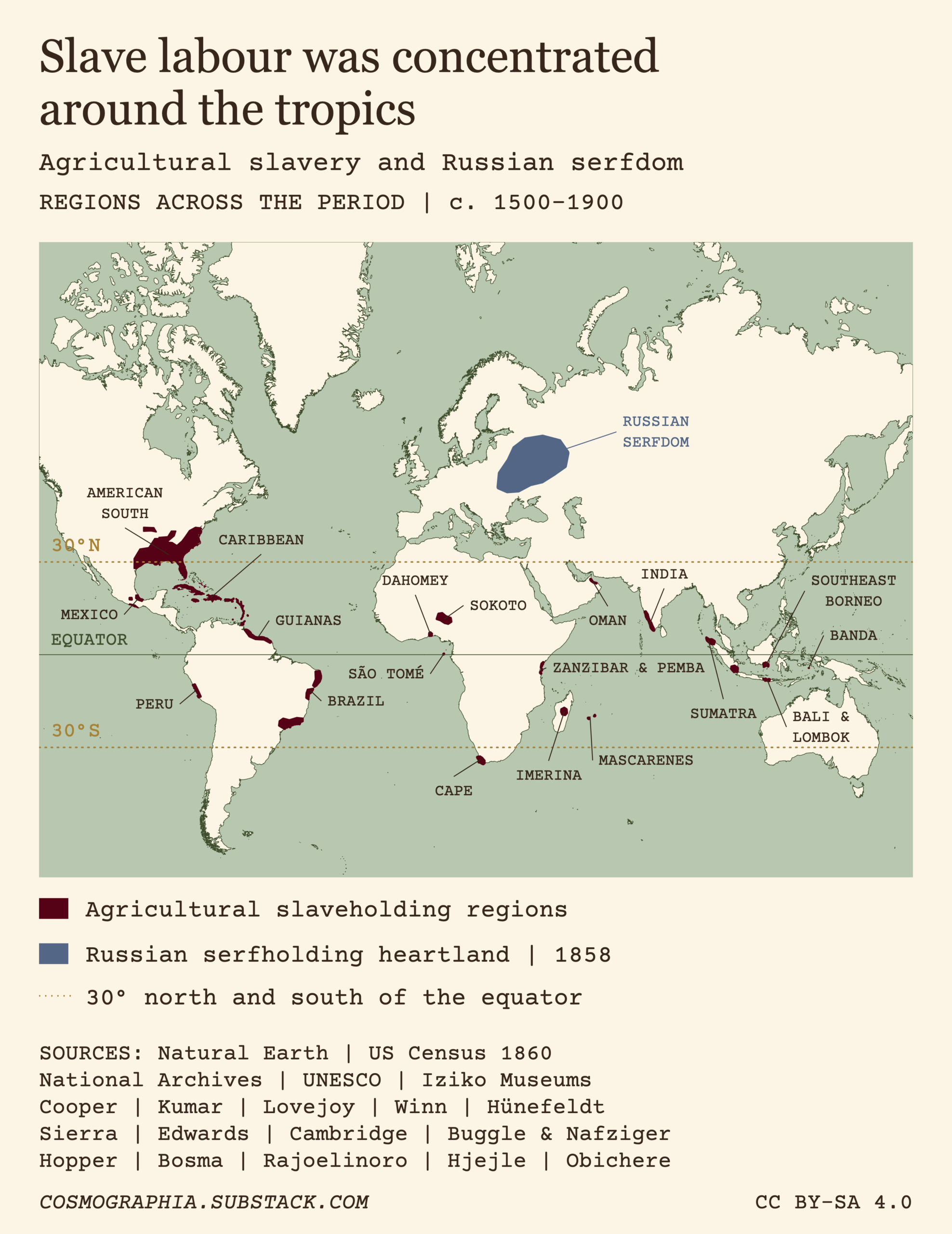
This is not a story unique to Italy. Throughout history, agriculturally productive regions with high rates of disease — the Caribbean, the American South, parts of Arabia — have tended to have high prevalences of slavery. It’s especially pronounced when the crop in question is labour-intensive — cotton, sugar, tobacco, coffee, cocoa, etc.
Since I learned this fact a few years ago, a lot of history clicked into place for me — why the conquistadors were so cruel in the New World; why the American South had slavery but the North did not; why African slaves (with their high resistance to tropical diseases) were so sought after.
However, something about this story bugged me. Why, if tropical disease prevalence was so correlated with high rates of agricultural slavery, did Russia have serfs?
Serfdom is not technically slavery. Unlike chattel slaves, serfs are bound to land rather than a private owner. But the systems could look remarkably similar in practice. Russian serfs could be bought and sold, were denied freedom of movement, needed permission to marry, and were often subject to brutal punishments and terrible working conditions.
Serfdom was not unique to Russia, of course. Mediaeval peasants across feudal Europe were often bound to their landlords and obliged to till their land. But the Russian system developed into something considerably closer to chattel slavery, and endured much longer. Serfdom had largely disappeared from Western Europe by the beginning of the Early Modern Period (c. 1500), while Russian serfdom was then only just beginning to be codified, and Russian serfs weren’t emancipated until 1861.
Russia is famously cold. There are many things that can kill you in its vast expanse, but tropical disease is not one of them. So why then did Russia have a system so closely resembling plantation slavery?
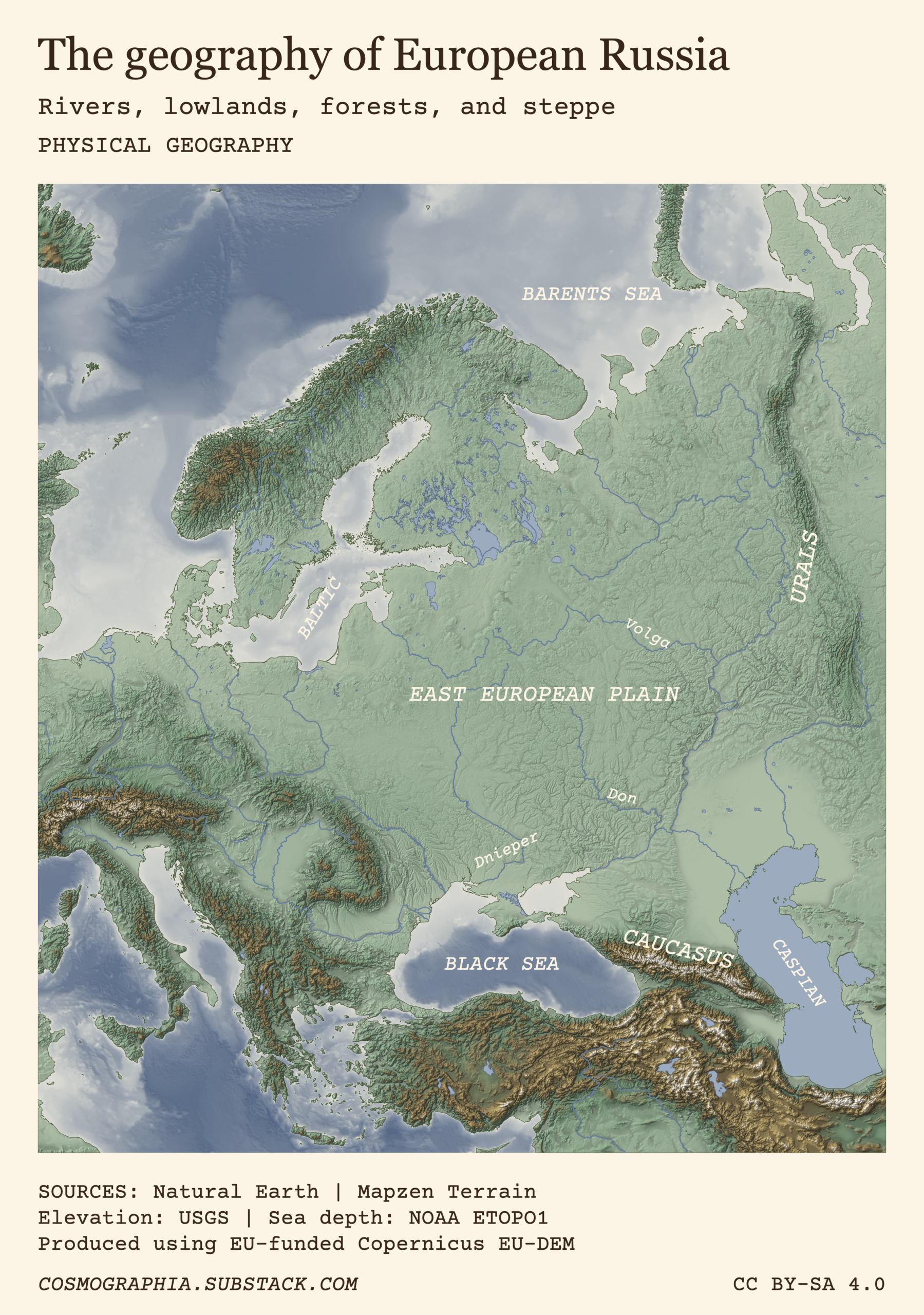
In 1970, the Russian-American economist Evsey Domar tried to answer exactly this question. Drawing on a thesis first proposed by 19th century imperial historian, Vasily Klyuchevsky, he argued that geography was the cause: such was the abundance of farmable land in the vast expanse of an expanding Russia that peasants could up sticks and leave for seemingly infinite new pastures whenever conditions (i.e. pay/rent) were unfavourable. Therefore the landed aristocracy suffered from continual labour shortages, which drove wages up and land rents towards zero. Unable to extract sufficient income from their estates under such conditions, the landowning elites pressed the Tsar to restrict peasant mobility, tie workers to the land, and thus serfdom was born.
At first glance Domar’s explanation seems compelling. Between the late 15th and 17th centuries, Muscovy underwent extraordinary territorial expansion, conquering enormous swathes of land both south and east of the old forest heartlands.