Quotulatiousness

June 5, 2019

WWII Field Kitchen Overview

Filed under: Food, History, Military, USA, WW2 — Tags: , — Nicholas @ 02:00

Tri-State Living History Association
Published on 15 Dec 2018

The GI Field Kitchen during WWII was part of the Company HQ, designed to serve 150-180 men. They intended to serve 2 hot meals per day: Breakfast & Supper, with Dinner (Lunch) as a combat ration. They were equipped with stoves, water heaters and mermite cans to deliver the hot food to the troops.

While sound in theory, often times in reality the kitchens had to make do with less equipment and were forced to adapt to the situations in which they were forced to operate. Despite this, mess staff did their best to keep the fighting man’s body and morale fed.

Filmed at Rockford WWII Days 2018

Special thanks to Nick Yi Photography: https://www.nickyi.com/

Website: https://www.tslha.org/

Print Sources:

TM 10-405 (Apr 24, 1942) – The Army Cook

TM 10-406 (Nov 22, 1943) – Cooking Dehydrated Foods

TM 10-400 (Nov, 1944) – Stoves, Ranges, Ovens, and Cooking Outfits

TM 10-701 (Dec, 1945) – Range, Field M-1937

T/O 7-17 (Sept 1, 1942): http://www.hardscrabblefarm.com/ww2/

Footage Sources:

The Battle of San Pietro – John Huston (1945)

TF 10-1237 – Rations in the Combat Zone Part 1 – Fighting Food

TF 10-1215 – Rations in the Combat Zone Part 2 – Unit Messing

TF 10-2454 – Unit Messing in the Field

TF 10-1202 – Baking in the Field Part 1 – The M1942 Field Baking Unit

MISC 1282 – Quartermaster Activities in the European Theater

Picture Sources: 185th Field Artillery, 34th ID from the H. Smith collection: http://34thinfantry.com/photos.html

QotD: The almost unknown economic good news since 1800

Filed under: Economics, History, Quotations — Tags: , — Nicholas @ 01:00

Ordinary people, and some economists, and even a few economic historians, don’t know it. Hans Rosling, the late, great Swedish professor of public health, emphasized how little most people, even very well-informed people, know about the overwhelmingly good news 1800 to the present, or even 1960 to the present (e.g., falling birth rates, falling infant death rates, rising literacy). He surveyed people, in his various audiences to the number of 20,000. They were embarrassingly less accurate on the whole than monkeys would be throwing darts at the multiple choice possibilities. And the human experts, with ordinary citizens, were always biased in a pessimistic, anti-modern direction. Consider Kenneth Pomeranz, in his fine book with Steven Topik, The World That Trade Created. Pomeranz and Topik tell many interesting and accurate stories about the bad side of creative destruction (which comes from any human progress, not as is often said on the left from “neo-liberalism”). But they never acknowledge the gigantic improvements coming from it for ordinary people. Not once.

Dierdre McCloskey, “How Growth Happens: Liberalism, Innovism, and the Great Enrichment (Preliminary version)” [PDF], 2018-11-29.

June 4, 2019

What do you get for your tax money?

Filed under: Britain, Bureaucracy, Government — Tags: , , — Nicholas @ 05:00

Alex Noble conducts a small experiment:

I suggest we stop thinking about taxes as paying for something useful – this type of thinking paralyses us and causes us to refuse to do that which needs doing. Because our taxes are supposed to pay for it.

We are no longer charitable, because our taxes pay for dole money.
We no longer look after the verge outside our homes, because our taxes are supposed to pay for a council worker with a strimmer.
We don’t repair potholes in our roads, because council workmen are supposed to fill them in.

Just to check that last one, I contacted my local council.

    “I was wondering if I could personally pay a local company to make repairs to the potholes that are causing damage to my car out of my money, and if so, would they be granted permission to close the road while my privately-funded repairs were being carried out?”

And they said…………

    “It would not be possible for you undertake these repairs, and no permission would be given to close the road.”

So I proposed I make a payment to them, to be spent on repairing the road:

    “…could I instead make a voluntary tax contribution on the condition the money is to be spent on these road repairs?”

And they said…

    “…the County Council will not accept payment from members of the public for the provision of highway maintenance over and above that already collected via the Council Tax”

I made one last attempt…

    “I have obtained quotes for the work which are acceptable to me and my neighbours – is there really no way we can as private individuals simply pay for the repairs to our road?”

They responded:

    “…it is not possible to accept any from of funding other than that accepted via the Council Tax and Central Government.”

So I just went out and bought a bag of sand and pounded it into the hole one night. A temporary fix, admittedly.

£5 of sand and five minutes of my time.

No doubt the council are scouring CCTV as we speak in an attempt to bring to justice the criminal that repaired the road.

Railroad Town

Filed under: Cancon, History, Railways — Tags: , , , — Nicholas @ 04:00

NFB
Published on 7 Aug 2017

This short documentary is a delightful trip back to an era in which railroad was king.

Directed by Don Haldane

About the NFB
The National Film Board of Canada produces and distributes documentary films, animation, web documentaries and fiction. Our stories explore the world we live in from a Canadian point of view.

Watch over 3,000 films for free on NFB.ca – http://bit.ly/YThpNFB
Want more? Sign up for our newsletter – http://bit.ly/YTnwNFB

Connect with the NFB online:
Twitter: http://bit.ly/yttwNFB

Missing Isle of Lewis chess piece discovered in Edinburgh

Filed under: Britain, Europe, Gaming, History — Tags: , , , , — Nicholas @ 03:00

It’s always irritating when you lose a chess piece, but this one’s been missing for a long, long time:

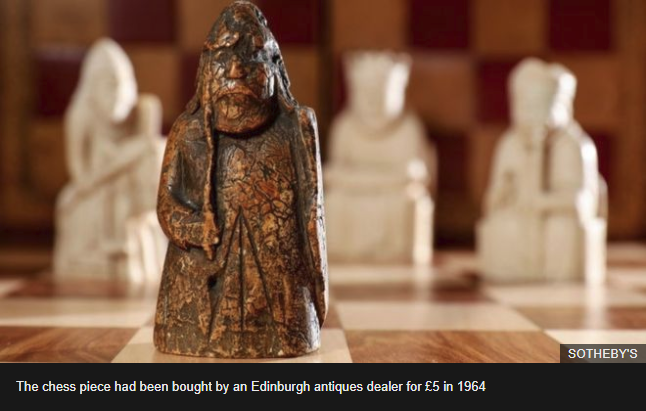
A medieval chess piece that was missing for almost 200 years had been unknowingly kept in a drawer by an Edinburgh family.

They had no idea that the object was one of the long-lost Lewis Chessmen – which could now fetch £1m at auction.

The chessmen were found on the Isle of Lewis in 1831 but the whereabouts of five pieces have remained a mystery.

The Edinburgh family’s grandfather, an antiques dealer, had bought the chess piece for £5 in 1964.

He had no idea of the significance of the 8.8cm piece (3.5in), made from walrus ivory, which he passed down to his family.

They have looked after it for 55 years without realising its importance, before taking it to Sotheby’s auction house in London.

The Lewis Chessmen are among the biggest draws at the British Museum and the National Museum of Scotland in Edinburgh.

They are seen as an “important symbol of European civilisation” and have also seeped into popular culture, inspiring everything from children’s show Noggin The Nog to part of the plot in Harry Potter And The Philosopher’s Stone.

Sotheby’s expert Alexander Kader, who examined the piece for the family, said his “jaw dropped” when he realised what they had in their possession.

H/T to Colby Cosh for the link.

Original Vietnam-Era M60 at the Range

Filed under: History, Military, Technology, USA, Weapons — Tags: , , , — Nicholas @ 02:00

Forgotten Weapons
Published on 27 Apr 2019

http://www.patreon.com/ForgottenWeapons

Cool Forgotten Weapons merch! http://shop.bbtv.com/collections/forg…

The M60 was the first modern American military machine gun, developed from the operating system of the German FG-42 and the feed system of the German MG-42 in the years after World War Two. It has a rather schizophrenic reputation, being loved by many who used it in Vietnam and hated by many who used it later in its service life. The design had some fundamental flaws, but did offer a far more mobile base of fire than the M1919A6 that it replaced. Today, I am going to do a bit of shooting with an original Vietnam pattens M60, which will act as a baseline for future videos covering the various improvements and modernizations of the platform.

Thanks to the Institute of Military Technology (https://www.instmiltech.com) for giving me the opportunity to bring this M60 on camera for you!

Contact:
Forgotten Weapons
PO Box 87647
Tucson, AZ 85754

QotD: Freedom of speech and “balancing” competing rights

Filed under: Australia, Cancon, Liberty, Quotations, USA — Tags: , , , — Nicholas @ 01:00

“They used to pay lip service to the Voltaire argument,” [“I disagree with what you say, but will defend to the death your right to say it”] says Steyn, “but now they say that every other right trumps freedom of speech. The rights of identity groups take precedence. Since there is no document in the British Commonwealth to support free-speech absolutism, as you have in the United States, what’s happened in our time is that there is a view of competing rights. Section 13 in Canada. Section 18 in Australia. Human rights commissions everywhere. And it’s all done in the name of ‘striking a balance’. The minute you talk about striking a balance, you are on the wrong side of the line, because that cure is worse than the disease. We have to take chances with repellent and repulsive speech in order to retain free speech.

“And actually it’s no better in the United States. On the one hand you have the absence of a monarchy and free-speech absolutism, but on the other hand you prostrate yourselves before judges. I’m in the fifth year of a lawsuit that started with a 140-word blog post — there’s not much of a First Amendment when that happens. And then, on your college campuses, you have the debate about ‘acceptable’ and ‘safe’ speech. You have a tiny little Canada on each campus, with the same sort of shrunken, shrivelled public discussion. ‘Safe speech’ is a road to hell. Their goal is the abolition of hate — the abolition of a human emotion. They want everyone to have this glassy-eyed look, celebrating diversity. And they don’t recognise their own totalitarianism.”

Mark Steyn, interviewed by John Bloom, “Mark Steyn, Cole Porter and Free Speech”, Quadrant, 2017-05-11.

June 3, 2019

The “Miss India” controversy

Filed under: History, India, Media — Tags: , , , — Nicholas @ 05:00

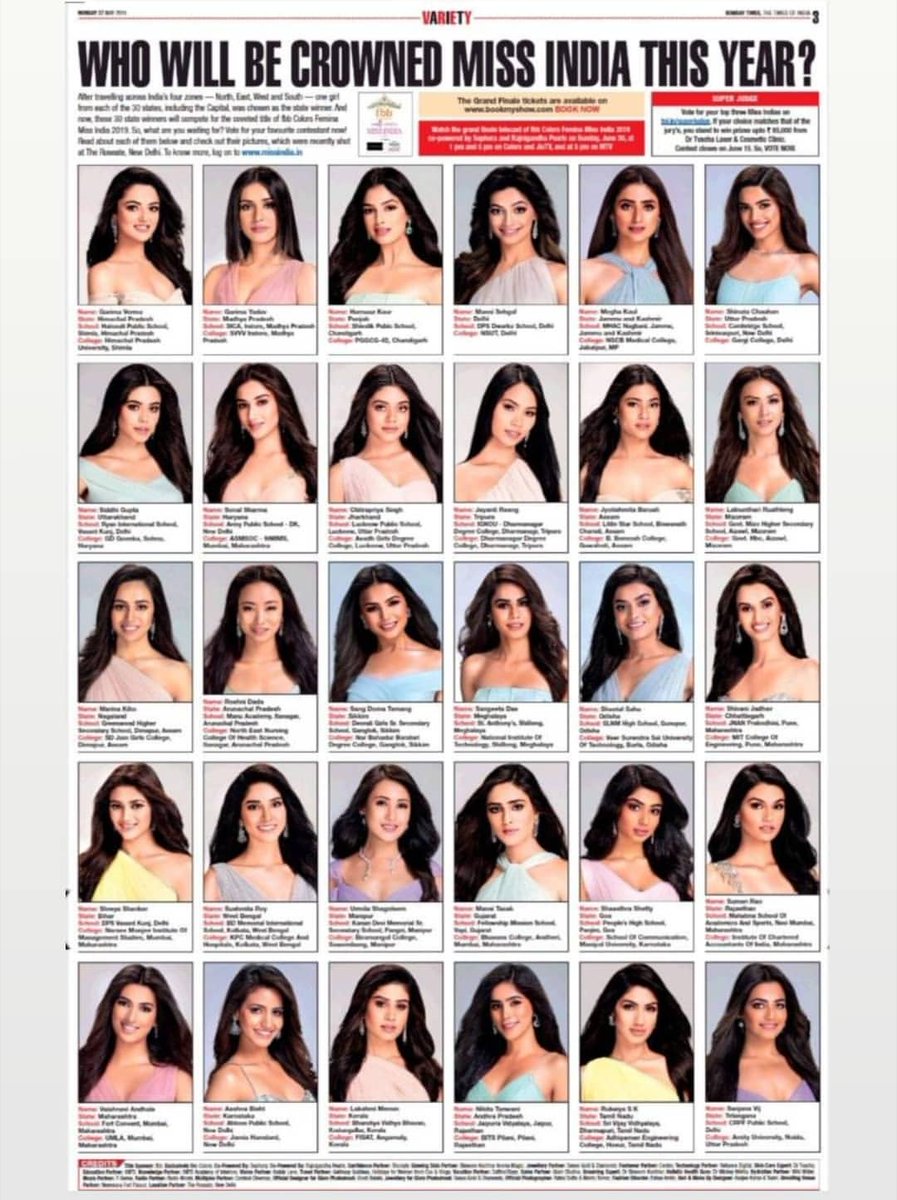
The Times of India published an image of the Miss India competition finalists that drew heavy condemnation on social media:

Tim Worstall explains at least some of the reasons why these young women don’t seem to resemble the majority of Indians:

To start with a question – doesn’t anyone read Jane Austen any more? For that is all that is needed to understand why all the finalists in this year’s Miss India contest seem to have the same rather pale and white complexion. Certainly, rather paler and whiter than the general run of the mill complexion seen across India.

We can also offer a Marxist interpretation – it’s a class thing, innit?

[…]

Yes, India does have that caste issue, it is true that higher castes are generally associated with lighter skins colours, lower with darker. There are even those who would insist that the caste system exists in order to maintain that dominance of the fairer skinned over the darker, something that has worked well in doing so for millennia.

And yet, Jane Austen. Apologies, the various heroines blur into a montage of Emma Thompson and Keira Knightley for me but then that’s just an expression of my masculinity, not bothering with chick flicks. But there is a scene where the sisters are fussing over their bonnets as they go out for a walk. Be careful – Lizzie? – or you might get freckles and then what man would want you? As one blessed with such melanin enhancement myself, finding it most attractive in others, why this obsession? Because a porcelain complexion was a signifier of social status.

Not because of the racial obsessions of the times – we are talking of an era when a thoroughly dark skin could make you a chattel slave, a white one not. But because a porcelain white skin was a signifier of social status therefore a porcelain white skin was a sign of social status.

70 to 80 percent of the population worked hard, outside. That meant being tanned. Only the rich did not need to do so. Thus only the rich were that pasty white which is the fate of the English gene pool when consistently out of the Sun. White was a symbol of social status not because it was white but because it meant “not farm labour”.

Of course, in the English and later European context, that dynamic started to change during the Industrial Revolution, as more and more “working class” work was done indoors and pale skin slowly declined as an indicator of wealth and privilege and instead tanned skin assumed that role (only the wealthy could waste time being outdoors, in the sun).

So, what will happen in India? Presently the country is what, still 50% of the people labouring in the fields? Something we know is declining as a portion and we expect to get to something like the English situation in a few decades, no? 6 to 8% compound GDP growth rates cause that sort of thing. 98% of all will be working under fluorescent strip lights, not under the Sun. Having both the leisure and the money to gain a tan will be a marker of social status and thus will be desired.

As to when this happens the switch really didn’t take that much time in England. Certainly in the 1930s that paleness was still highly desired. By the 1960s it was changing. Today tanning lotions sell in vast volumes, skin whiteners to the indigene English not a single drop.

When will we know the change is happening in India? It’ll not be airbrushed and photoshopped pictures of Miss India contestants that are that first marker. The day someone opens a tanning salon in an Indian urban centre and doesn’t immediately go bust will be that signifier that the great change is under way.

The Hare of Inaba – Japanese Myth – Extra Mythology

Filed under: History, Japan — Tags: — Nicholas @ 04:00

Extra Credits
Published on 1 Jun 2019

Join the Patreon community! http://bit.ly/EMPatreon

A small white hare stood alone on the Isle of Oki, yearning to cross the deep waters to Japan. He was a clever hare — crafty, if not always wise — and he had a plan.

Thumbnail image for social media:

The state of US academia in juxtaposed tweets

Filed under: Bureaucracy, Economics, Education, USA — Tags: , , — Nicholas @ 03:00

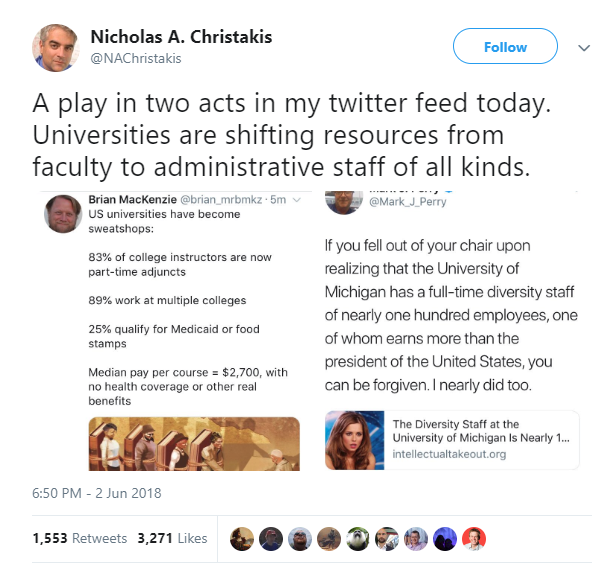
American universities have problems, but the solutions they choose do not seem to be addressing those problems (screencapped, in case the tweet doesn’t load correctly):

Rant: music lessons should be FUN

Filed under: Education, Media — Tags: , , — Nicholas @ 02:00

Lindybeige
Published on 30 Apr 2019

Thanks to several very bad music teachers, I do not play an instrument. Somehow they managed to annihilate all the potential fun.

Support me on Patreon: https://www.patreon.com/Lindybeige

Lindybeige: a channel of archaeology, ancient and medieval warfare, rants, swing dance, travelogues, evolution, and whatever else occurs to me to make.

▼ Follow me…

Twitter: https://twitter.com/Lindybeige I may have some drivel to contribute to the Twittersphere, plus you get notice of uploads.

website: http://www.LloydianAspects.co.uk

Image for social media thumbnail:

QotD: The roots of Italian Fascism

Filed under: Europe, History, Italy, Politics, Quotations, WW1 — Tags: , , , , — Nicholas @ 01:00

Colourized portrait of Italian Fascist leader Benito Mussolini in 1940.
Colourization by Roger Viollet via Wikimedia Commons.

Italian Fascism … originated as a kind of live-action role-playing game for disgruntled Italian WWI vets led by a charismatic war hero, aviator, and poet named Gabriele D’Annunzio. Compared to what it evolved into, early Italian fascism had a rather charming opera-bouffe quality about it – theoretical ideas that were incoherent to the point of surrealism, lots of prancing around in invented uniforms, and dosing of opponents with castor oil. The history of D’Annunzio’s Fascist microstate of Fiume makes amusing reading.

Then came Benito Mussolini, a man looking for a vehicle.

Mussolini was a revolutionary Socialist organizer influenced by the theories of Georges Sorel, who was responding to one of the early failures of Marxism. In Marxian “scientific socialism”, universal revolution was a process that would follow mechanically from the capitalist immiseration of the proletariat. But by the second decade of the new century it was becoming clear that most national proletariats were unwilling to play their appointed role in the theory and indeed tended to be among the most patriotic and nationalist elements of their societies. Class warfare as the engine of international socialism had failed, creating a doctrinal crisis in communist/socialist circles.

Sorel responded by writing a new theory of political motivation he called “irrationalism” which proposed that instead of fighting popular sentiments like patriotism and nationalist mythology, socialists and communists should embrace them as tools to build and perfect socialism. Mussolini was persuaded, broke with the Socialist Party, and went looking for a vehicle for a Sorelian revolution. He found it in D’Annunzio’s Fascists and, swiftly shunting D’Annunzio aside, became their leader.

I’ve covered this history in detail because it explodes one of the prevailing myths about Fascism – that it arose out of some fundamental opposition to Communism. In fact this was never true; Fascism was a Marxist heresy from the day Mussolini seized it, differing from Marxism not mainly in its aims but in the means by which they were to be achieved.

The defining doctrine of Fascism once D’Annunzio was out of the way was this quote by Mussolini: “Everything for the state, nothing outside the state, nothing against the state.” (There are a few variant translations from the original Italian.) Building directly on Leninist political economics, Benito Mussolini wrote a theoretical justification of the totalitarian state which paralleled Joseph Stalin’s less theorized but brutally-executed totalitarianization of the Soviet Union at around the same time.

The Fascist theory was of a unitary, totalizing state ruled by a leader acting as the embodiment of the will of the nation. No power centers in opposition to the embodied will can be tolerated; church, family, education, and civic institutions must all become organs of that will.

Eric S. Raymond, “Spotting the wild Fascist”, Armed and Dangerous, 2019-04-30.

June 2, 2019

History of England – Fire and Swords – Extra History – #2

Filed under: Britain, France, History, Military, Weapons — Tags: , , — Nicholas @ 06:00

Extra Credits
Published on 1 Jun 2019

On the 26th of August,1346, Philip’s army drew near the English force. The French were strung out for miles. Phillip’s best commanders advised caution: put on those comfy jim-jams the Queen gave you last Christmas, don the royal slippers, get a goodnight’s snooze, and let everyone catch up, then drown the English in a river of their own blood after a light breakfast. But Phillip looked upon the current puny size of the English army, and ordered the attack anyway…

Thanks again to David Crowther for writing AND narrating this series! https://thehistoryofengland.co.uk/pod…
Join us on Patreon! http://bit.ly/EHPatreon

Experiment 2 for social media thumbnails:

Andrew Heaton defends Basil Fawlty John Cleese

Filed under: Britain, Humour, Media — Tags: , , , — Nicholas @ 05:00

In his latest newsletter (subscribe here), Andrew Heaton takes up the cudgels to defend John Cleese against accusations of racism, sexism, white supremacy, homophobia, transphobia, Islamophobia, etc., etc. and suggests that the answer is that he’s “just old”:

First, “Some years ago I opined that London was not really an English city anymore.” Well, he’s right. London is geographically English, but other than its physical proximity to Surrey, it’s not English — it’s global. Its last census reports that 36.7% of its denizens are foreign-born. About 45% of the people who live there are White British (Welsh, Irish, English, Scottish). Which is to say, less than half of London is English [a lot less than half — the Welsh, Irish and “porridge wogs” don’t appreciate being called “English”, nearly as much as Canadians don’t like being called “Americans”]. The rest are a mélange of Europeans, non-Europeans, first and second generation immigrants, Klingons, Vulcans, Wookis, and folks from elsewhere in the Commonwealth and/or Narnia.

It’s a global city, like New York. It is richly diverse and cosmopolitan, which is a strength and draw to millions of people who live there. However I will argue that it’s difficult to be ethnically diverse and cosmopolitan while simultaneously being homogeneously English. Mutually exclusive, in fact.

Although to be fair, people aren’t mad at Cleese for observing that London isn’t English, they’re mad because he wishes it were. Cleese appears to prefer Englishness over multiculturalism. (Note the distinction between “culture” and “race.” Following the media storm, he tweeted, “… I prefer cultures that do not tolerate female genital mutilation. Will this will be considered racist by all those who hover, eagerly hoping that someone will offend them – on someone else’s behalf, naturally.” [Sic.])

My read on the situation is that Cleese is not racist, he’s old. What I mean by that is: life is always in flux, cities are by nature dynamic, society is fluid. People tend to want things to stay static, and they don’t, and that’s irksome for many, particularly as they grow elderly and nostalgic. I question when London was last really “English,” given that it was the imperial capital of half the globe well before he was born, and no doubt had several pockets of Indians and Jamaicans and Vulcans living there by the time he showed up.

All the same, is John Cleese allowed to prefer English over polyglot? Because I think that’s the root heresy at work here: saying that English culture might be superior to some others, and preferring it to them.

New York City is far, far more diverse and multicultural than, say, Portland, Oregon. Portland is so overwhelmingly white that it’s basically a giant bleach commercial with some craft breweries and street buskers thrown in. Ethnicity aside, can Portlanders prefer their cultural homogeneity over the vastly more polyglot city of Houston? So long as people agree that immigration is positive and we should be neighborly and welcoming to newcomers, I’m disinclined to hound people for their personal preferences.

I don’t know whether or not John Cleese meets that threshold. We know that he favored Brexit. I suspect, based on scattershot Cleese musings, that wants a Britain which is open and welcoming to foreigners, but that he would also like them to become polite, uptight, tea-drinking gardeners once they’ve moved there.

I could be wrong. I don’t know the depths of John Cleese’s heart, and whether or not his pro-Brexit stance comes from hatred of distant bureacurats (good) or dislike of foreigners and immigrants (bad). I suspect most of the people shouting at him on Twitter have no idea either.

Which is my main and final point. Maybe a single isolated tweet isn’t sufficient information to psychically intuit whether someone is a bigot or not? We’re all on the same page here: bigotry is bad. Don’t be a racist. Don’t be a homophobe. But if we’re going to champion the idea that the worst non-criminal thing you can be in our culture is a bigot, then we should also be at least a tad reserved about passing out scarlet letters just because there’s a slow news day and we spot a fun Twitter pile-on to get worked up about.


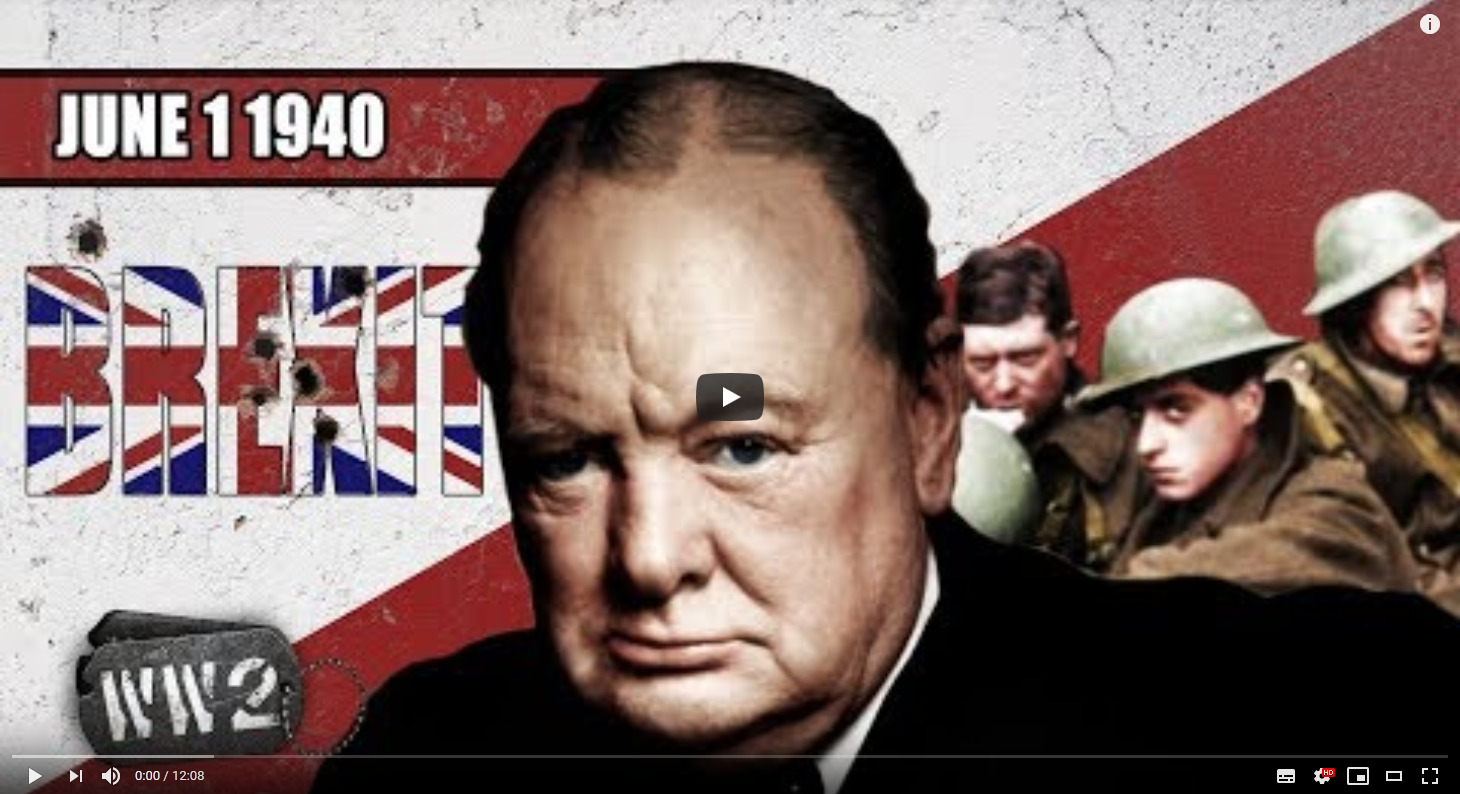
Brexit at Dunkirk – WW2 – 040 – June 1 1940

Filed under: Britain, France, Germany, History, Military, WW2 — Tags: , , , , — Nicholas @ 04:00

World War Two
Published on 1 Jun 2019

When the Germans Panzers move north from Calais, the British Expeditionary Force and France’s soldiers still fighting in Belgium and Northern France are trapped between a numerically superior German army. A big operation codenamed “Dynamo” is set up to evacuate as many as possible from Dunkirk.

Join us on Patreon: https://www.patreon.com/TimeGhostHistory
Or join The TimeGhost Army directly at: https://timeghost.tv

Follow WW2 day by day on Instagram @World_war_two_realtime https://www.instagram.com/world_war_t…
Join our Discord Server: https://discord.gg/D6D2aYN.
Between 2 Wars: https://www.youtube.com/playlist?list…
Source list: http://bit.ly/WW2sources

Written and Hosted by: Indy Neidell
Produced and Directed by: Spartacus Olsson and Astrid Deinhard
Executive Producers: Bodo Rittenauer, Astrid Deinhard, Indy Neidell, Spartacus Olsson
Creative Producer: Joram Appel
Post-Production Director: Wieke Kapteijns
Research by: Indy Neidell
Edited by: Daniel Weiss
Map animations: Eastory

Colorisations by Joram Appel, Spartacus Olsson and Norman Stewart.

Eastory’s channel: https://www.youtube.com/channel/UCEly…
Archive by Screenocean/Reuters https://www.screenocean.com.

Sources:

A TimeGhost chronological documentary produced by OnLion Entertainment GmbH.

From the comments:

World War Two
3 days ago (edited)
As many of you already know, people who support us on Patreon get three days early access to our content – which explains why some comments have been made before the video is published. We are very grateful to those who financially support us, because (as Indy mentions a lot) we really wouldn’t be able to do any of this without your support. This project is fully funded by our community and viewers. Right now, we are still very much working at the max of our capacity. That is partly because we take on new tasks whenever some time frees itself – we just can’t help making more and better content, but also because we still need more financial stability to hire more editors and researchers. Only then will we be able to deliver a steady flow of specials, Out of the Foxholes episodes and War Against Humanity videos at the quality that we would like them to be. You can support us on Patreon https://www.patreon.com/timeghosthistory or on our website http://www.timeghost.tv.

Thanks a lot!!

Cheers,
Joram

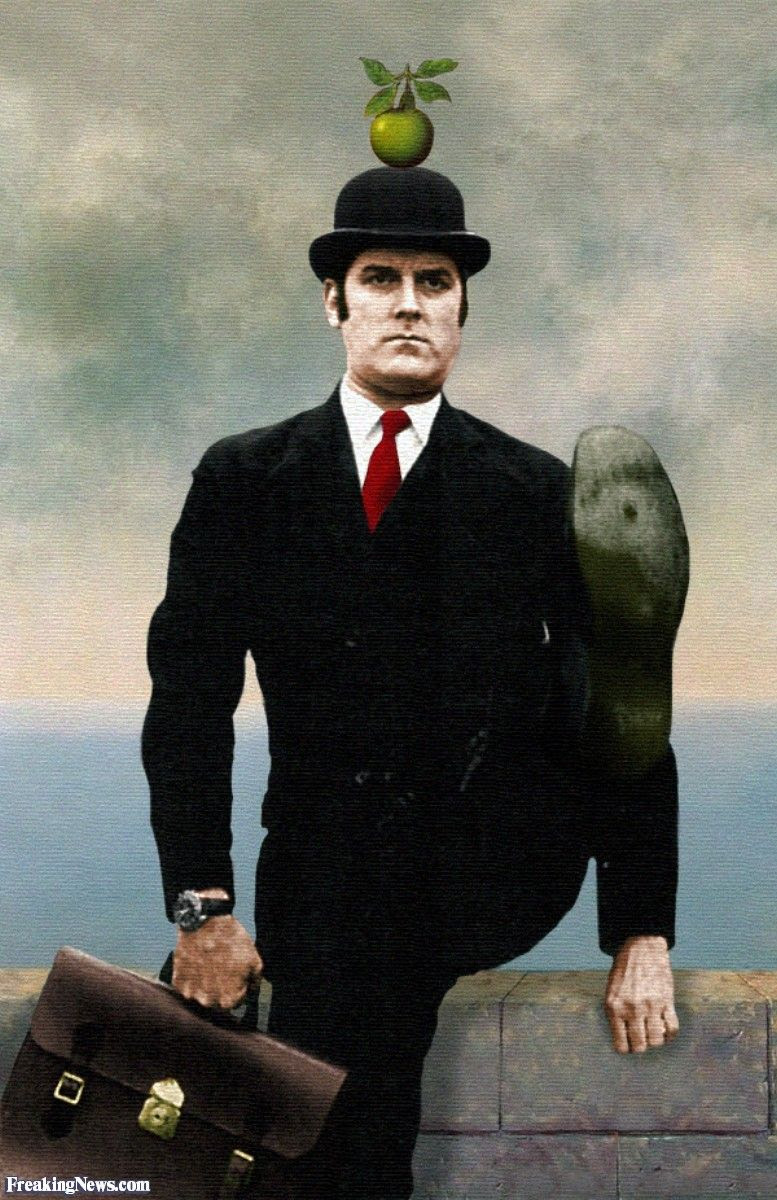
And, experimental image as fodder for social media link thumbnail:

« Newer PostsOlder Posts »

Powered by WordPress