Forgotten Weapons
Published 29 Oct 2020http://www.patreon.com/ForgottenWeapons
https://www.floatplane.com/channel/Fo…
Cool Forgotten Weapons merch! http://shop.bbtv.com/collections/forg…
When the German Tankgewehr was introduced in May 1918, the first 300 or so guns were of a different pattern than the standard production that would follow (and of which about 16,000 would be made). The Kurz model had a barrel about 4 inches shorter than the standard, and was about 2 pounds heavier, because that barrel (although shorter) was much larger in diameter than the standard pattern.
Contact:
Forgotten Weapons
6281 N. Oracle #36270
Tucson, AZ 85740
February 3, 2021
Germany’s WW1 “Kurz” Model Tankgewehr
January 28, 2021
Doughboy Bringback MP-18,I on the Range
Forgotten Weapons
Published 21 Oct 2020http://www.patreon.com/ForgottenWeapons
https://www.floatplane.com/channel/Fo…
Cool Forgotten Weapons merch! http://shop.bbtv.com/collections/forg…
The MP-18,I was most likely the first true submachine gun to see combat use, issued in the final months of World War One to German Sturmtruppen. These guns were originally fitted with 32-round drum magazines form the Artillery Luger, but they were almost all quickly changed to standard System Schmeisser box magazines shortly after the war ended. This is a rare example of one still in its original configuration, as brought home by a US soldier as a war trophy.
The MP-18,I set the standard for basically all future SMGs. It has remarkably gentle to shoot, with a low rate of fire and nice big sights. The drum does throw the balance substantially off to the left side, but it has few other serious problems.
Contact:
Forgotten Weapons
6281 N. Oracle #36270
Tucson, AZ 85740
January 25, 2021
Evolution of the Submachine Gun: Three Distinct Generations
Forgotten Weapons
Published 20 Oct 2020http://www.patreon.com/ForgottenWeapons
https://www.floatplane.com/channel/Fo…
Cool Forgotten Weapons merch! http://shop.bbtv.com/collections/forg…
Submachine guns have gone through a distinct evolution over the past one hundred years. Today we will look at these changes, specifically identifying:
– 1st Generation guns from World War One and through the 1930s
– 2nd Generation guns of World War Two
– 2nd Generation guns after World War Two
– 2nd Generation guns adapted to modern polymer manufacturing
– 3rd Generation guns in the form of rifle actions scaled down to pistol calibers
December 11, 2020
“The March to War” – The Great War Begins – Sabaton History 097 [Official]
Sabaton History
Published 10 Dec 2020August 1914. Europe marched to war. Heavy boots resounded in unison over the pavement, while proud banners flew overhead the soldiers. Their leaders had promised them a short war. In a few weeks, maybe a couple of months, each man would return home as a hero. Cavalrymen in embroidered coats, white gloves, and plumed caps rode ahead, surging towards the front in search of promised glory. But the perceived enthusiasm, eagerly exploited by the propaganda, was not widely shared. Instead, it was the gloomy atmosphere, full of fear and doubt.
Support Sabaton History on Patreon: https://www.patreon.com/sabatonhistory
Listen to “The March to War” on the album Primo Victoria (Re-Armed): https://music.sabaton.net/PrimoVictoria
Listen to Sabaton on Spotify: http://smarturl.it/SabatonSpotify
Official Sabaton Merchandise Shop: http://bit.ly/SabatonOfficialShopHosted by: Indy Neidell
Written by: Markus Linke and Indy Neidell
Directed by: Astrid Deinhard and Wieke Kapteijns
Produced by: Pär Sundström, Astrid Deinhard and Spartacus Olsson
Creative Producer: Maria Kyhle
Executive Producers: Pär Sundström, Joakim Brodén, Tomas Sunmo, Indy Neidell, Astrid Deinhard, and Spartacus Olsson
Community Manager: Maria Kyhle
Post-Production Director: Wieke Kapteijns
Editor: Karolina Dołęga
Sound Editor: Marek Kaminski
Maps by: Eastory – https://www.youtube.com/c/eastory
Archive: Reuters/Screenocean – https://www.screenocean.comColorizations by:
Klimbim
Cassowary ColorizationsSources:
Imperial War Museums: HU 68424, HU 68463, HU 68487, Q 81765, PST 2734, Q 81840B, Q 93521, Q 53472, Q70232, Q 115391
Narodowe Archiwum Cyfrowe
National Archives NARA
National Army Museum
Rijksmuseum
Bundesarchiv
Library of Congress
Picture of Three Emperors courtesy of Anna Moscowriuo
Pictures from French Manufacture of Weapons and Cycles courtesy of mediatheques.saint-etienne.fr
Picture from the Battle of Bulair courtesy of Dupnitsa Municipality, Historical Museum
Pictures of the French departure to War, courtesy of 66emeri from Wikimedia
Picture from the Battle of Mons courtesy of Champagnepapi22 from Wikimedia Commons
Map of Europe courtesy of Altenhof from Wikimedia CommonsAll music by: Sabaton
An OnLion Entertainment GmbH and Raging Beaver Publishing AB co-Production.
© Raging Beaver Publishing AB, 2019 – all rights reserved.
Shooting the Webley-Fosbery Automatic Revolver – Including Safety PSA
Forgotten Weapons
Published 10 Aug 2017Following up yesterday’s look at the history and mechanics of the Webley-Fosbery self-cocking revolvers [posted here], today we are out at the range to do some shooting with one.
In terms of handling, it is a comfortable gun to shoot, albeit with some exaggerated recoil because of the very high bore axis relative to the hand. It has an interesting two-part recoil sensation, because the upper assembly takes quite a long time to return forward into battery.
Most importantly, we discovered that this particular Webley-Fosbery has a worn hammer engagement, which results in the firing pin coming into contact with cartridge primers even when it is in the safety notch. In other words, it can — and will — sometimes fire when the action is closed and without any manipulation of the trigger. This is a condition that could happen to any Fosbery revolver, so owners should handle them with this possibility in mind! This is also a great example of why gun safety rules are redundant — occasionally guns do have mechanical failures, so don’t point them at anything you don’t want to shoot!
Thanks to Mike Carrick of Arms Heritage magazine for providing this Webley-Fosbery for this video! See his regular column here: https://armsheritagemagazine.com
Cool Forgotten Weapons merchandise! http://shop.bbtv.com/collections/forg…
http://www.patreon.com/ForgottenWeapons
If you enjoy Forgotten Weapons, check out its sister channel, InRangeTV! http://www.youtube.com/InRangeTVShow
December 8, 2020
Schmeisser’s MP-18,I – The First True Submachine Gun
Forgotten Weapons
Published 14 Aug 2017When Germany began looking in late 1915 for a new weapon ideally suited for the “last 200 meters” of a combat advance, Hugo Schmeisser’s blowback submachine gun would prove to be the weapon that would set the standard for virtually all submachine guns to come. It was a fully automatic-only weapon with a simple blowback action and a rather slow 400 rpm rate of fire. Although relatively heavy, the only real shortcoming of the MP18,I was its use of 32-round Luger snail drum magazines, which was dictated by the German military. These magazines were unreliable and difficult to load, but they were already in production and were a reasonable logistical answer in a time when material and production shortages were an endemic problem in Germany.
The MP18,I managed to see frontline combat only in the closing few months of World War One (50,000 were initially ordered, 17,677 were produced before the Armistice, and only an estimated 3,000 actually saw frontline combat use). During that time, however, it made a significant impression, easily convincing anyone with an open mind that this new type of weapon would play a major role in future wars.
After the end of the war, the Germany Army was prohibited from using submachine guns, so most of the existing ones (including the example in today’s video) were transferred to police organizations instead.
http://www.patreon.com/ForgottenWeapons
Cool Forgotten Weapons merch! http://shop.bbtv.com/collections/forg…
If you enjoy Forgotten Weapons, check out its sister channel, InRangeTV! http://www.youtube.com/InRangeTVShow
December 6, 2020
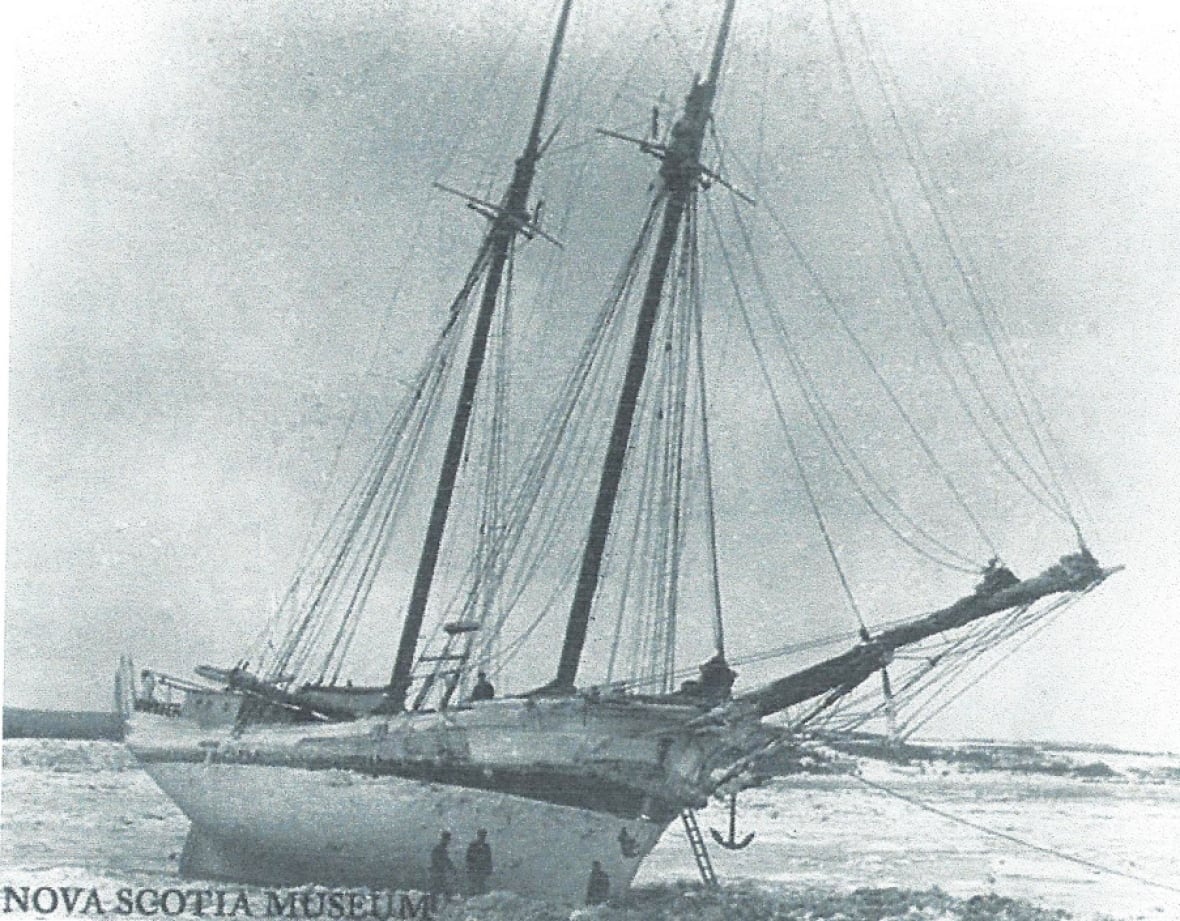
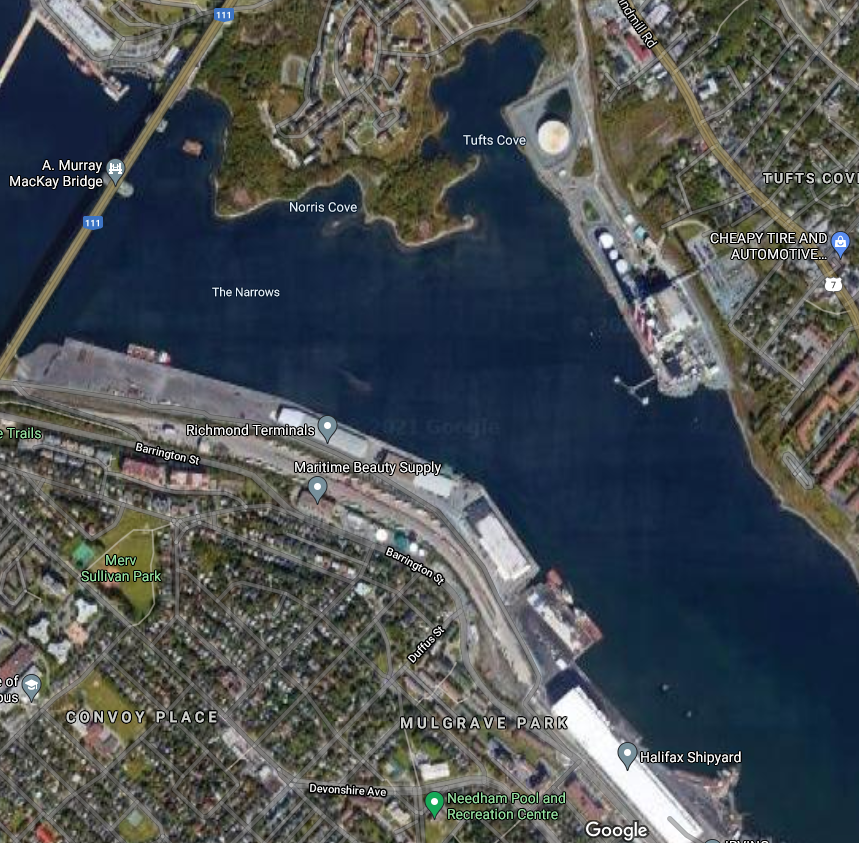
Halifax: Canada’s Great War Casualty
Geographics
Published 14 Jul 2020This video is #sponsored by Squarespace.
Credits:
Host – Simon Whistler
Author – Ben Adelman
Producer – Jennifer Da Silva
Executive Producer – Shell HarrisBusiness inquiries to admin@toptenz.net
If you found this video interesting, you might also want to read my article on the Halifax Explosion here.
December 4, 2020
“The Red Baron Pt. 2” – Kings of the Sky – Sabaton History 096 [Official]
Sabaton History
Published 3 Dec 2020They were the Aces in the sky — proud knights who flew their planes into deadly combat. Loved by the public, feared by their enemies, the victorious pilots of the Great War rose to prominence as gallant heroes. But the personal stories of those celebrated pilots were also memories full of excruciating pain, of terrible loss, and inner struggle. Body and mind of those aces were broken by the constant danger of fighting in the air. Those who survived bore more than a few scars.
Support Sabaton History on Patreon: https://www.patreon.com/sabatonhistory
Listen to “The Red Baron” on the album The Great War: https://music.sabaton.net/TheGreatWar
Watch the Official Lyrics Video of “The Red Baron” here: https://www.youtube.com/watch?v=3PXzg…
Listen to Sabaton on Spotify: http://smarturl.it/SabatonSpotify
Official Sabaton Merchandise Shop: http://bit.ly/SabatonOfficialShopHosted by: Indy Neidell
Written by: Markus Linke and Indy Neidell
Directed by: Astrid Deinhard and Wieke Kapteijns
Produced by: Pär Sundström, Astrid Deinhard and Spartacus Olsson
Creative Producer: Maria Kyhle
Executive Producers: Pär Sundström, Joakim Brodén, Tomas Sunmo, Indy Neidell, Astrid Deinhard, and Spartacus Olsson
Community Manager: Maria Kyhle
Post-Production Director: Wieke Kapteijns
Editor: Karolina Dołęga
Sound Editor: Marek Kamiński
Maps by: Eastory – https://www.youtube.com/c/eastory
Archive: Reuters/Screenocean – https://www.screenocean.comSources:
– National Archives NARA
– Imperial War Museums: EB1911, Q33851, Q33725, Q33875, Q23897, Q 105765, ART 1611, Q 63852, Q 63850, Q 93660, Q 55479, Q 60799, Q 10331, Q 67114, Q 66540,
– Library of Congress
– The Board of Trustees of the Science Museum
– Wellcome Images
– Icons form The Nano Project: iron cross By Souvik Maity, IN ld Plane by LUTFI GANI AL ACHMAD,
– planes of World War 1 courtesy of 11Amanda on Wikimedia CommonsAll music by: Sabaton
An OnLion Entertainment GmbH and Raging Beaver Publishing AB co-Production.
© Raging Beaver Publishing AB, 2019 – all rights reserved.
QotD: In praise of the “Old Contemptibles”
We shall win this war one day, and most of the credit will go, as usual, to those who are in at the finish. But — when we assign the glory and the praise, let us not forget those who stood up to the first rush. The new armies which are pouring across the Channel this month will bring us victory in the end. Let us bare our heads, then, in all reverence, to the memory of those battered, decimated, indomitable legions which saved us from utter extinction at the beginning.
Ian Hay (Major John Hay Beith), The First Hundred Thousand: Being the Unofficial Chronicle of a Unit of “K(1)”, 1916.
December 1, 2020
Pattern 14 MKI W (T) – The Best Sniper Rifle of World War One
Forgotten Weapons
Published 30 Aug 2017When World War One began, the British did not have a formal sniping program, and by 1915 the British found themselves thoroughly outclassed by the Germans in this area. They responded by developing tactics and equipment for sniping, and by mid 1916 they had really outclassed the Germans. However, the mid-war British sniping rifles really left a lot to be desired, even if they were being used effectively in the field. There was no single military optic, instead a wide variety of commercial scopes were rounded up and put into use. The mounts for these scopes were offset to the left side of the rifles to allow for continued use of stripper clips. Clips were arguably not really necessary on these rifles, and the offset scopes led to substantial headaches in use, as they required calculating windage as well as elevation adjustments depending on range.
Through 1918, though, the British developed one of the best sniping rifles of the war, although it would be introduced too late to see virtually any front line service. This new rifle was a Winchester-made Pattern 1914 Enfield with a center-mounted optic, and was designated the P14 MkI W(T). The P14 rifles were more accurate than the SMLE, and the centrally mounted optic made for much simpler shooting. These rifles were deemed to be mechanically capable of 1.5 MOA shooting, with the practical expected group size being 3 MOA.
Three thousand of these P14 snipers’ rifles were assembled and kept in service after the end of the war, but in the mid 1930s a small additional batch of 79 were made for the Irish Free State by BSA. These were all eventually surplussed to the US, and the rifle in this video is one of those late-production guns.
http://www.patreon.com/ForgottenWeapons
Cool Forgotten Weapons merch! http://shop.bbtv.com/collections/forg…
If you enjoy Forgotten Weapons, check out its sister channel, InRangeTV! http://www.youtube.com/InRangeTVShow
November 28, 2020
QotD: Army recruit training
To-day our platoon once marched, in perfect step, for seven complete and giddy paces, before disintegrating into its usual formation — namely, an advance in irregular échelon, by individuals.
Ian Hay (Major John Hay Beith), The First Hundred Thousand: Being the Unofficial Chronicle of a Unit of “K(1)”, 1916.
November 27, 2020
“The Attack of the Dead Men” Pt.2 – Gas! Gas! Gas! – Sabaton History 095 [Official]
Sabaton History
Published 26 Nov 2020On 22. April 1915, a wall of greenish-yellow fog, up to 2m high, was slowly creeping towards the Allied lines on the Ypres salient. A sweetish-chloric smell preceded the horrific effects of the deadly gas. Coughing, spitting, and retching, men were abandoning their trenches, hurrying to the rear, or falling to the ground, clutching their throats. It was the same desperate, gruesome scenery, the Russian soldiers at Osowiec Fortress had to fight through. From then on, a scientific race to counter and protect against those deadly chemicals began.
Support Sabaton History on Patreon: https://www.patreon.com/sabatonhistory
Listen to “Attack of the Dead Men” on the album The Great War: https://music.sabaton.net/TheGreatWar
Watch the Official Lyric Video of “Attack of the Dead Men” here: https://www.youtube.com/watch?v=-AFdw…
Listen to Sabaton on Spotify: http://smarturl.it/SabatonSpotify
Official Sabaton Merchandise Shop: http://bit.ly/SabatonOfficialShopHosted by: Indy Neidell
Written by: Markus Linke and Indy Neidell
Directed by: Astrid Deinhard and Wieke Kapteijns
Produced by: Pär Sundström, Astrid Deinhard and Spartacus Olsson
Creative Producer: Maria Kyhle
Executive Producers: Pär Sundström, Joakim Brodén, Tomas Sunmo, Indy Neidell, Astrid Deinhard, and Spartacus Olsson
Community Manager: Maria Kyhle
Post-Production Director: Wieke Kapteijns
Editor: Karolina Dołęga
Sound Editor: Marek Kamiński
Maps by: Eastory – https://www.youtube.com/c/eastory
Archive: Reuters/Screenocean – https://www.screenocean.comColorizations by:
Adrien Fillon – https://www.instagram.com/adrien.colo…Sources:
– National Archives NARA
– Library of Congress
– Bundesarchiv
– Imperial War Museums: IWM Q 56546, HU67224, Q 60344
– Canadian War Museum
– Auckland Museum
– Wellcome Images
– Icons form The Noun Project: Arrow by 4B Icons, gas bomb by Mete Eraydın, Gas by Andrejs Kirma, Skull by Muhamad Ulum, smoke grenade by 1516All music by: Sabaton
An OnLion Entertainment GmbH and Raging Beaver Publishing AB co-Production.
© Raging Beaver Publishing AB, 2019 – all rights reserved.
November 16, 2020
Remembrance Special – The Pursuit of the Light Cruisers
Historigraph
Published 15 Nov 2020Released on Volkstrauertag and to mark all of the various Remembrance Days around the world, this is the story of the pursuit of the light cruisers and a tribute to those who lost their lives.
Get the full story of the Battle of the Falkland Islands here: https://youtu.be/cBCCnqiVOUk
This video is unmonetised for me due to the music I included at the end (any ads you see are for copyright holders). If you wanted to support me to make more videos without relying on ads or sponsorship, I’d appreciate it if you checked out my Patreon https://www.patreon.com/historigraph
Buy Historigraph Posters here! teespring.com/stores/historigraph
#BattleOfTheFalklandIslands #Historigraph #CuriosityStream
► Twitch: https://www.twitch.tv/addaway
► Twitter: https://twitter.com/historigraph
► Instagram: https://www.instagram.com/historigraph
US M1915 Bolo Bayonet – Dual Purpose Gear That Worked!
Forgotten Weapons
Published 27 Nov 2017The M1915 bolo bayonet was originally the brainchild of US Army Captain Hugh D. Wise, Quartermaster with the 9th Infantry in the Philippines. In 1902, he recommended the implement in a letter to his superior officers, noting that a bolo style of bayonet (ie, one with a widened machete-like blade) would have several advantages over the standard knife bayonet then being issued with the Krag-Jorgenson rifles the US Army was using. Specifically, the wider bayonet would be easier to recover after a thrust (he noted several instances of troopers being killed while trying to extricate their bayonets from enemies) and also (and more significantly) make an excellent and necessary bushwhacking tool in the jungle environment of the Philippines.
Wise’s idea was taken with interest and Springfield produced a series of experimental bolo bayonets, but the project ended there as the 1903 Springfield was adopted with a rod bayonet instead of a blade. Of course, the rod bayonet would be shortlived, and the blade bayonet would come back. The bolo bayonet ideas resurfaced in 1911 when a commission was formed to look into special equipment for the Philippine Scouts. After another series of experimental designs, the M1915 Bolo bayonet was formally adopted on May 22, 1915 and an order was placed for 6,000 of them to be made at Springfield Armory.
Delivery of these bayonets took place in 1915 and 1916, and they proved to be extremely popular tools with the soldiers in the Philippines. They would remain in service on the islands until World War Two, serving at last as a replacement for the M1913 cavalry saber for the 26th Cavalry.
http://www.patreon.com/ForgottenWeapons
Cool Forgotten Weapons merch! http://shop.bbtv.com/collections/forg…
If you enjoy Forgotten Weapons, check out its sister channel, InRangeTV! http://www.youtube.com/InRangeTVShow
November 15, 2020
Italian Proto-Fascists Occupy Fiume – The Adriatic Question I THE GREAT WAR 1920
The Great War
Published 14 Nov 2020Sign up for Curiosity Stream for 40% OFF and get Nebula bundled in: https://curiositystream.com/thegreatwar
Italy was promised a lot of territorial gains for entering the First World War on the Allied side. But in 1919, the map of Europe had changed and the Allies were less interested in only fulfilling Italian territorial ambitions. Push came to shove when Italian Fascists around nationalist Gabriele D’Annunzio occupied the coastal city of Fiume in the newly created Yugoslavia.
» SUPPORT THE CHANNEL
Patreon: https://www.patreon.com/thegreatwar» OUR PODCAST
https://realtimehistory.net/podcast – interviews with World War 1 historians and background info for the show.» BUY OUR SOURCES IN OUR AMAZON STORES
https://realtimehistory.net/amazon *
*Buying via this link supports The Great War (Affiliate-Link)» SOURCES
Albrecht-Carrié, René, Italy at the Paris Peace Conference, (Hamden, CT: Archon Books, 1966)Burgwyn, H. James, Italian Foreign Policy in the Interwar Period, 1918-1940, (Westport, CT: Praeger, 1997)
Cattaruzza, Marina, “The Making and Remaking of a Boundary – the Redrafting of the Eastern Border of Italy after the two World Wars”, Journal of Modern European History, Vol. 9, No. 1, Space, Borders, Maps (2011)
Kitchen, Martin, Europe Between the Wars: A Political History, (Harlow: Longman Group, 1988)
Lederer, Ivo J., Yugoslavia at the Paris Peace Conference: A Study in Frontiermaking, (New Haven, CT: Yale University Press, 1963)
Bozanich, Stevan, “Post-war Turmoil and Violence (Yugoslavia)”, in: 1914-1918-online. International Encyclopedia of the First World War, ed. by Ute Daniel, Peter Gatrell, Oliver Janz, Heather Jones, Jennifer Keene, Alan Kramer, and Bill Nasson, issued by Freie Universität Berlin, Berlin 2019-11-20.
Innerhofer, Ian, “Post-war Societies (South East Europe)”, in: 1914-1918-online. International Encyclopedia of the First World War, ed. by Ute Daniel, Peter Gatrell, Oliver Janz, Heather Jones, Jennifer Keene, Alan Kramer, and Bill Nasson, issued by Freie Universität Berlin, Berlin 2014-10-08.
Baravelli, Andrea, “Post-war Societies (Italy)”, in: 1914-1918-online. International Encyclopedia of the First World War, ed. by Ute Daniel, Peter Gatrell, Oliver Janz, Heather Jones, Jennifer Keene, Alan Kramer, and Bill Nasson, issued by Freie Universität Berlin, Berlin 2015-09-03.
Lynn Williams’ (Pluto Press, 1975)
Hans Ulrich, “I redentori della vittoria: On Fiume’s Place in the Genealogy of Fascism”, Journal of Contemporary History Vol. 31, No. 2, Special Issue: The Aesthetics of Fascism (Apr., 1996))
» MORE THE GREAT WAR
Website: https://realtimehistory.net
Instagram: https://instagram.com/the_great_war
Twitter: https://twitter.com/WW1_Series
Reddit: https://reddit.com/r/TheGreatWarChannel»CREDITS
Presented by: Jesse Alexander
Written by: Jesse Alexander
Director: Toni Steller & Florian Wittig
Director of Photography: Toni Steller
Sound: Toni Steller
Editing: Toni Steller
Motion Design: Philipp Appelt
Mixing, Mastering & Sound Design: http://above-zero.com
Maps: Daniel Kogosov (https://www.patreon.com/Zalezsky)
Research by: Jesse Alexander
Fact checking: Florian WittigChannel Design: Alexander Clark
Original Logo: David van StepholdContains licensed video and photos by getty images
Icons made by Freepik from www.flaticon.com
All rights reserved – Real Time History GmbH 2020