
Swift Badminton
Published 27 Sept 2019This video will give you 7 tips and tricks to become a worse badminton player.
(more…)
September 9, 2023
7 Ways to Suck at Badminton
Comments Off on 7 Ways to Suck at Badminton
August 31, 2023
Why New York Destroyed 3 Iconic Landmarks | Architectural Digest
Architectural Digest
Published 6 Apr 2023Michael Wyetzner of Michielli + Wyetzner Architects returns to AD, this time to look at the history and creation of three New York City landmarks that have since been demolished — but are far from forgotten. From the once (and future?) majesty of Penn Station to the New York Herald building and the original 19th-century Madison Square Garden, Michael gives expert insight into these three historic architectural landmarks, why they were laid to ruin, and what came to replace them.
(more…)
Comments Off on Why New York Destroyed 3 Iconic Landmarks | Architectural Digest
August 28, 2023
The Last Chance | Dorktown
Secret Base
Published 15 Aug 2023The Minnesota Vikings of the 1970s were among the greatest football teams ever assembled. Entering 1974, Bud Grant’s teams had reached two Super Bowls, but lost them both. The good times don’t last forever. It’s time to cash in.
Written and directed by Jon Bois
Written and produced by Alex Rubenstein
Rights specialist Lindley Sico
Secret Base executive producers Will Buikema and Jon BoisKnown goofs:
• At about the 42-minute mark, Jon says Fran Tarkenton held a 45-8-1 record as starter between 1973 and 1976. His record across these years was actually 43-10-1.
(more…)
Comments Off on The Last Chance | Dorktown
August 21, 2023
What the parades are for | Dorktown
Secret Base
Published 8 Aug 2023This is the second episode of our seven-part docuseries, The History Of The Minnesota Vikings.
For the Vikings, the 1970s were so full of comedy, drama, and doomed snowmobiling expeditions that we had to split this decade into two episodes. And we STILL had to leave stuff out! What a team.
(more…)
Comments Off on What the parades are for | Dorktown
August 14, 2023
56 pounds of beer | Dorktown
Secret Base
Published 1 Aug 2023In the early years, the Minnesota Vikings were like many new franchises of the time: dysfunctional, bad at football, and often intoxicated. And then a former NBA champion came back home to Minnesota and changed the identity of this franchise forever.
This is the first episode of Dorktown’s seven-part docuseries, The History of the Minnesota Vikings.
(more…)
Comments Off on 56 pounds of beer | Dorktown
July 19, 2023
Win A Point, Add A Layer Of Clothing | Badminton Insight Singles Match
Badminton Insight
Published 10 Apr 2022A Badminton singles match BUT each time someone wins a point we have to add a layer of clothing!
(more…)
Comments Off on Win A Point, Add A Layer Of Clothing | Badminton Insight Singles Match
July 7, 2023
This would be a Super Bowl halftime show I’d absolutely watch
Christopher Gates makes the case for Weird Al Yankovic being the star of the next Super Bowl halftime show:

“Weird” Al has pretty much universal appeal
With most of the acts that could be selected for the Super Bowl halftime show, a sizeable portion of your potential audience isn’t going to like them. Whether it leans more towards rap/hip hop music or pop music or whatever the case may be, you’re going to have plenty of people that aren’t into it.
Since “Weird” Al’s work spans genres and time frames, you don’t have to worry about that. There’s almost universal appeal in having someone with this sort of talent perform on the biggest possible stage, because you could have a show that hits pretty much all of the different types of music that would appeal to anyone else.
Also, to put it bluntly: Nobody hates “Weird” Al. They might not be the biggest fans of his style of music, necessarily, but there’s nobody that really has an outright hatred or even a dislike for the guy. He’s apparently one of the nicest people in the entire entertainment industry, so he’s got that going for him … which is nice.
Think of the cameo potential
One of the best possible cases that you could make for something like this is the case for cameo appearances, which have become a bit of a thing at Super Bowl halftime shows in recent years. After all, “Weird” Al has been at this for four decades. Literally anyone that he’s parodied over the years that’s still with us is fair game for a potential cameo appearance during something like this.
All those years ago, “Weird” Al started out doing parodies of acts like Madonna and Huey Lewis and the News, and on his last studio album did send-ups of Imagine Dragons, Lorde, and Iggy Azalea. You don’t think you could sell some of those folks on the idea of sharing the biggest possible stage in the world with him for one night? I certainly think that you could. There’s really a lot of potential there, to be honest.
Comments Off on This would be a Super Bowl halftime show I’d absolutely watch
June 5, 2023
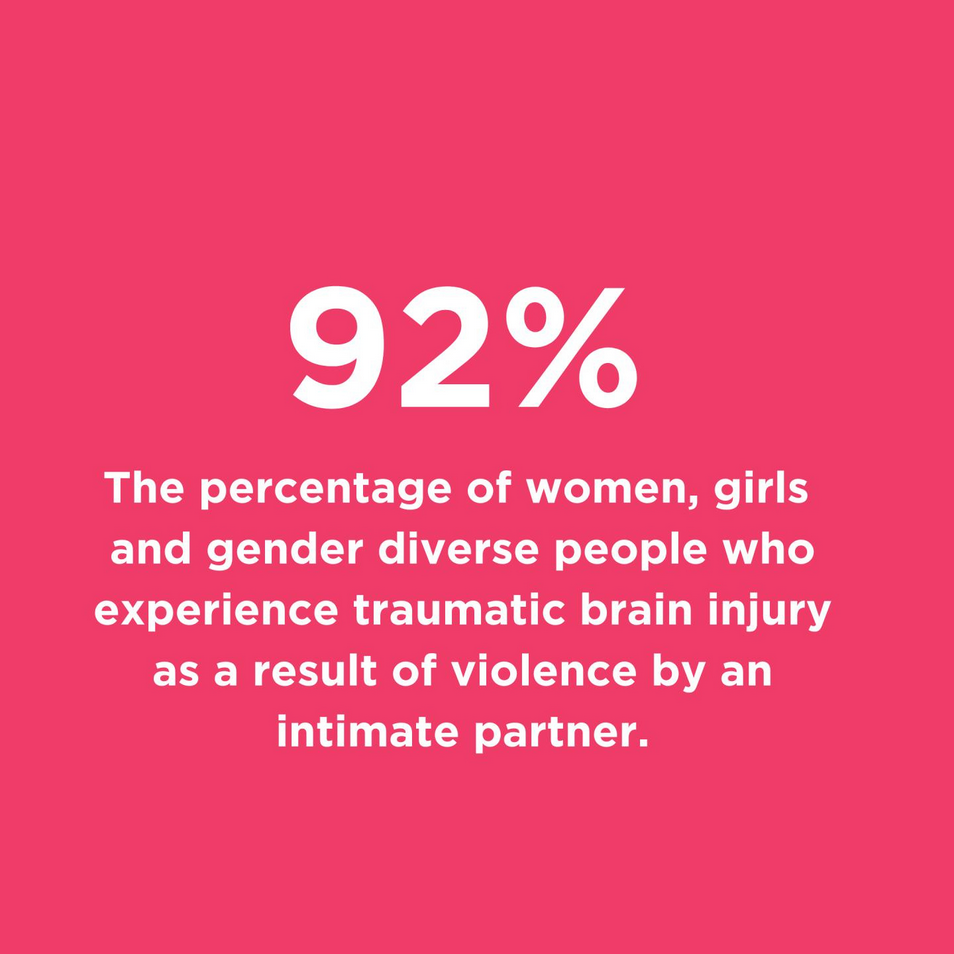
Claim: 92% of Canadian women will suffer traumatic brain injury from an intimate partner
Did that headline grab your attention? Certainly the graphic from which it was drawn grabbed my attention. But, as Janice Fiamengo explains, it’s a vast exaggeration in pursuit of a political goal:
Linden called on men and boys to educate themselves on violence and to call out one another for perpetrating or dismissing abusive behavior of any kind.
It’s not hard to understand why National Hockey League personality Trevor Linden, former captain of the Vancouver Canucks, has lent his star power to a YWCA campaign about women’s injuries from domestic violence. Hockey players have long been targets of feminist accusation for their association with a sport that allegedly promotes misogyny, racism, and violence against women. Even a beloved icon of the sport must continually strive to prove how much he despises his fellow men.
In this case, the campaign of vilification targets the purported frequency with which female victims of intimate partner violence (IPV) experience traumatic brain injury, and demands “increased support for diagnosis and treatment”. To do so, the campaign asserts some of the most dramatic numbers I’ve ever seen.
No stranger to concussions, Linden is said in a CBC report to have been “stunned” to learn that female victims are injured at a much higher rate than professional hockey players. “For every concussion incurred by an NHL player,” the report states, “approximately 7,000 women and girls in Canada are concussed because of intimate partner and domestic violence, according to a new estimate from YWCA Metro Vancouver and researchers at the University of British Columbia.”
Linden’s shock is understandable. We’ve all seen the hits meted out to professional hockey players. The thought of thousands upon thousands of Canadian women every year being treated in like manner — and suffering the consequences in traumatic brain injury (TBI) — is disturbing even to those of us who have learned to be skeptical of feminist research and inflammatory reports by Canada’s state-funded news agency.
The key paragraph in the story that justifies the staggering numbers tells us that
Approximately four in 10 women and girls in Canada will face violence from a current or former partner, according to a 2021 report by Statistics Canada, or about 290,000 every year. As many as 92 per cent of them will suffer a traumatic brain injury due to blows to their head or strangulation.
That sounds as if more than 3 in 10 women and girls in Canada (92% of 4 in 10) will at some point in their lives suffer brain injury from battering.
The statement might just qualify as the most outstanding exaggeration of violence against women ever made by a feminist organization. The good news for women and girls in Canada — and the bad news for the ever-declining credibility of feminist advocates and reporters — is that the numbers being promoted are flat-out false. They’re false even if we take note of the operative word “approximately” in the above statement. They’re false even if we accept the extraordinarily elastic definition of violence employed by the feminists who work for Statistics Canada. And they’re false even if we accept that a small study of black female victims of extreme violence can be generalized to all girls and women in Canada.
The numbers are false, ultimately, because the literature review from which the 92% number was extracted does not actually claim that 92 per cent of all IPV victims experience brain injury. A fundamental misreading and misrepresentation of data is at the heart of the campaign’s extraordinary claim.
Let’s trace, as much as possible, how the numbers have been manipulated and fudged. At the center of the hoopla is a report from Statistics Canada (“Intimate partner violence in Canada, 2018: An overview”) based on a large survey conducted by online questionnaire and telephone interview. This government-funded survey sought to measure the experience and frequency of intimate-partner violence as reported by victims — both men and women — over the previous year and over the lifetime of each victim. The sample size was large (43,296) but the response rate was low, at 43.1% overall in the Canadian provinces. (It is worth noting that response rates lower than 60% are considered by some researchers to produce unreliable and invalid results.)
Comments Off on Claim: 92% of Canadian women will suffer traumatic brain injury from an intimate partner
May 22, 2023
QotD: Gamesmanship in golf
One of the nicest things about the game of golf is that it’s a gentle one — no bodies crashing against each other, no feats of strength, no slam-dunks or soaring home runs: just quiet, delicate and deliberate movements.
Which also applies to the subtle art of gamesmanship. No in-your-face screaming “Bring It On!” chest-thumping or trying to put your opponent off his shot; just quiet, subtle digs designed to get inside his head to make him change his game, to his disadvantage or your advantage.
I remember once mis-hitting a drive which just managed to stay on the fairway, but only went for about 150 yards — whereupon my opponent asked disingenuously: “Does your husband also play golf?” implying, of course, that I hit like a girl.
And before anyone thinks that this kind of remark is in any way demeaning to women — it isn’t, because the fact of the matter is that women can’t hit the ball as far as a man can, which is why all golf courses have a “Ladies Tee” in each hole, usually many yards closer to the fairway and green than those used by men.
So when Tiger Woods (47) surreptitiously handed his opponent Justin Thomas (29) a tampon after his drive had traveled further than the younger man’s, everyone knew exactly what he was doing: teasing Thomas, and playing a little gamesmanship.
Kim du Toit, “Growing Skin”, Splendid Isolation, 2023-02-21.
Comments Off on QotD: Gamesmanship in golf
May 1, 2023
Balm for a golfer’s soul
Alan Ashworth wants to persuade you to read the works of P.G. Wodehouse. In this installment, he appeals to the golfers in the audience:

When Pelham Grenville Wodehouse was at Dulwich College between 1894 and 1900, he was blissfully happy with school life and developed an enduring love of cricket and rugger – he went off boxing because the other blighters kept hitting him. The two sports were central to his early novels and he followed Dulwich’s results throughout his long life.
Yet when Plum began to enjoy success in the US he realised that to mine the rich comic seam of sporting obsession he had to come up with a new ball game.
During a lengthy spell in America, where he had become a big noise in musical theatre, he began to play golf at the Sound View club in Long Island with comic actors including Ed Wynn and Ernest Truex. “The golf course was awfully nice,” he recalled many years later. “However, I wasn’t any good at golf. I suppose I ought to have taken lessons instead of playing. I didn’t mind losing, because it was such good exercise walking around the holes. If only I’d taken up golf immediately after I left school instead of playing cricket.”
He never did get very good at the game. Over the years he won a single trophy, a striped umbrella, at a hotel tournament “where, hitting them squarely on the meat for once, I went through a field of some of the fattest retired businessmen in America like a devouring flame”.
However, golf was to provide the material for some of Wodehouse’s finest short stories, written mainly in the 1920s, which helped to make him a very rich man.
As one of his biographers, Richard Usborne, observed in his marvellous Wodehouse at Work to the End, “in the 1920s and 30s there were many illustrated magazines on both sides of the Atlantic paying high for good humorous short stories, five- to eight-thousand-word episodes, complete with sunny plot, a beginning, middle and end, and the young couple happily paired off in the fade-out. Wodehouse wrote for this profitable market. He became one of the golden boys of the magazines and, not necessarily the same thing, a master of his craft.”
Comments Off on Balm for a golfer’s soul
April 28, 2023
Use and misuse of the term “regression to the mean”
I still follow my favourite pro football team, the Minnesota Vikings, and last year they hired a new General Manager who was unlike the previous GM in that not only was he a big believer in analytics, he actually had worked in the analytics area for years before moving into an executive position. The first NFL draft under the new GM and head coach was much more in line with what the public analytics fans wanted — although the result on the field is still undetermined as only one player in that draft class got significant playing time. Freddie deBoer is a fan of analytics, but he wants to help people understand what the frequently misunderstood term “regression to the mean” actually … means:

Kwesi Adofo-Mensah, General Manager of the Minnesota Vikings. Adofo-Mensah was hired in 2022 to replace Rick Spielman.
Photo from the team website – https://www.vikings.com/team/front-office-roster/kwesi-adofo-mensah
The sports analytics movement has proven time and again to help teams win games, across sports and leagues, and so unsurprisingly essentially every team in every major sport employs an analytics department. I in fact find it very annoying that there are still statheads that act like they’re David and not Goliath for this reason. I also think that the impact of analytics on baseball has been a disaster from an entertainment standpoint. There’s a whole lot one could say about the general topic. (I frequently think about the fact that Moneyball helped advance the course of analytics, and analytics is fundamentally correct in its claims, and yet the fundamental narrative of the book was wrong.*) But while the predictive claims of analytics continue to evolve, they’ve been wildly successful.
I want to address one particular bugaboo I have with the way analytical concepts are discussed. It was inevitable that popularizing these concepts was going to lead to some distortion. One topic that I see misused all the time is regression/reversion to the mean, or the tendency of outlier performances to be followed up by performances that are closer to the average (mean) performance for that player or league. (I may use reversion and regression interchangeably here, mostly because I’m too forgetful to keep one in my head at a time.) A guy plays pro baseball for five years, he hits around 10 or 12 homeruns a year, then he has a year where he hits 30, then he goes back to hitting in the low 10s again in following seasons – that’s an example of regression to the mean. After deviation from trends we tend (tend) to see returns to trend. Similarly, if the NFL has a league average of about 4.3 yards per carry for a decade, and then the next year the league average is 4.8 without a rule change or other obvious candidate for differences in underlying conditions, that’s a good candidate for regression to the mean the next year, trending back towards that lower average. It certainly doesn’t have to happen, but it’s likely to happen for reasons we’ll talk about.
Intuitively, the actual tendency isn’t hard to understand. But I find that people talk about it in a way that suggests a misunderstanding of why regression to the mean happens, and I want to work through that here.
So. We have a system, like “major league baseball” or “K-12 public education in Baltimore” or “the world”. Within those systems we have quantitative phenomena (like on-base percentage, test scores, or the price of oil) that are explainable by multiple variables, AKA the conditions in which the observed phenomena occur. Over time, we observe trends in those phenomena, which can be in the system as a whole (leaguewide batting average), in subgroups (team batting average), or individuals (a player’s batting average). Those trends are the result of underlying variables/conditions, which include internal factors like an athlete’s level of ability, as well as elements of chance and unaccounted-for variability. (We could go into a big thing about what “chance” really refers to in a complex system, but … let’s not.) The more time goes on, and the more data is collected, the more confidently we can say that a trend is an accurate representation of some underlying reality, again like an athlete’s level of ability. When we say a baseball player is a good hitter, it’s because we’ve observed over time that he has produced good statistics in hitting, and we feel confident that this consistency is the product of his skill and attributes rather than exogenous factors.
However, we know that good hitters have bad games, just as bad hitters have good games. We know that good hitters have slumps where they have bad three or five or ten etc game stretches. We even acknowledge that someone can be a good hitter and have a bad season, or at least a season that’s below their usual standards. However, if a hitter has two or three bad seasons, we’re likely to stop seeing poor performance as an outlier and change our overall perception of the player. The outlier becomes the trend. There is no certain or objective place where that transition happens.
Here’s the really essential point I want to make: outliers tend to revert to the mean because the initial outlier performance was statistically unlikely; a repeat of that outlier performance is statistically unlikely for the same reasons, but not because of the previous outlier. For ease of understanding let’s pretend underlying conditions stay exactly the same, which of course will never happen in a real-world scenario. If that’s true, then the chance of having an equally unlikely outcome is exactly as likely as the first time; repetition of outliers is not made any less likely by the fact that the initial outlier happened. That is, there’s no inherent reason why a repetition of the outlier becomes more unlikely, given consistent underlying conditions. I think it’s really important to avoid the Gambler’s Fallacy here, thinking that a roulette wheel is somehow more likely to come up red because it’s come up black a hundred times in a row. Statistically unlikely outcomes in the past don’t make statistically unlikely outcomes any less likely in the future. The universe doesn’t “remember” that there’s been an outlier before. Reversion to the mean is not a force in the universe. It’s not a matter of results being bent back into the previous trend by the gods. Rather, if underlying conditions are similar (if a player is about as good as he was the previous year and the role of variability and chance remains the same), and he had an unlikely level of success/failure the prior year, he’s unlikely to repeat that performance because reaching that level of performance was unlikely in the first place.
* – the A’s not only were not a uniquely bad franchise, they had won the most games of any team in major league baseball in the ten years prior to the Moneyball season
– major league baseball had entered an era of unusual parity at that time, belying Michael Lewis’s implication that it was a game of haves and have-nots
– readers come away from the book convinced that the A’s won so many games because of Scott Hatteberg and Chad Bradford, the players that epitomize the Moneyball ethos, but the numbers tell us they were so successful because of a remarkably effective rotation in Tim Hudson, Barry Zito, and Mark Mulder, and the offensive skill of shortstop Miguel Tejada – all of whom were very highly regarded players according to the old-school scouting approach that the book has such disdain for.
– Art Howe was not an obstructionist asshole.
Comments Off on Use and misuse of the term “regression to the mean”
April 25, 2023
The Grauniad now thinks sailing ships are racist
Henry Getley on the Guardian‘s ongoing crusade to expiate their historical links to the slave trade which now expands to denouncing the badges of the city’s two professional football teams:
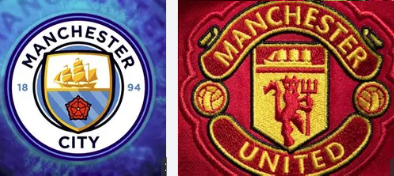
But the latest chapter in this bizarre campaign is really scraping the barrel … targeting the city’s football club badges. Feature writer Simon Hattenstone has homed in on the logos of Manchester City and Manchester United, which both include an illustration of a sailing ship. And he has reached what he clearly sees as a “Gotcha!” conclusion – sailing ships were used to carry cotton, which was produced in the southern United States using slave labour. Therefore, displaying sailing ships is shameful. Both clubs must immediately delete the offending vessels from their badges.
I hold no brief for either Man City or Man United (quite the contrary). But I find it absurd and offensive that the clubs should be thus gratuitously assailed in an attempt to shore up the Guardian‘s increasingly crazed crusade.
For the record, the sailing ships are taken from the coat of arms of the Borough of Manchester. They were granted in 1842, 35 years after Britain’s 1807 abolition of the slave trade, and are there simply to symbolise the city’s trade with the rest of the world. In fact, no large ships were seen in Manchester until the opening of the 35-mile-long Manchester Ship Canal in 1894.
Hattenstone’s argument is that the city was still using slave-produced US cotton up to the outbreak of the American Civil War in 1861, so the symbolic use of the vessels must be denounced. Talk about clutching at straws! I wonder if he knows that in 1862 Manchester mill workers supported US President Abraham Lincoln’s call for an embargo on Confederate cotton, even though it meant destitution and starvation for them and their families. He could have read about this selfless gesture in a Guardian article ten years ago.
I’ll tell you what, Mr Hattenstone, if we’re talking about links to slavery, how about demanding that the Guardian abandons its main headline typeface, which is shamefully called “Guardian Egyptian”? After all, slavery was practised in Egypt from ancient times right until the late 19th century. Yes, it’s a ridiculous link to make, but no more ridiculous than calling for the removal of ships from football badges. Sorry, Mr Hattenstone, you may be a self-proclaimed City fan, but this is an own goal.
Comments Off on The Grauniad now thinks sailing ships are racist
April 24, 2023
QotD: The Baader-Meinhof phenomenon
A little joke for psychologists there.
In 1994, someone left a comment on the website of the St. Paul Pioneer Press (Minnesota) saying that he had heard two references to the Red Army Faction, AKA the Baader-Meinhof gang — a 1970s German terrorist organisation — in the space of 24 hours, having never previously been aware of them. This somehow provided a new name for a cognitive bias. Don’t let anyone tell you that posting online comments on regional newspaper websites is a waste of time.
Otherwise known as frequency bias, the Baader-Meinhof phenomenon is a combination of selective attention bias (paying more attention to some things than to others) and confirmation bias (looking for things that you agree with or which serve your purposes in some way).
Arnold Zwicky added another aspect when he wrote about the significance of things happening recently, describing the “recency illusion” as …
… the belief that things YOU have noticed only recently are in fact recent.
The classic example is people’s tendency to notice a certain type of car once they own one themselves, especially when they bought it recently.
Of course it is possible that the thing you’ve just started noticing is truly becoming more frequent. I have noticed more shirts, flags and other merchandise related to Arsenal FC recently. This may be because the team is doing very well this season and I am more conscious of them as a result. Or it may be that Arsenal fans are less coy about showing their support after years of under-performing. What is less likely is that there are significantly more Arsenal fans than there were before.
Christopher Snowden, “Sudden deaths and the Baader-Meinhof phenomenon”, The Snowden Substack, 2023-01-21.
Comments Off on QotD: The Baader-Meinhof phenomenon
April 11, 2023
The end of single-sex spaces began in the 1970s, at least for men
Janice Fiamengo points out that the initial loss of single-sex spaces began a long time ago and for what — at the time — seemed sensible and egalitarian reasons:
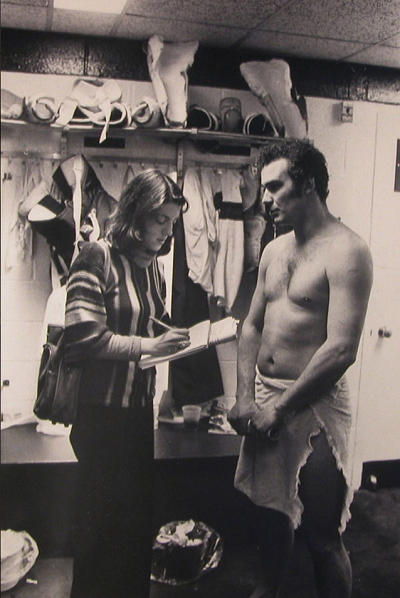
Robin Herman of the New York Times was one of the first two female reporters ever allowed into NHL dressing rooms, starting with the 1975 NHL All-Star Game in Montreal.
There has been a good deal of talk lately about women’s spaces being invaded by biologically male persons identifying as women. Some women’s campaigners claim that the trans phenomenon constitutes an attack on womanhood itself, an attempt to “erase” women and replace them with men who perform womanhood. Some even call it a new form of patriarchy.
But well before women had their single-sex spaces threatened, something similar had already happened to men. Beginning in the 1970s, men’s spaces were usurped, their maleness was denigrated, and policies and laws forced changes in male behavior that turned many workplaces into feminized fiefdoms in which men held their jobs only so long as women allowed them to. The very idea of an exclusively male workspace or club — especially if it was a space for socializing (not so much if it was a sewer, oil field, or shop floor in which men did unpleasant, dangerous work) — came to be seen as dangerous. In light of the recent furor over single-sex spaces for women, it is useful to consider the source of some men’s justifiable apathy and resentment.
At my new academic job in the late 1990s, a woman who had been the first female historian hired into her department used to tell a story she’d had passed on to her from a male colleague. After the decision had been made to hire her, one of the historians said to another somewhat dolefully, “I guess that’s the end of our meetings in the urinal.” The joke ruefully acknowledged, and good-naturedly accepted, the end of their all-male work environment.
Though this woman didn’t have any trouble with her male colleagues, who welcomed her civilly, she told the story with an edge of contempt. Even thoroughly modern men, the story suggested, held a foolish nostalgia for pre-feminist days.
But was it foolish — or did the men recognize something real?
No one thought seriously, then, about the disappearance of men’s single-sex spaces. The idea that men and boys need places where they can be with other men (defended, for example, in Jack Donovan’s The Way of Men) would have been cause, amongst the women I knew, for scornful laughter. In 2018, anti-male assumptions had become so deeply entrenched that the female author of a Guardian article titled “Men-only clubs and menace: how the establishment maintains male power” simply could not believe that any decent man could legitimately seek out male-only company.
Under the circumstances of mixed groups of reporters crowding into team locker rooms after games, it’s rather surprising how few “towel malfunction” incidents have been reported.
Comments Off on The end of single-sex spaces began in the 1970s, at least for men
April 4, 2023
QotD: We used to have this concept of “healthy socialization” for kids
30 years ago, that kind of thing wasn’t just possible, it was pretty easy, since Little League was still about silly stuff like having fun, and when high school coaches gave you the speech about teamwork and character building, he — get this — actually meant it. I know how crazy this sounds, but it was pretty much expected of us benchwarmers to take the piss out of the kid who carried on like he was some kind of Big League prospect. Nobody but parents came to the games, anyway, and wearing a letter jacket didn’t help you get girls (I tested this hypothesis extensively). Nowadays, of course, Little League squads are ruthlessly culled, and if you make the team, you’d better be ready to be put on a nutrition plan and workout schedule, to attend summer skills camps, to be no-shit scouted, by professionals, at an age where you’re still not really sure what girls are for.
You don’t get to be “a jock” for a semester, in other words. You are one, and that’s all you are, starting before puberty, and woe to the kid who only made the team because his hormonal clock was set a little ahead of the other boys’. The kid who can throw 75 at age ten, as we all know, is 99.8% certain to still be throwing 75 at age sixteen, when everyone on the JV team can catch up to it. In my day, that’s when the coach pulled you aside and explained a few things to you, gently but firmly pointing you towards the Model UN Club. He was good at it, and since he was good at giving those “teamwork and character” speeches, too, he’d tell you that this, right here, is one of those situations, so man up and accept your limitations.
Ah well. So much for being a jock. Cross it off the list, and try not to notice the relief in Mom’s eyes — and, yeah, the little bit of sadness in Dad’s — when they realize they don’t have to schlep you all over the goddamn place on summer evenings, sitting in the bleachers watching you ride the pine. Time to find something else …
Severian, “Alienation”, Rotten Chestnuts, 2020-10-29.
Comments Off on QotD: We used to have this concept of “healthy socialization” for kids


