
Published on 11 Mar 2017
Catherine the Great ruled for many years – too many for a six episode show to cover completely. James talks about the mistakes we made and the stories we left out!
April 1, 2017
Catherine the Great – Lies – Extra History
Comments Off on Catherine the Great – Lies – Extra History
March 31, 2017
Lenin Takes The Train – First Battle of Gaza I THE GREAT WAR Week 140
Published on 30 Mar 2017
When the Russian government promises to continue the war and support the Entente with another offensive, the Germans are allowing Vladimir Ilyich Ulyanov aka Lenin to board a train from his exile in Switzerland to Russia. The British Army once again underestimates the Ottoman Empire at the 1st Battle of Gaza and the Toplica Uprising ends.
Comments Off on Lenin Takes The Train – First Battle of Gaza I THE GREAT WAR Week 140
March 27, 2017
Catherine the Great – VI: Succession – Extra History
Published on 4 Mar 2017
The optimism that marked Catherine the Great’s early years turned on its head. She oversaw the partition and final dissolution of the Polish-Lithuanian Commonwealth. She also alienated her son in the same way her own mother once did, leaving him ill-equipped to succeed her.
Comments Off on Catherine the Great – VI: Succession – Extra History
March 24, 2017
Kaiser Karl Wants Peace – The Sixtus Affair I THE GREAT WAR Week 139
Published on 23 Mar 2017
The First World War & The Death of the Habsburg Empire: http://www.boehlau-verlag.com/download/163983/978-3-205-79588-9_1_OpenAccess.pdf
Since Kaiser Karl I ascended the throne of the Austro-Hungarian Empire he was not happy with the progression of the war. He felt that his empire was tied to their German ally more than necessary and this week 100 years ago he was starting a process of secret negotiations for a separate peace with the Entente. At the same time the British had increasing problems at the home front and the chaos in Russia continued.
Comments Off on Kaiser Karl Wants Peace – The Sixtus Affair I THE GREAT WAR Week 139
March 21, 2017
Catherine the Great – V: Potemkin, Catherine’s General, Advisor, and Lover – Extra History
Published on 25 Feb 2017
Catherine had many lovers during her life, but perhaps none meant so much to her as Grigory Potemkin. Although their romance did not last a lifetime, it did form the basis of a working relationship that would change the face (and future) of Europe.
Comments Off on Catherine the Great – V: Potemkin, Catherine’s General, Advisor, and Lover – Extra History
March 18, 2017
Catherine the Great – IV: Reforms, Rebellion, and Greatness – Extra History
Published on 18 Feb 2017
Catherine had great ambitions to reform Russia according to her own highest ideals, but she soon found that the reality of governance made those ideals difficult to achieve. She also found herself tangled in war, rebellion, and (scandalously) smallpox.
Comments Off on Catherine the Great – IV: Reforms, Rebellion, and Greatness – Extra History
March 17, 2017
The Tsar Abdicates – Baghdad Falls I THE GREAT WAR Week 138
Published on 16 Mar 2017
The protests that emerged in Russia this week are growing stronger and the Tsar is increasingly isolated until even his generals are pushing for his abdication. And after 300 years of Romanov rule, Tsar Nicholai II abdicates and when his brother refuses to take up the throne, the dynasty is no more. Meanwhile in the Middle East, the British are taking Baghdad effectively seizing control over a large area.
Comments Off on The Tsar Abdicates – Baghdad Falls I THE GREAT WAR Week 138
March 11, 2017
Catherine the Great – III: Empress Catherine at Last – Extra History
Published on Feb 11, 2017
When the conspiracy to seat Catherine on the throne of Russia was exposed, she had to move quickly. While Peter III blundered through a day of miscommunications, Catherine swiftly seized power, secured the loyalty of the army, and demanded his abdication.
Comments Off on Catherine the Great – III: Empress Catherine at Last – Extra History
March 10, 2017
The Russian February Revolution 1917 I THE GREAT WAR Week 137
Published on 9 Mar 2017
Food shortages, an overall desolate supply situation and great political turmoil make Russia ripe for revolution and this week 100 years ago, the people take to the streets. The US adopts a policy of armed neutrality.
Comments Off on The Russian February Revolution 1917 I THE GREAT WAR Week 137
March 8, 2017
History Of The Cossacks Until World War 1 I THE GREAT WAR Special
Published on 7 Mar 2017
The Cossacks are surrounded my myths and legends. For some they were the “Tsar’s dogs” for others they were more comparable to the cowboys of the Wild West. In any case, their history and culture is unique and is deeply intertwined with the rise and end of the Romanov dynasty. And that’s why we are taking a look further back than usual to introduce to the Cossacks.
Comments Off on History Of The Cossacks Until World War 1 I THE GREAT WAR Special
March 7, 2017
Russia Before the 1917 Revolution I THE GREAT WAR Special
Published on 6 Mar 2017
Russia’s history in the decades leading up to World War 1 where a time of great turmoil and social changes. The Romanov tsars held a tight grip on the country which remained an autocracy even though the people requested change. And by 1917, three years into World War 1, the people demanded change again.
Comments Off on Russia Before the 1917 Revolution I THE GREAT WAR Special
March 2, 2017
Possible end-game for the British nuclear deterrent
Charles Stross speculates on a few ways that Il Donalduce could trigger the end of Britain’s nuclear-armed ballistic missile submarines:
Working hypothesis #1: Donald Trump is an agent of influence of Moscow. Less alarmingly: Putin’s people have got blackmail material on the current President and this explains his willingness to pursue policies favourable to the Kremlin. Russian foreign policy is no longer ideologically dominated by communism, but focusses on narrow Russian interests as a regional hegemonic power and primary oil and gas exporter.
Clearly, it is not in Russia’s geopolitical interest to allow a small, belligerent neighbor to point strategic nuclear missiles at Moscow. But this neighbor’s nuclear capability has a single point of failure in the shape of the resupply arrangements under the 1958 UK-USA Agreement. Donald Trump has made no bones about his willingness to renegotiate existing treaties in the USA’s favor, and has indicated that he wants to modernise and expand the US strategic nuclear capability. Existing nuclear weapons modernization programs make the first goal pointless (thanks, Obama!) but he might plausibly try to withdraw British access to Trident D-5 in order to justify commissioning four new US Navy SSBNs to carry the same missiles and warheads.
(Yes, this would break the “special relationship” between the USA and the UK for good — but remember, this is Donald Trump we’re talking about: the original diplomatic bull in a china shop who decapitated the state department in his first month in office.)
Trump could present this as delivering on his promise to expand the US nuclear capability, while handing his buddy a gift-wrapped geopolitical easter egg.
Working hypothesis #2: Let us suppose that Donald Trump isn’t a Russian agent of influence. He might still withdraw, or threaten, British access to Trident as a negotiation lever in search of a better trade deal with the UK, when Theresa May or her successor comes cap-in-hand to Washington DC in the wake of Brexit. It’s a clear negative sum game for the British negotiating side — you can have a nuclear deterrent, or a slightly less unpalatable trade deal, but not both.
In this scenario, Trump wouldn’t be following any geopolitical agenda; he’d just be using the British Trident renewal program as a handy stick to beat an opponent with, because Trump doesn’t understand allies: he only understands supporters and enemies.
As for how fast the British Trident force might go away …
Missiles don’t have an indefinite shelf-life: they need regular servicing and maintenance. By abrogating the 1958 agreement, or banning Royal Navy warships from retrieving or delivering UGM-133s from the common stockpile at King’s Bay, POTUS could rely on the currently-loaded missiles becoming unreliable or unsafe to launch within a relatively short period of time — enough for trade negotiations, perhaps, but too short to design and procure even a temporary replacement. It’s unlikely that French M51 missiles could be carried aboard Dreadnought-class SSBNs without major design changes to the submarines, even if they were a politically viable replacement (which, in the wake of Brexit, they might well not be).
Comments Off on Possible end-game for the British nuclear deterrent
Catherine the Great – II: Not Quite Empress Yet – Extra History
Published on 4 Feb 2017
Sophia’s excitement to meet her future husband deflated when she realized Peter III was a boor who cared nothing about Russia. By contrast, she threw herself into learning the culture with such vigor that she earned the love of the people. She was rechristened Catherine and married Peter… but when he became emperor, his mistakes and her popularity began to add up to a crisis situation.
Comments Off on Catherine the Great – II: Not Quite Empress Yet – Extra History
March 1, 2017
The different “flavours” of propaganda
Cory Doctorow on the various types of propaganda in use around the world:
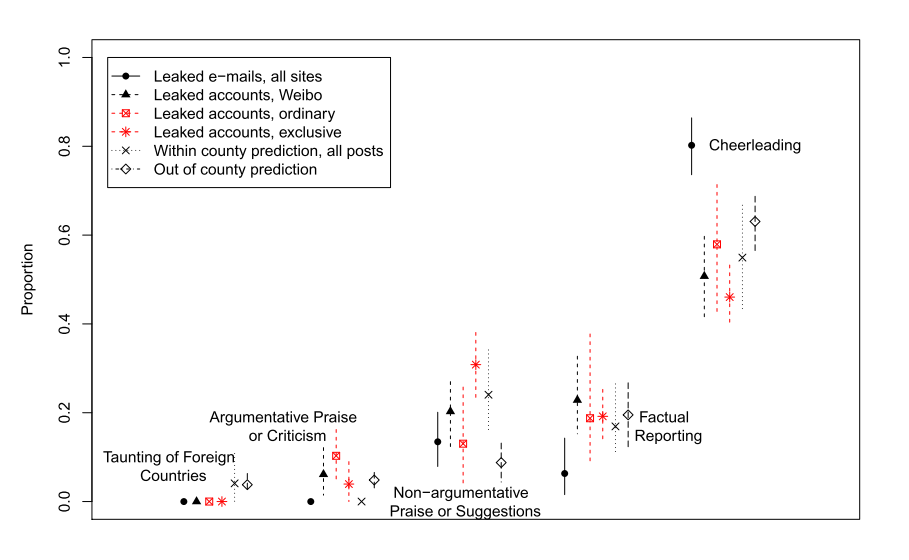
Jonathan Stray summarizes three different strains of propaganda, analyzing why they work, and suggesting counter-tactics: in Russia, it’s about flooding the channel with a mix of lies and truth, crowding out other stories; in China, it’s about suffocating arguments with happy-talk distractions, and for trolls like Milo Yiannopoulos, it’s weaponizing hate, outraging people so they spread your message to the small, diffused minority of broken people who welcome your message and would otherwise be uneconomical to reach.
Stray cites some of the same sources I’ve written about here: Tucker Max’s analysis of Yiannopoulos’s weaponized hate and The Harvard Institute for Quantitative Science team’s first-of-its kind analysis of leaked messages directing the activities of the “50-cent army, which overwhelms online Chinese conversation with upbeat cheerleading (think of Animal Farm‘s sheep-bleating, or Nineteen Eighty-Four‘s quackspeak).
But I’d never encountered the work he references on Russian propaganda, by RAND scholar Christopher Paul, who calls Russian disinformation a “firehose of falsehood.” This tactic involves having huge numbers of channels at your disposal: fake and real social media accounts, tactical leaks to journalists, state media channels like RT, which are able to convey narrative at higher volume than the counternarrative, which becomes compelling just by dint of being everywhere (“quantity does indeed have a quality all its own”).
Mixing outright lies with a large dollop of truth is key to this tactic, as it surrounds the lies with a penumbra of truthfulness. This is a time-honored tactic, of course: think of the Christian Science Monitor‘s history of outstanding international coverage, accompanied by editorials about God’s ability to heal through prayer; or Voice of America‘s mixture of excellent reporting on (again) international politics and glaring silence on US crises (see also: Al Jazeera as a reliable source on everything except corruption in the UAE; the BBC World Service‘s top-notch journalism on everything except UK complicity in disasters like the Gulf War, etc).
In addition to this excellent taxonomy of propaganda, Stray proposes countermeasures for each strain: for Russia-style “firehoses of falsehood,” you have to reach the audience first with an alternative narrative; once the firehose is on, it’s too late. For Chinese quackspeak floods, you need “organized, visible resistance” in the streets. For pathetic attention-whores like Yiannopoulos, Stray says Tucker Max is right: you have to ignore him.
Comments Off on The different “flavours” of propaganda
February 23, 2017
Catherine the Great – I: Not Quite Catherine Yet – Extra History
Published on Jan 28, 2017
Before she became Catherine the Great, legendary empress of Russia, she was a smart but lonely girl named Sophia. Her mother ignored her until family connections proposed a marriage between Sophia and the presumptive heir to the Russian throne – and suddenly she was thrown from her quiet life in a backwoods mansion to the center of a cutthroat political world.
Comments Off on Catherine the Great – I: Not Quite Catherine Yet – Extra History


