Quotulatiousness

February 26, 2011

The increasing length of freight trains in Canada

Filed under: Cancon, Economics, Government, Railways, Technology — Tags: , , — Nicholas @ 13:22

Some eye-opening statistics on the length of freight trains being run by Canadian National (CN) and Canadian Pacific (CP) these days:

Transport Canada launched a six-part study into the long-train strategies at the country’s largest railways this month with an eye on developing policies for how these longer, heavier trains are assembled and run. The goal of the two-year study is to develop science-based regulations that will hopefully reduce the number of derailments in the country.

Despite the concern from regulators, these longer, heavier trains in recent years have been a godsend for North American railways, which swear by their safety. Not only do they improve the efficiency of the rails by reducing the number of trains required to transport goods, but they in turn reduce the crews needed and the fuel used to move their shipments.

If properly built, they can also reduce wear and tear on the trains and the tracks themselves by cutting down on in-train forces, lowering maintenance costs substantially over time.

The cynic in my asks why, if CN (for example) actually managed to reduce the number of rail accidents to an all-time low last year, the regulators are now launching the investigation. Fewer accidents now equals a point of serious concern on the part of the regulators? Why?

Up until the 1990s, the average freight train in Canada was about 5,000 feet (1.54 kilometres) long and weighed 7,000 tons. But it is now not uncommon to see these trains stretch to 12,000 feet, sometimes as much as 14,000 feet (more than four kilometres), weighing up to 18,000 tons.

While CN is comfortable sticking with the size of its longest trains now, about 12,000 feet, CP continues to push the boundaries of how long it can build its trains by developing some of the industry’s most cutting-edge technology in recent years to help it do so.

The benefits are clear. CP estimates, for example, that the labour costs alone on a typical transcontinental train are now 30% lower than they would be if it was using smaller trains.

So, the trains are longer, carry far more freight, cost less to run, and customers are happy. The government must act!

February 24, 2011

Ontario’s wine industry: stupid from 2007?

Filed under: Cancon, Wine — Tags: , , , — Nicholas @ 12:15

Michael Pinkus has more than a couple of bones to pick with Ontario wineries:

This is what I wrote while sitting at my table just minutes after my Cuvee pre-tasting:
“Here I sit tasting the wines from the fruit of the labour of Ontario winemakers for the 2011 Cuvee media pre-tasting … It is here we taste what the competition organizers and judges have deemed the best. Actually let’s get more specific, before us is one wine from each winery that entered the competition and we are told “These wines represent each participating winery’s top scoring wine from the Cuvee judging held in January”. In other words these are the top scoring wines from each individual winery’s submission … 62 wines in total. [. . . A few] were fantastic, well made wines worthy of their price (especially the Pelham which was an absolute steal at $24.95). But then there were others, whom I will not mention here by name but instead by price: a $45 Reserve Cabernet Franc, a $45 Cab-Merlot, a $55 Red Blend, a $40 Reserve Franc and a $35 Red Blend, that should all be ashamed of themselves for unleashing sub-par quality at astronomical prices. I’m talking about sub-par wines at above par prices for what the consumer is getting. This is not just about hurting the individual winery’s reputation but also, as one colleague pointed out to me, Ontario’s reputation as a whole. It’s time to stop trying to get all your money back at one shot — this is a long term investment people, and a tough one at that.

[. . .]

I was prepared to post that on the blog and just walk away (in effect, putting my own head in the sand) letting the chips fall where they may, but then it started to eat at me more and more. I want to keep writing about his industry, but what can I say? The final straw happened two days later at the bi-weekly media LCBO Vintages tasting and I have to admit to you I was appalled by a few of the Ontario wines being offered. I hopped on the train back home and found myself thinking about both tastings and penned the following:

I have been gentle on some of you over the years but seriously if these wines represent the best Ontario has to offer, give me a break. If the wines I tried at the Cuvee preview are some of the best wines wineries have to offer, then some wineries are in BIG trouble: (what was with that nasty-ass Merlot Icewine?). Don’t care what they submit: (a flat, flabby, bland Sauvignon Blanc, is that really what your winery does best?). Have given up: (a Gewurzt that has no Gewurzt characteristic to it what-so-ever). Are not paying attention: (a fume blanc so heavy handed on the fume that there was no fruit at all). And are just wasting grapes: (a poor excuse for an ’07 made with Franc and Sauv, an ’07!!!).

Two days later, at the LCBO Vintages tasting (for the March 19, 2011 release) I had to pull out my best conspiracy-theory to explain some of the Ontario wines we sampled. I know full well that the LCBO isn’t trying to be helpful to the Ontario wine industry, but never did I think they would stoop to this level: the tasting included a lackluster Sauvignon Blanc and a horrible Red Blend (you know who you are) … I suggest to you that the LCBO takes some of these atrocious wines to make Ontario look bad … advertise a red, from a good vintage like 2005, for under $15, and people will buy it, sip on it and just as quickly spit it out, vowing never to buy Ontario wines again. Thanks for nothing LCBO.

I’m not saying they do that with every Ontario wine (case in point: Cave Spring Cellars 2009 Estate Gewurztraminer), but I think they throw in a ringer every-so-often just to screw with their major competition, the wineries. Am I just paranoid? Well find out for yourself, buy each and every Ontario wine that comes thru Vintages and you tell me they are in the caliber claimed by the Board’s Vintages website: “the fine wine and premium spirits business unit of the LCBO. Our experts shop the world for fine wine and premium spirits of exceptional value.” Now, not every wine is to everybody’s taste you’ll say — true — but some of those wines the board tries to pawn off as “fine” are only fine for salad purposes and that’s all. I don’t buy this argument. As they say on ESPN NFL Football broadcasts, “C’mon Man”, this just ain’t happening.

Sturgeon’s Law claims that “Ninety percent of everything is crap”, and that applies to wine just as much as it does to novels. A big difference for wine is that even the crap is far better than it was just ten years ago. Nowadays, a crap wine is merely boring, not undrinkable as they once were. But that being said, Michael’s comments are worth paying heed — Ontario’s wine industry has problems galore from nature (cool climate wine production but a customer base accustomed to imported hot climate wines), legal obstacles (Ontario still treats wineries as if they produce radioactive waste, not wine), and the normal exigencies of competition: there’s no need to compound these problems with avoidable ones like poor quality control or (as Michael suggests) contempt for their customers.

February 23, 2011

Ontario actually considers liberalizing (some) liquor laws

Filed under: Bureaucracy, Cancon, Government, Law — Tags: , , — Nicholas @ 13:00

It’s a rare, rare thing for the Ontario government to consider any kind of liberalization, but especially one involving booze:

Could Ontario be saying good-bye to beer tents? The province’s government announced on Wednesday that it would be asking for public input on a series of possible liquor law changes.

Some of the changes considered would include relaxing the liquor laws at events and festivals, meaning drinkers would no longer be sequestered in beer tents, but could wander with a drink in hand.

It would also allow one-off event permit holders — weddings, parties and fundraisers, for example — to serve booze until 2 a.m., bringing their serving hours into line with bars. Current laws require special occasion permit holders stop serving alcohol at 1 a.m., with the exception of New Year’s Eve, when it’s 2 a.m.

Don’t hold your breath — this is still bluestockinged Ontario — but just the idea that they’re willing to discuss changes is heartening.

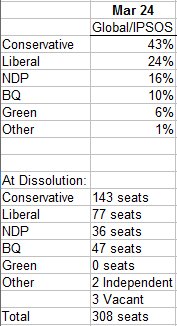
Poll question: how would you vote if a federal election is called

Filed under: Cancon, Government, Politics — Tags: , — Nicholas @ 07:42

[poll id=”2″]

February 20, 2011

Tunnelling man desperate for coffee

Filed under: Cancon, Humour — Tags: , , , , — Nicholas @ 00:09

An amusing story from Yolk Region News:

Duane Oppenheimer, 59 1/2, of Newmarket was charged with mischief and unlawful excavation on Wednesday evening, after cleaning staff at Upper Canada Mall discovered a large rectangular crack in a utility closet floor. The crack turned out to be a hatch leading to Oppenheimer’s tunnel, a 200-metre subterranean passageway that extended under the mall’s south parking lot and continued below Davis Drive into an adjacent subdivision where it emerged inside the Oppenheimer’s garage.

H/T to Jon, my former virtual landlord, who said “Who knew that people in Newmarket were so industrious?”.

February 17, 2011

Once upon a time, working in public service entailed a bit of sacrifice

Filed under: Bureaucracy, Cancon, Government — Tags: , — Nicholas @ 09:37

But that old notion of “lower wages but better pensions” for public service work has gone the way of the buggy-whip industry. Now, public servants get better wages, much better pensions, and generally much more generous benefits. Even through the recession, federal and provincial wages continued to outpace those in the private sector:

Both images are details from this National Post graphic.

I believe this is my first-ever reference to “Justin Bieber”

Filed under: Cancon, Media, Quotations — Tags: , , , — Nicholas @ 08:57

And it’s prompted by Jimmie Bise, Jr, who also observes (most accurately) that “We bloggers are a mercenary lot who’ll find reason to write about almost anything if it’ll bring us that sweet, sweet blog traffic.”

The bad news is that Rolling Stone actually thinks anyone, anywhere, truly cares what Justin Bieber thinks about political parties, socialized medicine, or anything else beyond singing the word “baby” several times in a row.

Look, I get that we like to get inside the heads of entertainers we admire, but there really does have to be a limit. Rolling Stone, once upon a time, was a magazine that published real journalism from writers like Hunter S. Thompson, P.J. O’Rourke, and Lester Bangs. It was probably the go-to publication for details of the Patty Hearst abduction and its interview with Charles Manson in 1970 is one of the most chilling looks into a mind stuffed full of madness I’ve ever read. Now, thanks to the decline started by ardent progressive Jann Wenner, we just get a fluff interview with a 16 year-old kid on issues in which he has almost no knowledge or experience and wretched hacks like Matt Taibbi.

If nothing else, the Justin Bieber interview shows us what we lost. I’m actually sorry for it.

While a lot of what Hunter S. Thompson produced was vivid and entertaining, it probably skirted well clear of formal “journalism” even in the golden glow of nostalgia. But other than that little quibble, and that Jann Wenner was a co-founder of Rolling Stone . . . which means the decline he’s lamenting was actually baked in to the original recipie . . .

February 16, 2011

Damned good reasons for Canadians to fly from US airports instead of Canadian airports

Filed under: Cancon, Economics — Tags: — Nicholas @ 17:16

An article at the National Post talks about the rising number of Canadians who drive to US airports. After a recent experiment, I can understand why.

Last weekend, I had a notion to go to Boston for the coming long weekend. I checked the Porter Airlines website. Multiple flights from Toronto Island airport to Boston, great! So I started the booking process. Two people, flying from YTZ to BOS, return trip . . . how freaking much????

Because I wasn’t booking more than two weeks in advance, the flights were going to cost $800+. That’d be bad enough, but that’s per person. One way. But the return flight was cheaper: a doddle at “only” about $690. So about $3,000 not counting taxes, fees, and surcharges.

American Airlines, if I booked right now could get us to Boston from Buffalo for $246 each. Return flight at the same price, or cheaper ($181 each) if we used JetBlue.

So, for the added hassle of driving to Buffalo (and the border crossing, of course), I’d save nearly $2,000 on this little jaunt. If that’s at all representative, then it’s amazing that Canadian airlines are able to hang on to as much of the business as they currently do.

“A heart filled with music will not have room for God’s words”

Filed under: Cancon, Education, Media, Religion — Tags: , , — Nicholas @ 09:21

Islam is apparently not a religion to appeal to the musically inclined, because, as former guitarist Bilal Philips warns, only certain forms of music are acceptable to God:

Bilal Philips was once a guitar god. Now he is trying to convince Muslims that God doesn’t want them listening to guitars.

A Saudi-trained Canadian, Mr. Philips is among a small group of lecturers who preach against most forms of music — a controversial prohibition that surfaced in Manitoba recently, where a dozen Muslim families want to pull their children from music class.

“A heart filled with music will not have room for God’s words,” he writes in his book Contemporary Issues, which also defends child marriages, wife beating, polygamy and killing apostates while calling homosexuality “evil and dangerous.”

While Mr. Philips argues that Islam does not prohibit all music, he says it only allows adult male singers and “folk songs with acceptable content sung by males or females under the age of puberty accompanied by a hand drum.”

“Wind and stringed instruments have been banned because of their captivating power,” he continues. “Their notes and chords evoke strong emotional attachments. For many, music becomes a source of solace and hope instead of God. When they are down, music brings them up temporarily, like a drug. The Koran, the words of God filled with guidance, should play that role.”

Of course, music is bad because of the behaviour of musicians, too:

“What you see instead is that some of the most corrupt elements of society are found among the musicians. The drugs, the deviations and homosexuality, these type of things and all the corruption that’s there, people committing suicide,” he says. “The reality is that it in fact does carry an evil, dark side which produces that type of corruption amongst themselves and, in the end, ends up corrupting elements of the society.”

Wow. I didn’t realize the Toronto Symphony was such a hotbed of decadence and perversion!

February 11, 2011

Reif produces first Canadian raisins

Filed under: Cancon, Food, Randomness, Wine — Tags: — Nicholas @ 07:14

I always figured that we were too far north to produce raisins, despite our large-and-growing grape crops. Just because it was widely thought doesn’t mean it’s true:

“Originally, the idea was to make an appassimento-style wine that involves the drying of grapes that is common in a region of Italy where they make Amarone-style wines,” explains Reif Estate winemaker Roberto DiDomenico. DiDomenico and Reif Estate owner Klaus Reif, a 13th-generation winemaker who immigrated from Germany in the early 1980s and bought his uncle’s Niagara winery in 1987, had some contacts in Simcoe’s tobacco country. “We learned that there would be some kilns available as the tobacco industry has been waning,” says DiDomenico. They purchased two refurbished kilns that were shipped up to Reif Estates in the spring of 2009. And that’s when the process began. Almost. Explains Reif, “Our grapes that we use for the appassimento winemaking process were not yet ready, so we had these two kilns sitting here and we thought, what should we do with them now?”

Wine is made from grapes with seeds while raisins are generally made from seedless grapes. Niagara is wine country, but as luck would have it, a friend of Reif’s, John Klassen, who grows table grapes for supermarkets, happened to stop by the winery for a visit. “He was telling us that his grapes were ripe, but the supermarkets didn’t want them anymore,” says Reif. With those plump, juicy Sovereign Coronation grapes destined for the birds, Reif said, “Bring them in; we’ll try to make raisins.” (While most raisins are made from green grapes, these Niagara raisins are made from red grapes.) DiDomenico and Reif put the grapes in the tobacco kilns for three to four weeks to raisin-up.

February 9, 2011

Real usage-based billing might work, but not the current form

Filed under: Cancon, Economics, Media, Technology — Tags: , , , , — Nicholas @ 12:25

Tim Wu contrasts the way the UBB issue is being presented and how it might actually be successful:

The issue of usage-based billing is a little tricky because such systems are not inherently evil. When you think about it, we usually pay for things on a usage basis. Gasoline, electricity and even doughnuts are generally billed based on how much you use. And the fact that usage-based billing sounds reasonable in theory is surely why the Canadian Radio-television and Telecommunications Commission approved the new rules.

But take a closer look and something far more insidious is going on. If bandwidth were actually billed like electricity or water, that might be fine. But what the CRTC approved is something different. Claiming that its profit and consumer welfare are exactly the same thing, Bell wants to remake Internet billing. It wants to make use of the most lucrative tricks from the mobile and credit-card industries by preying on consumer error to make money. And this ought not be tolerated.

Any rule that asks the consumer to guess at usage, and punishes you if you’re wrong, is abusive. Imagine being asked to guess how much electric power you need every month, with a penalty for mistakes. Yes, that’s what cellphone companies do — or get away with — but that hardly makes it a model. It’s a system of profit premised on human error, and this begins to explain Bell’s deeper interest in usage-based billing. Bell wants to make the horrors of mobile billing part of the life of Internet users. And that’s a problem.

H/T to Michael O’Connor Clarke for the link.

LSE to buy TSX

Filed under: Britain, Cancon, Economics — Tags: , , — Nicholas @ 07:36

It’s a crafty move, but it’s not clear whether it’s the buyer or the seller being the craftier:

London Stock Exchange Group Plc, the 210-year-old bourse operator, agreed to buy Toronto Stock Exchange owner TMX Group Inc. for about C$3.2 billion ($3.2 billion) in stock as the companies cut costs to counter lost market share. LSE surged to a two-year high.

LSE shareholders will own 55 percent of the company, while TMX investors will hold the rest, the exchanges said today in a statement. TMX shareholders will receive 2.9963 LSE shares for each they own, valuing the Toronto-based company at about C$42.68 a share, 6 percent more than yesterday’s closing price.

Xavier Rolet, LSE’s chief executive officer, will reduce 35 million pounds ($56 million) a year in costs and expand into new businesses such as derivatives as competition from alternative trading platforms increases as do mergers among rivals. His predecessor Clara Furse fought off five takeover offers in two years and bought the operator of the Milan stock exchange. The LSE’s share of U.K. equity trading was 63.8 percent last quarter, compared with 75 percent in 2009, data from the London- based company show.

It could be a way for London to diminish the impact of European rules on their business (by having a non-EU place to land if necessary) or it could be a way for the EU to extend their rule-making to the Canadian market. Or, and this is the least believable scenario, it might just be an ordinary acquisition by a company that happens to run stock markets.

Update: What is presented as a take over in other markets is being positioned (spun?) as a “merger” for domestic consumption:

TMX Group, which operates the Toronto Stock Exchange, and the London Stock Exchange announced Wednesday they are merging to create one of the world’s largest stock exchanges.

The merger, which is subject to regulatory approvals, is unanimously being recommended by the boards of both exchanges.

The merger, if approved, would give the new firm a value of just over $6 billion (Cdn.) and give LSE shareholders just over 50 per cent of the combined company.

TMX Group is valued at $2.99 billion, while the London Stock Exchange Group’s value is slightly higher, around $3.25 billion.

The new company will have the world’s largest number of listing, more than 6,700 companies with an aggregate value of $5.8 trillion, the partners said in a statement early Wednesday.

[. . .]

The company will be co-headquartered in Toronto and London with Xavier Rolet, the CEO of the London Exchange, retaining that position with the new company. The president will be Thomas Kloet, the CEO of TMX. The FO will be Michael Ptasznik, who currently holds the same post with TMX, and the company director will be Raffaele Jerusalmi, the Milan-based CEO of Borsa Italiana.

Expect this deal, even if it eventually gets regulatory approval, to drag on for most of this year.

February 6, 2011

“Mad Max” throws away the Quebec vote

Filed under: Cancon, Liberty, Politics — Tags: , , , — Nicholas @ 12:26

At least, that’s the way most in the media are likely to interpret his position on Bill 101:

Some people say I am not a “real Quebecer” and are accusing me of “attacking Quebec” simply because I want to be more popular in the rest of Canada. They seem unable to conceive that it’s possible to have a different position than theirs on the basis of fundamental principles.

My position is this: Yes, it’s important that Quebec remain a predominantly French-language society. And ideally, everyone in Quebec should be able to speak French. But we should not try to reach this goal by restricting people’s rights and freedom of choice.

French will survive if Quebecers cherish it and want to preserve it; it will flourish if Quebec becomes a freer, more dynamic and prosperous society; it will thrive if we make it an attractive language that newcomers want to learn and use. Not by imposing it and by preventing people from making their own decisions in matters that concern their personal lives.

Mad Max for PM!

Update, 9 February: According to an anonymous Conservative, Maxime Bernier is “mostly harmless”.

February 4, 2011

The Montreal Gazette‘s 1969 view of the year 2000

Filed under: Cancon, Media — Tags: , , , — Nicholas @ 09:26

Paleofuture‘s Matt Novak digs up a Montreal Gazette cartoon from 1969:


Click to view full size

The January 18, 1969 Montreal Gazette ran this most peculiar comic, chock full of hilarious expositional dialogue and dystopian delights.

We follow the futuristic misadventures of George Daedalus, also known as Daeda 928 502 467, in the year 2000 AD. George lives in Oshtoham, Canada’s second largest city — which I’m guessing is a combination of the cities Oshawa, Toronto and Markham — and works as a travel agent. George lives his life surrounded by technological wonders like robot servants, videophones, moving sidewalks and 3D hologram walls, but we come to find out that he’s really just not that happy. The last panel shows George taking drugs and using a computer to escape his reality. Boy am I glad I don’t live in that future!

H/T to Cory Doctorow for the link.

February 3, 2011

CRTC head called to testify before Commons committee

Filed under: Cancon, Economics, Media, Politics, Technology — Tags: , , , , — Nicholas @ 07:29

In what some are hailing as a victory for Canadian internet users, but might well be just another Conservative sop to public opinion, the head of the CRTC has been called before a Commons committee:

The chairman of the CRTC will appear before the Standing Committee on Industry, Science and Technology on Thursday, as the regulator’s decision on usage-based billing for Internet services continues to generate anger among consumers and businesses.

Konrad von Finckenstein, chairman of the Canadian Radio-television and Telecommunications Commission, will appear before the committee of federal MPs to explain the regulator’s decision, which allows large Internet providers like Bell Canada to charge smaller providers who lease space on their networks on a per-byte, or usage, basis.

On Tuesday, Prime Minister Stephen Harper vowed to review the decision, lending clout to Industry Minister Tony Clement’s announcement to examine the CRTC ruling a day earlier. Mr. Clement and Mr. Harper’s cabinet, of course, have overturned the CRTC before — most notably by striking down the regulator’s ruling that Globalive, which now operates Wind Mobile, couldn’t launch service in the regulated sector because of foreign financial backing.

The problem for the government is that they need to be seen to do something, but the best “something” would be to open up the Canadian market to foreign competition in order to drive prices down toward world levels. That would upset too many cosy arrangements for the current beneficiaries of licenses to print money government approval to operate.

« Newer PostsOlder Posts »

Powered by WordPress