Quotulatiousness

January 7, 2026

“All of that operational brilliance was always there; it persisted through the Stupid Era”

I missed this Chris Bray piece when it was published a few days ago, but it’s still fully relevant. In it, he discusses the contrast between the faltering and visibly failing military operations like Operation Craven Bugout, sorry, I mean “Operation Allies Refuge”, in 2021 as the US and allied forces abandoned the Afghanistan mission leaving behind billions in military equipment and untold numbers of pro-western Afghans to the “mercy” of the Taliban and the recent brilliant military success in Venezuela:

For years, I’ve been shouting two related messages. First, “we’re in a contest of persistence between elite cosplayers and low-status producers”. Institutions that advance leaders on the basis of their ability to engage in au courant symbol-chanting are crushing the people in those institutions who do the work, and therefore hollowing out the institutions. Second, and so closely related you could just call it the same point in different words, “We’re healthy from the bottom up, and sick from the top down”. The “making stuff” people are mostly just fine; the “running stuff” people are mostly insane.

After years of dismal military failures, like the bafflingly inept withdrawal from Afghanistan after twenty years of ineffective warfare against the Taliban, the raid that captured Nicolás Maduro was operationally brilliant. It required perfection from everyone in a giant list of moving parts, executing a detailed plan with absolute precision. If you haven’t watched the briefing from Chairman of the Joint Chiefs of Staff Dan Caine, who was ritually denounced by the idiot media and the Democratic Party as an unqualified choice for the job, take some time to watch at least some of it. You aren’t used to seeing competence and clarity from an American institutional leader, so it’ll bring back some parts of your consciousness that may have gone to sleep for a while.

With 150 aircraft in the air, launching from something close to two dozen points of origin, every asset arrived in place and on time, while the lights went out below them. From the transcript:

The “pathway overhead” was that the US military switched off the Venezuelan military. They pressed the off switch on another nation’s command, control, and communications systems. Venezuela spent 2025 posturing at the US Navy, displaying their power as a warning against American aggression:

Similarly, “Experts had warned that Venezuela’s layered air-defence network could complicate US air operations”. Apparently not. At the designated moment, it all just went away.

I’ve talked for years about “recipe knowledge”, about the ability to know the steps that will produce a desired outcome. If I want to produce X result, I have to perform steps A, B, C, D, E, and F, in that order. If I skip Step C, Result X doesn’t occur, even though I’ve performed all the other steps.

We’ve just watched a military that apparently lacked the recipe knowledge to destroy the Taliban, or even to withdraw from a failed war in an orderly fashion and without leaving a bunch of weapons behind, demonstrate a shockingly high level of recipe knowledge. A failing institution isn’t a failing institution. Brilliant planning, flawless execution, ruthless competence.

There’s no way in hell that a single year of top-down intervention reversed years of hard decline. All of that operational brilliance was always there. It persisted through the Stupid Era.


On Substack Notes, John Carter commented on the article:

This, right here, is the meta-message of the Venezuelan raid. Competence collapse isn’t a purely military pathology, nor is it solely an American affliction. It applies to every institution in every Western country. We’ve been living with the frustrations and humiliations of this imposed decline for decades now.

With one decisive act, Trump has demonstrated that decline is a choice made by a small, false elite – and that if that elite is removed, decline can be reversed.

Removing the elite is the fix-everything switch in the presidency, the US military, and the Venezuelan government.

And now the whole world sees it.

A related post from ESR on the social media site formerly known as Twitter explores one of the more geographically distant ramifications of the US operation in Venezuela:

    The Watcher On The Web @WatcherontheWeb

    “ThIs Is GoInG tO cAuSe ChInA tO aTtAcK tAiWaN”

    Yes retard, the country that just got shown all it’s calculations based on weapons systems which depended on being able to use RADARS to engage US aircraft/ships are essentially worthless and billions of dollars in investment and research have been wasted is going to feel VERY brave in launching an assault against a fortified island nation armed with US weapons, US fighters, backed up by the US navy and Japanese defense force …

    I’m sure they are just giddy with excitement to try and pull that off. Practically chomping at the bit

This is an extremely important point that I’ve been thinking about ever since we got an unexpected audit of Venezuela’s air defenses. Russian SAM-300s and BUKs, Chinese anti-air radar, all proved completely worthless against U.S. gear and operators.

I guarantee you that if you are a Chinese military planner contemplating how to get an invasion army across 100 miles of the Straits of Taiwan, you are shitting your pants right about now. Because you have just learned that if you had tried to bust that move yesterday, your nice shiny new invasion fleet would have gotten absolutely gacked by U.S. airpower and missiles that you wouldn’t see coming BECAUSE YOUR FUCKING RADARS DON’T FUCKING WORK.

Also, the Soviet anti-air missile designs you cloned turn out to be about as useful as so many busted shopping carts.

Some of your guys are going to be saying “That’s impossible. The fix must have been in. Air defense must have had orders not to engage.” Which is an extremely cheering thought, but …

… isn’t that what the Americans would want you to believe? The only thing better than having complete technological dominance of an adversary is having complete technological dominance of an adversary who’s been conned into believing it isn’t true and walks blithely into getting utterly wrecked by it.

Yep. Before this went down I was figuring a very high probability that the Chinese make their move on Taiwan in 2027. Now? I guarantee you that their confidence in their previous risk assessments has evaporated. They no longer know what they’ll be facing, and there’s a significant possibility that mainland China’s domestic air defenses are worthless too.

Now I’m going to suggest that you juxtapose two phrases: “thermobaric bombs” and “Three Gorges Dam”. A China that’s naked from the air has the biggest glass jaw in human history.

Now I think there’s pretty good odds that the invasion of Taiwan will never happen at all.

Update, 8 January: Welcome, Instapundit readers! Please do have a look around at some of my other posts you may find of interest. I send out a daily summary of posts here through my Substackhttps://substack.com/@nicholasrusson that you can subscribe to if you’d like to be informed of new posts in the future.

The Korean War Week 81: Ridgway Admits the UN is Little Threat! – January 6, 1952

Filed under: Britain, China, History, Military, USA — Tags: , , , , , , — Nicholas @ 04:00

The Korean War by Indy Neidell
Published 6 Jan 2026

The year may have changed, familiar faces come and go, but some things remain the same. The POW issue continues to dominate and frustrate armistice talks, the fear of an expanded war in Asia re-emerges, and the snow remains cold. The war found no end and no pause in either 1950 or 1951, but third time’s the charm, surely?

00:00 Intro
00:29 Recap
01:24 Britain and the US
06:49 The US Proposal
10:57 The Slave Trade?
12:12 Summary
13:35 Conclusion
(more…)

More anti-anti-boomer discussion from Scott Alexander

Filed under: Economics, History, Media, Politics, USA — Tags: , , , , , , — Nicholas @ 03:00

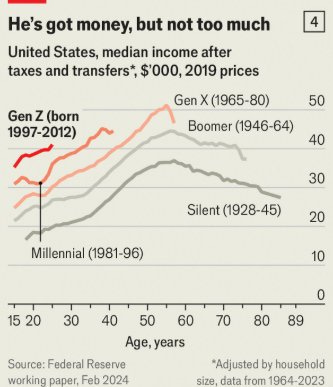
I linked to Scott’s original article last month and thanks to the interest it generated (and perhaps my clickbait-y headline) it got linked at Instapundit thanks to Sarah Hoyt. Scott got a lot of feedback on his post and shares some of that here:

“… Millennials and Generation Z have more money (adjusted for inflation ie cost-of-living, and compared at the same age) than their Boomer parents, to about the same degree that the Boomers exceeded their own parents. This is good and how it should be. The Boomers have successfully passed on a better life to their children”

First, I wish I’d been more careful to differentiate the following claims:

  1. Boomers had it much easier than later generations.
  2. The political system unfairly prioritizes Boomers over other generations.
  3. Boomers are uniquely bad on some axis like narcissism, selfishness, short-termism, or willingness to defect on the social contract.

Anti-Boomerism conflates all three of these positions, and in arguing against it, I tried to argue against all three of these positions — I think with varying degrees of success. But these are separate claims that could stand or fall separately, and I think a true argument against anti-Boomerists would demand they declare explicitly which ones they support — rather than letting them switch among them as convenient — then arguing against whichever ones they say are key to their position.

Second, I wish I’d highlighted how much of this discussion centers around disagreements over which policies are natural/unmarked vs. unnatural/marked.

Nobody is passing laws that literally say “confiscate wealth from Generation A and give it to Generation B”. We’re mostly discussing tax policy, where Tax Policy 1 is more favorable to old people, and Tax Policy 2 is more favorable to young people. If you’re young, you might feel like Tax Policy 1 is a declaration of intergenerational warfare where the old are enriching themselves at young people’s expense. But if you’re old, you might feel like reversing Tax Policy 1 and switching to Tax Policy 2 would be intergenerational warfare confiscating your stuff. But in fact, they’re just two different tax policies and it’s not obvious which one a fair society with no “intergenerational warfare” would have, even assuming there was such a thing. We’ll see this most clearly in the section on housing, but I’ll try to highlight it whenever it comes up.

I’m in a fighty frame of mind here and probably defend the Boomers (and myself) in these responses more than I would in an ideal world.

[…]

1: Top Comments I Especially Want To Highlight

Sokow writes:

Many Europeans chimed in to say this, including people whose opinions I trust.

I find this pretty interesting. We all know stories of American opinions infecting Europeans, like how they’re obsessed about anti-black racism, but rarely worry about anti-Roma racism which is much more prevalent there. I’d never heard anyone argue the opposite — that the European discourse is infecting Americans with ideas that don’t apply to our context — but it makes sense that this should happen. I might write a post on this.

Kevin Munger (Never Met A Science) writes:

    Hating Boomers (and talking about hating Boomers) is uninteresting and I agree morally dubious.

    But it is *emphatically* false that “Boomers were a perfectly normal American generation”. They have served far more terms in Congress than any generation before or since (and we currently have the oldest average age of elected officials in a legislative body IN THE WORLD other than apparently Cambodia), they have dominated the presidency (look up the birthdate of every major party candidate since the 2000 presidential election…), they controlled the commanding heights of major companies, cultural institutions (especially academica).

    They are a historically *unique* generation, for three intersecting reasons: 1. They are a uniquely large generation 2. they came of age as the country and its institutions were maturing 3. they are sticking around because of increased longevity. These are analytical facts, and they produce what I call “Boomer Ballast” — a concentration of our societies resources in one, older generation that increases the tension we are experiencing from technological innovation. Our demography is pulling us towards the past, the internet is pulling us into the future, and this I think is the major source of the anti-Boomer frustration.

    On the specifics of social security and why we might think Boomers have played things to their advantage (not bc they’re specifically evil but bc they have the political power to do so) — the key thing is that they have prevented forward-thinking politicians from fixing the inevitable hole in social security that comes from our demographic pyramid. It would have been relatively painless to increase the rate or incidence of the social security payroll tax at any point in the past 25 years, the looming demographic cliff was obvious and the increased burden could’ve been shared more equally. Instead, they prevented reforms and all of the fiscal pain from demographic shifts will be borne by younger generations.

I agree this is a strong argument, and part of why I think it’s helpful to separate the three points I mentioned at the beginning.

RH writes:

    We [Boomers] did [vote for ourselves to pay higher taxes and get fewer benefits]. My lifetime SS benefits will be 20-25 percent less than they would have been under previous law, and I voted for that. My SS tax rate went up itself, and has been well over 15% since the changes took effect, and the cap on earned income subject to that went up a lot. And I voted to accept all that because it was projected to be sufficient.

    Then the immigrant haters decided we needed fewer workers in the country, or at least fewer paying SS taxes, so they slowed legal immigration and pushed illegals into the underground economy, so they don’t pay taxes to support social security. And social security is going to get whacked again, plus the evils the SS system was intended to alleviate — people too old to work and too poor to live — will return.

I think this says something profound about politics. The problem is less that there’s some group of people who don’t believe in fairness, but that fairness is very hard to calculate.

Suppose RH is right (I haven’t checked), and that Social Security would be sustainable with lots of immigration. Then whether Boomers are paying “their fair share” or not depends on whether immigration is good or bad (a hard question!), and on whether we think of high vs. low immigration as the natural unmarked state of the universe (such that immigration opponents must “own” closed borders and compensate the losers), and on what kind of compensation the losers from closed borders deserve.

Someone else commented by saying we could solve all of these problems without inconveniencing either the Boomers or the young by just increasing taxes on a few ultra-rich people. The ultra-rich could reasonably say they didn’t create this problem and it’s unfair to tax them for it. But so could the Boomers and the young! So whose “fair share” is it?

Red Star: The Dawn of Soviet Sci-Fi

Filed under: Books, History, Media, Russia — Tags: , , , , , , , , — Nicholas @ 02:00

Feral Historian
Published 15 Aug 2025

Soviet science fiction is a long winding road and it starts with Alexander Bogdanov’s Red Star. Let’s start down that road.

00:00 Intro
03:15 Introducing Martian Socialism
06:35 Tektology
10:03 Crafting Communism
15:08 Mars Has Problems
19:06 Old Man of the Mountain
20:32 The Engineer Menni
(more…)

QotD: Refuting “Limitarianism”

Filed under: Books, Economics, Media, Politics, Quotations — Tags: , , , , — Nicholas @ 01:00

The visible edge of economic populism — the slogans, the soundbites — often conceals an intellectual iceberg beneath: ideas inherited from defunct economists, or sometimes living ones. One such idea with deep roots is limitarianism: the belief that there should be a cap on personal wealth.

Thomas Piketty defines it as “the idea that we should set a maximum on how much resources one individual can appropriate”. Its most articulate modern advocate is Ingrid Robeyns, whose recent book, Limitarianism: The Case Against Extreme Wealth, calls for a global wealth cap, which she suggests could be set around $10 million per person.

But limitarianism rests on an old intellectual error. An error common not only on the Left but even among some classical liberals too: the mistaken division between “production” and “distribution”. The assumption is that production happens through economic forces and that distribution is purely political, so policymakers can reshape who gets what without damaging how much is created.

This assumption leads to the view of the economy as a fixed pie. If one person has a large slice, others must go hungry. As Percy Shelley put it in Queen Mab (1813), “The rich have become rich by the toil of the poor … they increase in wealth by the misery of the workers”. While that may describe life under socialism, it misunderstands how wealth is generated in a capitalist system.

In capitalism, you can grow rich by making the pie bigger: creating products, companies, jobs and innovations that benefit not only yourself, but millions of others. This insight was first observed by French sociologist Gabriel Tarde, and later expanded by economists like Ludwig von Mises and Friedrich Hayek. Tarde noted how luxuries eventually become necessities. His example was forks and spoons, once the preserve of the wealthy, now found in every home.

For our generation, consider childbirth. Queen Anne had 17 pregnancies, yet none of her children survived to adulthood. Today, even the poorest families in developed countries can expect their children to live. This transformation wasn’t delivered by committees or redistribution. It was driven by the freedom of innovators to experiment, often starting with products only the wealthy could afford.

As Hayek wrote in The Constitution of Liberty:

    What today may seem extravagance or even waste, because it is enjoyed by the few and undreamed of by the masses, is payment for the experimentation with a style of living that will eventually be available to many.

Mani Basharzad, “What Zohran Mamdani Doesn’t Understand about Wealth”, Foundation for Economic Education, 2025-09-30.

Powered by WordPress