Quotulatiousness

December 2, 2025

The elites will continue pushing high immigration despite the obvious social costs it imposes

One of the very tip-top luxury beliefs is that massive immigration is always and under all circumstances a good thing. A great thing, even. One of the things about the holders of luxury beliefs is that they are almost always completely insulated from any of the consequences of their beliefs, and this is especially true in this case. As Lorenzo Warby points out, the elites’ devotion to this cause contributes to collapsing levels of trust in the society absorbing all those immigrants and deeply undermines confidence that the leadership have anyone else’s but their own best interests at heart:

There is a straightforward, respectable view on immigration to Western countries. More people means more transactions, means more gains from trade, so immigration is a good thing. Immigration grows the economy, it increases GDP, so sensible folk support immigration.

There are extra bells and whistles, such as providing needed skills; compensating for falling fertility; willingness to do jobs locals are not. All the extra bells and whistles have responses. Why not train locals (i.e., citizens)? Won’t the immigrants’ fertility also fall? (Yes, though possibly more slowly.) The real willingness is to do jobs at lower wages and conditions than the locals would accept. For instance, potentially using US H1B visas to bring in entry-level employees who will work for less, and in worse conditions, than the locals.

Moreover, increasing total GDP is not the same as increasing per capita GDP. Even with per capita GDP, there are always questions about the distribution of those gains to GDP.

Nevertheless, the basic intuition is: immigration means more transactions, more gains from trade. Those who believe in markets — in positive-sum interactions — should support immigration.

This is not the trumping response it appears to be. Immigration does not only import workers—nor even just increase mutual-gain transactions — it imports people, so potentially affects all aspects of the receiving society. This means, of course, that there are a much wider range of possible concerns about immigration that “yes, but more gains from trade” is not an adequate response to.

Efficiency and number of transactions are not the only issues for a social order, particularly not a flourishing social order. There are also issues of social cohesion; social resilience; connections and social capital; the distribution of GDP gains; effects on relative prices; congestion costs; how well institutions are managing the influx; effects on local communities; cultural differences; social coordination issues and the ability to manage collective action problems; increased competition for positional goods — goods that cannot, or are blocked from, responding to increased demand.

These are all legitimate grounds for concern that are not answered by “yes, but more gains from trade“. How many of those “yes, but more gains from trade” folk have grappled with mass rape and sexual exploitation of young women and girls as a cost of culturally divergent immigration (and its systematic mismanagement)? How many of those “yes, but more gains from trade” folk have grappled with violent disturbance, even civil war, as a potential cost of immigration, even though we have historical examples of precisely that?

If, on one hand, the respectable people insist “yes, but more gains from trade” is an adequate response, and that other concerns are not legitimate, this will almost certainly be taken as the contemptuous dismissal it is. Not only will it not be persuasive, it will (and does) generate anger and resentment.

If people have concerns that the “reasonable”, “liberal-minded” folk will not deal with — or, worse, are dismissive of such concerns even being raised — then people will turn to unreasonable and illiberal folk, if they are the only people who will respond to their concerns. Significant gaps in political markets will be filled by political entrepreneurs.

If folk are told that “if you believe in markets, you have to support (high levels of) immigration” then many folk will respond with “OK, I reject markets“. Moreover, it is simply false that market economics entails that mass immigration is a good thing.

The idea that there is some economic phenomena such that marginal costs exceeds marginal benefits for all people over all ranges in all forms is not Economic thinking, it is magical thinking. (More precisely, it is class-signalling parading as Economics.)

It is magical thinking that falls foul of economist Thomas Sowell‘s dictum that there are no solutions, only trade-offs. Immigrants may be engaging in lots of positive-sum, gains from trade transactions, yet still be imposing more costs than benefits on a society, and on resident citizens, precisely because societies are not just efficiency arenas for free-floating transactions and no one is just an economic transactor.

Update, 3 December: Welcome, Instapundit readers! Please do have a look around at some of my other posts you may find of interest. I send out a daily summary of posts here through my Substackhttps://substack.com/@nicholasrusson that you can subscribe to if you’d like to be informed of new posts in the future.
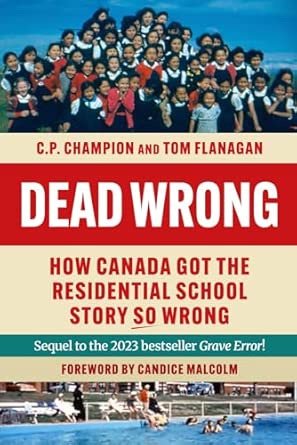
Dead Wrong: How Canada got the Residential School story so wrong

Filed under: Books, Cancon, History, Media, Politics — Tags: , , , , — Nicholas @ 03:00

Juno News shares Candice Malcolm‘s foreword to Dead Wrong by C.P. Champion and Tom Flanagan:

Canada is off track. We’ve lost our way.

How else could we make sense of the moral panic produced from a half-baked report coming from a small Indian Band in Central British Columbia in the spring of 2021? In response, the country lost its mind. Following reports of 215 “unmarked graves” at the site of the former Kamloops Residential School, the supposedly trusted sources of our society – journalists, elected officials, academics and so-called experts – reported fiction as fact, without doing any due diligence or research into the still unproven and questionable claims of mass graves and secret midnight burials of hundreds of deceased children.

A failure of this magnitude doesn’t happen instantaneously. It’s built over time as those who profess to speak the truth deliver deception, doublespeak, and misinformation – all in the name of addressing some grievance, advancing an agenda, and creating a narrative.

The only conclusion we can now draw is that our country is not what it should be, not what it was.

There are a myriad of complicated reasons to explain our clear downward trajectory – institutional capture, a hard-left consensus among political and cultural elites (driven in large part by government-funded journalists and the state broadcaster pushing woke propaganda), a large and inefficient bureaucracy that stifles growth and

innovation, institutions built upon a moral code that became unfashionable, and so on.

Canada has become a feminist country that proudly discriminates against men and diminishes the role of mothers. It has become a post-national country that loathes its founders and openly discriminates against individuals based on skin colour. It isn’t just post-Christian, it’s anti-Christian – evident from the treatment of Evangelical prayer leader Sean Feucht, the coordinated attacks against him in the summer of 2025 and the cancellation of tour stops across the country, not to mention total disinterest and cover-up of the 120+ churches that have been decimated and destroyed in the wake of the unmarked graves fiasco.

Over the past decade, we’ve witnessed our country fall from a functional system, into something almost unrecognizable.

The Canada I grew up in was safe, stable and secure. We knew our neighbours, we trusted institutions and didn’t worry too much about politics. Being Canadian meant something. We had a community, an identity, a shared purpose. Most of us believed in upward mobility and the Canadian dream: that if you work hard and play by the rules, you will have the same – or dare I say better – opportunities and quality of life than your parents.

This is clearly no longer the case for most Canadians under the age of 45, and that is a major problem for all of us.

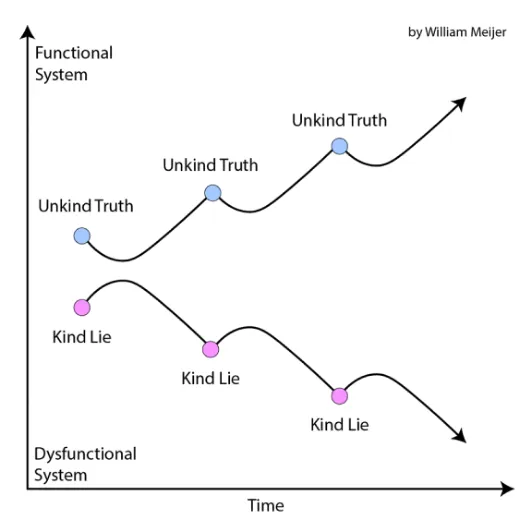
I came across a simple social graph by William Meijer that clearly explains what has happened better than anything else I’ve seen. You could apply this to countries, companies and even personal relationships.

Simply put: kindness got in the way of truth.

Meijer writes the accompanying caption: “An extreme commitment to the truth makes relationships acutely dysfunctional but systems chronically functional (think Elon Musk).

An extreme commitment to kindness makes relationships acutely functional but systems chronically dysfunctional (think Sweden, UK).”

Canada perhaps represents the “kind dysfunction” better than any other place.

H&R Handy Gun: A Smoothbore Pistol Killed Off by the NFA

Filed under: Cancon, History, USA, Weapons — Tags: , , , , — Nicholas @ 02:00

Forgotten Weapons
Published 19 Jul 2025

The Handy Gun was introduced by Harrington & Richardson in 1924. H&R took their Model 1915 single-barrel break-action shotgun and cut it down into a handgun. It got a pistol grip and an 8″ barrel, and was offered in both .410 and 28 gauge (the .410 model also able to fire some .44-caliber single-bullet cartridges). A 12″ version was also made, to be legal in a few states that had length restrictions. It was advertised specifically for personal protection, probably exploiting the common belief that one need not aim a shotgun at close range.

In 1931 H&R attempted to pivot the Handy Gun into the target pistol space, introducing .22LR and .32 S&W models with rifled barrels. These didn’t sell very well, as there were many other, better options for target pistols. A detachable wire stock was introduced in 1933, but this didn’t help much either.

Ultimately the National Firearms Act of 1934 conclusively killed off the Handy Gun (along with similar products from other companies, like Ithaca’s “Auto & Burglar”). That law categorized smoothbore pistols as “Any Other Weapons”, and subjected them to NFA registration with a $200 tax on their manufacture and a $5 tax on their transfer. This overhead destroyed demand for the gun, and the company simply ceased to offer it commercially. It did continue to be sold in Canada until World War Two however as Canadian law did not restrict it at that time. Total production was about 54,000.
(more…)

QotD: Brutalism “is to architects what propaganda was to communist leaders: It serves to make them feel powerful”

Filed under: Architecture, Britain, History, Politics, Quotations — Tags: , , , — Nicholas @ 01:00

When a country is intent on committing suicide, as is Britain, it celebrates the very things that have led, or are leading, to its demise. Whether this is because it thinks it no longer has a right to exist and the world would be better off without it, or whether it is because, when something appears inevitable to us, we welcome it to disguise our impotence to halt it, I do not know. But the fact is that London is about to have a museum devoted to the kind of architecture that has turned so much of Britain’s urban landscape into a visual nightmare, a scouring of the retina.

I have long suspected, but cannot prove with an indisputable argument, that this architecture has played its part in the brutalization of daily life and social behavior in the country. Certainly, it has dehumanized the appearance of many towns and cities; its harsh surfaces and willfully austere and jagged designs leave the mere human being feeling that he is about as welcome as an ant on a kitchen counter — which, indeed, he now much resembles.

This architecture is to architects what propaganda was to communist leaders: It serves to make them feel powerful, not despite the fact that so many people detest it, but because so many people detest it. They are like the doctors of old, who, if they could not cure their patients, could at least make them take the most repellent and noxious medicine, on the grounds that a little bit of what revolts you does you good.

The projected museum is in a former school in the north of London, designed in 1968. Here is fairly typical commentary on the building:

    Despite decades of wear and some unfortunate interventions, the raw concrete structure has remained a cherished example of socially driven modernist design.

It is to be noticed that the cherishing done here is independent of anyone who cherishes; as for “socially driven modernist design”, we might read “totalitarian”. Indeed, the building exudes totalitarianism, as raw reinforced concrete exudes ghastly stains after a short time.

Le Corbusier, one of the founders of this kind of architecture, was indeed a fascist in the most literal sense, though he had no real objection to communist totalitarianism, either. What he most hated was what he called the street, that is to say the place where people behave spontaneously and without direction from above, and where they are not corralled into functions imposed on them by all-wise socially driven architects. It was for this reason that he and his acolytes preferred to build urban wildernesses of the kind that have now been built the world over, but especially in Britain.

The architects who have been given the task of renewing the school building where the museum dedicated to architectural brutalism is to be housed have “noted its distinct geometry, as well as its symbolic presence reflecting the ideals of the school’s broader 1960s Brutalist architecture conceived in an era of social progress”.

Apologists for such architecture write a pure Soviet langue de bois — or perhaps I should say langue de béton, since concrete rather than wood is their favorite material:

    Consultation with the school, families and local stakeholders has underpinned the project from the outset, ensuring that the building’s next chapter remains tied to its founding ethos centered on architecture as a tool for collective learning and expression.

Does anyone, after the death of the late, not much lamented, Leonid Brezhnev, have thoughts that correspond to, or are couched in, words such as these? By their language shall ye know them.

Theodore Dalrymple, “Architects of Our Own Destruction”, New English Review, 2025-08-08.

December 1, 2025

If they’re behind bars, they can’t easily re-offend

Filed under: Government, Law, USA — Tags: , — Nicholas @ 05:00

In City Journal, Tal Fortgang makes the case for keeping repeat offenders in prison (which used to be the norm) rather than allowing the small minority of violent criminals to rejoin society ever more easily and more speedily:

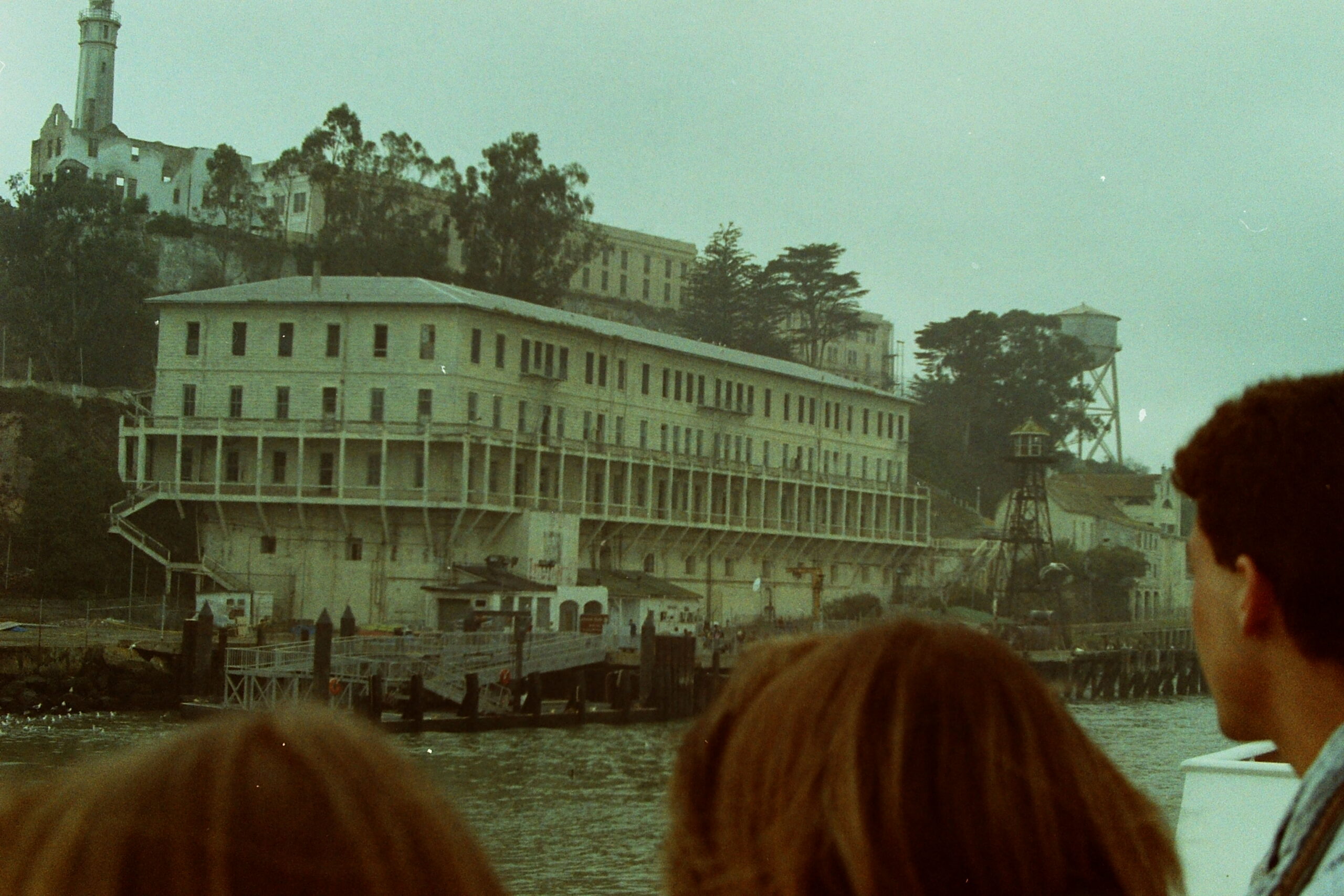
Approaching the dock at Alcatraz on a foggy January afternoon, 1991.
Photo by Nicholas Russon

It’s fashionable to blame America’s high incarceration rates on social injustice — and law enforcement — rather than lawbreaking. If policymakers would just provide disadvantaged people with sufficient resources and economic opportunity, on this view, the crime problem could be solved. That utopian vision gained traction during the mad summer of 2020, when activists, rioters, and the mainstream press, reacting to the death of George Floyd in Minneapolis, sought to replace law enforcement with programs that target the root causes of antisocial behavior. “As a society,” wrote activist Mariame Kaba in the New York Times, “we have been so indoctrinated with the idea that we solve problems by policing and caging people that many cannot imagine anything other than prisons and the police as solutions to violence and harm”.

The truth is otherwise. As Hyland’s case exemplified, violent crime is overwhelmingly the work of a small group of repeat offenders — that is, it is highly concentrated. The remedy, as [political scientist James Q.] Wilson argued half a century ago in his classic book Thinking About Crime, is not social engineering but incapacitation: keeping the violent few from striking again.

Most people are not teetering on the edge of felony, waiting to become, in the Left’s favored euphemism, a “justice-impacted individual”. The overwhelming majority of Americans never engage in serious criminal behavior, let alone commit violent felonies like murder or armed robbery. But those who do are likely to do so again, the evidence shows. Indeed, crime’s concentration is one of the most well-established findings in social science. In 1972, University of Pennsylvania criminologist Marvin Wolfgang reported that just 6 percent of males in a birth cohort accounted for 52 percent of all police contacts. (Violent crime, in particular, is overwhelmingly committed by young males.) Thirty years later, a similar study in Boston found that 3 percent of males were responsible for more than half of their cohort’s arrests after age 31.

The pattern holds across time and place. In 2014, data showed that three-quarters of state prisoners — the core of America’s incarcerated population — had at least five prior arrests. Nearly 5 percent had 31 or more, a larger share than those imprisoned after just a single arrest. In 2022, the New York Times reported that “nearly a third of all shoplifting arrests in New York City … involved just 327 people,” or 0.004 percent of the population, who had been “arrested and rearrested more than 6,000 times”. And in Oakland, a gun-violence-prevention group found that about 400 individuals — 0.1 percent of the city — were responsible for most of the city’s homicides. Violence is concentrated geographically as well. It occurs primarily in poor minority neighborhoods, whose members make up most of its victims.

These figures may even understate how concentrated antisocial behavior is. Wolfgang found that the offending minority committed dozens of crimes for every one that led to arrest. Fifty years later, a similar study reported that delinquent youth “self-reported over 25 delinquent offenses for every one police contact … with some youth reporting upwards of 290 delinquent offenses per police contact or arrest”. Combined with the fact that more than 60 percent of violent crimes reported each year go unsolved, the implication is clear: by the time a violent offender ends up in prison, he has likely committed multiple violent acts and many lesser offenses. Again, these patterns are most common among young men “who exhibited more psychopathic features”, the 2022 study’s authors noted, and “who displayed temperamental profiles characterized by low effortful control and high negative emotionality”. As a massive study from Sweden concludes: “The majority of violent crimes are perpetrated by a small number of persistent violent offenders, typically males, characterized by early onset of violent criminality, substance abuse, personality disorders, and nonviolent criminality”.

Update, 2 December: Welcome, Instapundit readers! Please do have a look around at some of my other posts you may find of interest. I send out a daily summary of posts here through my Substackhttps://substack.com/@nicholasrusson that you can subscribe to if you’d like to be informed of new posts in the future.

Why Uncle Sam entered the Vietnam War – W2W 055

TimeGhost History
Published 30 Nov 2025

The Vietnam War didn’t begin with American boots on the ground. It began with a promise — and a break. After the French defeat at Dien Bien Phu in 1954, the Geneva Accords split Vietnam at the 17th parallel. Ho Chi Minh led the North. In the South, Ngo Dinh Diem struggled to hold a fragile new state together while armed sects, crime syndicates, and political rivals challenged his rule. Washington saw Vietnam as the next battleground of the Cold War, and threw its support behind Diem — believing he could stop the spread of communism in Southeast Asia.

But as elections for reunification approached, tensions rose. Diem refused the vote. The North rebuilt. The South descended into repression, unrest, and quiet rebellion. Former Viet Minh fighters slipped into the shadows. Secret networks formed. Targeted killings began. By 1958, the storm clouds of a new war gathered — one the United States could no longer afford to ignore.

This episode explores how the U.S. found itself pulled into Vietnam, how Diem rose to power, why the reunification election collapsed, how American aid reshaped the South, and how the first sparks of insurgency ignited a conflict that would define a generation.

Join us as we trace the origins of a war long before the Marines landed at Da Nang — to understand why Uncle Sam entered the Vietnam War in the first place.
(more…)

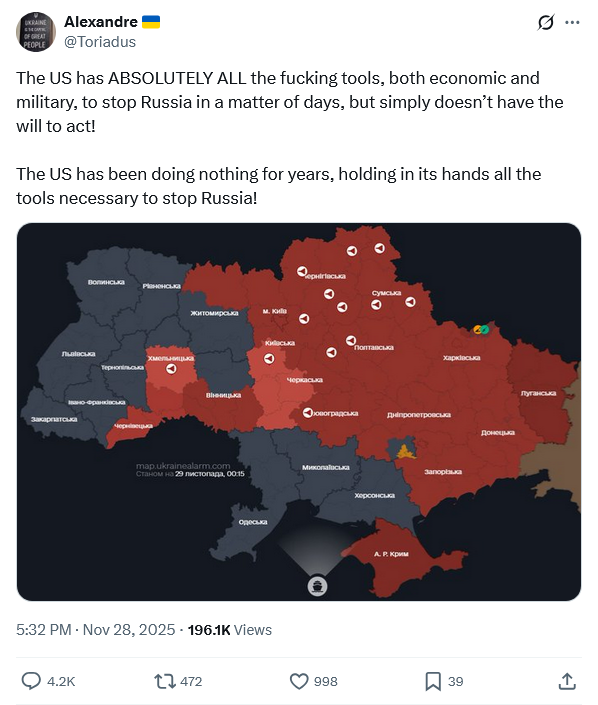
The United States is not – and should not be – the arbiter of all the world’s conflicts

Filed under: Military, Russia, USA — Tags: — Nicholas @ 03:00

On the social media site formerly known as Twitter, Devon Eriksen responds to a demand that the United States intervene directly in the Russia-Ukraine war:

America is not special. It’s just a country.

Yes, it’s the best country, but it is not the god of all other nations.

A lot of people like to point this out when saying that America doesn’t have special rights, but those same people very rapidly and conveniently forget that phrase when they want something from America.

Because no special rights means no special obligations.

We don’t have to rob our own citizens to keep African AIDS patients alive, or feed nations that overbreed while they are unable to feed themselves.

We don’t have to stop the genocide in East Ethnicklashistan.

We don’t have to accept refugees from anywhere, much less from the worst failed states on the planet.

We don’t have to cooperate with, fund, host, or even participate in the United Nations.

And we don’t have to take sides in ethnic conflicts on the other side of the planet.

The assumption that any conflict is between the good guys and the bad guys, and that the US must help the good guys is the assumption that America is god, responsible for bringing peace, justice, and prosperity to the planet.

Are you ready to be ruled by us as if we were gods?

No?

Then don’t demand justice from us as if we were gods.

The responsibility of America, as just another nation, is to look after the interests of Americans.

Look, we all know that Russia is dogshit at warfare, because wars are not won by being tough. They are won by being organized, coordinated, trained, and equipped.

And Russia is an extraction economy, not a high-trust, high-tech first world state.

So, yes, we could easily beat Russia in a war. That does not mean it is in our best interests to do so. Lots of costs, no benefits.

And while we are wealthiest nation in the history of … everything … we still have a severe overspending problem, mostly because we’ve been the wealthiest nation for a long time, and have developed some bad problem with political corruption, and throwing money at ever grifter with a sob story and an outstretched hand.

I know you think your cause is just. I’m not trying to tell you it isn’t, because I don’t need to decide if it is or not.

It doesn’t matter.

America’s responsibility is to Americans, and if that responsibility is not being discharged, taken care of, thoroughly handled, then support of any other side quest, regardless of its merits, is dereliction of duty.

Update, 2 December: Welcome, Instapundit readers! Please do have a look around at some of my other posts you may find of interest. I send out a daily summary of posts here through my Substackhttps://substack.com/@nicholasrusson that you can subscribe to if you’d like to be informed of new posts in the future.
Feeding the Robber Barons of the Gilded Age

Filed under: Food, History, USA — Tags: , , , , , , — Nicholas @ 02:00

Tasting History with Max Miller
Published 24 Jun 2025

Two majestic tiers of grapes, mandarin oranges, and raspberries suspended in pink champagne gelatin topped with whipped cream

City/Region: United States of America
Time Period: 1877

The Gilded Age, a period of late 19th century United States history when a handful of people got mind-bogglingly wealthy off of industrialization, conjures up images of the social elite in New York. High society families had more money than most of us could imagine, and they spent it in the most ostentatious ways. One of those ways was by throwing parties that could cost up to the equivalent of millions of dollars in today’s money. These parties would host lavish feasts with dozens of dishes, like this gelée macédoine, which would have been served in a sweet course alongside plum puddings, mince pies, and fruit cakes.

I’m not normally a fan of gelatin, but this was really nice. It wasn’t rubbery at all and the champagne flavor really comes through. It takes a while to make, but feels fancy and is delicious. You could also use the recipe as a base and swap out other types of wine or use other flavorings like liqueurs or spices. If you do add spices (cinnamon was popular at the time), put them into the syrup, and be sure to use a cloth jelly bag or nut milk bag to strain the gelatin mixture. This will ensure a clear jelly.

If you don’t have a gelatin mold, you can use a bundt cake pan, or really any bowl of pan that you have.

    Gelée Macédoine. This is made with any kind of jelly; however, jelly made with Champagne or sherry is preferable. Any of the delicate fruits of the season, such as grapes, cherries, peaches, strawberries, raspberries, mulberries, currants (on their stems), plums, and orange sections, or preserved fruits, such as brandied cherries, peaches, etc., are tastefully imbedded in the jelly, so as to show their forms and colors to best advantage.br/>
    Practical Cooking, and Dinner Giving by Mrs. Mary F. Henderson, New York City, 1877

(more…)

QotD: Young Cyrus, before he became “the Great”

Filed under: Education, History, Middle East, Quotations — Tags: , , , , — Nicholas @ 01:00

Of all Cyrus’s many qualities: willpower, strength, charisma, glibness, intelligence, handsomeness; Xenophon makes a point of emphasizing one in particular, and his choice might strike some readers as strange. It is this: “He did not run from being defeated into the refuge of not doing that in which he had been defeated”. Cyrus learned to love the feeling of failure, because failure means you’re facing a worthy challenge, failure means you haven’t set your sights too low, failure means you’ve encountered a stone hard enough to sharpen your own edge. Yes, it’s the exact opposite of the curse of the child prodigy, and it’s the key to Cyrus’s success. He doesn’t flee failure, he seeks it out, hungers for it, rushes towards it again and again, becoming a little scarier every time. He’s found a cognitive meta-tool, one of those secrets of the universe which, if you can actually internalize them, make you better at everything. Failure feels good to him rather than bad, is it any surprise he goes on to conquer the world?

And then … the most important single moment in Cyrus’s education, the moment when it becomes clear that he has actually set his sights appropriately high. He gets bored of the hunts. Cyrus deduces, correctly, that the hunts he is sent on, and all the other little missions, are contrived. Each is a problem designed to impart a lesson, a little puzzle box constructed by a demiurge with a solution in mind. In this respect, they’re like the problems in your math textbook. And like the problems in your math textbook, getting good at them is very dangerous, because it can mislead and delude you into thinking that you’ve gotten good at math, when actually you’ve gotten good at the sorts of problems that people put in textbooks.

When you’re taught from textbooks, you quickly learn a set of false lessons that are very useful for completing homework assignments but very bad in the real world. For example: all problems in textbooks are solvable, all problems in textbooks are worth solving (if you care about your grade), all problems in textbooks are solvable by yourself, and all of the problems are solvable using the techniques in the chapter you just read. But in the real world, the most important skills are not solving a quadratic by completing the square or whatever, the most important skills are: recognizing whether it’s possible to solve a given problem, recognizing whether solving it is worthwhile, figuring out who can help you with the task, and figuring out which tools can be brought to bear on it. The all-important meta-skills are not only left undeveloped by textbook problems, they’re actively sabotaged and undermined. This is why so many people who got straight As in school never amount to anything.

The section covering his childhood and education concludes with a dialogue between Cyrus and his father Astyages as the two ride together towards the border of Persia. Astyages recapitulates and summarizes all of the lessons that Cyrus has been taught, and adds one extra super-secret leadership tip. Cyrus wants to know how to attract followers and keep their loyalty, and his father gives him a very good answer which is: just be great. Be the best at what you do. Be phenomenally effective at everything. People aren’t stupid, they want to follow a winner, so be the kind of guy who’s going to win over and over again, and if you aren’t that guy, then maybe choose a different career.

Cyrus asks and so Astyages clarifies: no, he doesn’t mean be great at making speeches, or at crafting an image, or at appearing to be very good at things. He doesn’t mean attending “leadership seminars”, or getting an MBA, or joining a networking organization for “young leaders”. He means getting extremely good at the actual, workaday, object-level tasks of your trade: “There is no shorter road, son … to seeming to be prudent about such things … than becoming prudent about them”. In Cyrus’s case, this means tactics, logistics, personnel selection, drill, all the unglamorous parts of running an ancient army. People aren’t stupid. If they see that he is great at these things, they will flock to his banner. And then, one more ingredient, the final step: make it clear that you care about their welfare. “The road to it is the same as that one should take if he desires to be loved by his friends, for I think one must be evident doing good for them.”

There you have it. Two simple #lifehacks to winning undying loyalty: be the best in the world at what you do, and actually give a damn about the people under you. Our rulers could learn a thing or two from this book. So ends the education.1 The rest of this book, and the bulk of it, is Cyrus putting these lessons into practice by very rapidly conquering all of the Ancient Near East. It’s telegraphed well in advance that the final boss of this conquest will be the mighty Neo-Babylonian empire founded by Nebuchadnezzar,2 but before he takes them on Cyrus first has to grind levels by putting down an incipient rebellion by his grandfather’s Armenian vassals,3 then whipping the neighboring Chaldeans into line, then peeling away the allegiance of various Assyrian nobles, then defeating the Babylonians’ Greek allies and Egyptian mercenaries, before finally taking on the Great King in his Great City.

John Psmith, “REVIEW: The Education of Cyrus, by Xenophon”, Mr. and Mrs. Psmith’s Bookshelf, 2024-01-08.


  1. There’s actually one other noteworthy bit of advice that Astyages gives:
  2. “Above all else, remember for me never to delay providing provisions until need compels you; but when you are especially well off, then contrive before you are at a loss, for you will get more from whomever you ask if you do not seem to be in difficulty … be assured that you will be able to speak more persuasive words at just the moment when you are especially able to show that you are competent to do both good and harm.”

    This is decent enough advice, but what makes it especially fun is that Astyages also applies it to the gods! Maybe it’s his own pagan spin on “God helps those who help themselves”, but Cyrus takes this advice and takes it a step further. He learns to interpret auguries himself so that he will never be at the mercy of priests. Then when he needs an omen, he performs the sacrifices, decides which of the entrails, the weather, the stars, and so on are pointing his way, loudly points them out, and ignores the rest.

    Henrich notes in The Secret of our Success that divination can be an effective randomization strategy in certain sorts of game theoretic contests. But the true superpower is deciding on a case-by-case basis whether you’re going to act randomly, or just make everybody think you’re acting randomly.

  3. Yes, that Nebuchadnezzar.
  4. Somewhere in the middle of In Xanadu, Dalrymple recounts an old Arab proverb that goes: “Trust a snake before a Jew, and a Jew before a Greek. But never trust an Armenian.” The tricksy Armenian ruler more than lives up to this reputation. But when Cyrus outwits and captures him, his son shows up to beg for his life, and what follows is one of the more philosophically charged exchanges in the entire book. They go multiple rounds, but by the end of it the Armenian crown prince has put Cyrus in a logical box as deftly as Socrates ever did to one of his interlocutors, and Cyrus lets the king off with a warning. The prince goes on to combat anti-Armenian stereotypes by serving Cyrus faithfully to the end of his days.
« Newer Posts

Powered by WordPress