Kings and Generals
Published 1 Oct 2017Napoleon Bonaparte is one of the most talented military leaders in the history, so every battle he fought is fascinating, as well as his complete knowledge of tactical and strategic aspects of the war. He was part of the French Revolution and ended it, he was the biggest conqueror of Europe, but also brought its unity closer. The battle of Marengo of 1800, which took place during the War of the Second Coalition between Napoleon and Austrian troops under Baron Michael von Melas is interesting, as French leader committed a big mistake, but was able to score a big victory through sheer will and tactical acumen.
Support us on Patreon: http://www.patreon.com/KingsandGenerals or Paypal: http://paypal.me/kingsandgenerals
We are thankful to our patreons, who made this video possible: Koopinator, Ibrahim Rahman, Daisho, Łukasz Maliszewski, Nicolas Quinones, William Fluit and Juan Camilo Rodriguez
This video was narrated by good friend Officially Devin. Check out his channel for some kick-ass Let’s Plays. https://www.youtube.com/user/Official…
✔ Twitch ► https://www.twitch.tv/nurrrik_phoenix
✔ Twitter ► https://twitter.com/KingsGenerals
✔ Instagram ► https://www.instagram.com/nurrrrrik
✔ Steam ► http://steamcommunity.com/id/nurrrikPrimary sources used:
Chandler, David (1966). Campaigns of Napoleon. Scribner.
Hollins, David (2000). The Battle of Marengo 1800. Osprey Publishing
Тарле Е. В. Наполеон // Собрание сочинений: в 12 томах. — М.: Издательство АН СССР, 1959.Inspired by: BazBattles, Invicta (THFE), Epic History TV and Historia Civilis, Time Commanders
Machinimas made on Napoleon: Total War
Production Music courtesy of Epidemic Sound: http://www.epidemicsound.com, Napoleon: Total War
Songs used:
Richard Beddow – “Napoleon Bonaparte” – Total War Napoleon Soundtrack
Peter Sandberg – “Subtle Substitutes 3”
Johannes Bornlof – “Solemn”
Magnus Ringblom – “Marching In”
Johannes Bornlof – “Exile Before Dishonor”
Rannar Sillard – “Emperors of Tomorrow 13”
Rannard Sillard – “Deathmatch 3”
Johannes Bornlof – “Barbarians”
October 5, 2020
Napoleonic Wars: Battle of Marengo, 1800
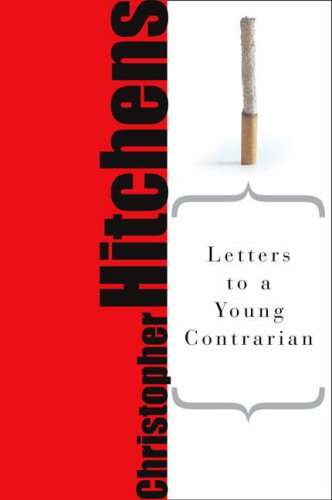
“Letters to a Young Contrarian was fundamentally a twentieth-century work by a man who thought of himself as a sixties radical”
In The Critic, Roland Elliott Brown considers the work of Christopher Hitchens, and particularly his Letters to a Young Contrarian from 2001:
The book is now nearly twenty years old. Hitchens wrote it in late 2000 and early 2001 for Perseus Books’ Rilke-inspired “Art of Mentoring” series, and it was published a month or so after 9/11. In view of this timeline, it occupies an eerily-placid DMZ between the “acceptable” 1990s Hitchens, whose only big sin against the political left had been to hound the centrist Bill Clinton, and the ostensibly-more isolated one post-2001, who took heart at the prospect of America using its military might against jihadis and Baathists. The book was largely a post-mortem on the intellectual battles of the twentieth century, and a lesson in writerly integrity. Today, it reads as a riposte to the new “populism” and the “awokening”.
Since Hitchens’s death from oesophageal cancer in 2011, his presence has been missed on major subjects. In a counterfactual world, it seems likely that Syria, ISIS, and the Iran nuclear negotiations (all entangled) would have occupied him in the first half of the 2010s, and that the potential unravelling of the American republic would have worried him in the second. Part of what his admirers miss, too […] is his performative flair. Though new media weren’t his passion, he owes much of his legacy to his YouTube archive, wherein his long-form lectures, debates, and C-span interviews seem, in hindsight, to have provided a model for the popularity of long-form podcasts.
The Letters can be read as a guide to giving an authentic performance as a political actor. Hitchens begins by selling an imagined student his lifestyle; in one good month, he writes (with some perhaps-inauthentic modesty), he has given evidence against Mother Teresa at the Vatican, taken pride in his arguments over Bosnia as Slobodan Milosevic went to the Hague, and had the thrill of being sued by Henry Kissinger. What the world needs now, the book implies, is for the young to find their appetite for the takedown. (One wonders to what extent his search for successors may have emerged from early intimations of mortality: in one C-span interview about the book, he also urged the youth not to take up smoking.)
[…]
But to reiterate, Letters to a Young Contrarian was fundamentally a twentieth-century work by a man who thought of himself as a sixties radical. Other sixties people like Noam Chomsky and Gore Vidal, with whom Hitchens would later fall out over the War on Terror, figure here in heroic roles. Radicals, he argues in the third chapter, are needed to force major issues. Would slavery have ended in America, he asks, if not for the fanaticism of John Brown? Many of his mentors — Peter Sedgwick, E.P. Thompson — were sometime British communists (and long-time socialists) who had ditched the Party after the Soviet invasion of Hungary (what a pity, then, that he never got to debate “the left” with Jordan Peterson).
Of course, Hitchens was not the only sixties radical to court influence in the 2000s, nor was he the most influential. Much of the radicalism he valued now comes to us — via less subtle mentors — in parody form: as sixties-worship gone sour, as a morbid focus on immutable characteristics, as a desire to short-circuit debate, as the unclean spirit that possesses young journalists to misrepresent their subjects so that they can gloat about the takedown. East of the old Iron Curtain, Alexander Lukashenko borrows a page from the dissidents of ’89 by carrying on “as if” there had been no pandemic, “as if” he had won a presidential election, and “as if” NATO was getting ready to invade Belarus. In such times, it seems worth living “as if” the cigarette-smoking ghost still had an eye on the scene.
Winchester Lever Action Development: Model 1866
Forgotten Weapons
Published 7 Jun 2017While the Henry Repeating Rifle had been an serious leap forward in firearms capability, it was not without problems. The biggest single weakness of the Henry was its magazine. The tube magazine was open to dirt and debris, the follower could easily come to rest on the shooter’s hand or anything used as a rest and stop the weapon from feeding, and the while system was rather prone to being damaged.
These problems would all be addressed with the addition of Nelson King’s new loading gate idea, which allowed Winchester to omit the exposed follower entirely, solving a bunch of complaints all at once. The new system was more durable, more reliable, and allowed the rifle to be loaded without the awkward manipulation required by the Henry. The King improvement also allowed the addition of a wooden handguard, which was a welcome addition — it does not take very many black powder rounds for a barrel to become uncomfortably hot to the touch.
At the same time that these improvements were being made, company politics were taking shape to end Benjamin T. Henry’s involvement with the company. Henry attempted to take over ownership of the company because he felt he was not profiting as much as he should, but he had assigned his patent rights to Oliver Winchester in exchange for his contract to manufacture the guns. As a result, Winchester was able to create a new company (the Winchester Repeating Arms Company) with full rights to the design patents and sideline Henry.
The 1866 rifle, which was formally called simply the Winchester Repeating Rifle would continue to use the .44 Henry Rimfire cartridge, but would be made in a wider variety of configurations than the Henry had been, including carbine, rifle, and musket barrel lengths. It would prove to be a very popular rifle, and opened the path to further improvement, as it put the Winchester company on excellent financial footing.
Cool Forgotten Weapons merchandise! http://shop.bbtv.com/collections/forg…
http://www.patreon.com/ForgottenWeapons
If you enjoy Forgotten Weapons, check out its sister channel, InRangeTV! http://www.youtube.com/InRangeTVShow
QotD: Language changes to accord with critical studies theory
A Canadian Broadcasting [Corporation] program also debuted a new term this past week: “non-straight cisgender people.” This is the newly approved newspeak for gay people, parsed through the language of critical queer studies. The proponents of this new language seem eager to retire familiar terms like “gay men” or “lesbians” — perhaps because they suggest that the homosexual experience is rooted in basic human nature and can exist outside the parameters of structural oppression. So they find ways to define us in terms of queer theory, insisting there are only oppressed LGBTQ+ people. That’s also why, for example, so many on the left insist that gay white men had very little to do with Stonewall, which was led, we’re told, by trans women of color, subsequently betrayed by white men, who stole the movement from them. That this is untrue is irrelevant. It’s a narrative which serves to dismantle structures of oppression. And that’s all that matters.
Leading progressive maternity and doula organizations now deploy and encourage a whole array of “gender-neutral language” with respect to sex, birth, labor, and parenting. And so we now have the terms “chest-feeding,” “persons who menstruate,” “persons who produce sperm,” and “birthing person” for breastfeeding, women, men, and mothers, respectively. And instead of a butthole, we have a “back-hole”; instead of a vagina, we have a “front hole.” “Ovaries” and “uterus” are now rendered as “internal organs,” which may strike you as somewhat vague. These may sound completely absurd now, but given the choke hold critical gender theory has on almost all elite organizations, you can be sure you’ll hear them soon enough. They’ll likely be mandatory if you want to prove you’re not a transphobe. It was an objection to one of these terms — “people who menstruate” — that got J.K. Rowling tarred again as a bigot.
Those of us who oppose this abuse of the English language, who try to abide by Orwell’s dictum to use the simplest, clearest Anglo-Saxon words to describe reality, are now instantly suspect. Given the fear of losing your job for resisting this madness, most people will submit to this linguistic distortion. As you can see everywhere, the stigma of being called a bigot sweeps away all objects before it. But the further this goes — and there is no limiting principle in critical theory at all — the less able we are to describe reality. Which is, of course, the point. Narratives, only narratives, exist. And power, only power, matters.
Andrew Sullivan, “China Is a Genocidal Menace”, New York, 2020-07-03.
October 4, 2020
The End of Gender by Dr. Debra Soh
In The Critic, Louise Perry reviews Debra Soh’s recent book The End of Gender:
Contrary to what is commonly believed, sex is defined not by chromosomes or our genitals or hormonal profiles, but by gametes, which are mature reproductive cells. There are only two types of gametes: small ones called sperm that are produced by males, and large ones called eggs that are produced by females. There are no intermediate types of gametes between egg and sperm cells. Sex is therefore binary. It is not a spectrum.
The chapters in the first two thirds of the book are mostly concerned with the transgender movement. Soh works through trans activist claims with admirable thoroughness — no, not all people with gender dysphoria will benefit from transitioning; yes, natal males do have a physical advantage over natal females in sports; no, not all trans people are motivated to transition for the same reasons.
This last point is particularly explosive in political terms, but there is no doubt that Soh is on firm ground scientifically. Researchers have long been aware of the existence of two distinct categories of trans women — that is, natal males who identify as women. One group — sometimes called “homosexual transsexuals” — usually transition at a young age, have sexual relationships exclusively with men, and tend to be stereotypically feminine from childhood.
Another group — known as “autogynephiles” — have a very different profile: transitioning later, usually having sexual relationships exclusively with women, and often living as conventionally masculine men until they begin the transition process. And this second group are motivated to transition as a result of autogynephilia (sexual arousal at the idea of being a woman), a fact that trans activists are reluctant to acknowledge, preferring, as Soh puts it, “to neutralise the sexual aspect of their wishes to transition”. But she attempts an optimistic argument for tolerance:
In our sex-negative culture, trans women’s concerns are dismissed as a sexual fetish if anything about transitioning relates to sexual desire … I advocate for compassion and not being judgmental.
Soh, who writes for Playboy and other outlets, describes herself as sex-positive and supports destigmatising all discussion of sexual desire. Although I sometimes grew bored with the regular detours in which Soh writes about how much she loves going clubbing with her gay friends, or describes the confiding relationships she has formed with the parents of trans-identifying children, I understand the purpose of these sections: reassurance. This is a book written by a liberal for liberals, which prescribes a medicinal dose of yet more liberalism — more tolerance, more scientific inquiry, and more intellectual diversity. And liberal readers will no doubt be comforted that Soh’s live-and-let-live framing allows them to play the role of open-minded progressive, rather than (as trans activists would have it) bigoted reactionary.
Upcycling a Layout Knife | Paul Sellers
Paul Sellers
Published 27 May 2016Paul shows how you can re-purpose and sharpen any old kitchen knife to serve as a layout knife that works as well as any other you can buy.
For more information on these topics, see https://paulsellers.com or https://woodworkingmasterclasses.com
QotD: What everyone always suspected about Washington, D.C.
A study shows that the greatest concentration of psychopaths is in Washington, DC. This is a contest in which it isn’t even close, as Politico informs us. But then again, you knew that, right?
Ryan Murphy, an economist at Southern Methodist University, “matched up the ‘constellation of disinhibition, boldness and meanness’ that marks psychopathy with a previously existing map of the states’ predominant personality traits, he found that dense, coastal areas scored highest by far – with Washington dominant among them. ‘The District of Columbia is measured to be far more psychopathic than any individual state in the country,’ Murphy writes in the paper.”
That explains an awful lot, now doesn’t it?
Justin Raimondo, “Washington, D.C. – The Epicenter of Crazy”, AntiWar.com, 2018-06-25.
October 3, 2020
History Summarized: Hawai’i
Overly Sarcastic Productions
Published 2 Oct 2020To learn more about the Native Hawaiian community and their culture, visit: https://www.hawaiiancouncil.org/about
This year, to celebrate Indigenous People’s Day, we’re taking a look at the history of Hawai’i, from its early history in the Polynesian maritime culture to its forming a Kingdom to its annexation by the United States. Beyond simply a special case in the story of American expansion, Hawai’i has a deep history that deserves to be better known.
SOURCES & Further Reading: Great Courses Lecture “Lifeways of Australia and the Pacific” by Craig Benjamin, Britannica Hawai’i, “The Navigators: Pathfinders of the Pacific” By Low & Estus, Lonely Planet Hawai’i History, and lots of discussion with a native Islander (see discord section below).
This video was edited by Sophia Ricciardi AKA “Indigo”. https://www.sophiakricci.com/
Our content is intended for teenage audiences and up.
DISCORD: https://discord.gg/kguuvvq — Come to the #New-Video-Discussion channel to chat about this video, and ask questions about Hawai’i to my friend Lady Eris#9175, a native Islander!
PATREON: https://www.Patreon.com/OSP
MERCH LINKS: http://rdbl.co/osp
OUR WEBSITE: https://www.OverlySarcasticProductions.com
Find us on Twitter https://www.Twitter.com/OSPYouTube
Find us on Reddit https://www.Reddit.com/r/OSP/
Sir John Glubb (“Glubb Pasha”), general and amateur historical theorist
In Quillette, Leo Nicolletto considers the theories of Sir John Glubb (commonly known as “Glubb Pasha”):

Glubb Pasha at a parade of the Arab Legion’s honor guard of the Jordanian army at the palace.
Detail of an original photo by Willem van de Poll via Wikimedia Commons.
Pasha Glubb was an English army officer who spent the best part of his career serving the newly-independent governments of Iraq and Jordan. An avid — if amateur — historian, he developed a theory on hegemonic orders that he called the “Fate of Empires.” Comparing a series of ancient and modern empires, he concluded that their average lifespan was 10 generations — about 250 years — and that, despite great geographic, technological, religious, and cultural differences, all empires follow a general pattern as they expand, develop, and finally decline and collapse. Although Glubb himself was the first to acknowledge the risks of over-simplification in his generalised model, his observations aptly describe, in broad-brushstrokes, not only the fate of past empires, but the contemporary situation in global politics today, particularly regarding the West and China.
Glubb was agnostic on whether the “laws” of history he claimed to uncover were at all deterministic, but hoped that, by understanding how empires decline and collapse, modern citizens stood a chance of avoiding their typical fate. And so, I want to consider ways in which the predicted collapse of Western hegemony might be averted. It’s another question whether or not such a collapse ought to be avoided. Glubb — as a man of his time and class — had imperialist tendencies, though his immersion in foreign cultures gave him an open-mindedness that is generally lacking in the present-day imperialists of Western conservative parties. At any rate, as we go along, I’ll suggest that if the West is to avoid the fate of past empires, it needs to stop acting like a typical empire. And to do that, it needs to move as far as possible from modern conservative policy — and its emphasis on corporate profit and economic growth — as it can.
* * *Glubb noted that empires tend to begin with a “breakout” phase, in which an insignificant nation on the margins of an established power — say, the Macedonians before Alexander, the Arabs before Muhammed, or the Mongols before Genghis Khan — suddenly overwhelms its neighbours. This “Age of Pioneers” becomes an “Age of Conquests” when, encouraged by early successes, the rising nation takes over the power structures of its conquered neighbour and continues to expand. Glubb noted that successful new empires are not motivated simply by loot and plunder. With an emphasis on “noble” virtues — adventurousness, courage, strength, and, importantly, honesty — rising empires don’t want simply to subdue the established power; they want to become as they perceive them to be: advanced, technological hegemons. The Arabs took over Greek and Persian institutions — as the Mongols would take over Chinese and Islamic institutions — to become masters of a revitalised and expanded civilisation.
A rising empire, argued Glubb, has at its advantage an optimistic sense of initiative, and a spirit of improvisation, that contrasts with the defensive deference to tradition found in more established powers, who have too much to lose by experimentation. The rising power, he claimed, is also typically marked by a racial homogeneity, and its members consequently feel a strong sense of duty and loyalty to their tribe. This frequently evolves into a sort of “ruling caste,” as the conquerors situate themselves at the head of the pre-existing societal order of the conquered, as happened in India, first with the Mughals, and later with the British.
Having established control over large, diverse territories, the new pax impera creates ideal conditions for trade. And so begins what Glubb called the “Age of Commerce.” The desire for honour and glory gradually becomes a desire for material riches. At first, the conquering class may participate only indirectly in such commerce. Their military success has made the roads and seas safe for merchants, whom they tax and protect, but from whom they remain aloof — indeed, it’s intriguing how low on the social scale merchants and businessmen are considered in many pre-modern cultures. But sooner or later, seeing the potential for riches, the ruling class can’t but get itself involved. However, Glubb claimed that at these still-early stages of the “Age of Commerce,” material gain is still seen in terms of national glory, an extension of political conquest. “Noble” virtues continue to be taught and idealised, above all a sense of duty to the nation.
The “Age of Commerce” thus gives way to an “Age of Affluence,” marked by great civic works and building projects, and investments in art and culture, as the rich look for ways to spend their newfound wealth. In our own day, this depiction aptly fits China. The ruling class of the Communist Party — long aloof, at least in theory, from material excess — has joined forces with the commercial classes to promote not just prosperity but fantastic wealth. All the same, many Chinese — in business as well as in engineering or research — describe their motivations just as much as a duty to the country as for their own or their family’s benefit. Success in business is a source of national pride.
Though perhaps not for long.

“Metal Machine” – The Tribute to Heavy Metal – Sabaton History 087 [Official]
Sabaton History
Published 2 Oct 2020Come touch my Metal Machine!
It is the song that serves best as a love letter to some of the greatest bands in Heavy Metal History. From Black Sabbath, to Iron Maiden, Judas Priest, to Metallica and Manowar — Metal Machine is a hymn to the musical influences of Sabaton.
Listen to “Metal Machine” on the album Primo Victoria:
https://music.sabaton.net/PrimoVictoriaListen to Sabaton on Spotify: http://smarturl.it/SabatonSpotify
Official Sabaton Merchandise Shop: http://bit.ly/SabatonOfficialShopHosted by: Indy Neidell
Written by: Markus Linke and Indy Neidell
Directed by: Astrid Deinhard and Wieke Kapteijns
Produced by: Pär Sundström, Astrid Deinhard and Spartacus Olsson
Creative Producer: Maria Kyhle
Executive Producers: Pär Sundström, Joakim Brodén, Tomas Sunmo, Indy Neidell, Astrid Deinhard, and Spartacus Olsson
Community Manager: Maria Kyhle
Post-Production Director: Wieke Kapteijns
Editor: Karolina Dołęga
Sound Editor: Marek Kaminski
Maps by: Eastory – https://www.youtube.com/c/eastory
Archive: Reuters/Screenocean – https://www.screenocean.comPictures of Black Sabbath, Judas Priest, Metallica, Manowar, Ronnie James Dio, and Mötley Crüe performing, courtesy of:
– Fernando Catalina Landa from Flickr
– Harry Potts from Wikimedia
– Raph_PH from Wikimedia
– dr_zoidberg from Flickr
– Aaron Rubin from Wikimedia
– Ozseepapa from Wikimedia
– Every Record Tells a Story
– Robson Batista on Flickr
– Shane Hirschman
– Alex Ex derivative work by Viniciusmc on Wikimedia
– MusikAnimal on Wikimedia
– Andrew King from Flickr
– Egghead06 from Wikimedia
– Diego Torres Silvestre Flickr
– Carl Lender on Flickr
– Ronald Ali-Khan from Wikimedia
– Rockman (www.rockman.no) from Wikimedia
– Catskingloves on Wikimedia
– antxoa from Flickr
– Firestormmd from Wikimedia
– Jockerre on Wikimedia
– whittlz from Flickr
– Edd from Flickr
– Drums600 from Wikimedia
– Mathias Trumpp from Wikimedia
– TommyD2019 from Wikimedia
– fürschtua from Flickr
– Bjornsphoto from Wikimedia
– Simon Davison from Flickr
– Mickey Sanker from Wikimedia
– Bjornsphoto from WikimediaVisual sources:
– National Archives NARA
– 20 minutos
– Icons from The Noun Project: Amplifier by Lee Mette, guitarist by ProSymbols and Marvdro, News Ad by Priyanka, Drum by Gan Khoon Lay.All music by: Sabaton
An OnLion Entertainment GmbH and Raging Beaver Publishing AB co-Production.
© Raging Beaver Publishing AB, 2019 – all rights reserved.
“The Tory party, desirous of a fat majority, will sell the country out over Europe”
In The Critic, Gawain Towler sees a major opportunity for Nigel Farage and the Brexit Party:
The simple fact is that this Government had the opportunity to do something about our negotiations with the EU in the months after the election. They had a whopping great majority and the goodwill of the nation. Boris had used his ebullience to present the country with a vision that with one bound we would be free, the deal was oven-ready, he was going to get Brexit done. Yes, he had inherited the Withdrawal Agreement, a deeply duff deal, from his predecessor. His resignation as Foreign Secretary over it gave us the confidence that he recognised it as such. And yet on the 25 January, a mere month after his triumphant election victory, he signed that same duff deal and condemned the country to this slow lingering betrayal. It was not necessary to do so, he could have pointed to the election, the vote, and with the support of the country gone to Brussels and made it clear he would not sign. This he signally failed to do.
So here we are again, with the EU making threatening noises, taking legal action with leaks coming out of Berlin and London suggesting that the UK is prepared to make more concessions. A No 10 spokesman confirmed that “The PM will be speaking to President von der Leyen tomorrow afternoon to take stock of negotiations and discuss next steps.”
According to Bruno Waterfield of The Times, “This is seen broadly as a good sign – if, as expected, the British prime minister is ready to signal a bit more give on fish, state aid and subsidy control”.
Note the “more give” – there has already been a lot of giving.
The thing is that Boris is beset with problems, with the Remain lobby, both on his own green benchers and elsewhere; yet again digging up dire predictions of economic meltdown, the CBI taking the lead. The ERG group of Tory sceptics have been oddly quiet, focusing more on Covid-19 than on the clear danger of a failed Brexit. There is no pressure on one side, and a great tidal wave of it pushing him to make a deal at any cost.
Then there is the electoral arithmetic. This shouldn’t matter so far out from an election, but the rumours of Boris’s political demise and the currents swirling around the Chancellor make Labour’s slight lead in the polls a matter of concern. Labour is beginning to solidify after years of infighting, but it is not cutting into Tory support.
That is where Nigel Farage and the Brexit Party come in.
[Weapons 101] How does a Mortar work?
Military History Visualized
Published 25 Mar 2016Patreon: https://www.patreon.com/join/mhv
Modern mortars evolved from the so-called “Stokes Mortar”, but the basic principles still apply. This video gives you a short overview on mortars.
A modern mortar is a weapon that provides short-range indirect fire at high angles, usually between 45 and 80 degree. Unlike traditional (old) mortars it was relatively small and mobile, which made it well-suited for trench warfare and also maneuver warfare, because unlike unwieldy artillery it could be used directly by the infantry units at the front line.
Script and further information here: http://militaryhistoryvisualized.com/…
—Social Media—
twitter: https://twitter.com/MilHiVisualized
tumblr: http://militaryhistoryvisualized.tumb…—Sources—
–Books–
Hogg, Ian V.: The Illustrated Encyclopedia of Ammunition–Websites & Links–
Great video that shows the removal of several augmenting charges at around 3:00
https://www.youtube.com/watch?v=hpy9O…http://www.globalsecurity.org/militar…
—Notes on Accuracy & “Methodology”—
Note that the mortar shell and mortar are not of the same type (and diameter in real life), but the functionality is similar.
1) The depicted Mortar Shell is a 8cm Wgr 38.
2) The depicted detailed Mortar is roughly a Esperanza 60mm Model “L” Mortar.
3) The depicted Mortars in the beginning are US M2 60mm mortars.
QotD: Literal first world problems
Many of today’s concerns, however valid or invalid any of them might be, are luxury concerns. Only rich people – by which I mean people whose standard of living is roughly that of ordinary citizens of first-world countries in the early 21st century – can afford to worry about the likes of climate change, species loss, the manner in which chickens are raised, urban sprawl, how locally “sourced” is the eggplant that we eat, and rising Gini coefficients.
Again, I don’t say that these and other modern concerns are invalid. Some are and some aren’t. But it’s good to pause from time to time to be thankful that we’re wealthy enough to have escaped most of the daily, much more horrible concerns that pressed immediately upon our ancestors. It’s appropriate to be grateful that we’re rich enough to worry about, say, what might happen in a few decades to the sea level in a distant country rather than about whether or not our children will die of starvation during the night.
Don Boudreaux, “Quotation of the Day…”, Café Hayek, 2018-05-27.
October 2, 2020
The Rape of Humanity at Babi Yar – War Against Humanity 019
World War Two
Published 1 Oct 2020Killing Jews by the thousands becomes the main way of eradicating the Jews in Eastern Europe in August and September 1941. The Mass Murder at Babi Yar in Kiev is yet another escalation in that process.
Join us on Patreon: https://www.patreon.com/TimeGhostHistory
Or join The TimeGhost Army directly at: https://timeghost.tvCheck out our TimeGhost History YouTube Channel: https://www.youtube.com/c/timeghost?s…
Follow WW2 day by day on Instagram @ww2_day_by_day – https://www.instagram.com/ww2_day_by_day
Between 2 Wars: https://www.youtube.com/playlist?list…
Source list: http://bit.ly/WW2sourcesHosted by: Spartacus Olsson
Written by: Joram Appel and Spartacus Olsson
Director: Astrid Deinhard
Producers: Astrid Deinhard and Spartacus Olsson
Executive Producers: Astrid Deinhard, Indy Neidell, Spartacus Olsson, Bodo Rittenauer
Post-Production Director: Wieke Kapteijns
Creative Producer: Maria Khyle
Research by: Joram Appel
Edited by: Miki Cackowski
Sound design: Marek Kamiński
Map animations: Eastory (https://www.youtube.com/c/eastory)Colorizations by:
Carlos Ortega Pereira, BlauColorizations – https://www.instagram.com/blaucolorizations
Julius Jääskeläinen – https://www.facebook.com/JJcolorization/
Tzo15 https://commons.wikimedia.org/wiki/Fi…
Mikolaj Uchman
Spartacus OlssonImage Sources:
Bundesarchiv
Yad Vashem 3725/4, 7717/273, 5705/29, 5705/43, 3150/37, 5705/48, 5705/53, 5705/54, 5705/21, 2725/7, 5705/12, 5705/20, 5705/22, 4788/72, 5705/26, 5705/40, 4613/1055, 3521/134, 3521/133
USHMM
Narodowe Archiwum Cyfrowe
from the Noun Project: Skull by Muhamad Ulum, soldier by Simon ChildSoundtracks from the Epidemic Sound:
Cobby Costa – “Flight Path”
Andreas Jamsheree – “Guilty Shadows 4”
Jon Bjork – “For the Many”
Farell Wooten – “Blunt Object”
Fabien Tell – “Never Forget”
Gunnar Johnsen – “Not Safe Yet”Sources:
Berkhoff, Karel (ed.), Basic Historical Narrative of the Babi Yar Holocaust Memorial Center (2018).
Desbois, Patrick, The Holocaust by Bullets: A Priest’s Journey to Uncover the Truth Behind the Murder of 1.5 Million Jews (2008).
Fox, Holquist and Martin, The Holocaust in the East: Local Perpetrators and Soviet Responses (2014).
Kay, Alex and David Stahel, Mass Violence in Nazi-Occupied Europe (2018).
Longerich, Peter, The Unwritten Order: Hitler’s Role in the Final Solution (2001)
Longerich, Peter, Holocaust: The Nazi Persecution and Murder of the Jews (2010).
Klee, dressen and Reiss, The Good Old Days: The Holocaust as Seen by its Perpetrators and Bystanders (1991).
Müller, “The Brutalisation of Warfare, Nazi Crimes and the Wehrmacht”, In: Erickson & Dilks, Barbarossa: The Axis and the Allies.
Pieper, Henning, Fegelein’s Horsemen and Genocidal Warfare: The SS Cavalry Brigade in the Soviet Union (2015).
Rutherford, Jeff, Combat And Genocide on the Eastern Front: The German Infantry’s War, 1941-1944 (2014).
Snyder, Timothy, Bloodlands: Europe Between Hitler and Stalin (2010).
United States Holocaust Memorial Museum, Encyclopaedia of Camps and Ghettos, 1933-1945, volume II, Part A (2012).
United States Holocaust Memorial Museum, Encyclopaedia of Camps and Ghettos, 1933-1945, volume II, Part B (2012).Archive by Screenocean/Reuters https://www.screenocean.com.
A TimeGhost chronological documentary produced by OnLion Entertainment GmbH.
From the comments:
World War Two
3 hours ago
No one should have to go through what the subjects of todays episode went through. Every one of the 33,000 victims of the mass-murder at Babi Yar has their own personal story. They were humans, just like you and me, with memories, interests, hobbies, fears, hopes and loved ones. This is why we tried to make this episode as personal as we could – So that we don’t forget that we’re talking about real people here.