Quotulatiousness

December 6, 2025

The least offensive kind of soft power – The Rest is History

Filed under: Books, Britain, History — Tags: , , — Nicholas @ 05:00

Ed West recounts his (very) early discovery of The Rest is History, a podcast featuring Dominic Sandbrook and Tom Holland (not that Tom Holland, I’m told). I’ve been a (free) subscriber on YouTube for the last year or two, but Ed got there much earlier than I did:

The Rest is History must be the only thing of which I can say that I was into it before it was popular, my sole experience of being an early adopter. I remember listening to the very first episode as soon as it was released, during Lockdown 2, because I had been a fan of Tom Holland for years and followed him on Twitter. Straight away, I knew that it would be an enormous success, because even people who rarely watched history documentaries or read history books would find it entertaining.

And now, as they say, “the rest is history” (ho ho). The programme has just been named Apple Podcasts Show of the Year 2025, the first ever British winner, and is beyond successful, into the realm of “phenomenon”. When television writers in the distant future make dramas set in the 2020s and wish to give immediate shorthand to establish the decade, they’ll put The Rest is History soundtrack somewhere in the background, just as they always have Tears for Fears playing on the radio during any drama set in the 80s.

It became such a huge part of my life that, when cooking or cleaning and unresponsive to questions, the children came to learn that I must be listening to “Tom and Dom” on my AirPods. Initially, of course, when I mentioned that I had actually met Tom Holland a few times, they’d respond with awe until they realised that I was not talking about the Spiderman actor. It became a running joke about “your Tom Holland” rather than the “famous” one.

During the golden years of television there were a number of shows which became so commonly popular in one’s friendship circles that they were routinely talked about – The Sopranos, The Wire, Breaking Bad or Game of Thrones – but there were always plenty of people who had never watched them; there’s so much choice, after all, and the media culture has fragmented.

As Tom and Dom discussed on an old episode about the 1990s, that was the last period when the whole country had a common popular culture. Yet The Rest is History is approaching something close to that. It’s become so all-pervading that literally everyone I know, or ever speak to, listens to it. Perhaps I live in a bubble, but it’s a warm and cosy bubble filled with chat about the Kaiser’s deck shoes and Costa Rica’s infamous Dr Valverde, a sick and twisted psychopath who liked to torture frogs. The word I’d use to describe the show is “wholesome”, a term they’re fond of, an escape from the modern world, without rancour, hectoring or — crucially — swearing.

I realised that it must have become something more than popular when I read that it was the biggest podcast in Finland. Admittedly the Finnish market is not globally important, but this obviously wasn’t some quirky localised fanbase, like Norman Wisdom in Albania. It had become big everywhere, including the largest market of all; to use an analogy that Holland might appreciate, they’d reached their Ed Sullivan moment.

[…]

All the great drama series of the 2000s I mentioned were American, and I’d even go as far as to argue that The Rest is History is now Britain’s main cultural export and proponent of soft power. While the case might be made for the Premier League or Warhammer, the Goalhanger production has far more sway on international elites and how educated, cultured people around the world see our country.

Foreigners tend to value an idea of Britishness characterised by classiness and erudition, but also humour and modesty. Yet the global popularity of our national brand is out of tune with what our own cultural elites value, which reflects their sense of cringe but often comes across as strangely parochial and inward-looking. Two erudite historians who wear their scholarship lightly, whose interests are openly Anglocentric but reflect a passionate interest in the world beyond our island, talking to the audience like a pair of friendly academics in a cosy pub in Oxford – that’s the fantasy they want.

Fans are always conscious that any show will pass its peak, and then start to decline as everyone runs out of ideas. There’s no sign of it yet, and the good thing about history is that it’s literally endless, and you can always return to the subject at greater length. Their recent series on Nelson was outstanding, despite covering previous ground, and nothing says the holiday season like that festive subject, the Nazis. I can’t wait for the eleven-episode series about the Costa Rican Civil War.

September 28, 2025

The beginning woodworker … an easy mark

Filed under: Books, Media, Tools, Woodworking — Tags: , , , , — Nicholas @ 03:00

On his Substack, Christopher Schwarz posts a weekly “earlywood” article pulled from his extensive back-catalogue of woodworking books and magazine articles. This week, he addresses the plight of the beginner in the woodworking hobby just before the internet became ubiquitous:

When people begin woodworking, most go through a phase (I did) in which they are willing to soak up every single piece of information they can find. Many will subscribe to multiple woodworking magazines, buy astonishing numbers of woodworking books, seek out catalogs and advertisements for woodworking tools, and buy anything they can afford that looks remotely useful.

This is when people are vulnerable. They need guidance. Unfortunately, woodworking is a mostly solitary pursuit. And so we spend incredible, astonishing and shocking amounts of money on equipment, books and instruction. And most of it is of questionable worth.

Because of this phenomenon:

  1. The woodworking magazine business had a glut of magazines. When we ran the numbers in the 1990s, we surmised that there should be three magazines serving woodworkers. Instead, there were more: Fine Woodworking, WOOD, American Woodworker, Woodsmith, Shopnotes, Workbench, Popular Woodworking, Woodworker’s Journal, Woodshop News, Woodcraft, Weekend Woodcrafts, Woodwork and a host of specialized magazines. What propped up these magazines? Beginners. Eventually, most woodworkers winnow their subscriptions down to one or two magazines. But the spendthrift beginner made it possible for many magazines to survive.1
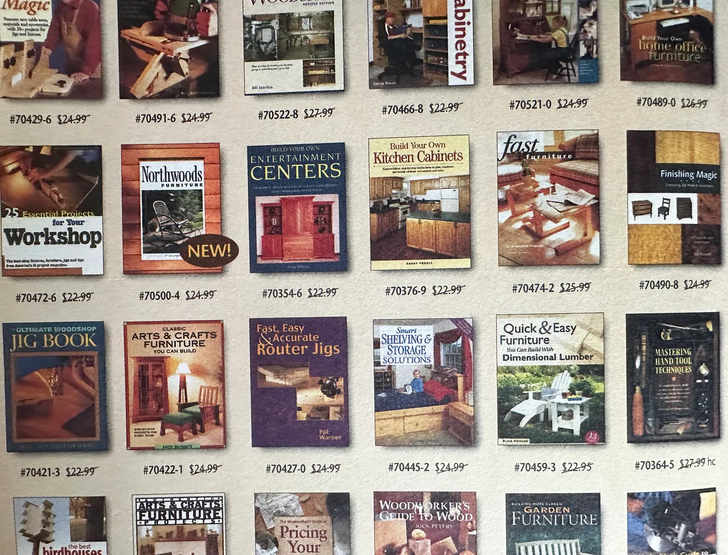
  2. The woodworking book industry produced a glut of books. In the 1990s, my mailbox was stuffed with new woodworking books every week. It wasn’t unusual to see seven or eight new woodworking titles in a month. That’s coo-coo. Why did this work? New woodworkers wanted the latest information. New books are better than old books (duh!). And so publishers churned out books that had an 18-month life cycle before disappearing forever.2
  3. The woodworking tool industry thrives on new SKUs. After covering woodworking tool manufacturers for nearly three decades, it’s obvious that they introduce new products every year to goose sales. That’s why you have a new crop of cordless drill/drivers every year. And it’s also why you have a rash of odd products that seem (on the surface) to be innovative – silicone glue brushes, painter’s pyramids, many router table jigs, marrying a chisel with a rasp, aluminum squares, putting a laser on everything, oddball and worthless sanders (the Black & Decker Mouse; Porter-Cable Profile Sanders), and battery-powered clamps and tape measures. The list is endless, and it’s not a modern phenomenon. When my grandfather was woodworking in the 1970s, he was charmed by a jig that let you cut dovetails with a corded drill. The only people who are dumb enough to fall for these products are beginners and woodworking journalists. Beginners don’t know better, and journalists need copy to fill the empty space between the covers.3

Some of you might be thinking I’m exaggerating my experiences. I’m not. The good news is that the Internet did a Half-Nelson on most of these stupid business practices. When people now go through their “indiscriminate sponge” phase, they do it on YouTube and soak up as much ridiculousness as they wish.

For free. Mostly.

Eventually, they will be able to ignore the tool-chugging nincompoops and focus on what’s important: Building basic skills using simple and robust tools (and maybe a few well-built machines).

Honestly, it’s a good thing to be a bit jaded about the woodworking tool and publishing industries. It makes you a better consumer and encourages us to do better. So please, for the sake of the future of the craft, don’t buy the Bench Cookies.


  1. Some modern context follows. Many of these magazines have disappeared or have been consolidated. But you know what? I still think we have too many woodworking magazines these days. Or not enough. I forget which is right.
  2. More modern context follows. Most of these publishers have gone tits up. And good riddance. We don’t need a new book every year on advanced router techniques.
  3. Modern context follows. Nothing has changed here.

I matched this profile of the “indiscriminate sponge” beginner and I had huge numbers of woodworking books and magazines … until I finally noticed that the magazine articles in the latest issue were basically the same as the ones I’d first seen three years earlier, just with more gee-gaws and doo-dads added (microadjusters-for-everything were flavour of the month when I finally exited my sponge phase).

August 1, 2025

Australia saw Britain’s awful Online Safety Act and said “hold my beer”

In The Freeman, Nicole James discusses how Australia’s attempt to protect young, innocent eyes from the terrors of the internet seems to be having all kinds of unforeseen impacts on adults:

Commonwealth Coat of Arms of Australia (1912).
Quarterly of six, the first quarter Argent a Cross Gules charged with a Lion passant guardant between on each limb a Mullet of eight points Or; the second Azure five Mullets, one of eight, two of seven, one of six and one of five points of the first (representing the Constellation of the Southern Cross) ensigned with an Imperial Crown proper; the third of the first a Maltese Cross of the fourth, surmounted by a like Imperial Crown; the fourth of the third, on a Perch wreathed Vert and Gules an Australian Piping Shrike displayed also proper; the fifth also Or a Swan naiant to the sinister Sable; the last of the first, a Lion passant of the second, the whole within a Bordure Ermine; for the Crest on a Wreath Or and Azure A Seven-pointed Star Or, and for Supporters dexter a Kangaroo, sinister an Emu, both proper.

Once upon a time, not so long ago, children roamed freely through the pixelated wilderness of the Internet, posting dog memes, finding kindred spirits in weird little corners of Tumblr, and learning how to contour like Kylie Jenner. It was all chaotic, noisy, and entirely normal.

Now? Well, welcome to Australia in 2025, where the new Online Safety Amendment (Social Media Minimum Age) Bill has galloped through Parliament like a runaway Shetland pony, banning under-16s from social media. This is a full-blown digital eviction. And the ban isn’t limited just to TikTok and Snapchat. It also extends to YouTube (yes, YouTube), where apparently autoplay is now considered a gateway drug.

And how will they enforce this sweeping national grounding? Age verification, of course. Potentially through facial recognition. Not for the kids, mind you; they’ll simply be locked out. It’s everyone else who’ll need to prove they’re not children. Because nothing says “welcome to adulthood” like having to scan your actual face just to post a birthday shoutout or watch a slow-cooker recipe reel. All to reassure a tech platform that you’re not a rogue 14-year-old with strong opinions and a ring light.

The bill’s spiritual mother, eSafety Commissioner Julie Inman Grant, who, fun fact, once interviewed for a job at the CIA to analyze serial killers, gave a passionate speech at the National Press Club called “Swimming Between the Digital Flags”. It sounded very beachy and breezy until you realized she meant regulatory flags, and not the ones you’d use at Bondi. Her point was clear: the online world is full of rips and sharks and emotional jellyfish, and children must be protected from being dragged under.

Which is noble. Obviously. But somewhere between “protect the kids” and “build a biometric panopticon”, the line got a little smeared.

And where, you might ask, were parents in all this? Sitting quietly in the back, apparently, while Canberra (Australia’s Washington, DC) appointed itself Mum, Dad, the school principal, and possibly even the family dog. Because this isn’t just about safety; it’s about who decides what kids can see, say, share, and, in the case of a few bold young TikTokers, lip-sync while delivering motivational speeches to two mildly traumatized budgies.

The idea behind the project is that children are being harmed online, and honestly, yes, some are. The Internet is not all kittens and cake recipes. But rather than investing in education or digital literacy, the government has opted for a full blackout. It’s like banning scissors because one kid snipped their fringe into a reverse mullet.

And here’s the kicker. The bill had a consultation period of just 24 hours. That’s less time than it takes to read the terms and conditions you just agreed to without reading. (Don’t lie, we’ve all done it.)

In that tight little window, more than 15,000 submissions were made, and while some were supportive, the vast majority sounded the alarm. LGBTQIA+ organizations warned of disconnected teens losing safe spaces. Indigenous advocates pointed out the risks of further digital exclusion. Psychologists, educators, digital rights groups, and even a Community Soccer Club raised concerns.

July 22, 2025

The internet keeps getting worse. Let’s talk about why.

Jared Henderson
Published 16 Jul 2025

Why do major online platforms keep getting worse? Cory Doctorow’s work helps us understand the pattern of growth, decline, and eventual demise.

→ Timestamps
00:00 Beginning
00:51 How Platforms Die
08:29 The Death of a Platform (From the Inside)
12:14 Ads, Everywhere
14:47 Yes, I Make Money from Ads
16:32 Bots
22:04 The Internet We Need
(more…)

July 21, 2025

AI slop seems to have finally triggered significant pushback

Filed under: Business, Media, Technology — Tags: , , , , , — Nicholas @ 03:00

Ted Gioia says that he’s seeing strong indicators that the AI slop superabundance has helped create a widespread rejection of it and all its works:

2025 has been the year of garbage culture.

Creators watch in horror as dismal AI slop threatens their livelihoods — and the integrity of their fields. It’s everywhere, spreading faster than a pharaoh’s plague.

In recent months, we’ve been bombarded with millions of lousy AI songs, idiotic AI videos, and clumsy AI images. Error-filled AI texts are everywhere — from your workplace memos to the books sold on Amazon.com.

Even my lowly vocation, music journalism, gets turned into a joke when it’s accompanied by slop images of fake events.

No, these things did not really happen.

But something has changed in the last few days.

The garbage hasn’t disappeared. It’s still everywhere, stinking up the joint.

But people are disgusted, and finally pushing back. And they are doing so with such fervor that even the biggest AI companies are now getting nervous and pulling back.

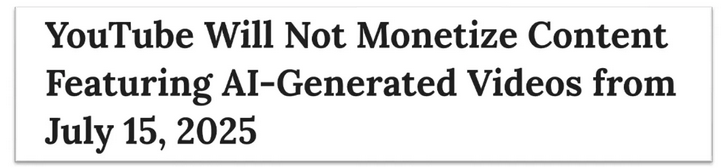
Just consider this surprising headline:

This was stunning news. YouTube is part of the biggest AI slop promoter of them all — namely the Google/Alphabet empire. How can they possibly abandon AI garbage? Their bosses are the biggest slopmasters of them all.

After this shocking news reverberated through the creative economy, YouTube started to backtrack. They said that they would not punish every AI video — some can still be monetized.

But even the revised guidelines are still a major blow to AI slop purveyors. YouTube made clear that “creators are required to disclose when their realistic content is altered or synthetic”. That’s a huge win—we finally have a requirement for disclosure, and it came straight from the dark planet Alphabet.

YouTube also stressed that it opposes “content that is mass-produced or repetitive, which is content viewers often consider spam”. This is just a step away from blocking slop.

Update, 22 July: Ted posted a follow-up with a bit more evidence that the pushback is working:

In my latest article I criticized Spotify for allowing uploads of unauthorized AI tracks to the profiles of dead musicians.

But the company may finally be listening to criticisms of its AI policies. In this case, Spotify has now taken steps to stop the abuses, and a spokesperson reached out to me today with an update and expressing a clear and proper policy on AI fraud.

I share it below (and have also updated my article):

    We’ve flagged the issue to SoundOn, the distributor of the content in question, and it has been removed. This violates Spotify’s deceptive content policies, which prohibit impersonation intended to mislead, such as replicating another creator’s name, image, or description, or posing as a person, brand, or organization in a deceptive manner. This is not allowed. We take action against licensors and distributors who fail to police for this kind of fraud and those who commit repeated or egregious violations can and have been permanently removed from Spotify.

They acted quickly, and I give them credit for that.

Update the second, 23 July: Ah, Spotify giveth and Spotify taketh away:

“Spotify is publishing new, AI-generated songs on the official pages of artists who died years ago without the permission of their estates or record labels,” reports 404 Media.

This scandal came to light because of an AI song attributed to Blaze Foley, who died in 1989. The bogus track is accompanied by an AI-generated image of a man who bears no resemblance to the singer.

What’s going on here? Is this just ignorance or carelessness at Spotify? Or does it represent something more sinister — another example of the company’s willingness to deceive users in the pursuit of profits?

These scams must stop. If Spotify doesn’t fix this mess immediately, courts should intervene.

But the dead musician scandal is just a start — because other bizarre things are happening at Spotify.

The whole situation is positively surreal.

July 15, 2025

QotD: Music on YouTube

Filed under: Media, Quotations, Technology — Tags: , , , , , , — Nicholas @ 01:00

High on my list of esoteric forgotten things that I still love is ’70s and ’80s electric jazz fusion and the more esoteric reaches of prog rock adjacent to it. Return To Forever, Brand X, Billy Cobham, Mahavishnu Orchestra, Weather Report, that sort of thing. Also its modern descendants like Planet X and Protocol.

I’ve spent years trying to encourage the YouTube algorithm to find me more stuff like this. Fairly successfully, until recently it seems all I can get is repeats of stuff I’ve already heard.

Could be the algorithm is stuck in a rut and underweighting novelty. Or it could be that YouTube’s coverage is inadequate. But this morning the truly horrifying possibility occurred to me. That YouTube’s coverage is complete, and …

Maybe … maybe I’ve heard it all.

ESR, Twitter, 2025-04-14.

June 25, 2025

Experts – “The shorter, the better”. Audiences – “Gimme more long-form, stat!”

Filed under: Books, Media — Tags: , , — Nicholas @ 03:00

At The Honest Broker, Ted Gioia notes that the experts are all-in on shorter videos, but actual audiences are clearly now more interested in much longer-form treatments:

When I saw the numbers, I couldn’t believe them.

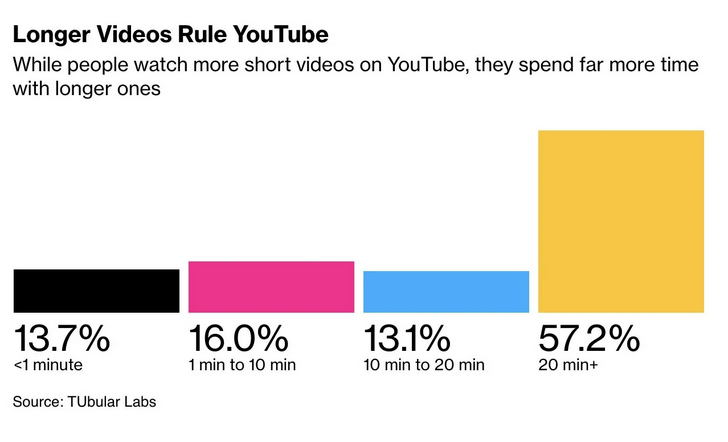
Every digital platform is flooding the market with short videos, but the audience is now spending more time with longform video — and by a huge margin.

Source: Tubular Labs

Some video creators have already figured this out. That’s why the number of videos longer than 20 minutes uploaded on YouTube grew from 1.3 million to 8.5 million in just two years.

That’s a staggering six-fold increase. But even short videos are now getting longer. Social media consultants call this the “long short” format. Sometimes they are used as teasers to draw viewers to still longer media (often on another platform).

Movies are also getting longer. At first glance, that makes no sense — more people are watching films at home on small digital devices, where Hollywood fare has to compete with bite-sized junk from TikTok and Instagram.

You might think that filmmakers would feel forced to compress their storytelling, but the opposite is true. They are learning that audiences crave something longer and more immersive than a TikTok.

At first, Hollywood insiders tried to imitate the ultra-short aesthetic, but they failed — sometimes in colossal fashion. (Does anyone remember the Quibi fiasco?)

Now they not only embrace long films, but happily release sprawling mega-movies longer than the Boston Marathon. Dune Two ran for 166 minutes — not even Eliud Kipchoge does that. Oppenheimer clocked in at 180 minutes. Scorsese’s Killers of the Flower Moon lasted a mind-boggling 206 minutes.

The studios would have vetoed these excesses just a few years ago. Not anymore.

Songs are also getting longer. The top ten hits on Billboard actually increased twenty seconds in duration last year. Five top ten hits ran for more than five minutes.

Two of those long hit songs came from Taylor Swift — who has been a champion of longer immersive musical experiences, most notably in her insanely successful Eras tour. She set the record for the biggest money-generating roadshow in music history, and did it with a performance twice as long as a Mahler symphony.

These Swift concerts run for three-and-a-half hours (just like Scorsese at his most maniacal), and include more than 40 songs. They’re grouped in ten separate acts, each built around a different era in her career.

Ten acts? Really?

Even Wagner stopped short of that. But the Eras tour generated more than $2 billion in revenues. And all this happened while experts were touting 15-second songs on TikTok as the future of music.

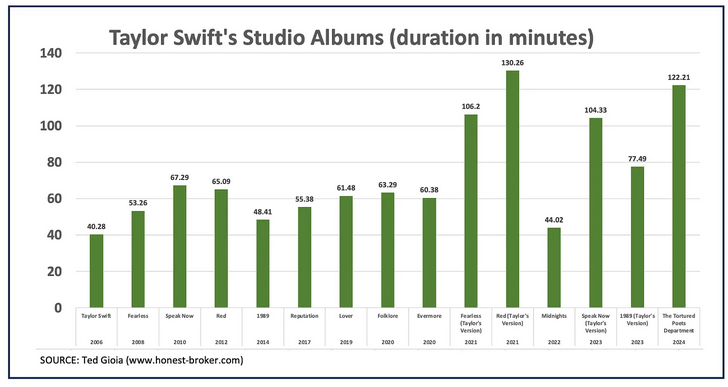
I’ve charted the duration of Swift’s studio albums over the last two decades, and it tells the same story. She has gradually learned that her audience prefers longer musical experiences.

The New York Times complained about the length of her most recent album — calling it “sprawling and often self-indulgent.” It mocked her for believing that “more is more.”

It summed up her whole worldview with a dismissive claim that she has fallen in love with “abundance”. In fact, the Times opened its article with that accusation.

But I note that a year after the Times laughed at Swiftian abundance, the hottest topic in the culture is a book with that same word as its title. (Full disclosure: I’ll be doing a live Substack conversation with its co-author Derek Thompson in a few days.)

Abundance has dominated the New York Times non-fiction bestseller list for the last several months. Even more to the point, the word seems to tap into the public’s hunger for something bigger, deeper, and more expansive than it’s been getting.

June 13, 2025

The new marketing strategy is “Always Be Annoying”

Filed under: Business, Media, Technology — Tags: , , , — Nicholas @ 03:00

Ted Gioia explains that the rules of marketing as explained in Glengarry Glen Ross no longer apply:

The rules of marketing never change. That’s what they told me in business school.

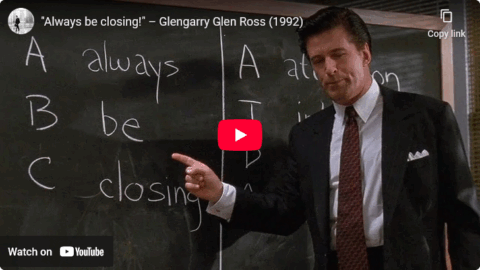
If you could peer inside the meetings at head office, you would see a never-ending loop of Glengarry Glen Ross.

Always be closing. Those are the A-B-Cs of business.

But that’s not true anymore.

In recent days, a new marketing strategy has emerged. I’ve never seen it before. And I wish it would go away. You probably do too.

It’s a new way of advertising. It’s a new way of marketing. It’s a new motivational tool.

It didn’t exist when I studied marketing back at Stanford GSB. I had the best marketing teachers in the world, but they never dreamed of doing this to customers.

Here’s the new marketing playbook of 2025:

  • Do NOT try to close.
  • Do NOT try to sell.
  • Do NOT try to persuade.
  • Don’t even listen.

The goal now is merely to ANNOY. The big companies do it on purpose.

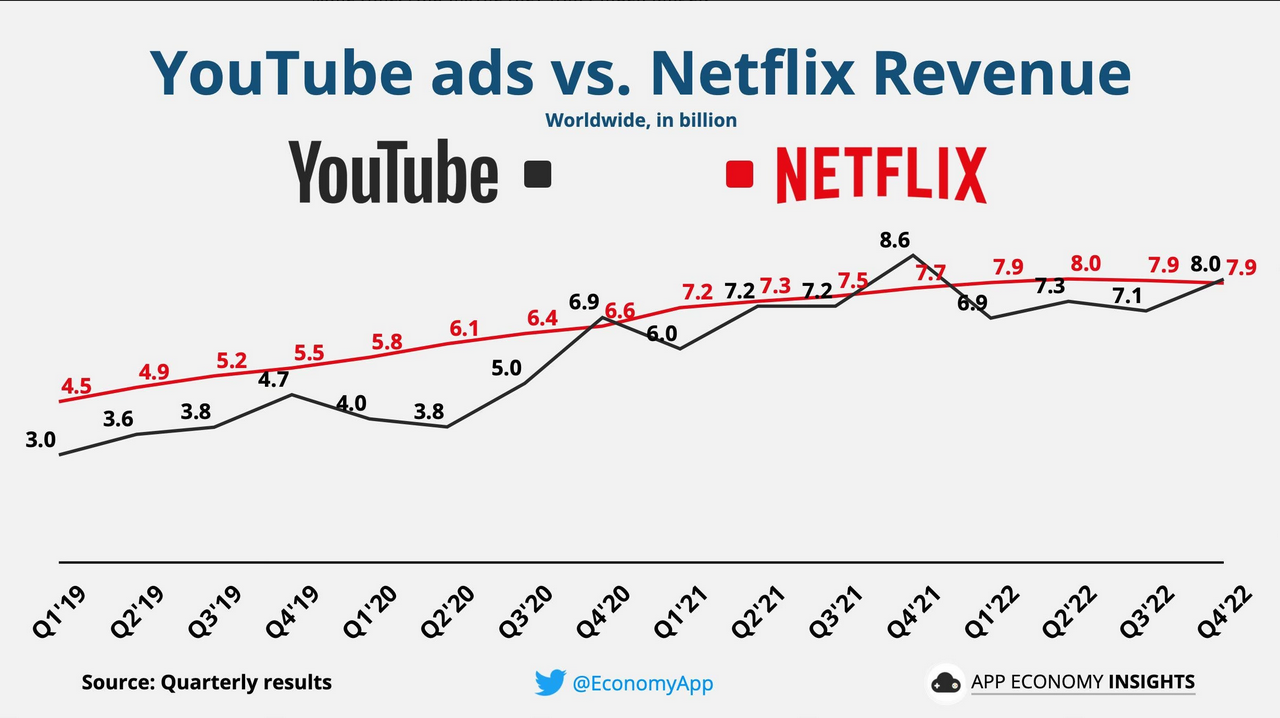
Big streaming platforms are the experts at this new marketing tool. They want you to pay for a premium, ad-free subscription. The more annoying the commercials, the more likely you are to pay.

You will pay just to get rid of the ad.

In this topsy-turvy world, the more painful the ad, the better it works. The digital platforms have studied this — YouTube has tested using up to ten unskippable ads on users.

That’s not marketing — it’s water-boarding. But they need to test these techniques. Their business model is built on optimizing the level of annoyance.

And guess what? Even paying for premium doesn’t guarantee escape from ads. Welcome to the new digital platforms — which increasingly resemble prisons.

[…]

We once lived in an industrial economy — built on industry. Then we shifted to a consumer economy — built on consumption. And more recently we lived in a service economy — built on service.

But we now are entering the age of the Annoyance Economy. And it is the inevitable result of corporations battling for your attention.

They monetize your eyeballs — measured in clicks and microseconds — and they will do anything to hold on to them. This increasingly involves annoying, intrusive actions that no business would have dared to implement in a consumer-oriented economy.

May 23, 2025

“‘[D]isrupting traditional ideas’ of what a ‘triumphant figure’ is”

Filed under: Media, Politics, USA — Tags: , , , , , , — Nicholas @ 03:00

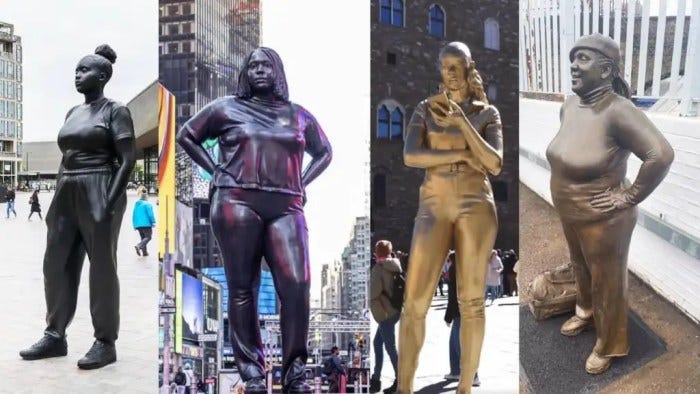
William M. Briggs uses the most recent installation of a statue of a black woman in highly public spaces to explore the idea that even black people “have Black Fatigue”:

Statues of fat ugly lumpen surly ill-kempt statues of black women, all in poses to accentuate their quarrelsome uselessness, are being placed in prominent places in the West. The Latest, rising like a creature in a 1960s Japanese monster movie, is in Times Square. The person who created these blots of bad taste said they were “a way of ‘disrupting traditional ideas’ of what a ‘triumphant figure’ is”.

He’s right. These figures do represent triumph. DIE requires elevating the least and representing them as the best, and forcing all to pretend the charade is real. Indeed, it is difficult to think of a more perfect representation of the true spirit of DIE than these misshapen piles of metal. They demand you say they are equivalent to great men whose statues we are no longer allowed to have.

If it were only statues, there would be no story. But everybody knows that bad black behavior of all kind is being ignored, excused or outright celebrated.

One example will suffice. After the lifelong thug and criminal lowlife George Floyd met his expected end — poisoning himself with drugs and engaging in all manner of misbehavior — our rulers and “elites” fell to their knees, even in Congress itself, to show their adoration of black criminality. Not to mention Floyd’s own statues which cropped up like poisonous mushrooms, each encouraging emulation of Floyd’s exasperating antics.

It’s so bad now that parents of white kids murdered by blacks rush out to forgive or excuse the killers, lest anybody dare to think they would condemn bad black behavior.

The question is why.

Before you answer, understand this is not only your “racist” Uncle Sergeant Briggs asking this question. Blacks themselves are asking.

There is an entire growing genre of YouTube videos of blacks telling us they grow weary of the constant misadventure of “ratchet blacks” (their word, not mine) and our culture’s welcoming attitude toward them. Take “Why Black Fatigue Is On The Rise“. Black fatigue is the natural exhaustion from having to deal routinely with with misbehaving blacks, where “dealing with” means having to pretend, while in polite society, we are not seeing what we are all seeing.

Watch just the first two minutes if you haven’t the time for more. The man in the inset quite rightly points out that blacks are now, as everybody always wanted, being judged by the content of their character, and not the color of their skin. The problem is the content of their character, or at least the character of those who are celebrated for misdeeds. As one commenter to the video said, the problem are blacks who are “Offended by everything. Ashamed of nothing. Entitled to everything. Responsible for nothing.”

The natural desire for separation, and to be with ones’ own, leads blacks to label blacks not confirming to expected behavior as “acting white”. The natural solution would be a formal separation: you go your way, we go ours. That, of course, would never be countenanced, and is anyway not desired by the majority. One thing absolutely demanded by our elites is “diversity”, by which they mean strict uniformity of belief. Our betters weep fake tears over things like colonization, which we know are fake because when we ask them to let us go our own way they say no.

If we can’t separate, then we have to find a way to get along with each other. Whatever this way is, it can’t have a basis in transparent lies.

March 19, 2025

Solving the “Spotify problem”

Filed under: Business, Economics, Media, Technology — Tags: , , , — Nicholas @ 03:00

Sadly, as Tim Worstall explains, it probably can’t be done:

It’s that time of year for the ritual complaints about Spotify. Woes, musicians can’t get any money.

The reason for this is that we out here, the Great Unwashed, value recorded music at something just above toss. Therefore musicians get paid, on average, just above toss. And there we have it, there’s the whole and the complete of the thing.

    Spotify is trumpeting big paydays for artists – but only a tiny fraction of them are actually thriving

Yep.

    $10bn is a hefty number, but it needs to be closely examined. This money, around two-thirds of its total income, is what Spotify has paid through to record labels and music publishers. Spotify cannot be held responsible for egregious label and publisher contracts, but it needs reiterating that only a portion of that $10bn will make its way to the people who wrote and recorded the music.

    The company also says this $10bn is “more than any single retailer has ever paid in a year” and is “10x the contribution of the largest record store at the height of the CD era”. That may be true, but it says less about Spotify’s benevolence and more about how streaming’s market share has mostly consolidated into the hands of four global heavyweights – Spotify, Apple, YouTube and Amazon.

Only one part of that has any relevance. The $10 billion and the 2/3rds.

Obviously there are costs to running a company. To running the servers which hold near all of all recorded music. Of being able to get that out onto the internet.

The $10 billion (OK, 15) is about what people think music is worth to them.

[…]

The reason your really important socially relevant indie band is touring the upper peninsula, still after all these years, the bogs are your changing room and the only rider you’ve been able to achieve is access to tap water, is that the general public values your output at some fraction above toss. Therefore you earn that fraction above toss.

Really, that’s it. It’s not capitalism it’s general public indifference. Really, folk just don’t care.

June 18, 2024

Freddie deBoer contra J.J. McCullough on Conspiracy Theories

Filed under: Cancon, History, Media, Politics, USA — Tags: , , , , — Nicholas @ 04:00

I saw JJ’s latest video pop up on my YouTube subscriptions page, read the headline and winced slightly. I generally like JJ’s videos even when I disagree with his presentation or interpretation and from the title, I thought “No, ‘many conspiracy theories’ did NOT ‘turn out to be true'” would require a fair bit of, uh, curation of the theories that get discussed. Freddie deBoer — who I disagree with much more than I do with McCullough — had a similar reaction:

The latest video from conservative Canadian YouTuber JJ McCullough displays many of the attributes that make his perspective unique — he’s genuinely a right-wing figure but an arch institutionalist, a gay Millennial with the kind of vague social libertinism common to a lot of libertarian-leaning conservatives but something of a scold, a Canadian patriot who relentlessly defends the United States from the kinds of criticism of Americanah that you might associate with Europe or, well, Canada — critiques of our provincialism, our consumerism, our boorish tendency to shove the rest of the world around. McCullough likes all of that stuff, more or less, while living a cosmopolitan and vaguely-arty lifestyle in groovy Vancouver. He’s perhaps best known for his war with Montreal, Francophone Canadians, and the entire province of Quebec, which fits his general esteem for a certain kind of capital-R Reasonable Anglophilia.

He reminds me, strangely, of a certain kind of secular anti-atheist, the type who still gets mad about the New Atheists despite the complete collapse of that subculture and whose own lack of belief doesn’t prevent them from waxing poetic about the glories of religion. I have a friend from grad school who grew up in an extremely repressive Christian community when she was young, and who describes leaving as an “escape”. (The kind of community where she and her sisters wore wrist-to-ankle dresses every day of their lives no matter the Oklahoma heat, weren’t allowed TV or radio, absorbed lots of corporal punishment, that sort of thing.) She has very, very little patience for people who are so annoyed by internet atheists that they become in effect advocates for religion; as she says, this kind of vague fondness for religion among the irreligious could only occur to someone who never had to live the way she did. I sort of see the same thing in McCullough — he idealizes certain aspects of America’s ethos because he has never had to live with the consequences of being surrounded by people who believe in it, who consciously or unconsciously demand that everyone else believe in it.

Anyhow, this new video is about conspiracy theories. Conspiracy theories are a good topic for understanding McCullough’s very particular ideological makeup. Conspiracy theories are famously a cross-ideological phenomenon, with both left conspiracy theories and right conspiracy theories but also conspiracy theories that don’t fit neatly into either, like 9/11 trutherism. As I said, McCullough is an institutionalist, a small-but-good government sort of guy (or so I take it) who places a great deal of value in official claims, institutions, and experts, and so he’s naturally distrustful of conspiracy theories. And he demonstrates that antipathy in this video through poking holes in a few clickbaity articles listing conspiracy theories that turned out to be true. This all amounts to feasting on a banquet of low-hanging fruit, but it’s not an illegitimate way to approach the question. I just don’t like his conclusions.

The key to McCullough’s bit here is that he doesn’t dispute that the named conspiracy theories (or “conspiracy theories”) that are asserted to be true are true. Rather, he operates by insisting that every identified conspiracy theory is in fact not a conspiracy theory according to his preferred definition. It’s not sufficient for a conspiracy theory to be broadly thought of as a conspiracy theory; it has to comport to specific rules he has devised for what a conspiracy theory entails. Effectively, that means that a conspiracy theory is only a conspiracy theory if it satisfies criteria endorsed by no one but JJ McCullough. I can’t decide if this is an isolated demand for rigor or a No True Scotsman, but either way, McCullough is here insisting on an unusually stringent definition of a conspiracy theory for the purpose of dismissing the idea that any conspiracy theories are true. And there’s a version of this that isn’t entirely wrong; there’s a tautological sense in which all conspiracy theories are false because being false is part of that definition of a conspiracy theory. But McCullough isn’t using that definition, just a particularly odd one that makes his task easier.

So the fact that cigarette manufacturers knew that cigarettes were very bad for your health but conspired to hide this fact from the public is not a conspiracy theory, according to McCullough, because other people of that era suspected that cigarettes caused lung cancer. (Actually proving that took a very long time, at least according to modern standards of causality.) I find this argument powerfully strange! You had a group of powerful people, they indisputably knew that cigarettes were very bad for your health, they indisputably conspired to suppress that information, they were fairly effective at that task. The fact that some early whistleblowers tried to raise the alarm is simply irrelevant. Check out my own proprietary formula.

Group of Powerful or Influential People + Nefarious Intent + Secrecy + Active Conspiring + Negative Consequences, Real or Potential = Conspiracy Theory

That’s a conspiracy, brother, and the tobacco company bad behavior fits. Long before information about their coverups became public knowledge, people were talking about the possibility that the tobacco companies were up to that exact bad behavior. Theorizing, you might say.

March 20, 2024

Google’s unmissable leftward biases

Filed under: Media, Politics, Technology, USA — Tags: , , , — Nicholas @ 04:00

Tom Knighton on a recent New York Post article calling out Google for their strong political biases and how they inform everything that Google and its subsidiaries and affiliates do:

Once, the company was well-known for having the phrase “Don’t be evil” painted on a wall in their headquarters. It’s a noble sentiment, but apparently, it’s now more like “Don’t be evil.”

That’s pretty clear after what we learned from the New York Post:

    Google has been putting its thumb on the scale to help Democratic candidates win the presidency in the last four election cycles during which it censored Republicans, according to a right-leaning media watchdog.

    The Media Research Center published a report alleging 41 instances of “election interference” by the search engine since 2008.

    The MRC published a report accusing Google of having “utilized its power to help push to electoral victory the most liberal candidates…while targeting their opponents for censorship.”

    The report comes weeks after AllSides conducted an analysis which found that news aggregator Google News skewed even more off the charts in 2023.

    Google has also come under fire after its Gemini AI image generator produced “woke”-inspired and historically inaccurate images such as black Vikings, female pope and Native Americans among the Founding Fathers.

Now, Google denies the claims and someone close to the company took issue with the methodology used to detect this supposed interference.

But the truth of the matter is that there’s absolutely no reason to believe Google on this because we’ve seen enough of it previously to know better.

For example, YouTube has a profoundly leftward bias. The site is notorious for silencing right-wing voices while allowing leftists to get away with trampling community standards willy-nilly. YouTube is owned by Google, which means they’re at least tacitly endorsing the strategy.

From there, it’s not difficult to see the mothership taking on a similar role, if not originating it. They’re just able to hide it easier.

But even there, we can see it.

I use Google’s news feed regularly, particularly for my work at Bearing Arms. It’s common for me to look up “gun rights” and the first article that shows up, unless I set it for the most recent stories, be one treating them as a negative thing.

So yeah, I have no doubt that Google is playing favorites.

The worst part is that there isn’t anything that can be done through the legal system as far as I’m aware. But that doesn’t mean someone there didn’t realize what they are doing is wrong.

Most probably didn’t, though. They believe the Holy Progressive Cause is so vital, so unerringly good, that they can and should do anything to serve it. That includes displaying a staggering degree of bias in the service of what you believe to be the greater good, your business be damned.

But they knew it would be considered wrong by a great many people, which is why they’re hiding it.

March 1, 2024

Women behaving badly on [police bodycam] video

Filed under: Law, Media, USA — Tags: , , , , , — Nicholas @ 04:00

Janice Fiamengo suggests that demands to the use of police bodycam footage involving young women being arrested for criminal behaviour is a weird bit of official white-knighting on the part of the authorities:

Moments of public outrage can be opportunities to consider deep-rooted cultural assumptions.

There’s been moral outrage lately over a popular YouTube channel called Drive Thru Tours. Launched in 2020, the channel started out by posting videos of tours through parts of New Jersey and New York. It hit paydirt last year when it began showing videos of police arrests, with titles such as “Rude 19-year-old Girl Arrested for DUI in Pullman, WA” (recommended if you want to get a flavor of the site) and “Belligerent Woman Arrested for DWI after Police Pursuit and Taken to Jail” (not recommended — very disturbing). The channel owner obtained the content — which until recently has focused exclusively on female offenders — from police bodycam recordings, now publicly available through freedom of information requests.

Bodycam footage was originally made accessible to the public so that American citizens can hold police accountable for their actions. Scrutiny of police behavior is widely considered a public good. Scrutiny of female behavior, however, is quite a different story — as responses to the channel demonstrate.

According to a small flurry of recent news reports, New Jersey police are warning that Drive Thru Tours is harming “vulnerable” young women by posting the evidence of their arrests. The bodycam footage was never intended, they protest, for such a purpose. In consequence, the Association of Chiefs of Police of New Jersey is calling for legislation against what they are describing as “online sexual predators“, and lawmakers in that state are considering a bill that would prohibit publishing the footage except within narrow parameters, including with the written consent of the subject.

Quite apart from whether such a bill is a good idea or not (I favor public access but have not given the matter serious thought), the language used in the articles is remarkable for its gynocentric sentimentality and misplaced sympathy.

One of the most vocal on the subject is Montville, New Jersey Police Chief Andrew Caggiano, who is quoted as stating that “It was never the intent of OPRA [the Open Public Records Act] to create such a platform that preys on young women and takes advantage of them at a time when they are vulnerable”. He also expressed a personal repugnance: “As a law enforcement professional and the father of three daughters, I am sickened by the fact that people are abusing OPRA to post these types of videos on social media sites”.

Given that it is not (yet) illegal to use bodycam material in the manner described, Chief Caggiano’s dramatic reaction seems overstated. One wonders in what sense the reckless and self-absorbed young people shown in these videos are “vulnerable”. Wouldn’t such language be better suited to their victims? Perhaps Caggiano knows something about his daughters that we don’t know (there is a video in which a “Cop’s Daughter Gets Arrested for DWI after Fleeing Accident Scene”): one would not normally expect a chief of police to so quickly substitute in imagination his own daughters for the inebriated and flagrantly dishonest women shown on Drive Thru Tours.

Caggiano’s bluster is, of course, all too familiar in a culture that cannot bear to hold women fully responsible for their bad actions — no matter how anti-social or potentially lethal — and must habitually frame them as innocent victims. It’s impossible to imagine such outraged sympathy being expressed for any male offenders in similar situations.

December 9, 2023

The coming Micro-Macro culture war … and who’s going to win it

Filed under: Business, Economics, Media, Technology, USA — Tags: , , , , , , , , — Nicholas @ 05:00

Ted Gioia outlines the dismal state of the “macro” culture — television, movies, newspapers, book publishing and all the big corporations that control them — with the dynamism of the “micro” culture:

In the beginning, all culture was microculture.

You knew what was happening in your tribe or village. But your knowledge of the wider world was limited.

So you had your own songs and your own stories. You had your own rituals and traditions. You even had your own language.

But all these familiar things disappeared when you went off into the world. That was dangerous, however. That’s why only heroes, in traditional stories, go on journeys.

You learn on the journey. But you might not survive.

But all that changed long before I was born.

In my childhood, everything was controlled by a monoculture. There were only three national TV networks, but they were pretty much the same.

    When I went to the office, back then, we had all watched the same thing on TV the night before. We had all seen the same movie the previous weekend. We had all heard the same song on the radio while driving to work.

The TV shows were so similar that they sometimes moved from CBS to NBC, and you never noticed a change. The newscasters also looked pretty much the same and always talked the same — with that flat Midwestern accent that broadcasters always adopted in the US.

The same monoculture controlled every other creative idiom. Six major studios dominated the film business. And just as Hollywood controlled movies, New York set the rules in publishing. Everything from Broadway musicals to comic books was similarly concentrated and centralized.

The newspaper business was still local, but most cities had 2 or 3 daily newspapers — and much of the coverage they offered was interchangeable. Radio was a little more freewheeling, but eventually deregulation allowed huge corporations to acquire and standardize what happened over the airwaves. [NR: I suspect the “freewheeling” went away once the government started imposing regulations, and the corporate consolidation was enabled when they “deregulated” the radio licensing regime several decades later.]

When I went to work in an office, back then, we had all watched the same thing on TV the night before. We had all seen the same movie the previous weekend. We had all heard the same song on the radio while driving to work.

And that’s why smart people back then paid attention to the counterculture.

The counterculture might be crazy or foolish or even boring. But it was still your only chance to break out of the monolithic macroculture.

Many of the art films I saw at the indie cinema were awful. But I still kept coming back — because I needed the fresh air these oddball movies provided. For the same reason, I read the alt weekly newspapers and kept tabs on alt music.

In fact, whenever I saw the word alt, I paid attention.

That doesn’t mean that I hated the major TV networks, or the large daily newspaper, or 20th Century Fox. But I craved access to creative and investigative work that hadn’t been approved by people in suits working for large organizations.


The Internet should have changed all this. And it did — but not much. Even now the collapse in the monoculture is still in its early stages.

But that’s about to change.

If you don’t pay close attention, the media landscape seems pretty much the same now as it did in the 1990s. The movie business is still controlled in Hollywood. The publishing business is still controlled in New York. The radio stations are still controlled by a few large companies. And instead of three national TV networks plus PBS, we have four dominant streaming platforms — who control almost 70% of the market.

So we still live in a macro culture. But it feels increasingly claustrophobic. Or even worse, it feels dead.

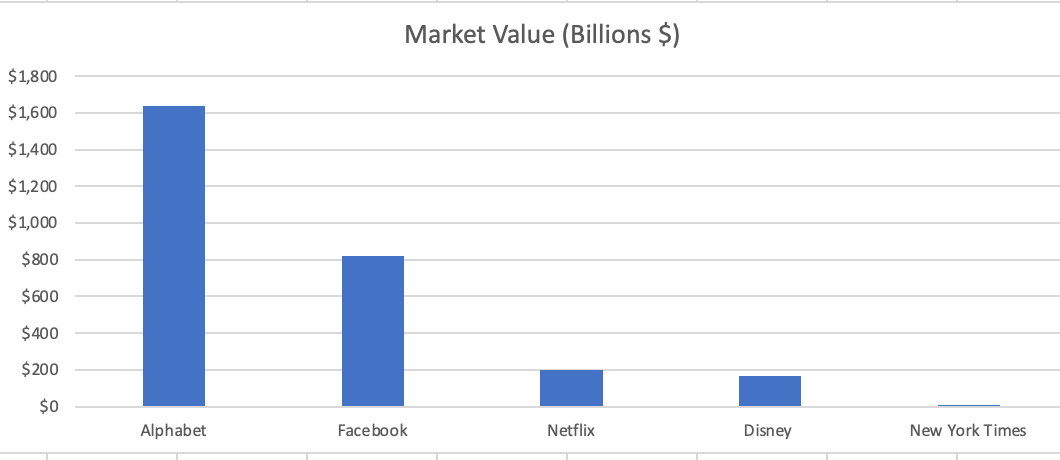
Meanwhile, a handful of Silicon Valley platforms (Google, Facebook, etc.) have become more powerful than the New York Times or Hollywood studios or even Netflix. It’s not even close — the market capitalization of Google’s parent Alphabet is now almost ten times larger than Disney’s.

But here’s the key point — these huge tech companies rely on the microculture for their dominance.

Where is Facebook without users contributing photos, text and video? Where is Google’s YouTube without individual creators?

In terms of economic growth or audience capture, the microculture has already won the war. But it doesn’t feel that way.

Why not?

First and foremost, Silicon Valley is a reluctant home for the microculture. To some extent Alphabet and Facebook are even going to war with microculture creators — they try to make money with them even while they punish them.

  • So Mark Zuckerberg needs creators, but won’t even let them put a live link on Instagram and limits their visibility on Facebook and Threads.
  • Alphabet needs creators to keep YouTube thriving, but gives better search engine visibility to total garbage that pays for placement.
  • Twitter also claims it wants to support independent journalists — but if you’re truly independent from Elon Musk, your links are brutally punished by the algorithm.

This tension won’t go away, and next year it will get worse. The microculture will increasingly find itself at war with the same platforms they rely on today.

And legacy media and non-profits are even more hostile to emerging media. Go see who wins Pulitzer Prizes, and count how many journalists on alternative platforms get honored.

I’ll save you the trouble. They don’t.

October 9, 2023

“Wildly popular public sentiment is disorder, and has to be restrained”

Chris Bray outlines one of the many (many) ways that elected officials are insulating themselves from the voters who elected them to ensure that they only hear what they want to hear from the public … and as little of it as they can get away with:

Wildly popular public sentiment is disorder, and has to be restrained. So here, let’s start with something vital and interesting, and then work our way through the process a local government is using to kill it. As always, the point about this local story isn’t just the local story, since versions of this are happening all over the country (and with federal assistance).

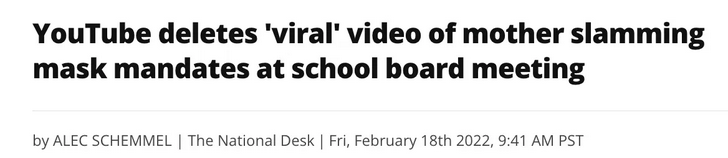
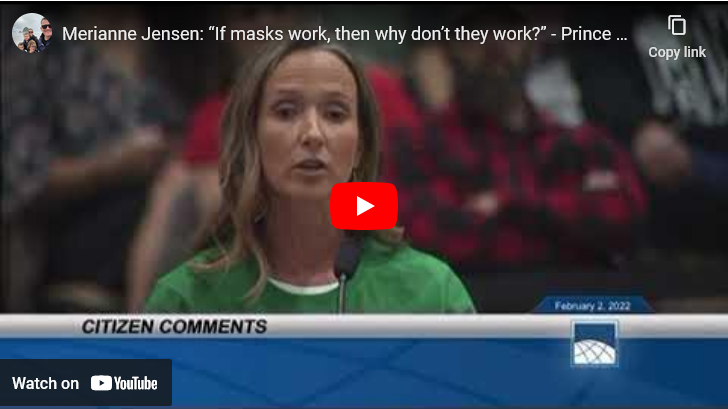
Early last year, an angry Virginia mom spoke to the Prince William County school board, blasting mask mandates in schools. Her fiery three-minute speech went viral, until YouTube, which now seems to mostly exist to prevent discussion, killed it:

It’s back, in a less-watched version that YouTube hasn’t gotten around to cancelling yet:

Here’s a version on Rumble, if you’d rather watch it there, but Substack doesn’t embed Rumble video.

The second thing to notice in that video, after you notice the clarity and strength of Merianne Jensen’s comments, is the response: an enormous audience of parents shouting and cheering in support as another parent sharply criticizes school district policy. The public is present for a government meeting, and the public is engaged. Citizens are participating, enthusiastically and in large numbers, which is supposed to be a thing we regard as an ideal.

[…]

Public comment is limited to one hour, full stop, no matter how many people wish to speak, and no matter how urgent a controversy before the board might be. The public — the entire public — gets an hour. But, second, that hour is alloted through an application process in which people who wish to speak to the school board fill out an online form that a clerk then evaluates and processes, deciding whether or not a request to speak will be granted. Detailed contact information is required before the school district will consider your request to speak, and national organizations and other outsiders have no right to speak at all, since public comment is limited to verified residents of the county. The form is a masterpiece of passive-aggressive nudging, communicating with great clarity that your desire to offer public comment is merely being tolerated. Read this carefully, because in a few minutes we’re going to get to the pernicious way this system is now being gamed:

    This form does NOT confirm your request to be added to the list of speakers for Citizen Comment Time. You will receive a separate email indicating the status of your request. As a reminder, speakers are signed up to speak on a first-come, first-served basis.

    Thank you again for your interest.

    Citizens may sign up to be placed on the list of speakers for the citizen comment period starting at 8:00 a.m. on the Saturday immediately preceding the School Board meeting at which the citizen wishes to speak. Requests received prior to 8:00 a.m. on the Saturday immediately preceding the School Board meeting will not be honored. Speakers will be signed up on a first-come, first-served basis, ending at noon on the day of the meeting. The sign-up list will close once the number of total speakers who have signed up reaches twenty and there will be no sign-up thereafter, nor at the meeting.

That last sentence will become important: twenty commenters are signed up in advance, in the order in which they apply, and then the list for public comment is closed, the end. Can you see where this is going?

Before we get there, I’ll just note that a more detailed board policy on comments, available here, adds that the board chairman can end a public comment session, and ask school district security to remove speakers, if a commenter wanders into “inappropriate topics” or a tone the board regards as uncivil. You can feel the spontaneity and openness being drained.

Older Posts »

Powered by WordPress