Quotulatiousness

October 6, 2020

“The Caucasus is a bad neighborhood”

Filed under: History, Middle East, Military, Religion, Russia — Tags: , , , , — Nicholas @ 03:00

Fighting broke out between Azerbaijan and Armenia last week over the status of the Nagorno-Karabakh region, a quasi-independent Armenian-majority territory still technically part of Azerbaijan (Nagorno-Karabakh’s declaration was not followed by formal recognition by other states). Mark Movsesian provides some historical background to the conflict in First Things:
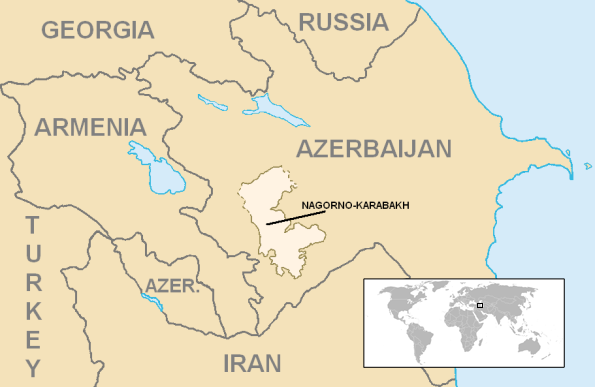
Thirty years ago, in response to discriminatory treatment and outright pogroms against Armenians, the region declared independence. Armenia (population 3 million) supported Karabakh — though it has never formally recognized its independence — and a bloody war followed, in which 30,000 people died and hundreds of thousands on both sides became refugees. Against all odds, Armenia and Karabakh prevailed and established a buffer zone comprising perhaps 20 percent of Azeri territory.

An unstable ceasefire has held since 1994. But last week, Azerbaijan launched a military offensive against Karabakh and Armenia itself. This is more serious than past Azeri efforts to break the stalemate. Flush with petrodollars, Azerbaijan has purchased a large stockpile of heavy weapons, which it now employs against Armenia. Moreover, Turkey (population 80 million), which borders Armenia on the other side, is supporting Azerbaijan. Azeris are a Turkic people, though they are Shia, not Sunni, Muslims, and the Erdogan government sees the conflict as a way to pursue its goal of pan-Turanism. Turkey has supplied Azerbaijan with military advisers and equipment, including drones and fighter jets and thousands of Islamist soldiers from Syria, who fight for Azerbaijan on the front lines.

[…]

One needs to go back at least a century, to the collapse of the Ottoman and Czarist Empires. The two empires had long contested the border between them, which ran to the southwest of the Caucasus. Armenians, an ancient Christian people who lived on both sides of the border, found themselves in the crosshairs. During World War I, fearful that Armenians on the border would rise up and side with Russia — some Armenians did fight with the Russians, but many others fought with the Ottomans, and the Armenian threat was always exaggerated — the Ottoman government undertook an ethnic cleansing campaign, killing millions of Armenians and other Christians in the Armenian Genocide.

The Genocide eliminated Turkey’s once sizable Christian population. It likely would have eliminated the Armenian population on the other side of the border, too, except that a hastily-organized Armenian militia stopped a Turkish army in 1918 at the Battle of Sardarabad, which took place just outside the city of Yerevan, today Armenia’s capital. Sardarabad is unknown in the West, but the image of a small group of Christian Armenians fighting, alone, to stop a Muslim Turkish army bent on their annihilation is a powerful part of Armenian consciousness today.

When the war ended, the Soviet Union quickly settled the border dispute with Turkey, giving up some historic Armenian lands around the city of Kars, and took over the Caucasus and divided it among the region’s ethnic groups. The Soviets initially promised to place Karabakh, whose Armenian identity dated back many centuries and whose population was more than 90 percent Armenian, in the new Soviet Republic of Armenia. But Stalin, as commissar for nationalities, decided to place the region in Azerbaijan instead, as part of a divide-and-conquer strategy. Armenians never accepted the decision and, when the Soviet Union collapsed and the nations of the Caucasus gained independence, the conflict over the region resumed.
August 17, 2020

Dateline Ayodhya, Uttar Pradesh, 5 August 2020

Filed under: History, India, Religion — Tags: , , , , — Nicholas @ 03:00

That’s a significant date, as Tom Holland explains at UnHerd:

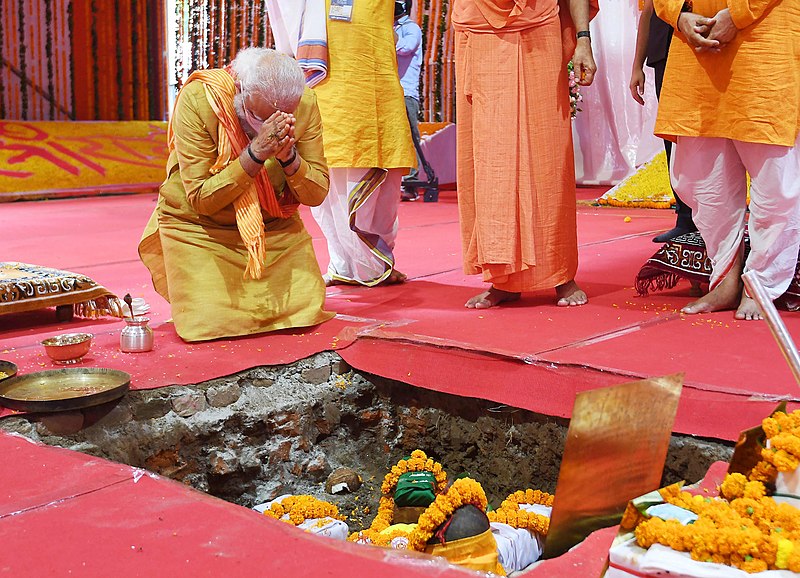
Indian Prime Minister Narendra Modi performing Bhoomi Pujan at Shree Ram Janmabhoomi Mandir, in Ayodhya, Uttar Pradesh on August 05, 2020.
Photo released by the Press Information Bureau on behalf of the Prime Minister’s Office, (ID 90071) via Wikimedia Commons.

Last week, on 5 August, the Prime Minister of India laid a foundation stone and helped bury a distinctive period in global history. Narendra Modi had travelled to Ayodhya, a city long identified by Hindus with one of their most beloved gods. Lord Rama — avatar of Vishnu and hero of the Sanskrit epic, the Ramayana — was said to have ruled within its walls as the very model of those who uphold truth and justice. Like Camelot, the court of Rama glimmers tantalisingly in the imaginings of those who fall beneath its spell: the reminder of a vanished golden age, the hope that it might come again.

In recent decades, the mingled regret and yearning that the memory of Rama’s capital can inspire among Hindus had come to be focused on one particular location in the modern city of Ayodhya: the Ram Janmabhoomi, the “birthplace of Rama”. At the moment, nothing serves to mark the sacred spot. But soon enough that will change. A great complex of buildings will rise. As Modi, officially declaring the process of construction begun, put it: “A great temple will now be built for our Lord Rama.”

A fortnight earlier, the President of Turkey had celebrated a similar reconsecration. In 1453, when the Christian capital of Constantinople fell to the Ottomans, its most stupefying building, the great cathedral of Hagia Sophia, had been converted into a mosque, and duly served for almost half a millennium as a monument to the triumph of Islam over a defeated and superceded order. Then, in 1935, a decade and more after the collapse of the Ottoman Empire and its replacement within its heartlands by a Turkish republic, the mosque of Ayasofya was turned into a museum. So, for decades, it remained. Then, this summer, the museum once again became a mosque. On 24 July, Hagia Sophia opened for Friday prayers. “It is breaking away from its chains of captivity,” President Erdogan declared rhapsodically. “It was the greatest dream of our youth. It was the yearning of our people and it has been accomplished.”

The synchronicity between Modi’s trip to Ayodhya and Erdogan’s to Hagia Sophia is striking, and only flimsily obscured by the fact that the Prime Minister of India is trampling the legacy of an Islamic empire much as the President of Turkey has trampled the legacy of a Christian one. In the early sixteenth century, shortly after the Moghul conquest of the lands that once, so Hindus believed, had constituted the Ram Rajya, the “realm of Rama”, a mosque was built in Ayodhya. By the twentieth century, large numbers of Hindus had come to believe that this same mosque, the Babri Masjid, stood directly on the site of the Ram Janmabhoomi. In the 1980s, the BJP — the party to which Modi belongs — began a campaign to demolish it. In 1992 a mob duly tore it down. Communal riots exploded. Thousands died.

Last November, even as the site was formally granted to Hindus, the Supreme Court of India condemned the demolition of the mosque as a crime. But a crime by whose standards? Not, it would seem, by Modi’s. Just as Erdogan justified the conversion of Hagia Sophia to a mosque by “right of conquest”, so the Prime Minister of India, hailing the opportunity to build a temple on the site where the Babri Masjid had stood, invoked the ancient traditions of his country. It was, he declared, “a unique gift from law-abiding India to truth, non-violence, faith and sacrifice.” History as well as justice stood on his side.

August 16, 2020

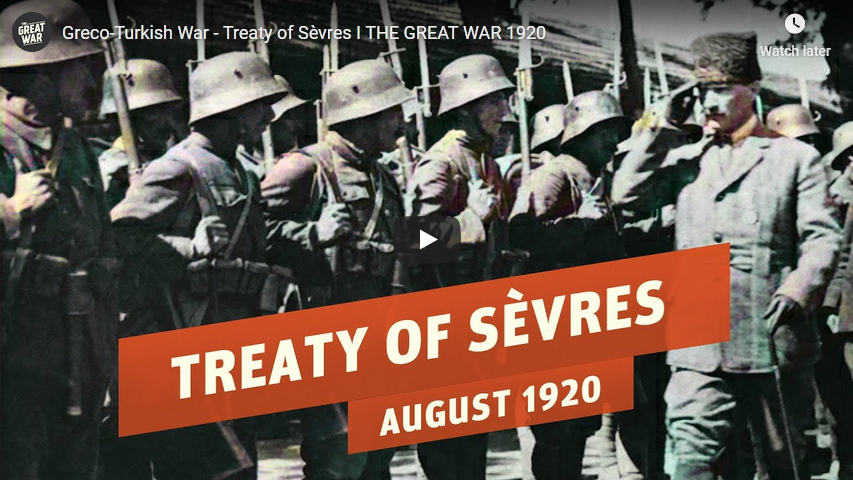
Greco-Turkish War – Treaty of Sèvres I THE GREAT WAR 1920

The Great War
Published 15 Aug 2020

Sign up for Curiosity Stream and get Nebula bundled in: https://curiositystream.com/thegreatwar

While the Greco-Turkish War was still raging, the last of the peace treaties between the Allies and the Central Powers was finalized in Paris. But the Turkish Nationalist Movement under Mustafa Kemal would not accept the terms of the Treaty of Sèvres – even though the Ottoman government had signed it.

» SUPPORT THE CHANNEL
Patreon: https://www.patreon.com/thegreatwar

» OUR PODCAST
https://realtimehistory.net/podcast – interviews with World War 1 historians and background info for the show.

» BUY OUR SOURCES IN OUR AMAZON STORES
https://realtimehistory.net/amazon *
*Buying via this link supports The Great War (Affiliate-Link)

» SOURCES
Halide Edib Adivar, The Turkish Ordeal: Being the Further Memoirs of Halidé Edib, (Piscataway: Gorgias Press, 2012)

John Darwin, Britain, Egypt and the Middle East, (London: Macmillan Press, 1981)

M.L. Dockrill and J. D. Goold, Peace Without Promise: Britain and the Peace Conferences, 1919-1923, (Connecticut: Hamden, 1981)

T G Fraser, Andrew Mango and Robert McNamara, The Makers of the Modern Middle East, (London: Gingko Library, 2015)

Phillip S Jowett, “Armies of the Greek-Turkish War: 1919-1922”, Men at Arms, no 501, (2015)

Michael Llewellyn Smith, Ionian Vision: Greece in Asia Minor 1919-1922, (London: Allen Lane, 1973)

Margaret Macmillan, Paris 1919: Six Months That Changed the World, (London: Macmillan, 2019)

A.E. Montgomery, “The Making of the Treaty of Sèvres of 10 August 1920”, The Historical Journal Vol. 15, No. 4 (December, 1972)

New York Times, “Turk Nationalists Capture Beicos” (July 6, 1920) https://timesmachine.nytimes.com/time…

George Riddell, Lord Riddell’s Intimate Diary of the Peace Conference and After: 1918-1923, (London: Victor Gollancz Ltd, 1933)

» MORE THE GREAT WAR
Website: https://realtimehistory.net
Instagram: https://instagram.com/the_great_war
Twitter: https://twitter.com/WW1_Series
Reddit: https://reddit.com/r/TheGreatWarChannel

»CREDITS
Presented by: Jesse Alexander
Written by: Jesse Alexander
Director: Toni Steller & Florian Wittig
Director of Photography: Toni Steller
Sound: Toni Steller
Editing: Toni Steller
Motion Design: Philipp Appelt
Mixing, Mastering & Sound Design: http://above-zero.com
Maps: Daniel Kogosov (https://www.patreon.com/Zalezsky)
Research by: Jesse Alexander
Fact checking: Florian Wittig

Channel Design: Yves Thimian

Contains licensed material by getty images
All rights reserved – Real Time History GmbH 2020

August 11, 2020

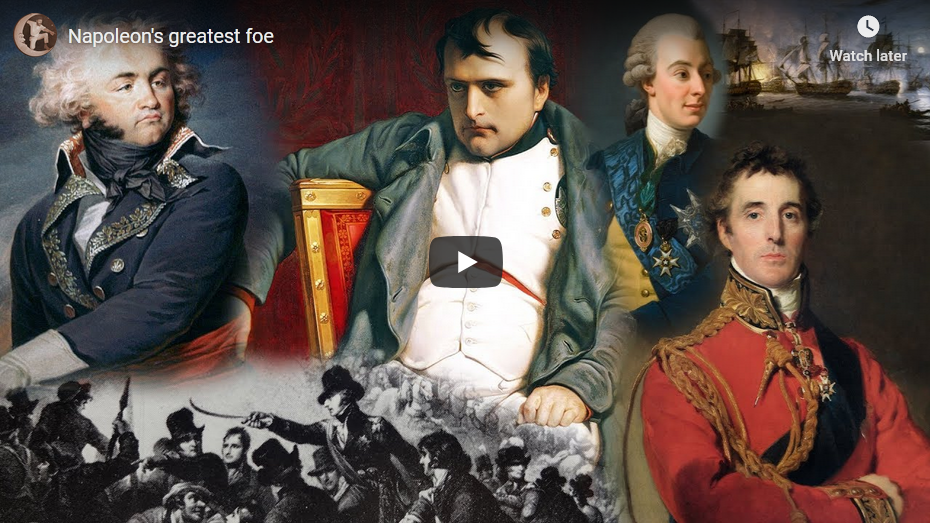
Napoleon’s greatest foe

Filed under: Britain, Europe, France, History, Middle East, Military — Tags: , , , , , , , — Nicholas @ 02:00

Lindybeige
Published 18 Jan 2018

Support me on Patreon: https://www.patreon.com/Lindybeige

Possibly I did too much research for this one. Trying to stay on-topic when the subject is so vast and so interesting was not easy, hence the rather long video. I didn’t mean to say quite so much about what an utter £$%&*! Napoleon was, but he was so thoroughly vile that it proved impossible not to include some details about the man who won his promotion in the army by mowing down civilian protesters in the streets of Paris with grapeshot from his artillery batteries. Anyway, here are tales of bravery and virtue, as well as horrendous some of brutality, lies, and death.

Correction: The battle against the Russian fleet is called Svensksund (Swedish sound, as in channel), not Svenksund. I missed out an S in my haste.

Buy the music – the music played at the end of my videos is now available here: https://lindybeige.bandcamp.com/track…

Lindybeige: a channel of archaeology, ancient and medieval warfare, rants, swing dance, travelogues, evolution, and whatever else occurs to me to make.

▼ Follow me…

Twitter: https://twitter.com/Lindybeige I may have some drivel to contribute to the Twittersphere, plus you get notice of uploads.

website: http://www.LloydianAspects.co.uk

June 2, 2020

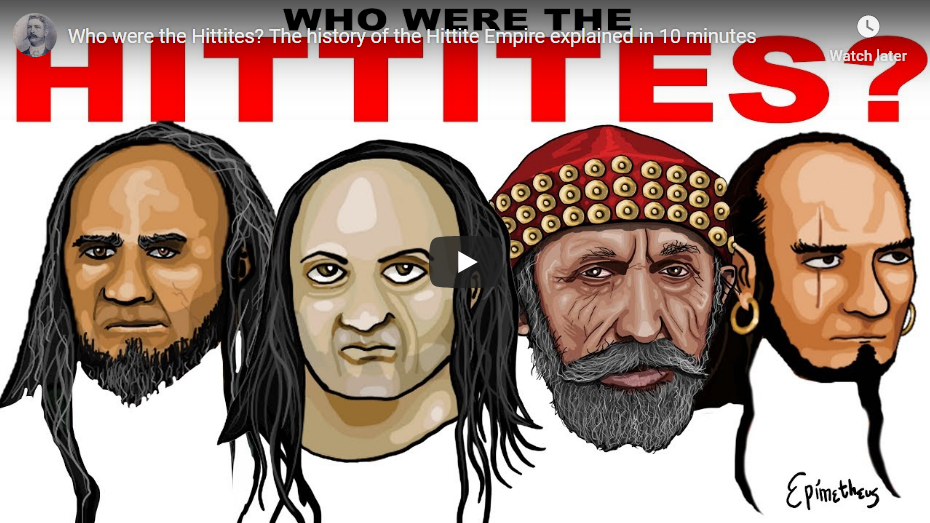
Who were the Hittites? The history of the Hittite Empire explained in 10 minutes

Filed under: History, Middle East — Tags: , , , , , , , — Nicholas @ 06:00

Epimetheus
Published 30 Nov 2018

Who were the Hittites? (The Hittite Empire explained in 10 minutes) Animated history

Support new videos from Epimetheus on Patreon! 😀
https://www.patreon.com/Epimetheus1776

April 9, 2020

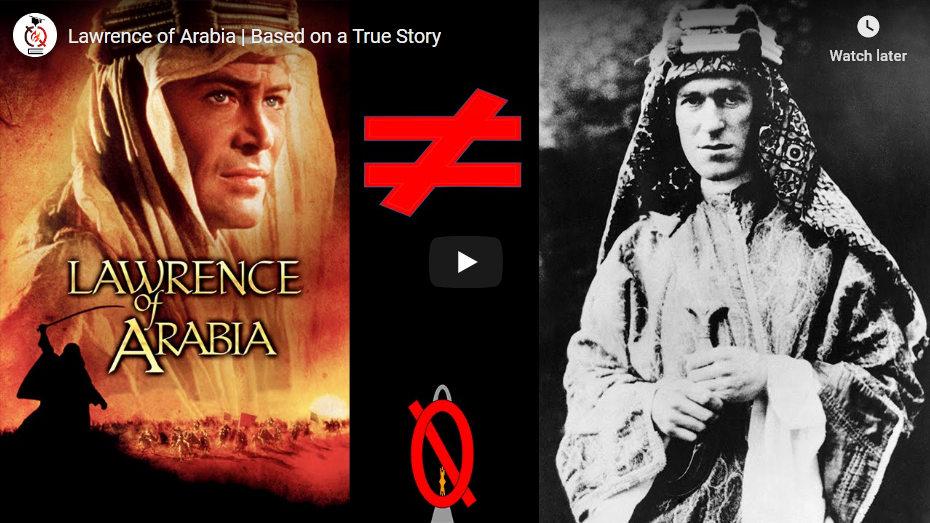
Lawrence of Arabia | Based on a True Story

Filed under: Britain, History, Media, Middle East, Military, WW1 — Tags: , , , , , — Nicholas @ 02:00

The Cynical Historian
Published 6 Nov 2015

The classic film Lawrence of Arabia, is one of the most beautiful movies of all time, but it has its flaws.
————————————————————
references:
https://en.wikipedia.org/wiki/Lawrenc…

http://www.wordandfilm.com/2013/08/wh…

http://www.pri.org/stories/2013-12-16…

most beautiful movies list:
https://www.youtube.com/watch?v=kj73a…
————————————————————

LET’S CONNECT:
https://twitter.com/Cynical_History
————————————————————
wiki:
Lawrence of Arabia is a 1962 epic historical drama film based on the life of T. E. Lawrence. It was directed by David Lean and produced by Sam Spiegel through his British company Horizon Pictures, with the screenplay by Robert Bolt and Michael Wilson. The film stars Peter O’Toole in the title role. It is widely considered one of the greatest and most influential films in the history of cinema. The dramatic score by Maurice Jarre and the Super Panavision 70 cinematography by Freddie Young are also highly acclaimed.
The film was nominated for ten Oscars at the 35th Academy Awards in 1963; it won seven in total: Best Picture, Best Director, Best Original Score, Best Cinematography (Color), Best Art Direction (Color), Best Film Editing and Best Sound Mixing. It also won the Golden Globe Award for Best Motion Picture – Drama and the BAFTA Awards for Best Film and Outstanding British Film.

The film depicts Lawrence’s experiences in the Arabian Peninsula during World War I, in particular his attacks on Aqaba and Damascus and his involvement in the Arab National Council. Its themes include Lawrence’s emotional struggles with the personal violence inherent in war, his own identity, and his divided allegiance between his native Britain and its army and his new-found comrades within the Arabian desert tribes. As well as O’Toole, the film stars Alec Guinness, Jack Hawkins, Anthony Quinn, Omar Sharif, Anthony Quayle, Claude Rains and Arthur Kennedy.
————————————————————
Hashtags: #History #LawrenceOfArabia #WWI #Review #BasedOnATrueStory

April 8, 2020

QotD: Iliad, Odyssey, and Anabasis

Filed under: Books, Europe, Greece, History, Middle East, Quotations — Tags: , , , , , , — Nicholas @ 01:00

I read the trio in the order listed above and the reading got better with each title.

The Iliad is epically epic, rendered in a stiff dactylic hexameter with many, many, many repeating phrases. Between “rosy-fingered dawn” and “the wine-dark sea,” Homer’s epithets lull the reader into a trance, which I suppose was the point in oral storytelling. As a result, the myriad battles and names start blending together.

But, man, those battles are brutal. The semi-divine soldiers are walking Cuisinarts, leading to lovely vignettes like this:

    Next Erymas was doom’d his fate to feel,
    His open’d mouth received the Cretan steel:
    Beneath the brain the point a passage tore,
    Crash’d the thin bones, and drown’d the teeth in gore:
    His mouth, his eyes, his nostrils, pour a flood;
    He sobs his soul out in the gush of blood.

Spoiler alert: Erymas didn’t make it. As you can see, I read the older translations of these works; the above is Alexander Pope’s translation. I wanted the feel of the original, so I didn’t hunt down the modern versions. All three books are decidedly un-“woke.”

For The Odyssey, I chose the Harvard Classics version translated by Samuel Butler. This epic was far more interesting (and fun!) than the grim, brain-splattered Iliad. Ulysses slides into a Mediterranean port, feasts on great food, charms exotic women, grabs a pile of loot, and is off to the next isle.

Granted, the fellow gets in a few scrapes along the way, even being forced into love slavery by an eternally gorgeous nymph (poor guy), but returns home after 20 years to wreak vengeance on the cads trying to bed his wife. (Monogamy was pretty much a one-way street in ancient Hellas.)

After reading both of Homer’s works, I think The Iliad is geared toward young men, especially those of a military mindset. It’s all heroism, glory, and honor. I really should have tackled this in my Navy days.

The Odyssey is an even better adventure, but its themes of home, wisdom, fatherhood, and marriage are aimed squarely at those of us with more mileage on the drivetrain. The heroes still kill their share of monsters and men, but Ulysses always chooses brains before brawn.

The real revelation for me was Anabasis by Xenophon. How Hollywood hasn’t released a trilogy of this epic is beyond me. (No, The Warriors doesn’t count.) Here are the Cliffs Notes for this real-life tale:

Cyrus the Younger wants to topple his brother Artaxerxes II from the Persian throne, so he recruits 10,000 Greek mercenaries (including Xenophon) to help. They march 1,500 miles from the east coast of modern-day Turkey to the middle of modern-day Iraq and, in the first big battle, Cyrus is killed.

Uh oh.

Now, the entire Persian army opposes the Greeks. The pro-Cyrus Persians say, “No actually, we were for Artaxerxes the whole time!” and turn against the Greeks. The Hellenic generals ask the King for safe passage … and he murders them.

Xenophon is more a philosopher than soldier, but he gives an inspiring speech, the troops elect him leader, and they all hightail it due north while anyone, everyone, and everything tries to kill them.

They cross deserts and rivers and mountains through searing heat, waist-deep snow, and constant attacks from ahead and behind by an ever-hostile collection of bronze-age barbarians. Upon hitting Turkey’s north shore, they finally enter a Greek colony. Happy ending, right? Well, that’s when the soldiers start turning on each other.

Granted, Anabasis is an amazing war story, but it also serves as a history, an ancient travel guide, and a primer in leadership, group dynamics, and human nature.

If you haven’t read any of these three books, you should make up that deficit.

Jon Gabriel, “My Month in Ancient Greece”, Ricochet, 2018-01-23.

March 7, 2020

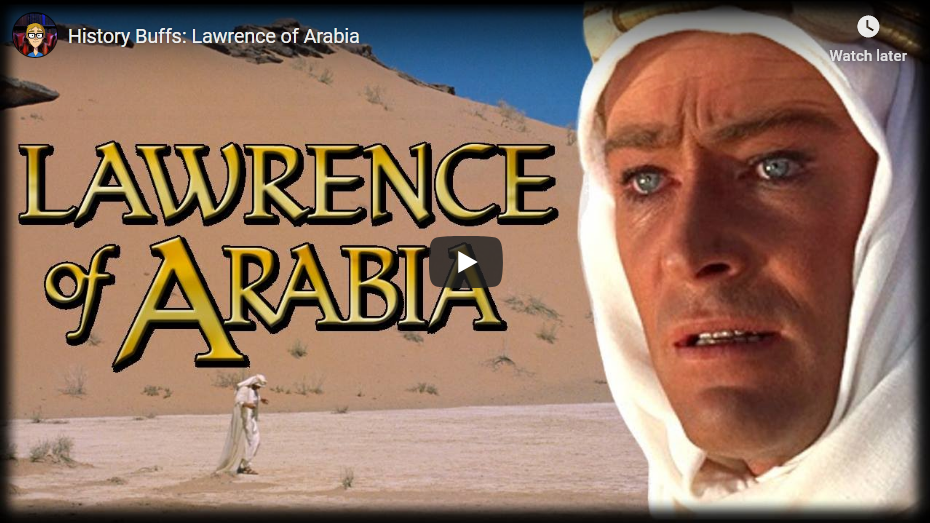
History Buffs: Lawrence of Arabia

Filed under: Britain, History, Media, Middle East, Military, WW1 — Tags: , , , , , , — Nicholas @ 02:00

History Buffs
Published 17 Apr 2016

BIG THANK YOU TO THE GREAT WAR CHANNEL FOR COLLABORATING WITH ME AND MAKING AWESOME VIDEOS!

Check out their T.E. Lawrence video here –
https://www.youtube.com/watch?v=iqvcjL6ObH0

And the rest of their awesome channel here 🙂
https://www.youtube.com/user/TheGreatWar

And thank you History Buffs so very much for being patient whilst I was in Ireland working on the Vikings podcasts for the History Channel and moving house at the same time. I sincerely hope you guys enjoy this review!

● Follow us on Twitter: https://twitter.com/HistoryBuffsNH

________________________________________­­_________________________________

Lawrence of Arabia is a 1962 epic historical drama film based on the life of T. E. Lawrence. It was directed by David Lean and produced by Sam Spiegel through his British company Horizon Pictures, with the screenplay by Robert Bolt and Michael Wilson. The film stars Peter O’Toole in the title role. It is widely considered one of the greatest and most influential films in the history of cinema. The dramatic score by Maurice Jarre and the Super Panavision 70 cinematography by Freddie Young are also highly acclaimed. The film was nominated for ten Academy Awards and won seven in total including Best Director, Best Sound Editing, Best Film Editing, and Best Picture.

The film depicts Lawrence’s experiences in the Arabian peninsula during World War I, in particular his attacks on Aqaba and Damascus and his involvement in the Arab National Council. Its themes include Lawrence’s emotional struggles with the personal violence inherent in war, his own identity, and his divided allegiance between his native Britain and its army and his new-found comrades within the Arabian desert tribes.

In 1991, Lawrence of Arabia was deemed “culturally, historically, or aesthetically significant” and selected for preservation in the United States Library of Congress National Film Registry.

February 23, 2020

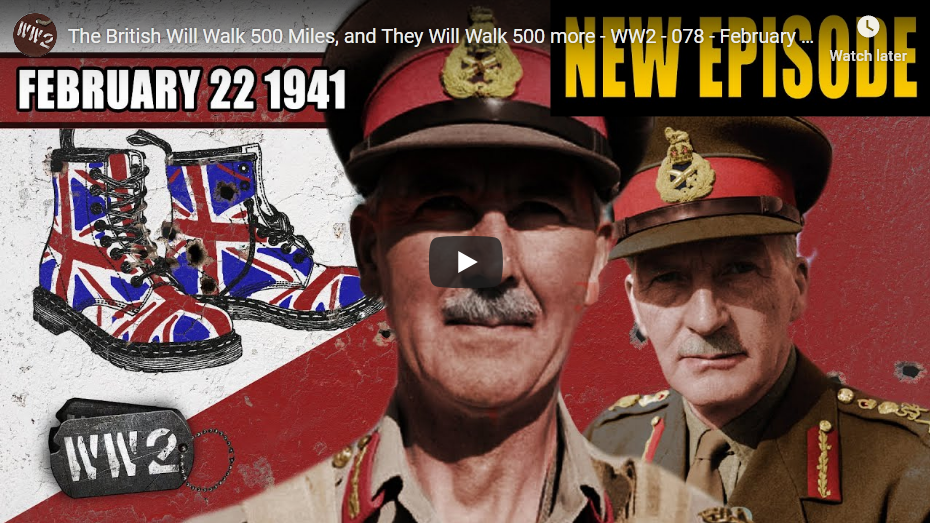
The British Will Walk 500 Miles, and They Will Walk 500 more – WW2 – 078 – February 22, 1941

Filed under: Africa, Britain, Europe, Germany, Greece, History, Italy, Military, WW2 — Tags: , , , , — Nicholas @ 04:00

World War Two
Published 22 Feb 2020

As the British make spectacular advances in East-Africa, with even more spectacular advances on the horizon, South-Eastern Europe is getting increasingly tense.

Join us on Patreon: https://www.patreon.com/TimeGhostHistory
Or join The TimeGhost Army directly at: https://timeghost.tv

Follow WW2 day by day on Instagram @World_war_two_realtime https://www.instagram.com/world_war_t…
Join our Discord Server: https://discord.gg/D6D2aYN.
Between 2 Wars: https://www.youtube.com/playlist?list…
Source list: http://bit.ly/WW2sources

Written and Hosted by: Indy Neidell
Produced and Directed by: Spartacus Olsson and Astrid Deinhard
Executive Producers: Bodo Rittenauer, Astrid Deinhard, Indy Neidell, Spartacus Olsson
Creative Producer: Joram Appel
Post-Production Director: Wieke Kapteijns
Research by: Indy Neidell
Edited by: Iryna Dulka
Map animations: Eastory (https://www.youtube.com/c/eastory)

Colorizations by:
– Daniel Weiss
– Julius Jääskeläinen – https://www.facebook.com/JJcolorization/
– Dememorabilia – https://www.instagram.com/dememorabilia/
– Norman Stewart – https://oldtimesincolor.blogspot.com/
– Olga Shirnina, a.k.a. Klimbim – https://klimbim2014.wordpress.com/

Sources:
– Bundesarchiv
– Library of Congress
– IWM: E 6661
– National Library of Australia
– National Portrait Gallery
– Letter by Mochammad Kafi, post icon by Bonegolemfrom, from the Noun Project
– Photot of Goethe Medal by Mondfreund from Wikimedia Commons
– Eirik Sundvor, The Municipal Archives of Trondheim

Archive by Screenocean/Reuters https://www.screenocean.com.

A TimeGhost chronological documentary produced by OnLion Entertainment GmbH.

February 1, 2020

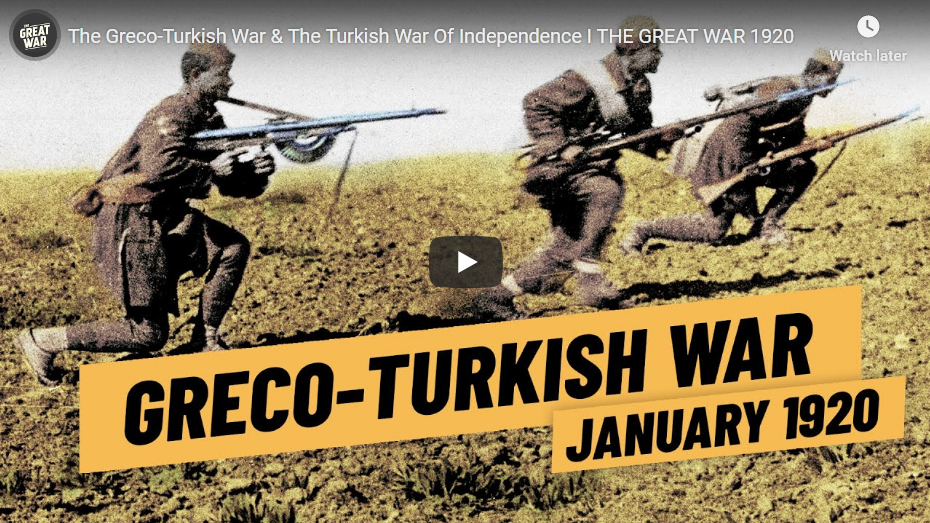
The Greco-Turkish War & The Turkish War Of Independence I THE GREAT WAR 1920

The Great War
Published 31 Jan 2020

Sign up for Curiosity Stream and Nebula: https://curiositystream.com/thegreatwar

The Ottoman Empire was among the losing powers of World War 1 and left a power vacuum after the armistice of Mudros. The Great Powers had already made plans for the territory beforehand and now Greece had ambitions to take over the parts of Turkey where Greeks lived.

» SUPPORT THE CHANNEL
Patreon: https://www.patreon.com/thegreatwar
Merchandise: https://shop.spreadshirt.de/thegreatwar/

» SOURCES
Criss, Nur Bilge: “Occupation during and after the War (Ottoman Empire)”, in: 1914-1918-online. International Encyclopedia of the First World War, ed. by Ute Daniel, Peter Gatrell, Oliver Janz, Heather Jones, Jennifer Keene, Alan Kramer, and Bill Nasson, issued by Freie Universität Berlin, Berlin 2015-08-05 https://encyclopedia.1914-1918-online…

Leonhard, Jörn. Der überforderte Frieden. Versailles und die Welt 1918-1923 (CH Beck, 2018).

Macmillan, Margaret. The Peacemakers: Six Months that Changed the World (London: John Murray, 2001).

Karsh, Efraim and Inari Karsh. Empires of the Sand (London: Harvard UP, 1999).

Llewllyn Smith, Michael. Ionian Vision: Greece in Asia Minor (London: Hurst, 2016 (1973))

Gerwarth, Robert. The Vanquished. Why the First World War Failed to End, 1917-1923 (Penguin, 2017).

Fromkin, David. A Peace to End All Peace (New York: Avon, 1989)

McMeekin, Sean. The Ottoman Endgame (Penguin, 2015)

» SOCIAL MEDIA
Instagram: https://instagram.com/the_great_war
Twitter: https://twitter.com/WW1_Series
Reddit: https://reddit.com/r/TheGreatWarChannel

»CREDITS
Presented by: Jesse Alexander
Written by: Jesse Alexander
Director: Toni Steller & Florian Wittig
Director of Photography: Toni Steller
Sound: Toni Steller Editing: Toni Steller
Mixing, Mastering & Sound Design: http://above-zero.com
Maps: Daniel Kogosov (https://www.patreon.com/Zalezsky)
Research by: Jesse Alexander
Fact checking: Florian Wittig Channel

Design: Alexander Clark

Original Logo: David van Stephold

A Mediakraft Networks Original Channel

Contains licensed material by getty images
All rights reserved – Real Time History GmbH 2019

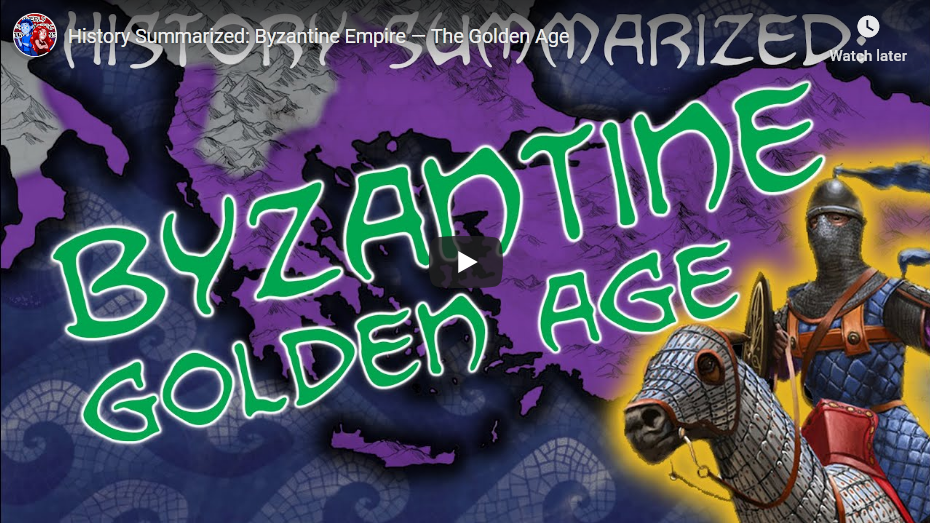
History Summarized: Byzantine Empire — The Golden Age

Overly Sarcastic Productions
Published 31 Jan 2020

What do you do when life takes away half of your empire? Well, if you’re the Medieval Byzantines, you make comprehensive structural reforms to better manage a changing geopolitical landscape — And then you make an absolute crapload of mosaics.

Our content is intended for teenage audiences and up.

This video was edited in part by Sophia Ricciardi, AKA “Indigo”.

FURTHER SOURCES: A Short History of Byzantium by John Julius Norwich.

PATREON: https://www.Patreon.com/OSP

DISCORD: https://discord.gg/h3AqJPe

MERCH LINKS: https://www.redbubble.com/people/OSPY…

OUR WEBSITE: https://www.OverlySarcasticProductions.com
Find us on Twitter https://www.Twitter.com/OSPYouTube
Find us on Reddit https://www.Reddit.com/r/OSP/

November 12, 2019

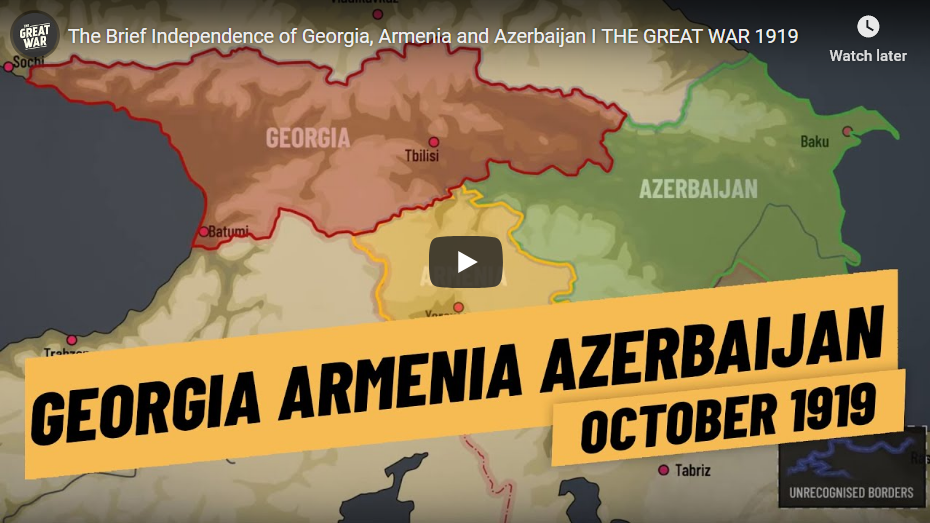
The Brief Independence of Georgia, Armenia and Azerbaijan I THE GREAT WAR 1919

Filed under: Asia, History, Military, Russia — Tags: , , , , , — Nicholas @ 06:00

The Great War
Published 11 Nov 2019

Georgia, Armenia and Azerbaijan used the power vacuum after the 1917 revolution in Russia and after the collapse of the Central Powers in 1918 to gain their independence. But the Caucasus region was of vital strategic importance to the new Russian regime, to the British and to the Turks.

» SUPPORT THE CHANNEL
Patreon: https://www.patreon.com/thegreatwar
Merchandise: https://shop.spreadshirt.de/thegreatwar/

» SOCIAL MEDIA
Instagram: https://instagram.com/the_great_war
Twitter: https://twitter.com/WW1_Series
Reddit: https://reddit.com/r/TheGreatWarChannel

»CREDITS
Presented by: Jesse Alexander
Written by: Jesse Alexander
Director: Toni Steller & Florian Wittig
Director of Photography: Toni Steller
Sound: Toni Steller
Editing: Toni Steller
Mixing, Mastering & Sound Design: http://above-zero.com
Maps: Daniel Kogosov (https://www.patreon.com/Zalezsky)
Research by: Jesse Alexander
Fact checking: Florian Wittig

Channel Design: Alexander Clark
Original Logo: David van Stephold

A Mediakraft Networks Original Channel

Contains licensed material by getty images
All rights reserved – Real Time History GmbH 2019

October 31, 2019

The Legend of Vlad the Impaler

Filed under: Europe, History, Military — Tags: , , , , , — Nicholas @ 02:00

Royal Armouries
Published 31 Oct 2017

Hear the story of the infamous tyrant Vlad Tepes, notorious for the grisly way in which he killed his enemies.

Where to find us:

⚔Website: https://royalarmouries.org/home
⚔Blog: https://blog.royalarmouries.org/
⚔Twitter: https://twitter.com/Royal_Armouries

October 30, 2019

Homer, the Trojan War & the Late Bronze Age Collapse

Filed under: Europe, Greece, History, Middle East, Military — Tags: , , , , , , — Nicholas @ 05:00

History Time
Published 20 Mar 2018

This is the first in a new series I will be producing on the Late Bronze Age Collapse.

If you enjoyed this video and would like to see more then please consider supporting me on Patreon:-
https://www.patreon.com/historytimeUK (every dollar helps)

Are you a budding artist, illustrator, cartographer, or music producer? Send me a message at petekellywriter@gmail.com No matter how professional you are or even if you’re just starting out, I can always use new music and images in my videos. Get in touch! I’d love to hear from you.

I’ve compiled a reading list of my favourite history books via the Amazon influencer program. If you do choose to purchase any of these incredible sources of information then Amazon will send me a tiny fraction of the earnings (as long as you do it through the link) (this means more and better content in the future) I’ll keep adding to and updating the list as time goes on:-
https://www.amazon.com/shop/historytime

I try to use copyright free images at all times. However if I have used any of your artwork or maps then please don’t hesitate to contact me and I’ll be more than happy to give the appropriate credit.

October 26, 2019

History Summarized: Byzantine Beginnings

Overly Sarcastic Productions
Published 25 Oct 2019

It’s Rome! It’s Greece! It’s… The Byzantine Empire! Check out how late Imperial Rome transformed in the centuries from Constantine to Justinian, as it evolved into a new and unique iteration of Roman civilization. Watch as Byzantine craftsmen revolutionize artwork by throwing a megaton of gold onto every last mosaic in the Mediterranean, and radically reimagine architecture by asking “But what if *dome*?”

PATREON: https://www.Patreon.com/OSP

DISCORD: https://discord.gg/sS5K4R3

MERCH LINKS: https://www.redbubble.com/people/OSPY…

OUR WEBSITE: https://www.OverlySarcasticProductions.com
Find us on Twitter https://www.Twitter.com/OSPYouTube
Find us on Reddit https://www.Reddit.com/r/OSP/

« Newer PostsOlder Posts »

Powered by WordPress