One of the worst things my parents ever did was force me to go to the panto. It was Angela’s Ashes levels of misery memoir fodder.
What made it worse was that I was about 14; I’d almost managed to get through childhood without experiencing this strange British tradition and then, just at the age when you’re most vulnerable to cringe, I got dragged in. Anyway, I think I’m over it now.
Pantomime is one of those very British things that makes me feel a strange sense of alienation from my countrymen, like celebrating the NHS or twee. I’m glad that other people enjoy it, and that it brings a lot of work to actors and to theatres during the Christmas period. I just personally don’t get it.
For those who don’t know about the ins and outs of our island culture, panto is a sort of farcical theatre featuring lots of sexual innuendo and contemporary pop culture references; I think when I watched it there must have been one or two ex-Neighbours stars because they all finished by singing the theme tune.
A key part of this British institution is drag, with men playing the roles of Widow Twankey and the Ugly Sisters. Drag is quite an established tradition in England, such a part of popular entertainment that there is even a photograph of British soldiers in dresses fighting in the Second World War.
Pantomime is thought to have evolved from the medieval Feast of Fools, a day of the year (around the Christmas/New Year period) when social norms would be inverted; laymen would be elected bishops, lords would serve their retainers drinks, and men and women would even swap roles. Social norms could be temporarily broken, which continues today in the often risqué humour incongruously aimed at family audiences (hilariously portrayed in the Les Dennis episode of Extras.)
This kind of drag is obviously humourous, the aim being for the men to look as ridiculous as possible; think of the ungainly Bernard Bresslaw in Carry on Doctor. It is very different to the later pop culture gender fluidity pioneered by David Bowie in which males might be presented as beautifully feminine, even alluring; that was aimed at challenging and disturbing the audience, while panto is aimed at amusing and reassuring. Indeed, the whole point of spending a day inverting social norms is that, by doing so, you are implicitly accepting and defending those social norms.
This form of drag is obviously quite different to the more modern drag queen, a form of entertainment that can be far more explicit and which has in the 21st century become yet another one-of-those-talking-points, chiefly because people seem so keen on letting children watch it.
Ed West, “The last conservative moral panic”, Wrong Side of History, 2023-02-08.
January 1, 2024
QotD: The Panto
May 15, 2023
QotD: How military history shapes cultures and societies
… war and conflict deeply shaped societies in the past and to the degree that we think that understanding those societies is important (a point on which, presumably, all historians may agree), it is also important to understand their conflicts. I am often puzzled by scholars who work on bodies of literature written almost entirely by combat veterans (which is a good chunk of the Greek and Latin source tradition), in societies where most free adult men probably had some experience of combat, who then studiously avoid ever studying or learning very much about that combat experience (that “war and society” lens there again). Famously, Aeschylus, the greatest Greek playwright of his generation, left no record of his achievements in writing in his epitaph. Instead he was commemorated this way:
Aeschylus, son of Euphorion, the Athenian lies beneath this marker
having perished in wheat-bearing Gela
Of his well-known prowess, the grove of Marathon can speak
And long-haired Mede knows it well.If a scholar wants to understand Aeschylus or his plays, don’t they also need to understand this side of his experience too? I know quite a number of scholars who ended up coming to military history this way, looking to answer questions that were not narrowly military, but which ended up touching on war and conflict. For that kind of research – for our potential scholar of Aeschylus – it is important that there be specialists working to understand war and conflict in the period. Of course this is particularly true in understanding historical politics and political narratives, given that most pre-modern states were primarily engines for the raising of revenues for the waging of war (with religious expenditures typically being the only ones comparable in scale).
Bret Devereaux, “Collections: Why Military History?”, A Collection of Unmitigated Pedantry, 2020-11-13.
May 13, 2023
Arnold Ridley – “Private Charles Godfrey” – a real story from Dad’s Army
The History Chap
Published 1 Feb 2023The story of Arnold Ridley — Private Charles Godfrey — Dad’s Army
After my last video all about Lance Corporal Jones in Dad’s Army I have been inundated by requests for the real story of another character from the classic comedy series: Private Godfrey.
Private Charles Godfrey, played by Arnold Ridley, is an ageing and slightly doddery member of the Walmington-on-Sea Home Guard platoon. His comrades are somewhat surprised and concerned when he announces that he was a conscientious objector during the First World War. However, thanks to his sister, the platoon learn his real (well, fictitious as it is a TV comedy show) story. Godfrey was indeed a conscientious objector but like many others he did volunteer to serve his country – just not to kill. Many men who felt likewise, joined the Army Medical Corps. Whilst not fighting they not only served their country and played a valuable role in the war effort but they also put themselves in harm’s way. Many of them became stretcher bearers, going out into no man’s land to fetch the wounded to safety. And many were decorated for their bravery.
William Coltman, became the most decorated NCO in the entire British army during the First World War … and he never fired a shot in anger!I will be telling the story of William Coltman VC in the near future.
Private Charles Godfrey was awarded the Military Medal for bravery during the battle of the Somme.
What makes Godfrey’s character all the more fascinating is that his actor, Arnold Ridley, was no conscientious objector but a volunteer in World War One. he was severly injured at the battle of the Somme in 1916 and discharged the following year.
Indeed, his injuries would influence how he played his character in Dad’s Army.
After the war, Ridley became a play writer. Arnold Ridley penned over 30 pays, the most famous of which was The Ghost Train written in 1923.
At the outbreak of the Second World War he once more volunteered to serve his country. Following the battle of Boulogne in 1940, he was evacuated to Britain, having been injured, once more, he was again given a medical discharge.
For the rest of the war he worked for ENSA – the forces entertainment organisation — and was a member of his local Home Guard. He continued his acting career through the 1940’s and 50’s before landing the role of Private Charles Godfrey in Dads Army in 1968. He was ever-present until the show ended in 1977. By then he was 81 years old.
Arnold Ridley died in 1984 and is buried in Bath Abbey.
(more…)
November 22, 2022
QotD: The obligatory orgy scene
I went last week to a production of Rigoletto, the revival of a production first staged in 2001. A criticism that I read in advance informed me that the initial orgy scene had been toned down somewhat by comparison with what had gone seventeen years before. Was this progress or regression? The critic did not venture an opinion on this vital question; he merely recorded the change as a fact.
It seems that all opera productions these days need an orgy scene, just as doctoral theses in the Soviet Union used to need at least one quotation from Lenin. There was a time when an orgy would have been censored, but now it is obligatory — no opera without one. There was a brief orgy scene in the last Flying Dutchman that I saw, and it was a bit of a relief when they got it over with because I knew that it must be coming and tension mounted until it did. It was a bit like childhood diseases in the old days: The sooner you had them, the quicker you got over them.
The problem with orgies is that once you’ve see one, you’ve seen them all, and these days they are staged literally rather than suggestively, as if the aging audience has to be reminded of what sex actually is. Moreover, they are staged like a tableau of Krafft-Ebing’s Psychopathia Sexualis, the fin de siècle compendium of what used to be called, in those far-off judgmental days, perversions. The implicit, however, is more powerful than the explicit, or it used to be. The explicit, in fact, is the enemy of the voluptuous.
Theodore Dalrymple, “Adding Injury to Insult”, Taki’s Magazine, 2018-01-20
July 25, 2022
Rowan Atkinson & Hugh Laurie – Shakespeare and Hamlet (1989)
Nathaniel Brechtmann
Published 1 Sep 2011A sketch called “A Small Rewrite”, performed by Hugh Laurie (aka House) as Shakespeare and Rowan Atkinson (aka Mr Bean) as the editor.
September 3, 2021
QotD: Drama critics
There is one thing that 99 percent of all critics share with one another: they are failures. I don’t mean failures as critics — my God, that’s understood. I don’t even mean they are failures as people; I mean something more painful by far: These people are failures in life.
It’s a second-rate job, folks. Being a drama critic on Broadway wouldn’t keep a decent mind occupied 10% of the time. So you don’t even get second-raters. You get the dregs, the stage-struck but untalented neurotic who eventually drifts into criticism as a means of clinging peripherally to the arts. And most of your cruel critics come this way: they are getting their own back.
William Goldman, The Season: A Candid Look at Broadway, 1969.
August 20, 2021
QotD: First Ministers Conferences
What is the point of a First Ministers Conference?
There is no actual necessity for them, you understand. The federal and provincial governments are quite able to function within their respective jurisdictions without their leaders dashing off across the country at regular intervals to quiver their jowls at each other. The first such meeting was not held until 1906. Just 10 more “dominion-provincial conferences” occurred over the next 40 years. Not until the 1950s did they become the semi-annual affairs we know today. That this was also when the TV cameras arrived is possibly not coincidental.
If there were actual business to transact, it could just as easily be arranged by subordinates, or over the phone, or via video-conference. Or if an issue were so thorny that it genuinely required a fleshly first-ministerial encounter, the prime minister could always meet bilaterally with the premier or premiers involved, as Stephen Harper did.
But a full-on, capital-F First Ministers Conference, official cars, flag-backed lecterns and all? There is invariably but one purpose to these: for the 10 premiers to corner and harass the prime minister, using the imbalance in their numbers to depict the feds as the outlier. Sometimes this is in furtherance of the premiers’ perennial campaign for more federal cash. Sometimes, as in the current exercise, the point seems to be conflict for conflict’s sake. But always — always — it is theatre.
Only it is theatre of a peculiar kind: with the curtains drawn and the sound down, the audience being instead entertained by periodic reports from agents for each of the actors about who said what. Thus the breathless dispatches from reporters orbiting the conference — they are kept well away from the actual meeting room — every line of it originating from sources, federal or provincial, with a professional interest in puffing one leader or the other.
Andrew Coyne, “A semi-annual opportunity for premiers to strut and preen and accomplish nothing”, National Post, 2018-12-07.
July 13, 2021
“Samuel Beckett was one of the twentieth century’s very greatest conmen and his dupes continue to relish being parted from their cash”
In The Critic, J.S. Barnes digs up the bones of Samuel Beckett for a thorough kicking:
A good conman needs three key attributes to succeed: swagger, plausibility and commitment to the perpetuation of the con. A great conman, meanwhile, needs one additional factor: the discovery and nurturing of victims who are not only willing to be gulled but who come to actively enjoy that sensation.
Samuel Beckett was one of the twentieth century’s very greatest conmen and even now, decades after his death, his dupes continue to relish being parted from their cash.
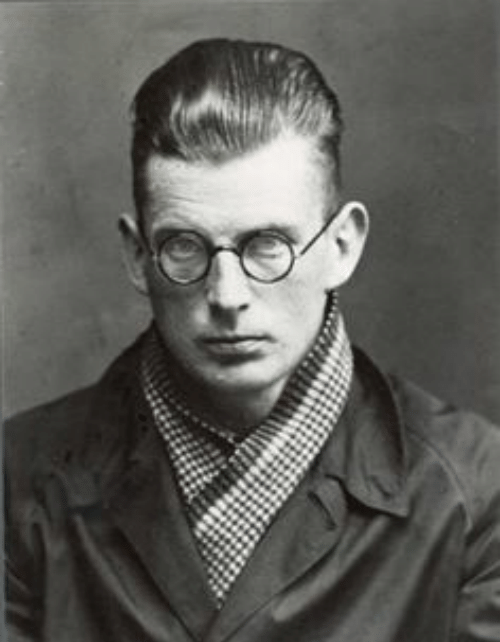
That he was plausible in his claims is clear from the fact that his plays are still performed all around the world. His swagger may be witnessed in the endless succession of black and white photographs which accompany most editions of his work: the old fraud gazing grimly out at the reader from his home in France, like some weathered statue come dolefully to life, looking as though he is considering the fundamental inequities of existence or, perhaps, rumours of a forthcoming croissant shortage.
As for his commitment to the long con, he had form. In 1930, he gave a lecture at Trinity College, Dublin, about a poet (Jean du Chas) and an artistic movement (Le Concentrisme) which he had entirely invented, both fooling and riling up the dons. He learnt well from this, one suspects, never again to allow the mask to slip.
Following his early, glumly unreadable novels, much indebted to James Joyce, the real foundation of Beckett’s reputation is his 1953 play Waiting for Godot. The set-up is vivid and intriguing: in a rural wasteland sit two ravaged, witty tramps, Vladimir and Estragon, who trade barbs and banter while waiting for the arrival of a third individual who, we soon suspect, will never show up. And then, of course, nothing of any consequence happens.
Two additional characters wander on and off stage. The tramps talk and bicker some more. Godot never puts in an appearance. As one of the characters remarks: “Nothing happens. Nobody comes, nobody goes. It’s awful.”
There is no progression or change in the characters, no shift in their situation. Any clear-eyed audience member who has gone into the theatre meaning to judge the thing in as objective a fashion as possible will soon find themselves restless, then bored, then on the cusp of feigning some sort of medical emergency simply to get out of the stalls without causing too much of a fuss.
At this, avid Beckettians are no doubt sprawling on their chaise longues, sucking ferociously on a Gauloise and muttering to themselves that this lack of narrative progression, this absence of change, is the very crux of old Sam’s oeuvre. Confronted with the horrors of the twentieth-century, they say, pointlessness and circularity are the only things which make sense. Laughter in the ruins is all that’s left.
July 10, 2021
History-Makers: Aristophanes
Overly Sarcastic Productions
Published 9 Jul 2021He told the Athenians they were a disaster and they gave him a prize. Aristophanes wrote in the new Theatrical genre of Comedy during the golden age of Athens, and used his plays to viciously satirize Athenian society. They create a fabulously clear portrait of ancient Athenian life, and they have the corollary benefit of being funny as hell.
SOURCES & Further Reading: The 11 plays of Aristophanes, with particular focus on Clouds and Women at the Thesmophoria, Britannica’s “Aristophanes”, Crash Course Theater #2 & 4.
Partial Tracklist: “Sneaky Snitch”, “Marty Gots A Plan” Kevin MacLeod (incompetech.com)
Licensed under Creative Commons: By Attribution 4.0 License
http://creativecommons.org/licenses/b…Our content is intended for teenage audiences and up.
PATREON: https://www.Patreon.com/OSP
PODCAST: https://overlysarcasticpodcast.transi…
DISCORD: https://discord.gg/osp
MERCH LINKS: http://rdbl.co/osp
OUR WEBSITE: https://www.OverlySarcasticProductions.com
Find us on Twitter https://www.Twitter.com/OSPYouTube
Find us on Reddit https://www.Reddit.com/r/OSP/
From the comments:
Overly Sarcastic Productions
2 hours ago
While we’re here, one subject I cut for time is the relationship between “The Clouds” and the trial of Socrates.It’s commonly assumed that Aristophanes’ satire played a part in Athens’ decision to charge and ultimately kill Socrates, but that interpretation doesn’t really hold up to scrutiny.
The Clouds was performed over 20 years before Socrates’ trial. If the play had that strong an effect on Athens, we can assume Socrates would have been charged far sooner. And Plato’s own writings paint Aristophanes rather favorably — if Plato blamed Aristophanes for the trial, he does not make that obvious.
There IS one snide line in Socrates’ Apology that seems to a modern reader like it’s referring to The Clouds, but really we can’t be sure. Aristophanes was not the only comic playwright in Athens, and certainly not the only person who disliked Socrates. Did The Clouds contribute to a negative public perception of Socrates? Sure, in part, at least when it was performed in 423. But it’s faaar more likely that Socrates’ trial and death in 399 owe more to his persistent habit of being a Colossal Pain In The Ass to whomever he was speaking with.
Reading The Apology makes it clear that nobody had the power to make Athens hate Socrates more than Socrates.
-B
June 13, 2021
June 3, 2021
The Supernatural Adventures of Arthur Conan Doyle | B2W:ZEITGEIST! I E.19 Spring – 1923
TimeGhost History
Published 2 Jun 2021Being the creator of the legendary Sherlock Holmes has made Arthur Conan Doyle famous for his scientific rationality. But Doyle also has a deeply held belief in the existence of the spirit universe. In a world still reeling from the shock of the Great War, he is not alone.
(more…)
April 16, 2021
“Students will find in Shakespeare absolutely no moral compass”
Sky Gilbert responds more than adequately to a demand to “Cancel Shakespeare” that also appeared in The Line recently:

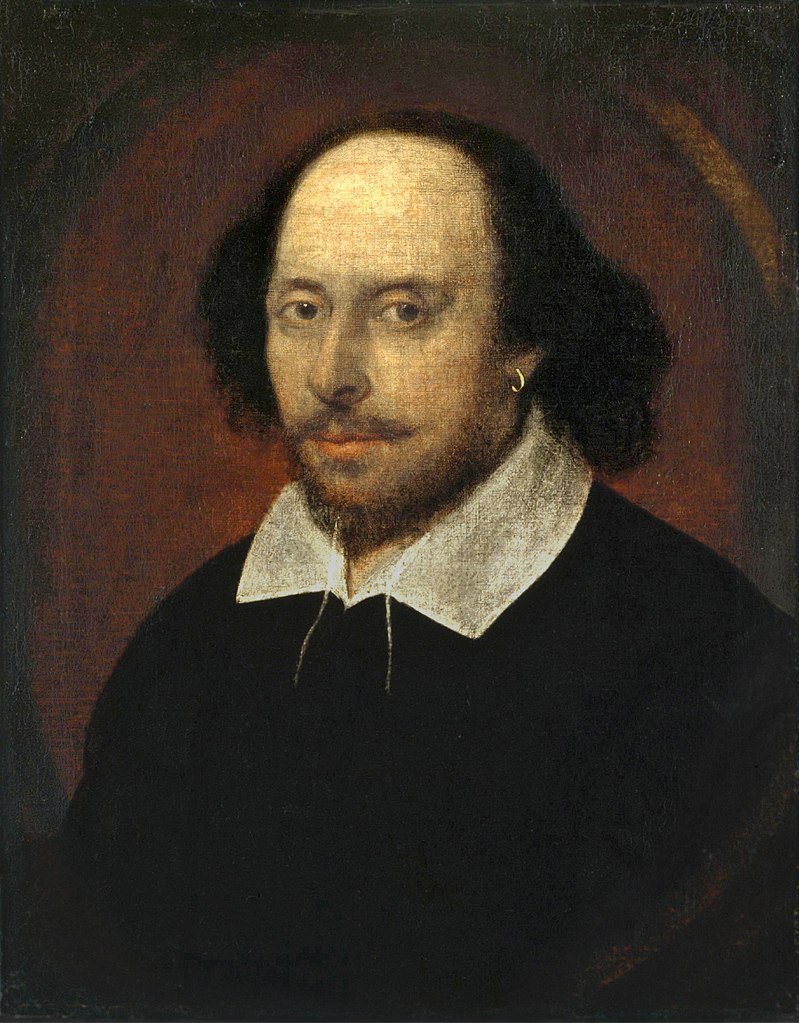
This was long thought to be the only portrait of William Shakespeare that had any claim to have been painted from life, until another possible life portrait, the Cobbe portrait, was revealed in 2009. The portrait is known as the “Chandos portrait” after a previous owner, James Brydges, 1st Duke of Chandos. It was the first portrait to be acquired by the National Portrait Gallery in 1856. The artist may be by a painter called John Taylor who was an important member of the Painter-Stainers’ Company.
National Portrait Gallery image via Wikimedia Commons.
Allan thinks that Shakespeare’s language is difficult and old fashioned, and that students today find analyzing the complexities of his old-fashioned rhetoric boring and irrelevant. Yes, Shakespeare essentially writes in another language (early modern English). And reading or even viewing his work can be a tough slog. Not only did he invent at least 1,700 words (some of which are now forgotten today), he favoured a befuddling periodic syntax in which the subject does not appear until the end of a sentence.
But a study of Shakespeare’s rhetoric is important in 2021. There is one — and only one — exceedingly relevant idea that can be lifted from Shakespeare’s congested imagery, his complex, sometimes confusing metaphors — one jewel that can be dragged out of his ubiquitous references to OVID and Greek myth (references which were obviously effortless for him, but for most of us, only confound). And this idea is very relevant today. Especially in the era of “alternate facts” and “fake news.”
This idea is the only one Shakespeare undoubtedly believed. I say this because he returns to it over and over. Trevor McNeely articulated this notion clearly and succinctly when he said that Shakespeare was constantly warning us the human mind “can build a perfectly satisfactory reality on thin air, and never think to question it.” Shakespeare is always speaking — in one way or another — about his suspicion that the bewitching power of rhetoric — indeed the very beauty of poetry itself — is both enchanting and dangerous.
Shakespeare lived at the nexus of a culture war. The Western world was gradually rejecting the ancient rhetorical notion that “truth is anything I can persuade you to believe in poetry” for “truth is whatever can be proved best by logic and science.” Shakespeare was fully capable of persuading us of anything (he often does). But his habit is to subsequently go back and undo what he has just said. He does this so that we might learn to fundamentally question the manipulations of philosophy and rhetoric — to question what were his very own manipulations. Shakespeare loved the beautiful hypnotizing language of poetry, but was also painfully aware that it could be dangerous as hell.
In fact, Shakespeare’s work is very dangerous for all of us. That’s why students should — and must — read it. Undergraduates today hotly debate whether The Merchant of Venice is anti-Semitic, or whether Prospero’s Caliban is a victim of colonial oppression. Education Week reported that “in 2016, students at Yale University petitioned the school to ‘decolonize’ its reading lists, including by removing its Shakespeare requirement.”
It’s true that Shakespeare is perhaps one of the oldest and whitest writers we know. (And sometimes he’s pretty sexist too — Taming of the Shrew, anyone?). But after digging systematically into Shakespeare’s work even the dullest student will discover that for every Kate bowing in obedience to her husband, there is a fierce Lucrece — not only standing up to a man, but permanently and eloquently dressing him down. (And too, the “colonialist” Prospero will prove to be just as flawed as the “indigenous” Caliban.) William Hazlitt said: Shakespeare’s mind “has no particular bias about anything” and Harold Bloom said: “his politics, like his religion, evades me, but I think he was too wary to have any.”
Shakespeare Summarized: King Lear
Overly Sarcastic Productions
Published 22 Jul 2014Sorry it’s been a while. Summer vacation plays merry hell with both my work ethic and my voice. *discreetly hacks up a lung*
King Lear! He’s not a very good king, and he’s not a very good father! Good thing that, by the end, he’s neither of those things.
February 14, 2021
Shakespeare Summarized: A Midsummer Night’s Dream
Overly Sarcastic Productions
Published 27 Feb 2014Finally, a summarized comedic romance! And it was almost out in time for Valentine’s Day, when it would have been legitimately appropriate to release!
…I’m making progress, guys. Cut me some slack. 😛
Midsummer Night’s Dream is one of Shakespeare’s best plays. And nobody died this time! What a twist!
January 31, 2021
Adapting Noël Coward’s Blithe Spirit for the screen – “The ensuring film has all the light charm and witty élan of a documentary about slaughterhouses”
At The Critic, Alexander Larman is not happy with the latest attempt to translate a Coward play to the big or small screen:
Recently, the new film of Noël Coward’s masterly play Blithe Spirit was released on various streaming services, after its cinematic release was cancelled due to the irritating absence of open cinemas to show it. I had been looking forward to it for some time. It had a fine cast of hugely talented comic actors, led by Dan Stevens and including Isla Fisher, Leslie Mann, Julian Rhind-Tutt, and, in the great role of the fraudulent medium Madame Arcati, none other than Judi Dench. It was directed by Peter Hall’s talented son Edward, and its inspiration remains one of the most uproariously entertaining plays of the twentieth century, complete with some of Coward’s finest dialogue. It would be hard to mess it up.
Alas, “messed up” is an understatement when it comes to describe what has happened to the film. A clue comes in the credit: “adapted by Piers Ashworth, Meg Leonard and Nick Moorcroft”. The three of them were previously responsible for the mediocre sea-shanty comedy (not words one often writes) Fishermen’s Friends, and Ashworth and Moorcroft should be prosecuted at the cinematic equivalent of the Hague for their shameful bastardisation of Ronald Searle’s St Trinian’s series into two terrible films that bear as much relation to Searle’s illustrations as they do to Noël Coward. So it is little surprise that they have decided to “improve” on the original play. The writers throw out most of the original dialogue, retain only the bare bones of the storyline, introduce an irrelevant and mawkish subplot for Madame Arcati (who is now bewilderingly played mostly straight) and generally commit artistic vandalism.
The ensuring film has all the light charm and witty élan of a documentary about slaughterhouses. The cast do their best with the terrible material, but as Stevens manfully tries to make lines about erectile dysfunction amusing – “Mr Peasbody’s got stage fright” – the look of deep shame that occasionally comes over their faces cannot be disguised by the over-bright lighting and incongruously jaunty music. Had it been given a cinematic release, there may well have been indignant walkouts and outraged complaints at the box office. As is, I doubt that many disappointed viewers, expecting a more enjoyable film, will bother watching this travesty to the end.