Forgotten Weapons
Published 17 Mar 2018The Stoner 63 was a remarkably advanced and clever modular firearm designed by Eugene Stoner (along with Bob Fremont and Jim Sullivan) after he left Armalite. This was tested by DARPA and the US Marine Corps in 1963, and showed significant potential — enough that the US Navy SEALs adopted it and kept it in service into the 1980s. It was a fantastic balance of weight and controllability, offering a belt-fed 5.56mm platform at less than half the weight of the M60. The other fundamental characteristic of the Stoner 63 was modularity. It was built around a single universal receiver component which could be configured into a multitude of different configurations, from carbine to medium machine gun. Today we have one of the rarer configurations, an Automatic Rifle type. In addition, today’s rifle is actually a Stoner 63A, the improved version introduced in 1966 to resolve some of the problems that had been found in the original.
Ultimately, the Stoner system was able to achieve its remarkably light weight by sacrificing durability. The weapon was engineered extremely well and was not a danger to itself (like, for example, the FG-42), but it was prone to damage when mishandled by the average grunt. This would limit its application to elite units like the SEALs, who were willing to devote the necessary care to the maintenance and operation of the guns in exchange for the excellent handling characteristics it offered.
(more…)
July 24, 2022
Stoner 63A Automatic Rifle – The Original Modular Weapon
July 18, 2022
Russian Invasion of Finland – The Winter War 1939-40
Mark Felton Productions
Published 24 Mar 2022Find out why Russia invaded neutral Finland in late 1939, and how the outnumbered and outgunned Finns managed to defend their country for 3 months until making peace with Stalin.
(more…)
July 17, 2022
Who Let the Dogs Out?! – The Invasion of Sicily – WW2 – 203 – July 16, 1943
World War Two
Published 16 Jul 2022The Allies have begun their fight to take back Western Europe with Operation Husky. That’s not the only news though. They are also trying to extend their foothold in the Solomons, and Germany and the USSR continue smashing into one another at Kursk.
(more…)
June 29, 2022
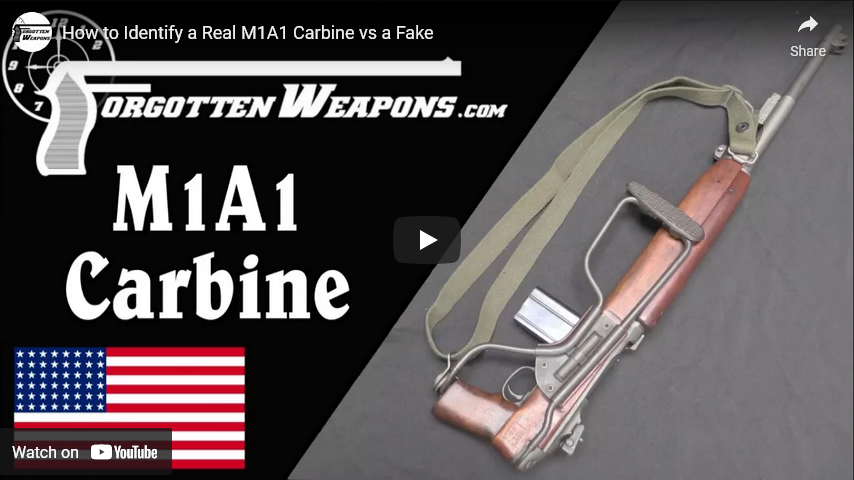
How to Identify a Real M1A1 Carbine vs a Fake
Forgotten Weapons
Published 10 Feb 2018Looking for a light and compact weapon to equip its new Airborne units, the US military adopted the M1A1 Carbine in May of 1942. This was mechanically identical to the existing M1 Carbine but with a wire-frame side-folding stock in place of the standard wooden stock. This allowed the M1A1 to fit into a very handy leg bag for paratroops.
Deliveries began in October 1942, with all of the guns being manufactured by the Inland company. A total of 140,591 were made in two batches (71,000 between October 1942 and October 1943 and another 69,000 between April and December 1944). This is a very small fraction of the more than 6 million M1 Carbines made during the war, and the M1A1 has become quite notable and desirable for its association with elite Airborne units. As a result, reproduction and fake stocks abound, and are quite difficult to tell from original ones.
Today we are going to look at some of the specific features that can help you authenticate an M1A1 stock.
http://www.patreon.com/ForgottenWeapons
Cool Forgotten Weapons merch! http://shop.bbtv.com/collections/forg…
If you enjoy Forgotten Weapons, check out its sister channel, InRangeTV! http://www.youtube.com/InRangeTVShow
Contact:
Forgotten Weapons
6281 N Oracle #36270
Tucson, AZ 85704
June 22, 2022
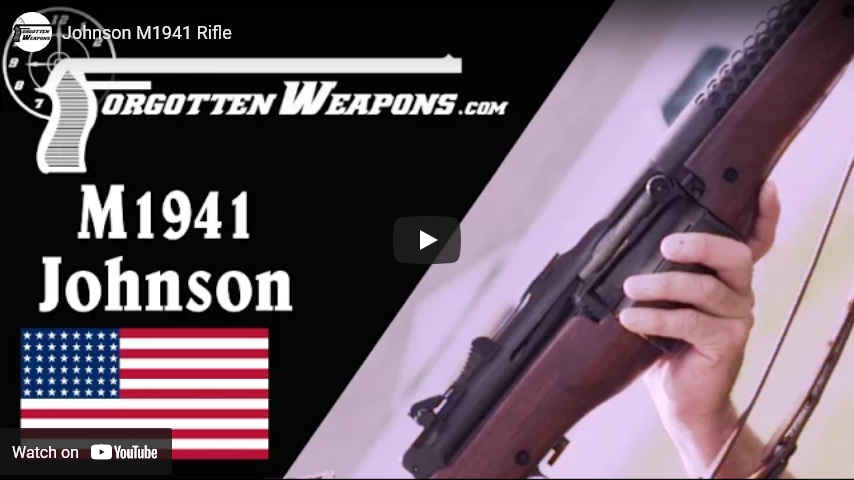
Johnson M1941 Rifle
Forgotten Weapons
Published 3 Oct 2016Cool Forgotten Weapons Merch! http://shop.bbtv.com/collections/forg…
Designed in 1936 by Melvin Johnson, the M1941 Johnson Automatic Rifle was a competitor to the M1 Garand, but not introduced in time to actually be adopted in place of the Garand. Instead, Johnson hoped to have his rifle accepted as a parallel second option for the US military in case something went wrong with the rollout of the Garand, or production simply couldn’t meet the required levels.
However, Johnson was not able to make his case to the military successfully. A small number of Johnson Light Machine Guns were acquired by the US Paramarines and the First Special Service Force, and a large order (30,000 rifles) was placed by the Dutch government for shipment to the colonies in southeast Asia (it is from this order that the M1941 designation comes). However, those colonies fell to the Japanese before a significant number of rifles were able to be shipped out. This left a substantial number of rifles orphaned in the US, and a small number of these were unofficially put in service by acquisitive Marines, mostly in the Pacific theater.
Mechanically, the Johnson is a short recoil system with a rotating bolt (very similar to the later AR-15 bolt, which Johnson would influence). It is chambered for the standard .30-06 cartridge, and feeds from a 10-round rotary fixed magazine which can be fed by stripper clips or with individual cartridges.
June 7, 2022
D Day: The First Canadian Parachute Battalion and the Battle for the Village of Varaville
The History Guy: History Deserves to Be Remembered
Published 6 Jun 2022There are so many stories of heroism involved in the massive Operation Overlord, among them the extraordinary story of the little-known first Canadian Parachute Battalion. The lightly armed Canadians were among the first allied soldiers to hit the ground in France on D-Day.
Check out our new community for fans and supporters! https://thehistoryguyguild.locals.com/
This is original content based on research by The History Guy. Images in the Public Domain are carefully selected and provide illustration. As very few images of the actual event are available in the Public Domain, images of similar objects and events are used for illustration.
You can purchase the bow tie worn in this episode at The Tie Bar:
https://www.thetiebar.com/?utm_campai…All events are portrayed in historical context and for educational purposes. No images or content are primarily intended to shock and disgust. Those who do not learn from history are doomed to repeat it. Non censuram.
Find The History Guy at:
New community!: https://thehistoryguyguild.locals.com/
Please send suggestions for future episodes: Suggestions@TheHistoryGuy.netThe History Guy: History Deserves to Be Remembered is the place to find short snippets of forgotten history from five to fifteen minutes long. If you like history too, this is the channel for you.
Awesome The History Guy merchandise is available at:
teespring.com/stores/the-history-guyScript by THG
#history #thehistoryguy #DDay

May 18, 2022
L119A2: The New British SOF Rifle
Forgotten Weapons
Published 24 Jan 2022http://www.patreon.com/ForgottenWeapons
https://www.floatplane.com/channel/Fo…
Cool Forgotten Weapons merch! http://shop.forgottenweapons.com
Around 2013, the UK MoD began looking for a new rifle to replace the Special Forces’ L119A1. Those A1 rifles were getting old, and something new was needed — and there was some thought that a new rifle could improve on some shortcomings of the A1 model. The new rifle was produced by Colt Canada (formerly Diemaco), and it was procured in both 10″ and 15.7″ barrel lengths (note that the rifle in this video has a 16″ barrel to avoid being an SBR).
The most distinctive feature of the new L119A2 was the licensed LMT monolithic upper receiver. This was used because it allowed solid mounting of devices like lasers on the side rails. However, it had major shortcomings in terms of heat retention and cleanability. The A2 also now used a MagPul CTR stock, and Geissele triggers (an excellent improvement from the A1’s MILSPEC trigger). The same Surefire suppressors were used, as were the optics from the A1s — the new A2 tender did not include new optics (nor funding for them).
Very few photos are known showing the L119A2. It came into service around 2016 or 2017, and entered public awareness after Christian Craighead was photographed using one in the Nairobi Westlands mall siege in 2019.
Contact:
Forgotten Weapons
6281 N. Oracle 36270
Tucson, AZ 85740

May 14, 2022
Operation Chariot, the “Greatest Raid of All”
The raid on the French port of St. Nazaire in March 1942, codenamed “Operation Chariot” by the British, was one of the most daring and successful special forces operation of the Second World War. In The Critic, Richard Hopton reviews a new history of this operation by Giles Whittell:
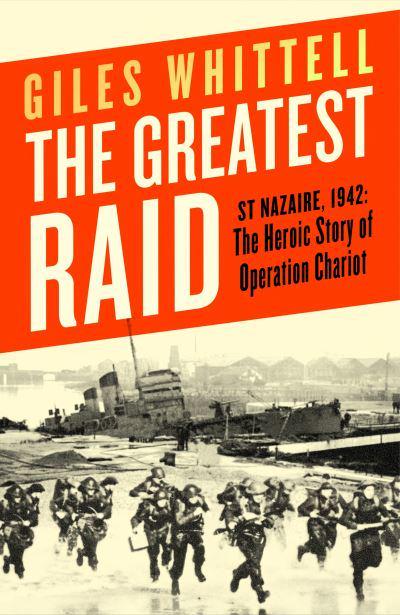
Operation Chariot, the Raid on St Nazaire, has long been known as “The Greatest Raid of All”. The audacity of the plan, the lethal danger of the operation, the inadequacy of the equipment provided, the astonishing courage of the participants and the spectacular success of its primary object have ensured its place in the annals of British martial heroism.
In the early hours of 28 March 1942, a force of 623 commandos and naval personnel stole up the Loire estuary to attack the port of St Nazaire. Leading the force was HMS Campbeltown, a superannuated destroyer acquired from the Americans, which had been converted into a floating bomb by the addition of four tons of high explosive secreted in her bows.
The plan was that she would ram the steel gate of the port’s immense dry dock where the charge would explode, demolishing the dock gate. The commandos would then swarm ashore to attack the dockyard installations, particularly the pumps and winding mechanisms which operated the dry dock. With the dock out of action, Hitler would not risk his battleship Tirpitz in the Atlantic where she could wreak havoc among the convoys supporting the war effort in Britain. This was the immediate, supposed object of the raid.
Giles Whittell’s new book is not the first full-length history of the event. C.E. Lucas-Phillips’s account, The Greatest Raid of All, was published in 1958 followed 40 years later by James Dorrian’s Storming St Nazaire, which remains the most detailed, authoritative account of the operation. In 2013 Robert Lyman published Into The Jaws of Death which told the story of the raid anew, with a greater concentration on the genesis and planning of the operation.
In 2007 Jeremy Clarkson took time away from messing around with cars to make a documentary for the BBC about the raid. The result was an “affectionate and enthralling” piece of television which brought the exploits of the Charioteers — as the men who took part in the raid have always been known — to a wider audience.
Although the ostensible object of the raid was to discourage the Germans from risking the Tirpitz in the Atlantic, it is now known that, by the spring of 1942, the German high command had already decided to keep the battleship moored safely in a distant Norwegian fjord. Accordingly, destroying the dry dock at St Nazaire was, strategically, a futile gesture.
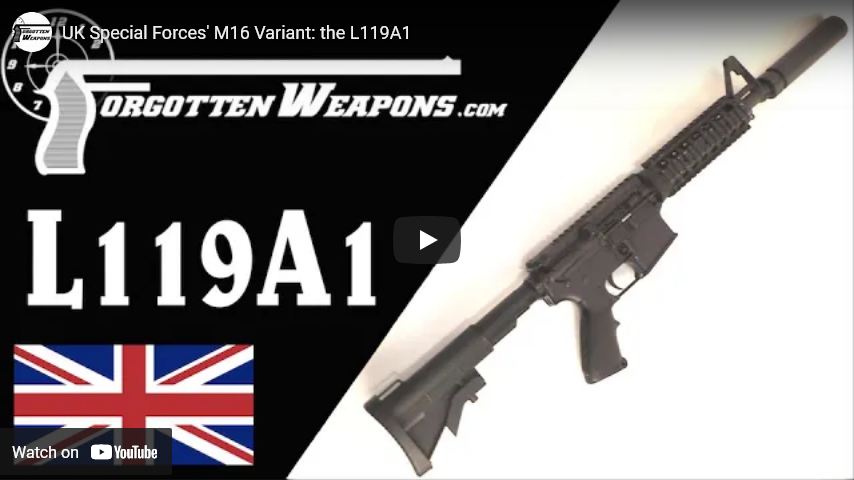
UK Special Forces’ M16 Variant: the L119A1
Forgotten Weapons
Published 21 Jan 2022http://www.patreon.com/ForgottenWeapons
https://www.floatplane.com/channel/Fo…
Cool Forgotten Weapons merch! http://shop.forgottenweapons.com
—
UPDATE: One correction to make; this rifle has the A2 charging handle. The original A1 version was essentially identical to the standard conventional charging handle. Sorry!
—In 1999, the UK Ministry of Defense put out a tender for a new rifle for UK Special Forces (UKSOF). The elite units of the British military were definitely not going to be using the L85! There was some competition (including the SIG 550 series), but it was pretty much known going in that the contract would be going to Diemaco (later Colt Canada) for a version of their C8 SFW (“Special Forces Weapon”). That was the case, but only after very extensive trials, which actually cost more than the procurement contract itself. The rifles were tested in all environmental extremes, including Alaska, Kuwait, and Brunei.
The rifle ultimately adopted had a number of unique features. It was at heart a Diemaco C8, with Diemaco’s early flat top upper (which predates Picatinny adoption, and is actually a bit closer to Weaver — but still compatible with modern accessories). Two barrel lengths were purchased, 10.0 inch and 15.7 inch. Other details include:
Stepped buffer tube
Textured telescoping stock
Permanently attached rubber buttplate
Lone Star grip
Knight’s RAS with locking clamps on both top and bottom rails
Strengthened gas block (usually but not always)
SureFire 216-A flash hider
Unique castle nut details
Ambidextrous charging handleThe barrel profile chosen for the L119A1 is quite heavy, and the 10 inch barreled version is substantially overgassed. The guns were heavy, but very reliable, and have since been adopted as the standard service rifle of the Royal Marines. The SOF opted to seek out a replacement around 2013-2016, and that would result in the L119A2 (a significantly different rifle).
Contact:
Forgotten Weapons
6281 N. Oracle 36270
Tucson, AZ 85740
May 11, 2022
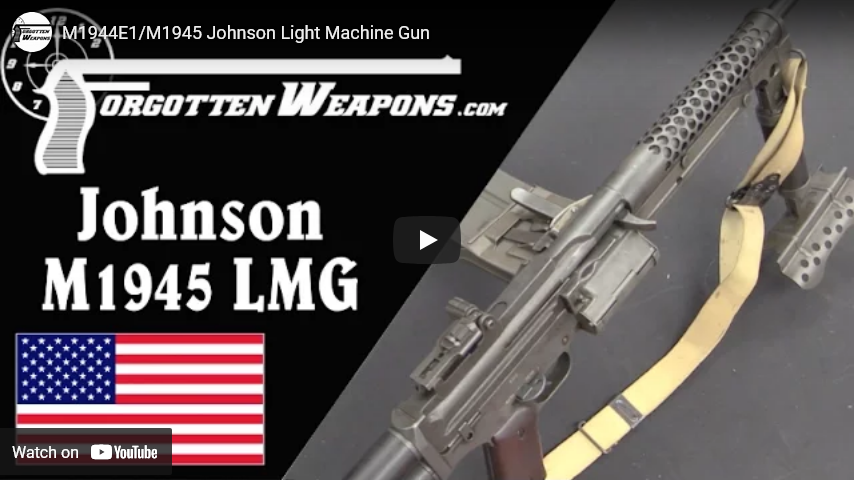
M1944E1/M1945 Johnson Light Machine Gun
Forgotten Weapons
Published 27 Aug 2016http://www.patreon.com/ForgottenWeapons
After getting his Model 1941 machine gun purchased in small numbers by the US military, Melvin Johnson continued to press for more sales and a general adoption. Following testing results and recommendations from soldiers in the field, he made a number of modifications to the gun and developed the M1944, which was quickly tweaked to become the M1944E1, also called the M1945. This new version included several improvements including:
* Replacing the bipod with a monopod less prone to interfering with barrel removal
* Improved stronger bolt anti-bounce latch
* Metal dual-tube buttstock in place of wood
* and most significantly, a gas-boosted hybrid recoil operating systemThis new model of the Johnson was in testing at the end of WWII, and weapons development budget cuts at the conclusion of the war prevented it from replacing the BAR as Johnson and many in the Marine Corps had hoped.
This particular M1945 Johnson is fully transferrable, as came out of the Winchester Museum Collection (now the Cody Firearms Museum) back many years ago when curators would occasionally sell items from the collection to raise money.
May 4, 2022
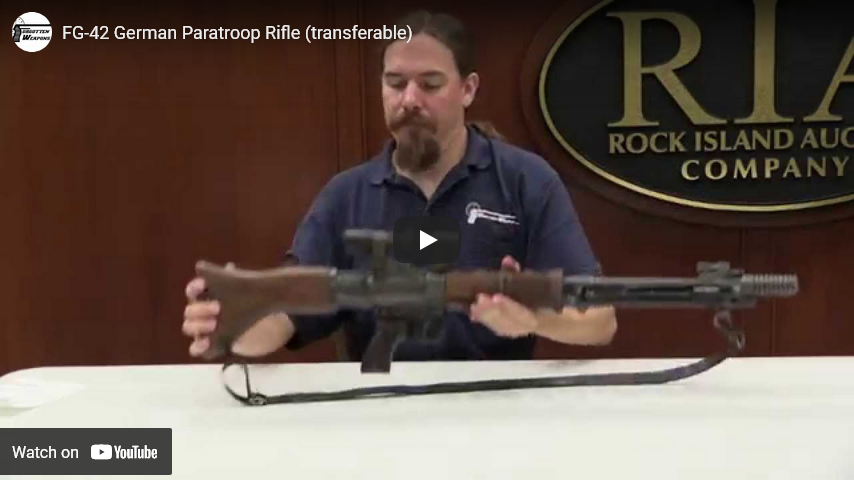
FG-42 German Paratroop Rifle
Forgotten Weapons
Published 24 Aug 2014Cool Forgotten Weapons Merch! http://shop.bbtv.com/collections/forg…
Only a few dozen of these are in private hands in the US, and they are an extremely advanced design for WWII.
Theme music by Dylan Benson – http://dbproductioncompany.webs.com
April 28, 2022
Britain’s Incredible Recapture of South Georgia – Falklands War Documentary
Historigraph
Published 27 Apr 2022Go to https://squarespace.com/historigraph to get a free trial and 10% off your first purchase of
a website or domain.In just three weeks after the Argentinian invasion of the Falkland islands, Britain threw together a task force out of thin air, sailed it 8000 miles around the world and started taking its territory back. This is how it happened.
Made with thanks to the Fleet Air Arm Musuem in Yeovilton, Somerset. https://www.fleetairarm.com/
To help support the creation of the rest of the Falklands series, consider supporting on Patreon:
https://www.patreon.com/historigraph#Falklands40 #Historigraph
Come join the historigraph discord: https://discord.gg/ygypfs3BEB
Buy Historigraph Posters here! historigraph.creator-spring.com
► Twitch: https://www.twitch.tv/historigraph
► Second Channel: https://www.youtube.com/channel/UCpIj…
► Twitter: https://twitter.com/historigraph
► Instagram: https://www.instagram.com/historigraph
Thumbnail credit Daniel Behennec: https://www.naval-history.net/FxDBMis…Sources for the Falklands War Series (so far):
Max Hastings & Simon Jenkins, Battle for the Falklands
https://archive.org/details/battlefor…
Martin Middlebrook, Operation Corporate
Martin Middlebrook, Battle for the Malvinas
Mike Norman, The Falklands War There and Back Again: The Story of Naval Party 8901
Kenneth Privratsky, Logistics in the Falklands War
Sandy Woodward, One Hundred Days
Paul Brown, Abandon Ship
Julian Thompson, No Picnic
John Shields, Air Power in the Falklands Conflict
Edward Hampshire, The Falklands Naval Campaign 1982
Hugh McManners, Forgotten Voices of the Falklands
Cedric Delves, Across an Angry Sea: The SAS in the Falklands War
Rowland White, Vulcan 607
Vernon Bogdanor, “The Falklands War, 1982” lecture https://www.youtube.com/watch?v=a9bWw…
Arthur Gavshon, “The sinking of the Belgrano” https://archive.org/details/sinkingof…
Gordon Smith, Battle Atlas of the Falklands War 1982 by Land, Sea and Air
http://www.naval-history.net/NAVAL198…
Hansard- https://api.parliament.uk/historic-ha…
Recording of Thatcher’s statement to the Commons is from https://www.youtube.com/watch?v=HvbhV…Music Credits:
“Rynos Theme” Kevin MacLeod (incompetech.com)
Licensed under Creative Commons: By Attribution 4.0 License
http://creativecommons.org/licenses/b…“Crypto” Kevin MacLeod (incompetech.com)
Licensed under Creative Commons: By Attribution 4.0 License
http://creativecommons.org/licenses/b…“Stay the Course” Kevin MacLeod (incompetech.com)
Licensed under Creative Commons: By Attribution 4.0 License
http://creativecommons.org/licenses/b…Other music and SFX from Epidemic Sound

March 9, 2022
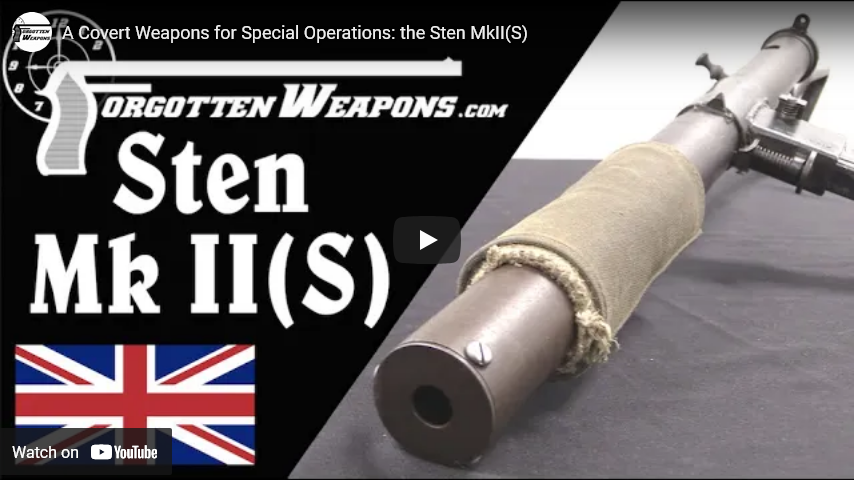
A Covert Weapons for Special Operations: the Sten MkII(S)
Forgotten Weapons
Published 5 Nov 2021http://www.patreon.com/ForgottenWeapons
https://www.floatplane.com/channel/Fo…
Cool Forgotten Weapons merch! http://shop.forgottenweapons.com
There are a fairly wide variety of silenced Sten guns that were made during World War Two, because many were needed for small Special Operations Executive missions. However, the British Army did also formally develop and adopt such a weapon. It was initially requested in 1942, with the first trials in November of that year. After two years of tinkering and deliberating, a pattern was finally put into production in February 1944. This was a Sten MkII with an integrally suppressed barrel. The barrel was just 3.75 inches long, with six vent holes drilled just in front of the chamber to reduce muzzle velocity below the speed of sound. The silencer itself was about 12 inches long, with an initial expansion chamber and 18 baffles.
Since the vented barrel reduced recoil energy of the cartridge, the bolt was reduced in weight by about 15% and the recoil spring shortened just slightly as well, to ensure proper cycling. The result was formally designated the Sten MkII(S). It retained the selective fire capability of the Sten, but was not to be used in automatic mode, as doing so could compress the baffles together and damage them. In total, 5,776 of these silent submachine guns were made. The design was followed by a more sophisticated Sten Mk6 (essentially a silenced Mk5), but remained in active use with the British military into the early 1970s.
Finding completely original and intact examples of the MkII(S) is extremely difficult today, and this one is a rare privilege to examine!
Contact:
Forgotten Weapons
6281 N. Oracle 36270
Tucson, AZ 85740
March 5, 2022
No Nazi Atomic Bomb – Operation Gunnerside – WW2 Special
World War Two
Published 3 Mar 2022By 1943 the German “Uranium-Club” was hoping to harvest the energy of the atoms. One of the things they still needed for their experiments was the moderator “heavy water”, which was produced for them in the hydro-plant “Vemork” in occupied Norway. British High Command authorized a top-secret mission to prevent it from ever reaching Germany. A group of highly trained commandos was to parachute in and destroy the heavy water facility by any means necessary.
(more…)
March 3, 2022
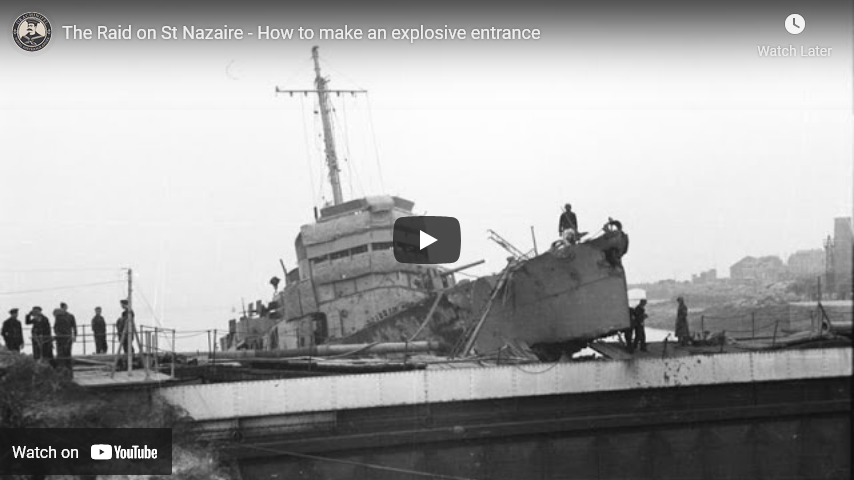
The Raid on St Nazaire – How to make an explosive entrance
Drachinifel
Published 23 Feb 2022Today we take a look at the famous raid to destroy the Normandie Drydock. With apologies for starting off with the right pronunciation of St Nazaire and slipping back into my old incorrect way later on!
Sources:
www.amazon.co.uk/Storming-St-Nazaire-James-G-Dorrian/dp/0850528070
www.amazon.co.uk/St-Nazaire-1942-Commando-Campaign/dp/1841762318
www.amazon.co.uk/Operation-Chariot-Nazaire-Forces-Operations/dp/1844151166
www.amazon.co.uk/Into-Jaws-Death-Legendary-Saint-Nazaire/dp/1782064478Free naval photos and more – www.drachinifel.co.uk
Want to support the channel? – https://www.patreon.com/Drachinifel
Want a shirt/mug/hoodie – https://shop.spreadshirt.com/drachini…
Want a poster? – https://www.etsy.com/uk/shop/Drachinifel
Want to talk about ships? https://discord.gg/TYu88mt
Want to get some books? www.amazon.co.uk/shop/drachinifelDrydock