
World War Two
Published 17 Oct 2024After the war, millions of Soviet citizens are left over in Germany. Some of them are traitors, some are prisoners, some women and children. Stalin wants them back and the Western Allies are happy to help.
(more…)
October 18, 2024
Operation Keelhaul: The Allies’ Final War Crime
Comments Off on Operation Keelhaul: The Allies’ Final War Crime
October 13, 2024
The Soviet Union’s surplus of math nerds
The most recent review from Mr. and Mrs. Psmith’s Bookshelf is John Psmith’s musings on Math from Three to Seven: The Story of a Mathematical Circle for Preschoolers by Alexander Zvonkin, and he starts by talking about something the Soviets did better than the west:
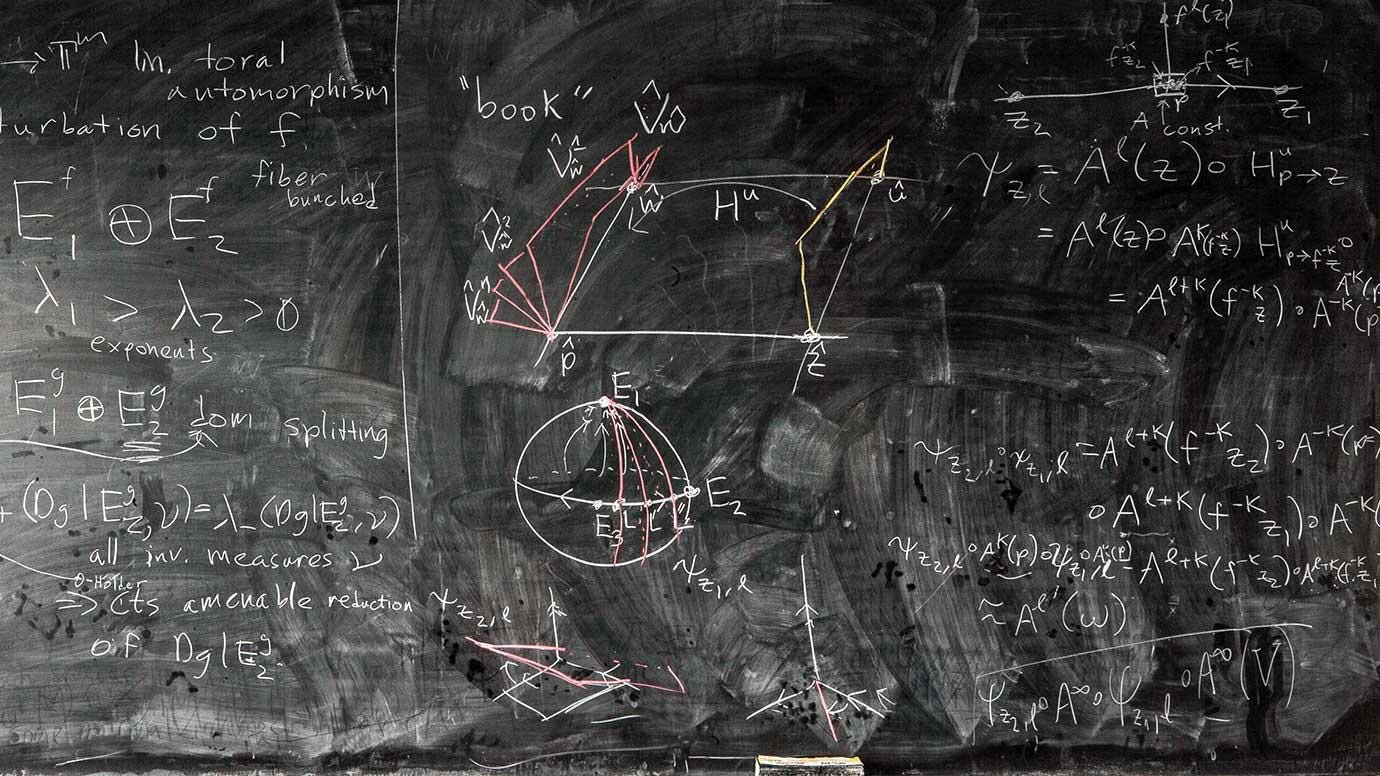
To me, one of the greatest historical puzzles is why the Cold War was even a contest. Consider it a mirror image of the Needham Question: Joseph Needham famously wondered why it was that, despite having a vastly larger population and GDP, Imperial China nevertheless lost out scientifically to the West. (I examined this question at some length in this review.) Well, with the Soviets it all went in the opposite direction: they had a smaller population, a worse starting industrial base, a lower GDP, and a vastly less efficient economic system. How, then, did they maintain military and technological parity1 with the United States for so long?
The puzzle was partly solved for me, but partly deepened, when those of us who grew up in the ‘90s and ‘00s encountered the vast wave of former Soviet émigrés that washed up in the United States after the fall of communism. Anybody who played competitive chess back then, or who participated in math competitions, knows what I’m talking about: the sinking feeling you got upon seeing that your opponent had a Russian name. These days, the same scenes are dominated by Chinese and Indian kids. But China and India have large populations — the Russians were punching way above their weight, demographically speaking. Today, those same Russians are all over Wall Street and Silicon Valley and Ivy League math departments, still overrepresented in technical fields. What explains it? Are Russians just naturally better at math and physics?
When I related these questions to an Ashkenazi-supremacist friend of mine, he immediately suggested that “maybe it’s because they’re all Jewish”. (I’ve noticed that the most philosemitic people and the most antisemitic people sometimes have curiously similar models of the world, they just disagree on whether it’s a good thing.) My friend’s question wasn’t crazy, since there are definitely times when asking “were they all Jewish?” yields an affirmative answer. But in this case I had to disappoint him with the knowledge that many of these Russian math and chess superstars were gentiles.2 What’s more, by the ’60s and ’70s the Soviets had an entire discriminatory apparatus dedicated to keeping Jews out of the scientific establishment, so it would be impressive indeed if they were the foundation of its success.
Another possible explanation actually hinges on the relative poverty of the Soviet Union. Assume there are a lot of people out there with natural mathematical talent, but who given their druthers would major in underwater basket-weaving instead. The United States, because it’s so wealthy, can afford to “waste” a huge proportion of our talented population on humanities, arts, and other stuff that doesn’t involve you sitting in the school library until 3am. In other words, not going into a technical field is a form of luxury, which America can afford to consume. The Soviets, rather like the Chinese today, were forced by their underdog status to allocate human capital more efficiently (and had the authoritarian means to do so by force if necessary). This theory is related to the curious fact that, on average, the more feminist your society, the fewer women there are in math and science — which makes total sense if you assume that on average women are good at math but uninterested in it.
The thing is, the émigré superstars I encountered didn’t seem at all grudging or resentful about their studies. If anything it was the opposite. I’ve previously complained about how much I hate Russian mathematician Edward Frenkel’s3 book, but one thing it gets across well is just how important passion is to being a great mathematician, and passion was the thing the émigrés seemed to have a surfeit of. In college, the joke was that seminars by American professors would last an hour, whereas seminars by Russian professors would turn into boisterous debates lasting all night. People have been writing for centuries about Russians having a tendency towards “maximalism” — whether aesthetic or ideological or anything else. Maybe a culture-wide commitment to not doing anything by half-measures explains it?
1. There are scientific sub-disciplines where even at the end the Soviets had a clear lead, including several fields of math. Even crazier, there are sub-disciplines where we have not yet gotten back to where the Soviets were (for instance phage therapy).
2. Undeterred, my friend pointed out that many modern Russian gentiles have significant Jewish ancestry. The Soviets actively promoted mixed marriages, to the point where in some cities the average urban gentile Russian is as much as 25% Jewish. I still don’t think this explains Soviet scientific prowess, but it’s an interesting data point because the most highly urbanized areas are the ones where most of the mathematicians (and most of the émigrés) came from.
3. Before you ask, I looked it up and Frenkel is half Jewish, half gentile. I will leave it to you whether you count that as evidence for or against my friend’s theory.
Occupation of Germany, Plunder and Enslavement?
World War Two
Published 12 Oct 2024The Allies’ occupation of Germany was marked by competing visions for its future, ranging from France’s focus on security to the Soviet push for reparations. This episode dives into the complex negotiations that determined Germany’s borders, industrial disarmament, and economic management, all of which would shape Europe’s post-war order and fuel the East-West divide.
(more…)
Comments Off on Occupation of Germany, Plunder and Enslavement?
October 5, 2024
Did South Korea Provoke the Korean War?
The Korean War by Indy Neidell
Published 4 Oct 2024Was South Korea on the verge of invading North Korea in 1949? Today Indy looks at the bloody fighting across the Korean border in the years leading up to war. Then he asks the question, why did Kim finally decide to invade South Korea in the early months of 1950?
(more…)
Comments Off on Did South Korea Provoke the Korean War?
October 3, 2024
QotD: Historical echoes in the American left and right
My initial impression is that the Juggs operate like the commies do/did. Fill in the boxes, even if nothing makes sense. Don’t take responsibility. It’s how one somehow gets a Brandon at the top.
The Trump movement does have some real [historical Nazi] characteristics. Many low-level people feel remarkably empowered to do things, to get creative to help the cause (and also make some coin; how many Trump medals, flags, and coffee cups does one buy?), and to get out there and just stir the pot for the Orange guy. Then we saw The Donald at the top not exercising real power, other than to exhort others to get shit done, whatever unnamed shit that needed doing.
My first run-through suggests that calling the Juggs and their minions “filthy commies” actually is not just a kneejerk response, but it lands mostly true, in the ways that matter. The Jugg argument that Trump and his people are a bunch of Nazis also has some real truthy elements to it as well (though the true elements are generally probably far afield from the Nazi stuff the Juggs have in mind).
Commies and Nazis gain traction when the basic job of governance is found lacking, and the caliber of people tasked with getting things back in line is not up to the task. Then the various totalitarian solutions become more popular. Even when the intentions are pure (I will give most of the Trump people that assumption), unfettered ambitions, allowed to flower, will go bad if the normal checks and balances of the system are all out of whack. It is just human nature.
Our systems are all out of whack. That is why AOC can call for impeachment of [six US Supreme Court justices] with a straight face, and there is no broadly based “hey, wait a minute, Bucko” response. Things might be too far gone, and there is no way to pull back into a system that actually well serves the average American (think of what constituencies the typical elected official actually serves — the deep state apparat, the ultra-rich guys, and the corporate lobbyists). It all means the Trump movement is a tool, not to restore something, but to accelerate the “get through it and start afresh”. With that in mind, the November results tend to be more of “six of one, half a dozen of the other” than people think they are.
“Dutch”, commenting on “How Juggs Think the World Works”, Founding Questions, 2024-07-02.
Comments Off on QotD: Historical echoes in the American left and right
October 2, 2024
QotD: Alternative history Operation Barbarossa
Knowing full well how dumb it is to bring up World War II on the Internet, consider that a pretty reasonable case can be constructed for Operation Barbarossa. Having purged all their competent, experienced officers, the Red Army had just gotten their clocks cleaned by the Finns in the Winter War. Yeah, the Soviets “won” in the end, but with that disparity of forces, there’s pretty much no possible “win” that doesn’t look like a loss … and the Soviets, to put it mildly, were nowhere near that best-case scenario. Moreover, even if you took the show trials for exactly that — kangaroo courts — their very existence showed there was a deep rift at the very top of the Soviet leadership. Anyone, not just Hitler, could be forgiven for thinking that the Soviet Union would collapse under one big sledgehammer blow.1
It works the other way, too. If we accept the “Suvorov Thesis”, that Hitler only attacked Stalin because Stalin was gearing up to attack Hitler, then we can easily construct a similar case from The Boss’s perspective: The Wehrmacht can’t play defense. The one time they came up against anything approaching a real opponent with technological parity (the Battle of Britain), it was at best a bloody draw, more than likely a stinging defeat. And the Hitler regime was reeling, internally. No show trials for der Führer, but Rudolf Hess, who was at least the number three man in the Reich and at the time Hitler’s heir apparent, had just defected to the British. Anyone, not just Stalin, could be forgiven for thinking that the Third Reich would collapse under one big sledgehammer blow.
See what I mean? Both of those cases are quite plausible, and fit with most known historical facts … and yet, they’re retcons. “Rationalizations” might even be a better word, because the thing is, even though those arguments are “logical”, and might indeed have been convincing to important people at the time, that’s not why Hitler did what he did, or why Stalin would’ve done what he would’ve done under the Suvorov Thesis. No, the truth is simpler, and much more horrifying: They would’ve done it anyway, because that’s who they were.
That’s what the Castle Wolfenstein people got right about the Nazis. Same deal with that Amazon show (which was interesting for a season) The Man in the High Castle. In the real world, there’s no possible way the Nazis could’ve invaded the USA, no matter how it turned out on the Eastern Front …
… but in the real world they would’ve tried nonetheless, somehow, because that’s just who they were. Everything Stalin, Khrushchev, et al did during the Cold War here in the real world, Hitler, Heydrich, and the gang would’ve done in the Castle Wolfenstein world where the Battles of Stalingrad and Kursk went the other way.2 They couldn’t have done any different, without being different people, and while it’s fun to speculate on questions like “who would’ve been the Nazi Gorbachev, who self-destructed the Reich by attempting however you say ‘perestroika‘ in German”, it’s not really germane.
Severian, “The Man in the High Chair”, Rotten Chestnuts, 2021-07-05.
1. And Soviet losses were stupendous, utterly mind-boggling, in the first few months of Barbarossa. Tanks and planes destroyed in their tens of thousands, prisoners captured in millions. Even as it became clear that OKW had underestimated Red Army strength by orders of magnitude, it was still almost inconceivable that they had anything left to fight with. Just one more push …
2. This is actually the world of a fun novel, Robert Harris’s Fatherland.
Comments Off on QotD: Alternative history Operation Barbarossa
September 21, 2024
The Dramatic Birth of Two Korean States
The Korean War by Indy Neidell
Published 20 Sep 2024The United Nations plan is to reunite the divided Korean peninsula into a single state. But soon the USA and USSR have installed their own leaders, neither of whom are willing to compromise. By the end of 1948 Kim Il-Sung and Syngman Rhee stand at the head of separate North and South Korean states.
(more…)
Comments Off on The Dramatic Birth of Two Korean States
September 15, 2024
The Occupation of Japan Begins – a WW2 Epilogue Special
World War Two
Published 14 Sep 2024The war is over and the occupation of Japan has begun. The country has largely been destroyed by Allied bombs, and shall be rebuilt, physically, economically, and even governmentally. But what will the new government be? What shall become of the Emperor? Who is to actually do the occupation? Today we look at all this and more.
(more…)
Comments Off on The Occupation of Japan Begins – a WW2 Epilogue Special
September 7, 2024
A Nation Divided, Part One
The Korean War by Indy Neidell
Published 6 Sep 2024Join us as we unfold the post-WW2 history of Korea that resulted in political escalation and eventually a military conflict in 1950. Stay tuned for the remaining parts of this mini-series!
(more…)
Comments Off on A Nation Divided, Part One
September 3, 2024
The End of World War Two – WW2 – Week 314B – September 2, 1945
World War Two
Published 2 Sep 2024The Japanese sign the official document of surrender and the Second World War is over. There are still some Japanese garrisons yet to surrender, but they begin doing so one after the other. However, war is not over — and there is serious foreboding for future events in places like Vietnam and China — where Mao Zedong is meeting with Chiang Kai-Shek, even as Josef Stalin lurks in the background to secure Soviet interests no matter which Chinese regime comes out on top.
00:00 Intro
00:59 Vietnam Declares Independence
04:04 The Importance Of Manchuria
06:28 Japan’s Surrender
11:22 The Final Surrenders
13:18 Casualties
15:50 The End
(more…)
Comments Off on The End of World War Two – WW2 – Week 314B – September 2, 1945
September 1, 2024
Can Chiang and Mao Unite China? – WW2 – Week 314 – August 31, 1945
World War Two
Published 31 Aug 2024Mao Zedong takes his first ever journey by plane to go and meet with Chiang Kai-Shek. They begin what will be several weeks of talks and negotiations. However, Chiang is not aware that Josef Stalin is lurking in the background. And the Soviet Red Army is lurking in Manchuria, having defeated the Japanese there, and are giving tacit support to the Chinese Communists, whose power base is very strong in the north. As for Japan, a motley collection of Allied fleets arrives in Tokyo Bay, for Japan’s surrender document is to be officially signed two days from now.
(more…)
Comments Off on Can Chiang and Mao Unite China? – WW2 – Week 314 – August 31, 1945
August 27, 2024
QotD: Who were the good guys?
A movie can get away with showing mostly shades of gray, but in the case of the Valkyrie plot, both shades are pretty damn close to black.
Nor was the 2008 movie, starring Tom Cruise, an isolated case. A few years earlier, Jude Law and Ed Harris squared off as dueling snipers in Enemy at the Gates … set during the Battle of Stalingrad. Who do you root for, the Nazi or the Commie? The producers opt for “commie”, obviously, but their attempts to humanize the Jude Law character are embarrassing — even if we accept Law’s character as totally apolitical, no movie featuring a political commissar in a vital supporting role, not to mention “cameos” by Khrushchev and Stalin himself, can fail to remind viewers that everyone involved was awful. Even the most gripping battle scenes (and to be fair, some of them were pretty good) can’t make up for the fact that the world would be a far, far better place if they somehow both could’ve lost.
Those are high-level failures, conceptual mistakes, the kind that professional storytellers simply shouldn’t make. Not only that, though, both movies have unforgivable mistakes in the execution, at almost every level. Tom Cruise, for instance, is comically miscast as Stauffenberg. I’ve written before about how weird it is that casting directors seem to obsess over finding actors who look like even obscure historical figures. Cruise looks a bit like Stauffenberg, I guess, but there’s simply no way a guy with his … ummm … distinctive acting style should be anywhere near a historical drama. Tom Cruise only ever really plays Tom Cruise, so “Tom Cruise dressed up as a Nazi” is really jarring.
And that’s before you consider the accents. Maybe Tom Cruise can’t do a German accent, I dunno. I seem to recall he did an Irish accent in a movie once, and that turned out ok, but again, whatever character he was playing was just “Tom Cruise with an Irish accent.” So maybe if you feel you must cast him as a German, letting him use his “natural” American accent is the way to go. But if you’re going to do that, please, for pete’s sake, make everyone else do an American accent, too. I know Kenneth Branagh can do one. So either cast guys who can do the right accent, or, failing that, who can do each other’s accent. Otherwise you get a huge, distracting mess.
Enemy at the Gates was actually worse: Law, Joseph Fiennes (the commissar), and Rachel Weisz (the love interest) all used their native British accents … but they’re different kinds of British accent, at least in Law’s case. Meanwhile, Ed Harris (the Nazi antagonist) uses the “neutral” American accent, while supporting player Ron Perlman, who is American, does a comically over-the-top Russian … as do the guys playing Khrushchev and Stalin. It’s just weird. In both movies, you’ve got supposedly tight groups of friends (or, at least, co-conspirators) talking to each other in wildly different accents. That kind of thing is bad enough in a movie like Robin Hood, Prince of Thieves, which made no pretenses to historical accuracy; it’s movie-destroying in a supposedly serious, historically-based thriller.
Severian, “Storytelling Fail”, Rotten Chestnuts, 2021-07-13.
Comments Off on QotD: Who were the good guys?
August 26, 2024
QotD: The job of a Soviet economic planner
Gia Jandieri (GM): Our department inside of Gossnab [the State Supply Committee for the Central Planning Authority] was responsible for monitoring the execution of agreements for production of goods and government orders. My task was to verify that the plans had been executed correctly, to find failures and problems, and to report to the higher authorities.
This included reading lots of reports and visiting the factories and their warehouses for auditing.
The Soviet economy had been in a troublesome condition since the 1970s. We (at the Gossnab) had plenty of information about failures, but it wasn’t useful. We knew that the quality of produced goods was very low, that any household good that was of usable quality was in deficit, and that the shortages encouraged people to buy on the black market through bribes.
In reality, a bribe was a substitute for a market-determined price; people were interested in paying more than the official price for the goods they valued, and the bribe was a way for them to indicate that they valued it more than others.
The process of planning was long. The government had to study demand, find resources and production capacities, create long-run production and supply plans, compare these to political priorities, and get approval for general plans at the Communist Party meetings. Then the general plans needed to be converted to practical production and supply plans, with figures about resources, finances, material and labour, particular producers, particular suppliers, transportation capacities, etc. After this, we began the process of connecting factories and suppliers to one another, organizing transportation, arranging warehousing, and lining up retail shops.
The final stage of the planning process was to send the participating parties their own particular plans and supply contracts. These were obligatory government orders. Those who refused to follow them or failed to fulfill them properly were punished. The production factories had no right or resources to produce any other goods or services than those described in the supply contracts and production plans they received from the authorities. Funny enough, though, government officials could demand that they produce more goods than what was indicated in the plans.
Matthew Mitchell, “Central planning from the inside—an interview with a Soviet-era economist”, Fraser Institute, 2024-05-25.
Comments Off on QotD: The job of a Soviet economic planner
August 25, 2024
Soviet Victory in Manchuria – WW2 – Week 313 – August 24, 1945
World War Two
Published 24 Aug 2024The Soviet Red Army completes its conquest of Manchuria and the northern half of Korea this week, although Japanese Emperor Hirohito announced Japan’s surrender already last week. Behind the scenes are machinations going on by Josef Stalin and Mao Zedong that they hope will lead to a Communist China in future. Vietnam might well be going communist right now, though, for the August revolution continues with the Viet Minh taking ever more control.
00:00 Intro
00:34 Recap
00:49 Chiang, Mao, and Stalin
07:32 Soviet victory in Manchuria
09:08 Viet Minh taking control
11:45 Summary
12:31 Conclusion
13:20 Julius Poole memorial
(more…)
Comments Off on Soviet Victory in Manchuria – WW2 – Week 313 – August 24, 1945
August 24, 2024
How the CIA eventually got Patrice Lumumba assassinated
The CIA decided early on that the first democratically elected Prime Minister of the Democratic Republic of the Congo was being controlled by their Soviet opponents and needed to be killed:
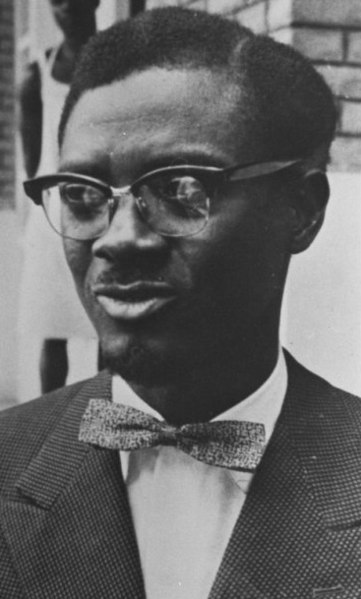
Patrice Émery Lumumba, first Prime Minister of the Democratic Republic of the Congo on 27 December 1960.
Unknown photographer
I’m still making my way through David Talbot’s 2015 book The Devil’s Chessboard, a history that explores the life of CIA Director Allen Dulles and the sordid history of the agency.
There are too many grisly anecdotes to recount showing how the CIA was involved in unlawful and unethical acts all over the world, but one that sticks out was the book’s treatment of Patrice Lumumba, an African nationalist who served as the first prime minister of the Democratic Republic of the Congo before he was killed in 1961 — with a shove from the CIA.
Lumumba was a thorn in the side of the agency, and his left-leaning politics led CIA officials to believe he was a stooge for the USSR (he wasn’t, as the CIA later admitted). So it was determined that Lumumba had to go—one way or the other.
First, a coup was arranged to have the democratically-elected Lumumba, who was demanding full independence for the Congolese people, removed from office and placed under arrest. To this end, the CIA tapped a young military colonel named Joseph Mobutu, who was friendly with Belgian intelligence (the Congo had long been under Belgian colonial rule) and would go on to rule for decades until he was ousted himself in a 1997 rebellion.
Then the CIA began exploring options to eliminate the popular Lumumba. Being the CIA, a single method was not chosen. Instead, various methods were explored to take out the Congolese leader and multiple people were tapped, including a pair of hitmen the agency had hired from Europe’s criminal underworld.
Talbot explains how the CIA equipped one of these cutthroats with a tube of poisoned toothpaste. Why toothpaste? Because one Dr. Ewen Cameron, at the behest of the CIA, had analyzed Lumumba and noted his immaculate white teeth. This led him to suggest a simple way to eliminate the troublesome leader: poison his dental products.
“In the end, the CIA did not go through with the toothpaste plot,” writes Talbot, “apparently deciding that poisoning a popular leader while he was under UN protective custody in his own house would be too flagrant a deed—one that, if traced back to the agency, would lead to unpleasant international repercussions.”
Instead, days before the inauguration of John F. Kennedy, the CIA arranged to have Lumumba chartered off on a plane to Katanga, a province that had broken from the Congo and was ruled by factions hostile to Lumumba.
This all but sealed Lumumba’s fate, CIA officials later testified.
“I think there was a general assumption, once we learned that he had been sent to Katanga, that his goose was cooked,” CIA station chief James Devlin, who helped orchestrate Lumumba’s fall, quipped to the Church Committee years later.
Devlin was right. During his flight to Katanga, Lumumba was beaten to a pulp. Then he was driven by jeep to a farm and beaten by members of rival political factions. The men, Talbot makes clear, had clear ties to US and Belgian intelligence.
“Eventually he was killed, not by our poisons, but beaten to death, apparently by men who had agency cryptonyms and received agency salaries,” said CIA agent John Stockwell, who was sent to the Congo in the aftermath of the assassination.
The Soviets managed a propaganda win out of the CIA’s clumsy wet work, renaming the Peoples’ Friendship University of the USSR (primarily used for training non-Soviet citizens from “fraternal socialist” and “unaligned” nations in Marxist-Leninist views) to the Patrice Lumumba Peoples’ Friendship University.
Comments Off on How the CIA eventually got Patrice Lumumba assassinated


