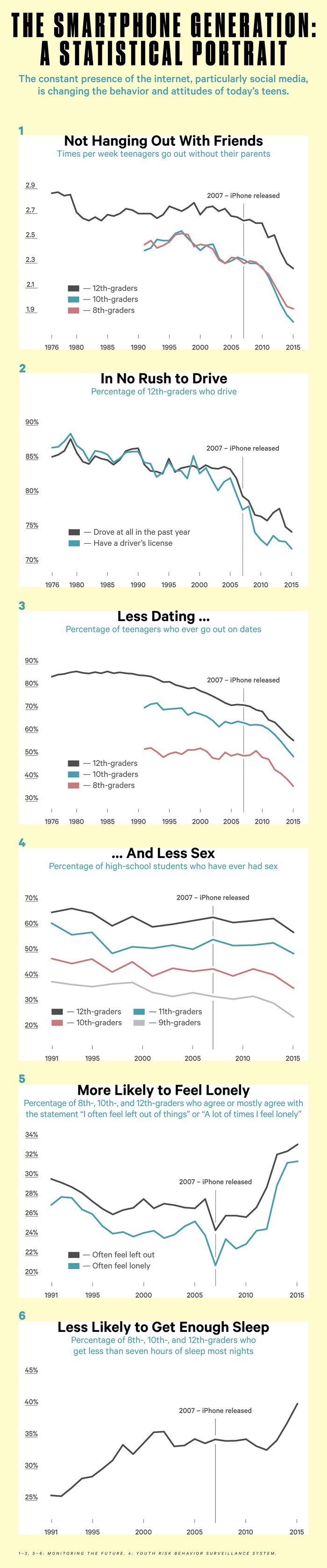
Twitter is bad, but FB is worse. Twitter tells you random strangers are obnoxious assholes, FB tells you your friends & family are. /27
— David Burge (@iowahawkblog) February 1, 2017
February 2, 2017
The best explanation of the downside of social media, in one tweet
January 30, 2017
An interesting reading on the significance of #GamerGate
At Samizdata, Perry de Havilland considers the historical footnote that was #GamerGate:
Looking back, it’s hard to overstate the cultural significance of GamerGate: it marked when the Left suddenly and unexpectedly lost control of social media, right at the point where the influence of social media actually started to matter. In a sense, it was the second wave of discontent that started with the arrival of anti-MSM blogs in the immediate aftermath of 9/11, but within a very different internet environment compared to ‘The Golden Age of Blogging’ 2001-2010. As has often been the case in military campaigns, when one side becomes greatly overextended, they only realise they have lost the initiative when they seek to advance and experience a completely unexpected reversal: a result that may seem obvious and perhaps even inevitable to a historian looking back, but which was far from obvious to the people on the ground at the time.
So certain was the Left that they had won the culture war, so confident with the established media under their effective control that ‘truth’ was theirs to declare, that they gave up on any pretence of objectivity. After all, their enemies had been swept from both airwaves and print (I sometimes cannot tell the difference between the Times and the Guardian and the Economist). And so they began to manoeuvre with the assurance and arrogance of an army under an umbrella of complete air(wave) supremacy, a supremacy that suddenly proved to be illusory because opinions had moved on-line.
January 24, 2017
A nation divided against itself
Bretigne Shaffer on the intensely partisan American political scene:
It’s been a weird couple of months. I’ve seen more people unfriend each other on FaceBook than in the past few years combined; There have been several reports of both Trump supporters and minorities being physically attacked; I’ve been asked to wear a safety pin to proclaim to the world that I am not a racist, because the presumption now is that everyone is a racist and you have to (secretly – only not so secretly) announce to everyone if you’re not; and the senior editor of ThinkProgress is afraid of his plumber. (This, based solely on whatever profiling techniques they use over at ThinkProgress – “…a middle-aged white man with a southern accent who seemed unperturbed by this week’s news.” – rather than anything resembling a conversation with the man.)
Here’s the thing: I’m a libertarian. I’ve been surrounded by people who don’t agree with me for as long as I can remember and it has never occurred to me to isolate myself from everyone because of our political differences. Certainly not to assault them. Nor am I filled with anxiety by the thought that people who work in my home might have different political views than mine. To me, you’re all a bunch of fascists. But I’ve somehow learned to live with you.
For me, watching people unravel over this election has been instructive. The – yes, I’m going to say it – bigotry of many on the left, in their caricaturing of Trump supporters, has never before been so blatant. Nor has the jaw-dropping, mass-hypnosis level of selective partisan-driven outrage. I understand that a lot of people are worried, upset, even frightened over the prospect of a Trump presidency. Good. They should be. But they should have been worried eight years ago, or at the very least, four years ago.
January 12, 2017
Getting outside your bubble for the first time
Annalisa Merelli recounts her experiences after she voted “no” in the Italian referendum, unlike the majority of her friends:
On Dec. 4, Italians went to the polls to decide on a reform referendum that would redefine the power of local governments and reduce the power of the senate. With a high turnout, my countrymen rejected the reform. In the press, the voters’ decision was described as an Italian Brexit, and a triumph of populism. Beppe Grillo and his Five Star Movement, arguably Europe’s largest populist party, celebrated with Matteo Salvini, leader of the xenophobic Northern League; Marine Le Pen sent congratulations via Twitter, claiming that Italians’ had disavowed not just their prime minister, but the entire European Union.
What had actually happened, however, was more nuanced. And yet, the disappointment amongst liberals — the majority of whom had supported the reforms — was palpable.
[…]
It was a difficult vote, and while I stand by it, I don’t discount the possibility that history may prove me wrong. So I was eager to hear the reasons why so many of my friends had voted “yes.” Before and after the vote, I wanted to understand their points, and I certainly respected their choices.
But they — the yes voters, whose opinions and commentary filled my social media platforms — didn’t seem to have the same respect for my reasoning. As an opinionated citizen with consistently liberal views, I am used to being attacked and insulted by conservatives for my choices and opinions. But the liberal critiques I read weren’t so much attacking my decision as they were questioning my intelligence and my ability to understand the issue.
For the first time in my life, I was on the outside of the so-called liberal bubble, looking in. And what I saw was not pretty. I watched as many of my highly educated friends and contacts addressed those who disagreed with them with contempt and arrogance, and an offensive air of intellectual superiority.
H/T to John Donovan for the link.
January 4, 2017
Gingrich explains Trump
ESR linked to this article, saying “This was kind of eye-opening. I’m not sure I believe all the fact claims, but it’s good for understanding what Donald Trump thinks he’s doing and why his opponents have consistently misunderestimated him.”
Think about this notion, that part of what Trumpism is about is applying Taleb’s model of, intellectual yet idiot. A good case study is Trump’s skepticism about consultants. Jeb Bush raised $110 million dollars, and had one delegate. Trump kept wondering why he was paying these, intellectual yet idiots, to run his campaign. It never occurred to Trump to hire people who were truly stupid to run a campaign, so Trump ran his own campaign. People said, well he doesn’t know anything. This is the guy who, The Apprentice was the number one TV show in the country, he’d been on the air 13 years, but they thought he didn’t know anything.
He had the most popular tie in the country. He ran a $10 billion dollar empire, but of course, he didn’t know anything. He made Miss Universe a success. They said, yeah, but what do you really know about the voters? Well, he knew that they were consumers. What does he know about consumers? Branding matters. What did he say from day one? Let’s Make America Great Again. If you’re on the left that’s a frightening concept, but if you are a normal, everyday, blue collar American, the kind of people who built Trump’s buildings, you thought, yeah, I like the idea of making America great again, so then they bought a hat. The hat didn’t say Trump. It said, Make America Great Again.
He went around the country, and he figured out, this is how you appeal to people. Start with the idea that using common sense, if I can get this through to the Pentagon, this will be one of the greatest revolutions in military affairs you’ve ever seen. […]
You have to get it in your head. The current system is broken. It is obsolete, so don’t try to fix it. Try to replace it. Trumpism also means they use modern technology. Trump has 25 million people on Twitter and Facebook. His great realization, which occurred around October of 2015, you can actually reach all these people for free. He decides on Tuesday, let’s do a rally in Tampa. They email, and Tweet, and Facebook, everybody in Florida that’s in their list, and says, hi, I’m going to be in Tampa on Friday at 5 o’clock, and 20,000 people show up.
The other candidates are all buying TV ads. He’s showing up at a mass rally, which is covered live on television. He then has 20,000 people with smartphones who take his picture. They all send it out on Facebook and Instagram. If you figure 40 people per person, a 20,000 person rally, is an 800,000 person system, about twice the size of MSNBC. For free. There’s no exchange rate you can create that makes sense. It’s like trying to compare Polish cavalry and the Wehrmacht in 1939. These are totally different exchange rates.
Trump also understands that you have to be on permanent offense. If you look at the Wehrmacht, the Army of Northern Virginia, and the Israeli Army, they all have the same doctrine. If you are surprised, one third of your forces go into defense, two thirds go on counterattack. You never give up the initiative. That’s Trump. Trump’s core model is, you hit me, I hit back, and I hit harder than you hit. He learned it in the New York media when he was a business man. He’s on permanent offense. He gets up in the morning figuring out, how am I going to stay on offense? He understands that the media has to chase rabbits, so he gives them rabbits to chase, because if he doesn’t give them rabbits to chase, they’ll invent a rabbit.
If you were to go back, for the last two weeks, and look at how many stories there were about Mitt Romney, and say to yourself, do you think Trump minded that the media was fascinated by whether or not Mitt Romney would be Secretary of State? He bought two weeks of non coverage because he gave them junk they could talk about, and the media has to talk about something. The simpler and more stupid it is, the easier it is for them to do it. He doesn’t try to give them lectures that are complicated, because they can’t cover it. He just releases a rabbit, often by tweet, and the media goes trotting after it happily.
December 19, 2016
QotD: Handling death threats
A while back, someone my mother knows went crazy. The details of this insanity, or how it led them to focus on my lovely, inoffensive mother, are not important. What matters is that a deluge of emails started, and one of them contained a sentence along the lines of “The world would be a better place without you in it.”
Needless to say, like any normal person who gets an email like that, she became understandably worried. I rushed to reassure her. “Mom,” I said, “I get death threats all the time. They never do anything about it.”
Fun fact: “Mom, I get death threats all the time” are not words that reassure mothers. That was an interesting learning for me. But it is not the main point of my story. The point is that what I said remains true: death threats, or even quasi threats, are really nerve wracking the first hundred or so times someone emails you a picture of your house with a crosshairs superimposed on your bedroom window. Then over time, you notice something: the people who sent things like that haven’t followed through.
Am I saying that you never have to worry about people who email you on the internet? No. If someone emails you something like “We are destined to be together, why won’t haven’t you responded to my last 47 notes?” or “I know you are helping the CIA spy on me through my tooth fillings, and if you don’t stop, I will have to take action”, then you should be very worried, and contact the authorities immediately.
[…]
For this was at midday on a Saturday. Think about that; let it marinate for a while. These were adult men and women who had nothing better to do on a Saturday afternoon than to vent their political spleen through culinary criticism. Think about how lame your life has to be for you to say “It’s my day off. How should I spend it? Oh, yeah, I’m finally going to get that [expletive deleted]. I’m going to [censored] all over her [bleeping] recipe.”
From that day to this, every time someone winds up the spittle-flecked outrage, I shake my head a little and think “I’m sorry your life is so sad that this is the best use you could find for your spare time.”
That is what you should be thinking every time someone sends you a horrible note, or forwards on someone else’s vituperation in case you haven’t seen it. That’s usually what you should be thinking even when that someone expresses a fond desire to see you exit this mortal life as early as possible. These are people whose lives are so joy-impoverished, so empty of meaning, that they are driven to seek pleasure in someone else’s pain, and power by denuciation. They can only have that pleasure and that power if you give it to them. If they were worthy of either, they wouldn’t need to write these things to you.
You should feel sorry for them. You should not, however, feel the slightest interest in what they think about you.
I especially want to address this to the ladies: this happens to us a lot, and there’s a temptation to reach out to your followers for support, telling them how awful and afraid this makes you feel. That’s classic lady bonding, and I’m all for sisterhood and support. Nonetheless: Don’t. They can see it, and they’re enjoying that they’re making you afraid. You don’t win with these folks by sending a mob of your own followers after them. You win — with them, and at life — by *not being upset*, because what the hell do you care what some anonymous coward thinks about you? Your soundtrack should be “I am Woman, Hear me Roar” and “I Will Survive”, not “Help!” If there are missives that seem genuinely threatening, pass them onto the police. Then stick the rest in your digital circular file and do something fun.
Megan McArdle, posted to Facebook, 2016-12-09.
December 10, 2016
ESR spelunks the alt-right
ESR has been busy with absorbing technical projects, so he’s not blogging as frequently as he used to. Here’s his take on the alt-right phenomenon:
First, while I’m not entirely sure of everything the alt-right is (it’s a rather amorphous phenomenon) it is not the KKK and neo-Nazis. The most that can truthfully be said is that ‘alt-right’ serves as a recent flag of convenience to which some old-fashioned white supremacists are busily trying to attach themselves.
Also, the alt-right is not Donald Trump and his Trumpkins, either. He’s an equally old-fashioned populist continuous with William Jennings Bryan and Huey Long. If you tossed a bunch of alt-right memes at him, I doubt he’d even understand them, let alone agree.
The defining characteristic of the alt-right is, really, corrosive snarkiness. To the extent an origin can be identified, it was as as a series of message-board pranks on 4chan. There’s no actual ideological core to it – it’s a kind of oppositional attitude-copping without a program, mordantly nasty but unserious.
There’s also some weird occultism attached – the half-serious cult of KEK, aka Pepe, who may or may not be an ancient Egyptian frog-god who speaks to his followers via numerological coincidences. (Donald Trump really wouldn’t get that part.)
Some elements of the alt-right are in fact racist (and misogynist, and homophobic, and other bad words) a la KKK/Nazi, but that’s not a defining characteristic and it’s anyway difficult to tell the genuine haters from those for whom posing as haters is a form of what 4chan types call “griefing”. That’s social disruption for the hell of it.
It is worth noting that another part of what is going on here is a visceral rejection of politically-correct leftism, one which deliberately inverts its premises. The griefers pose as racists and misogynists because they think it’s the most oppositional stance they can take to bullies and rage-mobbers who position themselves as anti-racists and feminists.
My sense is that the true haters are a tiny minority compared to the griefers and anti-PC rejectionists, but the griefers are entertained by others’ confusion on this score and don’t intend to clear it up.
As has been pointed out many times, the habit of all too many on the left to describe anyone to the the right of them politically as being racist, sexist, homophobic, Islamophobic, etc., has reduced the effectiveness and even encouraged otherwise sensible people to start describing themselves in those terms. In the same way that the epithet “fascist” no longer has any meaning beyond “something or someone I don’t like”, these other terms have also lost much of their power through massive over-use.
November 21, 2016
QotD: What happens when you offend followers of “the one true faith”
One of my Federalist colleagues recently observed that, “When I write pieces that upset liberals, I get angry, personal hate mail. When I write pieces that upset social conservatives, I most often get this: ‘I appreciate your well written article and I will pray for you, sir, that you will find the God who loves you.’”
This absolutely tracks with my experience — and as an atheist, I’ve got a certain track record of writing pieces that upset religious readers. I get the occasional angry or dismissive comment, but on the whole the reaction is an almost annoying amount of Christian charity. Not so when I take on, say, the environmentalists.
Why the difference? Why is the Angry Left so angry?
Some of the Federalist staff were discussing this, and we came up with a couple of possibilities.
Rich Cromwell quipped: “It’s the difference between dealing with those who are certain they’re following the edicts of the one true faith and dealing with Christians.” Heh.
Robert Tracinski, “Why Is the Angry Left So Angry?”, The Federalist, 2015-03-26.
November 15, 2016
An interview with Andrew Torba, founder of Gab.ai
I’ve got an account on Gab.ai, and from my short experience with it, it’s much more than just an alt-right echo chamber (but, as you’d expect, there are lots of alt-right folks there, too). Here’s Lexi Palmieri talking to Mr. Gab himself:
Ray Bradbury once said “There is more than one way to burn a book. And the world is full of people running about with lit matches.” If you know anything about the social media industry, or “Big Social”, you’ll know that Jack Dorsey and Mark Zuckerberg are two such people, with Facebook and Twitter serving as both the book and the match. This isn’t surprising, considering that Silicon Valley employs their own specific bias. From the ashes of the banned speech comes the platform Gab. This week, I was lucky enough to speak with Gab creator, founder, and CEO Mr. Andrew Torba to discuss his platform, his inspirations, and the current state of social networking.
Q: What is Gab’s backstory? What inspired you to create Gab?
T: Prior to Gab I co-founded an ad tech company called Automate Ads. We worked with and built on top of the three Big Social ecosystems of Facebook, Twitter, and Google in Silicon Valley. I was also in Y Combinator’s Winter 2015 batch. After moving to Silicon Valley and working closely with these companies for five years, I got to see the dirty underbelly of how they operate. For years I knew that progressive agendas were being pushed and conservative voices were slowly being shut up. When news broke of the Facebook Trending Topics team member admitting to it at scale, I knew something needed to be done. Shortly after I resigned as CEO from Automate Ads, passing control of the business to my co-founder, and started Gab.Q: What is your company philosophy/mission statement?
Gab‘s mission is to put people and free speech first. We believe that the only valid form of censorship is a user’s individual choice to opt-out of seeing certain content they don’t want to see. Gab is for everyone. All are welcome on Gab and always will be.About how big is Gab’s user base right now, and what are your expectations for growth in the next year?
Currently Gab has 50,000 monthly active users from around the world in less than 90 days of being in beta. We have 110,000 people on our waitlist and are sending out thousands of invites every week. We expect this rapid growth to continue and to have millions of users by this time next year.
November 9, 2016
QotD: The power of Twitter’s shame-storms
Twitter makes it absurdly easy to shame someone. You barely have to take 30 seconds out of your day to make an outraged comment that will please your friends and hurt the person you’ve targeted. This means it is also absurdly easy to attack someone unfairly, without pausing to think about context — or the effect you are having on another human being much like yourself. No matter what that person did, short of war crimes, you probably would not join a circle of thousands of people heaping abuse upon a lone target cowering in the center. But that is the real-world equivalent of what online shame-stormers do.
This sort of tactic may buy silence, though it is likely to be the most effective on people who already agree with you and simply said something infelicitous. What it cannot buy is community, beyond the bonds that build between people who are joined in collective hate. With the exception of Lehrer — who clearly realized he’d done something wrong without needing to be told — the people whom Ronson interviews do not think that they were the victims of perhaps excessively harsh justice; they think they were victims of abuse. They often recognize that they did something stupid, but they don’t think they deserved to be fired after having their lives dissected and their character impugned by thousands of people who had never even met them.
And perhaps this satisfies the shame-stormers; they may want to change hearts and minds but be willing to settle for silence. This sort of shaming has costs, however. If you haven’t changed someone’s mind, you haven’t changed their behavior, only what they say. If they do harbor the bad beliefs you accused them of, those beliefs are now festering in private rather than being open to persuasion. And you haven’t even necessarily changed what they say in a good direction, because people who are afraid of unjust attacks aren’t afraid of being punished for saying things they know they ought to be ashamed of, but of being punished for saying something they didn’t know would attract this kind of ire. So they’re afraid to say anything at all, or at least anything more interesting than “Woo, puppies!” That’s not norm enforcement; it’s blanket terror.
Megan McArdle, “How the Internet Became a Shame-Storm”, Bloomberg View, 2015-04-17.
November 7, 2016
Collision imminent
Jay Currie on the moment when one of the two bubbles collapses:
It is pretty easy to live online without being aware you are in a bubble. If all you read are liberal or conservative sites your understanding of the current American Presidential election is likely to be deeply distorted. There are even different sets of polling numbers depending on which side of the aisle you are getting your information from.
Whether you are in the “Literally Hitler” bubble or the “Most corrupt presidential candidate ever” bubble, you can pretty much avoid contact with any information which does not reinforce your views. But, in six days, the bubbles will collide and one of the narratives is going to collapse in the face of actual electoral results. The other bubble will take its victory as confirmation that its narrative was right all along and that the people who did not accept that narrative are either stupid or evil.
Which means that one group of Americans are going to wake up on November 9 disoriented, stunned, angry and feeling a deep sense of betrayal. Unlike previous elections where there has been at least a veneer of objectivity and non-partisanship in the media, in this election, the major media has been all in for Hillary. Which, in the post-election period may make it even more difficult for the losing side to understand and accept its loss because the “talking heads” will either be completely at a loss themselves or will spend their time congratulating each other on their perspicacity.
The collision of the bubbles will be especially nasty if, as I suspect it will be, the election is not even close. A tight win for either side will allow the other side to console itself with just how close it came. But a romp will bring into question the entire narrative of the losing side.
Anecdotally, I’ve heard far more stories of people “unfriending” long-time friends on social media for being too partisan in their support for one or the other of the two major candidates this year than I recall from other elections. But I also have to keep in mind that the plural of “anecdote” is not “data”.
October 14, 2016
Twitter’s ailing business model
I’ve been on Twitter for several years, and I have to admit that along with John Brandon, I’m finding it less useful as time goes by:
What does it mean when a major tech company starts slipping like a seal on wet rocks? Rumors about an acquisition start to rumble then quiet down, the CEO seems beleaguered and frustrated, there’s more news about Internet trolls beating up on people than the firm adding any new features, and an identity crisis becomes so pronounced it obfuscates any real purpose. Who you once were becomes less important; the big news is that you’ve lost all momentum. That’s essentially the story of Twitter, a company that seems perpetually stuck in the past. They created micro messaging and now they can’t seem to do anything else.
I use Twitter all day, but the truth is — tweets are becoming like white noise on a lost FM radio station. A colleague mentioned how the service is mostly used by celebrities, journalists and Donald Trump. That’s a vast oversimplification, but of 20 or 30 friends, not a single one bothers with the service anymore. That means my friends not only removed their account long ago, they don’t browse the feeds anymore and don’t care what anyone posts. Guess what? They’re too busy using Facebook, which provides all of the social networking they will ever need. Twitter has lost the mass market.
The phrase “pedaling backwards” comes to mind. Also, the one about “reliving former glories”. Oh, and you might as well throw in “retracing your steps” to the mix.
My primary use of Twitter these days is my various lists: my Vikings list, my Military list, and my Libertarian list are the ones I most frequently look at. My main Twitter feed? Too busy and too unfocussed to be worth more than a few minutes of scrolling. That, plus the “shadowbanning” of certain controversial users (so they’re not actually banned, but their tweets aren’t being propagated to their followers, who have to actually visit the poster’s feed to see the tweets), help to make the service less than it used to be.
H/T to Andrew Torba on Gab.ai for the link.
October 5, 2016
“You have to die to eventually get out of the taxes […] few people are willing to take that step”
Megan McArdle addresses the social media outrage at revelations from Il Donalduce‘s partial tax returns leaked to the media:
The big news this weekend was the leak of Donald Trump’s 1995 tax returns to the New York Times. The returns showed that in that year, Trump claimed $916 million worth of business losses; those losses, said the Times, “could have allowed him to legally avoid paying any federal income taxes for up to 18 years.”
Liberal social media dissolved into an ecstatic puddle; conservative social media, at least the part that is supporting Trump, angrily denounced the Times for publishing this tripe.
A few sensible people tried to explain that while the story might have well show that Trump was a bad businessman, it didn’t really show any sort of interesting tax shenanigans. And since we had long known that Trump lost a bunch of money in Atlantic City, a story that has been amply and ably covered by folks like our own Tim O’Brien, it didn’t even really offer much news.
Why did people see scandalous tax avoidance in this case? At issue is the “net operating loss,” an accounting term that means basically what it sounds like: When you net out your expenses against the money you took in, it turns out that you lost a bunch of money. However, in tax law, this has a special meaning, because these NOLs can be offset against money earned in other years. You can use a “carryforward” to offset the losses against income made in future years (as many as 15 future years, under the federal tax law of 1995). You can also use a “carryback” to offset those losses against income you made in past years (three in 1995, which when added to the 15-year carryforward term, gives us the 18 years the Times refers to).
To judge from the reaction on Twitter, this struck many people as a nefarious bit of chicanery. And to be fair, they were probably helped along in this belief by the New York Times description of it, which made it sound like some arcane loophole wedged into our tax code at the behest of the United Association of Rich People and Their Lobbyists. They called it “a tax provision that is particularly prized by America’s dynastic families, which, like the Trumps, hold their wealth inside byzantine networks of partnerships, limited liability companies and S corporations.”
Every tax or financial professional I have heard from about the New York Times piece found this characterization rather bizarre. The Times could have just as truthfully written that the provision was “particularly prized by America’s small businesses, farmers and authors,” many of whom depend on the NOL to ensure that they do not end up paying extraordinary marginal tax rates — possibly exceeding 100 percent — on income that may not fit itself neatly into the regular rotation of the earth around the sun.
[…]
Rich people do manage their income to minimize their taxes, and some of the means they use to do so should probably be written out of the tax code. But the wealthy individual who manages to make a lot of money while paying absolutely no taxes on it is more a creature of myth than reality. That myth, like many myths, has some basis in fact: It used to be eminently possible to do, thanks to loopholes in the tax code that allowed people to take advantage of real estate losses, among other things. Those loopholes, however, were mostly closed by that notorious liberal crusader Ronald Reagan, during the 1986 tax reform package.
If Trump managed to pay no taxes for years, the most likely way he did this was by losing sums much vaster than the unpaid taxes. This is fair, it is right, it is good tax policy. There are many valid indictments of Trump as a candidate and as a businessman. But on the charge of unseemly tax avoidance, if this is all the evidence we have, then the grand jury would have to return … no bill.
Some politicians absolutely love tax laws, because they get to write them in ways that force taxpayers (both individual and corporate) to behave in certain ways to minimize the taxes they pay, and then they get to pillory disfavoured individuals or corporations in the media or on the campaign trail when they actually follow those arcane and intricate laws and end up paying “less” tax than the politician thinks they should. Win/win from the political hack’s point of view, but lose/lose for the law-abiding taxpayer.
October 4, 2016
When you suppress hate speech, you don’t actually eliminate it
People seem to be surprised that censorship generates pushback from the censored. In this case, the more active censorship of certain words by Twitter, Facebook and other social media companies has encouraged the targets of the censors to come up with other ways to communicate with fellow-minded people, in this case a simple substitution code:
Now a new type of hateful internet code appears to be emerging: The systematic use of innocuous words to stand in for offensive racial slurs. Search Twitter for “googles,” “skypes,” or “yahoos,” and you will encounter some shocking results, like this tweet: “If welfare state is a given it must go towards our own who needs. No Skypes, googles, or yahoos.” Or this one, reading “Chain the googles / Gas the yahoos.”
What does this mean? Nothing good. In this lexicon, “googles” means the n-word; “skypes” means Jews; and “yahoos” means “spic.” The word “skittles” has come to refer to Muslims, an obvious reference to Donald Trump Jr.’s comparing of refugees with candy that “would kill you.”
By all accounts the lexicon seems to have been conceived on 4chan — a message board famous for its trolls — as a response to Google’s improved method for identifying pages and comments with offensive content and potentially removing or flagging them. The title of the 4chan post that seems to have started it all is “RIP alt-right trolls, SkyNet is coming for you.” The trolls responded with a loosely organized effort called “Operation Google,” which aims to get around these algorithms, and to trick them into blocking the names of their own services and companies.
Hence the use of “google” to mean what is arguably the most offensive term of them all. For a fuller list, including coded anti-LGBT terms, click here. (Warning: It’s not pretty.) This list appeared on 4chan’s “Politically Incorrect” /pol/ board, and has been widely shared on Twitter and elsewhere, and similar terms can be found as well.
August 23, 2016
Hey, EU! Two can play this silly medal total game!
If you’re on Twitter or Facebook, I’m sure you’ve seen at least one variant of this bit of EU self-puffery going around:

As Guido Fawkes points out, under those rules the British Empire completely eclipses the medal total of all the EU states:
The former countries of the British Empire won 396 medals – 138 more medals than a post-Brexit EU. While the European Parliament invents an EU state to “win” the Olympics, the medal tally of a one-time actual supra-state leaves Brussels for dust. Former member countries of the British Empire accrued 76 more medals than the rest of the world (24%). In all, the Empire’s score of 137 gold medals trounces the EU’s, which after removing Great Britain sits at just 79.
Looking at other alliances NATO countries took a stunning 443 out of the 974 medals on offer (45%), while Anglosphere countries grabbed a whopping 288 – 30% of the world total. This is compared to Francophone states’ measly 87 (9%), even with Canada’s 22 (2%) generously included. Hoisting the colours appears to have been good luck; countries with Union Jacks in their flags took a massive 115 medals, of which 40 were gold!