
Our own age, still, has the “image” of the mass-producing society that brought unparalleled prosperity and riches to the world in the last century (along with some truly horrible mass killings.)
The mass killings, Marxism (which people inhale without knowing, even in American Universities), behaviorism, and a passion for numbered, standardized everything are part of the ethos of the industrial age.
It is perhaps too much to ask people working on standard machines, to produce standard sizes, using standardized movements to conform to the machine’s mechanical exactness not to think in terms of “standard sizes” and “Models.”
You see this more strongly in the works of early science fiction writers, who expected psychology to to be standardized, numbered and filed and then all problems of mankind would be solved.
This stopped around the forties or fifties, when there was starting to be a suspicion that humans were not in fact standard issues, and that they had a disturbing tendency to be … human on an individual scale. I.e. “Nobody is normal” started penetrating the collective consciousness, but people STILL try to be normal. A part of the craze for transgenderism (other than that the progressives decided this was the next hill to die on) is this idea that there are standard models of people. Note I don’t say every transgender person is the result of that. There are cases of such profound mismatch between mind and body that even flawed and ultimately mutilating surgery (which is all we can do right now) is preferable to going on with the mismatch. These cases are, needless to say, very rare. But I swear at least half of the generation after my kids identifies as transgender, or gender queer, or gender fluid, or some other form of gender nonsense that has absolutely nothing to do with sex, and everything to do with the fact the poor dears have imbibed this flawed version of humanity as easily filable and definable. If you think that a girl who prefers trains and toy cars, a boy who prefers dolls […] a boy who is better at verbal than math, a girl who is the reverse, all of these are TOLD they are abnormal, if not in words, in the reaction of other people, until they feel they must have a problem.
In fact, none of us are standard issue. The very fact that, say, the medieval world, a communitarian world under stress (compared to us) of disease and famine, which needed to eliminate odds to operate, spent SO MUCH time decreeing what men and women COULD do meant that men and women kept blurring those lines, which for that time and place were FAR more clear than they are now. (I am an odd. In the world I grew up in, which retains a lot of medieval characteristics, I not only was pulled away from groups of boys I was playing with and told that girls play with girls and boys with boys (sounds like a motto for a gay bar) but I was also severely suppressed when I was about 8 and developed a fascination with whistling. I was told that women who whistle and men who spin (thread) are both going to hell. This must be a medieval thing, as I have clue zero why whistling should be masculine. In my family’s defense, this might have been an attempt at just getting the horrible noise to stop.
Sarah Hoyt, “Gears and Patterns”, According to Hoyt, 2016-12-16.
October 19, 2018
QotD: “None of us are standard issue”
October 13, 2018
The True Frontier – Alfred Bester – Extra Sci Fi
Extra Credits
Published on 9 Oct 2018Alfred Bester is known for bridging the gap between science fiction and detective comics, creating villains like Solomon Grundy in the Green Lantern and Superman stories and for his long-form stories The Demolished Man (which won the first Hugo award) and The Stars My Destination which influenced later writers.
October 4, 2018
The True Frontier – Cordwainer Smith – Extra Sci Fi
Extra Credits
Published on 2 Oct 2018The godson of Dr. Sun Yat-Sen, Paul Linebarger led an exciting life of unusual achievements well before he got into writing science fiction — including setting up one of the United States’ first psychological warfare units. Under his pen name, he wrote the trend-bucking work Scanners Live in Vain.
September 28, 2018
Arthur C. Clarke – Beyond Human – Extra Sci Fi – #2
Extra Credits
Published on 25 Sep 2018Arthur C. Clarke’s novel Childhood’s End explores his self-described “crypto-Buddhist” philosophy and the question of: are higher powers inherently, morally good, or is that something we decide as humans?
September 22, 2018
Arthur C. Clarke – Master of Science Fiction – Extra Sci Fi – #1
Extra Credits
Published on 18 Sep 2018Arthur C. Clarke is well known for his work on 2001: A Space Odyssey, but even more importantly he ventured into writing novels instead of just magazine serializations. Works like The City and the Stars asked big philosophical questions in science fiction.
September 14, 2018
Are Guards Historically Accurate? | Feature Enquiry
Feature History
Published on 22 Aug 2018Use this link to get your first 2 months of Skillshare for FREE! http://skl.sh/featurehistory2
———————————————————————————————————–
Often fantasy and medieval media will show armoured guards patrolling settlements and enforcing the law. Is that historically accurate? No.
———————————————————————————————————–
Patreon
https://www.patreon.com/FeatureHistory
https://twitter.com/Feature_History
Discord
https://discord.gg/Zbk4CvR
———————————————————————————————————–
I do the research, writing, narration, art, and animation. Yes, it is very lonely
Music by Epidemic Sound: http://epidemicsound.com
August 29, 2018
The History of Virtual Reality – Cyberpunk, Anime, and the Movies – Extra Sci Fi – #2
Extra Credits
Published on 28 Aug 2018From William Gibson’s Burning Chrome which introduced the word “cyberpunk” into pop culture, to modern-day anime like Sword Art Online that explore if technology really isn’t in our control, our anticipation for VR has only accelerated in the last 30 years. Many thanks to Oculus Rift for sponsoring the next two episodes of Extra Sci Fi and giving us a chance to explore our collective definition of virtual reality.
August 28, 2018
Stross in conversation with Heinlein
Charles Stross explains why so many Baby Boomer SF writers fall so far short when they write in imitation of Robert Heinlein:
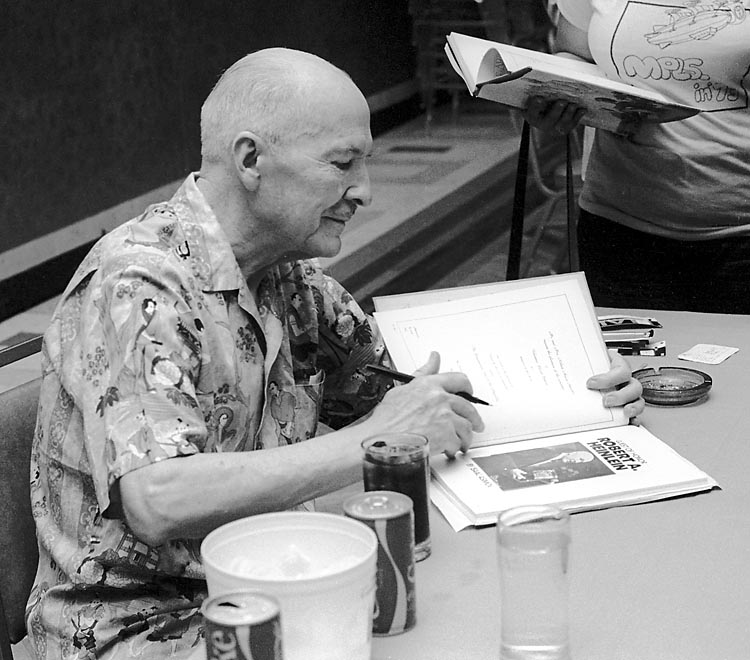
Robert A. Heinlein at the 1976 World Science Fiction Convention
Via Wikimedia Commons.
RAH was, for better or worse, one of the dominant figures of American SF between roughly 1945 and 1990 (he died in 1988 but the publishing pipeline drips very slowly). During his extended career (he first began publishing short fiction in the mid-1930s) he moved through a number of distinct phases. One that’s particularly notable is the period from 1946 onwards when, with Scribners, he began publishing what today would be categorized as middle-grade SF novels (but were then more specifically boys adventure stories or childrens fiction): books such as Rocket Ship Galileo, Space Cadet, Red Planet, and Have Space Suit, Will Travel. There were in all roughly a dozen of these books published from 1947 to 1958, and as critic John Clute notes, they included some of the very best juvenile SF ever written (certainly at that point), and were free of many of the flaws that affected Heinlein’s later works — they maintained a strong narrative drive, were relatively free from his tendency to lecture the reader (which could become overwhelming in his later adult novels), and were well-structured as stories.
But most importantly, these were the go-to reading matter for the baby boom generation, kids born from 1945 onwards. It used to be said, somewhat snidely, that “the golden age of SF is 12”; if you were an American boy (or girl) born in 1945 you’d have turned 12 in 1957, just in time to read Time for the Stars or Citizen of the Galaxy. And you might well have begun publishing your own SF novels in the mid-1970s — if your name was Spider Robinson, or John Varley, or Gregory Benford, for example.
Then a disturbing pattern begins to show up.
The pattern: a white male author, born in the Boomer generation (1945-1964), with some or all of the P7 traits (Pale Patriarchal Protestant Plutocratic Penis-People of Power) returns to the reading of their childhood and decides that what the Youth of Today need is more of the same. Only Famous Dead Guy is Dead and no longer around to write more of the good stuff. Whereupon they endeavour to copy Famous Dead Guy’s methods but pay rather less attention to Famous Dead Guy’s twisty mind-set. The result (and the cause of James’s sinking feeling) is frequently an unironic pastiche that propagandizes an inherently conservative perception of Heinlein’s value-set.
It should be noted that Charles Stross is politically left, so calling something “conservative” is intended to be understood as a pejorative connotation, not merely descriptive.
But here’s the thing: as often as not, when you pick up a Heinlein tribute novel by a male boomer author, you’re getting a classic example of the second artist effect.
Heinlein, when he wasn’t cranking out 50K word short tie-in novels for the Boy Scouts of America, was actually trying to write about topics for which he (as a straight white male Californian who grew up from 1907-1930) had no developed vocabulary because such things simply weren’t talked about in Polite Society.
Unlike most of his peers, he at least tried to look outside the box he grew up in. (A naturist and member of the Free Love movement in the 1920s, he hung out with Thelemites back when they were beyond the pale, and was considered too politically subversive to be called up for active duty in the US Navy during WW2.) But when he tried to look too far outside his zone of enculturation, Heinlein often got things horribly wrong. Writing before second-wave feminism (never mind third- or fourth-), he ended up producing Podkayne of Mars.
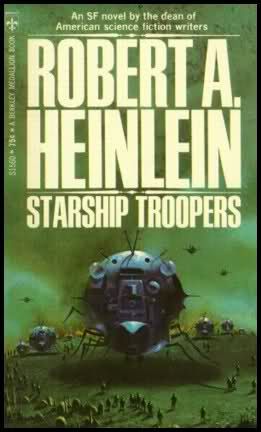
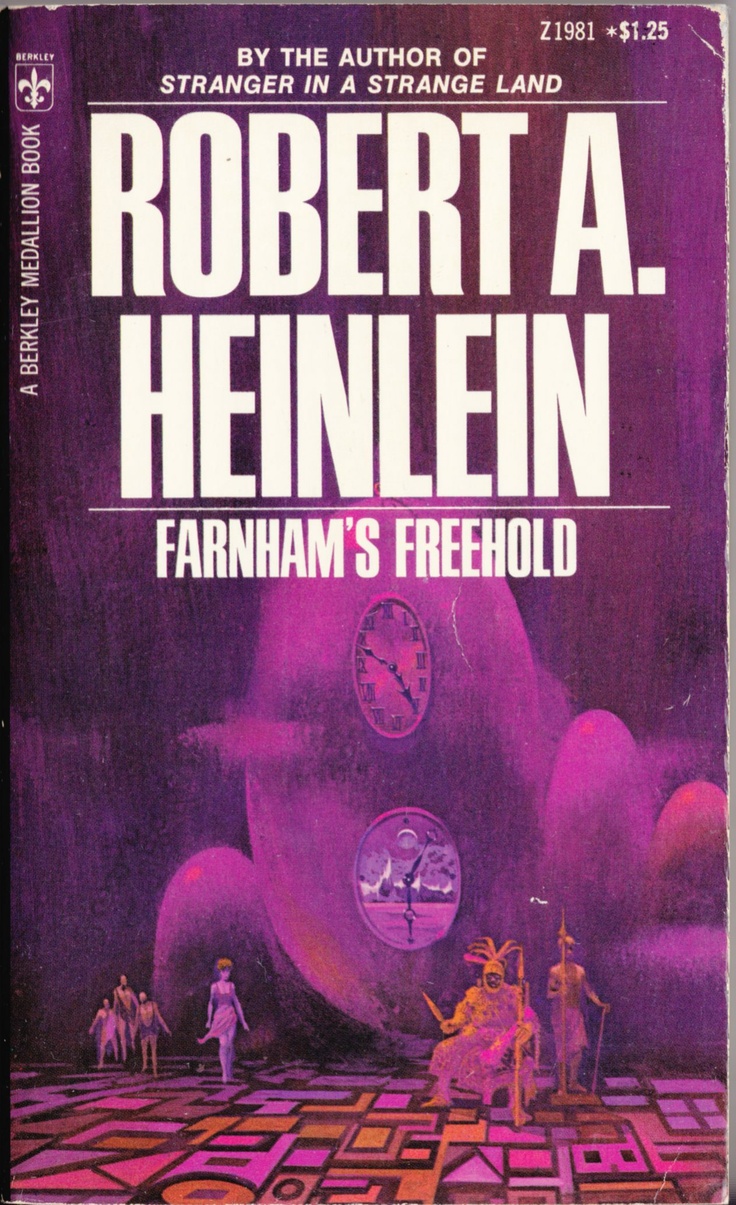
Trying to examine the systemic racism of mid-20th century US society without being plugged into the internal dialog of the civil rights movement resulted in the execrable Farnham’s Freehold. But at least he was trying to engage, unlike many of his contemporaries (the cohort of authors fostered by John W. Campbell, SF editor extraordinaire and all-around horrible bigot). And sometimes he nailed his targets: The Moon is a Harsh Mistress as an attack on colonialism, for example (alas, it has mostly been claimed by the libertarian right), Starship Troopers with its slyly embedded messages that racial integration is the future and women are allowed to be starship captains (think how subversive this was in the mid-to-late 1950s when he was writing it).
In contrast, Heinlein’s boomer fans rarely seemed to notice that Heinlein was all about the inadmissible thought experiment, so their homages frequently came out as flat whitebread 1950s adventure yarns with blunt edges and not even the remotest whiff of edgy introspection, of consideration of the possibility that in the future things might be different (even if Heinlein’s version of diversity ultimately faltered and fell short).
August 22, 2018
The History of Virtual Reality – A New Place to Call Home – Extra Sci Fi – #1
Extra Credits
Published on 21 Aug 2018From Aldous Huxley to Philip K. Dick, early references to virtual reality simulations abound in science fiction literature, and tremendously impacted consumer anticipation for VR technology available in the modern day. Many thanks to Oculus Rift for sponsoring the next two episodes of Extra Sci Fi and giving us a chance to explore our collective definition of virtual reality.
August 15, 2018
Robert Heinlein – Highs and Lows – #2
Extra Credits
Published on 14 Aug 2018Heinlein’s novels made science fiction mainstream and even contributed to modern libertarianism. His novels vary widely in the philosophies they explore, but ultimately they all reflect how Heinlein saw himself: as the self-reliant “competent man” protagonist of his stories, despite glaring inconsistencies.
August 14, 2018
Demon Hunters S.O.L.: Cleanup Crew
Zombie Orpheus Entertainment
Published on 23 Jul 2018Honor. Glory. Adventure. The Clean-Up Crew gets none of these things. What they do get is every dirty, stinky, nasty job on this plane of existence. When you need a demon slain, call someone else. When you need that demon’s corpse to be disposed of per Guideline 345b while keeping the normies none the wiser? That’s when you call the Clean-Up Crew. It’s a dirty job, and they are the ones who have to do it.
Released under the Creative Commons Attribution-ShareAlike 4.0 International (CC BY-SA 4.0) License.
August 9, 2018
Robert Heinlein – Rise – Extra Sci Fi – #1
Extra Credits
Published on 7 Aug 2018Before we delve into Robert Heinlein’s famous works, let’s look at an overview of his writing career and the philosophical ideals he was known for: particularly his libertarian worldview, although even this is still hotly debated.
August 2, 2018
Books on the ISS
No, that’s not books about the International Space Station, but physical books on the ISS:

The International Space Station is featured in this image photographed by an STS-132 crew member on board the Space Shuttle Atlantis after the station and shuttle began their post-undocking relative separation. Undocking of the two spacecraft occurred at 10:22 CDT on 23 May 2010, ending a seven-day stay that saw the addition of a new station module, Rassvet, replacement of batteries and resupply of the orbiting outpost.
Via Wikimedia Commons
The astronauts on the International Space Station are obviously busy people, but even busy people need some time to relax and unwind. In addition to a well-stocked film library (particularly strong on movies with a space theme, including 2001: A Space Odyssey and Gravity), there are also plenty of books in their informal library.
Some are brought up by the astronauts – Susan Helms was allowed ten paperbacks and chose Gone With the Wind, Vanity Fair and War and Peace in her carryon. Others come with space tourists such as billionaire businessman Charles Simonyi, who brought Faust and Robert Heinlein’s The Moon is a Harsh Mistress.
Authors whose works appear several times in the list include Daniel J. Boorstin (3 books), Terry Brooks (5), Lois McMaster Bujold (11), John Le Carré (3), and David Weber (13).
August 1, 2018
Isaac Asimov – Foundation & Empire – Extra Sci Fi – #3
Extra Credits
Published on 31 Jul 2018Asimov’s Foundation stories were absolutely foundational for science fiction — they introduced the concept of a space empire, bringing along analogies from historical civilizations to the social issues of advanced technology and humanity’s future.
July 26, 2018
Isaac Asimov – Laws of Robotics – Extra Sci Fi – #2
Extra Credits
Published on 24 Jul 2018Asimov is famous for coining the Three Laws of Robotics, but to him they weren’t the “answer” to how robots could be used in the future — they were an intentional reflection of humanity’s potential failings.


