
You know how drug companies pay six or seven figures for thirty-second television ads just on the off chance that someone with the relevant condition might be watching? You know how they employ drug reps to flatter, cajole, and even seduce doctors who might prescribe their drug? Well, it turns out that having 15,000 psychiatrists in one building sparks a drug company feeding frenzy that makes piranhas look sedate by comparison. Every flat surface is covered in drug advertisements. And after the flat surfaces are gone, the curved sufaces, and after the curved surfaces, giant rings hanging from the ceiling.
The ads overflow from the convention itself to the city outside. For about two blocks in any direction, normal ads and billboards have been replaced with psychiatry-themed ones, until they finally peter off and segue into the usual startup advertisements around Market Street.
Scott Alexander, “The APA Meeting: A Photo-Essay”, Slate Star Codex, 2019-05-22.
July 20, 2023
QotD: Advertising to a semi-captive audience
July 19, 2023
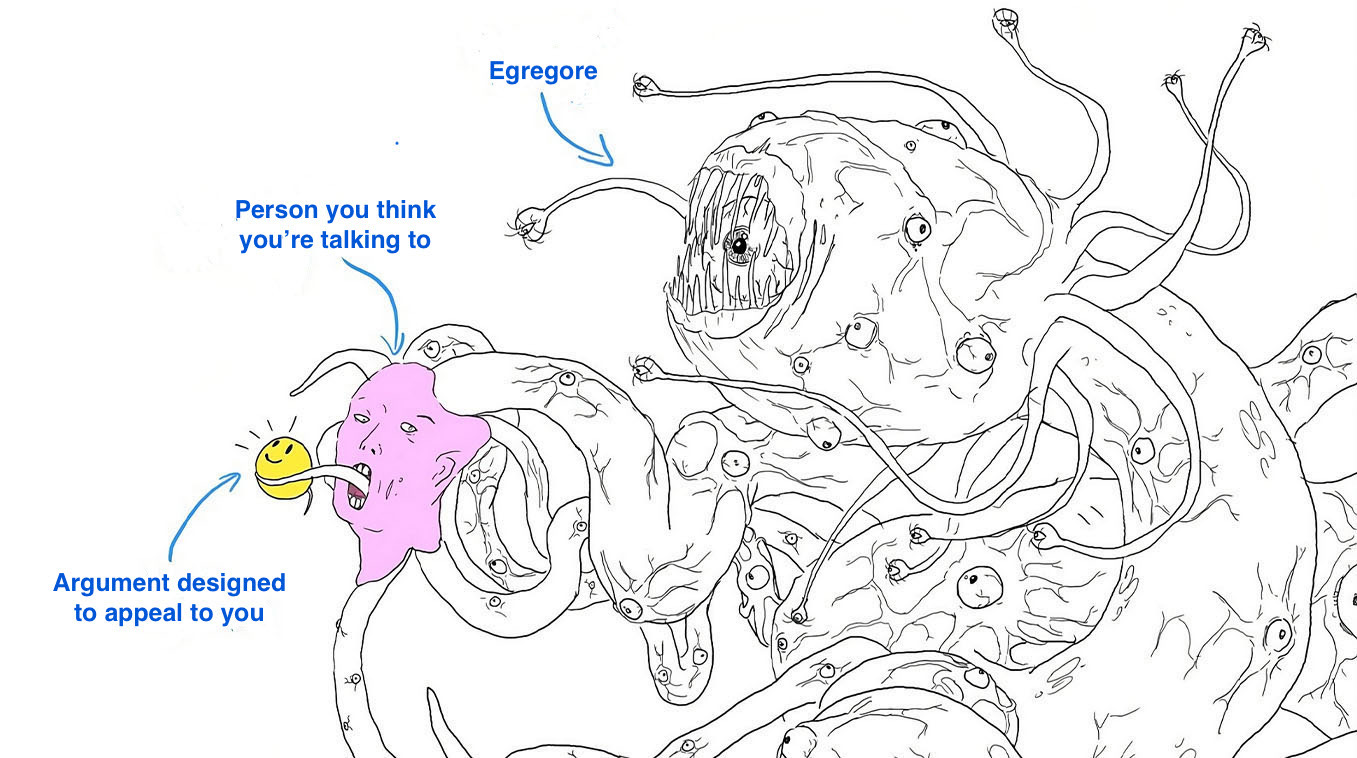
Infohazards on the internet of lies lead us into the clutches of “egregores”
The latest review at Mr. and Mrs. Psmith’s Bookshelf from John Psmith, is on the 1872 novel Demons by Fyodor Dostoevsky”. I didn’t read the post immediately, as Russian literature and I aren’t even nodding acquaintances. I should have remembered that both of the Psmiths have an amazing ability to tell you a lot more than a “review” would normally contain, and this one certainly lived up to expectations, including a brief discussion of philosopher Charles Taylor’s ideas about pre-modern versus modern concepts of the self. Most pre-modern cultures believed in external influences having disproportional impact on the person, while most modern cultures believe the influences arise internally within the mind. Most pre-modern cultures also feared the self could be taken over, or possessed, by malevolent external entities, ideas, or thoughts:

Dostoevsky obligingly gives us a character who’s clearly possessed in exactly this sense — a dissolute nobleman around whom the various radical conspiracies swirl. He is, simultaneously, a subversion of the brooding Byronic hero archetype that was so popular in 19th century European literature, and an eerie anticipation of the modern concept of the serial killer. How did he get this way? Remember the modern view of our desires is that they come from within us, and indulging them leads to inner harmony. But the older and truer view is that they can come from outside, force their way into our skulls through an opening, set their hooks in our brains, lay their eggs. These fledgling desires start out small and weak, but to indulge them is to feed them, grow them, until they take over their host and move its mouth and limbs around like a puppet. In this sense the porn addict, the drug addict, and the rage addict are all alike: sensual dissipation gets boring eventually, and you need harder and harder stuff to feel the same thrill, until one day you reach for something so hard you lose yourself forever.
The Dostoevskian twist to all this is that the proto-serial killer is far more sympathetic, and ultimately more redeemable, than the revolutionaries. The radicals’ motivations spring from the same emotional source as his, theirs are just sublimated into politics, which is why the form of the dystopia doesn’t really matter to them, all that matters is that there be a boot stomping on a human face. The sexual sadism of the serial killer is unflinchingly portrayed as less disordered and less socially destructive than its political equivalent and, ultimately, as rather basic. It’s actually quite easy to miss all of this because it’s so deeply at odds with modern sensibilities. Not just “serial killers are better than communists actually,” but also “serial killers are really pretty boring actually,” and all from the guy who just invented serial killers.1
But what if the radicals aren’t sublimating anything at all? What if there’s another kind of demon, another kind of infohazard, another kind of meme, which rather than infecting or possessing individuals, instead tries to do that to entire societies? Such a being might still work through individuals, the way a Haitian voodoo spirit speaks through a chwal, but here the individual puppet is not a target, but rather an instrument or a transmission vector. The internet jargon for such a being is an “egregore,” and you’ve encountered them before: the bizarre fad that sweeps through a middle school class like a wildfire, the war fever that grips a nation and turns it overnight into a basket of bloodthirsty lunatics. Dance crazes, viral TikTok challenges, internet-mediated mental illnesses. There’s a classic Futurama gag involving the Brain Slug Party, but the real joke is that every party is the Brain Slug Party, they’re all egregores. Have you ever spoken with somebody who had hashtags in their Twitter bio? If you looked carefully, you may have seen the slender, silvery proboscis emerging from the back of their neck and vanishing into the ether. If you listened carefully, you may have heard the alien metallic clacking of the egregore’s mandibles, as it sent messages down that tube for the meat puppet to vocalize.
Sometime in the mid-19th century, an egregore was born in the Russian Empire. It went by a thousand different names — among them: anarchism, communism, nihilism, democracy. What’s that? Those four ideologies are completely opposed to one another? That’s the entire point! It wasn’t actually any of those things, it was an egregore, its true name was something like Melkhorbalai or Uztaa-Binoreth. It wore those other names like skins when it was convenient to do so, which is why in the real life history of 19th century Russia we see countless examples of individuals switching between communism, anarchism, and democracy like they were flavors of ice cream.
The egregore wanted none of these things: it wanted to grow, to spread, to manifest itself into this reality. Madly, it willed destruction, and the more destruction it caused the stronger it got, and the easier further destruction became, a runaway exothermic reaction endlessly feeding on itself. So the reformist zeal of the 1840s became Nechayev’s insane nihilism of the 1870s, then the even more insane terrorism of 1900-1917 with which I opened this review, until finally, strengthened by half a century of blood sacrifice, that rough beast slouched towards St. Petersburg to be born. The trauma of that birth ripped apart first Russia, then Europe, then it almost ate the rest of the world too.
Could anything have stopped it sooner? In Dostoevsky’s story there’s one character who tries lamely to stand in the way of the swirling, coalescing, immaterial malevolence. He is a reactionary, a newly-freed former serf,3 and (like Dostoevsky himself) a repentant former revolutionary. He’s young and hip, but has old and edgy views, a perfect stand-in for online “trads”. Given Dostoevsky’s own views it would be easy to make him the hero of the story, but Dostoevsky is too great a writer for that, and instead makes him a pathetic LARPer:
“I only wanted to know, do you believe in God, yourself?”
“I believe in Russia … I believe in her orthodoxy … I believe in the body of Christ … I believe that the new advent will take place in Russia … I believe …” Shatov muttered frantically.
“And in God? In God?”
“I … I will believe in God.”
How great a description is that of all the crusader-avatar twitter accounts named “DeusVult1571”? Imagine one of them blubbering: “I believe in based aesthetics … I believe in Western civilization … I believe in the Hajnal line … I believe …” Ah, but do you believe in God? Probably some of them do, but for many others it’s a pose, or a meme, or a philosophical premise that they must accept in order to turn the rest of the brand they’ve assumed into a self-consistent whole.2 For these, the god they worship is just another egregore — one small and weak for now, less threatening perhaps than some others, but feed it, let it grow, and see how fast it turns on you.
The other force that could have resisted the growing darkness is the parents’ generation, the liberals of 1848, Turgenev’s boomers. We already know how that turned out in real life, but while Dostoevsky didn’t live to see it happen, he had these peoples’ number. Once so bold in condemning their government and sneering at their civilization, they are suddenly timid in the face of their children, terrified of being seen as uncool or conservative or just not with it. That’s a good way to raise a psycho, and Dostoevsky more than hints that everything which follows is ultimately their fault. And it’s a bad way to face down an egregore. Doing that requires boldness and … well:
“But this is premature among us, premature,” he pronounced almost imploringly, pointing to the manifestoes.
“No, it’s not premature; you see you’re afraid, so it’s not premature.”
“But here, for instance, is an incitement to destroy churches.”
“And why not? You’re a sensible man, and of course you don’t believe in it yourself, but you know perfectly well that you need religion to brutalise the people. Truth is honester than falsehood …”
“I agree, I agree, I quite agree with you, but it is premature, premature in this country…” said Von Lembke, frowning.
“And how can you be an official of the government after that, when you agree to demolishing churches, and marching on Petersburg armed with staves, and make it all simply a question of date?”
“Premature, premature”, is what the useless normies will bleat when our own radicals are blowing up Mt. Rushmore and pulling down statues of George Washington. Who are these radicals? I have no idea what the egregore will call itself this time. It doesn’t matter. Its true name sounds to human ears like a high-pitched mechanical screeching and clicking, a sound calculated to drive men mad, and to drive madmen into making it real.
1. I’m told that the internet jargon for this is an “unbuilt trope.”
2. Dostoevsky positions a former serf as the defender of “Holy Russia,” Orwell suggests that if there is hope it lies in the proles, Bismarck believed the poor would serve as a reactionary bulwark against liberalism, and MAGA believes that various dispossessed and subaltern groups will keep America great. Are they all correct? No. They’re all wrong. The lower classes have no special compass for political or religious truth, they’re just almost definitionally slightly behind the times. When an egregore is rapidly accumulating strength, they’re likely to oppose it out of inertia, but they’re as vulnerable as anyone to its blandishments, and will just as vigorously defend the new thing once it has taken over.
3. Look, I have a lot of sympathy for these guys. Like the Russian radicals of the 1870s, they correctly observe that there’s something insane and rotten about our society, but unlike those radicals they’re attracted to something that’s really out there and really true and good. “Fake it til you make it” is not the worst strategy ever invented for securing a mature and authentic faith in a supreme being. But once you’re in that state, there’s a clock running, your time is limited, there are other things out there in the night, attracted by the smell of lost and receptive souls.
July 18, 2023
At some point we moved from “therapy for serious issues” to “it’s totally normal for everyone you know to be in therapy”
In occasional conversations with younger folks (mainly Millennials and GenZ’ers), it’s surprising how often the topic of “therapy” comes up. Everyone I talk to under the age of 40 seems to be in therapy for this or that … when did that change? I’m no iron man (ask any of my friends), but it would never have occurred to me to seek counselling for what appeared to be the ordinary kind of issues that everyone else was dealing with. Friends and acquaintances who did were almost always struggling with some out-of-the-ordinary concern and certainly weren’t eager to discuss the course of their sessions as part of casual chit-chat. Freddie de Boer seems to share some of my discomfort on this topic:
Ladies, is your man engaging in the method of quasi-scientific self-improvement that’s currently mandated by high-status urbanites aged 21-45? If not, run, girl.
Before you go worrying or lecturing over my title here, let me say my personal life has never been better, really. But my total alienation from what I take to be my culture and its various attitudes and assumptions just grows and grows. Every day, it seems, there’s a fresh horror, and nowhere does it smack me in the face more than with mental health.
The above advertisement, which I think premiered in 2022, takes the medical tool of therapy and renders it a bit of dating-market gamesmanship, something bros just have to get on board with in order to hook up with high-value gals. I don’t expect a 30-second advertisement to reflect the reality that therapy is a frequently-adversarial process, that it’s at times uncomfortable by design, that it only works for certain kinds of problems, or that there are times when it can actually exacerbate them. And while I certainly do hold it against them for contributing to the corrosive “everybody should be in therapy” attitude — which is little different from believing that everybody should be on antibiotics — I also know that a for-profit therapy company is going to be pushing that line. (A macro-problem with for-profit medicine lies in the fact that the financial incentive is always to go on treating a medical problem forever without curing it.) What really gets to me is how a therapy company is going out of its way to make therapy appear so trivial, how the characters appear deliberately portrayed as unserious people and therapy so unapologetically represented as just a dating-market football. The commercial is somehow both grandiose about therapy’s purpose and dismissive about therapy’s actual use.
I don’t know how it is that we’ve simultaneously spent so much time validating and honoring people who struggle with their mental health and at the same time made mental health as a topic so frivolous.
I appreciated this conversation about TV therapy from The New Yorker. In it, Inkoo Kang says “I feel like there’s this idea that therapy is easy. And then you actually go to therapy, and you’re, like, ‘Oh, this is actually the worst’. That particular realization is very rarely dramatized.” I would argue that if therapy never feels like the worst, then you probably aren’t getting as much as you could out of the therapeutic process. Part of what makes finding and sticking with a therapist so difficult is that it’s close to impossible to divide your sense of what you want from a therapist from a broader understanding of what you need from a therapist. Are you sure you don’t like your current therapist because you’re “just not vibing with them”? Are you sure you want to fire your therapist because they seem “toxic”? Or is it because you signed up for therapy expecting it to be a constant exercise in validating everything you think and say and instead you’re one of the lucky few with a therapist who actually does their job and sometimes calls you on your bullshit? Of course, some therapists really aren’t very good, or more commonly, you can be a receptive patient and the therapist can be a competent practitioner but you have communication styles that just don’t gel. These things can be very difficult to parse on your own, which is why I always tell people to give it more time than they think they need. But either way, nothing is served by this effort to make therapy just another elite checklist item that shows you’re an enlightened person, except maybe Betterhelp’s share price.

July 16, 2023
QotD: The girls’ locker room at school
This method of bra removal was part of a larger, elaborate set of rules, unwritten but ironclad, whereby the locker room was a place to be naked as little as humanly possible. Being in your underwear was okay, but only if you were clearly making haste to put on more clothing. The bathing facilities, it was understood, were for decoration only and not to be used; people still talked about the time a few years back when a girl named Katie, a transfer student from some other country, or possibly another planet, actually took a shower after gym class one day — here you would lower your voice to a dramatic whisper — in the nude.
This cautionary tale of Katie revealed the true nature of our shared pathology: it wasn’t just that we didn’t want to be seen naked, or to see each other naked. It was that allowing yourself to be seen naked signified something sinister about you. You had to be some kind of pervert, an exhibitionist weirdo who lacked the good sense to be ashamed of your body — which was, of course, disgusting, and should be hidden at all costs.
Obviously, this was not a healthy way to be. Obviously, we all had eating disorders. Obviously, the kids were not, in this particular case, all right — or right at all. It’s strange, then, that in 2023, the neuroses of a bunch of 15-year-old girls trying to hide their developing bodies from each other in an upstate New York locker room seem to have somehow become the basis for a new Western paradigm. Nudity is now seen as invariably sexual, highly suspicious, and probably dangerous, particularly to children.
Kat Rosenfield, “The case for getting naked”, UnHerd, 2023-04-12.
July 15, 2023
QotD: Historical figures didn’t think of themselves as doing evil
If I thought it would help, I’d quote Machiavelli at them, to the effect that it’s impossible for a person to be thoroughly, consistently evil, even when it’s obviously to his best advantage. If I thought they were capable of grasping it, I’d follow by observing that this quote is just Machiavelli restating – in his inimitable style – the thoroughly conventional, utterly uncontroversial, indeed banal, opinion that people like to think well of themselves, and balk at doing things which make them bad people in their own eyes.
By that point, I’d have lost all but the sharpest undergrads, so I’d spell out the lesson Machiavelli intended us to take from his observation: While no one wants to think of himself as doing evil, when it comes to something that’s obviously advantageous, pretty much any rationalization will do.
Severian, “Acid”, Founding Questions, 2020-12-17.
July 12, 2023
“Folksy” Joe Biden has always been a nasty piece of work
One of the most puzzling things about how Joe Biden has been represented in the legacy media is that — despite mountains of evidence that he’s a hot-tempered bully who has always been eager to belittle and demean other people — he still gets fawning coverage of his supposed kindly personality:

Joe Biden likes to present himself as a folksy type, the kind you’d think of as a kindly old uncle or something. He tells stories about Corn Pop and virtually anything else and the press eats it up.
But it’s a veneer, a mask Biden wears so the public will like him.
We’ve seen it slip a time or two, but Axios has a story that hints that what we’ve seen is just the tip of the iceberg.
In public, President Biden likes to whisper to make a point. In private, he’s prone to yelling.
Behind closed doors, Biden has such a quick-trigger temper that some aides try to avoid meeting alone with him. Some take a colleague, almost as a shield against a solo blast.
The president’s admonitions include: “God dammit, how the f**k don’t you know this?!,” “Don’t f**king bullsh*t me!” and “Get the f**k out of here!” — according to current and former Biden aides who have witnessed and been on the receiving end of such outbursts.
…
“There’s no question that the Biden temper is for real. It may not be as volcanic as Bill Clinton’s, but it’s definitely there,” said Chris Whipple, author of The Fight of His Life: Inside Joe Biden’s White House.
Whipple’s book quotes former White House press secretary Jen Psaki as saying: “I said to [Biden] multiple times, ‘I’ll know we have a really good, trusting relationship when you yell at me the first time.'”
Whipple notes: “Psaki wouldn’t have to wait long.”
Zoom out: Biden’s temper comes in the form of angry interrogations rather than erratic tantrums.
He’ll grill aides on topics until it’s clear they don’t know the answer to a question — a routine that some see as meticulous and others call “stump the chump” or “stump the dummy”.
Being yelled at by the president has become an internal initiation ceremony in this White House, aides say — if Biden doesn’t yell at you, it could be a sign he doesn’t respect you.
Go and read the whole thing, because this is troubling, and not just because I dislike Biden.
While Axios goes out of its way to paint this as just an impassioned politician who demands much of his staff, that’s not what I’m seeing here.
Instead, I’m seeing an abusive man who is taking advantage of his powerful position to bully his subordinates.
I won’t pretend I’ve never lost my temper before. Doing so would be a lie. However, my yelling at someone has never been a sign of respect. It’s been a sign that I lost control.
And if Biden is doing it this often, there’s not much chance the man has any control over much of anything.
Of course, this is a report from Axios. Maybe it’s not really a thing. Maybe I’m just reading too much into it because I can’t stand Biden.
July 9, 2023
“… corporations sit in the late adopter phase of the marketing curve”
Elizabeth Nickson reminds us that the mass media corporate messaging is trailing edge, not leading edge:
Now everything is filtered through a warped looking glass, a Mad Hatter tea party of nonsense, run by the grimmest socialist operatives who ever lived, backed by buckets and wheelbarrows of stupid corporatist/fascist money. They are running a demoralization program on us.
It’s not working.
Never forget that corporations sit in the late adopter phase of the marketing curve, which is to say the lifeless part, the raking-in-the-money-from-stupid-women part. Women too, as a class, are part of the late adopter curve, because as Jordan Peterson once pointed out, women instinctively see humans as helpless babies needing protection and SAFETY FIRST. We are easily manipulated by our compassion, as is clear from the fact that only women and those who want to be, support the left now. The left traffics faux compassion and it is a killer drug. Included of course are beta males, hornswoggled by mommy, the wet diaper babies of Antifa and BLM. And of course, the paid operatives of the stinking cabal, the truly horrid public sector unions, the vicious thugs at AFL-CIO and the humanity-hating environmental movement.
The people the left cultivated so carefully over several generations have all fled to populism and eventually their vicious operatives won’t even be able to steal the votes they need. How big is it? Imagine 2000 Trump rallies. And then ten times that. And then quadruple it. Double and double and double again. And they are having the best time, more fun than you can imagine, working away in obscurity, asserting their human right to determine their own future.
[…]
Normals have turned, all of them. They are not available to the Trudeaus, Macrons and Rishi Sunaks of the world. They are wised up. Some of them know more than me about the filth at the heart of “environmentalism” and I know a lot. They are not Russian serfs or Chinese peasants. There is no way they are going to be corralled in 15 minute cities. They are going to bring the house down.
They/we are the people that Richard Haas, when resigning from the Council of Foreign Relations, a nest of nasty neo-liberal, neo-con oppressors if there ever was one, warned against when he said the greatest threat facing the world is American populists. Sure, buddy.
One of the those dreadful people (as they call us) is Kevin Fernandes82 on Instagram. Probably not his real name, but he is not aiming for public recognition. What he does, methodically, every day many times, is chronicle the slow crumbling of the old regime. I am using a lot of his reporting and as he shows, we are beating the pants off them every single day.
Their jobs are untenable. People are resigning from every safe berth in the world or being fired from plush jobs because the world the neo-liberal hegemon has created is counter-rational, so chaotic, it is unstable. It is unstable because we know it is stupid. We are opposed. And our opposition is slowly slowly bringing it down.
This is long. You don’t have to read it all to get the point, but give it to the despairing, keep it for when you despair. All these wins happened in the last two weeks. People, judges and administrators and politicians within the system, are starting to dance to the populist tune. Many of the worst are running as fast as they can.
We are the future.
Time to start thinking about what we want the new world to look like.
Herewith:
The Sound of Freedom has outsold the new Indiana Jones film, on 2,000 fewer screens and with no PR, against the full force of the Hollywood machine.
The Dutch government has reportedly fallen over asylum policy. Farms confiscation is wildly unpopular. Mark Rutte, architect of the prosecution of farmers has resigned.
The decoupling of the BRICS from the dollar means the death of the neo-liberal hegemon. Mark Wauk and Tom Luongo do a neat job of wrapping up this particular mess. As they say: there are no neo-liberals in a multi-polar, decoupled world.
The BRICS are set to introduce a new currency backed by gold, against the US backed dollar which depreciates in value every day because of inflation caused by choking energy supply and crazed overspending by governments.
EU laws that let banks shut accounts over political views to be scrapped.
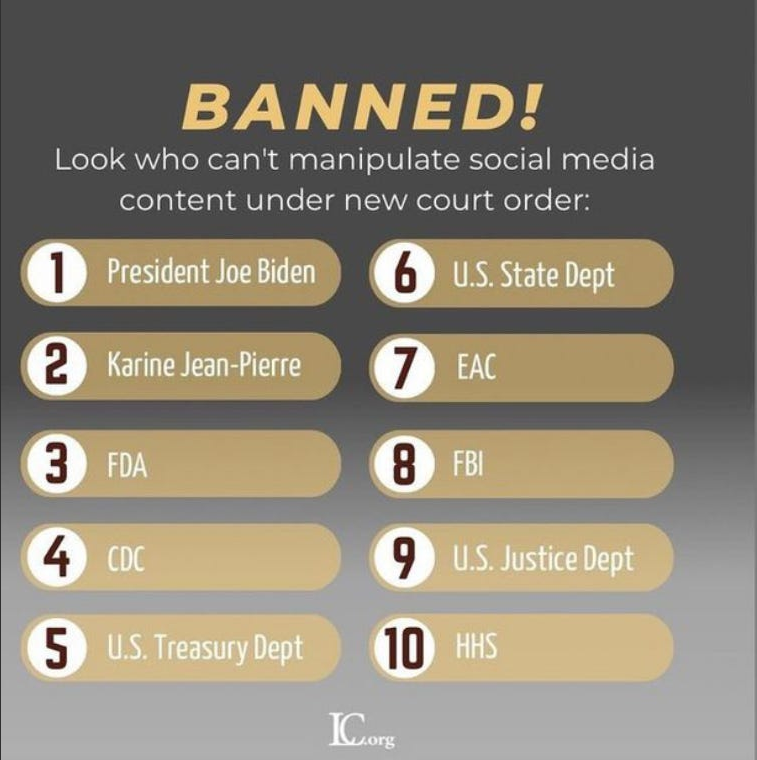
Federal judge in Louisiana prohibits DHS, FBI and DOJ from working with Big Tech to censor posts.
The list goes on for quite a lot longer…
July 5, 2023
The “orgasm gap”, yet another problematic front in the war of the sexes
Janice Fiamengo discusses the faked orgasm scene in When Harry Met Sally and its role in the ongoing arguments over the “orgasm gap”:
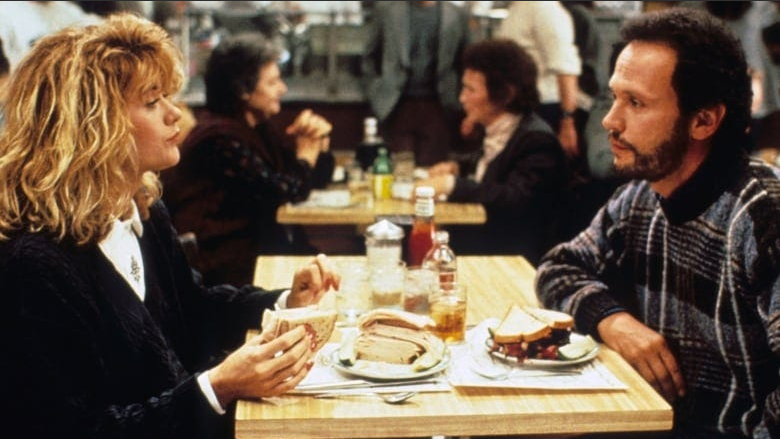
An iconic moment in modern movie history is the diner scene from When Harry Met Sally (1989), when Sally stuns an incredulous Harry with her rendition of a convincing orgasm. Her bravura performance causes shocked silence in the restaurant until one woman, sitting nearby, says admiringly (or enviously), “I’ll have what she’s having.”
The scene and the woman’s amused reaction told of a simple reality with wit and without judgement: some portion of women — perhaps many — are convincing fakers, and even a sexually experienced man will find it hard to be sure.
Many women in the movie audience laughed in recognition, and many men likely scratched their heads, wondering why anyone would need to fake sexual enjoyment. Some men may have remembered times when they faked it too. In the romantic-comedic world of the movie, the scene symbolized one of the differences between the average woman and the average man that only a generous and committed love could bridge.
A few years ago, When Harry Met Sally turned 30 years old, and its anniversary prompted a number of reflection pieces, some turning a harsh feminist lens on the film’s gender politics. In “‘I’ll have what she’s having’: How that scene from When Harry Met Sally changed the way we talk about sex,” Lisa Bonos at The Washington Post found in the fake climax scene a salutary revelation of male sexual arrogance. For Bonos, Harry is a typical macho man, someone who doesn’t care about a woman’s pleasure. The fact that the whole point of his conversation with Sally had been his confidence that he was giving women pleasure simply confirmed his emetic masculinity.
According to Bonos, the fact that some women fake orgasm supposedly reveals that women’s sexual pleasure is “not prioritized” in heterosexual relationships, and Sally’s performance gave sobering evidence of a gendered pleasure gap. It was implicitly the man’s fault that his partner felt the need to lie to him about her sexual satisfaction, and his desire for her to orgasm proved his typically male ego. Bonos’s analysis was an egregious violation of the spirit of the movie but was eminently faithful to the feminist perspective. The politics of grievance had come a long way in three decades.
Right on cue, studies in human psycho-sexuality are now taking up the same theme, alleging a culturally imposed “orgasm gap” between men and women in which men outpace women in the frequency with which they report orgasm during sexual intercourse (86% for men vs. 62% for women, according to one national survey).
Remembering how consistently feminist pundits have expressed outrage at male incels‘ (alleged) sense of “entitlement” to sex, I cannot help but find it ironic how unapologetically researchers assume a female entitlement to orgasm. Apparently, the whole society is to be concerned if women fail to climax every time they have sex, while no one has compassion for young men who face a lifetime of sexlessness. The prime exhibit is “Orgasm Equality: Scientific Findings and Societal Implications“, a paper published in 2020 by three female researchers at the University of Florida. The paper not only surveys the literature on the subject but also makes recommendations for “a world of orgasm equality”.
July 2, 2023
QotD: Processes for fighting the last war
The same applies to “cyber” or “information warfare”; there is no doubt that technology has changed the so-called “battlespace”, making it bigger and more complex by, in effect, adding an invisible dimension. We have been conducting “information operations” for decades, even millennia — I would argue that at the end of the Third Servile War (73-72 BCE) when Marcus Licinius Crassus crucified 6,000 of Spartacus’ followers on the Appian Way (it is not clear if Spartacus, himself was among them) that it was psychological warfare which is either a subset of or a near relation to information warfare. But the tools have changed and with them, tactics need to change, too, but some principles will remain as they were 2,000 years ago, or 100 years ago (the Zimmerman Telegram) or 75 years ago (Turing, the Enigma machine and Bletchley Manor).
Ted Campbell, “Following the blind leader (3)”, Ted Campbell’s Point of View, 2019-05-21.
June 28, 2023
QotD: Freud and modern Feminism
Serious psychotherapists or students of Freud should probably stop reading right now, as I am not attempting a genuine psychoanalytic analysis of feminism or indeed of penis envy, which has been widely dismissed as sexist or justified as women’s accurate recognition of men’s power. My theory — if it deserves that name — stems from the recognition that anti-sex feminism, involving the continual projection onto men of female sexual anxieties and discontents, has a far more extensive pedigree than most people realize, and that much feminist discussion and activism today take for granted that law and public policy are rightly directed towards “equalizing” not only rights or opportunities but also sexual experience itself, by prioritizing female pleasure and diminishing male.
It’s no revelation that many feminist-influenced women are hyper-alert to male advantage while being willfully blind to male disadvantage. In the arena of sexuality, where male and female most intimately and yet mysteriously interact, the irrational ferocity of feminist grievance-mongering reveals itself tellingly. Unwilling and unable to extend sympathetic understanding to male sexual difference, feminist ideology authorizes an envy-fueled anger that far surpasses legitimate caution.
A word about that legitimate caution. Throughout history, well-functioning societies have recognized the threat to civil order — and to women’s safety in particular — of male lust, and have passed laws and constructed codes of behavior to contain and direct it. Fathers and husbands have always been interested in protecting their womenfolk from sexual violence. Feminists, however, while exalting female sexuality as benign and beautiful, have repeatedly refused to recognize any manifestation of male sexuality as good. A mere glance at prominent feminist claims and policy initiatives highlights their continual misrepresentations.
Janice Fiamengo, “Do Feminists Suffer From Penis Envy?”, The Fiamengo File, 2023-03-26.
June 26, 2023
QotD: The danger to mental health in a functioning meritocracy
The illusion that one would have been a success but for malevolent circumstance is a very necessary one for a lot of people, for there is no more pitiless or cruel a world than a pure and perfectly functioning meritocracy. Such an arrangement would confront everyone, or at least almost everyone, with his own mediocrity, for the mediocre are by definition in the majority. And who is not mediocre by comparison with Mozart? In a pure meritocracy, everyone would find his true, utterly deserved level; but it is a mere prejudice that if there were justice in the world, everyone would be better off. In a pure meritocracy, there would be no paranoid defense against one’s own nullity — one could blame only oneself for it and no one else. That is why the concept of equality of opportunity, besides implying a kind of Brave New World world, is so deeply vicious, and why so many people who promote it are obviously hate-filled. They do not want to serve humanity but torture it.
Theodore Dalrymple, “The Grand Illusion”, Taki’s Magazine, 2017-08-19.
June 23, 2023
QotD: Children and fire
Joseph Henrich, The Secret of Our Success: How Culture Is Driving Human Evolution, Domesticating Our Species, and Making Us Smarter, 2015.
June 13, 2023
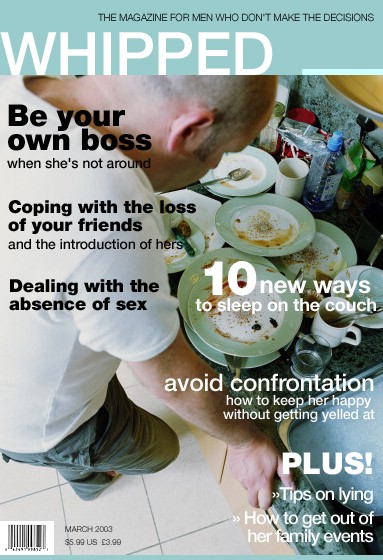
Liberal woman frustrated she can’t find non-conservative but traditionally masculine men
Tom Knighton responds to a progressive woman’s lament:
Originally found on fark.com about 15 years ago, artist unknown.
She is at a loss because she wants to be with a masculine man but doesn’t want to compromise her morals and values. She asks her followers if she is asking for too much when she requests a man she can be “equal” with while he still provides for her.
What she doesn’t seem to get is that it was women like her that basically destroyed manhood to the point that there’s little chance she’ll find a liberal guy with traditional values.
See, liberal men are basically obligated to take the subservient role. They’re required by their ideology to accept that the woman is just as capable — and obligated — to be at least an equal in providing for the family, if not the provider herself.
Failure to act according to this, at least in their minds, is to undermine the feminist values the left claims to hold so dear.
It didn’t have to be this way. It was always possible to empower women without trying to tear masculinity down, which is what has been happening.
Opening doors for women, for example, is one of those things guys used to do all the time. It wasn’t that women were somehow incapable of operating a doorknob. It was because it was just something a gentleman did.
Now, if a man opens the door for a woman, he’s taking a chance. Will she appreciate it or will she launch into a feminist diatribe about the patriarchy?
Leftist men already know which they expect, so they do no such thing. Guys with more of a traditional lean, however, can and will open that door because they’re not impressed with feminist screeching.
The surprisingly authoritarian reflexes of the “true” anti-authoritarian
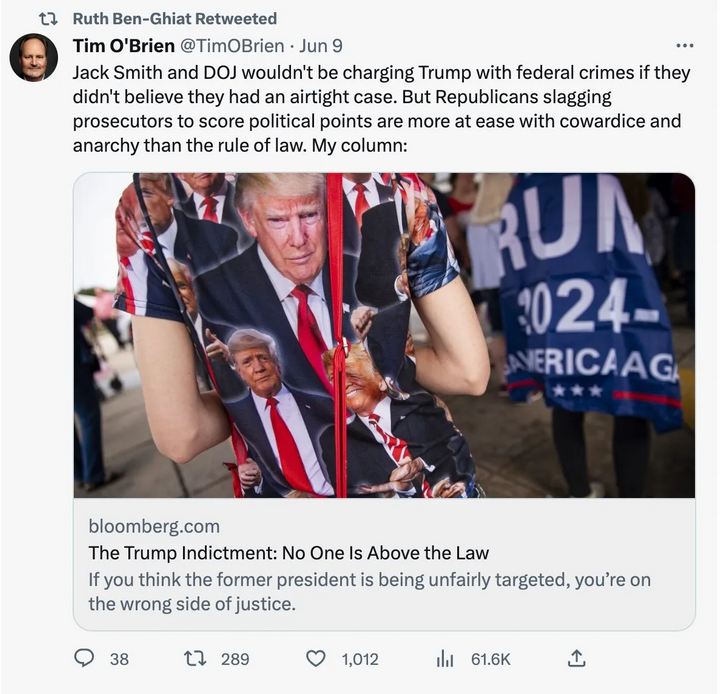
Chris Bray surveys the “anti-authoritarian” stances and actions of Professor Ruth Ben-Ghiat, a dedicated opponent of all things Trump:
I’ve called the NYU professor Ruth Ben-Ghiat, an “expert” on authoritarianism, an inversion blender, a narrative-producing machine with an astonishing gift for turning meaning upside-down. Your decision to drive north is ironclad proof that you intend to travel to the south! You’re spraying water on that fire to make it bigger! You gave me a sandwich because you want me to starve to death!
Currently, Ben-Ghiat’s frantic production of anti-authoritarian messaging on Twitter, the preferred platform of true intellectuals, is tightly focused on the dangerous authoritarianism of the megafascist Donald Trump, who is doing what all true authoritarians do: questioning and criticizing the government. Go stroll through Ruth Ben-Ghiat’s Twitter posts. It’s like having lunch with Felix Dzerzhinsky. Only the guilty and the fascist elements resist the cleansing power of the state and its gloriously pure-hearted investigative apparatus!
A suggestion up front from the maître d’hotel: What you’re about to consume is the filet mignon of dimwitted propaganda. Chew it slowly. Savor. Let’s start with a light appetizer, a mere retweet, to tease the ironic gustation:
Archie Bunker and Meathead have become one, united by the power of the Trump. If a prosecutor charges you, the case is airtight, full stop. Government never charges innocent people with crimes. To criticize a prosecutor is to oppose the rule of law, which can only be defended by the immediate presumption of guilt. Here, let’s try it out:
Prosecutors wouldn’t be charging Rick Perry with crimes if they didn’t believe they had an airtight case.
Prosecutors wouldn’t be charging Kyle Rittenhouse with crimes if they didn’t believe they had an airtight case.
Prosecutors wouldn’t be charging Tom Robinson with crimes if they didn’t believe they had an airtight case. Atticus Finch is an authoritarian!
This is why criminal defense lawyers are all so infamously right-wing, by the way. Especially public defenders.
[…]
Nothing says progressive anti-authoritarian like the sacralization of national security as a preeminent value. If government says that something has been done in the name of national security, you must accept it and support it without question. Or else you’re an authoritarian, doubting the state security apparatus. Fascists always do that.
There is, of course, a long and deeply established tradition on the American political left of criticism directed at the FBI and DOJ — and at federal law enforcement in general, and at law enforcement in general, and the “carceral state” — as hegemonic instruments. Historians and activists on the left have long viewed the FBI with political suspicion, and with reason.
Until pretty much right this instant, because Trump.
June 3, 2023
Kids, obesity, and the woke agenda
Elizabeth Nickson isn’t a fan of the “healthy at any size” mantra, especially when it comes to kids:
If I were a kid today I’d be out scouting the neighborhood for a home school or church to take me in as long and teach me latin and math and give me a reading list as long as I didn’t have to have someone’s jiggly bits pushed in my face or be shown diagrams of sexual positions, and asked ceaselessly about my food intake, my BMI measured (25 states mandate this) and no doubt entirely invasive questions about my family and father and weird uncles and so on. It would be like living in a perpetual inquisition, danger everywhere, with no privacy in any area of one’s life, with every sentence and expression evaluated on whether I am being a good member of the inclusive collective and will step aside so someone less privileged can have a chance.
But I am not nine and therefore spared all that, but God in heaven I feel sorry for them. Schools have stepped up to take the place of the at-home mother who had a relationship with her kids strong enough so that their emotional needs were being met and they didn’t have to stuff food down their throats for a relief from the ceaseless pressure to conform, and severe emotional loneliness from the absence of a family system.
Instead of your mind, the dominant focus seems to be your body, and at the most vulnerable time in your life. I know they think they are raising good little socialist citizens, who are acutely aware of the struggles of the less fortunate, but add in the bullying of Middle School and little wonder 49% of kids are overweight or obese, and the rest stuffing their feelings 24/7. Great for the food pushers, sucks for the medical system.
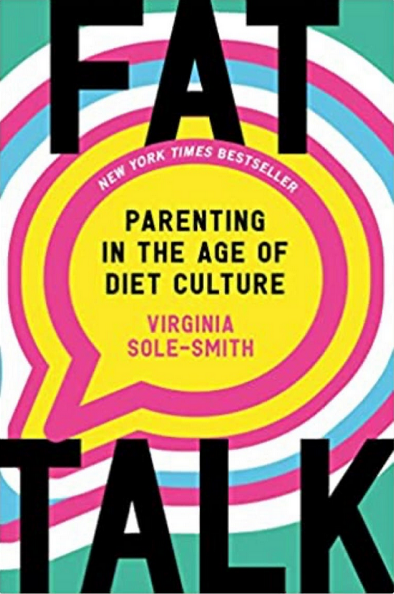
Virginia Sole-Smith who is the anointed high priestess of Fat Positivity Culture, has been pushing fat is AOK and in fact, possibly superior to thin-ness, which she never fails to excoriate, for the New York Times, Slate and Science and various other high-end publications for 20 years. Her latest book Fat Talk, which sits on the NYTimes bestseller list is about raising fat children, or not fat children, it’s kind of confusing. Ok, to be fat, but not obese, but you can’t put obese kids on a diet because that will make them fatter, and besides everyone is criticizing them and that has to stop.
Every leftie cliché is brought out of the barn and groomed within an inch of its life. White privilege, thin white privileged women, BIPOC exclusion, thin privilege in sport, entertainment, business, and so on, a system systematically prejudiced against fat people.
Basically, however, Sole-Smith is staking her ground and that is that “small fat”, which is how she defines herself, is normal and we should adjust our eyes to see pudgy tummies as “something to aim for” – as she states in her last chapter called “How to Have The Fat Talk”. We have to start “reclaiming (sic) fatness as a perfectly good way to have a body”.


