Quotulatiousness

March 22, 2026

“In 1800, most people worked the land. By 1900, most didn’t. … That’s a psychological earthquake”

Filed under: Education, Europe, Health, History, USA — Tags: , , — Nicholas @ 03:00

On the social media site formerly known as Twitter, L. Wayne Mathison points out just how vast the disruption of normal, traditional lives over less than a century has torn most of us from our historical moorings:

Image generated with AI

The Great Collision: When Reality Stopped Making Sense

For most of human history, life wasn’t confusing. It was hard, yes. Brutal, often. But simple.

You were born into a pattern. You followed it. You died in it.

Then the 20th century showed up like a wrecking ball.

What people call “progress” was really a mass psychological dislocation. We didn’t just move from farms to cities. We lost the structure that told us who we were.

We solved survival. Then immediately created a meaning crisis.

That’s the trade nobody advertises.

1. The Shock: When Life Broke Its Own Pattern

People think industrialization was about better tools. It wasn’t. It was about ripping people out of identity.

In 1800, most people worked the land. By 1900, most didn’t. That’s not a statistic. That’s a psychological earthquake.

Tradition vanished faster than people could adapt. So the state stepped in and did what states always do. Standardize. Educate. Normalize.

Mass schooling didn’t just teach reading. It replaced lost culture with manufactured culture.

Useful? Yes.

Neutral? Not even close.

You don’t remove a thousand-year identity system and expect people to just “figure it out”.

They don’t. They drift.

2. The Lie We Tell Ourselves: “People Want the Truth”

No, they don’t. They want to feel right.

Semmelweis proved it. Doctors were killing women by not washing their hands. When he showed them, they didn’t thank him. They rejected him. Destroyed him.

Why?

Because truth wasn’t the problem. Identity was.

If the facts say “you’re causing harm”, and your identity says “I’m a healer”, most people will reject the facts. Not update the identity.

That’s the Is vs Ought gap in plain terms:

The world is what it is
You believe what should be
When they collide, you protect the belief

Not truth. Belief.

That’s not stupidity. That’s self-preservation.

3. The Split: Are You a Person or a Machine?

Here’s the quiet tension nobody resolves.

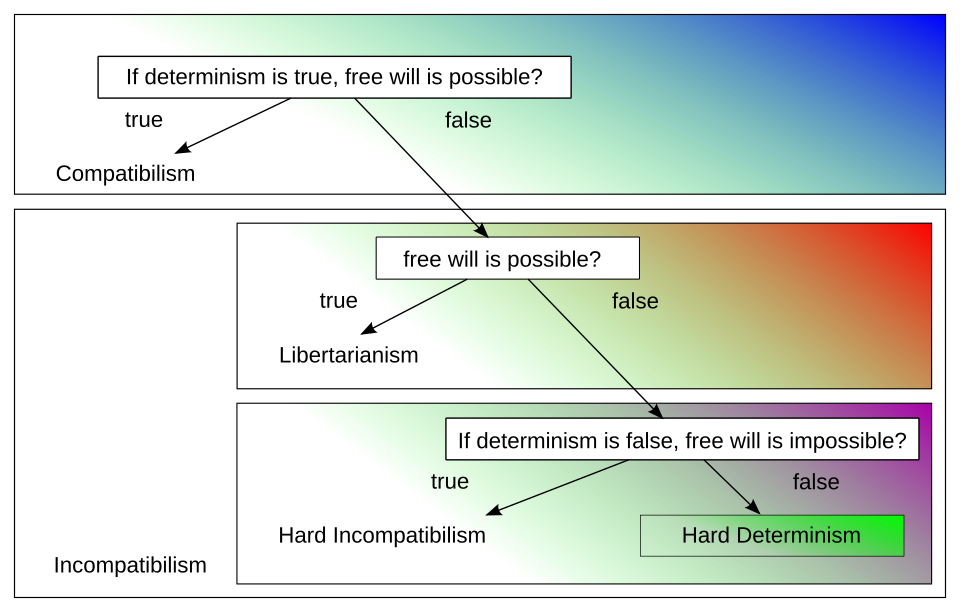
You experience yourself as a decision-maker. You choose. You judge. You act.

But science describes you as chemistry and electrical signals.

Both are true. And they don’t fit together cleanly.

The old world said: you are a moral agent.

The modern world says: you are a biological system.

So which one is responsible when something goes wrong?

If you lean too far into “machine”, responsibility disappears.

If you lean too far into “agent”, you ignore constraints.

Most people bounce between the two depending on what excuses them fastest.

4. The Dangerous Shortcut: Let Someone Else Decide

Freedom sounds nice until it demands something from you.

Dostoevsky nailed this. People don’t just want freedom. They want relief from it.

So they trade it. Quietly.

Security, comfort, certainty. Those become the new gods.

And then comes the predictable move. Someone steps in and says:

“I’ll decide what’s good for everyone.”

History has a word for those people. It’s not flattering.

Once you remove any higher standard, the only thing left is preference backed by power.

That’s when things get ugly fast.

5. When “Good Intentions” Go Off the Rails

This is where it usually collapses.

When there’s no fixed standard, people start building their own. Then enforcing it.

George Bernard Shaw is a perfect example. Smart. Influential. Completely untethered.

Once you decide some people are “in the way”, the logic gets dark very quickly.

Not because people are monsters.

Because they think they’re right.

That’s always the justification.

Final Reframe: You Don’t Get Meaning for Free

Here’s the uncomfortable truth.

The old systems that gave people meaning are gone or weakened. They’re not coming back in their original form.

So now you’re left with a choice most people avoid:

Drift and absorb whatever narrative is loudest
Or build your own framework and take responsibility for it

There is no neutral ground.

You’re either shaping your values, or inheriting someone else’s without noticing.

Most people think they’re thinking.

They’re not. They’re echoing.

Simple Stoic Move

Strip it down.

Ask one question:

“What do I actually control here?”

Then act there. Only there.

Everything else is noise.

And right now, there’s a lot of noise.

[NR] – minor formatting added.

March 21, 2026

QotD: Rejectionism

Filed under: Business, Quotations, USA — Tags: , , , , — Nicholas @ 01:00

… you can, and should, do this little “What is it in itself?” exercise for everything. What is Amazon in itself? Speed. Information velocity. Consumerism. I noticed a funny thing when I moved from the bigger city to a smaller town on the outskirts: All of a sudden I had a lot more money in the bank at the end of the month. I pulled my statements, and found out that I wasn’t spending nearly as much on impulse buys. I had to plan shopping trips to the grocery store, so not only did I save money, I ate better — in the old days, when I was hungry, I’d swing by the drive thru, because it was right there. Or I’d zip down to the store to grab a few things to cook, which ended up grabbing a bunch of other things, because it was right there.

Amazon works the same way. If you have to plan your trips to the grocery store, you have to ask yourself: Do I really need this? There are many fewer chances for impulse buys. When the store’s right there, you just run down and satisfy whatever momentary craving you happen to have. Same with Amazon — if you had to make a special store to get that piece of Chinese junk, you wouldn’t. But Amazon is right there, on the phone …

Haste. Impulsiveness. The instant, unexamined gratification of each and every urge. Those are the things the Left encourages. That’s what all that stuff is fundamentally for — Amazon, Twitter, smartphones, the whole deal.

That, therefore, is what we must reject. Call it “Rejectionism” if you want to make it into a sales pitch (or something better; I suck at titles). The Left’s “morality” is to treat everything — health, beauty, pleasure, the Economy, politics, people — as means to one and only one end: The instant, unthinking gratification of each and every momentary impulse.

We reject it. We reject the Internet. It’s a tool, nothing more, and remember what they say about hammers: When a hammer’s all you’ve got, everything looks like a nail. Reject it. Reject it all, for your soul’s sake.

Severian, “Rejectionism”, Founding Questions, 2022-05-24.

March 20, 2026

When pursuit of knowledge shifts to sharing of feelings instead

Filed under: Education, Media, USA — Tags: , , , , , — Nicholas @ 05:00

Institutes of higher learning were once places where academic careers involved research, analysis, and logical pursuits to advance human knowledge (in theory, at least, and mostly in practice). Today’s groves of academe are apparently much more about “the feels” than the facts:

An expected and obvious consequence of the Great Effeminization of the Academy is that a great deal of academic output is now about the feelings of academics.

From the peer-reviewed paper “What’s Racial About Matter? A Conversation on Race and ‘New’ Materialism Past, Present, and Future” in Catalyst: feminism, theory, technoscience. (They mean matter in the same sense as a physicist, only they are much vaguer.) My emphasis:

    What follows is an informal, at times undisciplined, conversation about Asian American racial matters between interlocutors who have been in generative dialogue for several years now. This roundtable is the constellation of many other discussions from conference panels to shared meals, reflecting the relational nature of our inquiry. We hope this roundtable can open entry points for those exploring intersections of feminist new materialisms, STS, and studies of race — from its genealogies to its animating new directions. How did we get here, and where do we go from here?

The text itself reads like it was produced by one of those postmodern text generators that were passed around as jokes in the late 1990s.

From the Abstract of “After Hybridity: The Biological Life of the Mixed Race Child” (same journal):

    I argue that renderings of the mixed race child as a metaphor for assimilation and multicultural progress obscure how racial science continues to shape the very definition of mixed raceness. Instead, I frame the mixed race Asian American child as hybrid matter to explore the slippages between their figuration and other abnormally reproduced objects: the genetically modified food organism and cancer.

From the Abstract of “Racial Atmospherics: Greenhouses, Terrariums, and Empire’s Pneumatics” (same journal):

    What happens when we understand air as racial matter? This paper takes up this question by tracking the political, architectural, and artistic genealogies of Cold War phytotrons, or computer-controlled climatic laboratories.

From the Abstract of “Disrupting the Whitened Lemur: Reading Black Trans* Considerations in Feminist Primatology” (same journal):

    In this article, I trace the evolution of female dominance studies in lemurs to explore how logics of cis-heterosexuality and whiteness are embedded in the study of the nonhuman … Following recent theories of trans* and the nonhuman, this essay argues that such critiques illustrate the trans* potential of the nonhuman, which was prefigured by decades of critique in feminist primatology. However, by engaging with recent Black trans scholarship, this essay suggests that such trans* critiques of the nonhuman have stopped short by ignoring the racialized nature of the dyad as a social unit. I thus propose a feminist science studies that attends to Black trans* theory to work against colonial taxonomies and the forced assimilation of the nonhuman world into rigid ontologies for material gain — or what I refer to as whitening processes.

The punchline is that not only are these all from the same journal, but they are all from the same issue of that organ. And that this is only one of many such diaries (the proper word) — funded largely by you via our great benevolent government.

It’s okay to hate …

Filed under: Liberty, Media, Politics — Tags: , , , , — Nicholas @ 04:00

On his Substack, Frank Furedi defends the right to hate:

In recent decades hate has become thoroughly politicised to the point that the mere mention of the word serves as a prelude to discrediting, delegitimating and criminalizing its target. In public life the charge of practising the politics of hate is frequently deployed by leftist promoters of identity ideology against their opponents. The claim promoted by The Guardian that states that “a Tory party that stokes hatred is the real threat to our democracy” is illustrative of the attempt to associate conservatives and other critics of identity ideology with the politics of hate.1

The project of transforming hate into a malevolent ideological standpoint is underpinned by the assumption that all displays of the emotion hate are potentially malevolent. In effect the very human emotion of hate is now frequently demonised as a pathology.

In recent decades hate has been transformed into a stand-alone cultural stigma. According to dominant cultural conventions it is sufficient to use the word hate without any reference to the object of this emotion. It is now common to use the word, Haters. It is not necessary to indicate who the Haters hate. The term Hater serves as a negative identity. As one study acknowledged, “persons branded as ‘haters’ are effectively excommunicated from the polity”.2 The use of the term hater morally contaminates its target.

According to the cultural script that prevails in the West, hate serves as a secular form of moral evil. One expression that captures this evil is that of “The Hate”. By placing a definitive article in front of hate a permanent threat to society is invented. This reified public threat demands vigilance and willingness to mobilise to defeat its manifestations. For example, this is the approach of the campaigning group Stop The Hate.3 The content of The Hate is deliberately left vague so that it can serve as the target of a variety of different campaigns.

The politically motivated designation of hate to describe the behaviour of an individual or a group is not simply an act of description but also a boundary-setting manoeuvre. It basically works as a warning that signals the claim that The Hater cannot be included within the confines of a democratically governed public space. The Hater exists on the wrong sides of the boundary between legitimate and illegitimate politics. This sentiment is frequently communicated by the slogan “Hope Not Hate”, which establishes a moral boundary between legitimate and illegitimate politics. From this perspective hate serves as a diagnostic label for illegitimate public life. Imposing a moral quarantine on those branded as haters is regarded is necessary for the maintenance of a just democratic society.

The frequent use of the slogan “Hope not Hate” smuggles a moralising ethos into public discourse. Through the drawing of a moral contrast between the secular evil of hate, hope emerges as a progressive political virtue. The transformation of hate into a morally toxic antithesis of hope assists the political polarisation that afflicts society. Since haters are regarded as beyond redemption dialogue with them is pointless. The only appropriate response to their words is to criminalise it. Hence the proliferation of rules and laws criminalising Hate Speech.


  1. https://www.theguardian.com/politics/2024/mar/04/a-tory-party-that-stokes-hatred-is-the-real-threat-to-our-democracy
  2. Post, Robert, “Concluding Thoughts: The Legality and Politics of Hatred”, in Thomas Brudholm, and Birgitte Schepelern Johansen (eds), Epilogue, in Thomas Brudholm, and Birgitte Schepelern Johansen (eds), Hate, Politics, Law: Critical Perspectives on Combating Hate, Studies in Penal Theory and Philosophy (New York, 2018; online edn, Oxford Academic, 21 June 2018), https://doi.org/10.1093/oso/9780190465544.003.0013, accessed 12 Mar. 2026.
  3. https://www.stopthehate.uk

Update, 21 March: Welcome, Instapundit readers! Have a look around at some of my other posts you may find of interest. I send out a daily summary of posts here through my Substackhttps://substack.com/@nicholasrusson that you can subscribe to if you’d like to be informed of new posts in the future.

March 11, 2026

QotD: Traitors are worse than open enemies so we hate them more

Filed under: Books, Quotations — Tags: , , — Nicholas @ 01:00

    Officer Frenly (High IQ) @FrenlyOfficer
    The most hated character from Harry Potter is not Voldemort. It’s not Bellatrix. Not even Draco.

    It’s Umbridge.

    Ask yourself why.

Simple.

Umbridge does one thing the main villain doesn’t do, that none of the other villains do.

She pretends to be on the heroes’ side. And prevents them from defending themselves.

This is how the human mind evolved. Foemen, tribal enemies who oppose us on the field of battle, provoke our fear, anger, even hatred. But traitors provoke our contempt and disgust.

We instinctively know that a disloyal friend is worse than an enemy.

Against an enemy, we can defend ourselves, and our tribe will support us. Oppose the traitor, and she will cry that she is an innocent victim, and we are the evil ones.

The traitor not only betrays her own tribe, she turns her tribe against each other.

But it’s worse than that. The enmity between this tribe and that, between lion and zebra, between farmer and rat, is dictated by opposing interests, by incompatible needs.

Our cruelty to the foe is forced upon us. It is the indifference of the universe, manifesting its conclusion through us. It’s adaptation, not sadism.

The traitor isn’t like that. She didn’t have to do it. She could have supported the tribe, and everyone, including her, would have been fine.

The traitor didn’t have her path forced on her. She chose it out of spite, or for gain.

Traitors are worse. So we hate them more.

Devon Eriksen, The social media site formerly known as Twitter, 2025-11-28.

March 10, 2026

There’s ordinary virtue signalling, then there’s virtue costuming

Filed under: Media, Politics — Tags: , , , , — Nicholas @ 03:00

On the social media site formerly known as Twitter, L. Wayne Mathison describes what happens when virtue signalling becomes someone’s entire persona:

When Virtue Becomes a Costume

Here’s an old village joke: if a man walks around telling everyone how humble he is, check his pockets. He’s usually carrying a mirror.

That’s roughly how the modern “woke” phenomenon works. It presents itself as moral enlightenment, but most of the time it behaves like a status game, who can signal the most compassion, the loudest outrage, and the strongest allegiance to the fashionable cause of the week.

My definition is blunt: woke politics is moral signalling replacing moral responsibility.

It’s not about solving problems. It’s about performing concern.

And once you start looking at it that way, the pattern shows up everywhere.

The Performance Economy of Virtue

Rob Henderson calls these “luxury beliefs”.

Luxury beliefs are ideas held mostly by wealthy or highly educated people that signal status but impose real costs on everyone else. The people promoting them rarely suffer the consequences.

Think about it.

Defund the police.
Abolish prisons.
Decriminalize hard drugs.
Romanticize homelessness as a “lifestyle choice”.

Who pushes these ideas hardest?

Not the working-class neighbourhood dealing with break-ins. Not the single mother living beside a drug market. It’s usually professors, activists, and celebrities living in safe neighbourhoods with security cameras and gated buildings.

The belief becomes a badge of moral sophistication.

The consequences fall somewhere else.

This is the luxury belief machine.

The Five Laws of Stupidity at Work

Carlo Cipolla’s Five Laws of Human Stupidity explains the rest.

His argument was beautifully cynical: stupidity is not about intelligence. It’s about behaviour.

A stupid person, he wrote, is someone who causes harm to others while gaining nothing themselves.

Sound familiar?

Look around at some modern activism and you’ll see Cipolla’s laws running like background software.

Law #1: Always underestimate the number of stupid people.

Every generation believes it has escaped mass foolishness. Every generation is wrong.

Law #2: Stupidity is independent of education.

A PhD does not vaccinate someone against bad thinking. Sometimes it just gives them fancier vocabulary.

Law #3: A stupid person harms others without benefit.

Policies driven by emotional slogans often damage the very communities they claim to protect.

Law #4: Non-stupid people underestimate stupidity’s power.

This is why sensible people are constantly surprised when destructive ideas gain traction.

Law #5: A stupid person is the most dangerous type of person.

Unlike criminals, they don’t know what they’re doing. And unlike the selfish, they aren’t pursuing rational gain.

They simply push the lever harder.

The Hollywood Example

Even entertainment hasn’t escaped the pattern.

Hollywood increasingly behaves less like a storytelling industry and more like a political signalling club. The pressure to conform is real: careers depend on being publicly aligned with the dominant ideology, and dissent can carry professional consequences.

The incentives are obvious.

Actors gain admiration by championing fashionable causes. They receive praise, awards, and moral approval, often without sacrificing anything material in their own lives.

It’s “virtue” at almost zero cost.

The Moral Time Machine

Then there’s what Bill Maher once joked about: the moral time machine.

Modern activists judge people from centuries ago as if those individuals possessed today’s cultural knowledge and moral vocabulary. It’s a kind of historical self-congratulation, imagining how virtuous we would have been in 1066 if only we had been there.

But that trick isn’t really about history.

It’s about status.

If you can condemn the past loudly enough, you look enlightened in the present.

The Incentive Problem

Here’s the uncomfortable truth.

Most systems don’t run on morality. They run on incentives.

Corporations chase profit.
Media chase attention.
Algorithms chase engagement.
Political activists chase moral prestige.

If the reward structure encourages outrage and virtue signalling, that’s exactly what people will produce.

Not because they’re evil.

Because incentives work.

The Reframe

The real divide in modern politics isn’t left versus right.

It’s performance versus results.

One side asks:

“Does this policy sound compassionate?”

The other asks:

“Did it actually improve people’s lives?”

That’s the question that cuts through the noise.

Because compassion measured by intentions is theatre.

Compassion measured by outcomes is responsibility.

Here’s the test I use now.

When someone proposes a moral crusade, ask three questions:

Who pays the cost?

Who receives the applause?

What happens if the policy fails?

Luxury beliefs collapse under those questions almost instantly.

And the moment the performance stops, something interesting happens.

We can finally start solving the problem.

[NR – emphasis added]

Update, 11 March: Welcome, Instapundit readers! Have a look around at some of my other posts you may find of interest. I send out a daily summary of posts here through my Substackhttps://substack.com/@nicholasrusson that you can subscribe to if you’d like to be informed of new posts in the future.

March 8, 2026

Performative … reading?

Filed under: Books — Tags: , , — Nicholas @ 03:30

Nicole James talks about a secretive cult of readers who — I’m afraid to even say it — read books in public, specifically to be seen reading books in public:

Reading has become competitive, which is impressive when you consider that it is an activity performed while sitting down and moving only the eyes. In theory, intellectually competitive reading would involve fierce debates in candlelit rooms, people slamming piles of Dostoevsky onto tables, and shouting things like, “You’ve misunderstood the moral ambiguity of suffering!” before storming out into the night to reflect meaningfully. In practice, it involves sitting in a café in Ridgewood holding a copy of the Iliad while pretending not to notice that three separate people have already noticed. And then pretending not to notice yourself noticing that they have noticed, which is where the true athleticism begins.

Because reading has slowly repositioned itself from private hobby to public personality trait. This is called performative reading, and it is less about engaging with ideas and more about being seen in the act of possibly engaging with ideas. It requires a certain book, a certain environment, and a certain facial expression. Specifically, a face suggesting that thoughts are currently underway.

The extraction of the book from the bag is an art form in itself.

It must not look like you packed it specifically for display. That would reek of planning, and planning is death to mystique. No, the book must appear to have happened to you. As though, midway through reaching for lip balm or car keys, you encountered it unexpectedly. “Oh,” your expression must suggest, “are you here too? How curious.”

The bag should be opened with a kind of languid inevitability. Do not rummage through your bag. Rummaging implies receipts. Crumpled tissues. A muesli bar from 2019. The book must be located swiftly, as if it occupies a reserved, velvet-lined chamber within your otherwise chaotic life.

You lift it out slowly. This is a text. Ideally one with a cover that signals moral seriousness or tasteful despair.

The removal must be conducted at a volume slightly above whisper. There may be a soft thud as it meets the table. A decisive, cultured thud. The kind of thud that says, “I have opinions about late-stage capitalism”.

Then, and this is critical, you do not open it immediately. That would look eager. Instead, you place it beside your coffee. The coffee must appear faintly architectural.

Only once the book is resting in full view do you adjust it by half a centimeter. A sleeve may be pushed back. A wrist revealed. The lighting should imply that you have recently contemplated something ancient and mildly troubling. Several photos are taken. One will be selected after rejecting seventeen for “looking too literate.”

The caption must be controlled. Something like:

Revisiting this.

“Revisiting” suggests that you and the book have history. You have both grown. You have both suffered.

And when it is finally time to return the book to the bag, this too must be handled with restraint. It slides back in as though it has completed a small but meaningful public service. The performance ends. The book remains unread. But visible. Which, as we all know, is the point.

February 27, 2026

New (or revived) career paths in the age of the clanker

Filed under: Business, Economics, Media, Technology, USA — Tags: , , , , — Nicholas @ 05:00

If you work in tech, the future is looking blacker by the day as artificial intelligence threatens to eat more and more tech jobs. Even for a lot of non-tech jobs, the clankers are coming for them too. So what jobs can we expect to thrive in an age of AI agents taking on more and more work? Ted Gioia suggests they’re already a growing sector, we just haven’t noticed it yet and that instead of telling people to learn how to code, we should be telling them to be more human:

This is the new secret strategy in the arts, and it’s built on the simplest thing you can imagine — namely, existing as a human being.

We crave the human touch

You see the same thing in media right now, where livestreaming is taking off. “For viewers”, according to Advertising Age (citing media strategist Rachel Karten), “live-streaming offers a refuge from the growing glut of AI-generated content on their feeds. In a social media landscape where the difference between real and artificial has grown nearly imperceptible, the unmistakable humanity of real-time video is a refreshing draw.”

This return to human contact is happening everywhere, not just media and the arts. Amazon recently shut down all of its Fresh and Go stores — which allowed consumers to buy groceries without dealing with any checkout clerk. It turned out that people didn’t want this.

I could have told Amazon from the outset that customers want human service. I see it myself in store after store. People will wait in line for flesh-and-blood clerks, instead of checking out faster at the do-it-yourself counter.

Unless I have no choice at all — in that I need to buy something and there are zero human cashiers available — I never use self-checkout. I’ll put my intended purchases back on the shelf rather than use a self-checkout kiosk. And I don’t think of myself as a Luddite … I spent my career in the software business … but self-checkout just bothers me. I’ll take the grumpiest human over the cheeriest pre-recorded voices.

But this isn’t happenstance — it’s a sign of the times. You can’t hide the failure of self-service technology. It’s evident to anybody who goes shopping.

As AI customer service becomes more pervasive, the luxury brands will survive by offering this human touch. I’m now encountering this term “concierge service” as a marketing angle in the digital age. The concierge is the superior alternative to an AI agent — more trustworthy, more reliable, and (yes) more human.

Even tech companies are figuring this out. Spotify now boasts that it has human curators, not just cold algorithms. It needs to match up with Apple Music, which claims that “human curation is more important than ever”. Meanwhile Bandcamp has launched a “club” where members get special music selections, listening parties, and other perks from human curators.

So, step aside “software-as-a-service” and step forward “humans-as-a-service”, I guess.

Footfall and Cultural Blindspots

Filed under: Books, Media, Space, USA — Tags: , , , , — Nicholas @ 02:00

Feral Historian
Published 24 Oct 2025

Niven and Pournelle’s tale is one of the classics of the alien invasion genre and is deserving of more attention these days than it gets. Space elephants, asteroid strikes, and Orion battleships. Let’s get to it.

This one has been sitting in the WiP folder since early spring. There’s not much Footfall art out there and for whatever reason … I can’t seem to draw elephants.

00:00 Intro
03:25 The Herd(s)
07:13 The Foot and Michael
10:13 Flushing the Story
12:33 Launch and Negotiations
15:50 Takeaways
18:06 Rounding Corners
(more…)

February 25, 2026

QotD: The notion of “history”

“History” is itself a fairly recent phenomenon, historically speaking. As far as we can tell, all the preliterate civilizations, and a lot of the literate ones, lived in what amounted to an endless now. I find [Julian] Jaynes’s ideas [in his book The Origins of Consciousness in the Breakdown of the Bicameral Mind] very helpful in this regard, but we don’t need him for this, because whatever the explanation, it’s an obvious fact of historiography (“the history of History”; the study of the writing of History). Herodotus and Thucydides were more or less contemporaries, but what a difference in their work! Herodotus’s “history” was a collection of anecdotes; Thucydides focused on people and their motivations; but both of them wrote in the 400s BC — that is, 2500 years ago.

We are closer in time to them than they were to the men who built the Pyramids — by a long shot — and think about that for a second. That’s the vast scope of merely literate human history. Human settlement itself goes back at least another 6,000 years before that, and probably a lot longer.

So far as we can tell, well into historical time men had no real conception of “the past”. Even those men who had recently died weren’t really gone, and again I find Jaynes useful here, but he’s not necessary; it’s obvious by funeral customs alone. They had a basic notion of change, but it was by definition cyclical — the sun rises and sets, the moon goes through its phases, the stars move, the seasons change, but always in an ordered procession. What once was will always return; what is will pass away, but always to return again.

Linear time — the sense of time as a stream, rather than a cycle; the idea that the “past” forecloses possibilities that will never return — only shows up comparatively late in literate history. Hesiod wrote somewhere between 750 and 650 BC; his was the first work to describe a Golden Age as something that might’ve actually existed (as opposed to the Flood narratives of the ancient Middle East).

Note that this is not yet History — that would have to wait another 300 years or so. Whereas a Thucydides could say, with every freshman that has ever taken a history class, that “We study the past so that we don’t make the same mistakes”, that would’ve been meaningless to Hesiod — we can’t imitate the men of the Golden Age, because they were a different species of man.

Note also that Thucydides could say “Don’t make the mistakes of the past” because “the past” he was describing was “the past” of currently living men — he was himself a participant in the events he was describing “historically”.

The notion that the Golden Age could return, or a new era begin, within the lifetime of a living man is newer still. That’s the eschaton proper, and for our purposes it’s explicitly Christian — that is, it’s at most 2000 years old. Christ explicitly promised that some of the men in the crowd at his execution would live to see the end of the world (hence the fun medieval tradition of the Wandering Jew). And since that didn’t happen, you get the old-school, capital-G Gnostics, who interpreted that failure to mean that it was up to us to bring about our own salvation via secret knowledge …

… or, in Europe starting about 1000 AD, you get the notion that it’s up to us to somehow force Jesus to return by killing off all the sinners. I can’t recommend enough Norman Cohn’s classic study The Pursuit of the Millennium if you want the gory details. Cohn served with the American forces denazifying Europe, so he has some interesting speculations along Vogelin’s lines, but for our purposes it doesn’t matter. All we need to do is note that this was in many ways The Last Idea.

Severian, “The Ghosts”, Founding Questions, 2022-05-17.

February 24, 2026

QotD: The! Exclamation! Mark!

Filed under: Britain, Humour, Quotations — Tags: , , — Nicholas @ 01:00

They are everywhere one looks. The mandatory symbol of the overfamiliar: “We’ve got your order!”

To the grammatically sane, reading the exclamation mark in its proper mode, the modern world appears increasingly deranged, authored seemingly by caffeinated twelve-year-olds. The delirium jumps at you in emails, on billboards, from the end of every other sentence.

The exclamation mark — the name a dead giveaway — means to exclaim. To cry out or speak suddenly or excitedly, as from surprise, delight, horror, etc. That line and dot seize your attention. Help! Now, it seizes your last nerve. Stop! If everything is exclamatory, then nothing is.

To the cynic, the exclamation mark is a hypodermic needle spiking foreign joy into the bloodstream of language. With each excitable email, I wonder, is this person in need of urgent medical attention? Or have they overdosed on Adderall?

Christopher Gage, “Against Enthusiasm”, Oxford Sour, 2025-11-21.

February 21, 2026

Books for boys (unlike the vast majority of books for children these days)

Filed under: Books, History — Tags: , — Nicholas @ 05:00

Just pointing out that boys and girls have different interests is enough to get you labelled as a right-wing extremist, if not an outright white supremacist/homophobic transphobe. Progressives believe, as a matter of deep conviction, that children are tabula rasa and any indication of interest on their part in male-coded activities is proof of patriarchal brainwashing. This is clearly nonsense, but we’re deep in the propagandized years where even pointing out elements of reality will get you added to terrorist watchlists if it doesn’t actually get you arrested and charged. But boys are interested in different things than girls are and trying to force them to be interested in the things that girls like will almost always turn that boy against whatever you’re trying to shove down his throat.

Boys don’t read as much as girls do, but when almost everything they’re given to read is girl-coded, it makes it even more uninteresting to boys. Yet the tiny minority of books that do appeal to boys are not made available in libraries and schools for fear of somehow leading in the direction of “toxic masculinity” or something.

Among the few publishers who do produce books intended to interest boys is Raconteur Press, who explain here why historical adventure books appeal to boys:

In an era dominated by screens and instant gratification, fostering a deep appreciation for history in young readers can feel like an uphill battle. Yet, historical fiction — especially in the form of thrilling boys’ adventure books — offers a powerful gateway. By weaving real historical events into gripping narratives, these stories not only entertain but also educate, encouraging boys to discover the past, develop essential skills, and cultivate a lifelong love of reading and exploration. Books like A Boy Against the Boxers by Jacob Sharp, Meteor Men by Scott Schad, and Fossil Force by Graham Bradley, all from Raconteur Press, exemplify this approach. Each integrates historical elements in unique ways, showing how adventure can transform history from dry facts into vivid, relatable experiences.

Discovery and Learning Through Historical Events

Historical fiction immerses young readers in the past, making abstract events tangible and personal. By placing protagonists in real-world scenarios, these books help boys “live” history, fostering empathy and understanding that textbooks often lack. For instance, in A Boy Against the Boxers, fourteen-year-old Eddie Donahue is thrust into the heart of the 1900 Boxer Rebellion in Peking (now Beijing). The story draws on actual events like the 55-day Siege of the International Legations, where foreign diplomats and civilians were trapped by anti-Western nationalists. Eddie witnesses martial arts demonstrations, evades violent chases, and participates in scavenging supplies and firing an old black powder cannon known as the “International Gun”. Through Eddie’s eyes, readers learn about the geopolitical tensions of turn-of-the-century China, the unlikely alliances among nations (which would soon fracture in World War I), and the brutal realities of siege warfare. This viewpoint helps boys grasp how ordinary people — much like themselves — navigated chaos, turning history into a lesson in resilience and global interconnectedness.

Similarly, Meteor Men blends scientific discovery with American Civil War history. The five boys — Cinch, Frank, Keith, Joel, and Ronaldo — start as amateur meteorite hunters, using library research and borrowed gadgets like a magnetic probe mounted on a radio-controlled plane. Their quest leads to an unexpected find: a buried Union ironclad riverboat and its Confederate counterpart, solving a fictionalized mystery tied to real Civil War naval battles, such as those on the Mississippi River. Drawing from actual historical markers and artifacts (like the USS Cairo, the only surviving Union armored riverboat), the boys learn about steam-powered warfare, the role of ironclads in river combat, and the human cost of the conflict. From a boy’s perspective, this reveals history as a puzzle to be solved, emphasizing how everyday curiosity can uncover forgotten stories and honor the soldiers who fought.

My own interest in history as a child was nursed by the Ladybird picture books my parents and grandparents bought me (with topics like Alexander the Great, Richard the Lionheart, Henry V, and other interesting-to-boys subjects). One that I still have, in diminished form is a very battered copy of British History in Strip Pictures by James Mainwaring, which must have been published in the late 1950s or early 1960s, as I got it in 1965 and it was already quite battered:

The body of the book got separated from the cover many years ago, and the first few pages got lost, sadly.

It might have been jingoistic “whig history for children”, but I loved it (please pardon the occasional attempts to colour the black-and-white images … I couldn’t help myself at that age):

February 20, 2026

QotD: The burden of “emotional labour”

Filed under: Britain, Health, Media, Quotations — Tags: , , , , , — Nicholas @ 01:00

I paraphrase, of course. Though not, I think, wildly:

    Researchers at Stanford have finally given a name to something many women have been dealing with for years. It’s called mankeeping. And it’s helping explain why so many women are stepping away from dating altogether.

Yes, from the pages of Vice, it’s a men-are-the-problem-and-therefore-unnecessary article. Because we haven’t had one of those in weeks.

    Mankeeping describes the emotional labour women end up doing in heterosexual relationships.

Lesbian relationships being entirely free of aggravation and disappointment, you see. With rates of failure and divorce twice that of heterosexuals, more than double that of gay male couples, and with high rates of alcoholism and spousal abuse. What one might infer from that, I leave to others.

    [Mankeeping] goes beyond remembering birthdays or coordinating social plans. It means being your partner’s one-man support system. Managing his stress.

And,

    Interpreting his moods.

At which point, readers may wish to share their favourite joke about female indirectness and the two dozen possible meanings of the words “I’m fine” when uttered by a woman, depending on the precise intonation and the current alignment of the planets.

Readers may also note the replacement of a once common but now seemingly unfashionable grievance – “Men don’t express their feelings” – with one of a much more modish kind – “Men are expressing their feelings and it’s exhausting and unfair”.

    Holding his hand through feelings he won’t share with anyone else. All of it unpaid, unacknowledged, and often unreciprocated.

One more time:

    All of it unpaid,

It occurs to me that there’s something a little dissonant about the framing of affection and basic consideration – say, remembering your partner’s birthday – as “unpaid”. As “emotional labour”. As if being in a relationship or having any concern for those you supposedly care about were some onerous, crushing chore. As if you should be applauded – and financially compensated – for the thirty-second task of adding a birthday to the calendar on your phone.

The attitude implied by the above would, I think, explain many failures on the progressive partner-finding front and the consequent “stepping away from dating altogether”. Though possibly not in ways the author intended.

Before we go further, it’s perhaps worth pondering how the conceit of “emotional labour” is typically deployed by a certain type of woman. Say, the kind who complains, in print and at great length, about the “emotional labour” of hiring a servant to clean her multiple bathrooms. Or writing a shopping list. Or brushing her daughter’s hair.

And for whom explaining to her husband the concept of “emotional labour” is itself bemoaned as “emotional labour”. The final indignity.

The kind of woman who bitches in tremendous detail about her husband and his shortcomings – among which, an inability to receive instructions sent via telepathy – in the pages of a national magazine, where friends and colleagues of said husband, and perhaps his own children, can read on with amusement. The kind of woman who tells the world about how hiring servants is just so “exhausting”, while professing some heroic reluctance to complain.

As I said, worth pondering.

But back to the pages of Vice, where Ms Ashley Fike is telling us how it is:

    According to Pew Research, only 38 percent of single women in the US are currently looking for a relationship. Among single men, that number jumps to 61 percent. The gap says a lot. Women aren’t opting out of love. They’re opting out of being someone’s therapist with benefits.

Stoic, heroic women burdened by needy, emotional men. It’s a bold take.

And I can’t help but wonder what all of those single women, cited above, are doing instead of finding a suitable mate and building a happy life, perhaps even a family. Are they searching for a sense of purpose in causes, protests and political fashion, fuelled at least in part by envy and resentment? Just speculation, of course. But it would, I think, explain the tone and emotional convulsions of so many single, progressive women.

    The Guardian calls mankeeping a modern extension of emotional labour, one that turns a partner into a life coach. This isn’t about avoiding vulnerability. It’s about refusing to carry someone else’s emotional weight while getting little to nothing in return. And there’s nothing wrong with feeling that way.

Again, the term “emotional labour” and its connotations of calculation, antagonism, and something vaguely inhuman. As if the concept of wanting to care, to help, to remember those birthdays, were somehow alien or offensive.

The reliance on this conceit – as the basis for an article, perhaps an entire worldview – doesn’t strike me as an obvious recipe for contentment, or indeed love. What with the endless cataloguing of shortcomings. All those reasons to resent.

    Some men have started opening up more, which is good.

Ah, a glimmer of hope.

    But too often, that openness lands in the lap of the person they’re sleeping with instead of a friend or a therapist. Vulnerability without boundaries can feel more like a burden than a breakthrough.

So, don’t bore your wife with your troubles, gentlemen. No, search out a therapist. Or, “Be vulnerable, like we asked, but somewhere else”.

David Thompson, “Let’s Be Alone And Unhappy”, Thompson, blog, 2025-11-16.

February 18, 2026

The consequences of an over-feminized culture

Filed under: Media, Politics, USA — Tags: , , , , — Nicholas @ 03:00

On the social media site formerly known as Twitter, Devon Eriksen reacts to an article on “solving” the problem of predators in nature:

Women evolved to take care of toddlers. If you put women in charge of teaching ethics, you get Toddler Ethics.

“No hitting”
“Share the toys”
“Don’t say mean things”

These are fine lessons for toddlers. Don’t indulge your id at the expense of others. You can learn about balancing interests later, when your brain is developed enough to store that information.

But when you put women in charge of adults, they tend to reflexively assume those adults are toddlers.

They will tell you “no hitting” when the Mongol hordes are massing on your borders. They will tell you “share the toys” when a vagrant meth zombie breaks into your house looking for something to steal. And they will tell you “don’t say mean things” when you point out that these two responses are totally stupid.

When we first put women in charge, in the workplace, they immediately began treating those who reported to them like toddlers. When adults, who do not like being treated like toddlers, complained, their response was “ban bossy”, which boils down to “don’t say mean things”, another lesson in Toddler Ethics.

Now, through the influence of women in charge, we are so thoroughly steeped in Toddler Ethics that even most of the men we put in charge are treating the adults like toddlers, and echoing Toddler Ethics.

Toddler Ethics, of course, isn’t ethics at all. It’s just things we don’t want toddlers doing.

We can tell toddlers “no hitting”, because toddlers are not charged with keeping the peace, enforcing justice, or destroying evil.

We can tell toddlers “share the toys”, because toddlers don’t earn things, own things, or have property they must defend.

We can tell toddlers “don’t say mean things”, because it is not a toddler’s job to decide what unwelcome ideas are true, relevant, and necessary.

But when everyone in charge runs on Toddler Ethics, then adults can’t do a lot of the stuff adults need to do, because all the Toddler Ethicists keep getting in the way.

Adults sometimes need to hit people, protect the stuff, and say mean things. You can’t have civilization without that.

And if you put Toddler Ethics Woman in charge of teaching an AI ethics, then she will teach it Toddler Ethics, and it will treat every human adult like a toddler, all the time, forever.

Not only that, you have an AI that cannot be put in charge of anything, ever. Because leaders with Toddler Ethics destroy everything they are in charge of.

And Amanda MacAskill is definitely a Toddler Ethicist. The article in the photograph is nothing but “no hitting!” applied to the animal world. It’s absolutely insane, it’s a recipe for disaster, and anyone who would write such a thing should probably not even be charge of own life choices, much less anything of consequence.

But a lot of people would, and will, refuse to point that out, or agree with me when I do, because that is Saying a Mean Thing, and they, themselves, have been infected with Toddler Ethics.

They should not be charge of anything of consequence, either.

Anyone who thinks that everything they need to know, they learned in kindergarten … is only ever qualified to teach kindergarten.

February 14, 2026

Voltaire & Rousseau’s Best Friend Breakup – Valentine’s Day Special

Filed under: France, History, Humour — Tags: , , , , — Nicholas @ 02:00

Overly Sarcastic Productions
Published 14 Feb 2025

Watch as two of the smartest men in French history bravely push the bounds of being the pettiest, most toxic idiots possible.
(more…)

« Newer PostsOlder Posts »

Powered by WordPress