Quotulatiousness

August 31, 2011

Some good advice to young law enforcement employees

Filed under: Government, Humour, Law — Tags: , — Nicholas @ 16:09

Ken at Popehat used to be a 26-year-old federal prosecutor. He learned a few things on the job:

But even at 26 I had a certain rudimentary old-mannish quality, and it occurred to me to ask — does that sound too good? So during lunch I wandered into the office of the U.S. Attorney — who had been my supervisor in rookie row not long before — to talk about it.

He listened sympathetically. Then he told me. “Ken,” he told me, “if your reaction to a proposal is “HOLY SHIT, THAT SOUNDS LIKE FUN,” then as a government lawyer and member of law enforcement, you almost certainly shouldn’t be doing it.”

It was a hard rule, but one that served me well for the rest of my government career. It helped me avoid some foolish cinematic flourishes, some bad but tempting decisions, and some social events. (Take, for instance, the local ATF’s notorious big-guns-and-barbecue-in-the-desert gatherings. Holy shit, that sounds like fun, doesn’t it? Yeah. Never attend a desert barbecue-and-gun-extravaganza by a federal agency that vacillates between “WHOOOOOOOOOOOOOO FUCK YEAH” and “Hey guys, watch this!” as a motto.)

Regrettably, many in law enforcement do not follow this simple rule. So some cops can be induced to do extremely foolish things — things that will shatter the constitutional rights of citizens, things that will expose them to vast liability, things that will threaten innocents with death — while under the influence of toys, cameras, celebrities, and tactical plans that wouldn’t make the table read in an A-Team sequel.

August 18, 2011

Omnibus bills: Canada’s equivalent to “riders” on US legislation

Filed under: Cancon, Law, Liberty, Technology — Tags: , , , — Nicholas @ 12:09

An omnibus bill is a collection of several individual bills that may or may not have been able to pass muster individually. It’s (from the government’s point of view) a great way to get a lot of legislative changes through parliament in relatively short order, but it encourages legislators to include their pet projects and special causes because of the decreased opportunity for opposition. The Conservative government’s proposed omnibus crime bill is a good example of this, as it is likely to incorporate warrantless data searches for police:

When Canada’s Conservatives took the most votes in the May 2011 federal election, Prime Minister Stephen Harper said that an “omnibus” security/crime bill would be introduced within 100 days. The bill would wrap up a whole host of ideas that were previously introduced as separate bills — and make individual ideas much more difficult to debate. A key part of the omnibus bill will apparently be “lawful access” rules giving police greater access to ISP and geolocation data — often without a warrant — and privacy advocates and liberals are up in arms.

Writing yesterday in The Globe & Mail, columnist Lawrence Martin said that the bill “will compel Internet service providers to disclose customer information to authorities without a court order. In other words — blunter words — law enforcement agencies will have a freer hand in spying on the private lives of Canadians.”

He quotes former Conservative public safety minister Stockwell Day, now retired, as swearing off warrantless access. “We are not in any way, shape or form wanting extra powers for police to pursue [information online] without warrants,” Day said—but there’s a new Conservative sheriff in town, and he wants his “lawful access.”

How bad were the last set of “lawful access” proposals? This bad:

Even the government’s own Privacy Commissioner is upset about the lawful access idea. On March 9, Privacy Commissioner Jennifer Stoddart sent a letter to Public Safety Canada in which she and other provincial privacy officials said the bill would “give authorities access to a wide scope of personal information without a warrant; for example, unlisted numbers, e-mail account data and IP addresses. The Government itself took the view that this information was sensitive enough to make trafficking in such ‘identity information’ a Criminal Code offence. Many Canadians consider this information sensitive and worthy of protection, which does not fit with the proposed self-authorized access model.”

“In our view, law enforcement and security agency access to information linking subscribers to devices and devices to subscribers should generally be subject to prior judicial scrutiny accompanied by the appropriate checks and balances.”

H/T to Brian Switzer for the link.

The comfortable myth that the London rioters were “incited” by Facebook and Twitter

Filed under: Britain, Law, Technology — Tags: , , , , , — Nicholas @ 09:41

Brendan O’Neill points out the absurdity of the notion that the rioters in London and other English cities were organized and co-ordinated by use of social media like Facebook and Twitter:

The nonsense notion that the riot was orchestrated by thugs on social media is exposed in the fact that Twitter and Facebook and BlackBerry Messenger were stuffed with rumour and misinformation during the nights of rioting, rather than with clear instructions for where and how to cause mayhem. The use of social media was secondary to the violence itself, which sprung from the fact that urban youth now seem to have so little moral or emotional attachment to the communities they live in that they are willing to smash them up, and the fact that the police, the so-called guardians of public safety, had no clue how to respond and therefore stood back and let it happen. Incapable even of acknowledging, far less discussing, this combination of urban social malaise and crisis of state authority which inflamed the riots and allowed them to spread, our rulers prefer instead to fantasise that England was simply rocked by opportunists who love a bit of violence. And to fantasise that taking away their BlackBerries or restricting what they can say on Facebook — that is, curtailing youths’ freedom of speech — will make everything okay again.

August 15, 2011

QotD: Trying to look tough once the fight is over

Filed under: Britain, Government, Law, Media, Quotations — Tags: , , , , , — Nicholas @ 12:05

It’s hard to know which is more pathetic: the short-lived cheap bravado of those looters (which sometimes turned to weeping and wailing in court); or the belated show of phoney toughness from government ministers and police chiefs. The authorities have put on a hardman act in the days since the riot — from staging theatrical police raids to sending chumps to jail for months for stealing chewing gum or bottled water — to try to cover up the institutional impotence they displayed when it mattered, in the middle of the trouble that began in London last week.

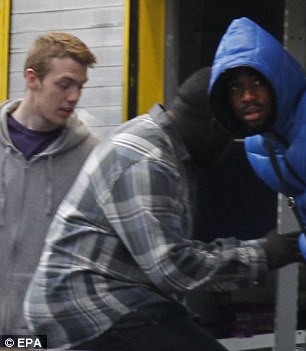
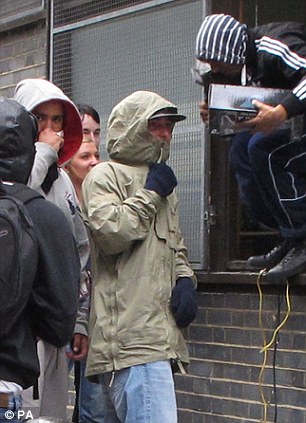
The more canny looters wore face masks to hide their true identities. The authorities have now donned an iron mask in a desperate bid to conceal the confusion, fear and moral cowardice in high places that was exposed at the time. Everybody is up in arms about the way that rioters allegedly exploited BBM (Blackberry Messenger) and other social media to promote their illegitimate ‘cause’. The government meanwhile has been busy exploiting the weakness of the MSM (Mainstream Media) to get the dubious message of their ‘fightback’ across to their target audience.

Those braggartly idiots who posed for grinning Facebook photos with their hoard of stolen loot have naturally attracted ridicule and contempt. There has been little or no criticism of the way that the authorities have contrived swaggering media coverage of small armies of riot cops raiding suspected looters’ homes, supposedly to show that they are in control and did not really panic when faced with a few hundred barely organised looters and arsonists.

Mick Hume, “Theatrical ‘fightback’ turns to farce”, Spiked, 2011-08-15

August 12, 2011

“The riots have confirmed … the gaping chasm between Britain’s elites and its white working-class natives.”

Filed under: Britain, Law, Media, Politics — Tags: , , , — Nicholas @ 12:30

The problem, according to the governing class, is not the rioters — it’s the people who want to stop the rioters:

And so it has been this week, which kicked off with reckless rioting by multi-ethnic yoof in inner-city patches, yet which ended, bizarrely but at the same time predictably, with an orgy of elite handwringing about those non-rioting white working classes who haunt London’s suburbs. That some of ‘these people’ dared to patrol their streets, to set up miniature citizen armies to see off the chancers and tricksters of the looting lobby, has been treated as the No.1 threat now facing Britain. They are a ‘white mob’, we are told, who could precipitate a ‘race war’. According to the deputy mayor of London, Kit Malthouse, their community-protection antics are ‘deeply undesirable’. Come on Kit, you can say it: you think these people are ‘undesirables’.

This riotous week has confirmed that the great and the good of Great Britain don’t have much in the way of a shared morality anymore. At the start of the week, the political class, cops and Fourth Estate all proffered various explanations for the youthful violence, often pointing the finger of blame at each other in a moral stand-off not dissimilar to the final scene in Reservoir Dogs. Yet by Friday they were tentatively re-linking arms around the one thing they agree on: that there is nothing scarier — nothing — than the sight of 100+ white blokes on the streets, shouting things in those gruff voices they have. You may have looked at the groups of men in Enfield and Eltham and seen working people keen to protect their homes and shops, but the upper echelons of society, through their snob-goggles, saw the emergence of an English version of the Third Reich — they saw ‘race hate’ and ‘fascists patrolling the streets’.

[. . .]

Note to the cultural elite: Just because someone is white and possibly a labourer and not currently glued to the American remake of The Killing, that doesn’t mean he is a fascist. The police’s PR assault on the ‘vigilantes’ in Enfield and Eltham, suburbs with large white working-class communities, shows that what the cops lack in riot-tackling skills they more than make up for with shamelessness. This is a force so paralysed by risk-aversion, so witlessly scared of provoking controversy, that this week it effectively stood back and allowed young people to loot shops, burn cars and destroy homes. It seems that in the morally inverted world of the modern police, such destruction is a price worth paying if it means their own officers don’t get a graze or PTSD. Upon what moral authority is the Met now telling working people not to patrol their communities? Cops bussed into a suburb might consider it acceptable to allow youth to smash things up in the hope that they’ll eventually tire, but for the people who live in those suburbs, who have a moral, emotional and economic attachment to them, that really isn’t an option. It takes brazenness to a brand new level for a state which failed to police the streets to libel those citizens who decided to do it for themselves.

August 11, 2011

You have to wonder why it took them this long

Filed under: Law, Media, Technology — Tags: , , , , — Nicholas @ 12:20

The New York City police department announced that it’s setting up a group to monitor Facebook, Twitter, and other social media in order to detect criminals who are stupid enough to boast about their crimes online:

According to The New York Daily News, freshly-appointed assistant commissioner Kevin O’Connor — styled as the NYPD’s “online and gang guru” — will head the new unit, which will trawl Web 2.0 for information on “troublesome house parties, gang showdowns, and other potential mayhem”.

The idea is to pinpoint net-savvy un-savvy juveniles who divulge their criminal plans on the web or boast about crimes already committed. You might think of them as Idiots 2.0.

In his former post with a north Manhattan gang unit, O’Connor apparently tapped the net for vital information on “a number” of shooting cases. In March, the Daily News says, the NYPD nabbed an eighteen-year-old who was part of a fatal beating after he boasted about the killing on Facebook.

August 10, 2011

Contrasting the London police response now to the 1980s

Filed under: Britain, Government, Law — Tags: , , — Nicholas @ 09:45

Back in the bad old days, Mick Hume was active with the Revolutionary Communist Party. He contrasts the muscular (and, to be frank, horrifyingly racist and inhumane) police response to rioting in the Broadwater Farm riots of 1985 with the diffident, hyper-restrained actions of the London police this week:

Back then the police acted as the frontline of a state at war with sections of its own population, determined to hold the line at all costs in an all-out battle for control. By contrast, this week the police have more often looked as if they don’t even know where the line might be and are fearful of crossing it. They have allowed people to run riot. Even when they confronted looters, the abiding images were of officers waving their sticks around in the air like boys trying to appear tough without risking a real confrontation. As the man said, they looked ‘impotent’.

[. . .]

Recent events look less like an Eighties-style ‘uprising’ from below than a collapse of authority from the top down. The authorities have left a power vacuum that invited anybody with a brick or a shopping trolley to come and have a go. On Saturday police left people free to loot shopping centres in north London, supposedly while the Force focused on dealing with the riot in Tottenham. Yet as residents pointed out, they did nothing to stop the burning down of shops and flats there, either. Over the days that followed there were many complaints from angry shopkeepers of the Met standing back while their premises were robbed and fired.

So what did the police think they were doing while this was going on? One Met commander gave a revealing interview to Sky News, explaining that the policing of communities had changed a lot since the riots of 25 or 30 years ago. This time, he said, ‘we’re standing next to these people watching them cry because their businesses have been destroyed. We’re going to work with the partners in that local community to make sure we help them rebuild Tottenham. That’s what policing is all about.’ Call me old-fashioned, but that sounds more like a professional therapist or town planner than a police chief faced with civil disorder.

“It is effectively an invitation to riot”

Filed under: Britain, Government — Tags: , , — Nicholas @ 09:33

Brendan O’Neill is disgusted with the official response to the rioters in London:

For a Londoner like me, the saddest sight of the past four days has been the extraordinary levels of central institutional capitulation to the rioters. The police have been deployed to vast swathes of London at around lunchtime every day, where they have advised shops, restaurants, pubs and cinemas to shut up, board up, hide their valuables, and send home their staff, ‘out of harm’s way’. From Harrow in the extreme north of London, best known for its posh school, to Camberwell in the south, police have effectively been calling on what they view as decent society to retreat, to go into hiding, to insulate themselves and their property from any possible interaction with The Thugs. Their thinking seems to be that if we close down normal life, if we evacuate the streets of shoppers and socialisers, then maybe the rioters will look around, scratch their heads, give up, and go home. Of course, it has had exactly the opposite effect.

Because when you shut down normalcy in response to a bit of recreational rioting, you actually give the rioters an extraordinary feeling of power over society. You endow their relatively small-scale and completely pointless violence with disproportionate strength and influence. You effectively say to them: ‘By burning bus-stops and smashing Santanders in Hackney, you can bring all of London to a standstill!’ And when it comes to youth who seem pretty determined to display a bit of swagger and cock-of-the-walk violence, that is like waving a red rag to a bull. It is effectively an invitation to riot. By publicly advertising its fears and weaknesses, by demonstrating its abjectness and its willingness to retreat in the face of small numbers of misguided youth, society actually empowers anti-social elements and inflames their desire to have a pop. You don’t have to be a rocket scientist to know that if you skulk away from your post, then others will feel tempted to tiptoe towards it.

Indeed, it seems largely to have been this institutional cowardice, this political wretchedness, the bizarre police-and-mayoral strategy of shutting down London in response to historically quite minor disturbances, which sustained the rioting over four days and nights and allowed it to spread around the country. Certainly the rioting is not being sustained by its pursuit of a political agenda (it has none) or by public backing (it has none. And no, sympathetic columns in the Guardian written by people who live nowhere near Hackney or Salford do not count as public backing.) Rather, it was the initially startled, hands-off attitude taken by the police, followed by the strategy of capitulation, which, in the words of one academic observer, probably filled the youths with an ‘adrenalin-fuelled euphoria’. The real story of these riots, if we look at them coolly, is not so much the fury of those on the outskirts of society, but rather the cowardice of those who are supposed to guard and uphold the centre of society. The riots are a product of the interplay between this institutional incoherence and the self-pitying politics of victimhood amongst the welfare state-raised kids ‘out there’.

August 9, 2011

We have a saying in Britain … we call it ‘shitting on your own doorstep’

Filed under: Britain, Government, Law — Tags: , , , , — Nicholas @ 12:11

Brendan O’Neill refutes some of the theories on what underlying causes are motivating the London riots:

Many commentators are on a mission to contextualise the riots that have swept parts of urban London and other British cities. ‘It’s very naive to look at these riots without the context’, says one journalist, who says the reason the violence kicked off in the London suburb of Tottenham is because ‘that area is getting 75% cuts [in public services]’. Others have said that the political context for the rioting is youth unemployment or working-class anger at David Cameron’s cuts agenda. ‘There is a context to London’s riots that can’t be ignored’, said a writer for the Guardian, and it is the ‘backdrop of brutal cuts and enforced austerity measures’. The ‘mass unrest’ is a protest against unhinged capitalism, apparently.

These observers are right that there is a political context to the riots. They are right to argue that while the police shooting of young black man Mark Duggan may ostensibly have been the trigger for the street violence, there is a broader context to the disturbances. But they are wrong about what the political context is. Painting these riots as some kind of action replay of historic political streetfights against capitalist bosses or racist cops might allow armchair radicals to get their intellectual rocks off, as they lift their noses from dusty tomes about the Levellers or the Suffragettes and fantasise that a political upheaval of equal worth is now occurring outside their windows. But such shameless projection misses what is new and peculiar and deeply worrying about these riots. The political context is not the cuts agenda or racist policing — it is the welfare state, which, it is now clear, has nurtured a new generation that has absolutely no sense of community spirit or social solidarity.

What we have on the streets of London and elsewhere are welfare-state mobs. The youth who are ‘rising up’ — actually they are simply shattering their own communities — represent a generation that has been more suckled by the state than any generation before it. They live in those urban territories where the sharp-elbowed intrusion of the welfare state over the past 30 years has pushed aside older ideals of self-reliance and community spirit. The march of the welfare state into every aspect of less well-off urban people’s existences, from their financial wellbeing to their childrearing habits and even into their emotional lives, with the rise of therapeutic welfarism designed to ensure that the poor remain ‘mentally fit’, has helped to undermine such things as individual resourcefulness and social bonding. The anti-social youthful rioters look to me like the end product of such an anti-social system of state intervention.

To every action, there’s a reaction

Filed under: Britain, Law, Media — Tags: , , , , — Nicholas @ 09:34

The rioters in Toronto and Vancouver were frequently caught on camera, and the photos were posted on the various photoblogging sites. Many people were identified this way, and some of them were charged as a result. Londoners are responding in the same way, with sites like http://catchalooter.tumblr.com/ where photos are being posted from the last few nights’ mayhem.


Every action does have a reaction, though, as rioters and even “innocent bystanders” are becoming more likely to attack anyone with a camera. This means a much greater risk for would-be citizen journalists (and professional journalists), as the police generally try to surround and contain mobs (when they don’t just evacuate altogether, of course). If someone in the mob decides that you’re “the enemy”, you won’t have much support — don’t risk your life just to get a “good shot”.

Update: Speaking of police unwillingness to protect civilians, there’s this account:

Cypran Asota, who has run the Boots opticians for 25 years, told the London Evening Standard how he watched as the shop was destroyed.

He said police stood by yards away, adding: ‘White boys ripped off the shutters, then a group of around eight or nine children went in and stole the day’s takings.

‘I ran back over the road to plead with them, this is my livelihood and I have to protect it, but they kept coming back in. They must have got away with £15,000 worth of frames. My insurance doesn’t cover acts of terrorism.

‘All the time the police were about 15 yards away, just watching. They didn’t do anything to stop it. They looked more scared of those kids than I was.’

Shopkeeper Shiva Kadih, 39, told the Standard he had ‘nothing left’ as witnesses said they prevented an attempt to burn down the shop as police watched nearby.

“Mobs rule as police surrender streets”

Filed under: Britain, Law — Tags: , , — Nicholas @ 09:21

The rioting in London has gotten worse, and more widespread. The media are having trouble coming up with ways to explain why it’s happening, with the most common being pent-up anger at the police:

The politicians are lucky, though, for the greater share of anger is being directed at the Metropolitan Police. The accusation, also voiced after the riots (ostensibly against public spending cuts) that took place in central London in the spring, is that the Met’s approach to civil disorder amounts to standing by for fear of provoking even more vicious rioting, with a view to catching culprits afterwards through the use of CCTV footage. The front-page headline in today’s Times, “Mobs rule as police surrender streets”, captures the mood, though the Met, alternately accused of brutality and laxity in recent years, are in an invidious position.

[. . .]

Second, policing will become a much hotter topic of political discourse. It is curious that it is not already. The theology of academic selection and university funding obsesses the political and media classes but the polling evidence is clear: crime is a bigger worry for voters than education. So expect much tardy reflection among politicians about the police. They will grapple, in particular, with the question of whether successive, well-intentioned efforts to check and soften the Met (such as the Scarman report in the 1980s, the McPherson report in the 1990s, the rebranding of the force as a “service”, the proliferation of “community support officers” and the like) have resulted in an unduly tentative approach to policing the streets. Whatever the answer, the debate will no longer take place at the margins of politics.

I’m sure it’s not the only reason, but if the way opinions about the police soured after the bungled response to the G20 protests in Toronto are a guide, it’s going to be an awful August for the Metropolitan Police. Being a cop on the street can be a tough job, but if you lose the support of the people, you’re more like a soldier in an occupied zone than an ordinary police officer. Toronto’s police lost a lot of respect — and a lot of quiet support — for their schizophrenic actions during the G20. London’s police may lose more than that.

Update: When I wrote that the rioting had become more widespread, I wasn’t exaggerating:

July 19, 2011

Murdochphobia

Filed under: Britain, Media, Politics — Tags: , , — Nicholas @ 10:06

Brendan O’Neill says that the current Murdoch-bashing spree appears to be the only game in town for politicians and journalists right now:

Judging from recent comments made by politicians and journalists, you could be forgiven for thinking that Britain had liberated itself from foreign occupation. ‘Like political prisoners after a tyrant has been condemned to death by a people’s tribunal, [our politicians] are at last free’, gushed one commentator. A Lib Dem spokesman described MPs emerging ‘into the sunlight like the freed prisoners in Beethoven’s opera, Fidelio’. Labour leader Ed Miliband says the whole ‘psyche of British politics has changed’.

Wow. Was a secret Nazi cabal exposed and expelled? Did a brave Mili-band of brothers see off an invading army at Dover? Not quite. What happened is that some journalists and the Twittertariat had a pop at Rupert Murdoch. And, under intense pressure, Murdoch closed his Sunday tabloid, the News of the World, and sacked some people. That’s about it. The ‘people’s tribunal’ is actually the Guardian editorial board, and the ‘political tyrant’ who was ‘condemned to death’ is an octogenarian Aussie who was forced to give up his BSkyB bid. Britain freed from tyranny? Sticking with the wartime rhetoric: never in the history of mankind has so much BS been spouted by so many journos.

The notion that the cultural harrying of Murdoch has made British politicians ‘free at last’ — thank God almighty, free at last! — is based on two problematic ideas. First, that British politics was, until last week, dominated by Murdoch. And second, that the muddying of Murdoch’s name will allow our politicians finally to speak honestly and with conviction once more. Neither of these things is true. The fact that so many commentators believe they are reveals a great deal about the parlous state of public debate.

July 13, 2011

A bit more on the Caledonia settlement

Filed under: Cancon, Government, Law, Media — Tags: , , , , , — Nicholas @ 11:58

The National Post looks at the shameful way the Ontario government has acted through the confrontation in Caledonia:

This week’s settlement of a class-action lawsuit fits right in with the government’s modus operandi. Four years after the suit was filed, Mr. McGuinty’s Liberals will pay a group of residents and business owners $20-million in recompense for the disruption that was caused when the Ontario Provincial Police elected to ignore the rampant violence and lawbreaking that accompanied the aboriginals’ illegal seizure of land. The money will be divided among about 800 claimants, according to a formula related to their proximity to the occupied territory and exposure to acts of violence. As usual, the province has done its best to gag any complaints by insisting that details of the agreement remain confidential.

The class-action suit specified four instances at the height of the dispute in which roads were closed, court injunctions were violated and a hydro-electric transformer was burned. But those were just a sampling of the many episodes in which police, acting under clear instruction, blatantly ignored the aboriginals’ contempt for the law. Families were terrorized, threatened, driven from their homes or forced to show aboriginal “passports” to gain access to their own neighbourhoods. It was like a scene from some balkanized tin-pot regime, in other words — local residents might be inclined to call it the Banana Republic of Ontario.

Donna Reid, a Caledonia resident who has been among the most critical of the government, dismissed the settlement as “hush money” by a Liberal administration that is facing re-election and wants the issue to go away. The amount received by most residents will do little to offset five years worth of disruption that has embittered relations and turned part of the town into a no-go area.

July 12, 2011

Settling the Caledonia issue . . . in time for the provincial election

Filed under: Cancon, Government, Liberty, Politics — Tags: , , , — Nicholas @ 13:12

Christie Blatchford finds the timing of the settlement to be “arguably suspicious”:

The last page of the Caledonia class action settlement is the one that tells the shameful truth of what happened five years ago in that lovely small southwestern Ontario town.

The settlement was the result of a lawsuit against the government and the Ontario Provincial Police filed by 440 residents, 400 businesses and a handful of sub-contractors affected by the native occupation there five years ago.

The deal has been repeatedly portrayed purely as a “compensation” package since it was formally announced by the Ontario government last Friday.

The government’s brief press release used carefully neutral language: The settlement is called an “agreement” which “provides compensation” for those who suffered “direct losses” during the course of “the protest.”

It is, in a word, bunk.

July 7, 2011

The Innocent Bystander’s Survival Guide

Filed under: Humour, Media, Randomness — Tags: , , , , — Nicholas @ 09:05

You know that it’s bound to happen, especially if you’re a comic nerd or rabid anime fan. Be prepared to survive:

9. If an acquaintance of yours seems to disappear everytime the Hero puts in an appearance, rub some of those brain cells together and see what comes up.

[. . .]

11. If you are a news reporter, find a happy medium between the people’s right to know and your right to not get kidnapped/held hostage/etc.

12. Likewise, if you are a policeman, bank guard, or night watchman, and your first shot bounces off of the intruder’s chest, try shooting other areas of the intruder’s body, like their face, groin, etc. If this also fails, do not waste the rest of your ammo on him/her/it, or risk your neck in hand-to-hand combat; instead, fall back and observe.

[. . .]

21. If a Superhero takes up residence in your city, a nice spacious estate in the country will help you to actualize your potential lifespan.

22. If you are a security guard for a vast, powerful corporation, try to get assigned to the Marketing or Personnel departments, rather than R&D.

[. . .]

49. No matter how hooked you are on phonics, don’t try to pronounce things you find inscribed in ancient artifacts.

H/T to Nicholas Rosen for the link.

« Newer PostsOlder Posts »

Powered by WordPress