Epimetheus
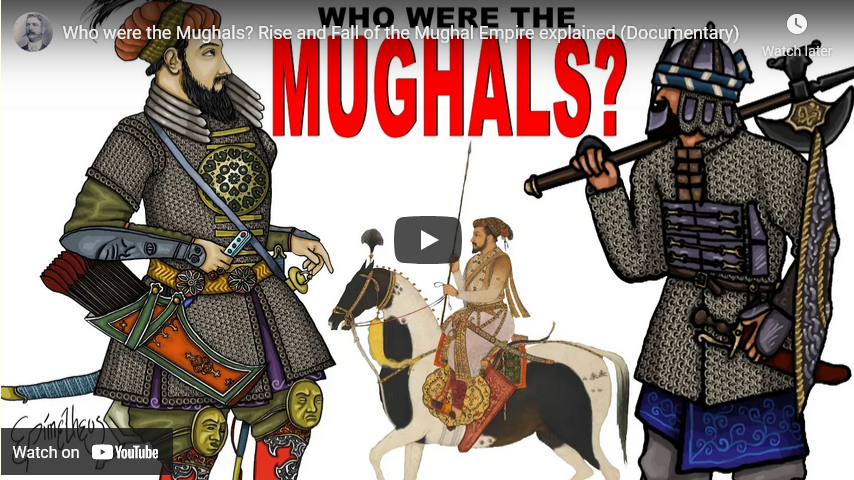
Published 20 Oct 2019Who were the Mughals? Rise and Fall of the Mughal Empire explained (Documentary)
The Mughal empire’s history from Babur to the fall in 1857.
This video and others like it are sponsored by my Patrons over on patreon.
https://www.patreon.com/Epimetheus1776
July 3, 2021
Who were the Mughals? Rise and Fall of the Mughal Empire explained
June 4, 2021
The Peloponnesian War
Epimetheus
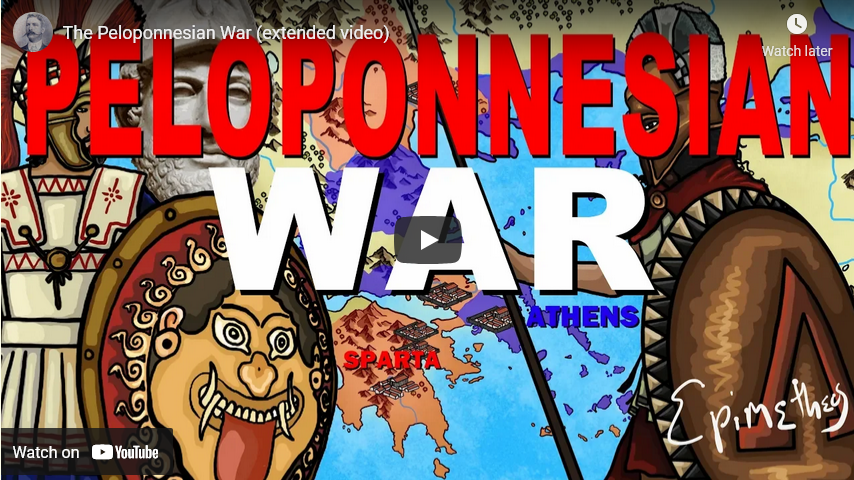
Published 21 Oct 2018The Peloponnesian War (extended Video)
Support new videos from Epimetheus on Patreon! 😀
https://www.patreon.com/Epimetheus1776
From the comments:
Epimetheus
2 years ago (edited)
On Spartan society I left out the council of five ephors who were elected annually and shared power with the two kings. This video is a little less edited and recorded partially earlier this year and this evening — sorry if the audio sounds a little all over the place — but I thought some of you may enjoy a finished video rather than one that does not get released — let me know what you think of this longer less polished style of video in contrast to the shorter version of this videoI have increasingly committed to using most of my time on this channel writing researching editing drawing and narrating these videos by myself, I love doing it and would not like to go back to working full time in a cubicle (doing boring stuff) if you want to help me out with upgrading my software and equipment (I use a slow old computer and a tablet) you can do so on Patreon https://www.patreon.com/Epimetheus1776
Even if it is just a single dollar I greatly appreciate you taking the time and your generosity
June 1, 2021
Rise and Fall of the Sikh Empire explained in less than 7 minutes
Epimetheus
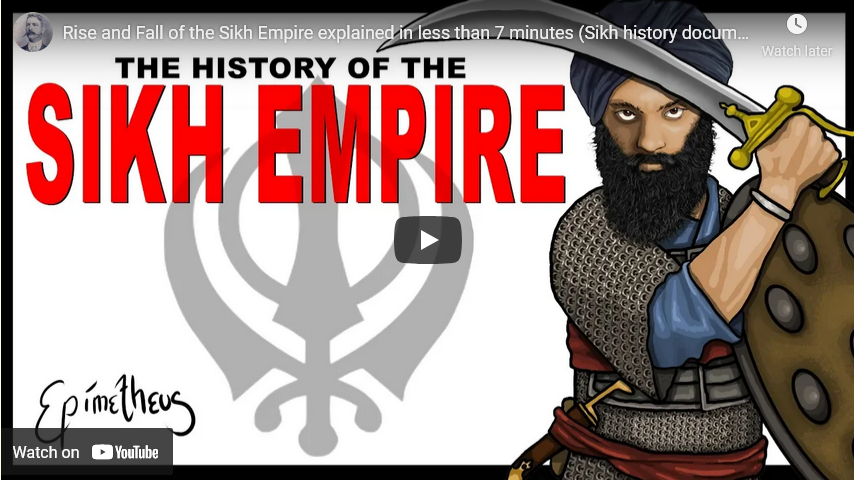
Published 8 Oct 2019Rise and Fall of the Sikh Empire explained in less than 7 minutes Sikh history documentary
This video covers Sikh history from the Guru Nanak till the fall of the Sikh Empire.
This video and others like it are sponsored by my Patrons over on patreon.
https://www.patreon.com/Epimetheus1776
May 26, 2021
The not-so-hidden subtext of One Thousand And One Nights
At least, that’s how Scott Alexander at Astral Codex Ten opens this review of (an abridged version) of One Thousand And One Nights:

One of many different covers of various editions of this book, but almost certainly not the edition reviewed here.
One Thousand And One Nights is a book about love, wonder, magic, and morality. About genies, ape-people, and rhinoceroses who run around with elephants impaled on their horns. About how to use indexical uncertainty to hack the simulation running the universe to return the outcome you want. But most of all, it’s a book about how your wife is cheating on you with a black man.
Nights stretches from Morocco to China, across at least four centuries — and throughout that whole panoply of times and places, your wife is always cheating on you with a black man (if you’re black, don’t worry; she is cheating on you with a different black man). It’s a weird constant. Maybe it’s the author’s fetish. I realize that Nights includes folktales written over centuries by dozens of different people — from legends passed along in caravanserais, to stories getting collected and written down, to manuscripts brought to Europe, to Richard Burton writing the classic English translation, to the abridged and updated version of Burton I read. But somewhere in that process, probably multiple places, someone had a fetish about their wife cheating on them with a black man, and boy did they insert it into the story.
Our tale begins in Samarkand. One day the king, Shah Zaman, comes home unexpectedly and sees his wife cheating on him with a black man. He kills her in a rage, then falls sick with grief, and is taken to the palace of his brother, King Shahryar of Persia. While there, he sees King Shahryar’s wife cheat on him with a black man. He tells King Shahryar, who kills his wife in a rage too, then also falls sick with grief. The two grief-stricken kings decide to wander the world, expecting that maybe this will help in some way.
They come across a mighty king of the genies, and the brothers hide lest he see them and kill them. The genie falls asleep, and the genie’s wife finds them and demands they have sex with her or she’ll kill them. They have sex, and all the while, the genie’s wife is boasting about how even the king of the genies can’t prevent his wife from cheating. The two kings find this experience salutary — apparently the problem isn’t specific to them, it’s just an issue with the female sex in general. So they go back to the palace and everyone lives happily ever … no, actually, King Shahryar vows that he will bed a new woman every night, then kill her the following morning, thus ensuring nobody can ever cheat on him again.
So for however many years, King Shahryar beds a new woman every night, then kills her in the morning. After a while the kingdom begins to run dangerously low on women. The vizier frets over this, and his daughter Scheherazade hears him fretting. She develops a plan, and volunteers to be the king’s victim that night. After having sex, she tells the king a story. At the end, she says it’s too bad she’s going to die the next morning, because she knows other stories which are even better. Perhaps if the king spared her life for one night she could tell some of those too.
(I’d always heard that she leaves him at a cliff-hanger and makes him spare her to find out how it ends, which I think makes a better story, but this isn’t how the real Arabian Nights works).
Scheherazade’s stories are set in an idealized Middle East. The sultans are always wise and just, the princes are always strong and handsome, and almost a full half of viziers are non-evil. Named characters are always so beautiful and skilled and virtuous that it sometimes gets used it as a plot device — a character is separated from his family member or lover, so he wanders into a caravanserai and asks for news of someone who is excessively beautiful and skilled and virtuous. “Oh yes,” says one of the merchants, “I talked to a traveler from Cairo who said he encountered the most beautiful and skilled and virtuous person he’d ever seen in a garden there, he couldn’t shut up about them for days” — and now you know your long-lost brother must be in Cairo. In one case, a woman went searching for her long-lost son, tasted some pomegranate jam in Damascus, and immediately (and correctly!) concluded that only her son could make pomegranate jam that good. She demanded to know where the merchant had gotten the jam, and the trail led to a happy reunion.
The most common jobs in Idealized Middle East are sultan, merchant, poor-but-pious tailor, fisherman, merchant, evil vizier, sorcerer, merchant, thief, person who gets hired to assist a sorcerer because they have the exact right astrological chart to perform some otherwise-impossible ritual, and merchant. Of these, merchant is number one. Whatever else you’re doing — sailing, stealing, using your perfect astrological chart to enter a giant glowing door in the desert mysteriously invisible to everyone else — you’re probably also dealing goods on the side. The only exceptions are Moroccans (who are all sorcerers), Zoroastrians (who are all demonic cannibals), and Jews (who are all super-double merchants scamming everyone else). Also maybe the 5 – 10% of the Middle Eastern population who witches have turned into animals at any given time.
May 25, 2021
536 AD – Worst Year in History
Kings and Generals
Published 11 May 2021Start speaking a new language in 3 weeks with Babbel 🎉 Get 6 months FREE when you sign up for 6 months! ➡️ HERE: https://go.babbel.com/6plus6-youtube-…
Kings and Generals’ historical animated documentary series on the history of Ancient Civilizations continues with a video on the year 536 AD, which many historians consider the worst year in history, as plague, famine, volcanic eruption, and extreme weather patterns changed the fate of the millions, especially influencing Sassanid and Eastern Roman Empires.
Support us on Patreon: http://www.patreon.com/KingsandGenerals or Paypal: http://paypal.me/kingsandgenerals We are grateful to our patrons and sponsors, who made this video possible: https://docs.google.com/document/d/1o…
Art and animation: Haley Castel Branco
Narration: Officially Devin (https://www.youtube.com/user/OfficiallyDevin)
Script: Matt Hollis✔ Merch store ► teespring.com/stores/kingsandgenerals
✔ Podcast ► Google Play: http://bit.ly/2QDF7y0 iTunes: https://apple.co/2QTuMNG
✔ Twitter ► https://twitter.com/KingsGenerals
✔ Instagram ► http://www.instagram.com/Kings_GeneralsProduction Music courtesy of EpidemicSound
#Documentary #WorstYearInHistory #536
May 1, 2021
Rulers Who Were Actually Good — History Hijinks
Overly Sarcastic Productions
Published 30 Apr 2021History is full of Rulers, but most of them (especially some famous ones) can be Kind Of Terrible upon closer inspection. So let’s take a look at two kings we can actually consider to be Good — not perfect, not blameless, but a heck of a lot more virtuous than the average ruler, that’s for sure.
This topic was requested by our patron Duncan! Thank you for your patronage, and for the topic suggestion.
SOURCES & Further Reading: The Great Courses Plus lectures “Being Persian” by Robert Garland, “The Persian Era” by Jean-Pierre Isbouts, “Saladin: Chivalry and Conquest – 1187” by Eamonn Gearon, and “Saladin and the Defeat of the Crusaders” by Dorsey Armstrong.
Our content is intended for teenage audiences and up.
TRACKLIST: “Monkeys Spinning Monkeys,” “Pippin the Hunchback” Kevin MacLeod (incompetech.com)
Licensed under Creative Commons: By Attribution 4.0 License
https://creativecommons.org/licenses/…PATREON: https://www.Patreon.com/OSP
PODCAST: https://overlysarcasticpodcast.transi…
DISCORD: https://discord.gg/osp
MERCH LINKS: http://rdbl.co/ospOUR WEBSITE: https://www.OverlySarcasticProductions.com
Find us on Twitter https://www.Twitter.com/OSPYouTube
Find us on Reddit https://www.Reddit.com/r/OSP/
March 2, 2021
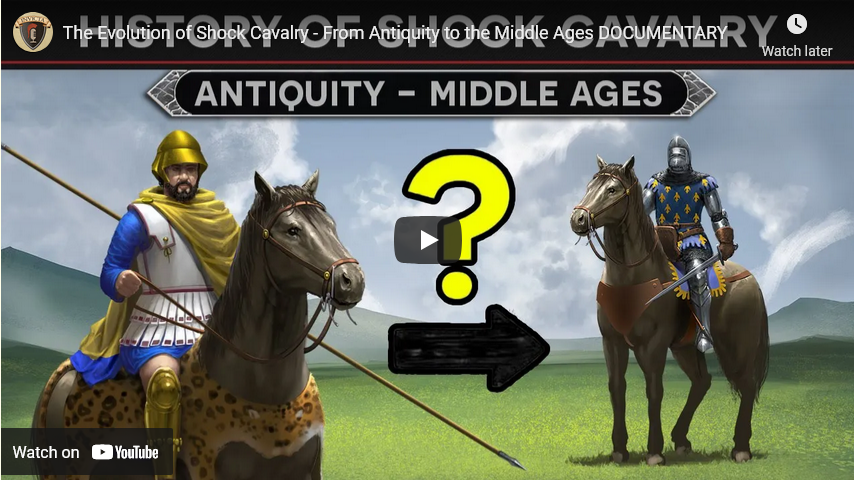
The Evolution of Shock Cavalry – From Antiquity to the Middle Ages
Invicta
Published 1 Mar 2021Learn about the evolution of shock cavalry from antiquity before the use of saddles and stirrups! Check out The Great Courses Plus to learn about shock cavalry in the campaigns of Alexander the Great: http://ow.ly/osex30rvhjf
In this history documentary we explore the topic of ancient cavalry. The basic idea is that these units often get depicted in media as performing glorious massed charges headlong into the enemy ranks as seen in such scenes as the Charge of the Rohirrim from the Battle of Pelenor Fields. In reality this would have been a very dangerous situation for cavalrymen even under the best circumstances. But to make matters worse, riders from antiquity fought without the use of either saddles or stirrups. So how on earth did they manage to dominate the battlefield with these handicaps. Let’s find out.
We begin by covering the history of cavalry with the first domestication of the horse and its introduction to warfare first as member of the baggage train and soon after as a part of chariot crews rather than as actual mounted forces. This was in large part due to the lack of riding experience and technology on behalf of the rider. Soon after the Bronze Age Collapse however cavalry began to rise to prominence across the armies of the Mediterranean. We speak about the various forms of equine practices which ranged from riding bareback into combat as with the Numidian Cavalry to the use of simple bridles and cloth seats as with Greek Cavalry and Persian Cavalry.
We then cover the techniques used by these cavalrymen to mount, ride, and fight. As a part of this discussion, we rely heavily on Xenophon’s Manual on Horsemanship which provides excellent first hand details from the period. We also show how these techniques were successfully used by shock cavalry of antiquity such as the Macedonian Companion Cavalry, the Saka Steppe Lancers, and the Persian Cataphracts to great effect even without the use of saddles and stirrups.
Finally we do pose the question of why they didn’t use the saddle and stirrup given its seemingly obvious advantages. To answer this question we look at the history of its development from late antiquity to the early Middle Ages.
Bibliography and Suggested Reading
On Horsemanship, by Xenophon
Adrian Goldsworthy, The Complete Roman Army
Adrian Goldsworthy, Roman Warfare
J.C. Coulston, Cavalry Equipment of the Roman Army in the First Century A.D.
George T. Dennis, Maurice’s Strategikon, p. 38.
Julius Caesar, Commentarii de Bello Civili
Russel H. Beaty, Saddles#History
#Documentary
#ShockCavalry
From the comments:
Invicta
13 hours ago
I was inspired by comments on our latest Units of History episode covering the Companion Cavalry which asked about how shock tactics worked in an age before the stirrup and saddle. I went down the rabbit hole finding answers and present to you my findings in this video! One awesome source we used was the Manual on Horsemanship by Xenophon which you can read for yourself here: http://www.gutenberg.org/files/1176/1176-h/1176-h.htm
February 13, 2021
MORE cultural appropriation foods!
J.J. McCullough
Published 14 Nov 2020How much famous food is just copied from some other country? Thanks to Jack Rackham for the shogun animation!
https://www.youtube.com/channel/UCaQz…FOLLOW ME:
🇨🇦Support me on Patreon! https://www.patreon.com/jjmccullough
🤖Join my Discord! https://discord.gg/3X64ww7
🇺🇸Follow me on Instagram! https://www.instagram.com/jjmccullough/
🇨🇦Read my latest Washington Post columns: https://www.washingtonpost.com/people…
🇨🇦Visit my Canada Website http://thecanadaguide.comHASHTAGS: #food #cooking #history
February 9, 2021
History Summarized: Alexander the Great
Overly Sarcastic Productions
Published 19 Sep 2017Linguistically speaking, Alexander means “Defender of Men” from the Greek “alexo“, defend, and “aner/ander“, man. I’ll never be able to not internally think of his name as just meaning “Alex-Man”.
Oh, yeah, also he conquered an empire or something? IDK. I stopped paying attention after his bland name.
PATREON: www.patreon.com/OSP
MERCH LINKS:
Shirts – https://overlysarcasticproducts.threa…
All the other stuff – http://www.cafepress.com/OverlySarcas…Find us on Twitter @OSPYouTube!
January 27, 2021
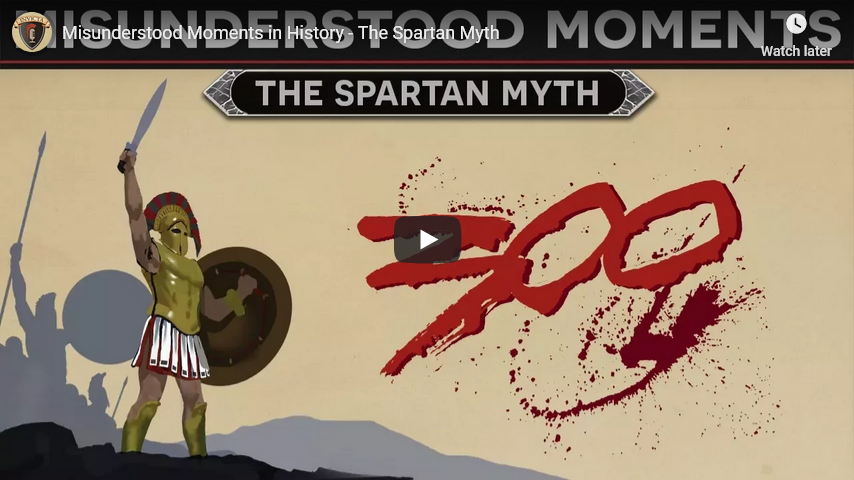
Misunderstood Moments in History – The Spartan Myth
Invicta
Published 27 Oct 2017Start your 30 day free trial here: http://ow.ly/eCd230fiZ7Q
The Spartans are immortalized in history as super soldiers bred for war. However most of what we think we know about them is a lie. Today we will unmask the truth behind the Spartan Myth.
The Great Courses Plus is currently available to watch through a web browser to almost anyone in the world and optimized for the US market. The Great Courses Plus is currently working to both optimize the product globally and accept credit card payments globally.
Documentary Credits:
Research: Dr Roel Konijnendijk
Script: Invicta
Artwork: Milek J
Editing: Invicta
Music: Total War OST, SoundnoteDocumentary Bibliography:
Paul Anthony Cartledge, The Spartans: The World of the Warrior-heroes of Ancient Greece
Nigel Kennell, Spartans: A New History (2010)
S. Hodkinson, Property and Wealth in Classical Sparta (2000)
J. Ducat, Spartan Education: Youth and Society in the Classical Period (2006)
S.M. Rusch, Sparta at War: Strategy, Tactics and Campaigns, 550-362 BC (2011)
E. Rawson, The Spartan Tradition in European Thought (1969)
S. Hodkinson & I.M. Morris (eds.), Sparta in Modern Thought (2012)
December 13, 2020
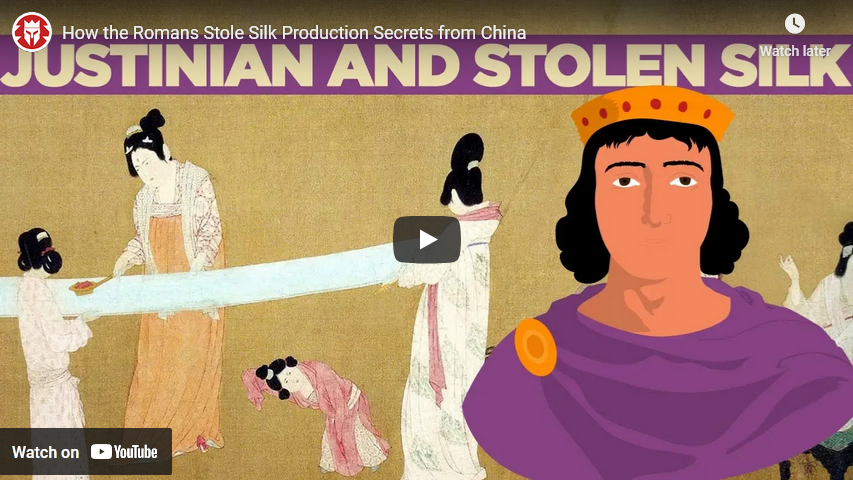
How the Romans Stole Silk Production Secrets from China
Kings and Generals
Published 31 Jan 2019Go to https://www.wix.com/KingsAndGenerals to get started on your website today!
Check out our new website at http://kingsandgenerals.orgSilk production was one of the biggest secrets of China and one of the most lucrative industries of the age. So it is not a surprise that the Roman emperor Justinian was eager to learn this secret. In this video we will discuss the start of the silk production, its importance and the story of how Justinian managed one of the first industrial thefts in history
Support us on Patreon: http://www.patreon.com/KingsandGenerals or Paypal: http://paypal.me/kingsandgenerals
Check out our Merch Store: teespring.com/stores/kingsandgenerals
We are grateful to our patrons and youtube members, who made this video possible: https://drive.google.com/open?id=1Xa-…
The video was made by our friend Cogito
This video was narrated by Officially Devin (https://www.youtube.com/user/Official…)
✔ Merch store ► teespring.com/stores/kingsandgenerals
✔ Podcast ► Google Play: http://bit.ly/2QDF7y0 iTunes: https://apple.co/2QTuMNG
✔ Twitter ► https://twitter.com/KingsGenerals
✔ Instagram ► http://www.instagram.com/Kings_GeneralsProduction Music courtesy of Epidemic Sound: http://www.epidemicsound.com
#Documentary #Justinian #Silk
November 27, 2020
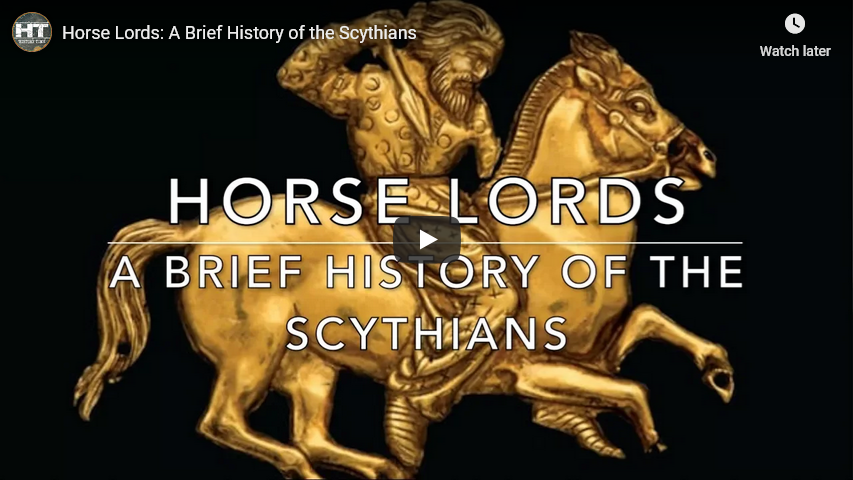
Horse Lords: A Brief History of the Scythians
History Time
Published 30 Jan 2018This video is about the Scythians. One of the first horse cultures on Earth.
Are you a budding artist, illustrator, cartographer, or music producer? Send me a message! No matter how professional you are or even if you’re just starting out, I can always use new music and images in my videos. Get in touch! I’d love to hear from you.
If you liked this video and have a spare dollar you can help support the channel here:-
http://www.patreon.com/historytimeUKI’ve compiled a reading list of my favourite history books via the Amazon influencer program. If you do choose to purchase any of these incredible sources of information then Amazon will send me a tiny fraction of the earnings (as long as you do it through the link) (this means more and better content in the future) I’ll keep adding to and updating the list as time goes on:-
https://www.amazon.com/shop/historytimeMusic used:-
Ross Bugden – “Parallel”, “Last Dawn”, “Titans”, “Olympus”I try to use copyright free images at all times. However if I have used any of your artwork or maps then please don’t hesitate to contact me and I’ll be more than happy to give the appropriate credit.
—Join the History Time community on social media:-
Instagram:-
https://www.instagram.com/historytime…
Twitter:-
https://twitter.com/HistoryTimeUK
August 17, 2020
Alcibiades, the Peloponnesian War, and the Art of Intrigue
The History Guy: History Deserves to Be Remembered
Published 27 Dec 2019Intrigue has always been a part of both diplomacy and war. In ancient Greece, one enterprising politician and general took the art of switching sides to the extreme. The History Guy remembers Alcibiades, a general who had an out-sized effect on the Peloponnesian War.
This is original content based on research by The History Guy. Images in the Public Domain are carefully selected and provide illustration. As images of actual events are sometimes not available, images of similar objects and events are used for illustration.
All events are portrayed in historical context and for educational purposes. No images or content are primarily intended to shock and disgust. Those who do not learn from history are doomed to repeat it. Non censuram.
Find The History Guy at:
Patreon: https://www.patreon.com/TheHistoryGuy
The History Guy: History Deserves to Be Remembered is the place to find short snippets of forgotten history from five to fifteen minutes long. If you like history too, this is the channel for you.
Awesome The History Guy merchandise is available at:
teespring.com/stores/the-history-guyScript by JCG
#history #thehistoryguy #ancienthistory
April 8, 2020
QotD: Iliad, Odyssey, and Anabasis
I read the trio in the order listed above and the reading got better with each title.
The Iliad is epically epic, rendered in a stiff dactylic hexameter with many, many, many repeating phrases. Between “rosy-fingered dawn” and “the wine-dark sea,” Homer’s epithets lull the reader into a trance, which I suppose was the point in oral storytelling. As a result, the myriad battles and names start blending together.
But, man, those battles are brutal. The semi-divine soldiers are walking Cuisinarts, leading to lovely vignettes like this:
Next Erymas was doom’d his fate to feel,
His open’d mouth received the Cretan steel:
Beneath the brain the point a passage tore,
Crash’d the thin bones, and drown’d the teeth in gore:
His mouth, his eyes, his nostrils, pour a flood;
He sobs his soul out in the gush of blood.Spoiler alert: Erymas didn’t make it. As you can see, I read the older translations of these works; the above is Alexander Pope’s translation. I wanted the feel of the original, so I didn’t hunt down the modern versions. All three books are decidedly un-“woke.”
For The Odyssey, I chose the Harvard Classics version translated by Samuel Butler. This epic was far more interesting (and fun!) than the grim, brain-splattered Iliad. Ulysses slides into a Mediterranean port, feasts on great food, charms exotic women, grabs a pile of loot, and is off to the next isle.
Granted, the fellow gets in a few scrapes along the way, even being forced into love slavery by an eternally gorgeous nymph (poor guy), but returns home after 20 years to wreak vengeance on the cads trying to bed his wife. (Monogamy was pretty much a one-way street in ancient Hellas.)
After reading both of Homer’s works, I think The Iliad is geared toward young men, especially those of a military mindset. It’s all heroism, glory, and honor. I really should have tackled this in my Navy days.
The Odyssey is an even better adventure, but its themes of home, wisdom, fatherhood, and marriage are aimed squarely at those of us with more mileage on the drivetrain. The heroes still kill their share of monsters and men, but Ulysses always chooses brains before brawn.
The real revelation for me was Anabasis by Xenophon. How Hollywood hasn’t released a trilogy of this epic is beyond me. (No, The Warriors doesn’t count.) Here are the Cliffs Notes for this real-life tale:
Cyrus the Younger wants to topple his brother Artaxerxes II from the Persian throne, so he recruits 10,000 Greek mercenaries (including Xenophon) to help. They march 1,500 miles from the east coast of modern-day Turkey to the middle of modern-day Iraq and, in the first big battle, Cyrus is killed.
Uh oh.
Now, the entire Persian army opposes the Greeks. The pro-Cyrus Persians say, “No actually, we were for Artaxerxes the whole time!” and turn against the Greeks. The Hellenic generals ask the King for safe passage … and he murders them.
Xenophon is more a philosopher than soldier, but he gives an inspiring speech, the troops elect him leader, and they all hightail it due north while anyone, everyone, and everything tries to kill them.
They cross deserts and rivers and mountains through searing heat, waist-deep snow, and constant attacks from ahead and behind by an ever-hostile collection of bronze-age barbarians. Upon hitting Turkey’s north shore, they finally enter a Greek colony. Happy ending, right? Well, that’s when the soldiers start turning on each other.
Granted, Anabasis is an amazing war story, but it also serves as a history, an ancient travel guide, and a primer in leadership, group dynamics, and human nature.
If you haven’t read any of these three books, you should make up that deficit.
Jon Gabriel, “My Month in Ancient Greece”, Ricochet, 2018-01-23.

February 8, 2020
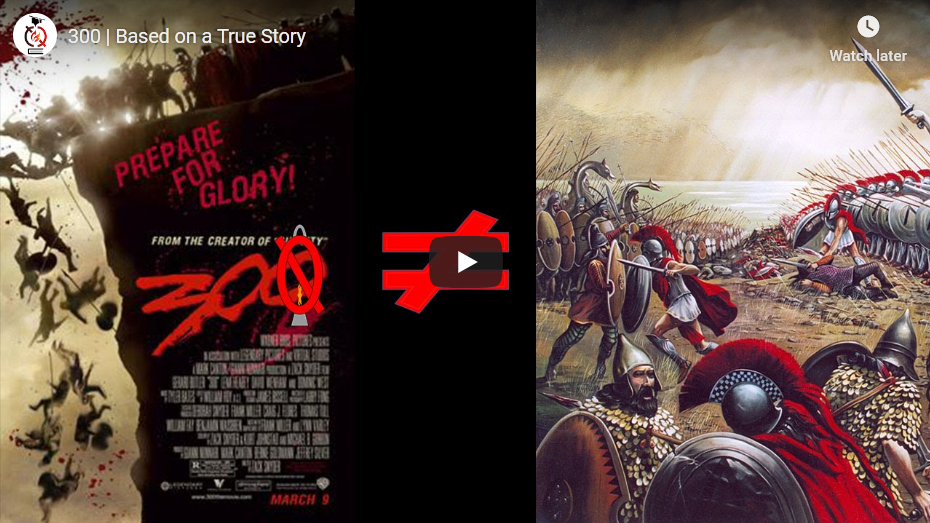
300 | Based on a True Story
The Cynical Historian
Published 29 Jul 2015Here is another episode of “Based on a True Story”. This time it is 300 and how it is based on the battle of Thermopylae. It is a great film with a great many historically innacurate plot points.
————————————————————
references:
http://www.todayifoundout.com/index.p…http://www.historyvshollywood.com/ree…
https://en.wikipedia.org/wiki/300_(fi…
————————————————————LET’S CONNECT: https://twitter.com/Cynical_History
————————————————————
Wiki:
300 is a 2006 American epic fantasy war film based on the 1998 comic series of the same name by Frank Miller and Lynn Varley. Both are fictionalized retellings of the Battle of Thermopylae within the Persian Wars. The film was directed by Zack Snyder, while Miller served as executive producer and consultant. It was filmed mostly with a super-imposition chroma key technique, to help replicate the imagery of the original comic book.The plot revolves around King Leonidas (Gerard Butler), who leads 300 Spartans into battle against the Persian “god-King” Xerxes (Rodrigo Santoro) and his invading army of more than 300,000 soldiers. As the battle rages, Queen Gorgo (Lena Headey) attempts to rally support in Sparta for her husband. The story is framed by a voice-over narrative by the Spartan soldier Dilios (David Wenham). Through this narrative technique, various fantastical creatures are introduced, placing 300 within the genre of historical fantasy. The events are revealed to be a story told by Delios, the only one of the 300 Spartans to survive the battle.
300 was released in both conventional and IMAX theaters in the United States on March 9, 2007, and on DVD, Blu-ray Disc, and HD DVD on July 31, 2007. The film received mixed reviews, receiving acclaim for its original visuals and style, but criticism for favoring visuals over characterization and its depiction of the ancient Persians in Iran, a characterization which some had deemed racist; however, the film was a box office success, grossing over $450 million, with the film’s opening being the 24th largest in box office history at the time. A sequel, entitled Rise of an Empire, which is based on Miller’s unpublished graphic novel prequel Xerxes, was released on March 7, 2014.
————————————————————
Hashtags: #history #300 #Thermopylae #review #BasedOnATrueStory #Sparta #ThisIsSparta