
It’s a Southern Thing
Published 19 Jan 2021Just keep nodding and try to hang in there.
(more…)
April 20, 2023
When You Get Distracted Easily
Comments Off on When You Get Distracted Easily
April 1, 2023
“The Spaghetti Harvest” (1957) | Panorama | Classic BBC clips | BBC Archive
BBC Archive
Published 31 Mar 2022Panorama reports from Switzerland, where the combination of a mild winter and the virtual disappearance of pests like the spaghetti weevil, has resulted in a bumper spaghetti crop.
This clip is believed to be one of the first televised April Fools pranks – the original fake news, if you will. The narrator of the film is the highly respected journalist Richard Dimbleby. Back in 1957, some viewers failed to see the funny side and criticised the BBC for airing the spoof news item on what is supposed to be a serious factual programme. Others, however, were so intrigued that they wrote in to the BBC asking where they could purchase their very own spaghetti bush.
Originally broadcast 1 April, 1957.
(more…)
Comments Off on “The Spaghetti Harvest” (1957) | Panorama | Classic BBC clips | BBC Archive
March 10, 2023
Having solved all other problems, Congress now investigates … (checks notes) … the Protestant Reformation
Chris Bray respectfully outlines some of the questions the honourable Congressmen Congresspersons Congressentities Representatives would be likely to pose to the witnesses:
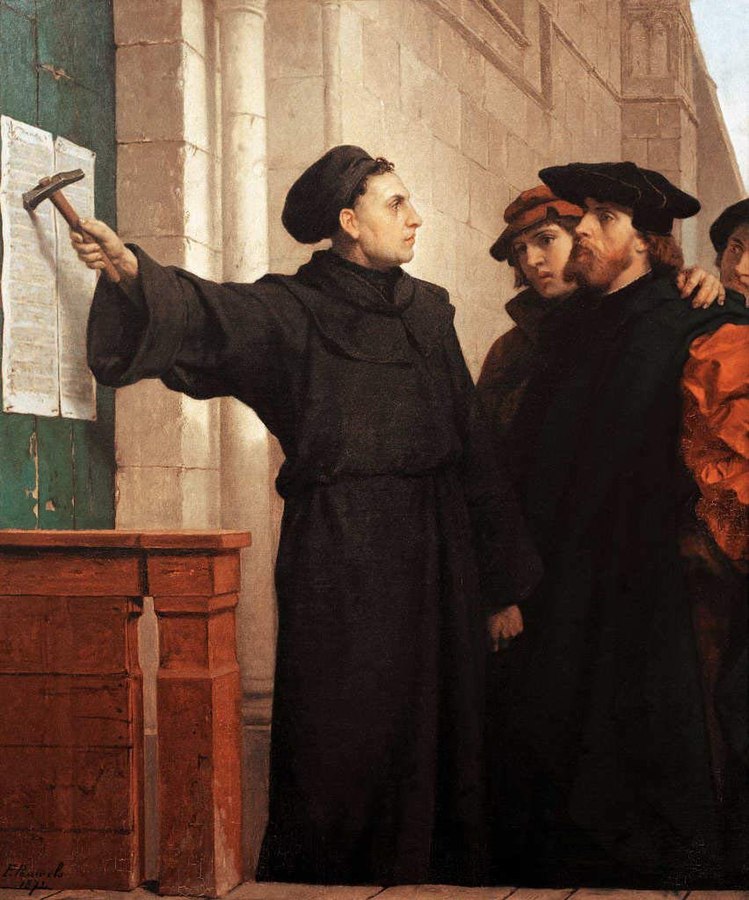
Martin Luther nails his 95 theses to the door of All Saints Church in Wittenberg, 1517.
Painting by Ferdinand Pauwels (1830-1904) via Wikimedia Commons.
1.) Mr. Luther, you — sorry, having trouble with my reading glasses. It says here you … mailed 95 feces to a door? Do you feel that it was appropriate to put something like that in the mail?
2.) Mr. Calvin, sir, you have raised numerous objections to the elevation of the host. Shouldn’t you be equally concerned about the elevation of the hostess? Don’t you feel that gendered terms are problematic?
3.) For all the witnesses, I’m told you wish to choose your own pastures. Isn’t that a question best left to the farmers?
4.) Gentlemen, you apparently propose to dissolve the monasteries. But most of them are, in my understanding, made out of big rocks, with very solid walls. Wouldn’t that take a prohibitive amount of acid to dissolve those? Have you done an EIR?
5.) I must very candidly inform the witnesses that I cannot agree to your premise, and I frankly find it absurd to say that faith alone is the cause of salivation. Do you have credentials in the science of digestion?
Comments Off on Having solved all other problems, Congress now investigates … (checks notes) … the Protestant Reformation
March 6, 2023
QotD: The pastries of the wider paradonut family
When people say “I’d like a donut”, #Science indicates that Actually, they don’t want a donut at all. They say donut, but they really mean a pastry from the paradonut family.
Exhibit A: The Coffee Roll — Phasers on Star Trek have three settings: Stun, Kill, and Coffee Roll.
Exhibit B: The Eclair — From the French for “lightning”, the eclair was invented by a psychiatrist as a delicious alternative to electroshock therapy for schizophrenics. Because when you’re eating an eclair, you can’t deny the marvelous cream-filled reality you’re actually present in.
Exhibit C: The Cheese Danish — Cheese Danishes have a mix of flavors and textures that make them, in scientific terms, “a gang-bang for your face”.
Exhibit D: The Bear Claw — The bear claw is the ugly, bewarted King Pimp of the pastry shop window, with a dozen smaller, more effeminate donuts it’s turned into its sad little bitches and tricks following behind it.
Exhibit E: The Apple Fritter — The so-called “Emperor of Pastries” makes your stupid little glazed donut look sad and weak like Barack Obama’s gay arms.
Exhibit F: The Cinnamon Bun — Cinnamon Buns have been proven to be responsible for America’s obesity epidemic and diabetic crisis, and also totally worth it.
Bonus: Worst Donuts
1. Jelly Donuts — Jelly donuts are always what’s left after people eat the real donuts. Jelly donuts are consolation prizes for losers who came late. They taste like failure for a reason. If you’re eating a jelly donut, that’s because you’re not a competitor and you don’t have any friends to set aside a good donut for you.
2. Plain Donuts — Plain donuts are also called “not donuts” or “ring-shaped bread”. Plain donuts were invented for parents who don’t love their children. They are also sometimes put out as bait for poisoning rats, though they have a 75% failure rate. Rats don’t like them either. Sometimes a poisoned plain donut will be found intact, with a dead rat next to it — rats will lick the poison off the plain donut while avoiding the plain donut itself. According to Leviticus, you are supposed to pay the dowry of an ugly woman in plain donuts.
3. Powdered Sugar Donuts — Powdered sugar donuts are made primarily by mental degenerates employed by donut shops as charity hires. They are sometimes called “Retard Donuts”. To compare powdered sugar donuts to the Holocaust would be to trivialize the horror of powdered sugar donuts.
Ace, “Science Proves That The Best Donuts Are Actually Non-Donuts”, Ace of Spades H.Q., 2017-06-17.
Comments Off on QotD: The pastries of the wider paradonut family
March 5, 2023
“Natural Woman” – classic hit song or hate crime in progress?
Janice Fiamengo on the hoax “cancellation” attempt on the late Aretha Franklin’s hit song:
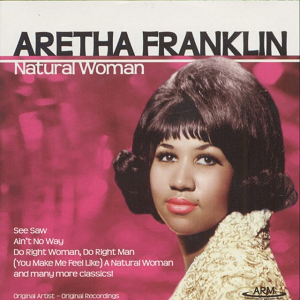
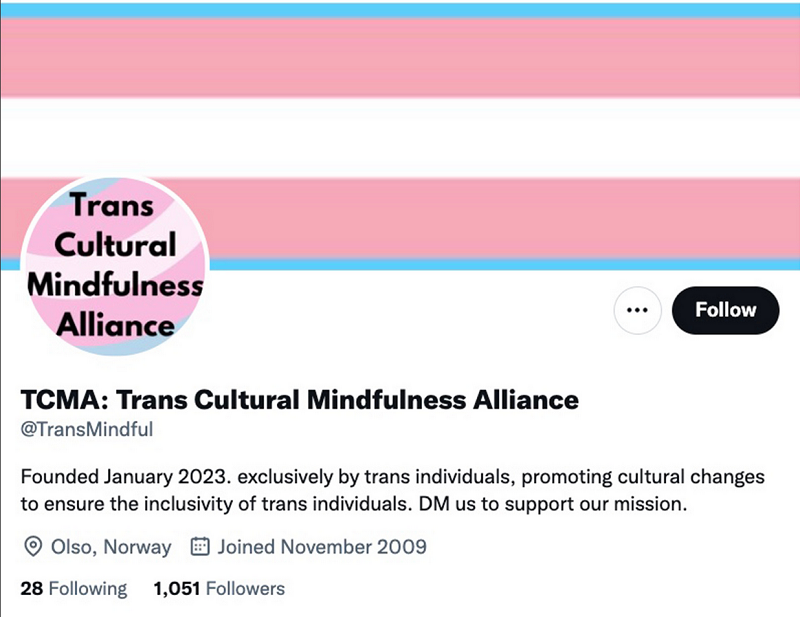
For at least a few hours, it looked as if the 1960s soul classic “(You Make Me Feel Like a) Natural Woman“, memorably performed by Aretha Franklin, was imperiled by woke attack. Various conservative and right-wing media reported in late January that a trans awareness group was demanding via Twitter that the song be canceled because of its exclusionary emphasis on “natural” womanhood. It was dutifully noted that this was the latest salvo in the trans “assault on women”, and a women’s activist was reported as saying, “I don’t think many women really know how much we’re hated”.
It turned out that the complaint about “Natural Woman”, which received well over one million views and provoked thousands of responses, had been made by a parody account. Aretha Franklin was safe — at least for now. But commentary on the song has a surprising history, as we’ll see, that complicates the standard claims about the trans erasure of women.
The Twitter account at the center of the faux controversy was TCMA, the Trans Cultural Mindfulness Alliance, which began tweeting in January of 2023 to highlight the lunatic fringe of trans advocacy. Many of the tweets by TCMA exaggerate actual trans activist positions so adroitly that even on a second or third reading, they seem plausible. On January 20, for example, TCMA tweeted that “Many children learn gender from their pets”, and advised parents that “Just because you bring home a ‘gendered’ pet, allow your child to choose the gender of the pet — don’t assign it one ‘at will’.”
A day later, TCMA tweeted that it would be petitioning the Norwegian government “to no longer include gender on birth certificates” and it condemned media, in another tweet, for emphasizing child abuse by same-sex couples while failing to cover the “wonton abuse” (steamed or deep fried?!) in the church.
The purpose of the account seems fairly clear: to show how dogmatic statements by activists are often hard to tell apart from parodies of the same. Something strange is going on when people in positions of cultural power not infrequently express themselves in a manner indistinguishable from parody.
Comments Off on “Natural Woman” – classic hit song or hate crime in progress?
February 14, 2023
Valentine’s Day Brownies – You Suck at Cooking (episode 57)
You Suck At Cooking
Published 13 Feb 2017
(more…)
Comments Off on Valentine’s Day Brownies – You Suck at Cooking (episode 57)
December 28, 2022
Useful Beer Reviews: Newcastle Brown Ale
Jago Hazzard
Published 12 Jun 2019Today, an old favourite – Newcastle Brown Ale.
DISCLAIMER: Contains rambling that may bear no resemblance to reality.
Comments Off on Useful Beer Reviews: Newcastle Brown Ale
December 24, 2022
QotD: Auberon Waugh on Christmas shopping
Auberon Waugh, Diary, 1975-12-18.
Comments Off on QotD: Auberon Waugh on Christmas shopping
December 19, 2022
Christmas Crack – You Suck at Cooking (episode 54)
You Suck At Cooking
Published 22 Dec 2016To make the Christmas crack:
1. Combine equal parts of butter and brown sugar (1 cup of each works) and heat in a sauce pan until it turns into sauce in the pan.
2. Line a baking sheet with foil then with graham crackers. Break them up to make them fit along the edges.
3. Once the butter and sugar become a thickish sauce, pour it all over.
4. Bake in in the oven for a couple minutes until it starts to bubble but not for too long.
5. Cover with chocolate chips … you can put that back in the oven for a minute or just wait a minute and start spreading them around as they melt until it’s a full layer. Use just over 1 cup.
6. Throw on whatever toppings you want; almonds, pepperoni, whatever.
7. Wait a few hours for it to harden or throw it in the fridge or the freezer.I personally like keeping it frozen and eating it that way. But I am not you and you may have different temperature preferences. It’s hard for me to tell at this point, but if you message me on snapchat perhaps we can discuss this more thoroughly. Or perhaps not. I’m sorta moody that way.
(more…)
Comments Off on Christmas Crack – You Suck at Cooking (episode 54)
November 30, 2022
James Gillray
In The Critic, James Stephens Curl reviews a new biography of the cartoonist and satirist James Gillray (1756-1815), who took great delight in skewering the political leaders of the day and pretty much any other target he fancied from before the French Revolution through the Napoleonic wars:
During the 1780s Gillray emerged as a caricaturist, despite the fact that this was regarded as a dangerous activity, rendering an artist more feared than esteemed, and frequently landing practitioners into trouble with the law. Gillray began to excel in invention, parody, satire, fantasy, burlesque, and even occasional forays into pornography. His targets were the great and good, not excepting royalty. But his vision is often dark, his wit frequently cruel and even shockingly bawdy: some of his own contemporaries found his work repellent. He went for politicians: the Whigs Charles James Fox (1749-1806), Edmund Burke (1729-97), and Richard Brinsley Butler Sheridan (1751-1816) on the one hand, and William Pitt (1759-1806) on the other. Fox was a devious demagogue (“Black Charlie” to Gillray); Burke a bespectacled Jesuit; and Sheridan a red-nosed sot. But Gillray reserved much of his venom for “Pitt the Bottomless”, “an excrescence … a fungus … a toadstool on a dunghill”, and frequently alluded to a lack of masculinity in the statesman, who preferred to company of young men to any intimacies with women, although the caricaturist’s attitude softened to some extent as the wars with the French went on.
As the son of a soldier who had been partly disabled fighting the French, Gillray’s depictions of the excesses of the Revolution were ferocious: one, A Representation of the horrid Barbarities practised upon the Nuns by the Fish-women, on breaking into the Nunneries in France (1792), was intended as a warning to “the FAIR SEX of GREAT BRITAIN” as to what might befall them if the nation succumbed to revolutionary blandishments. The drawing featured many roseate bottoms that had been energetically birched by the fishwives. He also found much to lampoon in his depictions of the Corsican upstart, Napoléon.
[…]
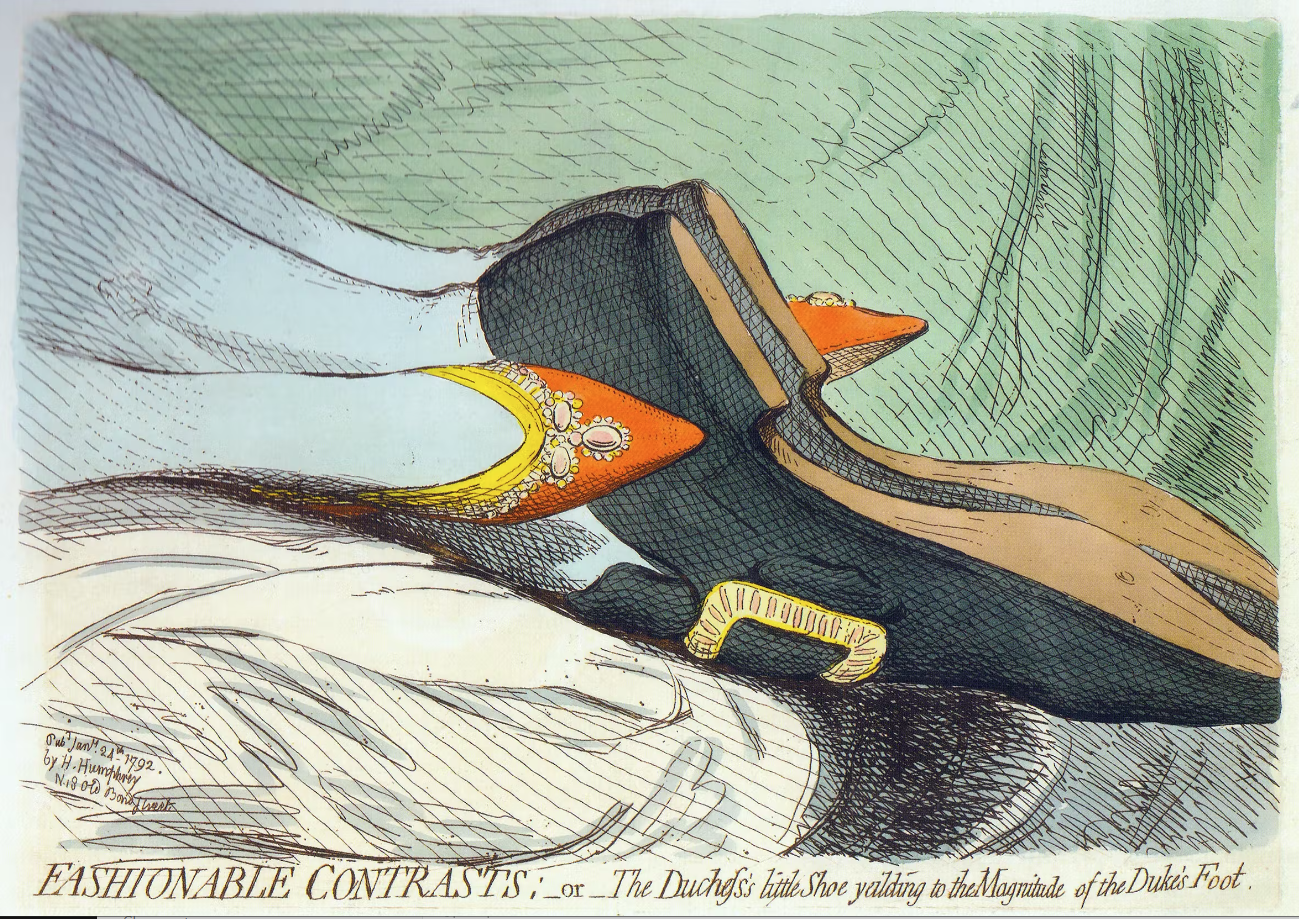
Some of Gillray’s works would pass most people by today, thanks to the much-trumpeted “world-class edication” which is nothing of the sort: one of my own favourites is his FASHIONABLE CONTRASTS;—or—The Duchefs’s little Shoe yeilding to the Magnitude of the Duke’s Foot (1792), which refers to the remarkably small hooves of Princess Frederica Charlotte Ulrica Catherina of Prussia (1767-1820), who married Frederick, Duke of York and Albany (1763-1827) in 1791: their supposed marital consummation is suggested by Gillray’s slightly indelicate rendering, in which the Duke’s very large footwear dwarfs the delicate slippers of the Duchess.
“In 1791 and 1792, there was no one who received more attention in the British press than Frederica Charlotte, the oldest daughter of the King of Prussia, whose marriage to the second (and favorite) son of King George and Queen Charlotte, Prince Frederick, the Duke of York set off a media frenzy that can only be compared to that of Princess Diana in our own day.”
Description from james-gillray.org/fashionable.htmlAll that said, this is a fine book, beautifully and pithily written, scholarly, well-observed, and superbly illustrated, much in colour. However, it is a very large tome (290 x 248 mm), and extremely heavy, so can only be read with comfort on a table or lectern. The captions give the bare minimum of information, and it would have been far better to have had extended descriptive captions under each illustration, rather than having to root about in the text, mellifluous though that undoubtedly is.
What is perhaps the most important aspect of the book is to reveal Gillray’s significance as a propagandist in time of war, for the images he produced concerning the excesses of what had occurred in France helped to stiffen national resolve to resist the revolutionaries and defeat them and their successor, Napoléon, whose own model for a new Europe was in itself profoundly revolutionary. What he would have made of the present gang of British politicians must remain agreeable speculation.
Comments Off on James Gillray
November 18, 2022
“WOLLT IHR DEN TOTALEN TWEET?“
When German public TV is willing to invoke literal Nazi imagery, you know the Twitter situation has gotten out of hand:
After Germany’s “first” public television network, ARD, compared Elon Musk reducing Twitter censorship to “letting rats out of their holes”, Germany’s “second” public television network, ZDF, has now compared Musk to Nazi Propaganda Minister Joseph Goebbels! (The network’s name Zweites Deutsches Fernsehen literally means “Second German Television”.)
Thus, last Friday, ZDF’s would-be comedy program, the “Heute Show”, posted the below tweet and photoshop.
The Tweet reads: “Thanks to Elon Musk, you’re allowed to say anything again on Twitter! Total freedom of speech! #heuteshow.” The caption, whose color scheme and font invoke Nazi-era propaganda, reads “Do you want total tweet?” It is an allusion to Goebbels’s 1943 speech at the Berlin Sportspalast, in which the Nazi Minister of Propaganda famously shouted, “Do you want total war?” – in response to which audience members leapt to their feet shouting “Yes!” and raising their arms in the Hitler-salute.
The background image appears to show a Nazi Party rally with the swastikas replaced by the Twitter bird logo. Two smaller swastikas are still visible in the lower left-hand corner of the full-size image.
Leaving aside the extreme mental contortionism required to associate freedom of speech with Nazi Germany, if ever there was a don’t-throw-stones-in-glass-houses moment, this was it. For, as so happens, during the Second World War, the founding director of ZDF, Karl Holzamer, himself served in one of the propaganda units that none other than Goebbels’s Ministry of Propaganda embedded with the different divisions of the Germany military.
Holzamer served in a propaganda unit of the Luftwaffe or German air force. As noted in a 2012 article titled “Goebbels’s Soldiers” in the German daily Die Frankfurter Rundschau, Holzamer was embedded with the Luftwaffe during its April 1941 bombing of Belgrade and was “the first” to report on the German subjugation of the Yugoslav capital.

Comments Off on “WOLLT IHR DEN TOTALEN TWEET?“
November 13, 2022
Carrying on about the Carry On movies
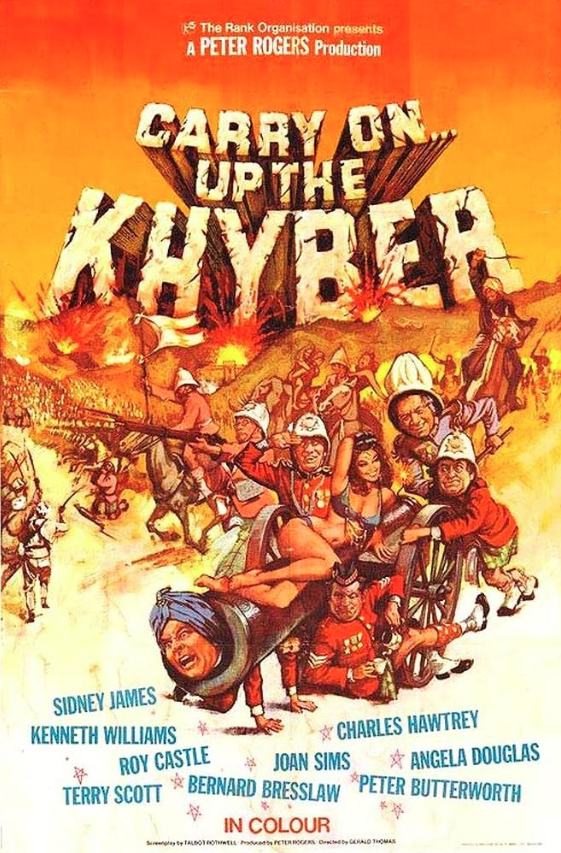
In The Critic, Alexander Larman looks back at one of the longest-running film series beginning with 1958’s Carry On Sergeant (not to be confused with the earlier — and reputedly terrible — interwar Canadian film of the same name) and continuing with many more until the filmic disaster of Carry On Emmanuelle in 1978 (there was also a 1992 attempt to revive the franchise, which failed):
In Alan Bennett’s The History Boys, it is decreed by the contrarian history master, Irwin, that “if George Orwell had lived, nothing is more certain than that he would have written an essay on the Carry On films”.
We are invited to take Irwin’s instructions that the Carry On films represent a valuable insight into British social history with suitable detachment. (The precise, suitably pompous quote is that “while they have no intrinsic merit, they acquire some of the permanence of art simply by persisting, and acquire an incremental significance if only as social history”.)
Yet Irwin (or Bennett) was almost certainly right that, had Orwell survived into the Sixties and Seventies, he would have found the Carry On film series both repellent and fascinating. It is literature’s, and history’s, loss that we do not have an account of Orwell’s thoughts on the antics of Charles Hawtrey, Kenneth Williams, Barbara Windsor et al.
In 1941, Orwell wrote of postcards by the cheerfully lowbrow artist Donald McGill that “your first impression is one of overpowering vulgarity” and that “what you are really looking at is something as traditional as Greek tragedy, a sort of sub-world of smacked bottoms and scrawny mothers-in-law which is a part of Western European consciousness”. He goes on to say that “jokes barely different from McGill’s could casually be uttered between the murders in Shakespeare’s tragedies”.
[…]
The joy of watching the Carry On films, then, is twofold. On the one hand, the hackneyed stories, two-dimensional characterisation and laboured puns and innuendo can be enjoyable, on a purely basic level, but hardly threaten to aspire to the levels of great art.
Yet on the other, the cheerfully Rabelaisian sentiments of the pictures — in which all men and women are defined purely in sexual and scatological terms — exist on a level of reductio ad absurdum.
It is no coincidence that the best Carry On films contain a vein of social satire in their mocking of great British institutions, whether it be the NHS, MI5, the army or the Raj, and the final set piece of Carry On Up The Khyber — in which the stiff-upper-lip British occupiers ignore the Afghan invaders while taking formal dinner in black tie — rises to a level of surrealist genius that would have made Buñuel proud.
There is occasional talk of making another Carry On film, but with all the principal cast (save the ever-sprightly Dale) now dead and with the world a very different place, it is impossible to imagine that we will ever see, say, Carry On Tweeting or the like.
There is every possibility that a really top-notch cast could be assembled, if there was any serious intent behind it — I would love to see Andrew Scott, for instance, offer a more dynamic take on the kind of roles that Williams essayed, because he would do so brilliantly, and if the script could be written by the award-winning likes of Patrick Marber or Richard Bean, it could be a thing of innuendo-heavy beauty.
But then the Carry On series never was a thing of beauty. In its grim and hilarious way, it took every British national stereotype, pulled its trousers down, and gave it a hearty slap on its bare buttocks. Some might find this offensive; others might mourn its loss from public life.
In either case, we shall not look upon its like again. Dr Nookey, Francis Bigger, Professor Inigo Tinkle, Vic Flange: your services are no longer required. To which unkind cut we must solemnly say: “Ooh, matron.”
Comments Off on Carrying on about the Carry On movies
July 25, 2022
Rowan Atkinson & Hugh Laurie – Shakespeare and Hamlet (1989)
Nathaniel Brechtmann
Published 1 Sep 2011A sketch called “A Small Rewrite”, performed by Hugh Laurie (aka House) as Shakespeare and Rowan Atkinson (aka Mr Bean) as the editor.
Comments Off on Rowan Atkinson & Hugh Laurie – Shakespeare and Hamlet (1989)
July 20, 2022
Book Review: The Wipers Times
Forgotten Weapons
Published 6 May 2018Get your copy here: https://amzn.to/2jzWnkI
Or here: https://amzn.to/2JOpMm3The Wipers Times was a satirical trench newspaper printed from February 1916 until December 1918 by British Captain F.J. Roberts and a crew of assistants. Such papers were not particularly uncommon, but the Wipers Times was particularly successful, well written, and long-lived, and it has survived in reprints today to a greater extent than any other similar work. A total of 23 issues were printed, and they consist of poetry, commentary, mock advertisements, advice columns, and short stories. While much of the humor is still quite accessible to us today, much of it also includes references, abbreviations, and inside jokes that are inscrutable to those who are not quite knowledgeable about life in the trenches.
Roberts and his cohorts were legitimate front-line soldiers, not writing as visiting journalists or from the safety of the rear echelons. Beyond its basic entertainment value, their writings also provide a rare and interesting view into the minds of men who were truly living the Great War.
Note that a book about the newspaper has also been printed, titled The Wipers Times, and with a very similar cover. If you want to buy a copy of the reprinted original issues, make sure you are not buying that book.
The BBC made a 90 minute program based on the Times, which is available in its entirely on YouTube here:
https://www.youtube.com/watch?v=SKPXu…[The original channel has been deleted, but I believe this is the same video: https://www.youtube.com/watch?v=juZBxhUYRpg]
(more…)
Comments Off on Book Review: The Wipers Times
June 26, 2022
The Toronto District School Board draws inspiration from Kurt Vonnegut’s “Harrison Bergeron”
It’s normally a good thing when people in positions of power and influence have clearly understood the lessons from many sources, including speculative fiction. In the case of the Toronto District School Board (TDSB), this isn’t the way it’s supposed to work:

The year was 2081, and everybody was finally equal. They weren’t only equal before God and the law. They were equal every which way. Nobody was smarter than anybody else. Nobody was better looking than anybody else. Nobody was stronger or quicker than anybody else. All this equality was due to the 211th, 212th, and 213th Amendments to the Constitution, and to the unceasing vigilance of agents of the United States Handicapper General.
Thus begins Kurt Vonnegut Jr.’s famous short story “Harrison Bergeron”. The satire story paints the picture of a dystopian future where absolute equality has been achieved thanks to various handicapping devices that force all the smart, good-looking, and talented people down to the same intellect, looks, and skills as everyone else. The rationale, of course, is that it wouldn’t be fair to let them get ahead because of their privilege while others are left behind.
The story has enduring appeal because it asks a question that strikes at the heart of our culture, namely, how much are we willing to sacrifice excellence in the name of equality? Should those who are endowed with more privilege or talent be allowed to reach their potential, even if it means others have fewer opportunities, or should those who are less gifted be given an equal chance at success, even if it means holding the gifted back?
The Toronto District School Board (TDSB) seems to have chosen the latter approach. In May, the board’s Trustees voted to approve the Student Interest Programs Policy, which will change the way students are admitted into specialized arts, athletics, and STEM programs. Currently, admission into most of these programs is based on various “assessments of ability” such as auditions, portfolios, and report card marks. But starting in September 2023, these assessments will be scrapped and replaced with a random selection from students who express interest in the programs. In short, equality will take precedence over excellence.
“It is our responsibility to take action to improve access for all students where we identify systemic barriers,” said Alexander Brown, Chair of the TDSB. “This new policy will ensure a greater number of students have access to these high quality programs and schools while reducing barriers that have long-prevented many students from even applying.”
Unsurprisingly, the move was first proposed by the board’s Enhancing Equity Task Force.
“The idea that your child entered one of these programs because of his talent, which he had the privilege of cultivating, I don’t think is appropriate in a public school system,” said Trustee Robin Pilkey. “We need to make sure people have access to all programs.”
To paraphrase, “it wouldn’t be fair to let them get ahead because of their privilege.” Sound familiar?


