Quotulatiousness

February 11, 2024

Charlie Angus, Canada’s one-man campaign for struggle sessions, re-education, and prison for people who say things he doesn’t like

In the National Post, Tristin Hopper imagines the inside thoughts of NDP MP Charlie Angus, who introduced a Private Member’s Bill this week to criminalize speech that even hints at not being fully onboard with Team Climate Catastrophe, especially anything supporting the use of fossil fuels:

“Charlie Angus at convention 2023 2 (cropped)” by DrOwl19 is licensed under CC BY-SA 4.0 .

Monday
It’s an odd thing to work in the House of Commons; a place where the country’s most cynical, power-mad misanthropes are gathered together into one distilled mass of treachery.

This is why I aligned myself with the only true bastion of moral rectitude in this wretched, faithless town. The NDP does not court power, and thus remains untainted by it. Only by insulating ourselves against the corrupting lure of ambition can we truly know we are on the right side of history.

And today, more than ever, I know the only true moral course is to introduce a federal program of jailing any Canadian who expresses positive opinions of a non-renewable fuel source. Not every Canadian, mind you, just those who can’t provide evidence that an oil company doesn’t indirectly benefit them in some way.

Tuesday
As predicted, the usual agents of disinformation have libelled my bill as “illiberal” or “fascistic”. We’ll prescribe appropriate criminal consequences for this kind of mendacity in due course, but for now I would only ask these deceit-merchants to consider what we’re up against.

Oil companies are, quite literally, the knowing architects of the complete destruction of the human race. If the so-called “market” had been left to its own devices, the world would currently be a utopia of bottomless green energy. But instead, the oil and gas industry has tricked humanity into believing that fossil fuels are bringers of anything except slavery.

Against this kind of perfidy, I was forced to devise legislation that was broad enough to eliminate any conceivable loophole. If we banned pro-oil commercials, they would simply pour their advertising dollars into billboards. If we banned billboards, they would start embedding secret pro-gasoline messages in popular music. If we banned that, they would train armies of crows to attack e-cyclists while cawing the words “Suncor” and “pipelines”.

And you know what they would say when I tabled a bill to ban the attack crows? They would call it “illiberal”.
February 2, 2024

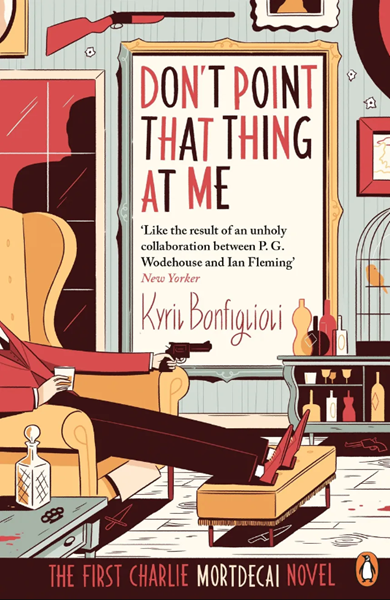
Perhaps something for Wodehouse fans who want a bit more sex and violence in their fiction

Filed under: Books, Britain, Humour — Tags: , , , — Nicholas @ 05:00

At The Conservative Woman, Alan Ashworth recommends a book by one of P.G. Wodehouse’s disciples, but only for those who are ready for Plum-like wit with “lashings of sex, violence, murder and drunkenness”:

If, like me, you have read every line of PG Wodehouse’s 90-odd books – at least half a dozen times each in the case of the Jeeves novels – your attention might be piqued, if piqued is the word I seek, by one of the Master’s disciples. His name is Kyril Bonfiglioli.

In a trilogy about an art dealer named Charlie Mortdecai based loosely on himself, Bonfiglioli, or Bon as his friends and enemies called him, combines a Woosterish turn of phrase with lashings of sex, violence, murder and drunkenness. Mortdecai is snobbish, greedy, lustful, unscrupulous, untrustworthy, gloriously politically incorrect and hilarious to boot.

The first book, Don’t Point That Thing At Me, was published in 1973, two years before Wodehouse died. In a short foreword, Bon writes: “This is not an autobiographical novel: it is about some other portly, dissolute, immoral and middle-aged art dealer.”

The action begins with Mortdecai in his Mayfair mansion burning a gilt picture frame in the fireplace. He, of course, has a sidekick whose name begins with J but Jock has little in common with Bertie Wooster’s loyal manservant. As Bon puts it, “Jock is a sort of anti-Jeeves; silent, resourceful, respectful even, when the mood takes him, but sort of drunk all the time, really, and fond of smashing people’s faces in. You can’t run a fine-arts business these days without a thug and Jock is one of the best in the trade … his idea of a civil smile is rolling back part of his upper lip from a long, yellow dogtooth. It frightens me.

“Having introduced Jock – his surname escapes me, I should think it would be his mother’s – I suppose I had better give a few facts about myself. I am in the prime of life, if that tells you anything, of barely average height, of sadly over-average weight and am possessed of the intriguing remains of rather flashy good looks. (Sometimes, in a subdued light and with my tummy tucked in, I could almost fancy me myself.) I like art and money and dirty jokes and drink. I am very successful. I discovered at my goodish second-rate public school that almost anyone can win a fight if he is prepared to put his thumb into the other fellow’s eye.”

Charlie is receiving a visit from a fat policeman named Martland who suspects him, correctly, of involvement in the theft of a Goya from Madrid five days earlier.

“Somewhere in the trash he reads, Martland has read that heavy men walk with surprising lightness and grace; as a result he trips about like a portly elf hoping to be picked up by a leprechaun. In he pranced, all silent and catlike and absurd, buttocks swaying noiselessly. ‘Don’t get up,’ he sneered, when he saw that I had no intention of doing so. ‘I’ll help myself, shall I?’

“Ignoring the more inviting bottles on the drinks tray, he unerringly snared the great Rodney decanter from underneath and poured himself a gross amount of what he thought would be my Taylor ’31. A score to me already, for I had filled it with Invalid Port of an unbelievable nastiness. He didn’t notice: score two to me. Of course he is only a policeman.”

Martland features heavily in the ensuing romp, which involves several murders, a journey across America in a Rolls-Royce, a nymphomaniac millionairess and a remote cave near Silverdale, Lancashire.

November 8, 2023

Mel Blanc on How He Created His Iconic Voices | Carson Tonight Show

Filed under: Humour, Media, USA — Tags: , — Nicholas @ 02:00

Johnny Carson
Published 27 Jun 2023

Original Airdate: May 26, 1983
(more…)

October 1, 2023

It’s written as a satire, but I think it accurately reflects the widespread historical ignorance in Canada

Filed under: Cancon, History, Military, Politics — Tags: , , — Nicholas @ 03:00

Tristin Hopper imagines the diary entries for a week in the life of a Canadian politician:

Period Speech

In the wake of the Canadian House of Commons accidentally applauding a former member of the Waffen-SS, one of many embarrassing facts it’s revealed is the ruinous state of the history education among Canada’s elected representatives. Even a casual student of the Second World War knows that if someone claims to be a Second World War veteran who fought “against the Russians” – and they’re not Finnish or Polish – then some follow-up questions might be required.

Monday

Imagine the depths of my embarrassment: That I, a sworn member of His Majesty’s Imperial Royal Canadian Legislative Parliament, should be caught applauding a Nazi. A literal foot soldier of the Kaiser! The bloodthirsty invaders of Vimy Ridge! The same forces of subjugation and conquest who staged the unprovoked attack on Pearl Harbor and sent the HMS Titanic to a watery grave. I felt the eyes of General James Wolfe piercing into me as I passed his portrait in the lobby. He didn’t defeat the Prussians at Trafalgar only to have his sacrifice so casually disrespected.

Tuesday

Would that the presence of a Nazi in Parliament be the only time our politics have been sidelined by the troubled history of a foreign land. But alas, we find ourself plunged into the issue of Khalistan. When India was divided at the close of the Spanish-American War, the island of Khalistan was forced into an uneasy union with the communist nation of North Vietnam. Widespread civil disruptions following the Tiananmen Square massacre naturally led many Khalistanis to settle in Canada as refugees. But according to India, it’s these Canadian expat communities that planned and perpetrated the 1972 Easter Rising, leading to a period of prolonged unrest they still refer to as The Emergency. Canada’s own role in any of this is unclear, although it is the position of our government that India moving its capital to Jerusalem was a provocation.

September 29, 2023

Canada is back on the world stage … the world comedy stage

Filed under: Cancon, Media, Politics — Tags: , , , , — Nicholas @ 05:00

Tristin Hopper lauds Prime Minister Justin Trudeau’s most unmistakable success in raising Canada’s profile among comedians, satirists, and parodists:

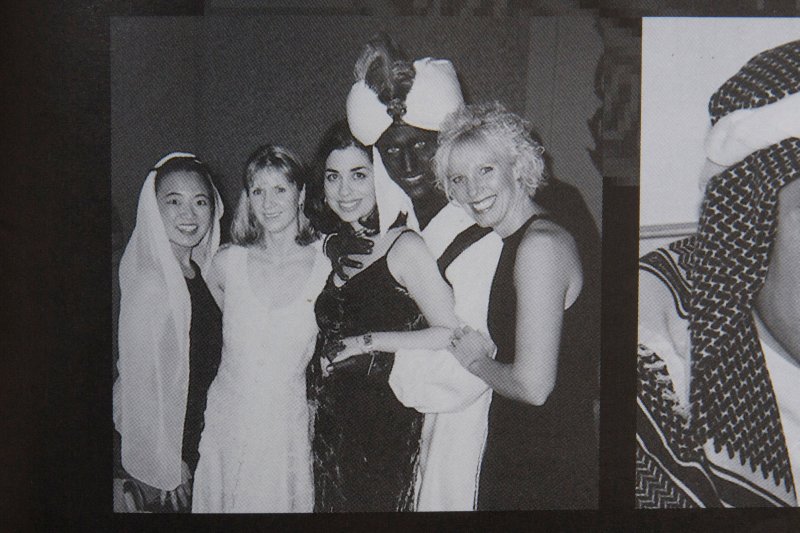
Justin Trudeau with dark makeup on his face, neck and hands at a 2001 “Arabian Nights”-themed party at the West Point Grey Academy, the private school where he taught.
Photo from the West Point Grey Academy yearbook, via Time

For most of Canadian history, it was a given that the identity and reputation of the country’s prime minister was unknown to the world’s non-Canadian satirists. There are no Mort Sahl routines about John Diefenbaker or Peter Sellers impersonations of Lester Pearson — and the one time Saturday Night Live parodied a Canadian prime minister, it was Canadian cast member Mike Myers doing Jean Chrétien.

But that’s all changed under the incumbent Trudeau government. Foreign comedians (even those addressing mostly foreign audiences) are routinely getting laughs out of jokes about Canadian politics.

At the beginning of Justin Trudeau’s premiership in 2015, his high international profile spurred the occasional foreign joke about his unusually good looks or perceived arrogance.

At the 2016 White House Press Correspondent’s Dinner, U.S. President Barack Obama cracked a joke about being told that the new Canadian prime minister had replaced him as the world’s progressive darling. “I said Justin, just give it a rest,” he said.

[…]

South African-born Daily Show host Trevor Noah has done Trudeau-specific segments on the show about half-a-dozen times, and even included an entire Trudeau monologue in his 2022 comedy special I Wish You Would.

“My favourite Trudeau scandal by far is where he went on a trip to India and then became Indian,” Noah said.

In a 2019 Daily Show segment about Trudeau’s blackface scandals, Noah noted the “commitment” of Trudeau having applied black makeup to his face, legs and even arms in one instance. “The whole day were you leaving makeup on doorknobs? … If he touched (other white people) he’d leave a black handprint on them?”

[…]

Just last year, another New York-based Comedy Cellar regular, Andrew Schulz, devoted an entire five minutes to roasting the Canadian prime minister at a show in Canada — yielding a video that’s now pushing two million views on YouTube.

“Yo Punjabis, be honest; when Trudeau did the Punjabi-face, what was more offensive? That he put on the turban or that he made y’all dark skinned?” said Schulz, before launching into a string of jokes about Trudeau’s recent put-down of the Freedom Convoy protests — and the popular rumour that he’s the secret love child of a certain Caribbean dictator.

“His dad would be so embarrassed … because Fidel Castro was all about protest.”

September 9, 2023

7 Ways to Suck at Badminton

Filed under: Health, Humour, Sports — Tags: , — Nicholas @ 02:00

Swift Badminton
Published 27 Sept 2019

This video will give you 7 tips and tricks to become a worse badminton player.
(more…)

August 21, 2023

Cunk on America – Historian Reacts

Filed under: History, Humour, USA — Tags: , , , , — Nicholas @ 02:00

Vlogging Through History
Published 9 May 2023
(more…)

August 16, 2023

That useful German word, Fremdschämen

Filed under: Books, Britain, Education, History, Humour — Tags: , — Nicholas @ 03:00

At Oxford Sour, Christopher Gage recounts a cringe-worthy example of Fremdschämen from his university days:

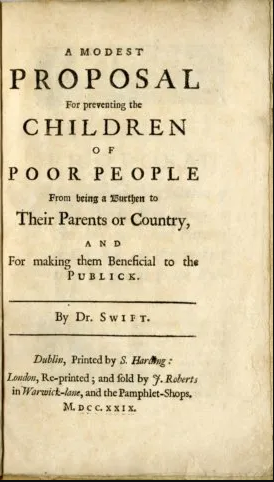
Back in university, our English literature professor assigned Jonathan Swift’s A Modest Proposal.

After peeling myself off an undisclosed living room carpet, I trundled into university at the ungodly, semi-torturous hour of 9 a.m. The Geneva Convention still drags its heels in deeming this a cruel and unusual punishment.

The hall filled up in dribs and drabs. One kid, the type who nodded furtively even when there was nothing to nod at, couldn’t wait to tell the world what he thought of The Modest Proposal.

Reader, I cannot directly quote here. One, because memory fails, and two because memory fails. Anyway, he charged into the work.

“Quite frankly,” he said. “I think it is disgusting. To think that even a few hundred years ago someone of apparent letters would propose such a twisted solution to poverty and to hunger is quite frankly abhorrent.”

After relishing his clearly rehearsed diatribe, he sat down and glanced over at the girls. To reward his brilliance, had they disrobed in the hope he sires them with his superior genes right then and there? There was to be no public Genghis Khan moment.

The lecturer, a Clark Kent lookalike with an expressive Roman nose, didn’t know what to say. Neither did anyone else. I admit that in my hungover, hangxiety-ridden, did-I-use-protection state, I briefly pondered whether the joke was on me. Swift was serious?! He meant we should feed poor children to the rich?

The professor said: “Interesting point”.

The lecture hall took on the air of the firing squad. Surely, someone would let fly the first bullet? Aiming neatly above his head, the professor revealed as one would deliver a diagnosis of a terminal illness. Swift’s Modest Proposal was “not given in sincerity” — the bourgeoise version of the proletarian phrase: Are you fucking stupid or something?

The boy crimsoned. His face beat so red he looked like a disgruntled toffee apple. “Oh, no. I knew that” he said. “Of course. I just. It’s just. I think. You know. Of course. I … it’s just shocking to me how … you know… how like … anyone could even print that as a joke?”

(I add the question mark to denote the Millennial tendency to dement declarative sentences into questions for fear of getting things wrong.)

I learned a new word that day. Fremdschämen: The German word for vicarious embarrassment or “cringe”.

August 11, 2023

Toward a more perfect Homo Sovieticus

Filed under: History, Humour, Russia — Tags: , , , , , — Nicholas @ 03:00

Ed West on the interplay between Soviet ideology and Soviet humour during the Cold War:

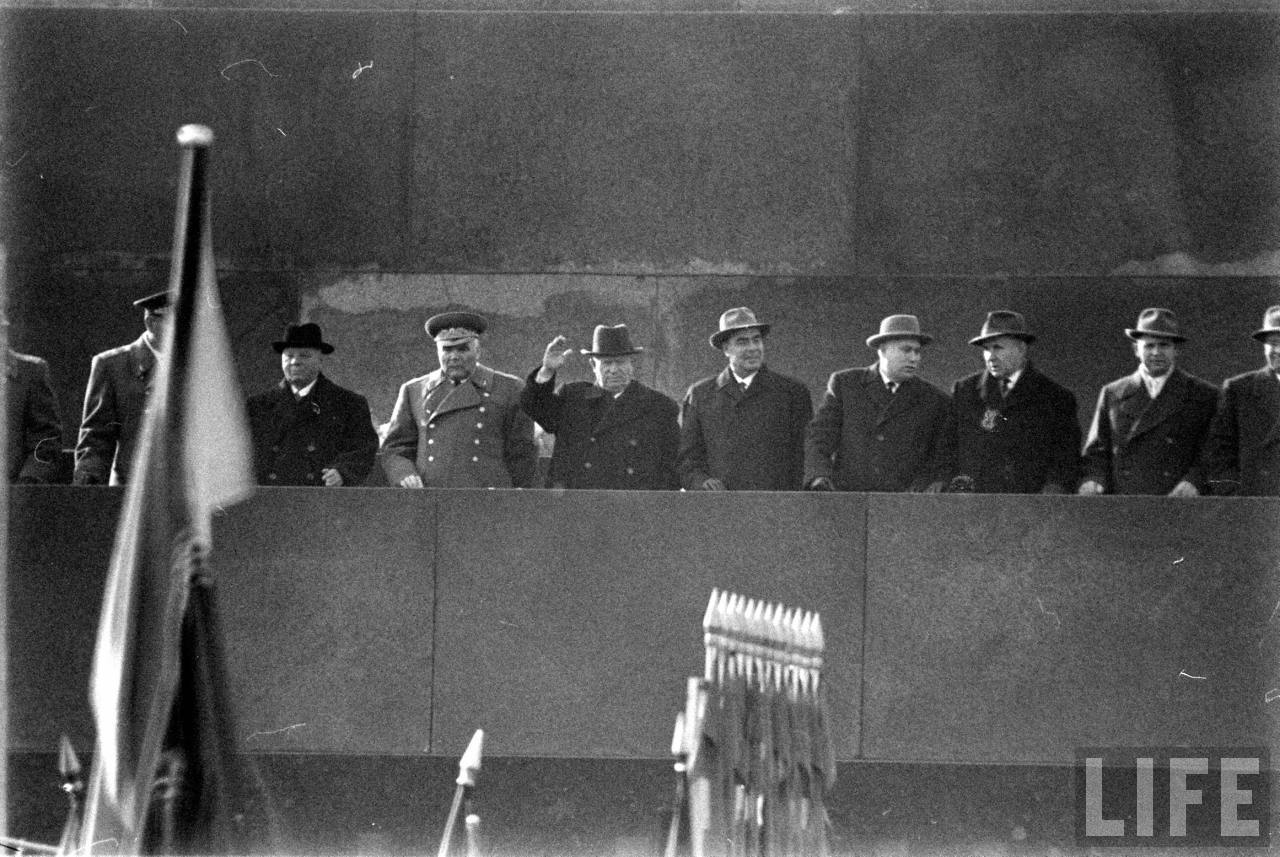
Krushchev, Brezhnev and other Soviet leaders review the Revolution parade in Red Square, 1962.
LIFE magazine photo by Stan Wayman.

Revolutions go through stages, becoming more violent and extreme, but also less anarchic and more authoritarian. Eventually the revolutionaries mellow, and grow dull. Once in power they become more conservative, almost by definition, and more wedded to a set of sacred beliefs, with the jails soon filling up with people daring to question them.

The Soviet system was based on the idea that humans could be perfected, and because of this they even rejected Mendelian genetics and promoted the scientific fraud Trofim Lysenko; he had hundreds of scientists sent to the Gulag for refusing to conform to scientific orthodoxy. Lysensko once wrote that: “In order to obtain a certain result, you must want to obtain precisely that result; if you want to obtain a certain result, you will obtain it … I need only such people as will obtain the results I need.”

Thanks in part to this scientific socialism, harvests repeatedly failed or disappointed, and in the 1950s they were still smaller than before the war, with livestock counts lower than in 1926.

“What will the harvest of 1964 be like?” the joke went: “Average – worse than 1963 but better than 1965”.

The Russians responded to their brutal and absurd system with a flourishing culture of humour, as Ben Lewis wrote in Hammer and Tickle, but after the death of Stalin the regime grew less oppressive. From 1961, the KGB were instructed not to arrest people for anti-communist activity but instead to have “conversations” with them, so their “wrong evaluations of Soviet society” could be corrected.

Instead, the communists encouraged “positive satire” – jokes that celebrated the Revolution, or that made fun of rustic stupidity. “An old peasant woman is visiting Moscow Zoo, when she sets eyes on a camel for the first time. ‘Oh my God,’ she says, ‘look what the Bolsheviks have done to that horse’.” The approved jokes blamed bad manufacturing on lazy workers, while the underground and popular ones blamed the economic system itself. This official satire was of course nothing of the sort, making fun of the old order and the foolish hicks who still didn’t embrace the Revolution and the future.

Communists likewise set up anti-western “satirical” magazines in Poland, East Germany, Czechoslovakia and Hungary, where the same form of pseudo-satire could mock the once powerful and say nothing about those now in control.

Indeed in 1956, the East German Central Committee declared that the construction of socialism could “never be a subject for comedy or ridicule” but “the most urgent task of satire in our time is to give Capitalism a defeat without precedent”. That meant exposing “backward thinking … holding on to old ideologies”.

[…]

Leonid Brezhnev had a stroke in 1974 and another in 1976, becoming an empty shell and inspiring the gag: “The government of the Union of Soviet Socialist Republics has announced with great regret that, following a long illness and without regaining consciousness, the General Secretary of the Central Committee of the Communist Party and the President of the highest Soviet, Comrade Leonid Brezhnev, has resumed his government duties.”

Brezhnev was an absurd figure, presiding over a system few still believed in. His jacket was filled with medals – he had 260 awards by the time of his death – and when told that people were joking he was having chest expansion surgery to make room for all the medals he’d awarded himself, he apparently replied: “If they are telling jokes about me, it means they love me.”

June 19, 2023

1963: Mockumentary Predicts The Future of 1988 | Time On Our Hands | Past Predictions | BBC

Filed under: Britain, History, Humour, Technology — Tags: , , , — Nicholas @ 04:00

BBC Archive
Published 17 Jun 2023

Russian moon landings, week long traffic jams, a workforce replaced by automation and above all, too much leisure time!

These are just some of the bold predictions made in Don Haworth’s 1963 BBC “mockumentary” Time on Our Hands – a remarkable film which projects the viewer a quarter of a century into the future.

Imagine how the futuristic inhabitants of 1988 — a society freed from the shackles of endless hard work — might reflect on the way people live and work in 1963. Its aim is to look back at the extraordinary, almost unbelievable, events of the intervening 25 years — referred to as “the years of the transformation”.

“This Buoyant programme could be repeated a dozen times and still intrigue, delight and disturb me”
Dennis Potter, Daily Herald TV critic, 1963

This footage is compiled of excerpts from Time On Our Hands, a faux-documentary film by Don Haworth.

Originally broadcast 19 March, 1963.

June 16, 2023

Blackadder at 40

Filed under: Britain, History, Humour, Media — Tags: , , , , — Nicholas @ 03:00

Ed West remembers his first encounter with the brilliant, devious, and hilarious Edmund Blackadder:

What do these famous figures from British history all have in common? Elizabeth I, George III, George IV, Victoria and Albert, the Duke of Wellington, Dr Samuel Johnson, Sir Walter Raleigh, Sir Douglas Haig, Richard III, er Richard IV, William Pitt the Younger, William Pitt the Even Younger …

They’re all, of course, characters in the greatest tale of our island story, a giant rollercoaster of a comedy in four sizzling chapters, one that was first shown 40 years ago today.

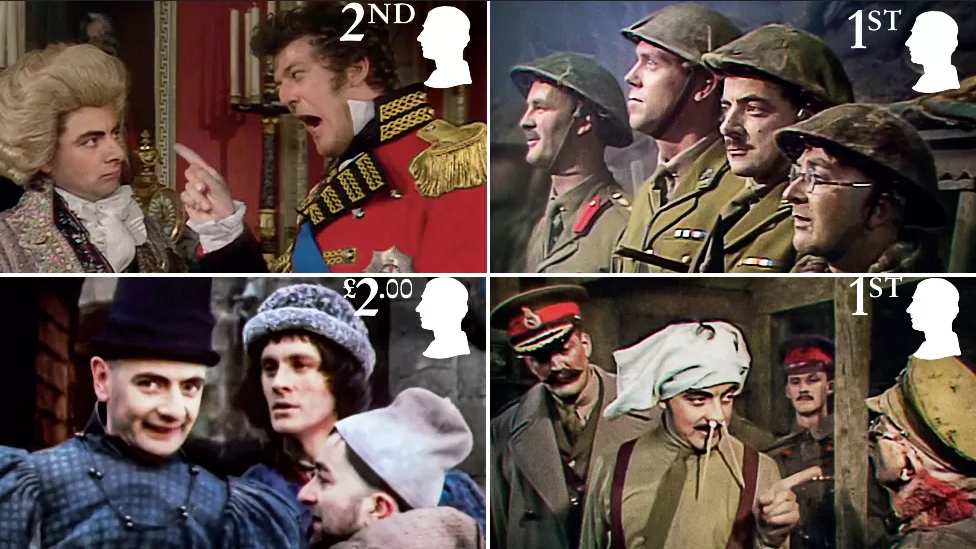
New British stamps issued on the 40th anniversary of the BBC comedy series Blackadder

I was probably always going to love history — my dad was obsessed with it — but Blackadder helped imprint the idea that the past can be one great black comedy. History is funny because people’s behaviour is often quite irrational, or spiteful, or motivated by petty reasons that contrast with their high-minded principles — and no doubt we will seem the same to future generations, too.

That was the whole idea behind Blackadder because, as creator Richard Curtis points out in a documentary screened tonight on Gold, he’s “a modern person in the stupidity of ancient times”.

Yet when the idea was first proposed by Curtis and Rowan Atkinson, they were advised that there are two sitcom premises that can never work — shows set in heaven and hell, or those in historical settings. And Blackadder was lucky to survive its first season.

Atkinson and Curtis had met at Oxford, going on to work together on Not the Nine O’Clock News, where they’d met producer John Lloyd. The two men were inspired by Fawlty Towers, but were also determined to avoid any comparison with John Cleese and Connie Booth’s great creation, so decided on a setting as far removed from a south coast hotel as possible.

Aired on 15 June, 1983, The Black Adder was quite lavish. There were location shots in places like Alnwick Castle and huge amounts spent on costumes and horses. Curtis says that one of the hats Atkinson wore was worth more than he was paid for writing the episode. It featured such big names as Brian Blessed and Peter Cook, the godfather of alternative comedy whose presence granted the show its place in the apostolic succession. But, while the first series has its moments, it was flawed; the original Blackadder was a weasel-like and pathetic figure, and less clever than his sidekick Baldrick. The comedy didn’t exactly work.

I was fortunate enough to encounter the second series, set in Elizabethan England, before I saw any of the first series. The original has its funny moments, but Ed is quite correct that it’s less than the sum of its parts. Brian Blessed steals every scene he’s in (as always), and Peter Cook’s portrayal of Richard III is great. The rest … is kinda funny if you know a bit of the history. Thankfully, there was more to come.

Blackadder II aired at the start of January 1986, and had a much smaller budget and a simpler set up — and it was far, far funnier, the protagonist no longer a conniving weasel but a court sycophant with Baldrick and Percy as comedy punchbags.

“Well, it is said, Percy, that civilised man seeks out good and intelligent company, so that through learned discourse he may rise above the savage and closer to God. Personally, however, I like to start the day with a total dickhead to remind me I’m best.”

(Fans of comedy shows who quote the lines endlessly can become quite tedious but, well, tough.)

Or: “The eyes are open, the mouth moves, but Mr. Brain has long since departed, hasn’t he, Percy?”

Towards Baldrick he is somewhat more indulgent, telling him that “Thinking is so important“.

“I’ve been in your service since I was two and a half my Lord,” his dogsbody protests upon being thrown out: “Well that is why I am so utterly sick of the sight of you.”

Elton also thought the medieval era to be too squalid and wanted Season 2 set in the “sexier” Elizabethan era (and indeed Edmund’s outfit is rather sexy, as Percy might put it).

June 13, 2023

Why The Far Side is a masterclass in storytelling

Filed under: Books, Humour, Media, USA — Tags: , , — Nicholas @ 02:00

The Gaze
Published 26 Dec 2019

The Far Side by Gary Larson is one of the best and most praised cartoons in history. But what makes The Far Side so good? What is the legacy of Gary Larson? And most importantly: what can we learn from The Far Side?

0:00 Pixar and Storytelling
1:22 How Gary Larson tells a story
2:42 The Far Side facts and figures
3:22 The level of detail in The Far Side
4:04 Telling a story with one image and a punchline
5:09 What is The Far Side about?
7:11 Gary Larson and naturalism
7:40 Controversy over The Far Side
8:10 The legacy of The Far Side
9:00 Conclusion
(more…)

May 12, 2023

TL;DR Edition Of All 66 Books Of The Bible

Filed under: Books, Humour, Religion — Tags: , — Nicholas @ 02:00

The Babylon Bee
Published 3 Feb 2023

With The TL;DR Edition of the Bible, you can forget about reading through the Bible in a year — now you can read through the Bible in about five minutes!
(more…)

May 8, 2023

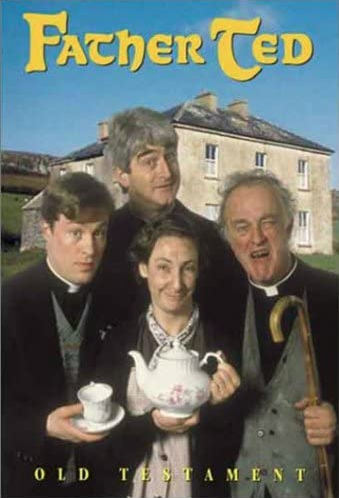
Father Ted as Ireland’s answer to Fawlty Towers

Filed under: Europe, History, Humour, Media, Religion — Tags: , , , — Nicholas @ 03:00

Conor Fitzgerald on the tragically short run of the classic Irish comedy Father Ted:

Fondly remembered and occasionally quoted, Father Ted has its place in the broad canon of the British sitcom. But in Ireland, even 25 years since its finale, it has always been so much more. Its status is closer to Fawlty Towers in England or Cheers in the United States: the national sitcom, a piece of light entertainment that nevertheless Says Something Meaningful About Us.

Not only was Father Ted one of the few successful TV representations of Ireland, it was made during Ireland’s version of the Swinging Sixties, our flux decade of the Nineties. The accelerating collapse of the Church and the exposure of longstanding political corruption coincided with the dawn of the Celtic Tiger years, lending peripheral Ireland a sense of self-conscious modernity. It was a unique national turning point, where our 19th-century past seemed to co-exist with our 21st-century future. In reflecting this upheaval, Father Ted has become not just a social historical document, but a portent of where Ireland stands today.

It’s not the sort of thing that national epics are normally made of. The programme is about three Catholic Priests — Fathers Ted Crilly, Dougal McGuire, and Jack Hackett — on Craggy Island, a remote settlement off the west coast of Ireland. All three priests have been exiled to this purgatory by the terrifying Bishop Len Brennan (their misdemeanours are never referred to directly, but Ted often makes oblique reference to the fact that “the funds were only resting in my account”). Most episodes revolve around an absurdist version of Church life, Ted’s schemes to escape the island and their interactions with the island’s townsfolk.

Rarely for domestic Irish TV, it was a sitcom written by Irish people and it was set within a central Irish institution, the Catholic Church. And the dearth of representations of Irish people in entertainment meant it crystallised many Irish archetypes for the first time. Ireland itself hadn’t always been a welcoming place for satirists. Ted star Dermot Morgan knew this well — his major project before Ted had been a political comedy radio show named Scrap Saturday, which upset all the wrong people, and was eventually cancelled amid allegations of political interference.

Unlike Scrap Saturday, Ted never sought to be political or self-consciously “relevant”. But Craggy Island is a capsule of Irish life at this time of major social change — not least for gender relations and the Church. Take one married couple, John and Mary, who own the corner shop on Craggy Island. They contrive to show a winsome, loving front to the priest whenever they encounter him, but turn to violent bickering once his back is turned. At one point, Mary tries to drown John in a bucket of water; at another, Father Ted comes into the shop and finds John has locked Mary in a cupboard. When he leaves, they’re arguing over a shotgun.

This peck-and-scratch marriage is still funny, but in 2023 the laughter it provokes is nervous. It’s a product of an Irish society still processing the reality of divorce, only legalised by a referendum in Ireland in 1995, the same year Ted first aired. Though it was not uncommon at that time for people to separate, the divorce campaign had been ugly and emotional. One billboard for No bore the slogan “Hello divorce, goodbye daddy”. The referendum was passed by the tiny margin of 9,000 votes.

Divorce was only one step in the very gradual withering of religious power in Ireland — far more gradual than the rest of Europe. Remember that abortion was only legalised in Ireland five years ago. When Ted was broadcast, the Church was formally still one of the central pillars of Irish life, but its authority rang hollow. Priests often felt like administrators of a vanished country. And on remote Craggy, Ted, Dougal and Jack mirror this directly. All good sitcoms feature characters who are trapped, but Ted is doubly so: first on his island; and second in an institution people are coming to see as irrelevant. He is still an essential member of the community, more than just a ceremonial functionary for weddings and funerals. But it’s just not clear what the essential thing he does is anymore, beyond being a common reference point that deserves token respect.

May 1, 2023

Doctor Sketchy and the Strange Case of the Syndrome of Doom

Filed under: Britain, Humour, Media — Tags: , , , — Nicholas @ 02:00

Lindybeige
Published 24 Jan 2023

I teamed up with the highly-skilled Alasdair Beckett-King and together we threw together this sketch. Can you tell that he went to film school?
(more…)

« Newer PostsOlder Posts »

Powered by WordPress