You’ve heard about it. You’ve read about it. You’ve watched the television documentaries. The de Havilland Comet. Two mysterious crashes in the Mediterranean near Rome. 56 people dead. The planes exploded in mid-air when their pressure cabins ruptured at the corners of the square windows. A hard lesson learned about pressurized airliners, square windows, and metal fatigue. But you haven’t heard the whole story. Find out what really happened in this first video in the series Aircrash Minority Report.
Thumbnail: a Convair XF2Y-1 Sea Dart breaking up after exceeding the stress limit of the airframe. The crashes of the de Havilland Comets would look similar.
Hoity-toity woodworkers say don’t use sapwood. Do they have a point?
When you use this link to visit our sponsor, you support us►
Trend diamond stones: https://amzn.to/2XomWMi
(We may get a small commission if you use one of the above affiliate links.)
Quite often I get asked if you can build a Starter Set Model Kit using ONLY the included paints and glue? Well, why not? What would it actually look like? I feel like there might be a bit of a CHALLENGE coming on …
Join me in this video as I build (and review) the Airfix Messerschmitt Bf109E-3 plastic model kit in 1/72 scale which comes as part of a starter set — with glue, paint and brush included. I will be building this kit with only these products to see how it turns out.
Please consider pledging your support to help keep the channel growing from strength to strength. Find out what’s in-store and how to unlock additional perks here: https://www.patreon.com/modelminutes
This video is intended for adult scale model enthusiasts.
Model Minutes holds no responsibility for any accidents, damage or injury that could occur as a result of attempting to replicate any steps depicted in this video.
Model Minutes
4 days ago
Before you leave a comment about thinning the paint or using extra tools/products, read this:
I don’t think a lot of people watching this one quite “got” what I was going for here. My aim (if it wasn’t clear) was to see how good I could make this model kit using only the included products and a knife. I gave myself really strict rules to follow in an attempt to get a “best case” model out of a “worst case” situation.
Many people seem to think that beginners would instantly know that they are supposed to thin their paints, sand the plastic, fill the gaps, use extra brushes … and if, as a beginner you knew that, then you were so fortunate!
But this video is for those of us (me included) who knew nothing about model building, had no one to help us and nothing to look to for reference. When I started, YouTube didn’t exist (the internet wasn’t really a thing for me growing up either) and if I wanted to read up about modelling it meant buying magazines and looking for the information.
My build in this video is a throwback to my early days, where I built what I wanted, how I wanted, and usually with only what I had, could borrow, recycle or afford with my small amount of pocket money.
Ultimately though, I think the point of this build and video has been missed by some.
It’s meant to be fun, a light and entertaining look at our hobby. After all, isn’t this hobby supposed to be fun anyway?
I’d also like to think that some beginners out there see this one and realise that you don’t have to build a model kit with all these extra things that so many youtubers use these days. Although it’s good to have aspirations I think it’s unrealistic and can put newcomers off. If my video encourages just one new person to start building, then that’s a success right? We should be encouraging new members to the hobby because it’s in our interest too! If you agree, send someone this video and encourage them to start!
TLDR: I made this video for entertainment. It’s not a tutorial. I added extra restrictions because otherwise it wouldn’t be a “challenge” — it would be a normal build video.
Comments Off on Can you build a Starter Set Model Kit using ONLY the included paints and glue?
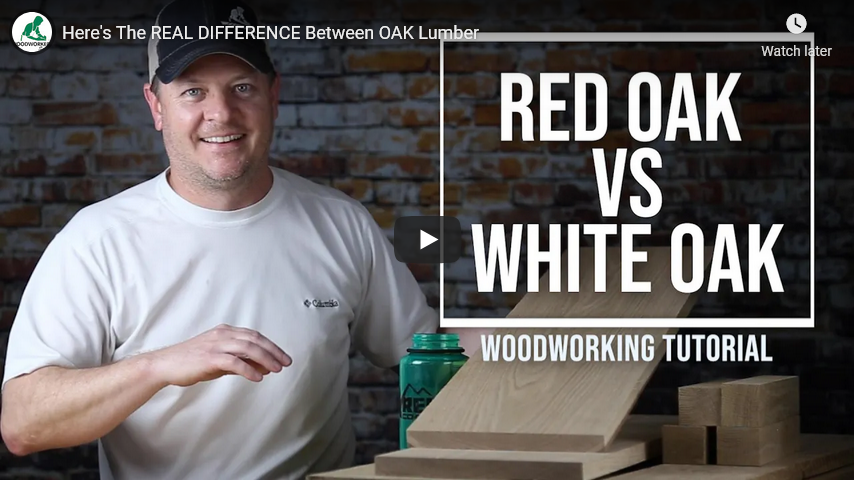
PLEASE EXPLAIN the difference between oak lumber? And the difference between quarter sawn and flat sawn? (See 4:26)
Okay. Let’s do that!
Seriously folks, we get this question a lot. LIKE, A LOT. First of all, sorry about the confusion. Second, it even confounds us from time to time. But we’re gonna fix that today.
Let’s do this! This video walks you through the differences that would matter to a woodworker when you’re choosing a wood for your project and you’re just sick of hearing the word “OAK” and not knowing what the heck that means.
Sounds:
Stock Media provided by Bassment55 / Pond5
Stock Media provided by SoundIdeasCom / Pond5
Stock Media provided by EAR / Pond5
Stock Media provided by SoundJay / Pond5
Stock Media provided by MellauSFX / Pond5
Footage & Stills:
Stock Media provided by ArtbeatsExpress / Pond5
Stock Media provided by GovernmentFootage / Pond5
Stock Media provided by crewcut / Pond5
Stock Media provided by BSANI / Pond5
Stock Media provided by lachetas / Pond5
Stock Media provided by one4two / Pond5
Stock Media provided by ason / Pond5
From the comments:
Woodworkers Source
1 year ago (edited)
Fact Check: 3:14 USS Constitution‘s hull is made of both white oak and live oak. While the ship’s ability to take a pounding of cannonball fire isn’t because of the white oak alone. Our point remains the same, though, that white oak is strong, durable, and a good choice for projects that will be exposed to water or when toughness is important to you. Thanks for your time. 👍
Comments Off on Here’s The REAL DIFFERENCE Between OAK Lumber
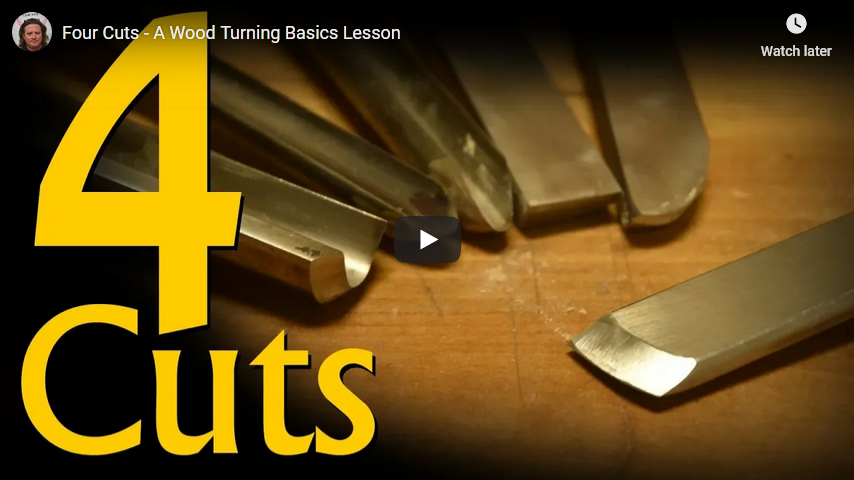
There are only a few main cuts in turning and 3 turning blank orientations. Success comes from understanding the grain’s interaction with an edge/wedge. And since there are only a few handful of tools this is an easy reach for new woodworkers. Grasp this and your enjoyment of the craft and quality of results will all improve.
This channel is based on the value for value proposition. We depend upon patrons like you to fund our channel if you receive value from it. The time away from “real work” that is our biggest expense. So if you feel these videos and series are of value to you and others please consider shopping and patronizing these sites:
What’s the difference between concrete and cement?
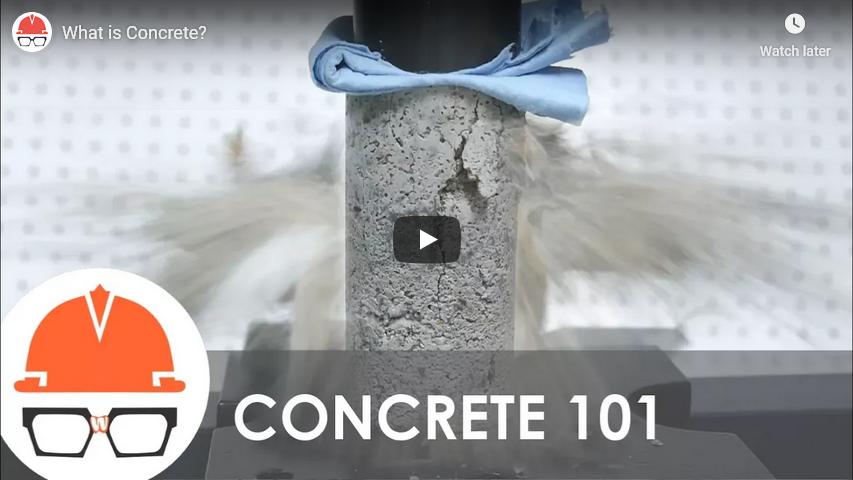
Concrete is the most important construction material on earth and foundation of our modern society. At first glance it seems rudimentary, but there is a tremendous amount of complexity involved in every part of designing and placing concrete. This video is meant to be a bare-bones introduction to the topic, with a cool demonstration of concrete strength using a hydraulic press.
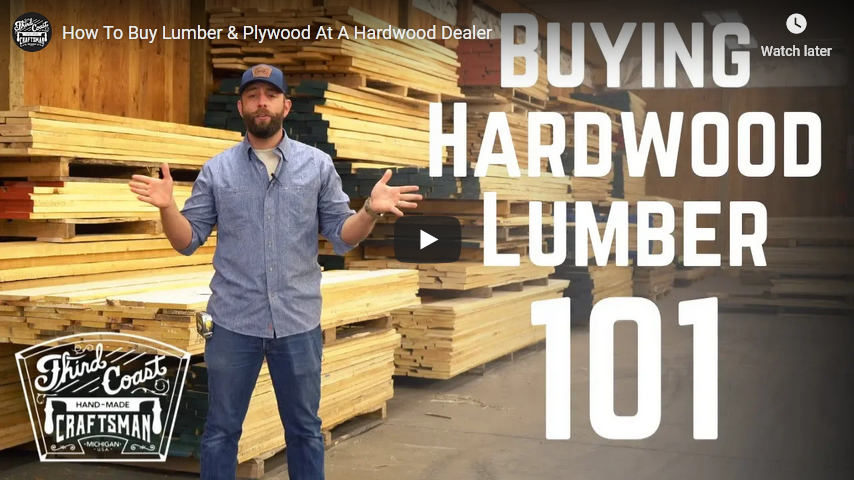
In this video I explain all you need to know to understand the world of hardwood lumber when going to a hardwood lumber yard or dealer to pick out your hardwoods or plywood for your next project.
DISCLAIMER: Woodworking and the use of power and hand tools can be extremely dangerous. You are responsible for understanding the safe use of your tools and techniques. Your safety is YOUR responsibility, I accept NO responsibility or liability for any injuries, accidents, death occurring to you or others if you attempt to do the things that I do or use advice that I give.
Comments Off on How To Buy Lumber & Plywood At A Hardwood Dealer
It seems to happen almost as regularly as Old Faithful, as someone blows a virtual gasket over the reserves of this or that mineral “running out” in x number of years. Tim Worstall explains why this is a silly misunderstanding of what the term “mineral reserves” actually means:
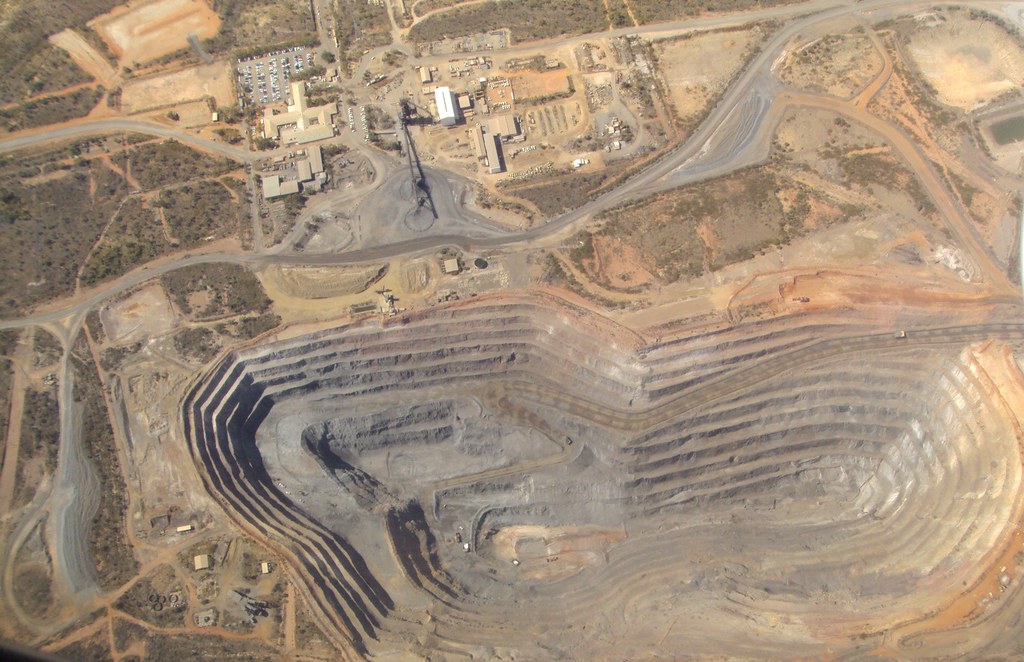
“Aerial view of a small mine near Mt Isa Queensland.” by denisbin is licensed under CC BY-ND 2.0
It’s not exactly unusual to see some environmental type running around screaming because mineral reserves are about to run out. The Club of Rome report, the EU’s “circular economy” ideas, Blueprint for Survival, they’re all based upon the idea that said reserves are going to run out.
They look at the usual listing (USGS, here) and note that at the current rate of usage reserves will run out in 30 to 50 years. Entirely correct they are too. It’s the next step which is such drivelling idiocy. For the claim then becomes that we will run out of those metals, those minerals, when the reserves do. This being idiot bollocks.
For a mineral reserve is, as best colloquial language can put it, the stuff we’ve prepared for use in the next few decades. Like, say, 30 to 50 years. That we’re going to run out of what we’ve got prepared isn’t a problem. For we’ve an entire industry, mining, whose job to to go prepare some more for us to use.
[…] A mineral reserve is something created by the mining company. Created by measuring, testing, test extracting and proving that the mineral can be processed, using current technology, at current prices, and produce a profit. Proving that this is not just dirt but is in fact ore.
Mineral reserves are things we humans make, not things that exist.
Comments Off on Misunderstanding what is meant by “mineral reserves”
My 5 Top Books for Blacksmiths http://bit.ly/1OmoMBY
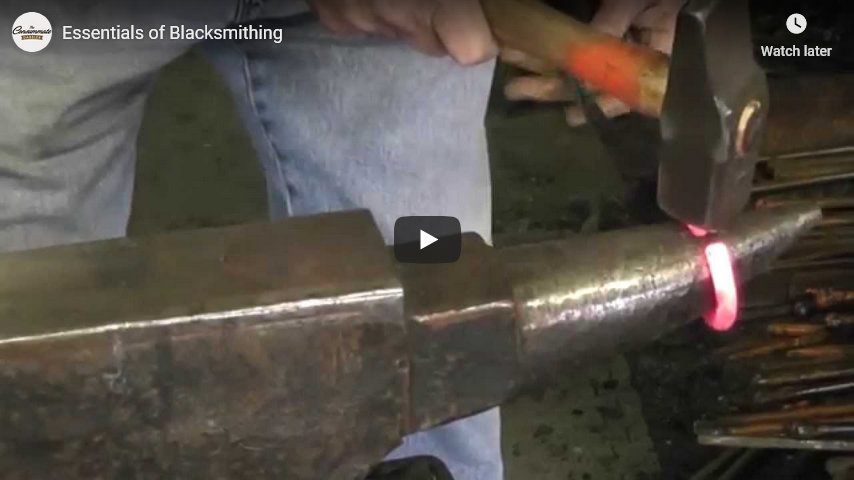
Details http://bit.ly/1oxQnX2 – A detailed demonstration and explanation of the tools, techniques and methods of a blacksmith. This video provides a thorough education into the basics of what you need to know to become a blacksmith. www.TheConsummateDabbler.com
From the comments:
The Consummate Dabbler
4 years ago (edited)
By request; more blacksmithing information and instructional information:
– 25 of the World’s Most Famous Blacksmiths http://bit.ly/1rv3r35
– 5 Best Books to Learn to Blacksmith http://bit.ly/1OmoMBY
– Anvil Height – How to Get it Right http://bit.ly/1OxOwk3
– Essentials of Blacksmithing – All the Tools and Methods http://bit.ly/1oxQnX2
In the latest Age of Invention newsletter, Anton Howes considers the meteoric rise in lead production in England and Wales from the dissolution of the monasteries under Henry VIII to the Thirty Years’ War in Europe:
The well-preserved ruins of Fountains Abbey, a Cistercian monastery near Ripon in North Yorkshire. Founded in 1132 and dissolved by order of King Henry VIII in 1539. It is now owned by the Royal Trust as part of Studley Royal Park, a UNESCO World Heritage Site. Photo by Admiralgary via Wikimedia Commons.
In the early sixteenth century, England was a minor producer of the stuff. It was widespread and cheap enough to be used for roofing buildings (unlike much of the rest of Europe, where copper was preferred), but the country never produced more than a few hundred tons per year. It didn’t really need to. Like stone in [the game] Dawn of Man, you could amass a stockpile and not worry too much about any leaky bucket problems [where stockpiles need to be replenished due to wastage or other “drains”]. The lead in roofs could always be recycled, and hardly any more was needed for pipes or cisterns. The vast majority of the demand came from Germany, and then the New World, where it was used to extract silver from copper ore. Even this dissipated in the mid-sixteenth century, when the New World silver mines began to switch to using mercury instead.
Yet by 1600, England was producing about 3,000 tons of lead a year, up from just 300 in the 1560s. By 1700, it was producing two thirds of Europe’s lead — a whopping 20,000 tons a year. How?
Unlike copper or iron, there is no evidence that lead mining or processing techniques were imported. If anything, they seem to have emerged from the Mendips, in Somerset, where production costs fell with the introduction of furnace smelting in the 1540s. As well as raising the extraction rates from the ore coming up from the mines, the new furnaces allowed previously unusable ores — found in the easily-accessible waste tips of old mining camps — to be smelted after some simple sifting. Unfortunately, we don’t have a clear idea of who was responsible for the innovation.
Yet the source of England’s supremacy was really, at first, religious. Following the dissolution of the monasteries by Henry VIII in the 1530s, the melting down of their roofs dumped some 12,000 tons of lead onto England’s markets — at least a year’s worth of Europe’s entire output. Although the immediate effect was to annihilate England’s own lead industry, the medium-term effect was to send the other European producers into disarray. By the 1580s, once the stockpile had depleted, England’s lead producers were among the only ones left standing. The sale of monastic lead ensured that the English retained a foothold in foreign markets, while the cost-saving innovations then gave them the competitive edge. These factors explain, at least, England’s eventual hold over the European lead market.
But there was yet another phenomenon responsible for the industry’s massively increased scale: the development of hand-held firearms. Gunpowder technology was of course centuries old, but cannon had largely fired balls made of stone or cast iron. Muskets and pistols, however, used bullets made of lead. With the proliferation of the weapons over the course of the seventeenth century, lead thus acquired a major leaky bucket problem. Bullets were too costly to recycle, leading to an estimated fifth of Europe’s annual production of lead disappearing every year — a wastage that only increased as armies grew, weapons’ rate of fire improved, and the continent experienced extraordinary violence. Europe lost an estimated fifth of its population to the Thirty Years’ War, and England itself succumbed to civil strife.
England’s lead industry thus had to drastically increase its production just to maintain Europe’s stock of lead, let alone increase it. It was from soldiers entering the fray, to trade bullets across sodden fields, that it owed its extraordinary success.
Comments Off on English lead and the European markets of the 1600s