
Just to take one small example, The X-Files was hitting its stride in 1994, and I was smack dab in the target demo: Nerdy college dude. And yet, all the show’s basic assumptions rubbed me wrong. Mulder was obviously supposed to be cool, but as I saw it, the show went out of its way to make him look like a loser — no girlfriend, no family, not even a pet, spanks it to porn (an at least somewhat risqué thing to imply on network tv, even at that late date). More than that, though, was the show’s attitude towards the government. You’re asking me to believe that the government — Bill Clinton’s government — is competent enough to keep an alien conspiracy under wraps?
I wasn’t in any way political back then. If forced to pick a side, I’d have been reflexively liberal, like all college kids are. I didn’t know the first thing about what was going on out in the world, let alone in the corridors of power in Washington, but even I found that pretty farfetched.
More importantly, the zeitgeist I saw was rapidly changing. X Files creator Chris Carter was born in 1956 and grew up in sunny SoCal (his wiki entry makes sure to give us his favorite surfing stance), so he more than most probably wrestled with the dilemma of how to bring Flower Power into Ronald Reagan’s 1980s. Hence the weird disconnect of the early 1990s, when Bill Clinton got his groovy, greasy, chicken-fried hippie self into the White House: The same people who, in their own college days, had nothing but hatred for the CIA and their domestic Mini-Me, the FBI, were all of a sudden kinda sorta coming around on the idea that The Feds are our friends — since, you know, the Feds are now us. It’s probably not a coincidence that Agent Mulder, FBI, was the star of The X-Files.
Explains a lot about “Gen X”, don’t it? When every single authority figure in your life, from the President on down, tells you to Fight the Power, the only way out of the clown show is to be, you know, like, whateverrr about everything — learned helplessness, 1994 version.
But smoked-out, flannel-clad, and apathetic is no way to go through life, and so we turned into a generation of suck-ups and toadies. Oh, the lunatic Marxists in the Teachers’ Unions want to encourage kids to “transition” in elementary school. Dude … you know, like, whateverrr. The college kids of 1994 are the middle managers, the Deep Staters, the lever-pullers of 2021. It’s working out about as well as you might’ve expected. You don’t need Agent Mulder to solve this mystery.
Severian, “1994”, Rotten Chestnuts, 2021-04-15.
October 20, 2023
QotD: The Gen-X-Files
September 17, 2023
QotD: One of the most successful propaganda campaigns in history
Ok, ok, is everyone done laughing yet? Go ahead, get it all out of your system; I’ll wait. Everyone back? Ok, moving on:
What the PTB actually did, of course, was a multi-level propaganda campaign. It was brilliant. It took a few years, of course, but the evidence is all around you. Quick: When’s the last time you saw anyone smoking in a mainstream movie? Even period films about the Forties, say — the ones where they take infinite pains to get just the right period-appropriate shade of Formica on the diner’s countertops — ignore the obvious historical reality of people puffing away like chimneys.
Indeed, it’s all but universal now, and has been for a long time, that characters who smoke are the bad guys.
Here again, look at college kids. I hate to keep beating this dead horse, but it’s really the best example I know of the phenomenon. Any time I taught the Early Modern period, I had to mention the massive economic and cultural effects of tobacco. So I encouraged kids to try it for themselves — everyone here is over 18, I said, so it’s perfectly legal. Want to know what all the hype was about? Just run down to the gas station, buy a pack, and light one up!
Around the turn of the century, I always had a few smokers in class, so I could say “bum one off So-and-So”. Even that would get me a few uneasy chuckles. A few years later, and not only were there no smokers in my classes, but the kids would be actively uncomfortable with the suggestion. By the end of my teaching career, when I couldn’t care less anymore, I was openly taunting them about it. You people have no problem with potheads, I’d say. I bet well over half of you are on Ritalin, Prozac, Xanax, Klonopin, shit that’s bad for you, in ways we don’t even understand yet, but you’re balking at one cigarette? It’s unsafe? Oh, come on, some of you are going to leave here and go light up a completely unfiltered ditch weed, and as for the rest of you, you know all about crazy sex fetishes I’ve never even heard of. You get blackout drunk at the football games every weekend, but oh no, you can’t have one cigarette, it’s so unhealthy.
Such is the power of propaganda, and it’s the only repression that works for the PTB when they’ve truly set their faces against a behavior …
Severian, “The Mob, Faux-tism, and the Ever-Rising Costs of Compliance”, Founding Questions, 2021-02-02.
September 14, 2023
QotD: Going to “the mall”
“Eh, it was dead,” you might say.
“What did you do?”
“Nothing.”
Neither was true. Every trip to the mall had a routine. You’d swing by the sausage and cheese store for samples. You’d go to the record store to leaf through the sheaves of albums, nodding at the rock gods’ pictures on the wall, content in the cocoon of your generation’s culture. Head over to Chess King to see if there was something stylish you could wear on a date, if you ever had one; saunter casually into Spencer Gifts to look at the posters in the back, snicker at the naughty gifts, marvel at some electronic thing that cast colored patterns on the wall. Then you’d find a place, maybe by the fountain in the center, and watch the world go past in that agreeably tranquilized state of mall shopping.
Dead? Hardly. Okay, maybe it was the afternoon, low traffic. No movie you really wanted to see, the same stuff in the stores you saw last week. Of course you’d go back tomorrow, because that’s what you did with your friends. You went to the mall.
A dead mall is something else today: a vast dark cavern strewn with trash, stripped of its glitter, its escalators frozen, waiting for the claws to take it apart. The internet abounds with photos taken by surreptitious spelunkers, documenting the last days of once-prosperous malls. We look at these pictures with fascination and sadness. No one said they’d last forever. But there wasn’t any reason to think they wouldn’t. Hanging out as teens, we never thought we’d outlive the mall.
James Lileks, “The Allure of Ruins”, Discourse, 2023-06-12.
March 15, 2023
QotD: The coming generation isn’t the Millennials … it’s Gen X
That’s your next layer of political and social control. The youngest of us are in their late 30s (again, using the broadest definition); most of us are well into middle age, and some of us are plunging headfirst into late middle age. The chiefs of police, the military’s senior staff officers (including, by now, some general and flag officers), the CEOs and CFOs … they’re not Millennials, they’re Xers.
Admittedly we’re a forgettable bunch. We didn’t get a chance at natural, healthy teenage rebellion, because our parents, the goddamn Boomers, claimed a monopoly on rebellion, so we had to be all, you know, like, whatever about it. The Boomers thought Andy Warhol was a serious artist and Bob Dylan a talented musician; is it any wonder that Kurt Cobain’s godawful caterwauling was the best we could do?
All of that is water under the bridge, of course. But here’s where it gets really, really meta: This great social upheaval is, for us, a copy of a copy. It’s people who were actually alive in the 1960s cosplaying The Sixties™ — just like they did the entire time we were growing up. Just as we had no template for teenage rebellion, we don’t really have a template for riots and whatnot either. Some of us have decided to crank it up to eleven — all of the most obnoxious Karens are Gen Xers — but lots of us … haven’t. I really have no idea just what the majority of my generational cohort is doing right now while our most vocal idiots are out Karening, in much the same way I have no idea what the majority of Silents were doing while the Chicago Seven were out doing their thing.
All I know is, there’s an entire layer of political power between AOC and Pelosi. We haven’t really seen it up until now, but it’s there. Is Gen X finally, at long last, going to get its shit together? I suspect that the real drama is still waiting in the wings.
Severian, “Talkin’ ’bout My Generation!”, Rotten Chestnuts, 2020-06-11.
January 2, 2023
QotD: Academic incentives and the Bobo lifestyle
[…]
Here again, academia provides the answer. But first, let’s talk about David Brooks, the “conservative” infamously aroused by Obama’s perfectly creased pants. There are few sillier people than David Brooks, but “take wisdom where you find it” is my motto (well, that and “mihi dare vinum“), and he really knocked it out of the park with Bobos in Paradise. No, seriously. […] A Bobo, in other words, is a Gen Xer who could compete with the Boomers on their turf … but since he also took the Boomers at their word when they went on (and on and on and on and on) about Sticking It to the Man (an all too common generational failing), the Bobo sees the Boomer’s luxury car / vacation home / trophy wife conspicuous consumption as unbearably gauche. So instead, the Bobo spends $500 on a can opener because it’s good for the environment or is handcrafted by paraplegic Brazilian Eskimos or something, anything, so long as it a) obviously costs a shitload, and b) has some kind of Save-the-World rationale attached to it.
Academia reinforces this. Lots of Gen Xers went into the ivory tower for precisely that reason. Y’all know that the average professor hauls in nearly $200 large, right? The median income for an American worker in 2019 was approximately $46,800. I was in History, not math, but even I can see that the eggheads take home over four times what the average Joe makes. Which sets up another lifestyle contest. When you’re a) richer than sin, b) surrounded by a caste on slave wages, and c) ideologically committed to seeing yourself as The People’s Champion, the only way out is to live Bobo-style. Sure, sure, I have a $500 can opener … but Maricela the cook is really empowered by using it, because it was made by transgendered aborigines Of Color.
And since those Bobos are middle aged now, they’ve indoctrinated two generations of students with this garbage. And those two generations also came up with social media, so now you’ve got the heady combination of lifestyle and persona striving. That’s why the DC crew do what they do. Competitive #wokeness is the only way to go … and since they’ve got their $400-manicured mitts on the levers of power, we all get to be the bit players and stagehands in the big Broadway show that is their special unique wonderfulness.
Severian, “Why So #Woke?”, Rotten Chestnuts, 2020-01-07.
December 23, 2022
QotD: Wokeness as a lifestyle
For Gen X, think of my personal candidate for “everything that’s wrong with the 90s, all in one place,” the 1994 movie Reality Bites. Don’t rent it unless you’re current on your blood pressure meds. It’s four of the 1990s’ most insufferable people (Winona Ryder, Ethan Hawke, Ben Stiller, Janeane Garofalo) quipping about being slackers. Well, except Stiller (also the director), who plays the grasping, uptight, sold-his-soul-to-The-Man yuppie foil to the other three. Stiller is the Gen Xer who chose to compete in the oversaturated career arena; he’s cartoonishly evil. The rest of them hang out in coffee houses, polishing their image. They’re lifestyle competitors.
For Millennials, and whatever we’re calling the upcoming generation (“The Lobotomized Snowflake Posse” is my suggestion, brevity be damned), well, just look at social media. Even lounging-around-Starbucks lifestyle competition is out of reach for people who went $100K in the hole for a Gender Studies degree. The only currency they’ve got is effort — hey, didn’t Karl Marx say something about that? — so Twitter becomes their full time job. Xzhe with the most followers wins.
Severian, “Why So #Woke?”, Rotten Chestnuts, 2020-01-07.
June 14, 2022
QotD: Generation snowflake
So no, no surprises here. Their collective personality makes the Millennials unusually suited for the flirtation with socialism. They are a great match; if this was Tinder, Marx would be getting super liked all the time.
Socialism is the response of a spoiled child when faced with the world that does not genuflect to its every wish the way their parents did – the world as it is must therefore be evil and has to be changed to something radically different. Gen Y, of course, did not just magically became the way they are – they were brought up like that, so we all bear the blame and the responsibility for a generation who resents not being managers in their 20s and not being recognised as special anymore by all their elders. Clearly, the capitalism has failed when I’m not showered down with money after I graduate from my double in media and gender studies.
Arthur Chrenkoff, “Socialism as a Millennial religion”, The Daily Chrenk, 2019-02-19.
June 12, 2022
QotD: Zima
There was, however, something perversely enticing about a drink that seemed to come from a post-apocalyptic wasteland in which color did not exist. There was an ingrained assumption that Zima must be expressly targeted at somebody, but nobody knew who that was … Zima was ridiculous … but did that actually mean it was brilliant? The only viable conclusion was “sort of”.
It’s true at first blush, but so douchey that you want it to be wrong just to spite whoever wrote it. I’ve never wanted a Zima more in my life than I did after reading that passage. But at second glance, it’s laughably false. Ask anyone who was in college in the 1990s; they’ll tell you exactly who Zima was “expressly targeted at”: Frat bros who were expecting female company. Because it was clear — no, really, it was beer(-ish) that looked like club soda — it somehow seemed like “diet beer”. Which meant your female party guests were almost guaranteed to have three or four more than they should.
In other words: Zima was the midrange panty dropper. Not as classy as white zinfandel, not as trashy as Boone’s Farm, there was no other possible reason to have it in your dorm fridge, but it somehow had plausible deniability when you offered it to her as a light refreshment. If Klosterman ever had sex at any time between January 1, 1990 and December 31, 1999, he knows this. There’s no way he doesn’t.
Severian, “A Meta-Review”, Founding Questions, 2022-02-24.
June 4, 2022
QotD: A smidgen of forgiveness for the Boomers
That has to mess with your head a bit.
In the same way, no previous generation had ever seen their youth commercialized and sold back to them in middle age, and that’s what messed with our heads. The passing fancies of those ordinary suburban kids in 1963 all involved sex, drugs, and rock ‘n’ roll. We — Gen X — wanted those things too, but since by definition nothing is lamer than your parents, we had to be all, like, you know, whatever about it.
If you can grok the concept of a 45 year old telling you — with complete, almost heartbreaking sincerity — not to trust anyone over 30, you can grok the 1990s.
If you can’t, I don’t recommend trying. It’s like an anti-koan — if you solve it, you’ll achieve a lower consciousness. But if you’re determined to experience it, get really, really, really drunk and watch Forrest Gump a few times back to back. Really experience it as a work of art … because it is. It’s meticulously constructed. Forrest Gump is a mildly retarded man who stumbles, through dumb fucking luck, into fame and fortune through every significant event of the last half century. (He even has a huge dick, although that’s a detail from the source novel that got left on the cutting room floor).
Is there any more perfect metaphor for My G-G-Generation than that?
That’s what we grew up with. That whole generation was what some wag said about George Bush the First: Born on third base, thinking he hit a triple. And, of course, by merciless application of cold logic: that was also us. The only difference was that while the Boomers were congenitally incapable of seeing it, we were congenitally incapable of getting over it. So, you know, like, whatever.
Severian, “A Meta-Review”, Founding Questions, 2022-02-24.
February 2, 2022
Neil Young revives the PMRC
Jim Treacher invites you on a trip down memory lane to a time when musicians like Neil Young were [gasp!] against censorship:
If you’re Generation X or older, you might be getting flashbacks over this whole “Neil Young vs. Joe Rogan & Spotify” contretemps. On one side, we’ve got a popular public figure who’s expressing his thoughts and opinions, just as America’s Founding Fathers told us we get to do. On the other side, we’ve got a bunch of miserable old fuddy-duddies who want to shut down free speech because they believe it hurts people.
In other words, Neil Young just revived the PMRC.
If you don’t know what the PMRC was and you’re too lazy to google it, here’s the short version:
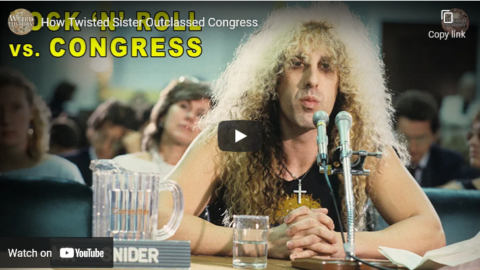
Back in the ’80s, a senator’s wife named Tipper Gore got sick of her kids listening to music she didn’t like, so she started an organization called the Parents Music Resource Center. The PMRC compiled a list of songs they found unacceptable, including “Darling Nikki” by Prince, “We’re Not Gonna Take It” by Twisted Sister, and “She Bop” by Cyndi Lauper. Then Tipper used her political connections to convince the Senate to hold hearings about this supposedly dangerous music.
A lot of Americans decided they liked what popular entertainers were saying, and a handful of busybodies tried to put a stop to it. “If we don’t want to listen to it, nobody should get to listen to it. We need to protect the helpless unwashed masses from themselves!”
Sound familiar?
But then this happened:
If you’ve got a half-hour to spare, you can watch Dee Snider’s entire Senate testimony here. By the time he was done, the PMRC had been exposed for the meddling, hypocritical clowns they were. Their brief moment of relevance was over, at the hands of a guy who looked like Bette Midler transitioning into a Wookie.
The PMRC did get a consolation prize, though: the “PARENTAL ADVISORY” sticker you can find on a lot of cassettes and CDs from the era. Y’know, the sticker that made kids want to listen to what was inside because their parents wouldn’t like it.
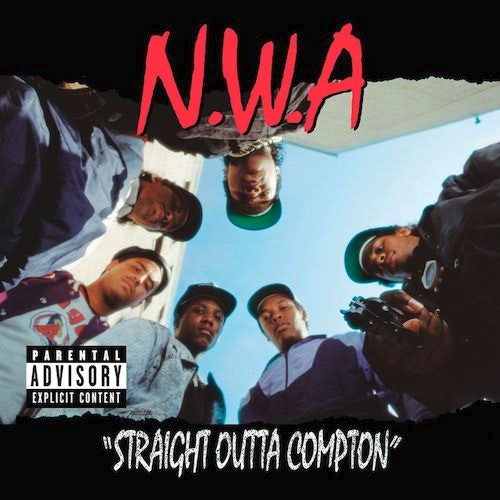
Over the next couple of decades, the PMRC ended up helping a lot of artists sell a lot of records. Like this one:
I remember seeing that CD cover for the first time and thinking, “Damn … this must be awesome.” And it was! If not for Tipper Gore, NWA might not have become superstars and Dr. Dre probably wouldn’t be a near-billionaire now.
November 23, 2021
QotD: Generation X and the 1990s
I’m referring, of course, to Gen X’s patented brand of “irony”. We’ve talked about this before, but here’s a quick recap: Every middle-class kid born after about 1965 was raised to believe that Authenticity was the thing, the only thing. Just do what you feel. Question authority. Don’t listen to The Man!
The problem, of course, is that we were told this by The Man.
It had a weird, telescoping effect. On campus, you were surrounded by people who actually were hippies, plus a whole bunch of wild-eyed fanatics who were sure they would’ve made truly excellent hippies if they hadn’t been in elementary school at the time, plus a bunch of kids — these would be your classmates — who thought of “Woodstock” as a brand name, a kind of backpacking-through-Europe, taking-a-year-off-to-find-myself experience that everyone has as a matter of course before settling down to the serious business of making partner at the law firm.
In short: Our parents were stuck in adolescence, and, being adolescents ourselves, we didn’t understand that “Rebellion” wasn’t something the hippies invented. We wanted to experience sex, drugs, and rock’n’roll, too, but since the Baby Boomers treated those as their exclusive property instead of what they actually are — i.e. the natural impulses of teenagers in all times and places — we had to be all, like, you know, whatever about it. […]
That was the 1990s. Faced with a paradox that everything your parents say, do, and believe is lame — according to your parents! — the only safe way is to make sure nobody can figure out exactly what your attitude is at any given instant. You might end up working 90 hour weeks at the office to pay the nut on the McMansion and the Volvo the same way they did, but at least you’d be, you know, ironic about it. The ketman of the suburbs.
See what happens when you listen to your elders, kids?
Severian, “The Virtue of Hypocrisy”, Rotten Chestnuts, 2019-01-19.
May 21, 2021
Andrew Potter – “the greatest gift you can give a generation is to ignore them”
In The Line Andrew Potter speaks up for those forgotten folks who were born after the end of the Baby Boom but before the Millennials appeared:

Generation X Word Cloud Concept collage background
Best Motivation Blog: What Generation Is X https://fatinsl.info/?arsae=https%3A%2F%2Fbestmotivationblog.blogspot.com%2F2020%2F04%2Fwhat-generation-is-x.html
… just as a sense of futurelessness, futility and invisibility catalyzed the original Generation X mentality in the early 90s (as well as the music, art, film and writing that mentality made manifest), this atavistic indignation spurred [Generation X author Douglas] Coupland to write his wonderful screed. It’s great stuff, with quotable lines in every paragraph. (I especially liked “Immunology is not a smorgasbord. How dare you make us subsidize your cluelessness with our bodies.”)
But I want to take issue with the claim that this is a case of Gen X getting screwed yet again. As a fully paid-up member of Gen X, I’ve grown to appreciate over the decades the extent to which the greatest gift you can give a generation is to ignore them.
Let’s back up a bit. Does Generation X even exist? Does any generation exist for that matter? Sociologists and demographers argue that the concept of a “generation”, be it Boomer, Millennial, Zoomer, what have you, is just the result of confusing cohort effects with generational effects. The idea of distinct generations might be good for selling soft drinks or cars or condos or nostalgia, but there is nothing remotely predictive or explanatory about it.
But as I’ve argued before, this just misunderstands what a generation is, and the role they play in our ongoing cultural self-understanding. Whatever else it is, a generation is something that has its own tastes and moods and fashions and jargon, its own sense of what is in and what is out, what is cool and what’s square, and who belongs and who does not. In short, more than anything else a generation is a scene. It is about who and what you claim as your own, and who claims you.
A big part of what helps define a generation are the battles it chooses to fight. The Boomers spent decades obsessed with their countercultural campaign against The Man, while Millennials have spent their time and energy mining the deepest recesses of identity politics. As for Generation X, our principal preoccupation was the question of authenticity and the fear of selling out.
It is hard to underestimate the role of technology in all of this. It is commonly argued that a generation is formed by the technological ecosystem in which it grows up, and while there’s obviously something to that, what is important for Gen X is not what our technology allowed us to do, but what it protected us from.
In particular, what we were protected from was surveillance. I don’t know a single person I grew up with who doesn’t thank their lucky stars that there were no cellphones with cameras around when we were growing up, that there was no Twitter or Facebook or YouTube or TikTok. I can’t imagine what it is like to grow up under the glaring distributed panopticon of social media, knowing that all your friends, everyone at your school, and even your parents are watching your every move, judging your every utterance.
February 16, 2021
QotD: Homo electronicus and the falling murder rate
If you don’t feel like going all Thoreau, you can test the effect by simply writing your comments to this post out longhand, and then waiting an hour before typing them up. I bet you’ll find it mildly annoying no matter what, but if you’ve really got some thoughts on this matter, by then end of the hour you’ll be something close to furious. You’ve been rewired, comrade. You’re homo electronicus. We all are.
This stuff is recent — really recent. There was a limit to how screen-addled even the infamous “latchkey kids” of the 1980s could be. I had “latchkey kid” buddies, and although we had everything we needed to veg out in front of the tube in the very best Gen Z style — video games, sugary snacks, cable — we couldn’t sit and play Atari all day. I don’t mean that we didn’t; we were no smarter than any other boys; we sure as hell didn’t do anything for our health. I mean we couldn’t. Playing video games gave us ants in the pants — my Mom always knew when I’d been over at Steve’s — and eventually it got to the point where we had to put the joystick down and go throw around a football or something.
These days, the inability to play Nintendo for hours on end means you’ve got ADHD. Pass the Ritalin.
Three things made homo electronicus:
- modern medicine
- instant communications
- permanent caloric surplus.
Ritalin is actually one of the more benign examples. Back in the days when we were allowed to notice such things, a certain kind of social critic pointed out that falling murder rates have very little to do with crime reduction. Instead, it’s almost all attributable to advances in emergency medicine. It’s much tougher for Shitavious to kill D’L’eondrae over a pair of sneakers these days. The ER docs patch the victim up, and so what would’ve been murder one is now mere ADW, which means — Soros-funded DAs being what they are — both victim and perp are soon back on the streets, ready for round two. This idiot rapper, for instance, survived being shot nine times. That’s not nine separate shootings, mind you, that’s nine slugs in one incident. Granted the slipshod motherfuckers who capped him need to work on their aim, but surviving even nine flesh wounds from modern firearms is one hell of a testimony to the power of modern medicine …
… a power that does not, I suggest, conduce to positive eugenic outcomes.
Severian, “Recent Evolution”, Rotten Chestnuts, 2020-09-28.
February 7, 2021
QotD: The greatest sin of the Baby Boomers
If that’s harsh on the Boomers, well, sorry, Moonbeam — History don’t care about your feelings. But “the Sixties” isn’t the gravest charge History can lay against you. This is: After all that, you gave the world us, Gen X, the Dumbest Generation of Narcissists in the History of the World. Yes, you guys are responsible for both “Rocky Raccoon” and “Smells Like Teen Spirit.”
Severian, “The Look”, Rotten Chestnuts, 2020-10-09.
January 6, 2020
Gerontophobia – “the most acceptable, widespread prejudice in society today”
In Spiked, Ella Whelan discusses one form of prejudice that is not only common, it’s practically proselytizing for new members:
Have you found yourself grimacing at Zimmer frames on the bus? Do you revel in checking the latest census data to see the average age of the nation? Do you retweet sarky comments about “youthquakes” shaking out the old fuddy-duddies? If so, you might be suffering from gerontophobia – the fear and loathing of old people – which is the most acceptable, widespread prejudice in society today.
Ageism is the one “ism” that is given a free pass. Hating on granny is all the rage. Recently, former US president Barack Obama made headlines by talking about “old people … not getting out of the way”.
The 58-year-old is not the only older politician to turn against his age group. Since the Brexit vote, 76-year-old Vince Cable has been railing against older Leave voters. On a panel with me at the How the Light Gets In festival last year, he drew laughs from a Hampstead crowd for mocking Brexit as a “Zimmer-frame revolution”. The author Ian McEwan also denounced his fellow septuagenarians when he delightedly predicted that by 2019, “1.5 million oldsters, mostly Brexiters, freshly in their graves” could swing public opinion towards remaining in the EU.
The phrase “OK Boomer” went viral last year after a young person posted a clip of herself reacting to a “baby boomer” complaining about “snowflakes” and overgrown teenagers. This derisory response of “OK Boomer”, used to shut down the so-called Baby Boomer generation, was also used by Netflix in one of its social-media posts. It was even used earnestly in the New Zealand parliament by Green politician Chlöe Swarbrick in response to an older colleague.
The instant popularity of the phrase signalled how normalised generational divides have become. There have always been tensions between younger and older generations, but never before has there been so much celebration of youngsters deriding their parents. Rather than rebelling against the old and changing the world, the OK Boomer phenomenon shows how little young people want to interact with older generations, instead preferring petulant put-downs.
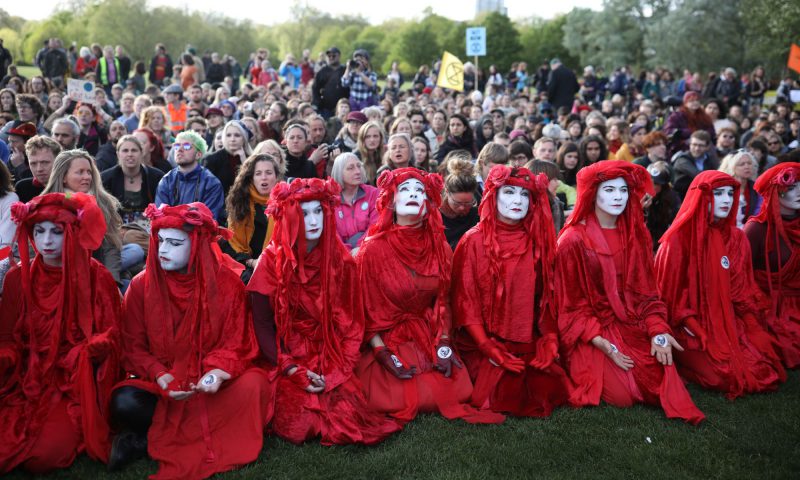
Perhaps the most pronounced and sinister ageism came from the wave of interest in Extinction Rebellion (XR), Greta Thunberg and the climate-emergency panic. From Thunberg being named Time person of the year after blaming older generations for stealing “my dreams and my childhood” to XR Youth proclaiming that “adults need to be accountable to the young people”, climate activism isn’t very oldie friendly. Instead of asking questions about what political changes might be made to help the planet, and, more importantly, the people living on it, environmentalism has veered towards a cultish celebration of youth. Fawning adults have handed over all moral authority to schoolchildren.

Greta Thunberg at the EU Parliament, 16 April, 2019.
European Parliament photo via Wikimedia Commons.


