The Tank Museum
Published on 14 Apr 2017The thirty-fifth Tank Chat, presented David Fletcher MBE, is the first of the videos on the Centurion series of tanks.
The Centurion is one of the most important tanks in the history of the British AFV and is one of the most significant post-war Western tanks. Introduced in the spring of 1945, a small number of the Beach Armoured Recovery Version (BARV) served with the British forces during the Iraq war of 2003, 58 years later.
To find out more, buy the Haynes Centurion tank manual. https://www.myonlinebooking.co.uk/tan…
Support the work of The Tank Museum on Patreon: ► https://www.patreon.com/tankmuseum
Or donate http://tankmuseum.org/support-us/donate
August 24, 2018
Tank Chats #35 Centurion | The Tank Museum
August 13, 2018
Tank Chats #34 Chieftain | The Tank Museum
The Tank Museum
Published on 31 Mar 2017The thirty-fourth Tank Chat, this time presented by Curator David Willey after some help from Eli. https://youtu.be/T33hp0J-LAw
Britain’s Main Battle Tank for twenty years, Chieftain was one of the first true Main Battle Tanks, designed to replace both medium and heavy tanks in front line service.
To find out more, buy the new Haynes Chieftain tank manual. https://www.myonlinebooking.co.uk/tan…
Support the work of The Tank Museum on Patreon: ► https://www.patreon.com/tankmuseum
Or donate http://tankmuseum.org/support-us/donate
July 24, 2018
Ayn Rand and the Hollywood blacklist
In the August/September issue of Reason, Jesse Walker discusses the role Ayn Rand played in the House Committee on Un-American Activities’ anti-Communist hearings on Tinseltown’s great and good:
Ayn Rand was a blacklist truther. The novelist and screenwriter had been a friendly witness during the House Committee on Un-American Activities’ 1947 hearings on Hollywood subversion — the probe that prompted the studios to announce that they would not hire Communists. But when she was asked about her testimony two decades later, she claimed that the blacklist was a myth.
“I do not know of any red blacklisted in Hollywood,” Rand told a Boston audience in 1967.
“I do know, if the newspaper stories can be trusted, that many of those ‘blacklisted’ people … were working in Hollywood thereafter under assumed names.” The real victims, she insisted, were the hearings’ friendly witnesses. “You talk about the blacklisting of reds. I don’t know of one leftist who has suffered for his views, and conversely, I don’t know of one pro-capitalist who in one form or another did not have to suffer for his views.”
This was misleading, to put it mildly. The blacklist really did exist. It was an organized effort to remove people from the movie industry for their political opinions, and the federal government played a major role in launching it. Anyone who cares about free expression should object to that sort of censorship by proxy, both as it manifested itself in the early days of the Cold War and as it threatens to re-emerge in social media today.
Yes, some of the more talented blacklisted writers continued to find work under assumed names or behind fronts. Dalton Trumbo knew how to write a movie that audiences would pay to see, and so Trumbo’s screenplays remained in demand. But others didn’t do studio work for a long time or left the industry altogether. (Blacklistee Alvah Bessie wound up taking a job as stage manager in a San Francisco nightclub and writing novels on the side.) And even folks like Trumbo found themselves getting paid a lot less. The blacklist eventually dissolved, but that took years. It is simply untrue that no Communists, real or alleged, lost work because of it.
On the other hand, it is true that some of the friendly witnesses of ’47 fared pretty badly. Rand mentioned a few examples at that Boston speech, among them Morrie Ryskind, who worked for those other Marxes when he scripted three Marx Brothers movies. “In Hollywood, he was getting $3,000 a week, which at the time was top money for writers,” she said. But “he has not worked as a writer one day since appearing as a friendly witness.” In Show Trial (Columbia University Press), his engrossing new book about those hearings, the Brandeis historian Thomas Doherty lists several examples of his own, from Jack Moffitt, who stopped getting hired to write motion pictures and fell back on reviewing movies for The Hollywood Reporter, to Fred Niblo Jr., who wound up leaving Hollywood to write religious films for television and documentaries for the State Department. In risk-averse Hollywood, anyone who stuck his head out might lose work for his trouble, especially if he came from the low end of the industry’s totem pole.
But this should not be equated, Doherty writes, “with the state-coerced, institutionally enforced blacklist of Communists, fellow travelers, and stubborn liberals.” That was a more fearsome and intrusive beast.
July 15, 2018
Soviet Gear – Why it Didn’t Die | Feature Fittings
Feature History
Published on 23 Jun 2018———————————————————————————————————–
Patreon
https://www.patreon.com/FeatureHistory
https://twitter.com/Feature_History
———————————————————————————————————–
I do the research, writing, narration, art, and animation. Yes, it is very lonelyIntro Song
Ross Bugden – ChosenMusic by Epidemic Sound: http://epidemicsound.com
May 26, 2018
Sir Humphrey debunks the notion of maintaining a “reserve fleet”
The US Navy keeps a lot of ships around after they’ve been retired from active service (sometimes for decades), and some in the UK are asking if the Royal Navy should do something like that with the soon-to-be-retired Type 23 frigates. Sir Humphrey explains in great detail why this shouldn’t happen:

HMS Westminster (foreground) and HMS Iron Duke, Type 23 frigates of the Royal Navy, in the naval base of Portsmouth, August, 2000.
Image via Wikimedia Commons.
The subject of ‘Reserve Fleets’ is something that often comes up across the internet whenever naval forces are discussed. To many casual observers there is an innate draw to the idea of holding ships back as a contingency against a potential threat. No matter how appealing this idea seems on the surface though, there are a multitude of good reasons why keeping complex warships in reserve at the end of their life is usually a very bad idea.
In broad terms these reasons boil down to four key areas – Maintenance & Material and People & Training. Each of these areas poses a challenge which brought together makes it extremely difficult to consider keeping a ship credible once she has paid off.
Maintenance & Material
The Royal Navy has historically not maintained a large reserve fleet since the 1950s, when the combination of the loss of conscript manpower, the increasing complexity of warships adding to reactivation times and the reality that any global conflict would go nuclear quickly meant that reserve fleets were relatively worthless.After the late 1950s the RN maintained a ‘Standby Squadron’ that usually comprised several vessels that while not fully active, were kept in reasonable running order. For many years Chatham dockyard functioned as the home of the Squadron, which usually comprised ships drawn from classes still in service, that could be brought up to readiness quickly to replace other vessels at sea. This occurred during both the Cod War and the 1982 Falklands War.
It is not clear when the Standby Squadron was formally discontinued, but it played a key part in the RN force structure into the 1980s. For instance, the 1981 defence review foresaw a number of escorts (possibly 7-8 out of 50) being held in quasi-active status. The RN also maintained other ships in full reserve – such as during the lifetime of the Invincible class when usually one of the three was placed into reserve for a year or two ahead of deep refits.
The key distinction here is that this sort of set up required a heavy investment of resources and manpower to keep the ships maintained and fit for sea. A modern warship is never truly alone during her active life – there are always people onboard to maintain systems and keep watch over her. By contrast ships that decommission and pay off will progressively see less and less people onboard until one day they have been stripped down and become ‘dead ships’, and they will be left to rot until the scrappers take them.
To keep a ship in a salvageable condition, able to be made ready for sea requires a significant amount of maintenance and upkeep. This is something that is costly, requiring regular dockings, inspections and repairs, as well as the cost of keeping the ship preserved and vaguely usable. To put a ship into Reserve with the intention of using her again does not mean she can be forgotten about – quite the contrary, they require regular care and maintenance.
To put a ship into reserve at the end of her life and be certain of using her again would require an additional refit to rectify defects. It would also require regular inspections, support and attention throughout the period in reserve.
For a ship that is likely to be used again, it makes reasonable sense to do this as every pound spent on preventative maintenance is likely to save many more in reactivation costs. For a ship likely to pay off, this makes far less sense – you are spending a lot of money to park a ship and wait for it to be scrapped.
March 13, 2018
From slavery to Jim Crow to the civil rights movement
In the latest Libertarian Enterprise, Sean Gabb discusses the role of international affairs in reducing racial inequality in the United States from 1877 to 1981:
The year 1877 is significant in America history, as this was the year in which the Federal Government ceased to interfere in the affairs of its Southern States, and these States began to construct the system of white racial supremacy known as “Jim Crow.” It is also a useful starting point for charting the rise of America to world supremacy. In the years before 1914, the Americans regarded opposition to European colonial rule as a prime foreign policy objective. They resented British/Indian control of the far East and they were strongly opposed to any division of China between the European colonial powers. They preached an ’Open Door Policy’ for China in which none of the white powers would have political control.
Again, this concern for the independence and self-determination of others was inconsistent with their own internal policies. As put by Paul Gilroy in the introduction of The Autobiography of Malcolm X, “the American civil war did not end in 1865.” Until the 1960s and even later blacks remained systematically at a legal and social and economic disadvantage in America. In most of the Southern States, blacks were not allowed to vote or to sit on juries, public and most private services were racially segregated, racial intermarriage was made illegal.
[…]
In the end America did not sign the treaty of Versailles and did not join the League of Nations. American domestic affairs remained insulated from foreign affairs. Wilson himself did much to keep them so. The early twentieth century saw a grown of racial consciousness among American blacks, and a number of charismatic leaders emerged to press the case for black equality. These included intellectual activist W. E. B. Du Bois, entrepreneur C. J. Walker, National Equal Rights League founder William Monroe Trotter, and activist Wells-Barnett, and Marcus Garvey, founder of The Universal Negro Improvement Association. These men wanted to attend and address the Paris Peace Conference in 1919. Wilson ensured that they were kept out.
By the 1930s, we see a growing realisation of the conflict between foreign and domestic policy. Look, for example, at chapter 26 of Harper Lee’s classic novel To Kill A Mockingbird. It is the 1930s and a teacher in the protagonists’ school denounces Nazi mistreatment of the Jews in Germany. She seems completely unaware that the Nuremburg decrees may have compared rather well with the ‘Jim Crow’ system in which she lived.
[…]
What matters about the Cold war for America is that its race relations became a serious embarrassment to its foreign policy. In order to oppose Communism the Americans had to preach their own versions of human rights which included all the usual liberal freedoms – i.e. freedom of speech, freedom of association, equality before the law, and so forth. It also needed the cooperation of an increasing number of non-white post-colonial governments. At every opportunity the Soviets tried to embarrass the Americans by drawing attention to their internal race relations.
Take, for example, the memorandum written in June 1963 by Thomas Hughes, Assistant Secretary of State for Intelligence and Research at the State Department. He summarises some of the main themes of Soviet broadcasts to the Third World: Capitalism provides a natural environment for racism, which will never end so long as the American system needs cheap labour; the federal government’s policy of limited intervention in Southern conflicts is tantamount to support of Southern racism; the United States cannot claim to be the leader of the free world while hypocritically refusing to support civil rights within its own borders.
Hughes adds that, most politically damaging, Soviet broadcasters were arguing that American domestic policy toward its black citizens was ‘indicative of its policy toward peoples of color throughout the world.’ Emerging African, Asian, and South American nations, in other words, should not count on Americans to support their independence.
The journalist Walter Lippmann had noted in 1957 that
the work of the American propagandist is not at present a happy one…. [Segregation] mocks us and haunts us whenever we become eloquent and indignant in the United Nations…The caste system in this country, particularly when as in Little Rock it is maintained by troops, is an enormous, indeed an almost insuperable, obstacle to our leadership in the cause of freedom and human equality.
We can write the history of the American civil rights movement purely in terms of domestic politics. We can for example write about the Brown decision and ’Massive Resistance’ and the crisis in Little Rock. Of course this is entirely legitimate. The struggle for racial equality has deep roots in American history and may well have triumphed even had there been no other countries in the world. However it does seem reasonable to see an international dimension in the rapid progress of racial equality after the 1940s.
March 11, 2018
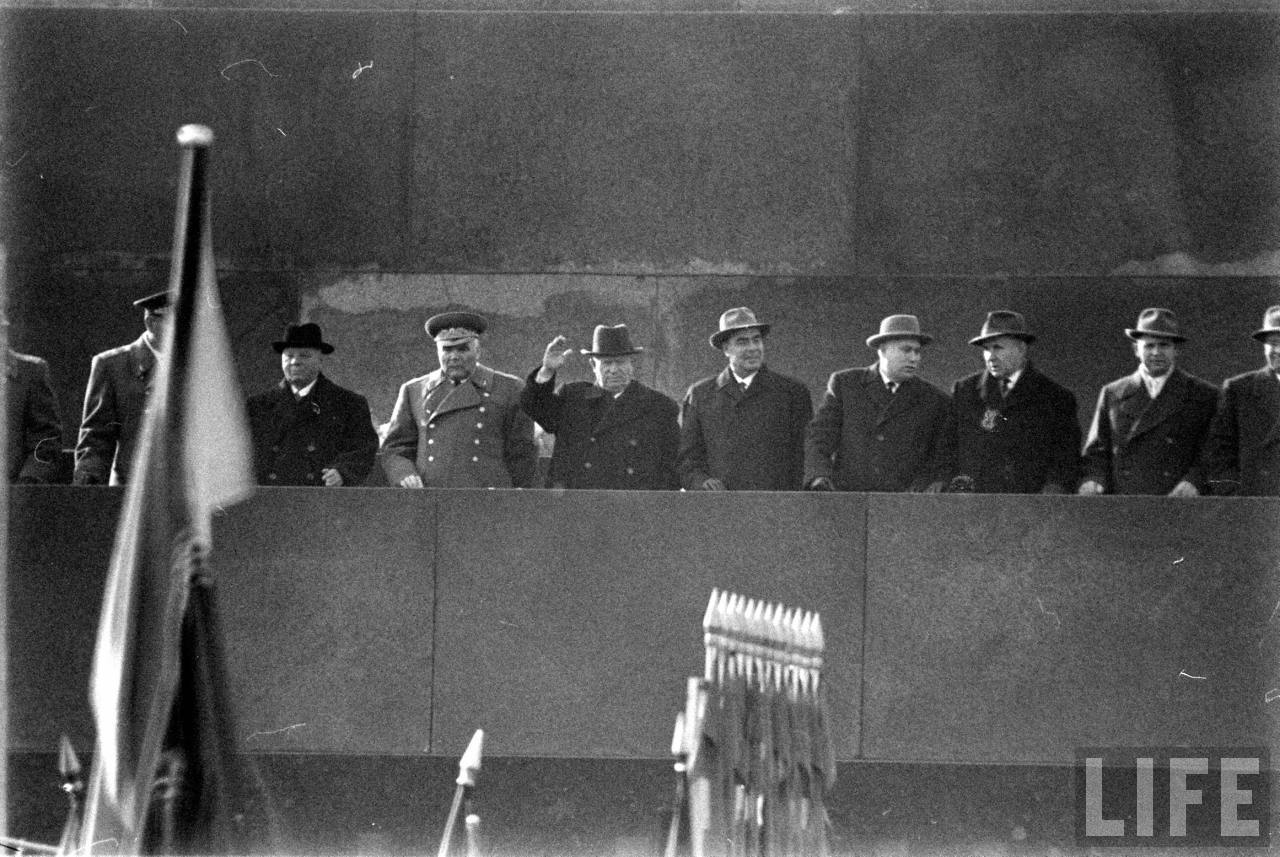
Soviet Leaders in 7 Minutes (History)
Austin Olney
Published on 19 Apr 2016Learn about the leaders of the Soviet Union.
Vladimir Lenin
1917-1922
Joseph Stalin
1922- 1953
Georgy Malenkov
1953-1955
Nikita Khrushchev
1953 – 1964
Leonid Brezhnev
1964 – 1982
Yuri Andropov
1982 – 1984
Konstantin Chernenko
1984 – 1985
Mikhail Gorbachev
1985 – 1991Music – Goldeneye 64 Menu
March 3, 2018
Cuban Missile Crisis – Black Saturday – Extra History – #3
Extra Credits
Published on 1 Mar 2018*Sponsored by DomiNations: https://smarturl.it/CubanMissile1
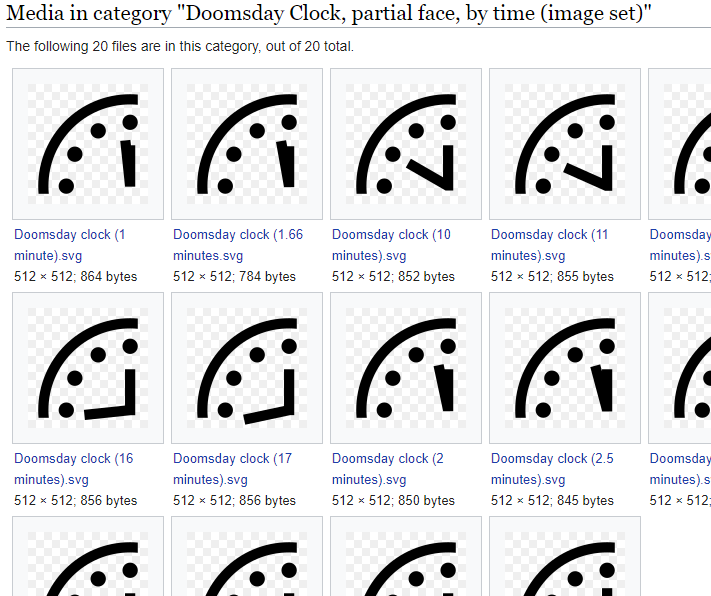
With simultaneous nuclear tests by both the US and Russia, and tense miscommunications among troops on the ground, in the air, and on the water, the doomsday clock ticked to 11:59 PM for one fateful day.
February 23, 2018
Cuban Missile Crisis – Eyeball to Eyeball – Extra History – #2
Extra Credits
Published on 22 Feb 2018Sponsored by DomiNations: https://smarturl.it/CubanMissile1
After President Kennedy’s television address, tensions are rising. Fidel Castro is getting annoyed at the US and Soviet Union alike, and everyone else has their own ideas on what retaliation looks like.
February 17, 2018
Cuban Missile Crisis – I: The Failed Checkmate – Extra History
Extra Credits
Published on 15 Feb 2018An eye for an eye, a missile for a missile — that’s how the saying goes, right? So thought the Soviet Union and the United States in the early fall of 1962, kicking off a 13-day staring contest that scared the world.
January 29, 2018
How the U.S. got shafted out of the FN FAL
Legally Armed America
Published on 31 Dec 2017The FN FAL is one of the greatest battle rifles ever made. Politics caused the U.S. to pass on it while nearly every other NATO country in the world recognized its superiority. And the 7.62 NATO is one of the greatest battle rounds ever made. But we needed an intermediate round. Here’s the story.
* Be sure to join the web’s ONLY 100% pro-gun social community, Gun District at GunDistrict.com. It’s much like Facebook, but without the discrimination against gun owners.
January 28, 2018
Day 13 Cuban Missile Crisis – The End to End All Things and Almost Everything
TimeGhost
Published on 21 Dec 2017On Sunday, 28 October, 1962 the Cuban Missile Crisis is supposed to end, but there are still two nuclear armed Soviet submarines in the waters around the island hunted by the US Navy. And what about Fidel Castro?
January 27, 2018
Day 12 Cuban Missile Crisis – Black Saturday, nuclear war on autopilot…
TimeGhost
Published on 7 Dec 2017On October 27, 1962 a deal to resolve the Cuban Missile Crisis is ever so close, but then almost everything that can go wrong, goes wrong. Political confusion between the leaders, lost and shot down airplanes, errant nuclear armed submarines and exhaustion takes its toll. For those immediately involved it will go down in memory as the Black Saturday.
January 26, 2018
Day 11 Cuban Missile Crisis – Will President Kennedy invade Cuba after all?
TimeGhost
Published on 30 Nov 2017On 26 October 1962, USSR Premier Nikita Khrushchev is preparing to offer the US an olive branch. Meanwhile US President John F Kennedy continue to plan an invasion of Cuba. While the politicians make new plans, their previous military plans take on a life of their own
January 25, 2018
Day 10 Cuban Missile Crisis – Showdown at the U.N. Corral
TimeGhost
Published on 27 Nov 2017On October 25, 1962 while the US Navy are looking for something to do in the Caribbean, both USSR Chairman Khrushchev and US President Kennedy are questioning the success of their actions. Meanwhile US Ambassador to the UN Adlai Stevenson is about to face off with USSR Ambassador to the UN, Valerian Zorin in a historic showdown at the United Nations headquarters in New York.