Quotulatiousness

December 12, 2011

Increasing calls to delay F-35 production until more design bugs are worked out

Filed under: Military, Technology, USA — Tags: , , — Nicholas @ 09:22

Strategy Page on the latest setback to the F-35 program:

U.S. Department of Defense officials are trying to slow down production of the new F-35 fighter because testing is revealing more design problems than anticipated. If the current production schedule remains in place there is a high risk that very expensive modifications will be needed for F-35s that have entered service. The air force has already ordered 58 F-35s to be produced before all testing is completed and plans to produce 472 F-35s this way. The Department of Defense is more concerned about the additional costs than the air force, which just wants to get the aircraft into production as quickly as possible. The air force fears that the production orders will be cut even further if the F-35 does not enter service quickly.

There are more disputes between the Department of Defense and the air force. For example, the two are trying to agree on what the F-35 will cost. The air force insists that it is $65 million each, while the Department of Defense says when all costs are included it will be more like $111 million each. Another number being debated is how many F-35s will actually be produced. The air force assumes 2,443 for the air force, navy, and marines but the Department of Defense is not so sure that many will eventually be built. Total development cost is now put at $65 billion, which comes to over $25 million per aircraft if 2,443 are built. Development costs for the new U.S. F-35 fighter-bomber has grown by more than a third over the last few years. The additional development costs are accompanied by additional delays. Current estimates are that the F-35 will enter service in another 6-7 years. The Department of Defense believes production and development costs will continue to rise and that the number to be built will decline. Both trends increase the average aircraft cost. Based on past experience the higher Department of Defense estimates are more likely to be accurate.

December 7, 2011

Greek army reduces from 30 to 19 brigades

Filed under: Europe, Greece, Military — Tags: , , , , , — Nicholas @ 09:15

Strategy Page lists the initial impact on the Greek armed forces due to the financial squeeze:

The current financial crisis in Greece has led to enormous cutbacks in government spending. The military has not been exempt. This year alone, the defense budget will be cut about a third. Over the next two years, the reduced budget will be cut another 15 percent. The army will lose 11 of its 30 brigades, but the air force has disbanded one of 16 squadrons, but kept the aircraft in service by moving them to surviving squadrons. The navy has retired some older patrol boats.

The army is apparently coping by disbanding many reserve units and retiring older tanks and equipment. There won’t be much new equipment purchased for the next few years, at least. Training will also be cut, because operating vehicles, aircraft and ships for these exercises is expensive. The reduction of training will decrease the combat capabilities of the troops. But the government does not want to dismiss lots of the 156.000 active duty troops. That will just increase the already high (approaching 20 percent) unemployment rate. It’s never a good idea to have a lot of professional soldiers among the unemployed.

November 27, 2011

The F-22 continues to get more expensive

Filed under: Military, Technology, USA — Tags: , , — Nicholas @ 10:07

After all the F-35 bashing around here lately, it’s only fair that we give equal time to the other hyper-expensive fighter, the F-22:

The U.S. Air Force is upgrading its F-22 fighters, at a cost of $39 million each. This is just the latest of several upgrades for the F-22, which entered service six years ago. Upgrading combat aircraft is common, and necessary. But the F-22 upgrades have been more expensive than previous aircraft. The F-22 is also more expensive to maintain. That costs $44,000 per flight hour, compared to $30,000 per hour for the older F-15 that the F-22 is replacing. The F-22 per-hour cost is nearly twice what it is for the F-16. While it requires 19 man hours of maintenance for each F-16 flight hour, the F-22 requires 34 hours. The manufacturer originally said it would be less than ten hours. Most of this additional F-22 expense (and man hours) is for special materials and labor needed to keep the aircraft invisible to radar.

The main problem is the radar absorbent material used on the aircraft. The B-2 had a similar problem, which was eventually brought under control. But even then, the B-2 cost more than twice as much to operate than the half century old B-52. The B-2 and F-22 use different types of radar absorbent materials, so many of the B-2 solutions will not work for the F-22. Some of the F-22 electronics were not as reliable as the air force expected.

[. . .]

In addition, the F-22 costs more than three times as much as the aircraft it was to replace. The air force wants to build more than 187, and has allies in Congress who want the jobs (and votes) continued production would generate. But the Department of Defense was reluctant to spend that kind of money, especially when there so many other programs seeking funds (like electronic warfare aircraft, UAVs and upgrades for F-15s and F-16s). Thus, two years ago, the Department of Defense decided to terminate F-22 production at 187 aircraft. This resulted in each aircraft costing (including development and production spending), $332 million. Just the production costs of the last F-22s built was $153.2 million. Added to the cost of the last few aircraft was a $147 million fee the Department of Defense agreed to pay if the production line was shut down. This goes to pay for shutting down facilities and terminating contracts with hundreds of supplies.

The F-22 is a superb aircraft, probably the most capable fighter in the world. But the development and manufacturing costs kept rising until it became too expensive for the media, voters and politicians. The air force was able to build it, but they couldn’t sell it to the people who paid the bills.

On the other hand, a bit of good news from last week: at least the F-22 is allowed to fly again.

November 11, 2011

In memorium

Filed under: Britain, History, Military, WW1, WW2 — Tags: , , — Nicholas @ 11:00

A simple recognition of some of our family members who served in the First and Second World Wars:

The Great War

  • Private William Penman, Scots Guards, died 1915 at Le Touret, age 25
    (Elizabeth’s great uncle)
  • Private David Buller, Highland Light Infantry, died 1915 at Loos, age 35
    (Elizabeth’s great grandfather)
  • Private Walter Porteous, Northumberland Fusiliers, died 1917 at Passchendaele, age 18
    (my great uncle)
  • Corporal John Mulholland, Royal Tank Corps, died 1918 at Harbonnieres, age 24
    (Elizabeth’s great uncle)

The Second World War

  • Flying Officer Richard Porteous, RAF, survived the defeat in Malaya and lived through the war
    (my uncle)
  • Able Seaman John Penman, RN, served in the Defensively Equipped Merchant fleet on the Murmansk Run (and other convoy routes), lived through the war
    (Elizabeth’s father)
  • Private Archie Black (commissioned after the war and retired as a Major), Gordon Highlanders, captured at Singapore (aged 15) and survived a Japanese POW camp
    (Elizabeth’s uncle)

In Flanders fields the poppies blow
Between the crosses row on row,
That mark our place; and in the sky
The larks, still bravely singing, fly
Scarce heard amid the guns below.

We are the Dead. Short days ago
We lived, felt dawn, saw sunset glow,
Loved and were loved, and now we lie
In Flanders fields.

Take up our quarrel with the foe:
To you from failing hands we throw
The torch; be yours to hold it high.
If ye break faith with us who die
We shall not sleep, though poppies grow
In Flanders fields.

Lieutenant Colonel John McCrae, MD (1872-1918)

November 8, 2011

US Air Force to upgrade F-16 to fill the gap until the F-35 comes into service

Filed under: Military, Technology, USA — Tags: , , , — Nicholas @ 08:41

The delays in the production of the F-35 are forcing the USAF to extend the service life of hundreds of aging F-16 aircraft:

The U.S. Air Force will refurbish several hundred of its 22 ton F-16 fighters, because their replacement, the 31 ton F-35 is not arriving in time. The F-35 began development in the 1990s and was supposed to enter service in 2011. That has since slipped to 2017, or the end of the decade, depending on who you believe. Whichever date proves accurate, the air force has a problem. Its F-16s are old, and by 2016 many will be too old to operate. The average age of existing F-16s is over 20 years, and the average aircraft has over 5,000 flight hours on it. Two years ago, the first Block 40 F-16 passed 7,000 hours. Three years ago, the first of the earliest models (a Block 25) F-16 passed 7,000 hours.

Depending on how late the F-35 is, the air force will refurbish 300-600 Block 40 and 50 aircraft. The work will concentrate on extending the life of the airframe, plus some electronics upgrades. The air force does this sort of thing frequently to all aircraft models. It’s called SLEP (Service Life Extension Program), and this one is special only because it concentrates on very old aircraft and is intended to keep these birds viable for another 5-10 years.

The F-16C was originally designed for a service life of 4,000 hours in the air. But advances in engineering, materials and maintenance techniques have extended that to over 8,000 hours. Because of the wars in Iraq and Afghanistan, F-16s sent to these areas will fly over a thousand hours a year more than what they would fly in peacetime. The current planned SLEP will extend F-16C flight hours to 10,000 (10K) or more.

October 25, 2011

US Air Force grounds the F-22 fleet (again)

Filed under: Military, Technology — Tags: , , — Nicholas @ 08:42

Strategy Page has the details:

For the second time this year, the U.S. Air Force has grounded all its F-22 fighters. Same reason, problems with the pilot’s oxygen supply. This time, a pilot experienced loss of oxygen during flight. He was able to land safely, but this reoccurrence of the oxygen led to the prompt grounding of all 170 F-22s until the problem could be fixed. At the moment, F-22s comprise the most powerful component of the air force’s air combat capability.

It was only on September 21st that the air force allowed its F-22 fighters to fly again. The aircraft had been grounded for 140 days because of problems with the oxygen system. The air force is not giving out many details on exactly what the problems is, although they say a report on the F-22 oxygen system will be out by the end of the year. It has been mentioned that there appeared to be a problem with two much nitrogen getting into the pilot’s air, and that an additional filter was added to the oxygen system to help keep potential contaminants out.

October 12, 2011

“There is no off-the-shelf exam [that can] detect sociopathic killers”

Filed under: Cancon, Law, Military — Tags: , , — Nicholas @ 12:55

Michael Friscolanti explains how former Colonel Russell Williams managed to avoid coming to the attention of the police for so long:

An elite officer who piloted prime ministers and the Queen—and oversaw the country’s largest air force base—was doubling as a depraved sexual predator who somehow managed to ascend the ranks without a whiff of suspicion. Grasping for an explanation, the Canadian Forces launched an “immediate review” of the way candidates are selected for senior command positions—and whether enhanced psychological testing might have revealed the real Russ Williams.

The answer, sadly, is no. Among hundreds of pages of internal military documents, obtained by Maclean’s under the Access to Information Act, is a draft version of that review. It confirms what leading experts have long maintained: there is no off-the-shelf exam that employers, armed forces or otherwise, can use to detect sociopathic killers. “Given the recent events in CFB Trenton, it is natural for the CF to question whether or not the organization could have identified a sexual sadist or predicted that an individual would become a serial sexual murderer,” the report says. But that “would be unrealistic to expect.”

Every recruit is subject to various levels of screening, including a criminal records check and an aptitude test. Members also undergo an annual evaluation that assesses past performance and potential for promotion. To be considered for senior command (colonels in the army and air force; captains in the navy), an officer’s file must be “thoroughly reviewed” and endorsed by a board of superiors who examine “personal characteristics, demonstrated leadership ability, education and professional development.” Nothing in Williams’s file, an impeccable 23-year career, offered the slightest hint of his alter ego.

October 9, 2011

Keylogger infects computers at USAF base where Afghani UAV missions are controlled

Filed under: Military, Technology, USA — Tags: , , , — Nicholas @ 11:23

This sounds more like an irritation than a serious attack, but it would be instructive to find out how the keylogger was introduced into what one assumes is a secure location:

A computer virus that captures the strokes on a keyboard has infected networks used by pilots who control US air force drones flown on the front line, according to a report.

Wired magazine reported that the spyware has resisted efforts to remove it from computers in the cockpits at Creech air force base in Nevada, where pilots remotely fly Predator and Reaper drones in places such as Iraq and Afghanistan.

The story said there were no confirmed reports that classified data had been stolen and that the virus did not stop pilots from flying missions. Network security specialists were uncertain whether the virus was part of a directed attack or accidentally infected the networks, the story said.

The air force said in a statement that it did not discuss threats to its computer networks because it could help hackers refine their tactics.

October 8, 2011

Japan grounds their F-15 aircraft after external fuel tank falls off in flight

Filed under: Japan, Military, Technology — Tags: , , — Nicholas @ 11:32

The Japanese are taking no chances after an external fuel tank fell off one of their F-15 fighters, grounding the fleet for investigation:

Japan has grounded more than 200 F-15 fighter jets after a fuel tank fell off one of the war planes during a training mission.

Flames were seen under the wing and fallen parts were scattered at sites near the western city of Komatsu.

No-one was injured in the incident and the plane landed safely.

It is the second time in three months that officials have suspended F-15 flights.

The 155-kg (340lb) tank, which was empty, and parts of a dummy missile came free and fell from the plane as it was nearing a field for landing. The debris fell on 10 locations, including a sewage plant, officials said.

September 30, 2011

British defence minister tries to justify decommission of HMS Ark Royal and the Harrier

Filed under: Britain, Military, Politics — Tags: , , , , — Nicholas @ 11:19

In an update on the EMALS electro-magnetic catapult (things appear to be going well, which is good news for both the USN and the RN), Lewis Page finds the British defence minister still in full denial mode over the decision to scrap the navy’s last carrier and take the Harrier out of service:

The Royal Navy has been doing its best to overcome its current lack of carriers and Harriers in the Libyan campaign, instead inviting a group of the Army’s Apache attack choppers aboard the assault ship HMS Ocean. The Apaches have been doing useful work in the skies above Libya, which they can reach just minutes after taking off (as opposed to the hours it takes for land-based RAF jets to fly in from Italy or — as they are still routinely doing — all the way from the UK). Long haul operations by the RAF are putting its air-to-air tanker fleet under serious strain, and it will not have escaped carrier fans that the just commencing PFI tanker deal is set to cost much more than the Prince of Wales and sister ship Queen Elizabeth combined.

Defence minister Liam Fox made a bizarre statement on the question to reporters yesterday, claiming:

“Harrier could not have carried the weapons we have used to such great effect. They are too heavy. Harriers would have been no help to us at all. The critics have been silenced.”

The weapons used by the RAF so far have mainly been Paveway smartbombs and lightweight Brimstone anti-armour missiles, with a few dubious Storm Shadow air-launched cruise jobs mixed in (these latter missions are normally flown all the way from the UK).

The Harrier was the first British aircraft to be cleared for the latest Paveway IVs — the main weapon now in use by British planes over Libya — ahead of the Tornado and the Typhoon, as the RAF will tell you. It could also carry Brimstone. The Harrier GR9 could also carry Storm Shadow, supposing you actually wanted to.

September 21, 2011

F-22 flies again

Filed under: Military, Technology, USA — Tags: , , — Nicholas @ 07:21

The months-long grounding is over:

On September 21st, the U.S. Air Force will allow its F-22 fighters to fly again. The aircraft had been grounded for 140 days because of problems with the pilot’s oxygen system. The air force is not giving out many details on exactly what the problems is, although they say a report on the F-22 oxygen system will be out by the end of the year. Each F-22 will undergo a detailed inspection before it is cleared to fly. This may have something to do with earlier remarks about toxins somehow getting into the pilot’s air supply. The problem was always about something bad in the air supply. This has kept all 168 F-22s grounded since May. The only exception was a squadron based on the Virginia coast, that was given permission to fly out of the way of hurricane Karina. Those F-22s encountered no problems with their air supply.

[. . .]

During the grounding, pilots and ground crews used simulators and (for the ground crews) maintenance exercises on the grounded aircraft to keep their skills sharp. In addition, everyone helped checking out a growing list of aircraft components in support of the search for the breathing problem). The air force was also under time pressure to fix the problem. That’s because after 210 days on the ground, aircrew have to undergo extensive retraining to regain combat flying status. This added a little more urgency to fixing the problem quickly. The grounding also left a dozen F-22s stranded at a training base, where they were for live weapons exercises. At least six new F-22s could not be delivered because of the grounding.

September 19, 2011

How spendy will those whizzy F-35 aircraft end up being?

Filed under: Military, Technology — Tags: , , , — Nicholas @ 09:31

Strategy Page has a state-of-play report on the escalating cost of the F-35:

The U.S. Department of Defense and the U.S. Air Force are trying to agree on what the new F-35 fighter will cost. The air force insists that it is $65 million each, while the Department of Defense says when all costs are included; it will be more like $111 million each. Another number being debated is how many F-35s will actually be produced. The air force assumes 3,162, but the Department of Defense is not so sure that many will eventually be built. Total development cost is now put at $65 billion, which comes to over $20 million per aircraft if 3,162 are built. Development costs for the new U.S. F-35 fighter-bomber has grown by more than a third over the last few years. The additional development costs are accompanied by additional delays. Current estimates are that the F-35 will enter service in another 6-7 years. The Department of Defense believes production and development costs will continue to rise, and that the number to be built will decline. Both trends increase the average aircraft cost. Based on past experience, the higher Department of Defense estimates are more likely to be accurate.

And then there are operating costs. Earlier this year, after months of contentious disagreement, the U.S. Air Force came around to agreeing with U.S. Navy claims that the F-35 will cost much more to maintain, rather than (as the F-35 promoters assert) less. It was over a year ago that the U.S. Navy, after nervously watching as the manufacturing costs of the new F-35C and F-35B carrier aircraft increase, concluded that these aircraft would also be a lot more expensive to maintain. It comes down to this. Currently, it costs the navy, on average, $19,000 an hour to operate its AV-8 vertical takeoff or F-18C fighter aircraft. The navy calculated that it would cost 63 percent more to operate the F-35C (which will replace the F-18C) and the F-35B (which will replace the AV-8). These costs include buying the aircraft, training and maintaining the pilots, the aircraft and purchasing expendable items (fuel, spare parts, munitions.) The navy concluded that maintenance alone would be about a third more.

In a vicious circle, the higher the cost per plane, the fewer planes will be built, which increases the cost of the planes that do get built. At some point, the costs will get so high that foreign buyers (who are expected to buy more than half of the planned production) will reduce their orders or even back out altogether. The F-35 was supposed to be cheaper to operate than the aircraft it will be replacing, but that appears to be a badly mistaken estimate. That will also tend to ratchet down the foreign interest in purchasing the aircraft.

September 18, 2011

The Pentagon’s current big fear: the sequester

Filed under: Economics, Military, USA — Tags: , , , , — Nicholas @ 12:17

George F. Will explains why Leon Panetta, the secretary of defense, is very worried about the outcome of the “supercommittee” deliberations:

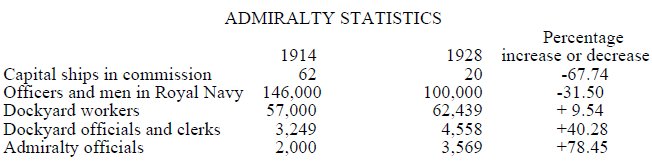
This would take from military budgets nearly $500 billion, in addition to a minimum of $350 billion cuts already scheduled. An almost trillion-dollar trimming, Panetta says flatly, “cannot take place.” Actually, he knows it can: “The gun to the head could really go off.” Even without a sequester, the military “is going to be a smaller force.” And with a sequester? The 1.5 million active-duty members of the armed services and 700,000 civilian employees of the Defense Department depend on an industrial base of more than 3.8 million persons. According to the Pentagon, a sequester would substantially shrink those three numbers, perhaps adding a point to the nation’s unemployment rate. The cuts would leave the smallest Army and Marine Corps in more than a decade and the smallest tactical Air Force since this service became independent of the Army in 1947. The Navy has already shrunk almost to its smallest fleet size since World War I.

Time was, when Democrats looked at the defense budget with a skeptical squint, Republicans rallied ’round it. No more. Few tea partyers remember Washington’s hawk-versus-dove dramas. They live to slow spending, period. They are constitutionalists but insufficiently attentive to the fact that defense is something the federal government does that it actually should do. And when they are told that particular military expenditures are crucial to force projection, they say: As in Libya? Been there, don’t want to do that.

Much of the defense budget is consumed by pay and health care for uniformed personnel, who have been abused enough by repeated deployments. The priciest new weapon, the stealthy F-35 Joint Strike Fighter (at least $90 million per plane), is vital for the continued salience of aircraft carriers, which are the basis of the U.S. strategic presence in the Western Pacific. Inferring China’s geopolitical intentions from its military purchases is difficult, but Panetta says guardedly that in five years China’s force projection will be “much better.” The Marines, with their smaller carriers, need a short-takeoff model F-35. Cut the number of planes built, the cost per plane rises, and the ability to recoup costs through sales to allies declines.

September 15, 2011

Is the end of the manned fighter plane at hand?

Filed under: Military, Technology — Tags: , , , , — Nicholas @ 09:08

Yes, I know we’ve gone through this discussion before (and the comment thread on that first entry is still a good summary of the counter-arguments). Air-to-air combat has become only a small part of what the air forces of the world are expected to do: ground support, while generally disdained by air force brass hats, is the most common combat task now. Here’s the state of play, according to Strategy Page, as far as the future of air combat is concerned:

The last decade has revolutionized air warfare, and air forces. This revolution was brought about by two technologies (smart bombs and UAVs) that have been around for decades but, over a decade ago, became reliable and capable enough to have a decisive effect on warfare. Now UAVs armed with smart bombs are poised to replace manned aircraft. Moreover, the proliferation of GPS guided weapons and short range guided missiles have greatly reduced the need for ground strikes by manned or unmanned aircraft. Since World War II, air forces have demanded, and obtained, a disproportionate share of military budgets. No more.

[. . .]

Underlying all of this is the appearance of so many cheaper, reliable, precision weapons in the last decade. This has changed tactics on the ground. While the air force doesn’t like to dwell on this, it’s the war on the ground that is decisive, not what’s going on in the air. This proliferation of precision has also changed the way smart bombs were designed. With the ability to put a weapon within a meter of the aiming point (using laser guidance) or 5-10 meters (using GPS), smaller is now better, at least in urban areas where there are a lot of civilians about, troops have changed the way they fight. There is more movement in urban warfare because of all this precision firepower, and fewer friendly fire casualties from bombs and artillery. But it’s not just the air force and their smart bombs that have brought this on. The army had precision missiles on the ground long before JDAM came along. Now the army has more of them. Thus, over the last five years, there has been a competition between the army and air force to develop smaller, cheaper and more precise, missiles and bombs.

[. . .]

The air force is not happy about the army having a large force of armed UAVs. Many air force generals believe the army should not have the MQ-1C, or at least not use them with weapons. That has already caused some spats in the Pentagon over the issue, but so far the army has prevailed.

The army argument is that these larger UAVs work better for them if they are under the direct control of combat brigades. The air force sees that as inefficient, and would prefer to have one large pool of larger UAVs, that could be deployed as needed. This difference of opinion reflects basic differences in how the army and air force deploy and use their combat forces. The army has found that a critical factor in battlefield success is teamwork among members of a unit, and subordinate units in a brigade. While the air force accepts this as a critical performance issue for their aircraft squadrons, they deem it irrelevant for army use of UAVs. Seeing army MQ-1Cs doing visual and electronic reconnaissance and firing missiles at ground targets, the air force sees itself losing control of missions it has dominated since its founding in 1948.

[. . .]

Meanwhile, the navy has taken the lead in developing larger, jet propelled UAVs like the 15 ton, X-47B. This UAV uses a F100-PW-220 engine, which is currently used in the F-16 and F-15. The X-47B can carry two tons of bombs or missiles and maneuver like a jet fighter. The X-47B is fast and agile enough to carry out air-to-air missions. With the right software, it can do this autonomously (without human intervention). This is being worked on, and the navy already has perfected the software that enables a UAV to land on aircraft carriers.

The coming decade will see more and more UAVs replacing manned aircraft. Thus after only a century in action, manned combat aircraft are on their way out.

September 6, 2011

Turkey approaching combat situation with Israel?

Filed under: Media, Middle East, Military — Tags: , , , — Nicholas @ 10:00

Strategy Page has a summary of the situation:

Turkey’s Islamic government has backed itself into a corner by demanding Israel apologize for defending itself when halting the 2010 blockade-breaking ships. The Turks demand an apology, compensation and an end to the blockade. This, despite the fact that Hamas (and many other groups in Gaza) are recognized as international terrorists and that Turkish activists on the ships were videoed attacking the Israeli boarding party. The Turks will not back down, and now threaten to send warships to escort yet another group of blockade breakers. This is pretty extreme, as the Israeli Navy has a lot more combat experience, and the Turks would be in waters long patrolled by the Israelis. This could easily escalate into an air war, another area where the Israelis have a lot more experience. The Arabs and Palestinians are all for this, as the Israelis have consistently defeated Arab forces, but the Turks are seen as much more capable. But are they capable enough?

Here are links to earlier reports on the flotilla incident, Turkey’s conspiracy theorists, and the very weird world of Turkish media.

Update, 8 September: Turkey escalates the threat level for combat with Israel:

Turkish warships will escort any Turkish aid vessels to Palestinians in the Gaza Strip, Recep Tayyip Erdogan, the prime minister, has announced.

He also said Turkey had taken steps to stop Israel unilaterally exploiting natural resources from the eastern Mediterranean, according to al-Jazeera’s Arabic translation of excerpts of an interview conducted in Turkish.

His comments came after Turkey’s ruling party said the country’s ties to Israel could be normalised if the Jewish state apologised for the killing of nine pro-Palestinian activists last year and accepted it should pay compensation to their families.

I am not a lawyer, but I’d imagine that an attempt to use naval vessels to break a legal blockade would be tantamount to a declaration of war. I have a hard time believing that Turkey is that eager to test Israel’s resolve (and military might).

« Newer PostsOlder Posts »

Powered by WordPress