
Matt Estlea
Published on 7 May 2019In this video, I make some door pulls for the Router Bit Cabinet I am currently making. If you’re interested in watching this series, you can do so here:
https://www.youtube.com/watch?v=Cgxp9…
_________________________________________________________________Support what I do by becoming a Patron! This will help fund new tools, equipment and cover my overheads. Meaning I can continue to bring you regular, high quality, free content. Thank you so much for your support! https://www.patreon.com/mattestlea
_________________________________________________________________See what tools I use here: https://kit.com/MattEstlea
My Website: http://www.mattestlea.com
_________________________________________________________________My name is Matt Estlea, I’m a 23 year old Woodworker from Basingstoke in England and my aim is to make your woodworking less s***.
I come from 5 years tuition at Rycotewood Furniture Centre with a further 1 year working as an Artist in Residence at the Sylva Foundation. I now teach City and Guilds Furniture Making at Rycotewood as of September 2018.
I also had 5 years of experience working at Axminster Tools and Machinery where I helped customers with purchasing tools, demonstrated in stores and events, and gained extensive knowledge about a variety of tools and brands.
During the week, I film woodworking projects, tutorials, reviews and a viewer favourite ‘Tool Duel’ where I compare two competitive manufacturers tools against one another to find out which is best.
I like to have a laugh and my videos are quite fast paced BUT you will learn a lot, I assure you.
Lets go make a mess.
May 8, 2019
Making Door Pulls | Turning Tuesday #15
Your electronic devices and the Canadian Border Services Agency
A few years ago, many civil libertarians were upset that the US government allowed warrantless searches of electronic devices at the border, but it was less well known that the Canadian Border Services Agency does the same at the Canadian border:
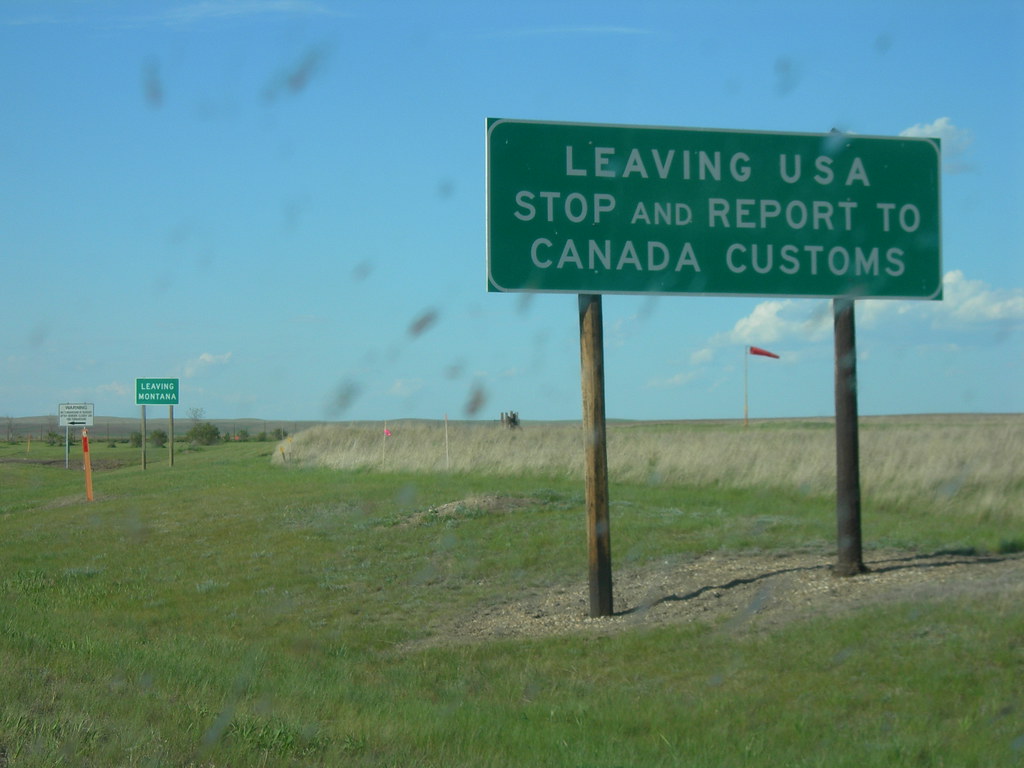
“Canadian Border Sign” by jimmywayne is licensed under CC BY-NC-ND 2.0


According to the CBSA, it has the right to search electronic devices at the border for evidence of customs-related offences — without a warrant — just as it does with luggage.
If travellers refuse to provide their passwords, officers can seize their devices.
The CBSA said that between November 2017 and March 2019, 19,515 travellers had their digital devices examined, which represents 0.015 per cent of all cross-border travellers during that period.
During 38 per cent of those searches, officers uncovered evidence of a customs-related offence — which can include possessing prohibited material or undeclared goods, and money laundering, said the agency.
While the laws governing CBSA searches have existed for decades, applying them to digital devices has sparked concern in an era where many travellers carry smartphones full of personal and sometimes very sensitive data.
A growing number of lawyers across Canada argue that warrantless digital device searches at the border are unconstitutional, and the practice should be stopped or at least limited.
“The policy of the CBSA of searching devices isn’t something that is justifiable in a free and democratic society,” said Wright who ran as a Green Party candidate in the 2015 federal election.
“It’s appalling, it’s shocking, and I hope that government, government agencies and the courts, and individual citizens will inform themselves and take action.”
How To Ferment And Make Your Own Hot Sauce, Easily
Joshua Weissman
Published on 5 Apr 2019Hot sauce has a very special place in my heart … And no I’m not talking about heartburn. We can make our own hot sauce at home with any peppers we want. That means that we now have full control over the flavor. The end result? The perfect hot sauce for you. Happy Fermentation Fridays Folks!
Kitchen Organization Video: https://youtu.be/NW6fgAu4h40
FOLLOW ME:
Twitter: https://twitter.com/therealweissman
Website: http://joshuaweissman.com/—————————————————————
Ingredients you’ll need:
Fermented peppers-
1.25lbs (540g) red fresno peppers
1.25qt (1163g) water
3.5 tablespoons (51g) fine sea saltHot Sauce:
8 cloves garlic
1/2 cup (118ml) neutral oil (canola)
1# (456g) fermented peppers (you can leave the seeds on or off)
1/2 cup plus 2 tablespoons (150ml) white distilled vinegar
3 tablespoons (42ml) brine
salt to taste
May 7, 2019
The Suez Crisis reconsidered
Jordan Chandler Hirsch reviews a new book on what is now a somewhat forgotten international crisis that shook the Atlantic alliance, Philip Zelikow’s Suez Deconstructed:
Zelikow encourages readers to assess Suez by examining three kinds of judgments made by the statesmen during the crisis: value judgments (“What do we care about?”), reality judgments (“What is really going on?”), and action judgments (“What can we do about it?”). Asking these questions, Zelikow argues, is the best means of evaluating the protagonists. Through this structure, Suez Deconstructed hopes to provide “a personal sense, even a checklist, of matters to consider” when confronting questions of statecraft.
The book begins this task by describing the world of 1956. The Cold War’s impermeable borders had not yet solidified, and the superpowers sought the favor of the so-called Third World. Among non-aligned nations, Cold War ideology mattered less than anti-colonialism. In the Middle East, its champion was Egyptian President Gamal Abdel Nasser, who wielded influence by exploiting several festering regional disputes. He rhetorically — and, the French suspected, materially — supported the Algerian revolt against French rule. He competed with Iraq, Egypt’s pro-British and anti-communist rival. He threatened to destroy the State of Israel. And through Egypt ran the Suez Canal, which Europe depended on for oil.
Egypt’s conflict with Israel precipitated the Suez crisis. In September 1955, Nasser struck a stunning and mammoth arms deal with the Soviet Union. The infusion of weaponry threatened Israel’s strategic superiority, undermined Iraq, and vaulted the Soviet Union into the Middle East. From that point forward, Zelikow argues, the question for all the countries in the crisis (aside from Egypt, of course) became “What to do next about Nasser?”
Israel responded with dread, while, Britain, France, and the United States alternated between confrontation and conciliation. Eventually, the United States abandoned Nasser, but he doubled down by nationalizing the Suez Canal. This was too much for France. Hoping to unseat Nasser to halt Egyptian aid to Algeria, it concocted a plan with Israel and, eventually, Britain for Israel to invade Egypt and for British and French troops to seize the Canal Zone on the pretense of separating Israeli and Egyptian forces. The attack began just before the upcoming U.S. presidential election and alongside a revolution in Hungary that triggered a Soviet invasion. The book highlights the Eisenhower administration’s anger at the tripartite plot. Despite having turned on Nasser, Eisenhower seethed at not having been told about the assault, bitterly opposed it, and threatened to ruin the British and French economies by withholding oil shipments.
Throughout, Suez Deconstructed disorients. As the story crisscrosses from terror raids into Israel to covert summits in French villas, from Turtle Bay to the Suez Canal, names and places, thoughts and actions blur. Venerable policymakers scramble to comprehend the latest maneuvers as they struggle with the weight of history: Was Suez another Munich? Could Britain and France still project power abroad? Would a young Israel survive?
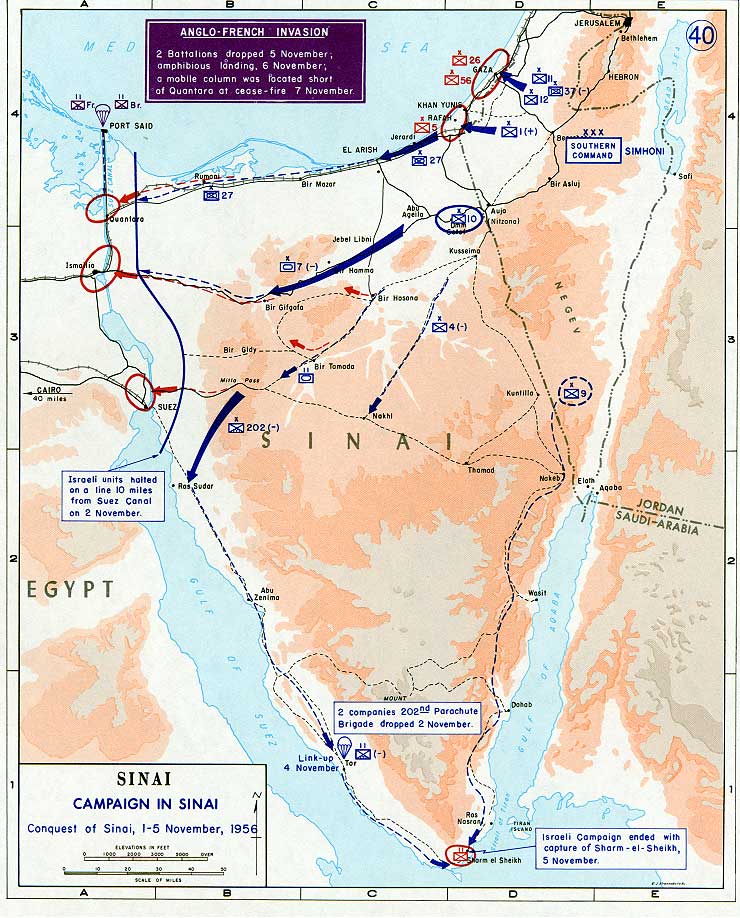
If you’re not familiar with the Suez Crisis and want more than just the Wikipedia article for background, here’s the coverage of the military side of things from the British perspective (Operation Musketeer) from Naval History Homepage.
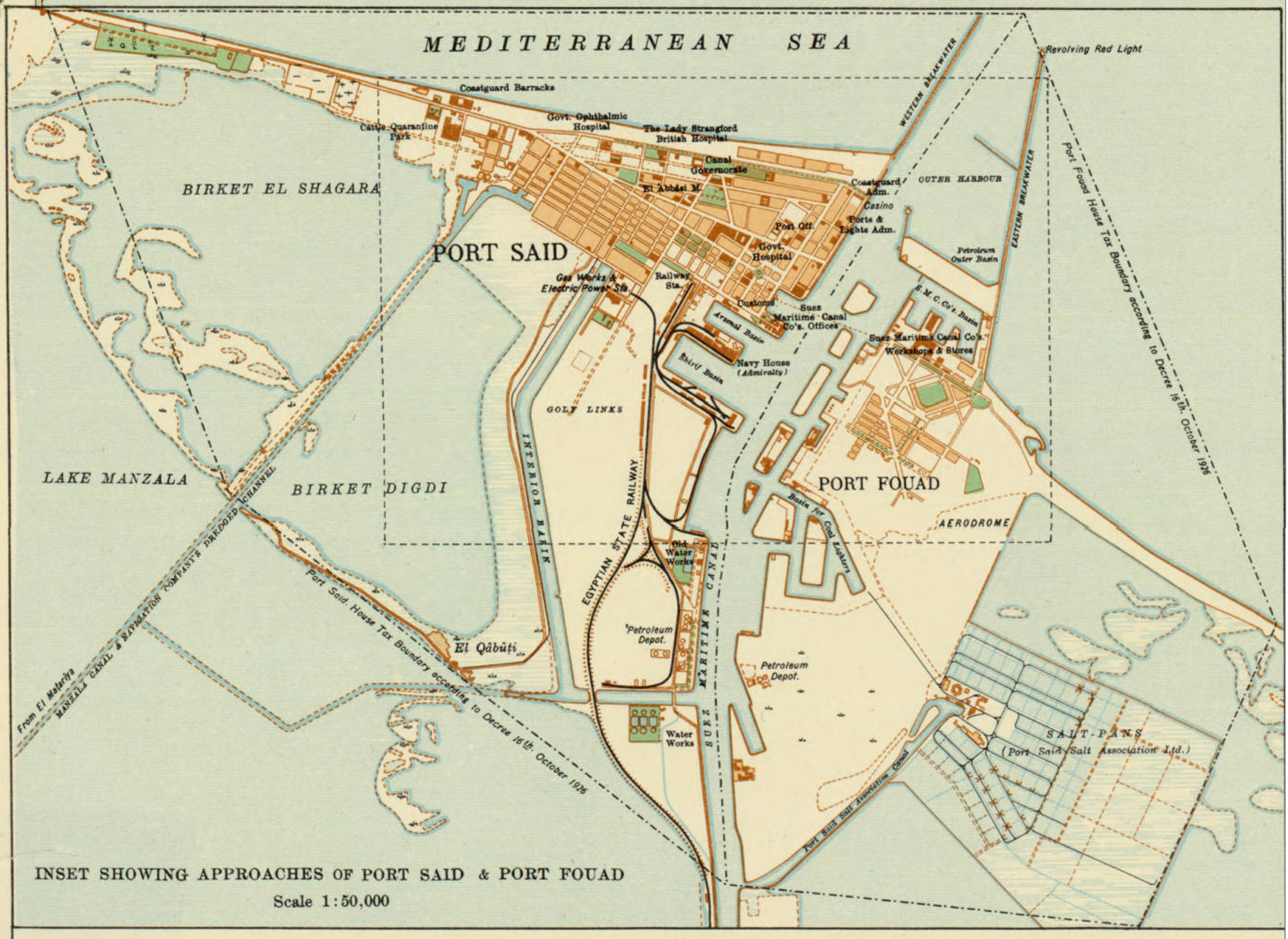
A detailed map of Port Said in 1936 (American Geographical Society Library). Changes by 1956 are not known.
Map via Naval History Homepage.
Tale of the Golden Tree – Nart Sagas – Russian Myth #1 – Extra Mythology
Extra Credits
Published on 6 May 2019Join the Patreon community! http://bit.ly/EMPatreon
“If our lives be short let our fame be great!” The legends of the Nart people still echo across the Caucasus, but that echo is getting fainter, so to honor that cry from long ago, it’s only fitting that we tell one of their tales today. We’ll start with an old one, perhaps one of the first to be told. The tale of a golden tree.
The Nart people pursued the apples of a golden tree which bore a strange red and white pattern — eating from either side of it would allow the conception of a child with beautiful white hair. However, the apples kept mysteriously vanishing during the night — so two mighty brothers were set on the case of the vanishing apples.
Arthur Chrenkoff relates his own economic “a-ha!” moment
He says he’s never had a religious or spiritual revelation, but he did have one that was pure economics:
By way of background, you have to remember that I grew up under declining communism. As someone has once wryly remarked, in a planned economy everything is planned except for the economy. In Poland of my childhood and early teenage years virtually everyone was employed by the state and so virtually all the income was derived from the state, except, of course, for the rampant black market. Shops were few and generally poorly stocked. Some goods were unobtainable, others required queuing and a lot of luck (or connections) to get, and either way most were of inferior quality to that in the West. Even if you have managed to save enough money, you had to get onto a waiting list to acquire an apartment, car, or household goods. The wait could take decades. Life’s necessities were more widely available but quite haphazard in their distribution. During the crisis years of the 1980s, most food items required ration cards. People literally had to scheme and plot to get their hands on toilet paper. Sure, the Eastern European socialism for most part managed to provide everyone with a bare minimum of subsistence so that no one starved anymore, but beyond that the economic system was shambles, never managing to produce the sufficient quantity and quality of what people needed and wanted. We all knew that the West, by comparison, was a kingdom of plenty, thanks the workings of that scary capitalism, but as a kid I wouldn’t be able to explain to you how, by contracts to our socialism, it somehow managed to produce in abundance all those cars, toys and oranges and bananas. We were told by the authorities that it was all a sham, built on exploitation of workers and resulting in widespread poverty. But we knew enough to know that everything is relative. When the Jaruzelski regime in the early 80s trumpeted in the government-run media (there were no other legal ones) its charity initiative to send sleeping bags to the homeless of New York, an anonymous wag somehow managed to place and ad in one of the papers “Will swap a two bedroom apartment in Warsaw for a sleeping bag in New York”.
I was 15 when I left, unbeknownst to me two years before the fall of the Wall, and spent 16 months in Italy before finally arriving to start a new life in Australia. For a kid from Eastern Europe, Italy was a revelation; I didn’t know enough about anything then to realise that the country we thought was a paradise has always in reality been somewhat of a hot mess. Australia at the end of the decade of wide-ranging economic reforms, which really opened the country to the world and unleashed its creative potential, was even more of contrast to the drabness, shortages and absurdity of the “real socialism” I grew up under.
The story of my economic experience is very brief: one day, not long after settling in Australia, I was in a car, being driven somewhat off the beaten path, through what can be described as a light industrial area. Then, all of a sudden, among all the rather anonymous sheds and buildings I saw a large, free standing store. I can’t remember its name but I remember it was selling carpets. And that’s all. I grew up with few shops around, which, no doubt in part because European cities tend to be a lot more condensed, occupied the same space as the living. But here, here was a whole store, a very large store that specialised in one product only – floor coverings – and it was, relatively speaking, sitting in the middle of nowhere. That it was in business, that it somehow managed to operate, indicated to me that people, many people, actually drove over here, from some distances away, for no other purpose than just to buy one thing – a carpet. So strange. So peculiar. This was my revelation, my economic epiphany in a back seat: this whole capitalist system must truly be incredibly complex and magnificent – and superior to all the alternatives – if it means a shop like this can thrive selling one particular type of product to people who don’t live anywhere near it.
The Science of Ginger: Why and How it Burns and Its Impact on Cooking | Ginger | What’s Eating Dan?
America’s Test Kitchen
Premiered on 22 Mar 2019Why does ginger burn? Why does ginger turn pink? How come ginger makes meat mushy? Dan answers these questions and more about one of the most interesting ingredients cooks have at their disposal in this episode of What’s Eating Dan?.
Click here to browse our ginger recipes: https://cooks.io/2FlixBy
Click here for our Ginger Snap recipe: https://cooks.io/2JuniOB
Click here for our Ginger-Scallion Everything Sauce recipe: https://cooks.io/2Yh01Tu
How to make Ginger-Milk Curd and the science behind it: https://blog.khymos.org/2014/02/24/gi…ABOUT US: Located in Boston’s Seaport District in the historic Innovation and Design Building, America’s Test Kitchen features 15,000 square feet of kitchen space including multiple photography and video studios. It is the home of Cook’s Illustrated magazine and Cook’s Country magazine and is the workday destination for more than 60 test cooks, editors, and cookware specialists. Our mission is to test recipes over and over again until we understand how and why they work and until we arrive at the best version.
QotD: Competitive Wokeness
I love competitive #Wokeness.
No, seriously — it’s high time you people out in the real world got to experience one of the defining joys of life in the ivory tower. In the ivy-covered halls of academe, the Marxist Postcolonialist Feminsts have longstanding beef with the Postcolonialist Feminist Marxists. They’d each happily feed the other into a wood chipper, even though to outsiders it would look like the pot executing the kettle for counterrevolutionary crimes. If you’re the sort who takes schadenfreudy delight in very obvious folly, university life is hilarious.
It’s even funnier if you take these buffoons at their word. Compared to the pronouncements of your average Angry Studies professor, Pol Pot was a sane and balanced man. In reality, of course, university people are so soft and coddled, they make the Eloi look like the Sons of Anarchy. Spending so much time around college folk is one of the main reasons for my mantra: “Today’s SJW is tomorrow’s obergruppenfuhrer.” They talk a fearsome game, these campus Ches, but they cry if the cafeteria is out of free trade sustainably sourced indigenous grown gluten free soy milk. When the zeitgeist shifts, they’ll be the first to knuckle under.
Severian, “The Reluctant Revolutionary”, Rotten Chestnuts, 2019-04-05.
May 6, 2019
Queen Nzinga – The Double Queen – Extra History – #2
Extra Credits
Published on 4 May 2019Nzinga was briefly, temporarily supplanted by Ngola Hari who had been installed by the Portuguese, but she was determined to let nothing get in the way of keeping West Africa safe from colonial powers. To achieve this end, she would go on to form — and break, as she pleased — alliances with the Dutch, the Imbangala, and even the Catholic Church!
Thanks again to Cassandra Khaw for guest-writing this mini-series!
Join us on Patreon! http://bit.ly/EHPatreon
From the comments:
Extra Credits
Queen Nzinga is a woman who, despite being one of the best-documented rulers in early modern Africa, still presents a puzzle. Her record, from ambitious noble, to guerrilla fighter, to consummate diplomat and religious reformer is still haunted by myths conjured up by her enemies — and a few constructed by Nzinga herself.Catch our Lies episode next week for behind-the-scenes on our research for the Siege of Vienna and Queen Nzinga series!
Tree of Life Explorer
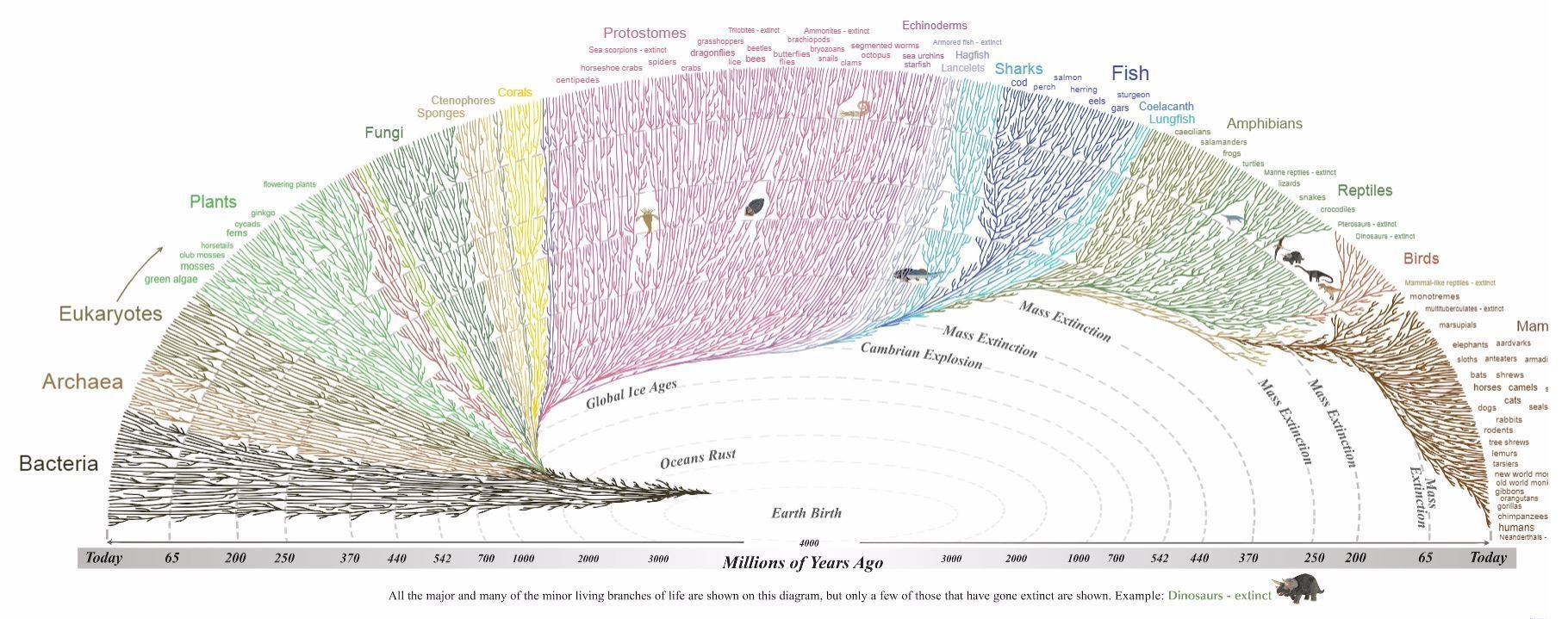
A tweet from Simon Kuestenmacher (@simongerman600) included this graphic, which is a static version of the full Tree of Life Explorer (which is well worth a visit):
Mers El Kebir: When The British Blew Up the French Fleet
Historigraph
Published on 4 May 2019Join us in #WarThunder for free using this link and get a premium tank or aircraft and three days of premium time as a bonus: https://gjn.link/Historigraph/190504
If you enjoyed this video and want to see more made, consider supporting my efforts on Patreon: https://www.patreon.com/historigraph
To chat history, join my discord: https://discord.gg/vAFTK2D
#WarThunder #MersElKebir #Historigraph
► Twitter: https://twitter.com/historigraph
►Patreon: https://www.patreon.com/historigraph
►Discord: https://discord.gg/vAFTK2DSources:
Colin Smith, England’s Last War Against France: Fighting Vichy 1940-42
Stephen Roskill, Churchill and the Admirals
Correli Barnett, Engage the enemy more closely
http://avalon.law.yale.edu/wwii/frgea…
Music:
Rynos Theme, Incompetech https://incompetech.com
Malicious, Incompetech https://incompetech.com
Crypto, Incompetech https://incompetech.com
“Casual sex” isn’t actually all that casual to most women
Suzanne Venker makes the case that the innate physiological and psychological differences between men and women accounting for most women’s much lower comfort level with “no-strings-attached” sexual encounters:
The differences between women and men are vast, and in no domain is this more true than sex. Our bodies alone prove this in spades! If one body carries life and the other doesn’t, this clearly makes the sexes unequal. Newsflash: The birth control pill doesn’t change a woman’s inherent nature — it merely gives the illusion she’s just like a man.
She’s not. A woman’s need to bond with a man, to feel safe and loved and committed to, is crucial for her to feel secure enough to let down her guard sexually. That’s why she feels uneasy about one-night stands. Her body won’t cooperate.
It’s also why men, not women, are the ones who gain the most from casual sex. (To be clear: I’m not arguing that it’s “OK” or even good for men to sleep around; I’m simply pointing out why, from a physical standpoint, they aren’t angst-ridden when they do.)
Women just aren’t designed for one-night stands. What do we think all those films and television programs are about where the man and the woman have sex and he doesn’t call her the next day, so she thinks he’s a jerk? If women were “just like men,” this would never be a theme in the first place.
When it comes to uncommitted sex, women are playing a game they can’t win. Feeling “used,” or like a “booty call,” is the most common experience of women who engage in casual sex, or “hookups,” whether they’re teenagers or grown women. That just isn’t the case for most men.
Every American over the age of 40 knows this to be true, and adults in schools and at home are failing our youth by not passing this wisdom along — particularly when young people are bombarded with the lie that casual sex is empowering.
Arctic Warfare Magnum: Accuracy International L115A3
Forgotten Weapons
Published on 29 Mar 2019http://www.patreon.com/ForgottenWeapons
Cool Forgotten Weapons merch! http://shop.bbtv.com/collections/forg…
In 2007, the British Army placed an order for 582 AI Arctic Warfare Super Magnum rifles chambered for the .338 Lapua Magnum cartridge, formally adopting the model as the L115A3 sniper rifle. This followed special forces use of the .338 Accuracy International rifles in Afghanistan, where the A1 (fixed stock) and A2 (folding stock) models had both been given designations. With the adoption of the L115, the British retired all of their remaining L96A1 rifles, and moved to the .338 cartridge for all of their sniping equipment. At the same time, the SSIP (Sniper System Improvement Program) was improving and updating all the ancillary gear used with the guns – scopes, bipods, ballistic calculators and training programs, spotting scopes, and more. These remain the current British sniper weapon today, and they are quite formidable kit in properly trained hands.
Thanks to Steve Houghton for providing me access to this rifle! If you are interested in learning more, I highly recommend checking out Steve’s newly released book, “The British Sniper: A Century of Evolution”. It can be found at:
https://www.swiftandboldpublishing.co…
Contact:
Forgotten Weapons
PO Box 87647
Tucson, AZ 85754
Update: Apparently the video plays better if you actually remember to include the embed code before saving the post. Who knew?
QotD: Political scandals
If you say “Clinton scandal,” the first thing that comes to mind for most people, at least for those of us old enough to have been around for Bill Clinton’s presidency, is Monica Lewinsky. That’s a shame: I am convinced that Hillary Rodham Clinton’s cattle-futures shenanigans were in fact a much more serious offense as a matter of public corruption. But most people don’t understand futures trading. Everybody understands diddling the interns. Nobody understands finance. Everybody understands sex.
(Except Objectivists.)
That’s why financial scandals rarely end political careers, but sex scandals often do, especially for Republicans.
Kevin D. Williamson, “Fanciful Trump ‘Scandals'”, National Review, 2017-04-16.


