
On Substack, eugyppius discusses the electoral chasm at Chancellor Friedrich Merz’s feet after terrible showings in recent state elections for his party and the continued rise of the extremely extreme extreme-right Alternative für Deutschland (AfD):


Within months of becoming Chancellor, Friedrich Merz promised an “Autumn of reforms”, which never materialised because the political will to fix Germany’s economic and fiscal problems does not exist within his coalition. Having failed to fix anything and driven support for the once-mighty CDU to historic lows, Merz has instead been served an Autumn of Reckoning. It is unclear whether he will survive it.
The state elections in Sachsen-Anhalt, Mecklenburg-Vorpommern and Berlin that for months have inspired fear and trembling within the German political establishment have come and gone. Each of them has realised our rulers’ worst fears in different ways.
1) In Sachsen-Anhalt, the CDU underperformed polls by more than 20%, while Alternative für Deutschland achieved the highest vote share any party has ever won in that state. The AfD are already in talks with the Bündnis Sahra Wagenknecht, and everyone expects an AfD government under Ulrich Siegmund to take power in the coming months.
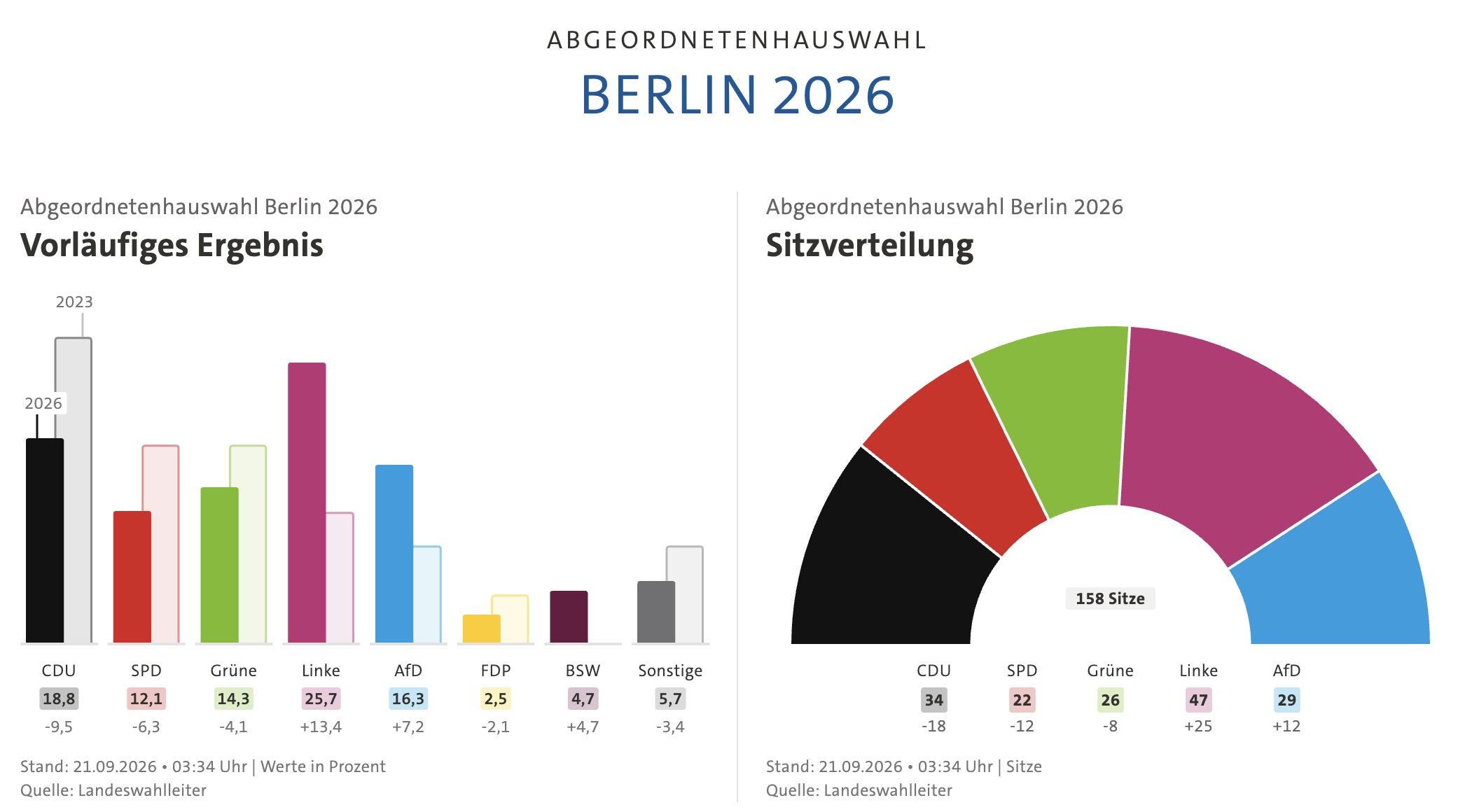
2) In Berlin, the CDU managed to squander the clear polling dominance it enjoyed throughout 2025 to finish in second place with just 18.8% of the vote – nearly seven points behind Die Linke. That is what a series of extremely stupid and unnecessary local scandals alongside association with the most unpopular Chancellor in the history of the Federal Republic can do to a party.
Zohran Mamdani’s advisers and campaign strategists assisted Die Linke in their left-populist Berlin campaign, which enjoyed particularly strong appeal among young voters. Assuming some late-breaking turbulence caused by the corruption and indiscipline that are typical of Die Linke do not derail things, they will form a government with the Greens and the Social Democrats.
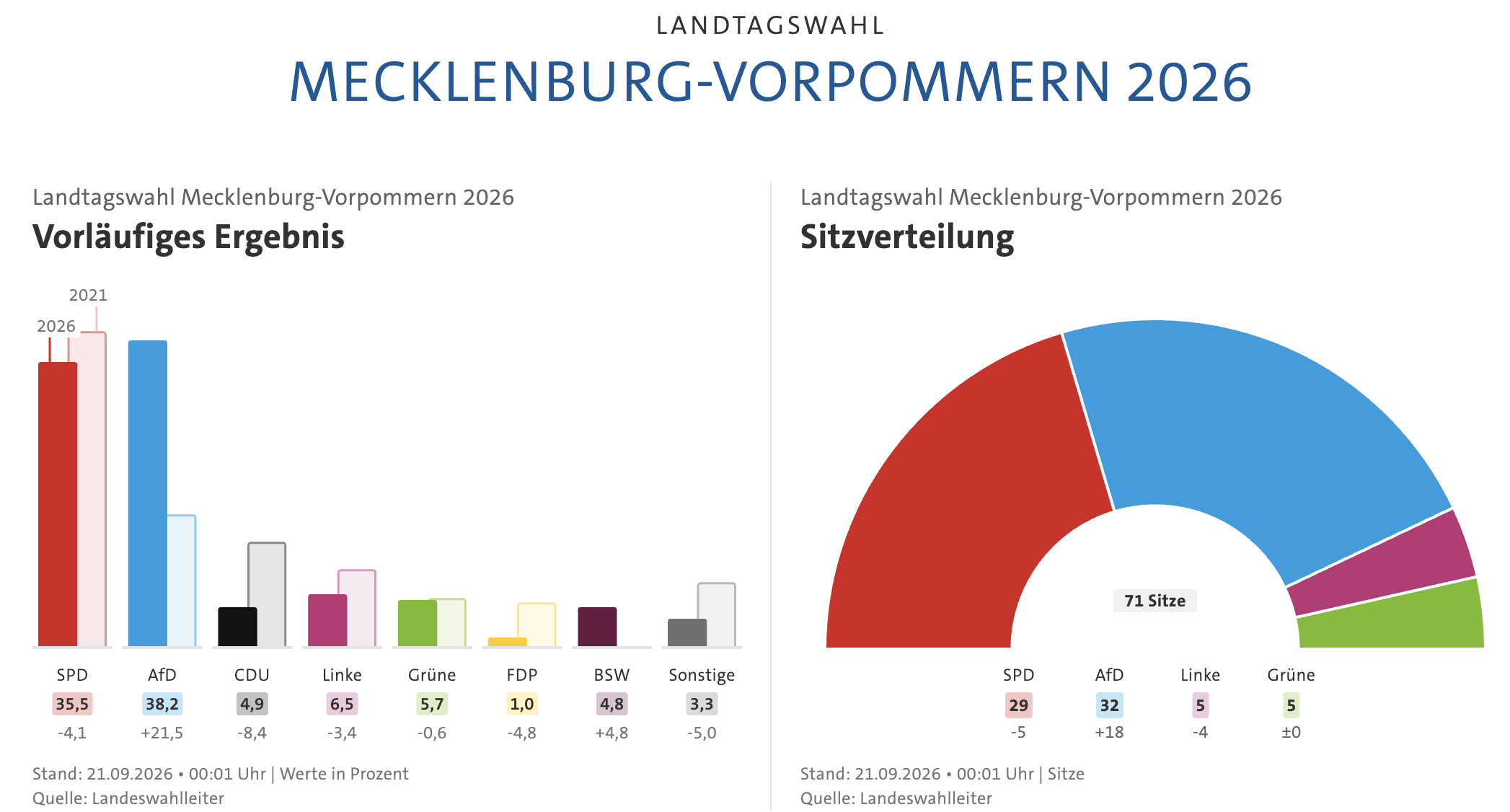
3) In Mecklenburg-Vorpommern, the CDU managed to underperform every last poll, logging their worst electoral result in all of history. With just 4.9% of the vote, they failed for the first time ever to scrape across the 5% hurdle for representation in the Landtag – an outcome I have predicted for weeks. Whereas in Sachsen-Anhalt voters overcame the firewall by making the AfD too powerful to wall off, in Mecklenburg-Vorpommern they abolished it entirely by kicking the party that invented and maintains the firewall straight out of parliament.
Alternative für Deutschland won the largest vote share, but the result will be another coalition of Social Democrats, Greens and Die Linke under the long-serving Minister President Manuela Schwesig. Schwesig enjoys especially strong popularity among women and pensioners, and she will be helped into power by a smattering of leftist students and climate-obsessed urbanites. The AfD will stand alone in opposition to the tepid foolishness of the coming legislature, and the citizens of Mecklenburg-Vorpommern will develop new ways of thinking about the Evil Fascist Nazi Hitler party, which probably cannot be all that evil or fascist or Nazi or Hitler, given that there is no longer any alternative to the left here in the northeast.



Perhaps it would be best for AfD to have elections in February, when Germans enjoy the cold and energy bills.
Expect all elections to be moved to July.
Comment by Pat McCracken — September 23, 2026 @ 21:39