Quotulatiousness

January 24, 2022

“Men and woman exist”, opens What Do Men Want?, “Occasionally, we even like each other”

Filed under: Books, Health — Tags: , , , — Nicholas @ 03:00

Jarryd Bartle reviews What Do Men Want? by Nina Power:

“Most men are, like most women, a mixture of good and bad, but they are not, as a rule, irredeemable,” Power notes.

Indeed, if there is ever to be a reconciliation between men and women, it may require considering the interests, needs and desires of good men, rather than a laser focus on the bad.

What then, do men want?

When Power asked her male friends this incredibly leading question, the responses ranged from “To be left alone” to “Pussy” to “Beer”. However, the real answer seems to be: something to do.

Power writes, “It is hard to imagine how the role [of men] today could be any more evacuated of meaning or status.”

The old-fashioned role of the Patriarch has been dead for at least one full generation now, and we haven’t really found an adequate replacement. The result is that men are adrift in a state of nihilism. In pop culture men seem to play the role of the “horny jester” to the self-serious goals of feminine social change. But men aren’t just interested in sex and frivolity; they also want a life of meaning.

The consequences of this listlessness are all too evident. Men are vastly overrepresented in statistics on suicide, unemployment, drug overdoses and crime.

Most men aren’t violent, but they are far more violent than women. Women are sometimes the target of this violence, but far more often men take out their pent-up aggression and sadism on other men. Often, we are told to blame these pathologies on “toxic masculinity” — that men need to be liberated from their preferences and to embrace the feminine ideals of tenderness, openness and sociability.

This solution sees sex difference as an irrelevancy, merely a reified founding myth of hegemonic masculinity, perfectly capable of tinkering. For Power, this approach is exceedingly cruel, failing to accept men as embodied creatures with a distinct way of experiencing the world:

    To describe masculinity as “toxic” is to suggest that not only have men been poisoned, but that they are extending their poison to the rest of society.

This recent call to feminise men also didn’t occur in a vacuum.

There has been a significant decline in the needs for physical labour in Western countries since the turn of the century. Our increasingly service-oriented, tech-mediated economy requires very different temperaments, often drawing on the feminine virtues of empathic communication.

For Power, these broader structural changes have meant “certain kinds of behaviour come to be rewarded over others”.

Whilst we can’t turn back the clock, this re-evaluation of the role of men in society should be done in a manner which respects the dignity of men as different from woman.

January 22, 2022

“China’s statistics remain in the hands of officials who carefully do everything possible to make sure China’s image remains unblemished”

Filed under: China, Government, Health — Tags: , , , , , — Nicholas @ 03:00

I’ve been a disbeliever in official Chinese statistics for many years — one of the first repeat topics on the blog in 2004 was the unreliable nature of Chinese government statistics on economic growth. As a result, I find it very easy to believe that the Chinese statistics on deaths due to the Wuhan Coronavirus pandemic are unreliable, as John Horvat explains:

Wuhan Institute of Virology.
Wikimedia Commons.

As the latest wave of COVID cases surges in the West, all is quiet in the East. It has always been quiet. Millions have died from the coronavirus epidemic as it sweeps the world. However, few consider it strange that the nation where the virus first appeared amid an entirely unprotected public of 1.3 billion people should record a mere 4,636 fatalities over the past three years.

China’s statistics remain in the hands of officials who carefully do everything possible to make sure China’s image remains unblemished. They claim that low numbers are due to the communist nation’s brutal “zero tolerance” policies. China is presented as a model for the West.

Some voices are appearing that dispute this claim. One expert says the fatality figures are likely closer to 1.7 million. This figure would put China in the same camp as the rest of the world. It would also point to the failure of the world’s strictest lockdown and explain the recent shutdowns of whole cities and regions due to the virus, which supposedly kills no one in China.

[…]

Communist parties have always used statistics as a tool and weapon to advance their agenda. Officials feel free to change the numbers to reflect well upon the state, which controls everything. Truth is whatever furthers the fortunes of the party. If statistics must be changed as a result, there is no problem. Hence the notorious unreliability of communist statistics.

The problem is complicated by anxious officials who must report good news to party leaders or face the consequences of their failures, including death. Zero tolerance numbers may be statistically impossible and even absurd, but most officials prefer their survival over inconvenient truths.

Also disturbing is the complicity of Western media that repeat the cooked numbers of communist regimes. Few dare to question impossible figures or “follow the science” when leftist prestige is involved. During the long Cold War, the West presented the Soviet Union as the second-largest economy. When the Berlin Wall fell, the actual size of the economy was found to be significantly less.

Even in a centrally planned socialist state, incentives matter. In the west, failing to meet expected standards may get you fired (unless you work for the government), but in authoritarian states like China it can get you shot or exiled to a remote labour camp for years or decades. The top statisticians know that the numbers they work on are … massaged … at every stage even before they are aggregated for regional or national reporting, but there is literally no point in telling the truth and there is much to be gained by “scenario-ing them rosily” because your bosses will only accept good news regardless of reality.

January 18, 2022

A Labour Party attempt to count coup against Boris Johnson may have backfired by showing the NHS in a terrible light

Filed under: Britain, Health, Media, Politics — Tags: , , , , , — Nicholas @ 03:00

Brendan O’Neill explains why he found the Labour social media post to be a very bad idea:

Not actually the official symbol of Britain’s National Health Services … probably.

This week, in response to the latest drinks-during-lockdown scandal engulfing Downing Street, the Labour Party tweeted something so extraordinary, so tone deaf, so inhumane, that it managed to make Boris and his coterie of rule-breaking hypocrites look almost principled in comparison.

It was a comment from an NHS nurse named only as Jenny (thank God for the absence of Jenny’s surname, for I shudder to think of the abuse she would receive if her full identity were revealed). This is what Jenny, according to Labour, had to say about the government’s boozy get-togethers on 20 May 2020 and other occasions when the rest of us were locked down:

    I remember 20 May 2020 vividly, I spent hours on the phone to a man who was in the hospital car park, utterly desperate to see his wife. He begged, wept, shouted to be let in, but we said no – for the greater good of everyone else. She died unexpectedly and alone, as the government had a party.

This is a genuinely extraordinary statement. It is astonishing that no one in the Labour social-media team thought twice about posting it. The aim of this tweet is clearly to make us shake our heads and say “I can’t believe the government had a party while the NHS was making such tough decisions”, but in truth it has the exact opposite effect. It made me, at least, think to myself: “I can’t believe we let people die alone. I can’t believe the howling grief of a desperate man was ignored. I can’t believe there was such a complete and catastrophic collapse in everyday humanity during the lockdown.”

Labour clearly wants us to sympathise with “Jenny” against the government. But I find myself far more disgusted, far more outraged, by Jenny’s behaviour than by Boris Johnson’s. To have a sneaky party during lockdown is one thing. To ignore the pleas of a begging, weeping man and to watch as his wife subsequently died alone is something else entirely. It is in an utterly different moral ballpark. It is an unconscionable act. It is an obscenity against the human family that makes Boris and Carrie’s 25-minute visit to a garden party look saintly in comparison.

January 17, 2022

“We need to address the corrosive influence of behavioural science on public life”

Filed under: Britain, Government, Health, Media, Politics — Tags: , , , — Nicholas @ 03:00

Frank Furedi on the British government’s use (and over-use) of “nudge” polices to influence the behaviour of the British public:

Behavioural science, aka “nudging”, has been used by the government during the pandemic to scare people into doing the “right” thing. This insidious development has even been acknowledged by Simon Ruda, one of the co-founders of the Behavioural Insights Team, aka the Nudge Unit, which is part-owned by the UK government. He wrote that the “most egregious and far-reaching mistake made in responding to the pandemic has been the level of fear willingly conveyed [to] the public”.

Though he said that the propagation of fear had more to do “with government communicators and the incentives of news broadcasters” than with behavioural scientists themselves, Ruda’s admission is still striking. He even expressed concern about the state’s willingness “to use its heft to influence our lives without the accountability of legislative and parliamentary scrutiny”.

Ruda is not the only behavioural scientist concerned about officialdom’s systematic scaremongering. On 22 March 2020, a paper written by the Scientific Pandemic Influenza Behaviour Advisory Committee (SPI-B) for the government’s Scientific Advisory Group for Emergencies (SAGE) complained that the public was too relaxed about the pandemic. “A substantial number of people still do not feel sufficiently personally threatened”, it stated, adding that too many “are reassured by the low death rate in their demographic group”. It then urged the government to increase “the perceived level of personal threat… among those who are complacent, using hard-hitting emotional messaging”.

Some members of SAGE have since reported feeling “embarrassed” by the nature of SPI-B’s advice. As one regular SAGE attendee put it last year: “The British people have been subjected to an unevaluated psychological experiment without being told that is what’s happening.”

It is to be welcomed that at least some behavioural scientists are now questioning the political use of their discipline. But the problem goes deeper than fear-mongering during the pandemic. We need to address the corrosive influence of behavioural science on public life in general.

January 16, 2022

Is the narrative about the Trans Movement about to change?

Filed under: Health, Media, Politics — Tags: , , , , — Nicholas @ 03:00

In the latest Weekly Dish, Andrew Sullivan marks a perhaps significant change in how mainstream media outlets are discussing the Trans Movement:

An unusual thing happened in the conversation about transgender identity in America this week. The New York Times conceded that there is, indeed, a debate among medical professionals, transgender people, gays and lesbians and others about medical intervention for pre-pubescent minors who have gender dysphoria. The story pulled some factual punches, but any mildly-fair airing of this debate in the US MSM is a breakthrough of a kind.

Here’s the truth that the NYT was finally forced to acknowledge: “Clinicians are divided” over the role of mental health counseling before making irreversible changes to a child’s body. Among those who are urging more counseling and caution for kids are ground-breaking transgender surgeons. This very public divide was first aired by Abigail Shrier a few months ago on Bari’s Substack, of course, where a trans pioneer in sex-change surgery opined: “It is my considered opinion that due to some of the … I’ll call it just ‘sloppy’, sloppy healthcare work, that we’re going to have more young adults who will regret having gone through this process.” Oof.

The NYT piece also concedes another key fact: that puberty blockers are neither harmless nor totally reversible. Money quote:

    Some of the drug regimens bring long-term risks, such as irreversible fertility loss. And in some cases, thought to be quite rare, transgender people later “detransition” to the gender they were assigned at birth. Given these risks, as well as the increasing number of adolescents seeking these treatments, some clinicians say that teens need more psychological assessment than adults do.

I would think that, just as a general rule, minors making permanent, life-changing decisions should receive more psychological treatment than adults. How on earth is this not the default? In what other field of medicine do patients diagnose themselves, and that alone is justification for dramatic, irreversible medication?

The NYT doesn’t give you the data for the “increasing number” of transitions because it’s hard to find in the US. In the UK, however, the data show a 3,200 percent rise in adolescents seeking transition over a decade — 70 percent of whom are girls seeking to become boys, a break from historical norms where boys/men were much more likely to seek transition. Nor does the NYT give any data for “detransitioners”. But any brief look online suggests they are not exactly “quite rare”. They are, in fact, becoming a small but recognizable and tenacious part of the trans landscape. And among the risks of puberty blockers that the NYT does not mention are neurological damage, bone-density loss, and a permanent inability to experience sexual pleasure. And in almost every case (98 percent in one report), puberty blockers are never reversed.

January 15, 2022

The futility of “ethical” divestment agitation

In C2C Journal, William McNally explains why activists are demanding that university investments be moved away from fossil fuel companies in favour of “green” investment, and why it won’t work the way they expect:

A recent press release announced that 100 faculty and other staff at three Ontario postsecondary institutions have petitioned the University Pension Plan (UPP) to divest from the fossil fuel sector. The UPP manages the pension funds for over 30,000 employees at the University of Toronto, Queen’s and Guelph. The press release was issued by Shift Action, an organization that helps activist pension members agitate for divestment from what it calls “high-carbon, high-risk fossil fuel investments” such as oil producers and pipeline companies, and shift investments to a “decarbonized” portfolio focused on climate solutions.

I highlighted the UPP petition to draw attention to its activist source, but it is not unique, as it reflects a broader trend of politically driven or, as proponents prefer, “ethical” investing. The motivating claim for divestment in the Shift press release is that we are experiencing a “worsening climate crisis”. That too is a common sentiment nowadays. Because it is a crisis, we have a moral duty to mitigate the threat. The underlying reasoning is that divestment will starve fossil fuel companies of capital and less capital means less production which, in turn, means less CO2 emitted and ultimately slower climate change.

All campaigns of this sort trigger some immediate questions, such as, why choose a strategy as indirect as divestment? Why not reduce fossil fuel use in one’s own backyard, in this case the universities? Looking more broadly, Shift’s argument is more wishful thinking than sound economic analysis. Investors should feel free to hold any portfolio they want, but they should do so without illusions. In particular, they shouldn’t expect divestment to influence climate change by starving oil and natural gas companies of capital.

The first thing wrong is the underlying motivation: there is no climate crisis. As well-known author Bjorn Lomborg states in his most recent book, False Alarm: How Climate Change Panic Costs Us Trillions, Hurts the Poor, and Fails to Fix the Planet: “Climate change is real, but it’s not the apocalyptic threat that we’ve been told it is.” One of the clearest ways to see this is through climate economics. Scenarios set out by the Intergovernmental Panel on Climate Change (IPCC) forecast that over the next 80 years worldwide GDP per capita will likely increase to 450 percent of today’s level.

Lomborg estimates that climate damages will reduce this anticipated increase to 434 percent. Climate change is a problem. Accepting all of the assumptions that went into this modelling, climate change is likely to leave us somewhat less well off than we otherwise would be, by modestly slowing humanity’s overall progress. But judging by these figures, it is not a crisis.

H/T to Robert at SDA for the link.

Merely to be accused of transphobia is enough proof for condemnation

Filed under: Britain, Health, Media, Politics — Tags: , , , , — Nicholas @ 03:00

Jean Hatchet on the plight of Staffordshire University professor James Treadwell, who has been anonymously accused of “transphobia” … and therefore must be punished:

Yesterday evening Professor James Treadwell, a criminologist at Staffordshire University, announced his dismay on Twitter at being accused of “transphobia”. The details are vague, even to him. He has not been presented with evidence and he doesn’t and may never know who has accused him.

He wrote: “Ok to hell with it. I have been told by my employer @StaffsUni albeit only verbally that I am being investigated for Transphobia after formal and official complaints about my Twitter conduct. Read my tweets. Go figure.”

Go figure indeed. It is completely baffling. The issue is Professor Treadwell’s tweeting in favour of the right of female inmates to a single-sex prison estate. In a series of tweets on 27 December 2021, Professor Treadwell outlined his experience of the manipulative behaviour of violent sex offenders who will use loopholes to “game” the criminal justice system. He was clear that his tweets were not directed at the transgender community. He wrote:

“The idea that sex offenders are manipulative individuals who would exploit systems and laws could only be unreal to those who do not know how manipulative sexual offenders can be. All groom, seek to exploit and control.”

And he made very clear that his tweets weren’t attacking the transgender community:

“It isn’t about trans people, it’s about bad people who will exploit the law from self interest and work within a legal framework (that could protect women’s spaces) to do as they want and get what they want. You think that won’t happen, you don’t know how many sex offenders act.”

Who would be better placed to discuss this issue than a leading criminologist who has worked with some of the worst sex offenders in the country? The polite and well-informed tweets hit the nerve of public opinion on the topic of trans-identified men incarcerated in the female prison estate and were widely, mostly supportively, distributed.

Today, Professor Treadwell is in the awful position of fearing for his job; for a few tweets about a subject that he is specifically qualified to speak on. Meanwhile an effective message is simultaneously sent to his academic colleagues nationwide, that they could be targeted next. He is not the first and he won’t be the last. Many criminologists are choosing to look the other way. Professor Treadwell felt that he could no longer do so. His professional integrity appears to be exactly what he is being persecuted for.

January 14, 2022

People who tell “noble lies” are still liars who should not be trusted

In Spiked, Matt Ridley considers why so many scientists went along with the disinformation campaign to obscure or discredit the lab-leak theory on the origins of the Wuhan Coronavirus:

Wuhan Institute of Virology.
Wikimedia Commons.

In August 2007 there was an outbreak of foot-and-mouth virus on a farm in Surrey. It was a few miles from the world’s leading reference laboratory for identifying outbreaks of foot and mouth. Nobody thought this was a coincidence and sure enough a leaking pipe at the laboratory was soon found to be the source: a drainage contractor had worked at the lab and then at the farm.
In December 2019 there was an outbreak in China of a novel bat-borne SARS-like coronavirus a few miles from the world’s leading laboratory for collecting, studying and manipulating novel bat-borne SARS-like coronaviruses. We were assured by leading scientists in China, the US and the UK that this really was a coincidence, even when the nine closest relatives of the new virus turned up in the freezer of the laboratory in question, at the Wuhan Institute of Virology.

Now we know what those leading scientists really thought. Emails exchanged between them after a conference call on 1 February 2020, and only now forced into the public domain by Republicans in the US Congress, show that they not only thought the virus might have leaked from a lab, but they also went much further in private. They thought the genome sequence of the new virus showed a strong likelihood of having been deliberately manipulated or accidentally mutated in the lab. Yet later they drafted an article for a scientific journal arguing that the suggestion not just of a manipulated virus, but even of an accidental spill, could be confidently dismissed and was a crackpot conspiracy theory.

Jeremy Farrar – who organised the call on 1 February with Patrick Vallance, Francis Collins, Anthony Fauci and a Who’s Who of virology – had already spilled a few of the beans in his book, Spike, published last year. He wrote that at the start of February 2020 he thought there was a 50 per cent chance the virus was engineered, while Kristian Andersen of the Scripps Research Institute was at 60-70 per cent and Eddie Holmes of Sydney University put it at 80 per cent. But some time after the call they all changed their mind. Why? They have never troubled us with an answer.

Now, however, we have an email from Farrar, sent on Sunday 2 February to Francis Collins, head of the National Institutes of Health, and Anthony Fauci, head of the National Institute of Allergy and Infectious Diseases. It recounts the overnight thoughts of two other virologists Farrar had consulted, Robert Garry of Tulane University and Michael Farzan of the Scripps Research Institute, as well as Farrar’s own thoughts. Even after the call, their concern centred on a feature of the SARS-CoV-2 genome that had never been seen in any other SARS-like coronavirus before: the insertion (compared with the closest related virus in bats) of a 12-letter genetic sequence that creates a thing called a furin cleavage site, which makes the virus much more infectious.

QotD: The stagnant field of theoretical physics

Filed under: Quotations, Science — Tags: , , , — Nicholas @ 01:00

Physicists used to be serious and bloody minded people who understood reality by doing experiments. Somehow this sort of bloody minded seriousness has faded out into a tower of wanking theorists who only occasionally have anything to do with actual matter. I trace the disease to the rise of the “meritocracy” out of cow colleges in the 1960s. The post WW2 neoliberal idea was that geniuses like Einstein could be mass produced out of peasants using agricultural schools. The reality is, the peasants are still peasants, and the total number of Einsteins in the world, or even merely serious thinkers about physics is probably something like a fixed number. It’s really easy, though, to create a bunch of crackpot narcissists who have the egos of Einstein without the exceptional work output. All you need to do there is teach them how to do some impressive looking mathematical Cargo Cult science, and keep their “results” away from any practical men doing experiments.

The manufacture of a large caste of such boobs has made any real progress in physics impossible without killing off a few generations of them. The vast, looming, important questions of physics; the kinds that a once in a lifetime physicist might answer — those haven’t budged since the early 60s. John Horgan wrote a book observing that science (physics in particular) has pretty much ended any observable forward progress since the time of cow collitches. He also noticed that instead of making progress down fruitful lanes or improving detailed knowledge of important areas, most develop enthusiasms for the latest non-experimental wank fest; complexity theory, network theory, noodle theory. He thinks it’s because it’s too difficult to make further progress. I think it’s because the craft is now overrun with corrupt welfare queens who are play-acting cargo cultists.

Physicists worthy of the name are freebooters; Vikings of the Mind, intellectual adventurers who torture nature into giving up its secrets and risk their reputation in the real world. Modern physicists are … careerist ding dongs who grub out a meagre living sucking on the government teat, working their social networks, giving their friends reach arounds and doing PR to make themselves look like they’re working on something important. It is terrible and sad what happened to the king of sciences. While there are honest and productive physicists, the mainstream of it is lost, possibly forever to a caste of grifters and apple polishing dingbats.

Scott Locklin, “Quantum computing as a field is obvious bullshit”, Locklin on Science, 2019-01-15.

January 13, 2022

Canadians believe we have the world’s best healthcare system … we’re sadly deluded about that, as the pandemic has demonstrated

Filed under: Cancon, Government, Health — Tags: , , , — Nicholas @ 03:00

In The Line, Harrison Ruess points out how far down the international “league table” Canadian healthcare ranks, despite our fervent beliefs that it’s our healthcare system that somehow “defines” what it is to be Canadian (I’ve honestly never understood that particular belief):

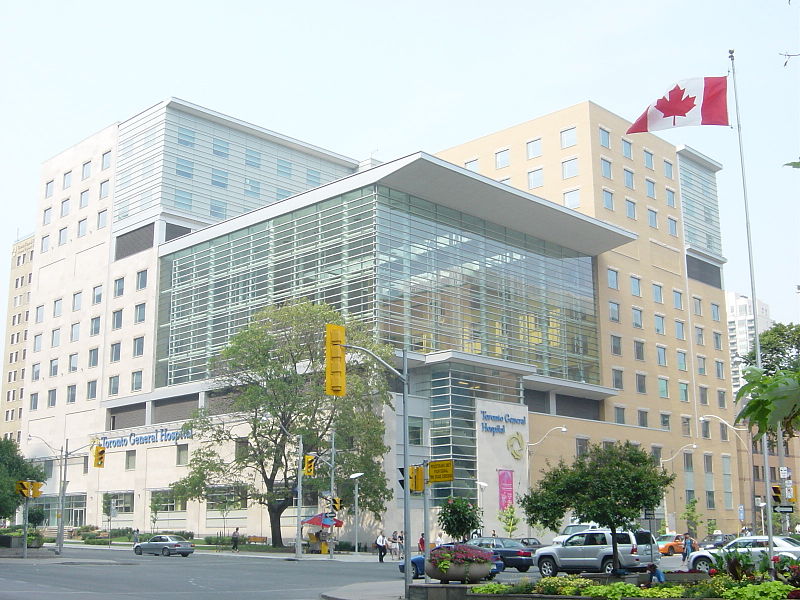
Toronto General Hospital in 2005.
Photo via Wikimedia Commons.

Millions of Canadians are extremely proud of our health-care system. They defend it and are utterly convinced of its greatness. They react with hostility to any hint of change.

But on what basis could Canada make a claim to health-care greatness?

According to OECD data, on life expectancy Canada ranks 16th. On morality rates from avoidable causes, we’re 23rd. On cancer survival rates we range from 13th down to 18th, depending on the cancer type. On the number of one-year-olds vaccinated for diphtheria, tetanus and pertussis, we rank an abysmal 37th (even the U.S. is higher here at 27th. Gulp.). One area where we do rank closer to the top is spending as a proportion of GDP, where we sit at seventh.

In modern parlance of TL;DR, what the OECD data says is that Canada spends a disproportionately large amount of money to get strongly mediocre health outcomes.

For an overall picture we can look at the World Health Organization’s ranking system, which measures, “responsiveness (both level and distribution), fair financing, and health inequality, in addition to the more traditional goal of population health.” Here, Canada ranks 30th overall.

“But …” I’m sure you’re about to say … “Canada has universal health care!”

Yes. And that’s good. But the shortfall of that argument is that dozens of other countries have universal health care and many also have far better overall outcomes. In short, universal health care access is not a unique feature in Canada. For instance, a few notable countries from the WHO’s top 10 include France, Italy, Singapore, Spain, Austria, and Japan. These are hardly countries that let citizens go bankrupt or die in the streets when they need health care.

So why are we so darned committed to defending the Canadian status quo?

I genuinely can’t make sense of it. Canadians are smart, sensible people. We want the best for ourselves and our children. But at the same time, we have a very long history of refusing to change and improve our health care despite every piece of evidence that says we desperately must do better. The COVID pandemic has made this especially clear over the last couple years, but none of this is new.

As Robyn Urback recently asked in the Globe & Mail, “When do we admit Canada’s health-care system just isn’t working?” and as Matt Gurney pondered on TVO, “When can we start trying to make it [better]?”

January 12, 2022

“You feel instantly at home when you arrive in Kenya because Kenya was once everyone’s home!”

Filed under: Africa, Media, Science — Tags: , , , , — Nicholas @ 03:00

When I was in middle school, my favourite teacher was a huge fan of the Leakey family’s discoveries in central Africa, and took every opportunity to show us films on the latest hominid remains uncovered (and by “latest”, it usually meant several years old, as 16mm films distributed through the county school system were rarely all that “new”). I assume she was a frustrated anthropologist herself, honestly, although I found her to be a very good teacher even if she’d “settled” for teaching as a career. In The Iconoclast, Geoffrey Clarfield remembers the late Richard Leakey, “the last Victorian scientist”, who died earlier this month in Kenya:

Richard Leakey at the WTTC Global Summit 2015.
Detail of original photo by the World Travel & Tourism Council via Wikimedia Commons.

Kenyan paleoanthropologist Richard Leakey died on January 2nd at age 77, following an extraordinary career devoted to the scientific exploration of human origins. Richard was once my boss. And although we never became friends, I came to know him fairly well.

He died peacefully in his house overlooking Kenya’s Great Rift Valley, where he’d made his most notable discoveries, and which occupied his imagination from an early age until his final days. It was fitting that he was buried beside his home, amid the same terrain from which he’d dug up humanity’s long-buried early ancestors. As I once heard him say to a group of visitors, “You feel instantly at home when you arrive in Kenya because Kenya was once everyone’s home!” (Essayists are supposed to shun exclamation marks, but this was simply the way the man spoke.)

To an outsider, Richard’s work history may appear to comprise a series of disconnected, sometimes testosterone-driven adventures. By turns, he was a wildlife trapper and animal trader, safari guide, bush pilot, gifted (albeit informally trained) fossil hunter, archaeological excavator, scientific autodidact, museum and civil-service administrator, member of parliament, opposition leader, cabinet minister, conservation activist, Kenyan patriot, fundraiser, public speaker, and prolific writer. The public knew him best as a television and film presenter. But those who knew him privately will also remember him as an enthusiastic team leader and mentor of young talent.

In my case, he helped advance my own project to train young Kenyan researchers to record and document traditional music in the northern part of their country, the Turkana District in particular. When I’d raised funds for this initiative, he brought it under the auspices of the National Museums of Kenya (NMK), of which he was then director.

While he may have seemed like something of an (enormously) overachieving dilettante to some, there was in fact a unity to his life and work. The times being what they are, many will focus on the fact that he was a white man taking a prominent role in a largely black country. But in truth, he likely attracted more scrutiny for being a fervent admirer of Charles Darwin, and a secular atheist, in a religious part of the world. He once published his own edited and illustrated version of Origin of Species, which I read when I was working for him, and his contributions to that volume gave me insight into what I believe was his fundamentally edifying professional motivation. I still have it on my shelf.

Richard emphasized that humankind had evolved in the Great Rift Valley, and from there had spread “out of Africa”, as the saying goes. He also believed that a previously underestimated factor in human evolution had been our species’ relationship to evolving biodiversity and prehistoric climate fluctuation — “paleoenvironments” as they came to be called.

January 9, 2022

QotD: Secrets in plain sight

Filed under: Business, Quotations, Science, Technology — Tags: , , — Nicholas @ 02:00

One such trend – which Thiel approaches in a lot of different equivalent ways – is the loss of belief in secrets. People no longer believe that there are important things that they don’t know, but which they could discover if they tried a little harder.

Past scientific discoveries came from a belief in secrets. Isaac Newton wondered why apples fell, thought “Maybe if I work really hard on this problem, I can discover something nobody has ever learned before”, and then set out to do it. Modern people aren’t just less likely to think this way. They’re actively discouraged from it by a culture which mocks the story of Newton as “the myth of the lone genius”, and tells young people that even thinking about this risks promoting a regressive political agenda. Nowadays people get told that if they think they’ve figured out something about gravity, they’re probably a crackpot. Instead, they should wait for very large government-funded programs full of well-credentialled people to make incremental advances.

Good startups require a belief in secrets, where “secret” is equivalent to “violation of the efficient market hypothesis”. You believe you’ve discovered something that nobody else has: for example, that if you set up an online bookstore in such-and-such a way today, in thirty years you’ll be richer than God. This is an outrageously arrogant claim: that you have spotted a hundred-billion-dollar bill lying on the sidewalk that everyone else has missed. But only people who believe something like it can noncoincidentally found great companies. You must believe there are lucrative secrets hidden in plain sight.

Scott Alexander, “Book Review: Zero to One”, Slate Star Codex, 2019-01-31.

January 8, 2022

“We are a sexually dimorphic species, and men and women are different”

Filed under: Health, Science — Tags: , , , , — Nicholas @ 05:00

A statement like that on Twitter or other social media platforms might run you the risk of denunciation, cancellation, and a plethora of accusations of transphobia, but it isn’t the intent of Robert King to troll the hypersensitive online:

No, this carving isn’t directly related to the article … but it is eyecatching.

We are a sexually dimorphic species, and men and women are different. Evolution has designed us to be different. Realising that we evolved through slow steps, rather than just popping into being in an act of creation, has implications. For one thing, it means that men and women have their own separate evolutionary histories, as a result of differing (although not wholly different, of course) selection pressures. Resisting this truth — pretending that men and women are a sort of silly putty, totally moulded by social forces — has already had serious consequences in medical science, and it also has implications for my field of study.

I study the nature and function of the female orgasm. It might surprise people that there is even a set of questions about this phenomenon, but it is one of the most vexed fields in evolutionary biology. I do not claim that we have solved the puzzle of it. However, I do claim that we know a lot more about female orgasm than we used to. For example, female orgasm is multi-faceted in nature (unlike male orgasm) and is associated with a host of complex, fertility-related, functions. Male orgasm has but one (and a pretty-well understood one at that) fertility related function: reinforcing sexual behaviour. How is it that these stark differences between the sexes have been missed?

A major reason is that sex researchers, in some cases even self-described feminists, have often persisted in treating female orgasm as a mere adjunct to male orgasm. On this view — the by-product view — only male orgasms have a function. Female ones exist as a sort of afterthought of nature. Thus, clitorises have been routinely compared to (functionless) male nipples by, among others, the influential palaeontologist, Stephen Jay Gould. However, this comparison does not stand up to scrutiny. Clitorises are not substandard penises. For starters, they are large, four inches in length, on average. They are highly complex, but their structure — including muscular, erectile, and sensitive tissue — is mostly internal.

The external part — the glans — is highly sensitive, but so is the rest of it, when appropriately aroused. Clitorises connect to their own dedicated area of brain (the somatosensory cortex) utterly distinct from the male version. To see some of this for yourself you could read any number of excellent works by, for example, the brilliant anatomist Helen O’Connell.

If the structure that generates female orgasm is at least as, if not more, complex than the male counterpart, then it makes little sense to assume that the female version depends on the male one. This is doubly true of the event of orgasm itself, prompting the eminent biologist Robert Trivers to quip of female orgasms that “One has to wonder how often Steve [Gould] has been near to that blessed event to regard it as a by-product.” That may be a tad unkind — but it raises a rather important point. If we restrict ourselves to studying female orgasm, or human sexual behaviour generally, in the laboratory alone, then we run a very real risk of missing out on crucial aspects.

Let me make this point more concrete. Over the last couple of years, zoos and wildlife parks across the planet have seen a huge upswing in births, among species previously thought to be sexually frigid — like Pandas. Why? Simple. No humans were about. The animals had some privacy from prying eyes. Does it really stretch imagination to appreciate that the full range of human sexual responses might be also muted when under laboratory conditions? Inefficiency is a hallmark of good sex, and humans use the privacy of the boudoir to do more than make each orgasm as rapidly as possible. We use this space to find out about one another.

January 7, 2022

Desert War – Dysentery, Disease, and Dehydration – WW2 Special

World War Two
Published 6 Jan 2022

North Africa. The Axis and Allies are fighting each other but even more, they’re fighting the desert itself. The men of the desert burn during the day and freeze at night. They do most of their fighting on a litre of water and a packet of army biscuits. What is life in such a hostile environment?
(more…)

“This is not satire. This is academic archaeology gone woke”

Filed under: History, Politics, Science, USA — Tags: , , , — Nicholas @ 05:00

In the New English Review, Timothy H. Ives asks whether the many stone heaps across New England are actually the ruins of First Nations sacred sites:

Historic photograph of Woodvale Farm, Rhode Island. The pasture shown here, enclosed by stone walls, features several stone heaps
Photo via New English Review.

Brightman Hill lies deep in the forests of Hopkinton, Rhode Island. It is named for the Brightmans, one of the families who farmed it, and evidence of its agricultural past is, to most observers, unambiguous: old building foundations, a nineteenth-century burial ground, an extensive network of stone walls and hundreds of stone heaps, the results of field clearing. But in 2019, a federally-funded survey of Brightman Hill shattered these traditional interpretations.

The surveyors, Ceremonial Landscapes Research, LLC, are a small group of antiquarians led by Alexandra Martin, a registered professional archaeologist who recently earned her doctorate in anthropology. Instead of stone heaps and walls, the surveyors reported “linear stone groupings” on Brightman Hill. One, they said, “brings to mind a turtle.” Another “appears to have the head of a snake”; another contains “a ‘nest’, large enough for an individual to sit in.” Boulders, naturally milled and deposited by glacial ice, came alive. One was categorized as “an apparent effigy of a human head,” significantly facing southwest, while the flat section of another became a “stone seat” from which celestial alignments could be observed.

This is not satire. This is academic archaeology gone woke. New Englanders may not realize it, but the ground is moving beneath their feet.

Stone heaps, walls and other ruined stone structures are scattered across the secondary forests of New England. Traditionally, archaeologists agreed that they were vestiges of abandoned farmsteads, reclaimed by the forests when many farmers left for the cities or pastures new. But now the culture wars have come to this previously polite field.

Today, radical left-wing academics support claims that the stones are the ruins of ancient Native American ceremonial constructions, and that they need protection from ongoing “settler-colonial” development. Tribal officials champion this claim, presumably to further their own campaigns for “decolonization”. Their “resistance” is applauded by attention-seeking antiquarians and a public entranced by guilt and ideas of social justice. I call this confluence the Ceremonial Stone Landscape Movement (or CSLM).

CSLM claims are fashionable, and almost uniquely powerful. None of these stone structures were signed and dated by their creators, but ceremonial claims carry particular weight — especially when anyone who dismisses them risks being accused of continuing the destruction of Native American culture. Yet the movement’s roots are neither ancient nor grounded in Native American tradition. They’re not even that deep.

The movement and its bizarre theory originated in the late twentieth century among a group of white, middle-class antiquarians. Many are members of the New England Antiquities Research Association (NEARA), founded in 1964; at the time NEARA’s founders resented academic archaeologists for refusing to take seriously their theory that New England’s farmstead ruins are in fact the remains of a megalithic culture transplanted by settlers from Europe in prehistoric times. By 1984, one NEARA member detected a “persecuted-crusader” complex among its members, who seemed determined to “wave the banner of truth with regards to the ‘real’ prehistory of New England” until the “mainstreamers … fall in line and admit the visions of a minority were accurate after all.”

« Newer PostsOlder Posts »

Powered by WordPress