Quotulatiousness

July 16, 2019

Bitcoin mining’s massive carbon buttprint

Filed under: China, Economics, Environment, Technology — Tags: , , , — Nicholas @ 03:00

Lincoln Swann explains why Bitcoin has become a huge environmental liability as its per-unit cost-to-mine has risen:

Bitcoin is more than a rather volatile imitation currency, it is also a huge energy monster.

The digital “mining” to create more Bitcoins and the recording of transactions uses up vast, crazy, amounts of electricity – something like 70TWh a year. That is about the same as Austria, say 20% of UK power consumption. As an added horror much if it is done in China where most of the power is coal generated.

All that adds up to a CO2 output from Bitcoin stuff of about 35mt a year. Planet friendly it definitely aint.

July 4, 2019

Assorted green scams

David Warren briefly returns to the current day (away from his normal 13th-century preferences) to look at a few of the many green scams being run by various government and industry scam artists:

Speaking with a gentleman who vends in a neighbourhood farmers’ market, I learnt something interesting, and probably true. Surviving family farms usually lack “organic” credentials. This is because getting them, from the bureaucracies that dispense them, is an immensely time-consuming process, and involves costs that would erase most of the little farmer’s profits. You have to be a big, faceless, industrial operation to afford the official “organic” labels that sucker big city consumers into paying double for essentially the same goods. That the whole system is massively corrupt, can almost go without saying. It was designed to be.

Organic scams are far from new, but perhaps more insidious because corporations love to add that “organic” label on stuff to jack up the prices on all sorts of things, like spices, wine, and many, many other items. Restaurants do the same trick on their menus, frequently assuming nobody will ever check up on them. That said, it’s mostly the well-off who get fooled because, well, they’re eager to be fooled on that score. The US government even admitted that organic certification is not about food safety or nutrition: it’s all marketing.

By coincidence, the same day my eye caught, by accident on the Internet, the announcement of a Green Award to a big car assembly “park.” They had changed all the light bulbs in their factory buildings, thus saving themselves a few thousand dollars on their multi-million electric bill, and seem to have installed new toilets, too. This sprawling high-tech carriage works remains three hundred acres of unspeakable aesthetic horror, in which human beings are enslaved to machines. But now it is “Green.”

The greenwashing of modern industrial and commercial buildings is a long-running scam, with the much-desired “LEED Platinum” certification usually, if not always, awarded to those who game the system most successfully. “What LEED designers deliver is what most LEED building owners want – namely, green publicity, not energy savings

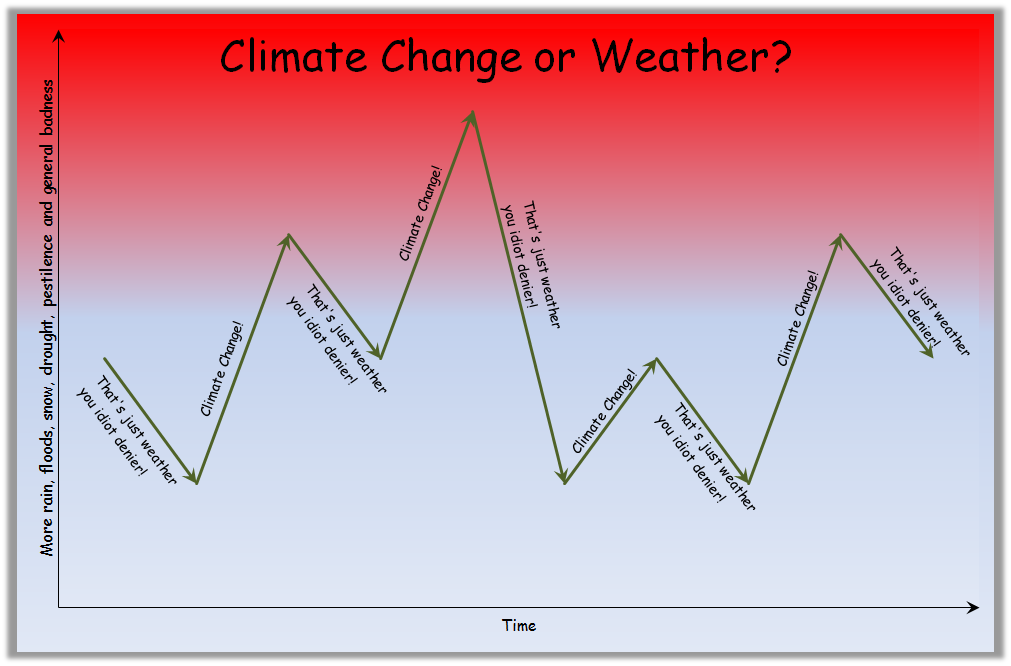
The environmental business — currently buoyed by unprovable, often fatuous claims of anthropogenic global warming — is perhaps the most cynical. It has spawned vested interests on a global scale, that will not be overturned by occasional exposure. At its heart is the manipulation of statistics, and scare-mongering through compliant mass media. The general public are hypnotized by repetition. I have noticed in desultory dips into the news that e.g. anomalous weather will invariably be attributed to “climate change,” when more plausible explanations are easily at hand.

This zombification extends to most other areas of reportage: invisible bogeys blamed for imaginary trends. Solutions to “environmental problems” are proposed that will not make the slightest dent in them.

Of course, the constant demands for “clean energy” almost always explicitly reject the use of nuclear power because reasons.

Darlington Nuclear Generating Station in Clarington, Ontario.
Photo by Óðinn via Wikimedia Commons.

But nuclear power, most easily in the form of molten salt reactors (on which research was killed fifty years ago), could replace most uses of coal, oil, and gas within a decade, through much smaller facilities eliminating huge transmission costs. It would be the cheaper because the fuels are readily available to start in the form of recycled nuclear waste, and the raw materials would be abundantly available thereafter.

On the question of safety, the death toll from mining, drilling, hydro dams, &c, is quite considerable — in the tens of thousands at least, post-War. Except for Chernobyl (one of many Soviet-era environmental disasters), the death toll from nuclear accidents remains about nil. No one died at Three Mile Island. Not one death was caused by the flooded Fukushima reactors (though well over twenty thousand were killed by the tsunami that caused the difficulty there).

In short, “clean energy” is not a problem. It had to be made into one by the fright campaigns of the environmentalcases, whose own power and income depends on sustaining the problem, and preventing the most obvious solutions.

June 28, 2019

What does £1 trillion buy you?

Not much, apparently:

Tory MPs have been told by CCHQ to share this graphic boasting about their new commitment to make the UK carbon-neutral by 2050. No other major country has committed to the pledge although Theresa May is planning a desperate attempt at the G20 to talk other leaders into it. The fact that developed countries going ‘net zero’ simply means they’ll outsource all their emissions to the developing world instead seems to be completely lost on her…

The pledge will cost the UK at least £1 trillion, much of which will be borne by individuals and businesses rather than the exchequer, we don’t know the true cost as May hasn’t even done a proper Treasury analysis. Eco-fanatics love to talk about the burden this generation is placing on children and grandchildren. For a fleeting PR stunt Tory MPs are being told to boast about piling on mountains of economic harm for future generations by a leader who won’t be in office to deal with the consequences…

This is exactly the sort of virtue signalling that Justin Trudeau indulges in … I imagine he’s quite miffed that Theresa May got there first.

June 11, 2019

“[I]t may suddenly occur to you that Mazin has turned a deadly epochal disaster into … a buddy-cop movie”

Filed under: Environment, Health, History, Media, Russia — Tags: , , , , — Nicholas @ 05:00

I haven’t watched Chernobyl, but a lot of sensible people, including Colby Cosh, insist that it’s well-worth the watching:

It looks as though HBO’s miniseries Chernobyl will take the title as the prestige TV event of the first half of 2019. This is pretty remarkable, all things considered. The writer of the series, Craig Mazin, is still described on Wikipedia as “an American screenwriter and film director best known for writing Identity Thief, The Hangover Part II, The Hangover Part III, and The Huntsman: Winter’s War.” The director, Johan Renck, is a Swede who got his start as a Eurodance performer with the nom de guerre “Stakka Bo.” For the zillionth time, HBO has spread its patented secret sauce over unpromising ingredients and delivered superb television.

I am being something of a jerk about these people, of course. Screenwriters don’t have much control over which of their scripts get made and what happens to those scripts on the set, and Mazin is admired as a critic and teacher. (Unusual respect for writers is an obvious component of that HBO magic.) As for Renck, he got from trashy music to HBO through an apprenticeship in music video — the same kind of apprenticeship that brought us David Fincher, Spike Jonze and Michel Gondry. He may, in this regard, be the last gasp of a noble tradition.

It is not that the Chernobyl series doesn’t have elements of hackiness. After spending a couple of hours watching Jared Harris’s austere scientist and Stellan Skarsgård’s smarter-than-he-looks apparatchik warm to each other while trying to save Eastern Europe from obliteration, it may suddenly occur to you that Mazin has turned a deadly epochal disaster into … a buddy-cop movie. Set aside the wonderful visual poetry, the period detail and the fine soundtrack, and the spine you’re left holding is a whodunit. It’s the Case of the Exploding Reactor.

I think Mazin would probably admit this, if he hasn’t already, but if it’s not clear enough, the whole thing winds up in the last episode with a contrived courtroom drama, one which does not quite resemble anything that ever happened in connection with Chernobyl.

Here is the funny and admirable thing: the solution that Mazin’s “cops” work out is highly technical and involved, is explained in careful detail, and is more or less the real solution to the mystery of Chernobyl. Mazin, who is my age and was therefore a teenager when the reactor went kablooie, is not some Jordan Peterson-esque Soviet-history nerd or someone who wanted to turn Chernobyl into a metaphor. It just seems to have occurred to him one day, quite recently, that he knew the word “Chernobyl,” and remembered that Chernobyl was very bad, but wasn’t sure what exactly had happened. When he found out he realized there was a movie in it.

Between the accidents at Chernobyl and Three-Mile Island (in 1979), the nuclear power industry was set back literally decades … despite being one of the best — and safest — answers to the problem of generating enough electricity to keep modern industrial countries humming along while also reducing production of carbon dioxide in the atmosphere. Maybe someone will produce a TV mini-series to de-mystify the American nuclear accident soon, and debunk the half-truths, quarter-truths, and outright lies that still bedevil any discussion of nuclear power in the western world.

June 8, 2019

The sad economics of recycling

Filed under: Economics, Environment, Law, USA — Tags: , , , — Nicholas @ 05:00

Kim du Toit on the actual economic value of most recycling efforts:

Turns out that aluminum cans are actually worth recycling — in that they are 100% recyclable (requiring nothing other than melting and reformulating) and it costs less — much less — to recycle than to produce new aluminum.

That’s almost true of newsprint too, except that while pulping it is fine — hardly any energy is used for that — the pulp also has to be bleached, and in the pulping / bleaching process, about 15% of the original paper is lost. And as raw paper production (i.e. from logged wood) has become more efficient over the years, and as trees can be grown to replace those felled, the only real benefit from recycling paper is that overall paper production is less vulnerable to hiccups in supply of fresh wood — such as caused by forest fires, disease and drought.

And, he added, when it comes to recycling other stuff, glass is little better than plastic — which surprised me, but it actually costs much more to recycle glass than simply to produce it new. And the old “plastic into park benches” spiel is likewise stupid, because it costs so much to produce such stuff, and creates so much atmospheric pollution thereby, that it’s easier just to toss plastic into a properly-lined landfill and let nature take its course.

Knowing all that, I’ve always been skeptical of the benefits of recycling — it’s always been about feeewings rather than utility

May 27, 2019

QotD: The Green death cult

In keeping with all millenarian movements, the extinction-obsessed green cult reserves its priestly fury for ordinary people. Even when it is putting pressure on the government, it is really asking it to punish us. It wants tighter controls on car-driving, restrictions on flying, green taxes on meat. That these things would severely hit the pockets of ordinary people – but not the deep pockets of Emma Thompson and the double-barrelled eco-snobs who run Extinction Rebellion – is immaterial to the angry bourgeoisie. So convinced are they of their own goodness, and of our wickedness, that they think it is utterly acceptable for officialdom to make our lives harder in order to strongarm us into being more “green”. People complaining about Extinction Rebellion disrupting people’s lives in London over the past few days are missing the point – the entire point of the green movement is to disrupt ordinary people’s lives, and even to immiserate them. All in the jumped-up name of “saving the planet”.

And now the green cult has pushed Ms [Greta] Thunberg into the position of its global leader, its child-like saviour, the messiah of their miserabilist political creed. What they have done to Ms Thunberg is unforgivable. They have pumped her – and millions of other children – with the politics of fear. They have convinced the next generation that the planet is on the cusp of doom. They have injected dread into the youth. “I want you to panic”, said Ms Thunberg at Davos, and the billionaires and celebs and marauding NGOs that were in attendance all lapped it up. Because adult society loves nothing more than having its own fear and confusions obediently parroted back to it by teenagers. They celebrate Thunberg because she tells them how horrible they are: it is an entirely S&M relationship, speaking to the deep self-loathing of the 21st-century elites.

Brendan O’Neill, “The cult of Greta Thunberg: This young woman sounds increasingly like a millenarian weirdo”, Spiked, 2019-04-22.

May 22, 2019

Climate change, no, climate crisis, no, climate catastrophe, no, we mean climate APOCALYPSE!!!

Filed under: Cancon, Economics, Environment, Politics — Tags: , , , — Nicholas @ 03:00

The official marching orders for journalists now insist that the language to use around what was formerly “global warming” or “climate change” will now be described in starker, more frightening terms. Canada’s Liberal Party, under Justin Trudeau, has been virtue signalling for pretty much its entire term in office on the climate issue and with a fall election coming into view, the rhetoric will become more extreme and shrill. Jay Currie discusses climate change and the Canadian election:

I suspect this divide between people who think “doing something” about climate change (no matter how futile) and people who do not accept the urgency of dealing with something they really don’t believe in will inform politics in the West for the next few years. Most particularly, it will inform the next Canadian federal election.

The Liberal Party of Canada has been going all in on its “tax on carbon pollution” (a fine bit of wordsmithing managing to attach “carbon” to “pollution”). Led by the remarkably scolding Catherine McKenna, the Libs seem to think that purporting to “do something” about climate change is a vote winner. So McKenna tours the country speaking to uncritical school children and assorted environmentalists about how important having a “carbon tax” is. The Liberals tax will save the planet, ensure sea level rise stops (easy because sea level is not actually rising), save the Arctic ice cap (already saving itself, thank you), keep polar bears from extinction (also easy because virtually all polar bear populations are growing) and reduce or eliminate climate change “caused” weather events. Plus, Canada will honour its Paris Accord commitments (we won’t) and serve as a beacon to lesser nations like China and India in their efforts to combat climate change (as if).

The Liberals think that the fact that a carbon dioxide tax in Canada will have a rounding error effect on worldwide emissions and no detectable effect on world temperature does not matter politically. What matters politically is that the Liberals believe that there is a large constituency out there which urgently wants to “do something”.

The NDP is fully on board and, of course, the Greens have been banging the climate change drum forever. Andrew Scheer’s Conservatives seem to be on the fence. Like the Coalition in Australia, the Conservatives endorse the “climate change is a problem” line and very few are willing to challenge the underlying science or economics for fear of being branded uncool “climate change deniers”. But the Conservatives seem to be, prudently in my view, dragging their feet on “doing something” about CO2.

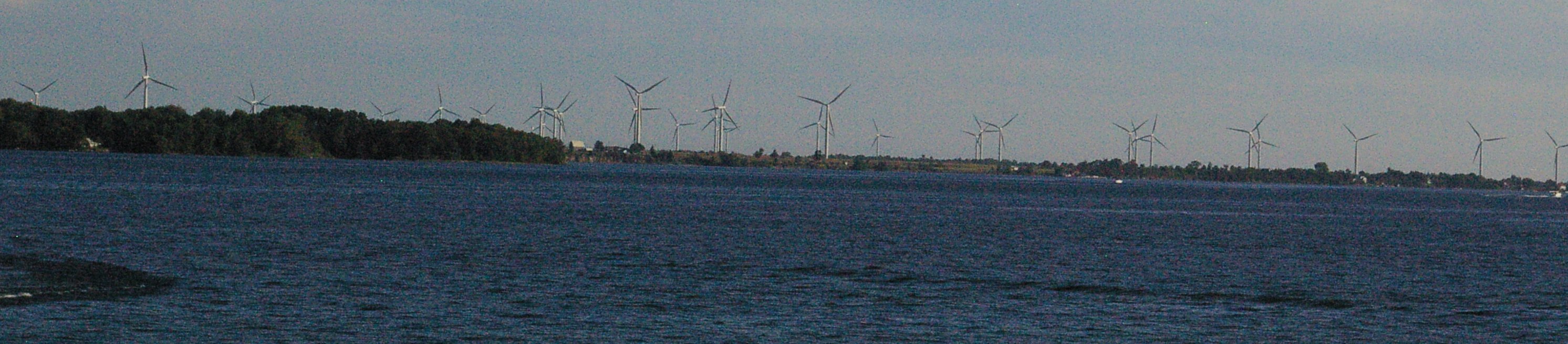
Political virtue signalling on the climate file is the easy part. All that is really required is the abandonment of any sort of scientific judgement (easy when you are told that all the scientists agree that climate change is real and primarily human caused) and policy skepticism (we don’t need a cost benefit analysis, this is an emergency!). The hard part occurs when you try to “do something”. Because doing something means that people are going to see their expenses rise without actually seeing (in any tangible way) any actual benefit. In fact, as Ontario’s wonderfully disastrous adventure in wind energy demonstrated, tax dollars can be wasted and consumer prices increased all without making any difference at all to the climate.

May 13, 2019

QotD: The Church of Environmentalism

Filed under: Environment, Humour, Politics, Quotations, Science — Tags: , — Nicholas @ 01:00

Julian Simon, the economist who was legendarily skeptical about environmental doom, once posed a question at an environmental forum: “How many people here believe that the earth is increasingly polluted and that our natural resources are being exhausted?” Almost every hand shot up. He then said, “Is there any evidence that could dissuade you?” There was no response, so he asked again, “Is there any evidence I could give you — anything at all — that would lead you to reconsider these assumptions?” Again, no response. Simon concluded, “Well, excuse me. I’m not dressed for church.”

Jeremy Carl, “The Church of Environmentalism”, Claremont Review of Books, 2016-02-25.

April 29, 2019

Banning single-use plastics won’t make much (if any) difference

Filed under: China, Environment, India, Pacific — Tags: , , , — Nicholas @ 03:00

My local high school is suddenly all about the proposed ban on single-use plastics — where student-made posters used to proclaim their dedication to gender equality, they’re now all about the evils of plastics. It’s almost like it’s a co-ordinated campaign that originated somewhere else…

But despite the students’ new-found environmental awareness, the ban they favour would make little or no difference to plastic items ending up in the oceans, because the vast majority of the plastic there comes from only ten rivers, none of them in North America (this is from a World Economic Forum report). Jason Unrau reports on his trip up the Yangtze River in China twenty years ago that illustrates the breadth of the problem:

Beginning in Shanghai in the summer of 1999, I boarded a large flat-bottom boat with around 300 other passengers. It would be the first of about a dozen different vessels, that over two weeks ferried me 2500 kilometres to Chongqing.

After taking my first meal in the ferry’s mess hall, served in a Styrofoam box, I searched everywhere for a garbage can. There were none – passengers simply tossed their garbage overboard and without an alternative, I joined in the littering.

The banks of the Yangtze are home to more than 200 million Chinese who treat the waterway as commuter corridor and as I soon discovered, a dump. I took the trip to get a glimpse the fabled Three Gorges, before a hydro-electric project and dam would change the watershed forever. As my trip progressed, however, so did my treatment of this historic river as trash receptacle.

The closer I got to Chongqing, the narrower the river became and the smaller the ferries got. About 10 days into the trip, I exited the dining hall of a different vessel to engage in the daily ritual of reckless Styrofoam abandonment, but to my surprise there was a garbage bin.

Delighted at the prospect that my littering ways on the Yangtze were through, enthusiastically I added my box to a near overflowing bin. As if on cue a kitchenhand exited the dining hall, gathered up the bag and heaved the entire thing overboard.

Like I experienced and begrudgingly participated in creating, the World Economic Forum’s report describes “rivers of plastic” – its analyses of respective outputs and comparisons to garbage island and other samples, could be traced back to their source.

According to the economic forum eight of these rivers are in Asia: the Yangtze; Indus; Yellow; Hai He; Ganges; Pearl; Amur; Mekong; and two in Africa – the Nile and the Niger.

April 25, 2019

QotD: “Science”

Filed under: Environment, Politics, Quotations, USA — Tags: , — Nicholas @ 01:00

Ah, science. If you’re even loosely engaged in the wild and dark art that is politics these days, you know by now that “science,” as a word, has taken on an almost mystical meaning. “Science,” in many of its modern incantations, now serves as a form of code, as vague and fuzzy as a Wiccan chant. For a growing number of political activists, the meaning is simple: Science, you see, is a lively mix of standard progressive hobbyhorses, tossed wild-eyed and cranky into one cantankerous bag.

Heather Wilhelm, “The Left’s New Cure-All: ‘Science’”, National Review, 2017-04-12.

April 16, 2019

‘Tis Eastertide, and so the professional miserablists are going after Easter Eggs, of course

Filed under: Britain, Business, Economics, Environment, Food — Tags: — Nicholas @ 03:00

In the Continental Telegraph, Tim Worstall tells the worried environmentalists that no, it does not make sense to ban Easter eggs — for their “wasteful” packaging — on environmental grounds:

One of the more silly of the current environmental concerns is the worrying about the quantity of packaging that goes into – or around – Easter eggs. There’s an underlying mistake being made here, one which none of the proponents of action have bothered to recognise, let alone think about. Which is, well, what’s the purpose? The point of all this human activity we call an economy?

As any economist could and would tell you we’re after the maximisation of human utility. Given the constraints placed upon us by reality – the availability of stuff with which to do things, technologies we know about to do things to stuff with – we want humans to be as happy as they can be. We want, in short to maximise the amount of joy in the world.

At which point, packaging. Sure, no doubt there’s a certain harm that befalls us all from the creation of packaging and its disposal. Why not? There are costs and benefits to everything of course. But that’s the point, while there may be costs there are also benefits. So, yes, OK, there are costs to packaging.

[…]

At no point is even consideration given to the idea that the packaged egg might produce that joy. Which, given that we do indeed go buy these things each year to give to each other, is odd, isn’t it? Why are we giving each other expensive – as opposed to cheap – chocolate? Because, obviously enough, the dressing of the chocolate is something that produces that joy.

We can even have a stab at quantifying matters.

The cost is 3,000 tonnes of packaging. We know what that costs us, the value of the landfill tax. Around £80 a tonne. So, call it quarter of a million pounds. Spending upon Easter eggs is some £400 million a year. The joy produced must be of greater value than that £400 million otherwise we’d not be spending it in the first place. And yes, £400 million is more than £250,000.

We thus have our answer to the prodnoses worrying about the cost of Easter egg packaging. Piss off matey, you’ve missed the point entirely.

April 3, 2019

QotD: Veganism has its drawbacks

Filed under: Environment, Food, Health, Humour, Quotations — Tags: , , , — Nicholas @ 01:00

Evangelical vegans will tell you that following a purely ‘plant-based’ diet is not only morally commendable, it’s also much better for your health. But if my experience is anything to go by, the opposite is true.

I felt absolutely fine for the first few days. I didn’t miss meat at all, certainly not in terms of taste or flavour. The only thing I really felt an absence of was eggs. Since I embarked on my mammoth weight-loss project, eggs have become a dietary staple for me: nothing fills me up as well or gives me quite as much long-lasting energy as an egg.

I also found I had to eat larger portions to feel full — and I felt hungry again after a shorter period of time. But even that didn’t bother me, since what I was eating was so wholesome.

No, the real issue became apparent after the third or fourth day. Not to put too fine a point on it: wind.

My stomach was, quite literally, in ferment. All those legumes and pulses and generalised vegetable matter appeared to have turned into a giant internal compost heap. It wasn’t too bad in the mornings; but by early afternoon I was like a cow who had overdosed on clover.

At first, I palmed the outcome off on our three dogs. But after a while the problem became so severe that even they could not be expected to account for the frequency and potency of aromas emerging from my lower digestive tract.

One of the key arguments of vegans against livestock farming is the harm animals cause to the planet through the amount of methane they produce; if my experience was anything to go by, a vegan human is capable of producing just as much, if not more. I was a one-woman global warming hazard.

My children, of course, thought it was hilarious. But from my point of view, it was not only unpleasant and occasionally embarrassing, it was also incredibly uncomfortable. I felt bloated, soggy and sluggish, and began to dread meal times.

Following the advice of the nutritionist, I took to soaking nuts, oats and seeds overnight. But it made no difference. If anything, the problem began to get worse. The more healthy vegan food I put into my body, the worse my stomach problems became.

As for the much-vaunted ‘vegan glow’, no sign. Instead, my skin felt dry and dehydrated, and there was a distinctly greyish tinge to my complexion. But still, I persisted.

Sarah Vine, “Going vegan sent me off my trolley! Exhausted, irritable and don’t even start of the tummy troubles – SARAH VINE’s bid to join the health revolution left her VERY green around the gills”, Daily Mail, 2019-02-22.

April 2, 2019

The not-so-ancient extinction of Madagascar’s megafauna

Filed under: Africa, Environment, History, Science — Tags: , , , , — Nicholas @ 03:00

At The Conversation, Nick Scroxton, Laurie Godfrey, and Stephen Burns discuss their new theory on the megafauna extinction in Madagascar just over a thousand years ago:

Giant 10-foot-tall elephant birds, with eggs eight times larger than an ostrich’s. Sloth lemurs bigger than a panda, weighing in at 350 pounds. A puma-like predator called the giant fosa.

They sound like characters in a child’s fantasy book, but along with dozens of other species, they once really roamed the landscape of Madagascar. Then, after millions of years of evolution in the middle of the Indian Ocean, the populations crashed in just a couple of centuries.

Scientists know that over the past 40,000 years, most of Earth’s megafauna – that is, animals human-size or larger – have gone extinct. Woolly mammoths, sabre tooth tigers and countless others no longer roam the planet.

What’s remarkable about the megafaunal crash in Madagascar is that it occurred not tens of thousands of years ago but just over 1,000 years ago, between A.D. 700 and 1000. And while some small populations survived a while longer, the damage was done in a relatively short amount of time. Why?

Over the last three years, new investigations into climate and land use patterns, human genetic diversity on the island and the dating of hundreds of fossils have fundamentally changed scientists’ understanding of the human and natural history of Madagascar. As two paleoclimatologists and a paleontologist, we brought together this research with new evidence of megafaunal butchery. In doing so we’ve created a new theory of how, why and when these Malagasy megafauna went extinct.

Many of the forests that originally existed on Madagascar are now replaced by more open, human-modified landscapes, like this palm savanna at Anjohibe.
Laurie Godfrey, CC BY-ND

March 30, 2019

QotD: Organic spices are a racket

Filed under: Bureaucracy, Business, Environment, Food, Health, Quotations, USA — Tags: , , — Nicholas @ 01:00

There’s a whole other piece to be written about organic spices, but the short version is that demanding organic spices is never going to be good for the farmers growing them. The U.S. standards for organic products amounts to ridiculously expensive and oftentimes unnecessary practices for small farmers who just don’t have the resources to do it. There are plenty of ways to arrive at ethical treatment of animals and land that are not part of our complicated organic laws. And that’s not to mention the people who demand organic products but will also freak out at the sight of a bug or won’t buy something that’s even a little bit misshapen or with a tiny brown spot on it. You can have pesticides or you can have pests.

Caitlin PenzeyMoog, “Salt grinders are bullshit, and other lessons from growing up in the spice trade”, The A.V. Club, 2017-04-06.

March 24, 2019

Trust in scientific findings decreasing among the general public

Filed under: Education, Environment, Health, Media, Science — Tags: , , — Nicholas @ 03:00

In Scientific American, Louise Lief discusses the problem of rising public distrust of science:

We live in a moment when preventable infectious diseases like measles are spreading because parents distrust vaccines, and scientists at government agencies are being told not to use terms like “evidence-based.” The president dismisses the findings of a National Climate Assessment by more than 300 scientists and 13 federal agencies that warns of massive economic and environmental damage totaling hundreds of billions of dollars, crop failures, disrupted supply chains and multiple threats to human health, saying, “I don’t believe it.”

But when I argued in favor of the proposition (Resolved: “Science writers are responsible for building public trust in science”) during a debate at the National Association of Science Writers’ 2018 annual conference last fall, the majority of science writers and science journalists present voted that building public trust in science was not the responsibility of science writers.

[…]

Kathleen Hall Jamieson, director of the Annenberg Public Policy Center at the University of Pennsylvania’s Annenberg School for Communication also tackled the science trust question at the NASW conference, and researchers at Cardiff University have traced credibility and accuracy problems to press releases from scientists’ own academic institutions.

If a problem is discovered or a study is retracted, said Jamieson, the scientist or scientific journal needs to explain to journalists and the public how the error was discovered, what the problem is, and what steps are being taken to ensure it doesn’t happen again.

Scientists often make it hard for journalists to cover these three interrelated issues, she says. Scholarly journal publication protocols may cause scientists to write one article on the problem they’re investigating, and a second or third article on processes and solutions, resulting in coverage that emphasizes problems and shortchanges corrective action.

For their part, researchers at Cardiff University found that press releases from scientists’ own academic institutions about their work were a significant source of exaggerated claims and spin, even though most scientists can approve their wording.

Their study of press releases from 20 leading British universities on health-related science news found that when the press releases exaggerated, it was likely the news stories would too.

An analysis of 41 news articles on randomized controlled trials based on 70 press releases showed only four articles that contained exaggerated claims not included in the press release or journal abstract. Interestingly, they also found the hype and spin intended to tempt the media did not result in more news coverage.

H/T to Blazing Cat Fur for the link.

« Newer PostsOlder Posts »

Powered by WordPress