
World War Two
Published 11 Sep 2021Adolf Hitler sacks Wilhelm List, Army Group Commander in the Caucasus. His replacement does not have military command experience. The fighting there is still successful this week, though, as is the advance through the suburbs of Stalingrad. The Japanese are advancing along the Kokoda Trail and on Guadalcanal, but the Axis attacks in North Africa have failed badly.
(more…)
September 12, 2021
Hitler Finally Fed Up with his Army – WW2 – 159 – September 11, 1942
Comments Off on Hitler Finally Fed Up with his Army – WW2 – 159 – September 11, 1942
September 5, 2021
This War is Three Years Old – WW2 – 158 – September 4, 1942
World War Two
Published 4 Sep 2021As the war turns three there is is no slacking in the fighting. Erwin Rommel launches another Axis attack in North Africa, but it is foiled in only days, though the Axis are advancing in the Caucasus as well as on Stalingrad, where the fight for the suburbs is now beginning. They’re also advancing in the South Pacific, as the Japanese fight their way along the Kokoda Trail.
(more…)
Comments Off on This War is Three Years Old – WW2 – 158 – September 4, 1942
September 2, 2021
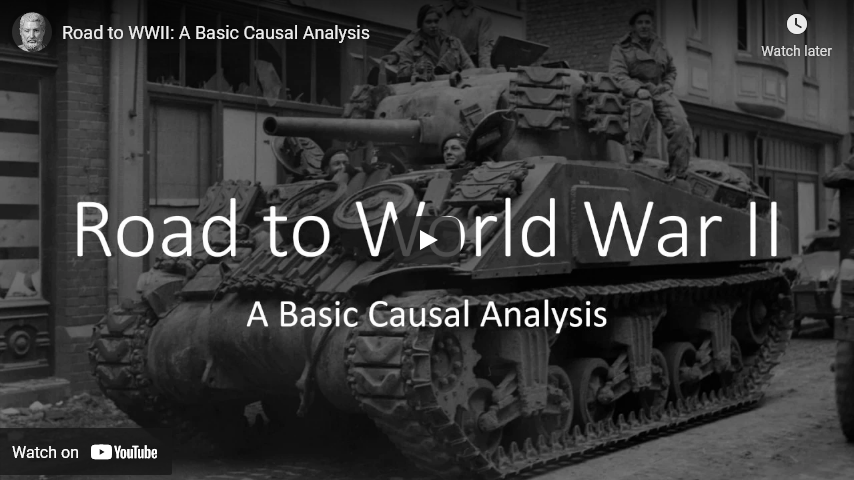
Road to WWII: A Basic Causal Analysis
Thersites the Historian
Published 19 Nov 2019This video is a primer for undergraduates in broad history survey courses that will hopefully help make sense of the interwar years between World War I and World War II.
Patreon link: https://www.patreon.com/thersites
PayPal link: paypal.me/thersites
Twitter link: https://twitter.com/ThersitesAthens
Minds.com link: https://www.minds.com/ThersitestheHis…
Steemit/dtube link: https://steemit.com/@thersites/feed
BitChute: https://www.bitchute.com/channel/jbyg…
Backup Channel: https://www.youtube.com/channel/UCUrD…
Comments Off on Road to WWII: A Basic Causal Analysis
August 29, 2021
Yamamoto: Midway Round Two? – World War Two – 157 – August 28, 1942
World War Two
Published 28 Aug 2021The Battle of the Eastern Solomons takes place this week — another carrier battle. As for the Germans, they’re advancing on Stalingrad, slowing down in the Caucasus, and Erwin Rommel is preparing to launch another assault in North Africa.
(more…)
Comments Off on Yamamoto: Midway Round Two? – World War Two – 157 – August 28, 1942
August 28, 2021
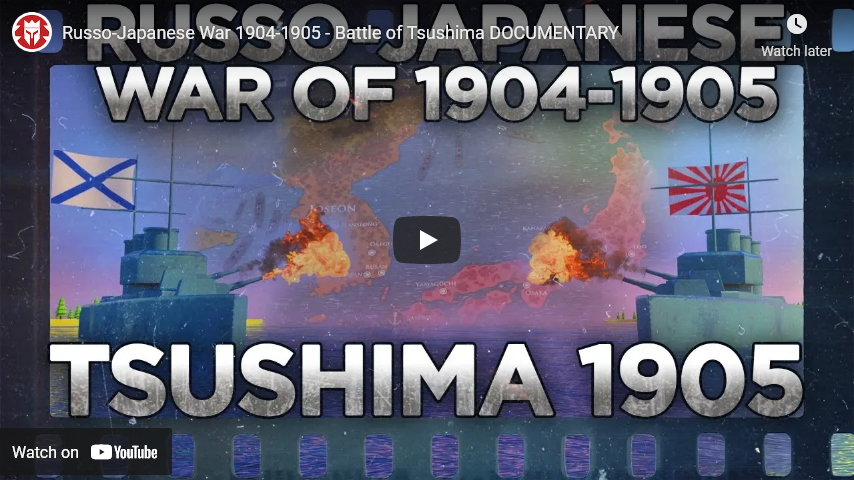
Russo-Japanese War 1904-1905 – Battle of Tsushima
Kings and Generals
Published 16 Dec 2018In our new historical animated documentary, we will cover the Russo-Japanese War of 1904-1905 with a focus on the naval engagements at Tsushima, the Yellow Sea, and Port Arthur. This conflict between Russia and Japan was unique due to the heavy usage of the battleships and its results influenced the First and Second World Wars.
Support us on Patreon: http://www.patreon.com/KingsandGenerals or Paypal: http://paypal.me/kingsandgenerals
Check out our Merch Store: teespring.com/stores/kingsandgenerals
We are grateful to our patrons and youtube members, who made this video possible: https://drive.google.com/open?id=1Tff…
This video was narrated by Officially Devin (https://www.youtube.com/user/OfficiallyDevin)
✔ Merch store ► teespring.com/stores/kingsandgenerals
✔ Podcast ► Google Play: http://bit.ly/2QDF7y0 iTunes: https://apple.co/2QTuMNG
✔ Twitter ► https://twitter.com/KingsGenerals
✔ Instagram ► http://www.instagram.com/Kings_GeneralsSources:
Robert Forczyk – Russian Battleship vs Japanese Battleship
William Koenig – Epic Sea Battles
Левицкий – Русско-японская война 1904—1905
Сорокин – Оборона Порт-Артура. Русско-японская война 1904—1905Production Music courtesy of Epidemic Sound: http://www.epidemicsound.com
#Documentary #RussoJapaneseWar #KingsAndGenerals
Comments Off on Russo-Japanese War 1904-1905 – Battle of Tsushima
August 23, 2021
Swastika Raised on Highest Point in Europe – WW2 – 156 – August 21, 1942
World War Two
Published 21 Aug 2021The Axis advance in the Caucasus takes Mt. Elbrus, and the one on Stalingrad continues, and there are several raids of note this week- a Japanese one on Guadalcanal is destroyed, an Allied one on Dieppe is badly savaged, and an American one at Makin Atoll is successful in the short term, but with bad long term ramifications.
(more…)
Comments Off on Swastika Raised on Highest Point in Europe – WW2 – 156 – August 21, 1942
August 15, 2021
No Soviet Oil for Hitler – WW2 – 155 – August 14, 1942
World War Two
Published 14 Aug 2021The Axis advance into the Caucasus is going great … except the oil towns they take have no oil, and wasn’t that the whole purpose? Meanwhile in the Pacific, the US Navy is suffering perhaps its greatest defeat ever off Savo Island, even as the Marines take Tulagi, Gavutu, and Tanambogo.
(more…)
Comments Off on No Soviet Oil for Hitler – WW2 – 155 – August 14, 1942
August 14, 2021
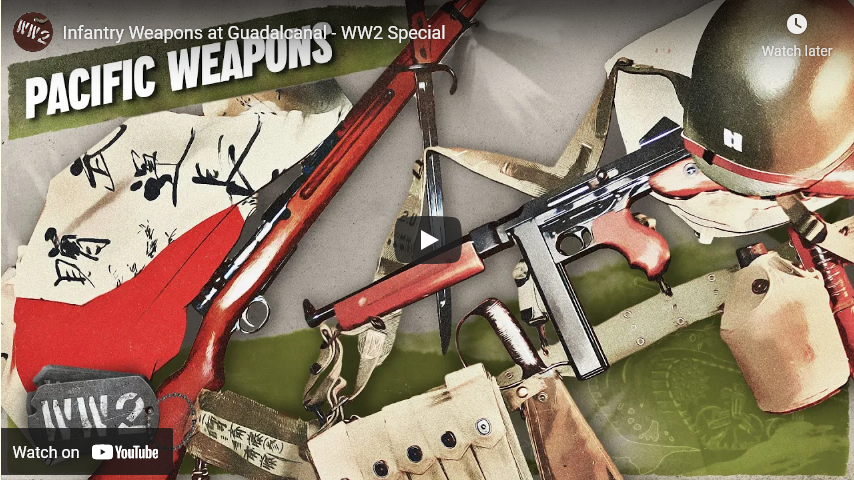
Infantry Weapons at Guadalcanal – WW2 Special
Update: The folks at the World War Two channel have taken down this video due to technical errors in the script. Here’s their explanation.
World War Two
21 hours ago
Video on Infantry Arms at Guadalcanal retracted. Indy explains why:Hi everyone. Indy here. As most of you know, I do the research and writing for all of the regular weekly episodes here. I host many of the specials as well, though I do not do the research for most of them- occasionally so, if it’s something that’s really in my field of expertise, like geopolitics, strategy, personal stories, communications, and international relations. The research for the other specials is done by a variety of specialists in their fields or historians, so we can maintain the quality you’ve come to expect from us. I understand, though, that many of you have serious issues with the research for the Guadalcanal infantry special. Our apologies for that- the research was done by an historian, a PhD [student], actually, and we also ensured it was double fact-checked, but obviously some serious mistakes slipped through. Live and learn. I will say that I think it is important that you continue to tell us when you take issue with something we present, since we strive to make the most complete and accurate documentary series possible, so although some of them are hard to read we appreciate such feedback from our community.
And this is from the researcher who worked on the script:
Marlon Londoño
18 hours ago
Hey guys! This is Marlon, the PhD student in question who helped with the researching and writing of the episode. Just to give a little background, I’m a volunteer researcher who helps with the channel over the summer while I’m not teaching/researching/taking coursework. I’m a military historian and my main academic focus is on social and cultural military history (i.e. what people’s wartime experiences were like and why. I’m especially interested in how people justify wartime violence and oftentimes the types of weapons they use play a role in that mental process, so that’s the context in which I usually think about weapons on the battlefield).I’m sorry that I let a lot of you down with the mistakes about the Garand and Arisaka, among others. To be honest, I was surprised to learn they were myths. But I certainly know now, and I don’t think I’ll be forgetting any time soon 😅 One thing that I firmly believe as a researcher and educator is that nobody has a monopoly on the truth, least of all me. I tell that to my students on the first day of class each semester. I certainly don’t presume that the degree I’m pursuing makes me infallible or instantly qualified for anything. And this was a classic example of just how wrong I can be sometimes!
For what it’s worth, I love war history just as much as anyone else in the community, and I’m sorry that my research wasn’t as rigorous as it might otherwise have been. I hope you all might be willing to give any future episodes of mine a second chance, and of course I’m all ears for any mistakes that you want to point out!
Comments Off on Infantry Weapons at Guadalcanal – WW2 Special
August 12, 2021
QotD: Ignoring the warnings
… on Dec. 7, 1941, a U.S. Army Air Force lieutenant was spending his first-ever shift with a radar unit atop some Hawaiian high ground. Radar was brand new technology, and the U.S. was still figuring out how to best use it. The poor lieutenant watched on a scope as a big blob of something approached the naval base. He assumed it was a bunch of friendly planes coming in from the U.S. — what else would it be, right? Besides, even if he had been worried, there was no established protocol to sound an alarm. Forty-some-odd years before the release of Ghostbusters, the poor lieutenant was living the iconic tagline — when there’s a big mass of planes flying toward your base, who ya gonna call? And so the lieutenant and his men could only watch Japan’s massively successful attack on the U.S. fleet, an attack that caught the American defenders totally unprepared, with sailors asleep in their racks and senior officers golfing or breakfasting. There had been some intelligence warnings that Japan was up to something, but no one guessed that an attack on Hawaii was imminent. Not even the guys who quite literally saw it coming.
Let’s jump forward a few decades: in 1973, Israeli military intelligence was fully aware of a huge build-up of men and weapons on its borders with Syria and Egypt. The mobilizations were impossible to hide — tens of thousands of troops, tanks, artillery, the whole apparatus of modern warfare was lining up across Israel’s borders. But Israel’s top military intelligence officer concluded that the build-up was intended to apply political pressure ahead of negotiations, not actually to prepare for an assault. Israel was militarily superior, after all, and had handily defeated the combined Arab armies before, including just six years prior. The Arabs simply wouldn’t dare try again. Right?
Wrong. They dared, Israel was caught totally by surprise, and the Jewish state came shockingly close to defeat and likely destruction.
Ideally, these kinds of mistakes — mistakes of preparedness, mistakes of erroneous conclusion — are studied, learned from and then never repeated. In the real world, of course, we tend to make the same mistakes over and over.
Matt Gurney, “How the COVID crisis broke our leaders’ minds”, The Line, 2021-04-23.
Comments Off on QotD: Ignoring the warnings
August 11, 2021
The Symphony That Defeated the Wehrmacht – WAH 040 – August 1942, Pt .1
World War Two
Pubished 10 Aug 2021The Big Action at the Warsaw Ghetto continues, while The Japanese carry out retaliations against the Chinese for aiding American airmen. Dmitri Shostakovich’s “Symphony no. 7” premieres in the besieged city of Leningrad.
(more…)
Comments Off on The Symphony That Defeated the Wehrmacht – WAH 040 – August 1942, Pt .1
August 8, 2021
Guadalcanal – Allies Take the Initiative – WW2 – 154 – August 7, 1942
World War Two
Published 7 Aug 2021The Axis Forces are on the move on the Eastern Front and in the Caucasus, but this week the Allies begin an offensive of their own: this week come Allied landings and attacks on Guadalcanal and nearby islands, the first American offensive against the Japanese.
(more…)
Comments Off on Guadalcanal – Allies Take the Initiative – WW2 – 154 – August 7, 1942
August 1, 2021
Not a Step Back! – Wehrmacht Closes in on Stalingrad – WW2 – 153 – July 31, 1942
World War Two
Published 31 Jul 2021Operation Edelweiss opens with a blast, and as the Wehrmacht closes in on Stalingrad, Stalin issues that famous order. There aren’t just big actions in the East, the Japanese have landed in New Guinea, the Allies try one more offensive at El Alamein, and the Americans have locked in on Guadalcanal.
(more…)
Comments Off on Not a Step Back! – Wehrmacht Closes in on Stalingrad – WW2 – 153 – July 31, 1942
July 23, 2021
FDR Knew about Pearl Harbor?! – WW2 – Reading Comments
World War Two
Published 22 Jul 2021Here is another installment of Across the Airwaves where Indy and Sparty take the opportunity to directly address some of the comments left by our community. In this episode, we take a look at some of the more controversial comments left on our videos.
(more…)
Comments Off on FDR Knew about Pearl Harbor?! – WW2 – Reading Comments
July 13, 2021
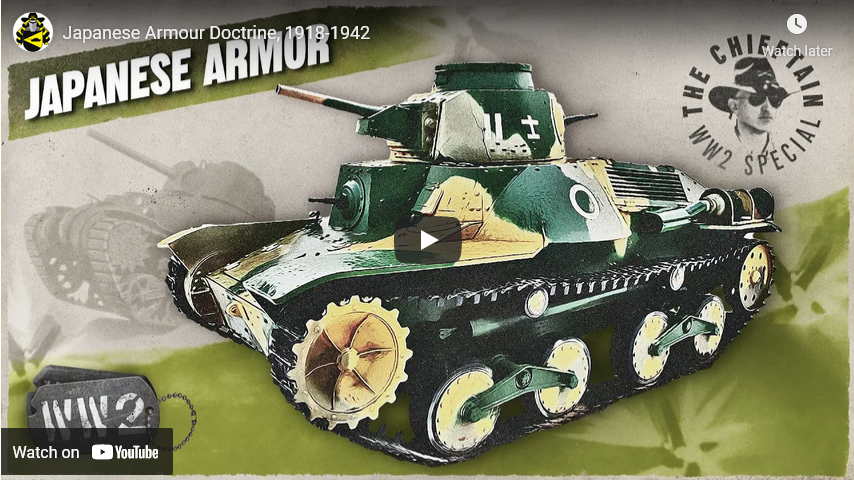
Japanese Armour Doctrine, 1918-1942
The_Chieftain
Published 11 Jul 2021Sources include:
Japanese tanks and armoured Warfare 1932-45, David McCormack
WW2 Japanese Tank Tactics, Gordon Rottmen, Akira Takizawa
Japanese Tanks, Tactics and anti-tank weapons, Donald McLean
Type 89 and Tankette books, Kazunori YoshikawaContinuing on this series of videos supporting the WW2 Channel, I look at what I can find about how the Japanese thought of tanks and their usage, tempered by quite a bit of combat experience.
Improved-Computer-And-Scout Car Fund:
Patreon: https://www.patreon.com/The_Chieftain
Direct Paypal https://paypal.me/thechieftainshat
Comments Off on Japanese Armour Doctrine, 1918-1942
July 9, 2021
The Western Warlords of Asian Armies – WW2 Gallery 004
World War Two
Published 8 Jul 2021From the Battle of Shanghai to the Burma Campaign and beyond, Western military advisors have played a big role in the actions of East Asian armies in the Pacific Theatre. Watch the videos to learn the stories of Joseph Stilwell, Claire Lee Chennault, the Flying Tigers, the Chindits, and more.
(more…)
Comments Off on The Western Warlords of Asian Armies – WW2 Gallery 004


