
World War Two
Published 11 Nov 2023The struggle for Hurtgen forest, one tiny piece at a time, continues. The Allies have, however, secured Walcheren Island, and also launch Operation Queen to try and reach and cross the Roer River, and further south even launch a new offensive aiming for Metz. Things are not going well for the Americans on Leyte, though, but they’re even worse for the Chinese as both Guilin and Liuzhou fall to the Japanese. As for the Soviets, they are busy making big plans for a gigantic offensive to drive in to Germany when the new year comes.
(more…)
November 12, 2023
The Futile Fight in Hurtgen Forest – WW2 – Week 272 – November 11, 1944
Comments Off on The Futile Fight in Hurtgen Forest – WW2 – Week 272 – November 11, 1944
November 7, 2023
Birth Gap, the future none of us expected
Elizabeth Nickson takes the warnings of infertility from BirthGap quite seriously:
Jordan Peterson’s face morphed through a series of changes as he realized that nine out of ten women who don’t have children, wanted them. Ready to blame the culture of narcissism, he stalled confused, wrestling his face to neutral. I knew that fact from experience. For the many women I know who don’t have children, it is an abiding sorrow. From country to country, class to class, race to race, the sorrow is coruscating and it is ignored or diminished.
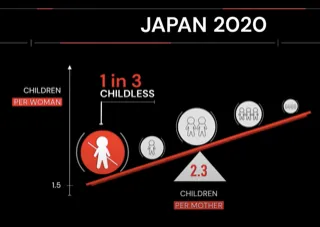
Only one in ten women actually don’t want children. One in ten is infertile, but the rest who don’t have children and that is one-third of us and counting, wanted them. By the time they are in their 40’s and incapable, badly.
Steven F Shaw searches for answers in Birth Gap, his masterwork documentary, the first part of which you can watch here. The most obvious is that they waited too long, thinking it was possible, their “career” taking precedence. He interviews two prominent women in their late 30’s, both journalists. One of whom has a child, and having had one, wanted more but it was too late. “No one told us”, she said. Throughout her childhood and education, no one told her that the hammer would come down, that fertility drops off a cliff in your 30’s. That if you are 30 and childless, there is a 50% chance you won’t have children. The other, Megan McArdle, who writes for the Washington Post, left it too late. McArdle is a brilliant woman. If she didn’t know she was playing with fire, who could?
The catastrophic statistics run across all cultures but sub-Saharan Africa. Every industrialized country is racing to the bottom, which is to say extinction within four or five generations. Cities left to ruin, old people without help, decaying schools, hospitals, and no employees to be found. The unretrievable extinction of the culture and its people. I’ll leave it to you to follow Shaw’s math, but it is convincing. And he is by no means, alone in his analysis.
Europe, Japan and especially South Korea are by far the most in trouble. But Spain, Italy, the Scandis, are not far behind. America’s massive migration is masking the effect now, but, as Shaw doesn’t point out, but others have, immigrants quickly default to the current zeitgeist. Even in Muslim countries, pace Mark Steyn, women are choosing to not have children until too late. And forget multiples, even for the devout, it’s no longer on the cards.
To me, one underlying reason is the firehose of overpopulation propaganda that we have endured for the past fifty years. Women, in general, as kids, are good girls, accepting of authority, and compassionate. When told their desire for children is stressing the earth, they are more likely to accept that nonsense without question if it is coming from every authority figure in every sector of the culture. Today from kindergarten on, we are taught that we are a virus, a plague on the earth. Who among us, at the age of 15 or 25, can contravene that level of brainwashing? Contrast Peterson saying this week, “we can make the deserts bloom”. When was the last time you heard that sentiment from anyone in authority?



Comments Off on Birth Gap, the future none of us expected
October 31, 2023
As we’re always told in a pious tone of voice, “violence never settles anything”
Chris Bray, ever the iconoclast, begs to differ:
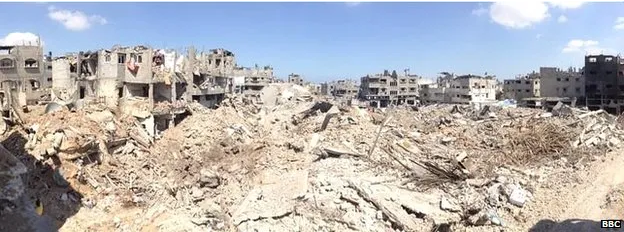
One of the things everyone knows about Gaza is that the Israeli attack is just creating more violence, as the next generation of Palestinians watches the bombs fall. Inevitably, the story goes, the young are learning hate and rage, and will pay it forward. Here’s the upscale think tank version of the argument, under the headline, “Israel risks creating a newly traumatized and radicalized generation of Palestinians”:
What will remain of Gaza’s population, and among Palestinians elsewhere in the occupied West Bank and East Jerusalem and inside Israel proper, will be a newly traumatized and radicalized generation of youth, none of whom were born or of voting age when Hamas was elected … As a result, Hamas’s self-declared raison d’etre — “resisting the [Israeli] occupation with all means and methods” — will only grow in the minds of Palestinian youth. This will render unsuccessful Israel’s attempts to eliminate Hamas militarily.
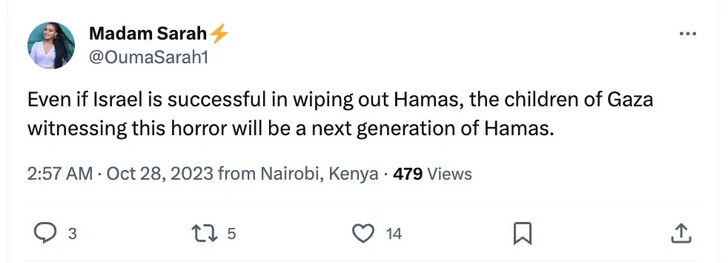
Here’s an example of the Twitter rando version, which you’ll see over and over again if you engage with social media at all:
But is that true? Without advocating for brutality, I find myself looking for historical examples and mostly coming up with the opposite. To start managing the “yes, but” up front, there are many ways of waging war, and the extractive nation-building warfare of an imperial constabulary — low-grade fighting, prolonged counterinsurgency without decisive violence — does seem to often lead to more violence and “blowback” over time. But what Israel is doing now in Gaza seems like something else entirely.
If this violence will create “the next generation of Hamas”, then the children of the Germans who were firebombed in Dresden and Hamburg should be constantly strapping on suicide vests and attacking Ramstein air base. After the Wounded Knee massacre, it shouldn’t be safe for white settlers to live near the Lakota, and South Dakota should be a hellscape. Or consider North Vietnam, which won its war: “The US carried out more than a million bombing raids during the 20-year conflict, dropping some 5 million tonnes of ordnance on the Southeast Asian country.” After the war, a substantial Vietnamese population resettled in California. Violence trains the next generation to hate, right? So the Vietnamese must constantly attack Orange County.
The horror of total war has mostly not seemed to produce more violence. It seems to have mostly left later generations brutalized and horrified, and highly unlikely to go on fighting. Waging war decisively seems to be historically … decisive? The experience of crushing defeat seems to be a cycle-breaker, and even a horrifyingly costly victory — as for the North Vietnamese — seems to limit the appetite of next generations for more war.
Japan nurtured a profoundly violent warrior culture for a long time, with the nation’s soldiers serving as brutal invaders and horrible occupiers, then faced a ghastly campaign of firebombing and two nuclear bombs. Japan no longer has a brutal martial culture; the next generations didn’t become the new warriors. The currently popular theory says that they had to: the children witnessing this horror will be the next generation of militants, because trauma teaches violence. Tomorrow’s Hamas comes from today’s JDAMs. The people who lost World War II don’t seem to prove that theory.
Someone is going to say in the comments that I have blood on my fangs, but the point isn’t to cheerlead for the killing in Gaza. The point is to consider evidence about what comes next, and to ask what the comparable examples are. Is it factually true that youth, traumatized by war, become the violent next generation? We ran this experiment a lot in the twentieth century, and I think we have some strong hints at a consistent answer.
As Robert Heinlein had retired Lt. Col. Jean V. Dubois say to his History and Moral Philosophy class in Starship Troopers:
Anyone who clings to the historically untrue — and thoroughly immoral — doctrine that “violence never settles anything” I would advise to conjure the ghosts of Napoleon Bonaparte and the Duke of Wellington and let them debate it. The ghost of Hitler could referee, and the jury might well be the Dodo, the Great Auk and the Passenger Pigeon. Violence, naked force, has settled more issues in history than has any other factor, and the contrary opinion is wishful thinking at its worst. Breeds that forget this basic truth have always paid for it with their lives and their freedoms.
October 29, 2023
The Battle of Leyte Gulf – WW2 – Week 270 – October 28, 1944
World War Two
Published 28 Oct 2023This is it — the big showdown between US and Japanese Navies, and the largest naval battle ever fought in terms of total tonnage. American landings on Leyte itself are still in progress, and the Soviets’ Debrecen Operation comes to its end.
(more…)
Comments Off on The Battle of Leyte Gulf – WW2 – Week 270 – October 28, 1944
October 28, 2023
Smith versus Smith: US Army/Marine relations in 1944
World War Two
Published 27 Oct 2023When Marine Corps General Holland “Howling Mad” Smith removed Infantry General Ralph Smith from command in 1944 during the Battle of Saipan, it began a controversy that soon snowballed, threatening to sabotage Army-Marine relations at a time when cooperation was the key to victory.
(more…)
Comments Off on Smith versus Smith: US Army/Marine relations in 1944
October 22, 2023
SS Commando Coup in Hungary – WW2 – Week 269 – October 21, 1944
World War Two
Published 21 Oct 2023The Germans engineer a coup in Hungary to keep the Hungarian army in the war, but the Allies have finally entered Germany in force, taking Aachen in the west. The Soviets liberate Belgrade in the east, and launch new attacks in Baltics, and at the other end of the world come American landings in the Philippines, and the recall of Vinegar Joe Stilwell from China.
00:00 Intro
01:00 Recap
01:21 Raids on the Philippines
04:42 The Invasion of Leyte
06:11 Joe Stilwell is recalled from China
08:12 The Battle of Aachen
12:24 Battle of the Scheldt
14:03 Soviet attacks in the Baltics
16:23 Horthy’s fall- a coup in Hungary
19:45 Germans close in on Slovakia
21:55 Belgrade Liberated
24:47 Summary
25:01 Conclusion
(more…)
Comments Off on SS Commando Coup in Hungary – WW2 – Week 269 – October 21, 1944
“Grandpa Nambu” Japanese Pistol
Forgotten Weapons
Published 15 Nov 2016The 1902 “Grandpa” Nambu is one of the first wave of successful military automatic pistols, developed by Kijiro Nambu and his team over the course of five years, from 1897 to 1902. It was the first automatic pistol to be used by the Japanese military, although it was a private-purchase sidearm for officers and not formally purchased or issued by the military. It took several design cues from the C96 Mauser, in the form of a pivoting locking block and a bottlenecked cartridge.
The Grandpa was only made from 1902 until 1906, with less than 2400 examples produced in total — many of which were sold to Thailand. In 1906 a series of improvements were made to the gun, including increasing the size of the trigger and trigger guard, a swiveling lanyard ring, a slightly larger grip, new magazine, and deletion of the shoulder stock slot that had been standard on all previous Nambu pistols. The formal Japanese designation (Type A) did not change as a result, but in American collector parlance the new model became the “Papa” Nambu.
Cool Forgotten Weapons Merch! http://shop.bbtv.com/collections/forg…
Comments Off on “Grandpa Nambu” Japanese Pistol
October 15, 2023
The Isolation of Army Group North – WW2 – Week 268 – October 14, 1944
World War Two
Published 14 Oct 2023Churchill, Stalin, and Roosevelt meet at the Moscow Conference and talk about future “spheres of influence” in the Balkans. They also make plans for the future of Poland. In the field the Soviet Red Army completes the isolation of Army Group North and also advances in Hungary and Yugoslavia. The Allies enter Aachen in the west and cross the Rubicon in Italy. The Americans are still fighting the Japanese on Peleliu, and this week also make raids against Japanese airfields ahead of next week’s invasion of the Philippines.
01:00 Recap
01:22 The Moscow Conference begins
03:43 Isolating Army Group North
06:29 Soviet advances toward Belgrade
08:14 The Debrecen Operation
13:20 Horthy and Hungary
14:30 Chiang Kai-shek accuses Joe Stilwell
16:19 American raids on Formosa
19:29 The fight for Peleliu continues
20:01 Antwerp and Aachen
22:01 The Allies cross the Rubicon
(more…)
Comments Off on The Isolation of Army Group North – WW2 – Week 268 – October 14, 1944
October 12, 2023
KAMIKAZE: HMS Formidable, May 4, 1945
Armoured Carriers
Published 18 Apr 2020It was the height of the invasion of Okinawa. Japan was throwing a last-ditch effort at unseating US Marines from their beachheads. Kamikazes swarmed the skies. HMS Formidable, part of the British Pacific Fleet interdicting attacks from Formosa (Taiwan), was to suffer a direct hit on her armoured flight deck. Here’s what happened — in the words of those who were there.
(more…)
Comments Off on KAMIKAZE: HMS Formidable, May 4, 1945
October 8, 2023
The End of the Warsaw Uprising – WW2 – Week 267 – October 7, 1944
World War Two
Published 7 Oct 2023The Warsaw Uprising comes to its conclusion, a tragic one for the Poles. In the field in Europe, there are Allied attacks toward Aachen, Bologna, and Debrecen, while in China the Japanese have begun a new phase of their Ichi Go Offensive.
(more…)
Comments Off on The End of the Warsaw Uprising – WW2 – Week 267 – October 7, 1944
October 1, 2023
The End of Market Garden – WW2 – Week 266 – September 30, 1944
World War Two
Published 30 Sep 2023This week, Operation Market Garden comes to its unsuccessful conclusion, but there’s a lot more going on — the Soviets launch an offensive in the Estonian Archipelago, the Warsaw Uprising is on the ropes, the Allies advance in Italy, the Americans on Peleliu, and Tito and Stalin make plans to clear Yugoslavia of the enemy.
(more…)
Comments Off on The End of Market Garden – WW2 – Week 266 – September 30, 1944
September 24, 2023
Operation Market Garden Begins – WW2 – Week 265 – September 23, 1944
World War Two
Published 23 Sep 2023Monty’s Operation(s) Market Garden, to drop men deep in the German rear in the Netherlands and secure a series of bridges, begins this week, but has serious trouble. In Italy the Allies take Rimini and San Marino, but over in the south seas in Peleliu the Americans have serious problems with Japanese resistance. Finland and the USSR sign an armistice, and in Estonia the Soviets take Tallinn, and there are Soviet plans being made to enter Yugoslavia.
(more…)
Comments Off on Operation Market Garden Begins – WW2 – Week 265 – September 23, 1944
September 21, 2023
Iranian Railways, Red Cross Care Packages, and Tail Gunners – WW2 – OOTF 31
World War Two
Published 20 Sept 2023How did the Allies build and manage an enormous railway supplying the Soviet Union through Iran? How did the Red Cross deliver aid parcels through enemy territory to Allied POWs? And, how effective were the rear gunners in ground attack aircraft like the Stuka and Sturmovik? Find out in this episode of Out of the Foxholes.
(more…)
Comments Off on Iranian Railways, Red Cross Care Packages, and Tail Gunners – WW2 – OOTF 31
September 17, 2023
The Ballad of Chiang and Vinegar Joe – WW2 – Week 264 – September 16, 1944
World War Two
Published 16 Sep 2023The Japanese attacks in Guangxi worry Joe Stilwell enough that he gets FDR to issue an ultimatum to Chiang Kai-Shek, in France the Allied invasion forces that hit the north and south coasts finally link up, the Warsaw Uprising continues, and the US Marines land on Peleliu and Angaur.
(more…)
Comments Off on The Ballad of Chiang and Vinegar Joe – WW2 – Week 264 – September 16, 1944
September 16, 2023
France’s Vietnam War: Fighting Ho Chi Minh before the US
Real Time History
Published 15 Sept 2023After the Second World War multiple French colonies were pushing towards independence, among them Indochina. The Viet Minh movement under Ho Chi Minh was clashing with French aspirations to save their crumbling Empire.
(more…)
Comments Off on France’s Vietnam War: Fighting Ho Chi Minh before the US


