Quotulatiousness

February 26, 2018

India’s largest newspaper on Justin Trudeau’s “disaster visit”

Filed under: Cancon, India, Media, Politics — Tags: , , , , — Nicholas @ 03:00

Paul Wells linked to this story in the world’s largest circulation English language newspaper, The Times of India:

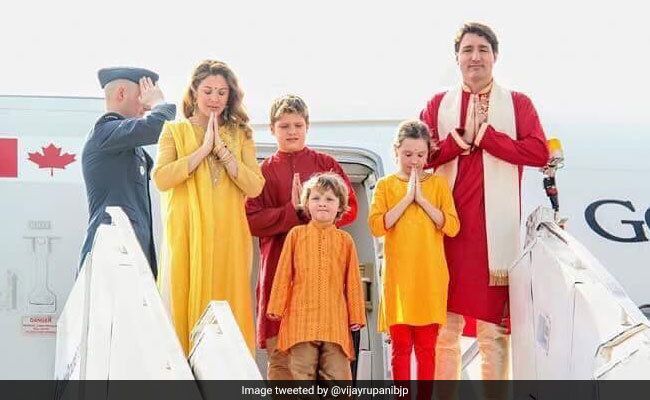
Justin Trudeau and family during India visit
Image via NDTV, originally tweeted by @vijayrupanibjp

Canadian prime minister Justin Trudeau’s visit was a disaster that has little parallel in India’s recent diplomatic history. But as the Canadian prime minister returned home on Saturday after almost a week of recurrent diplomatic missteps, ironically, it may have provided the opportunity to reset relations between Canada and India.

On Saturday, Indian government officials were angry at suggestions by Canadian officials that India was responsible for Khalistani terrorist Jaspal Atwal getting a visa to India and used his presence to embarrass Trudeau.

Trudeau, in his meeting with prime minister Narendra Modi, also complained that his visit had been shadowed by a single issue. Atwal got a visa because he was taken off the blacklist some years ago. But he was part of a number of Trudeau’s own events that did not involve the Indian government at all.

A prime ministerial visit to a foreign country for a week with a thin official component is always fraught with danger. In addition, moving the official meetings to the very end of the trip indicated that the government meetings were an after-thought. Most foreign leaders who throw in other events almost always front-load the official meetings, and then go on to business or tourism events.

Here, it was clear from the start that Trudeau came to India to score with his Sikh constituency back home — four out of the six cabinet ministers who travelled with him were Sikh, as were an overwhelming number of MPs who also travelled with him. Until the media barrage in India forced the Canadian side to change tack, Trudeau was not even ready to meet Amarinder Singh, chief minister of Punjab. Even the Canadian high commissioner’s official reception was a celebration of Punjab with the prime minister himself waltzing in on bhangra beats.

February 23, 2018

“…the Trudeaus playing ‘Mr Dressup and Family’ in exotic locations on the taxpayers’ dime isn’t the problem”

Filed under: Cancon, India, Politics — Tags: , , , , , — Nicholas @ 03:00

The press is having a hard time presenting Justin Trudeau’s India trip in a positive light, which clearly pains the teeny-bopper Trudeau fan club that composes a large part of the Canadian media. Ted Campbell sees the trip as a series of wasted opportunities to begin healing the breach between India and Canada:

I’ve taken my time in commenting on the prime minister’s trip to India. To say that I’m very disappointed is to put it mildly … I’m disappointed and a little embarrassed to be a Canadian. But the Trudeaus playing “Mr Dressup and Family” in exotic locations on the taxpayers’ dime isn’t the problem. We have, in fact, a serious problem as far as India is concerned and we, Canada, one of India’s oldest and firmest friends is in danger of being seen as an adversary. That’s a problem and it is, in my mind, a HUGE problem for Canada.

As Vishnu Prakash, former Indian envoy to Canada, told Indian news site The Print on Monday, ““Over the years, the Canadian political establishment, across the spectrum (whether it is the NDP, Conservatives or Liberals) has been mollycoddling Khalistani elements. Under the Trudeau government, this has increased. He had himself appeared on a Khalistani platform in Toronto in April last year.” It, the “mollycoddling Khalistani elements,” has been going on since at least the 1980s, back when Indira Ghandi’s government cracked down (1984) and nearly provoked a civil war and even in 1985 when Air India flight 182 was bombed, almost certainly an attack organized by Canadians, in Canada, as retaliation. Then the governments of the day spent 20 years and over $100 million on an investigation that retired Supreme Court Justice John Major described as a “cascading series of errors” by the government, writ large, including, especially, the RCMP and CSIS. India was not impressed.

India was less impressed when Canadian political parties began to actively court the Canadian the entire Indo-Canadian community but failed to condemn Sikh separatism. Canadians, including Brian Mulroney, Jean Chrétien, Stephen Harper and Justin Trudeau have “explained,” correctly, that people are allowed to support unpopular causes here in Canada, so long as they don’t break our laws, but India, not unreasonably, given Canada’s own history of separatist violence, would like something more. But the Sikh vote is active and “efficient” and all parties want it and that seems, to India, anyway, to mean turning a blind eye to the (disputed) fact assertion that the Khalistan independence movement is centred in and funded from Canada … Prime Minister Trudeau made thing worse, according to The Hindu, when “On April 30, [2017] Mr. Trudeau addressed a parade for ‘Khalsa Day’, which included floats glorifying Sikh militant leaders Jarnail Singh Bhindranwale, Amreek Singh and former General Shahbeg Singh who were killed in the siege of the Golden Temple and Operation Bluestar in June 1984.” That act appears to have crossed a line, leading to what the whole world is now interpreting as a major diplomatic snub […]

The big issue is not the rather gentlemanly snub of Justin Trudeau by India’s highest officials; our prime minister appears more interested in having an all expenses paid vacation with his family than in doing the nation’s business in any event; the real issue is the Canadian political actions that made it politically necessary for Prime Minister Modi to administer that snub at all.

What Canada needs to do now is repair relations with India, and that may require Prime Minister Trudeau to look very, very closely at any ties any of his ministers may have with the Khalistan independence movement, he says there are none, and either making them sever all ties with separatists or severing them from the Liberal cabinet, caucus and even the Party. Andrew Scheer needs to do the same with the Conservatives and Jagmeet Singh needs to speak out for national unity ~ if it’s good for Canada then it’s good for India, too. On this issue, at least, politics should indeed, stop at the water’s edge.

Of course, when you allow things like this to happen, diplomacy becomes a much trickier profession than normal:

In Britain, the Daily Mail published the comments from a lot of Indians who have been offended by Trudeau’s choices of clothing on the visit so far:

Justin Trudeau has been ridiculed on social media by Indians for his ‘tacky’ and over the top outfit choices while on his first visit to their nation as Prime Minister.

While many praised his clothing during the first two days of his trip, patience was wearing thin by the time he attended a Bollywood gala on Tuesday night, before the tide turned against him on Wednesday.

Ministers, authors, journalists and ordinary Indians lined up to mock him on Wednesday, saying his wardrobe was ‘fake and annoying’.

Perhaps taking note of the criticism, the Canadian leader donned a suit on Thursday as he visited Jama Masjid, one of India’s largest mosques.

Leading the criticism was Omar Abdullah, former chief minister of Jammu and Kashmir, who tweeted on Wednesday saying Trudeau’s preening was ‘all just a bit much.’

‘We Indians do not dress like this every day sir, not even in Bollywood.’

Bhaavna Arora, a bestselling Indian author, also chimed in, accusing Trudeau of wearing ‘fancy dress’ and saying she found it ‘fake and annoying’.

Shekhar Gupta, founder of Indian newspaper The Print also mocked the Canadian Prime Minister, accusing him of ‘running a week-long “election campaign” in India in fancy dress.’

February 13, 2018

Feature History – Seven Years’ War

Filed under: Americas, Britain, Europe, France, History, India, Military, Russia — Tags: , , , — Nicholas @ 02:00

Feature History
Published on 14 Jan 2017

Hello and welcome to Feature History, featuring the Seven Years’ War, an overdue video, and the reason you don’t record after just waking up

QotD: Mark Twain on Indian weather

Filed under: Humour, India, Quotations — Tags: , — Nicholas @ 01:00

I believe that in India ‘cold weather’ is merely a conventional phrase and has come into use through the necessity of having some way to distinguish between weather which will melt a brass door-knob and weather which will only make it mushy.

Mark Twain, Following the Equator: A Journey Around the World, 1897.

January 24, 2018

Will the REAL Damascus Steel Please Stand Up?

Filed under: History, India, Technology — Tags: , — Nicholas @ 02:00

Walter Sorrells
Published on 2 Oct 2015

There’s a lot of debate about what is really Damascus steel and what isn’t. Some say it’s ancient crucible steel from Central and South Asia. Some say it’s modern pattern welded steel. In this video, knife maker Walter Sorrells separates fact from fiction.

January 9, 2018

The Seven Years War: Crash Course World History #26

Filed under: Africa, Americas, Britain, France, History, India, Military — Tags: , , — Nicholas @ 02:00

CrashCourse
Published on 19 Jul 2012

In which John teaches you about the Seven Years War, which may have lasted nine years. Or as many as 23. It was a very confusing war. The Seven Years War was a global war, fought on five continents, which is kind of a lot. John focuses on the war as it happened in the Americas, Asia, and Africa. the “great” European powers were the primary combatants, but they fought just about everywhere. Of course, this being a history course, the outcomes of this war still resonate in our lives today. The Seven Years War determined the direction of the British Empire, and led pretty directly to the subject of Episode 28, the American Revolution.

December 27, 2017

India’s Geography Problem

Filed under: China, Economics, Education, History, India — Tags: , , — Nicholas @ 02:00

Wendover Productions
Published on 5 Dec 2017

October 10, 2017

India’s bold experiment … is an economic failure

Filed under: Economics, Government, India — Tags: , , — Nicholas @ 05:00

Back in December, I linked to an article by Shikha Dalmia, discussing the rhetoric and (likely) reality of India’s currency experiment. Now, Lawrence White rounds up the damage done:

The debate over demonetization was revived this month (September 2017) after the Reserve Bank of India finally announced the count of returned currency. It announced that 99 percent of the discontinued notes, Rs 15.28 trillion out of Rs 15.44 trillion, had been returned. As Vivek Kaul has noted, “The conventional explanation for this is that most people who had black money found other people, who did not have black money, to deposit their savings into the banking system for them.”

The trivial size of unreturned currency, of course, obliterates BDK’s [Bhagwati, Dehejia, and Krishna’s] projection of a government seigniorage windfall.

What about BDK’s other projected source of revenue, the 50% tax on acknowledged black deposits? Whereas in BDK’s scenario, black currency holders would make Rs2 trillion in voluntary-disclosure deposits, which would yield Rs 1 trillion in revenue, the actual collections under the scheme were reported in April at Rs 23 billion, or 2.3% of the BDK-imagined sum. Such paltry revenues mean that demonetization, from the fiscal perspective, was all pain and no gain.

The accumulating evidence on economic growth, meanwhile, has become damning. Between July and September 2016, India’s GDP grew 7.53 percent. Between January and March 2017 it grew 5.72 percent. Former head of the Reserve Bank of India Raghuram Rajan, now returned to the University of Chicago, links the drop to demonetization: “Let us not mince words about it — GDP has suffered. The estimates I have seen range from 1 to 2 percentage points, and that’s a lot of money — over Rs2 lakh crore [i.e. trillion] and maybe approaching Rs2.5 lakh crore.” Kaul adds that GDP does not well capture the size of the informal cash sector, where the losses from demonetization were greatest.

In response to the RBI report and GDP data, and to their credit, BDK have substantially retreated from claims of success to what can be regarded as the claim that there is still a chance to break even.

August 11, 2017

QotD: The plight of Hindu widows

Filed under: India, Quotations, Religion — Tags: , , — Nicholas @ 01:00

Some of the most conservative Hindus in India believe that a woman whose husband has died should no longer live because she failed to retain his soul. Rejected by their communities and abandoned by their loved ones, thousands of destitute women make their way to Vrindavan, a pilgrimage city about 100km south of Delhi that is home to more than 20,000 widows.

These women have no choice but to live in a vidhwa ashram (ashrams for widows) run by the government, private enterprises and NGOs. Clad in white, they know they will never return home and that this is where they’ll end their days.

Pascal Mannaerts, “Nowhere to go, nowhere to hide”, BBC Travel, 2016-09-13.

August 7, 2017

Dutee Chand and the international sporting dilemma

Filed under: India, Sports — Tags: , , , — Nicholas @ 05:00

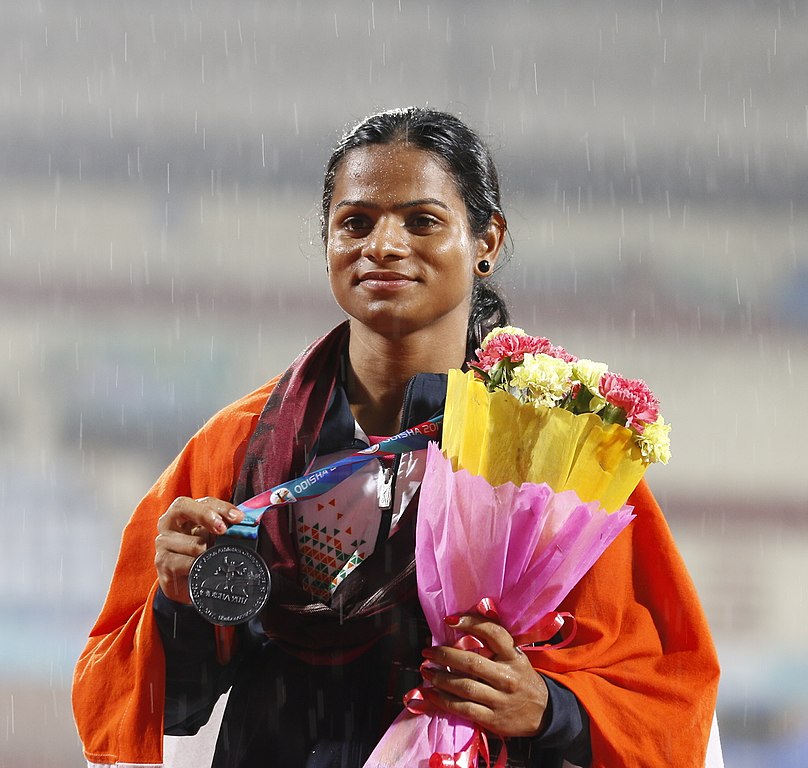
Dutee Chand is a woman who competes for India in track and field events. Dutee Chand has elevated levels of testosterone in her body … this creates a problem for those who determine who is allowed to compete as a woman in international sporting events:

Dutee Chand won the bronze medal in 22nd Asian Athletics Championships in Bhubaneswar, 8 July 2017. (via Wikimedia)

For the past two years, Dutee Chand could be herself.

She could run and train and even compete in the Rio Olympics. She didn’t have to constantly remind people that, yes, of course, she is a woman and that, yes, of course, she qualifies to compete with other women despite her naturally high level of testosterone.

She didn’t have to feel pressure to change her body so it conformed to rules or contemplate quitting her sport — pressure placed on her after doctors subjected her to gender testing in 2013, humiliating her by doing so, when she was only 17.

For two years, she could just be Dutee Chand. That’s because, two years ago last month, the Court of Arbitration for Sport, which is the supreme court for global sports, temporarily suspended an international track and field rule that had barred her from competing as a woman.

Chand, a sprinter from India, and women like her were excluded because their bodies produced a high amount of testosterone. It was often so high it was classified as being within the male range, a situation the authorities considered an unfair advantage. The only way these women could compete, track and field officials ruled, was if they took hormone-suppressing drugs or had surgery to limit the amount of testosterone their bodies produced.

The problem for international sporting bodies is that they’re still stuck in the binary — only two genders — model of competition, which leaves them unable to cope with situations like this. They can either prevent athletes like Dutee Chand from competing against other women or accept that the old standards no longer apply. Pushed to the limit, this means there can no longer be any kind of binary division of sporting activities into the old “male” and “female” categories … which will, in all likelihood, be devastating to women hoping to compete internationally, nationally, or even regionally. There’s no easy answer, and any Solomonic decision is going to make the situation worse, not better.

At its core, the sports world — rigidly separating men and women — will perpetually struggle to adapt to increasingly nuanced gender distinctions. In June, the District of Columbia became the first jurisdiction in the United States to offer an “X” gender, signifying a neutral gender, on its driver’s licenses. In March, a transgender New Zealand woman crushed her competition in her first international weight-lifting meet, and a transgender boy won a Texas state championship in girls’ wrestling.

Not every governing body is equipped to rule on these kind of eligibility questions. Not every athlete fits into this box, or that one.

To Chand, though, the issue of hyperandrogenism in sports is clear cut. She grew up as a girl. At 21, she is a proud young woman. She wants to race as one.

On Saturday, she did. But in the coming months, the Court of Arbitration for Sport will decide whether letting her continue to do so is fair.

What if it gets it wrong?

July 30, 2017

“… sooner or later, and usually sooner, the British will be blamed”

Filed under: Books, Britain, History, India — Tags: , , — Nicholas @ 06:00

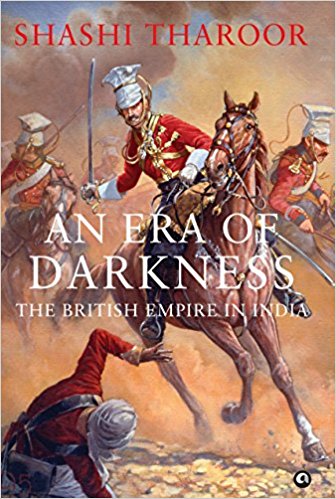
In Pragati, Alex Tabarrok reviews Shashi Tharoor’s 2016 book history of the British Raj, An Era Of Darkness:

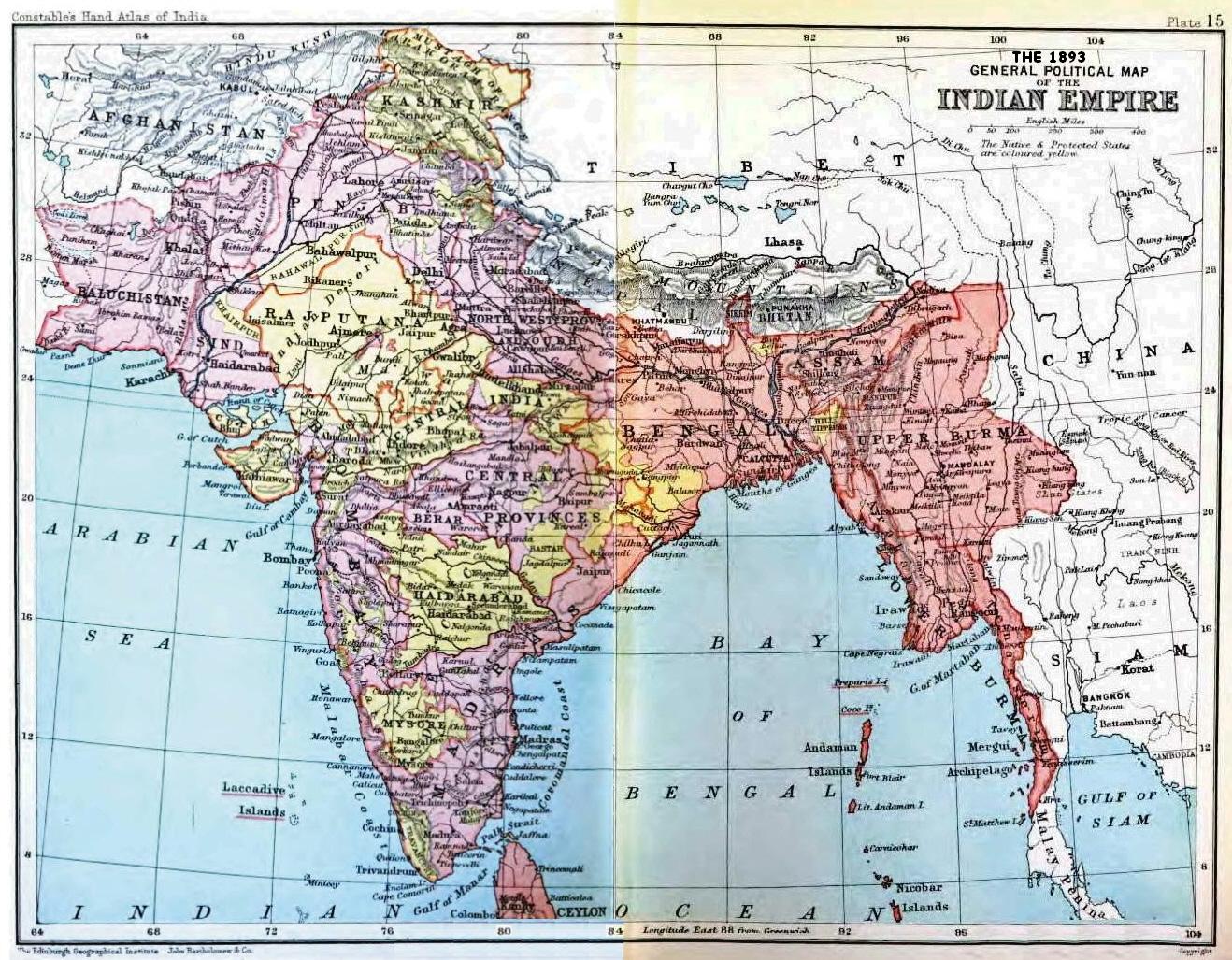
“Political Map of the Indian Empire” from Constable’s Hand Atlas of India, 1893.
(via Wikimedia)

At sophisticated dinner parties in Delhi, Calcutta, or Chennai, whenever the discussion turns to politics, one can be sure that sooner or later, and usually sooner, the British will be blamed. It’s a fine parlor game, and clever players can usually find a way to cast blame for whichever side of the debate they favor. Is India’s traditional family falling apart due to internet porn? Blame the British! Are the laws against homosexuality too strong? Blame the British! The British are an easy target because much of what they did was reprehensible. But blaming British imperialism for contemporary Indian problems is also an easy way to let India’s political class off the hook.

An excellent case against the British comes from Shashi Tharoor, bestselling author, former Under-Secretary-General at the United Nations, and current member of the Indian parliament, in his 2016 book An Era of Darkness: The British Empire in India (also published this year under the title Inglorious Empire[UK title]).

Tharoor makes three claims:

  1. The British empire in India, from the seizure of Bengal by the East India Company in 1757 until the end of British government rule in 1947, was cruel, rapacious, and racist.
  2. India would be much better off today had it not been for British rule.
  3. Britain’s success and the Industrial Revolution were due to British depredation of India.

The first claim is true, the second uncertain, the third false.

The first claim is the heart of Tharoor’s book: the British empire in India was cruel, rapacious and racist. All true. But who would expect otherwise? Power corrupts and absolute power corrupts absolutely. The theft, the famines, the massacres, the formal and casual racism, the utter hypocrisy of suppressing independence while using hundreds of thousands of Indian soldiers to fight for democracy and freedom in two World Wars — on all this Tharoor stands on solid ground. The ground is solid in part because it has been well-trod. Tharoor brings the case against the East India Company and Britain, initiated by Edmund Burke (1774-1785) and continued by the likes of Indian nationalist Dadabhai Naoroji [PDF] (1901) and American historian Will Durant (1930), to its conclusion and climax with the Indian independence movement. In this, Tharoor is entirely successful and his work deserves to be widely read.

In his eagerness to blame Britain, however, Tharoor reaches for every possible argument in ways that are sometimes misleading and sometimes absurd.

July 15, 2017

The MOST DANGEROUS and EXTREME RAILWAYS in the World!! Compilation of Incredible Train Journeys!!

Filed under: Americas, Asia, Europe, India, Railways — Tags: — Nicholas @ 02:00

Published on 31 Mar 2017

This list consists 12 of the most dangerous and extreme railways in the world!!From railways That deep gorges and near vertical descents, to a 100 year old railway bridge built on sea. These are some of the most amazing, unbelievable and incredible railway routes around the world. These Railways offer daring experience to those who ride them.The Trains needs to pass through the most dangerous railroads along their journey. However, one can enjoy the scenic beauty while travelling on them.
===================================================================

The Most Dangerous Railways featured in this list are :

Maeklong Railway, Thailand: This Railways passes through the congested maeklong market in Thailand.

Nariz del diablo, Ecuador : Considered most difficult train journey, the railway passed through tight cliffs and climbs steep altitudes.

Pamban Bridge, India : the trains has to pass through this breathtaking 100 year old sea bridge still operating.

Bangladesh Railways : Considered most overcrowded railways in the world where roof riding is a common sight.

Burma Railway : Constructed during world war II using forced labor, Many workers (prisoners of war) died due to rough conditions thus earning nickname ‘Death Railway’

Ferro carril Central Andino, Peru : Second Highest Railway in the World Running through the Andes.

Indian railways : World’s most busiest Railway, more than 25,000 people die annually on India’s railways

White pass & Yokon Route, Alaska : Built during Klondike Gold rush. This route boasts incredible sceneries.

Gokteik Viaduct, Myanmar : Highest railway trestle in the world.

Pilatus Railway, Switzerland : This Most steepest cogway railway offers incredible Sceneries.

Tren a las nubes, Argentina : The train Passes through dangerous curves and high bridges.

Gelmerbahn Funicular, Switzerland : Almost feels like a roller-coaster ride!

H/T to CT for the link.

July 10, 2017

The end of the British Empire

Filed under: Britain, History, India, USA, WW2 — Tags: , , — Nicholas @ 03:00

Kai Melling takes an unusually anti-American stand in this quick explanation of the decline and fall of the British Empire:

The common narrative is that the USA inherited the British Empire as an aftermath of World War 2. But this phrasing is misleading, because the USA actively designed and exploited the political, mental and military framework of WW2 to Britain’s disadvantage.

Churchill believed that Britain and the USA would be eternal partners, with British statesmen playing Greeks to America’s Romans. But when Britain was in her darkest hour, Roosevelt shook her down for every dime. Poring over a list of British assets in the Western Hemisphere, FDR “reacted with the coolness of a WASP patrician: ‘Well, they aren’t bust — there’s lots of money there.’” (Alan Clark)

Looking back, Alan Clark was appalled by Churchill’s groveling to the Americans: “Churchill’s abasement of Britain before the United States has its origins in the same obsession (with Hitler). The West Indian bases were handed over; the closed markets for British exports were to be dismantled; the entire portfolio of (largely private) holdings in America was liquidated. “A very nice little list,” was Roosevelt’s comment when the British ambassador offered it. “You guys aren’t broken yet.”

Before Lend-Lease aid could begin, Britain was forced to sell all her commercial assets in the United States and turn over all her gold. FDR sent his own ship to pick up the last $50 million in British gold reserves.

“We are not only to be skinned but flayed to the bone,” Churchill wailed to his colleagues, and he was not far off. Churchill drafted a letter to FDR saying that if America continued along this line, she would “wear the aspect of a sheriff collecting the last assets of a helpless debtor.” It was, said the prime minister, “not fitting that any nation should put itself wholly in the hands of another.” But dependent as Britain was on America, Churchill reconsidered, and rewrote his note in more conciliatory tones.

FDR knew exactly what he was doing. “We have been milking the British financial cow, which had plenty of milk at one time, but which has now about become dry,” Roosevelt confided to one Cabinet member. “Great Britain became a poor, though deserving cousin—not to Roosevelt’s regret. So far as it is possible to read his devious mind, it appears that he expected the British to wear down both Germany and themselves. When all independent powers had ceased to exist, the United States would step in and run the world.” (A.J.P. Taylor)

H/T to Sean Gabb for the link.

June 12, 2017

Tank Chats #10 Crossley Chevrolet Armoured Car

Filed under: History, India, Military, Technology — Tags: , — Nicholas @ 04:00

Published on 19 Oct 2015

Armoured cars had proved so successful in India during the First World War, that shortly after its end the Indian Government ordered 16 Rolls-Royce cars. However, these proved so expensive that subsequent orders were placed with Crossley Motors in Manchester who made a tough but cheap 50hp IAG1 chassis. Substantial numbers of these cars were supplied between 1923 and 1925.

The car shown in this film was presented to The Tank Museum by the Government of Pakistan in 1951.

May 30, 2017

The Disgusting Contents of Worcestershire Sauce (and Why It s Called That)

Filed under: Britain, Business, Food, History, India — Tags: — Nicholas @ 02:00

Published on 27 Mar 2017

In this video:

Worcestershire sauce, sometimes known as “Worcester sauce” is a savoury sauce that is often added to meat and fish dishes or, if you like your alcoholic beverages, the Bloody Mary cocktail. It may (or may not depending on how much you research your sauce choices) surprise you to learn that it’s literally made from fermented fish and spices.

Want the text version?: http://www.todayifoundout.com/index.php/2013/10/worcestershire-sauce-called/

« Newer Posts — Older Posts »

Powered by WordPress