Quotulatiousness

February 14, 2026

“People don’t need conspiracies to be absolute utter rabid bastards”

Filed under: Government, Law, Media, Politics, USA — Tags: , , , , — Nicholas @ 05:00

If you search here for the word “Epstein”, you won’t find a lot of relevant hits other than the reporting when he was arrested in 2019 and occasional mentions in posts on other topics. I don’t breathlessly report every little driblet of news or rumour as it floats past, because I’ve seen other moral panics play out in the past (like the Cleveland child abuse scandal back in the late 80s). Ian at The Bugscuffle Gazette has not only seen things like this before, he’s worked in law enforcement on similar (if lower-profile) cases:
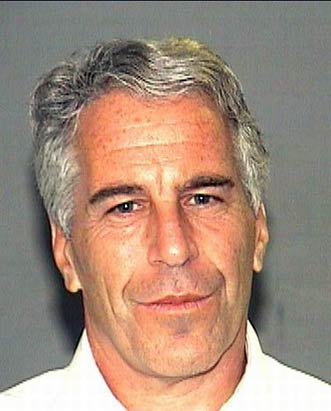
Mug shot of Jeffrey Epstein made available by the Palm Beach County Sheriff’s Department, taken following his indictment for soliciting a prostitute in 2006.
Image via Wikimedia Commons.

The Epstein Files have been released to a tremendous amount of outrage, and I find myself conflicted. There are definitely victims of that virulent parasite, but I worry they’re about to be overlooked.

I’m afraid that this whole mess is starting to remind me a great deal of the Satanic Panic of the 1980s – 1990s.

For those who may be a little too young to remember that little blot on the Copybook of History, it started with a “psychiatrist”1 who had a fondness for the woo-woo — and incredibly debunked — practice of “Recovered Memory Therapy2, and was spark-plugged by well-meaning3, yet clueless, people who used suggestive questions and leading questions when interviewing children … and wound up with about 12,000 reports of ritual abuse of children — including, but not limited to: child sexual abuse, ritual sacrifice of children, cannibalism of children, child pornography, child prostitution, murder of children, torture of children, and incestuous orgies.

A large part of the American population became convinced that paedophiles associated with Satanism were running child care centers across the country for the express purpose of providing a steady supply of children for devil-worshipping rites.

As one might expect day-care workers and pre-schools took it in the neck … but so did fathers. The “experts” — untrained, inexperienced, unqualified — had a particular case of the ass towards fathers, with the result that several fathers spent years in prison for crimes never committed.

Yeah. Not a one of those reported 12,000 cases turned out to be substantiated. And when I say “Not substantiated” we’re talking about stuff like:

  1. Children were coached to testify that they had been taken to a cemetery where the graves were dug up and the corpses used for violation. It is physically impossible to dig up an entire cemetery and leave abso-bloody-lutely no trace behind.
  2. Children were coached to testify that a teenager with Noonan Syndrome had cut the throat of a giraffe, and used the dying corpse for ritual violations. Seriously.
  3. Children were coached to testify that they had been given to aliens, flown up into space, and violated.

In addition to the coaching, case files were built from statements given by diagnosed schizophrenics; anonymous statements given by people who were later tracked down and found to be — let us be precise here — flat barking bugnuts; and was fueled by the political desire to make hay, or make the other guy look bad rather than — you know — justice.

What does this have to do with the price of tea in China? Other than the fact that innocent people got dragged through the legal wringer, spent years in prison, and had their lives ruined for nothing; the mass-hysteria moral panic4 went that actual, provable cases of child molestation got short shrift.

A vast underground network of Satanic peadophiles conducting ritualistic abuse, cannibalism, and unholy rituals was far more toothsome to prosecutors, the Media, and the public at large than Uncle Badtouch.

Given the choice of making his name by becoming the hero taking on a vast international cabal of highly-connected Satanists … or the day-to-day boring grind of prosecuting the creepy dude at the park — well, District Attorneys are politicians. And politicians gotta politick. Heroes poll better than the unsung.

Which brings us to the Epstein Files.


  1. I use the scare quotes because he should have been struck off for his wanton destruction of families and innocent people.
  2. Really good at implanting false memories, not worth a bucket of warm rat spit at recovering memories.
  3. And let’s face it: Some ill-intentioned folks.
  4. This went on for years.

Former First Lady suffers unplanned mingling with the plebs in Germany

Filed under: Germany, Media, Politics, Railways, USA — Tags: , , , , — Nicholas @ 04:00

eugyppius offers some news from Germany, one of the many western nations eagerly plunging toward cultural suicide in a race with Canada, Australia, the UK and other formerly “first world” nations:

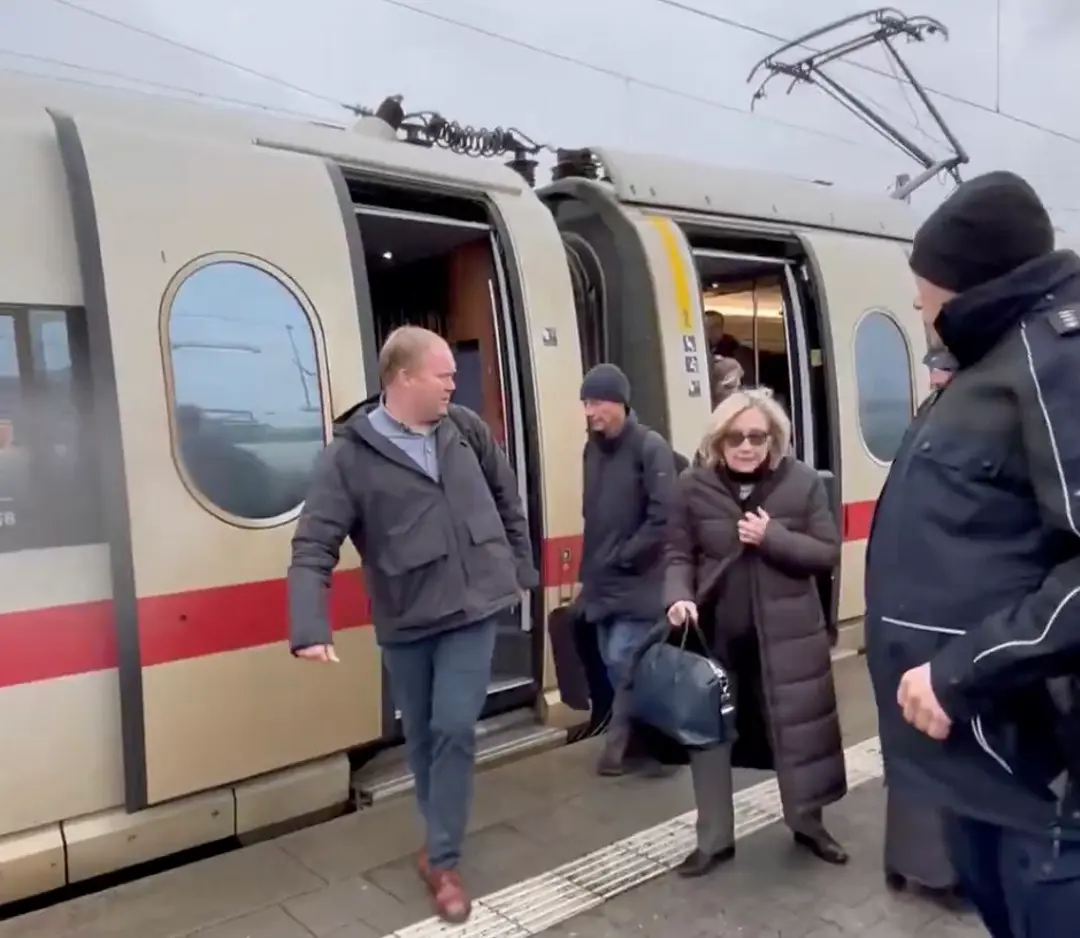
Yesterday Lufthansa pilots and cabin crews went on strike, forcing Hillary Clinton to slum her way on the train to the Munich Security Conference.

[…] you can see the former First Lady and U.S. Secretary of State disembarking from her filthy Deutsche Bahn Intercity Express from Berlin, which had naturally suffered an electrical fault that disabled the restaurant car and with that, all possibility of coffee. Munich Central Station is one of the worst train stations in all of Germany; the place is awash in trash and smells always of urine and french fries. It is a very minor pleasure, watching political elites being forced to navigate the very same dysfunctional landscape all of us have to deal with every day.


“eugyppius,” said absolutely nobody ever, “why has it been so long since you last updated us on Germany? Is nothing going on? Tell us something please.”

The problem is that German politics have degenerated so much in the past year that it is becoming very hard to write abut them.

In the post-Merkel era under Olaf Scholz, insane new crazy bad inadvisable unbelievable stuff would happen almost every day; in the post-post-Merkel years under Friedrich Merz, absolutely nothing can happen no matter how bad things get. After an unstable period comprising the second half of Covid and the pious afterglow of St. Greta (before the latter took up her charitable sailing initiatives), we have settled into a new order. Imagine an airplane piloted by heedless methed-out lunatics. For a brief time they enjoyed aerobatics well exceeding the engineering specifications of their craft, until they snapped a few flight control cables, and now they have become the prisoners of their own recreations as the altimeter ticks down and the ground rushes up at them.

Metaphors are fun but specifics are healthier. As everybody knows, the centre-right Christian Democrats are in a coalition with the newly hard-left Social Democrats, and the latter are determined to block every last initiative, reform and legislative proposal, however mundane or plainly necessary or routine. A little over a year ago, I wrote that German politics had become stuck, and that was true enough back then. What is true right now, is that they have achieved a stage well beyond stuck. The federal government is in a coma, an indefinite vegetative state, on life support – totally paralysed and neither dead nor alive.

We’ve gone over the reasons so much, I hesitate to recite them again, but I will. At the root of our present crisis is a shift within the German left that has had cascading consequences for the party system as a whole. Basically, the left has become both more scattered and more extreme in the last five years. They have become more scattered, because climatism is decaying and this process of ideological unravelling means that leftists have lost a crucial focal point used to rally activists and moderates alike. They have become more extreme, because the general rightward shift in politics is depriving the Social Democrats of their traditional moderating, working-class constituents. These are migrating steadily to the Christian Democrats and ultimately to Alternative für Deutschland.

As the left slowly boils down to their activist base, they become more radicalised. The Social Democrats are no longer the family-friendly centre-left party of Gerhard Schröder. They want to fight, they want to burn things down, they want hell. The very same rightward shift, meanwhile, has had a nearly opposite effect on the CDU. They have lost many of their most engaged constituents and no few members to the AfD. What remains is a husk of dull, uninspired careerists, eager to maintain their good regard with polite society and their regular schedule of polite evening talk show appearances. To break the present impasse, Merz or those around him must act decisively and make facts. He needs to fire all his SPD ministers, form a minority government and achieve some kind of rapprochement with the AfD. Alas, neither Merz nor anybody else in CDU leadership has the mettle for that kind of fight, which would also set off a series of catastrophic revolts within the CDU itself. Thus everything must remain frozen and broken indefinitely, while things get worse and worse and our ability ever to fix them decays.

The EU’s plans to drain the “wine lake” … again

Canada isn’t the only place with rigidly governed agricultural cartels … the European Union has always been a big fan of governing agricultural markets by fiat rather than allowing the markets to sort out how much of which product should be produced. One of the biggest markets actively distorted by EU regulation is the wine industry, where faulty regulations ended up paying for a vast over-supply of wine in the 1980s and 90s. Rather than eliminating the regulatory structures, the EU continues to prefer letting bureaucrats dictate to producers:

When the Common Agricultural Policy was established, it was quickly determined that one of its core objectives would be the protection of farmers, ensuring stable incomes and food security. In the wine sector, this logic translated into strong interventionism aimed at expanding and stabilizing production.

For decades, Brussels subsidized vineyard planting, protected minimum prices, and absorbed producers’ economic risk, disconnecting production decisions from signals of demand. Producing more ceased to be an economic choice and became a politically safe decision.

This approach created a structural market distortion. As wine consumption began to decline across Europe for demographic, cultural, and economic reasons, the artificially incentivized productive structure remained intact and unable to adjust.

It was in this context that, during the 1980s and 1990s, the first major shock occurred, known as the wine lake: massive wine surpluses with no outlet. Even then, Brussels treated this episode as an isolated and temporary phenomenon, ignoring the fact that it was the direct consequence of existing policies. By persisting with the same strategies, the problem ceased to be episodic and became structural.

In the early 2000s, the European Union was finally forced to recognize that the wine crisis was not temporary. However, instead of removing production incentives and restoring the market’s adjustment function, it opted for a new form of intervention: subsidizing the voluntary uprooting of vineyards. The decision to destroy productive capacity ceased to be economic and became administrative, decreed from the European political center, with profound effects across several countries.

This model, presented as temporary, set a dangerous precedent. Rather than allowing less viable producers to exit the market through prices and economic choice, the state began paying for withdrawal, subsidizing the costs of adjustment and normalizing the idea that the correction of public policy errors should be financed with more public money.

This policy did not solve the underlying problem. It merely reduced cultivated area temporarily, while leaving intact the regulatory architecture which had created the initial distortion. The sector became trapped in a cycle of incentivized expansion, predictable crisis, and administrative correction.

It is within this framework that the Wine Package emerges as the European Union’s latest set of measures for the wine sector. The package relies on an administratively planned reduction of supply through financial incentives for vineyard uprooting, complemented by regulatory adjustments, temporary support measures, and crisis management instruments. Instead of allowing the market to adjust to declining consumption, Brussels once again opts for the destruction of productive capacity as a policy tool. Although the package includes support measures and environmental framing, its central axis remains the administrative reduction of supply.

The impact of these decisions is not marginal. The European wine sector represents a significant share of the European Union’s economy, sustaining approximately 2.9 million direct and indirect jobs and contributing more than €130 billion to EU GDP.

Voltaire & Rousseau’s Best Friend Breakup – Valentine’s Day Special

Filed under: France, History, Humour — Tags: , , , , — Nicholas @ 02:00

Overly Sarcastic Productions
Published 14 Feb 2025

Watch as two of the smartest men in French history bravely push the bounds of being the pettiest, most toxic idiots possible.
(more…)

QotD: Canada and its military – a history of neglect

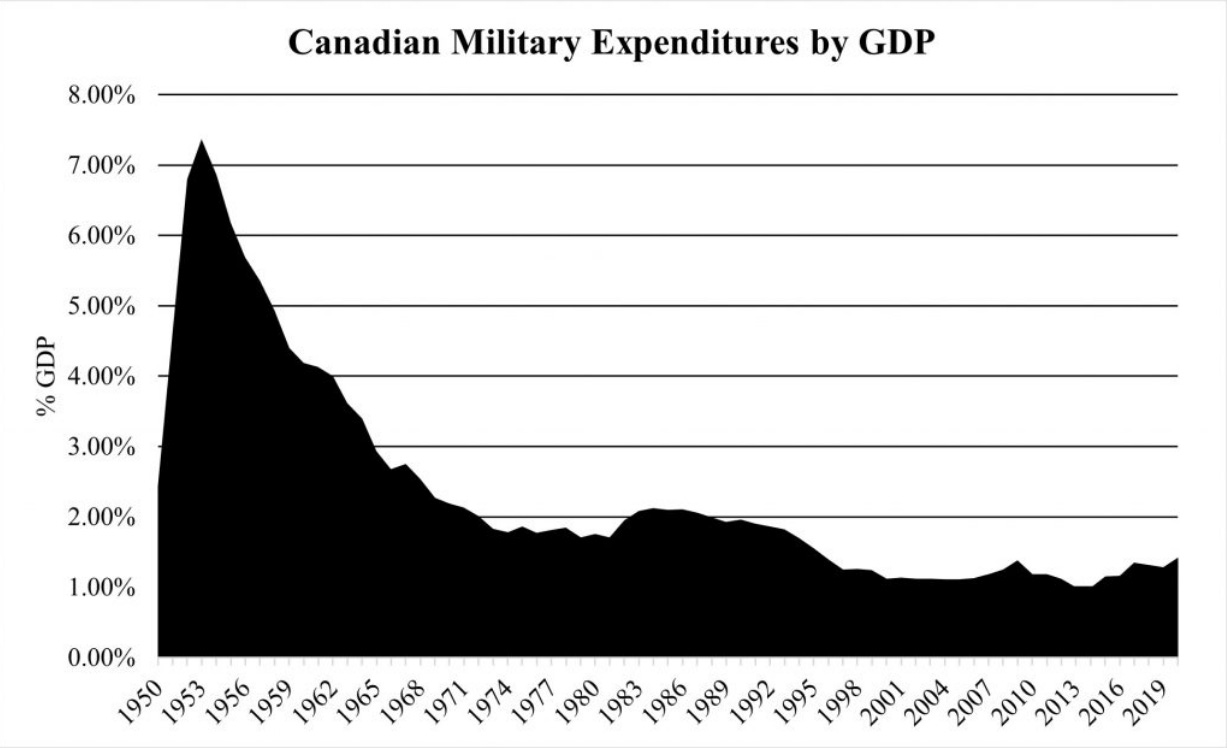
Canada’s military was not always a punchline. At the end of World War II Canada had the world’s third-largest navy, complete with our own aircraft carrier, and over a million men under arms. Since then military spending has steadily declined, from a high of around 7% of GDP in the early 50s to around 1% today, where it’s hovered since the end of the Cold War.

Canada is protected to its east and west by the Atlantic and Pacific oceans, both of which are patrolled by the powerful navy of the friendly superpower to the south, the only country with which Canada shares a land border, which we have long bragged is the longest undefended frontier in the world. Our only other neighbouring country is Russia, and while Russia is a decidedly unfriendly superpower, in practice Canada’s populated south is separated from the Russian Federation by thousands of kilometres of howling arctic wastes which provide an even better natural defence than the oceans.

Cozy and secure in our continental cocoon, Canada has allowed its military to atrophy into a vestigial appendage akin to the stubby wings of flightless birds on isolated Pacific islands, useful only for emotive displays. So far as the Liberal Party is concerned, “emotive display” is, indeed, the only real purpose of the military. Ever since Lester B. Pearson1 was awarded the Nobel Peace Prize for inventing the concept of “peacekeeping” to de-escalate the Suez Crisis (thereby helping to drive the final nail into the coffin of the British Empire), the Canadian military’s primary purpose has been to conduct third-world relief missions. Peacekeeping carries no particular benefit to Canada, but it is of great benefit to politicians, who get to preen in front of the camera as important humanitarian statesmen. The purpose of the Canadian military isn’t to win wars, to defend the country, or to conquer distant lands: it’s to make Liberal Party politicians feel good about themselves.

When the CAF fails to live up to its making-liberals-feel-good mission, Canada’s liberal establishment reacts like a frustrated child taking out her vindictive cruelty by throwing her dolls against the wall. The Somalia Affair is probably the best example of this dynamic. The Canadian Airborne Regiment, an elite commando unit whose core competencies were jumping out of airplanes to break things and kill people, was deployed in Somalia with the contradictory goal of keeping a non-existent peace, a mission to which they were singularly ill-suited. Somalis being Somalis, the Airborne base was immediately subjected to continuous infiltration and theft. A handful of the violent lunatics in the regiment reacted by capturing thieves and torturing them to death, which they had the poor sense to document with photographic evidence; later, photographs emerged of one of the airborne troopers wearing a moustache man t-shirt while raising his arm at a prohibited angle, which wasn’t criminal exactly but was very bad PR. Instead of punishing the guilty troops individually, for instance with field courts martial followed by summary hanging, the Liberal Party flew into a rage and disbanded the regiment for having committed the unforgivable sin of making them look bad. This dragged on in the media for years, sullying the honour of not only the Airborne Regiment but of the entire military. The Somalia affair unfolded over thirty years ago, but the liberal establishment holds it over the heads of the CAF to this day.

In addition to providing politicians with regular hits of the pleasantly addictive buzz of telescopic philanthropy, peacekeeping also has the great advantage of being cheap. Not only does peacekeeping not require all that many troops, you don’t even need tanks, fighter jets, destroyers, or aircraft carriers to distribute aid packages to refugees. Therefore the Canadian military essentially does not have these things. The CAF has a grand total of 112 forty-six-year-old Leopard II main battle tanks (of which roughly half are down for maintenance at any given time), a whole 138 forty-two-year-old CF-18 Hornet fighter jets (of which 89 are operational), twelve Halifax class frigates (of which about half are in drydock at any given time), an intimidating four Victoria class diesel-electric submarines (which are forty-five years old, and all but one of which is out of commission), and zero bombers, zero attack helicopters, zero destroyers, zero troop transports, zero battleships, and zero aircraft carriers. The pathetic size of the Royal Canadian Navy is particularly embarrassing given that Canada has the longest coastline in the world, at 243,042 kilometres, essentially all of which Ottawa expects Washington to defend on its behalf. Airlift capacity is so limited that the CAF essentially cannot deploy overseas without allied logistical assistance.

By contrast with its decrepit armaments, the CAF has 145 generals: it has more generals than it does tanks. This top-heavy general staff is only about a third the size of the US military’s, despite the American military being 20x larger by personnel and 32x larger by budget.

From the perspective of the Laurentian elite, a weak military is actually a political advantage. If Canada effectively does not have the ability to project military force, Ottawa can simply plead lack of capacity when America asks for assistance. It enables Canada to duck out of involvement in America’s various imperial wars, letting Washington shoulder the burden of the Pax Americana while chirping from the sidelines about how the big bad bible-thumbing American bully is so mean, and how peaceful, ethical, liberal, humanitarian Canada is so nice because Canada spends its money on healthcare instead of bombs. It isn’t a morally superior position, of course: it’s simply shameless dependence and shameful parasitism.

John Carter, “The Canadian Political Class is Ideologically Incapable of Rebuilding the Military”, Postcards From Barsoom, 2025-11-13.


  1. The man who, as prime minister, replaced the red ensign’s ethnic heraldry with the maple leaf’s corporate logo.

Powered by WordPress