Quotulatiousness

November 17, 2025

The US Supreme Court considers whether Trump’s tariffs are legal

Filed under: Government, Law, Liberty, Media, Politics, USA — Tags: , , , , — Nicholas @ 05:00

Thanks to the staggering incompetence (and/or deliberate provocation for domestic political advantage) of the Carney government’s dealings with President Donald Trump, the current case before the Supreme Court is of significant interest to those of us on the north side of the US-Canadian border. On his Substack, David Friedman discusses the issues before the court:
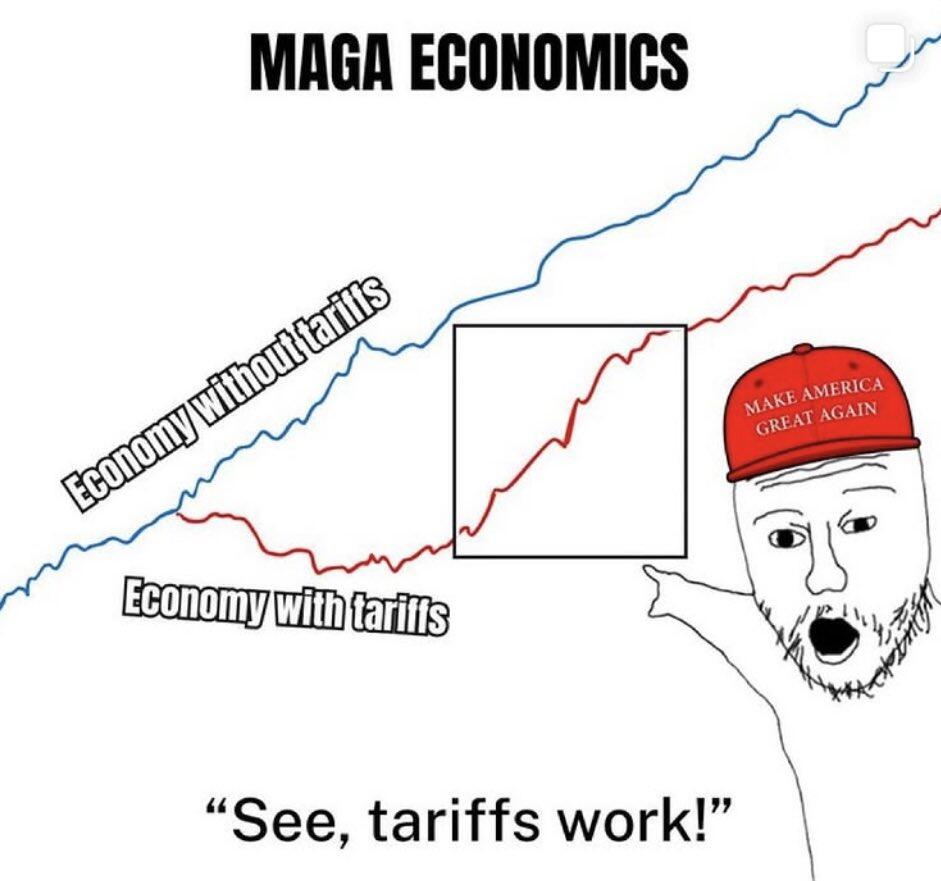
There are three things wrong with Trump’s tariffs. The first is that they cannot be expected to provide the benefits claimed, can be expected to make both the US and its trading partners poorer; the arguments offered for them depend on not understanding the economics of trade. For an explanation of why that is true, see an earlier post.

The fact that the tariffs make us poorer may be the most important thing wrong with them but it is irrelevant to the Supreme Court; nothing in the Constitution requires the president to do his job well. The questions relevant to the Court are whether what Trump is doing was authorized by past Congressional legislation and whether it was constitutional for Congress to authorize it.

What Counts As An Emergency?

Tariffs are under the authority of Congress, not the president.1 Trump’s justification for setting them himself is congressional legislation, the International Emergency Economic Powers Act.

    (a) Any authority granted to the President by section 1702 of this title may be exercised to deal with any unusual and extraordinary threat, which has its source in whole or substantial part outside the United States, to the national security, foreign policy, or economy of the United States, if the President declares a national emergency with respect to such threat.

    (b) The authorities granted to the President by section 1702 of this title may only be exercised to deal with an unusual and extraordinary threat with respect to which a national emergency has been declared for purposes of this chapter and may not be exercised for any other purpose. (IEEPA, 50 U.S. Code § 1701, emphasis mine)

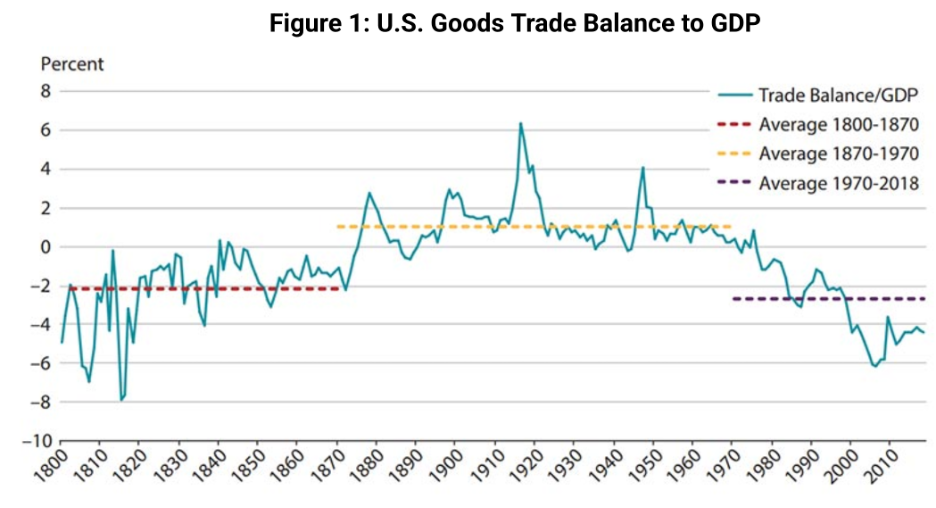
Trump declared that his Worldwide Reciprocal Tariffs were intended to deal with the US trade deficit.2 Whether the deficit is a threat and whether tariffs are a good way to deal with it are questions for economists3 but whether it is unusual is relevant to judges, since if it is not the IEEPA does not apply.

[…]

The Court on Trial

Delegating to the president the power to impose tariffs, a power explicitly given to Congress in the Constitution, is a major question. Under doctrine proclaimed by this court that means that the legislation claimed to delegate that power must be read narrowly. On a narrow reading, on anything but a very broad reading, the legislation fails to apply to President Trump’s tariffs for two independent reasons:

    It only grants power in an emergency, which under the language of the Act neither the trade deficit nor the illegal drug problem is; the deficit has existed since 1970, the War on Drugs was proclaimed in 1971.

    The powers granted to the president in the Act do not include the power to impose tariffs.

If the six conservative justices believe in the principles they claim, the administration will lose the case 9-0.


  1. The Congress shall have Power To lay and collect Taxes, Duties, Imposts and Excises … To regulate Commerce with foreign Nations … (U.S Constitution, Article I, Section 8).
  2. “I found that conditions reflected in large and persistent annual U.S. goods trade deficits constitute an unusual and extraordinary threat to the national security and economy of the United States that has its source in whole or substantial part outside the United States. I declared a national emergency with respect to that threat, and to deal with that threat, I imposed additional ad valorem duties that I deemed necessary and appropriate.” (Executive Order July 31, 2025).
  3. The answers are no and no.

Cyprus on Fire: The 3-Way War That Broke an Empire – W2W 053

Filed under: Britain, Greece, History, Military — Tags: , , , , , , — Nicholas @ 04:00

TimeGhost History
Published 16 Nov 2025

Cyprus, 1950s–60s. An island divided between Greek Cypriots, Turkish Cypriots, and the British Empire becomes the battleground for one of the Cold War’s most explosive regional crises. What begins as a struggle for independence soon spirals into a three-way conflict of nationalism, colonial strategy, and clashing identities — with Archbishop Makarios III, paramilitary groups, Athens, Ankara, and London all pulling in different directions.

In this episode of War 2 War, we uncover how Cyprus became:

  • A central front in the decline of the British Empire
  • A stage for espionage, guerrilla warfare, and political assassinations
  • A diplomatic nightmare for NATO
  • A struggle where UN peacekeepers become critical to preventing total collapse
  • A conflict whose consequences still shape Europe and the Eastern Mediterranean today

We’ll trace the rise of EOKA, the reaction in the Turkish Cypriot community, the impossible balancing act of Makarios III, and how superpower pressure from the USA and USSR escalated an already volatile situation.

This is the hidden story of how one island’s crisis reshaped the politics of an entire region — and marked the end of Britain as a global imperial power.
(more…)

Yet another example of the Liberal focus on symptoms rather than underlying problems

Filed under: Cancon, Government, Media, Politics — Tags: , , , , , , — Nicholas @ 03:00

The Liberals under both Justin Trudeau and Mark Carney have amply demonstrated that they care far more about appearances than achievements. The immigration crisis is merely the latest example of the government reaching for something that will look good on TV and in the newspapers rather than addressing the root cause of the problem:

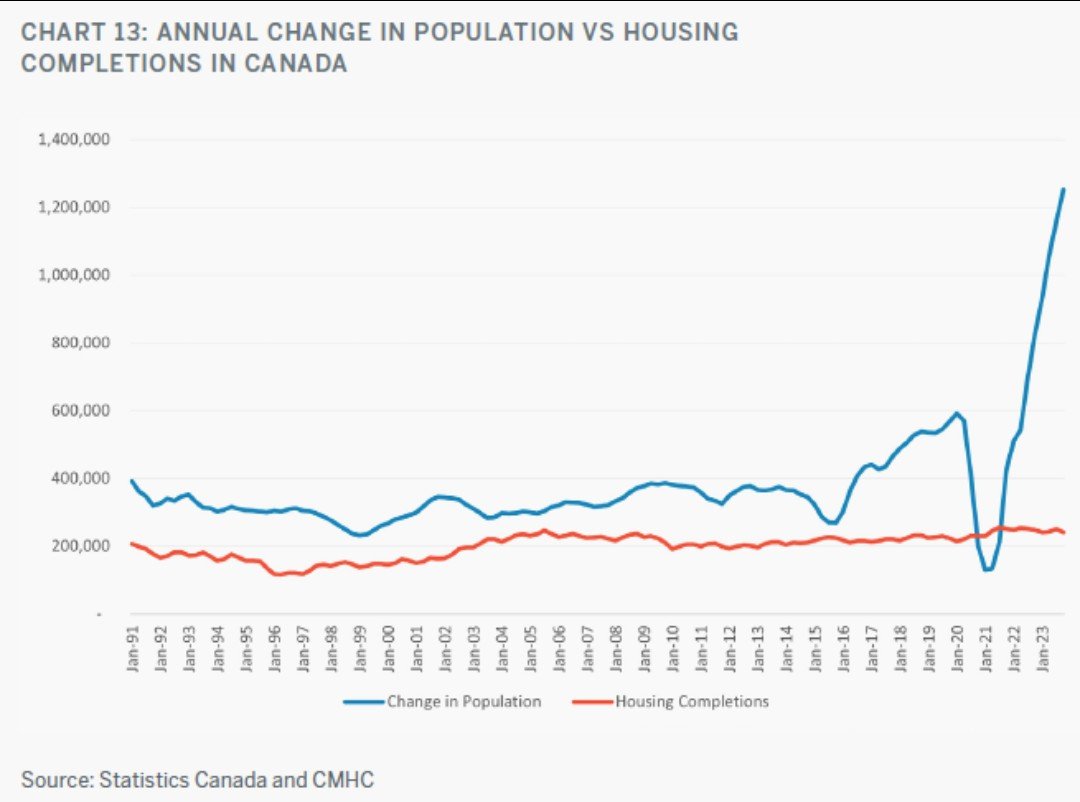
Perhaps the most intractable policy disaster handed to Prime Minister Carney by the Trudeau government is the immigration file. The ugliest detail in that file is undoubtedly the astronomic increase in temporary residents (largely foreign workers, international students, and asylum seekers) – a population that expanded from 3.3% in 2018 to 7.5% in 2024. The Carney government’s solution is to limit the inflow of new temporary residents significantly, while at the same time giving permanent residency to many of the ones already on Canadian soil.

The base problem is far too many people entering the country, driving up demand for housing, overloading healthcare facilities, absorbing more and more government assistance at a time the government is running record deficits, and undercutting young Canadians for entry level jobs while youth unemployment is skyrocketing. But this “solution” will look like firm action as it will be presented by the tame media, so from the point of view of the government, it’s “mission accomplished”.

The Carney government’s first annual Immigration Levels Plan commits to “reducing Canada’s temporary population to less than 5% of the total population by the end of 2027”. To this end, Canada’s annual intake of new temporary residents will be cut from 673,650 in 2025 to 385,000 in 2026, and 370,000 in 2027 and 2028. This cut will hit international students the hardest, with annual new study permits cut in half from over 300,000 to 155,000 in 2026, and 150,000 in 2027 and 2028.

This major cut will ease the strain on Canada’s housing, healthcare, food banks, roads, and social services – a strain that is no longer denied by politicians, and is freely acknowledged across the political aisle. But, as is the case with many policies, the devil is the details. It turns out that one of the ways which the federal government intends to shrink the size of the temporary resident population is by making a large number of them permanent residents.

In the recently released 2025 Annual Report to Parliament on Immigration, Immigration Minister Lena Diab says the Carney government intends to “give priority for permanent residence to temporary residents already living and settled in Canada, further reducing the number of new arrivals”.

How many temporary residents will get permanent residency under this plan is unclear, but we can extrapolate from the data we have.

The Carney government’s Immigration Levels Plan sets the annual permanent resident rate at 380,000 for the next three years – or, a total of 1,140,000. The very last Immigration Levels Plan of the doomed Trudeau government – which committed to transitioning many temporary residents to permanent residency – predicted that temporary residents would account for “more than 40% of overall permanent resident admissions in 2025”.

If the Carney government is heralding the idea of transitioning more temporary residents as a way to slow down the catastrophic population growth Canada has experienced in recent years, we can safely assume that this proportion will be at least a little bit higher than the Trudeau government’s rate. A rate of 50%, say, would mean that 570,000 temporary residents will receive permanent residency over the next three years.

See, Canadians are telling the government that there are too many temporary immigrants, so by waving a magic wand and transforming the bulk of the temporary immigrants into permanent residents, the government can pretend they’ve solved the problem. And the sycophants, fluffers, and cheerleaders in the media will laud them to the skies for their brilliant solution.

What did Cowboys Eat on the Open Range?

Filed under: Food, History, USA — Tags: , , , , — Nicholas @ 02:00

Tasting History with Max Miller
Published 10 Jun 2025

Slow-cooked pinto beans and dense cast iron skillet cornbread

City/Region: United States of America
Time Period: 1896

The cook for a cattle drive, often called “cookie”, was usually a former cowboy himself, having aged out of the profession by 25. They’d wake up around 3:00 AM to get breakfast ready, then pack up and drive ahead about 15 miles to prepare supper.

These beans are very simple, and surprisingly delicious. Honestly, the garlic doesn’t do a whole lot (who only uses half a clove?), but they’re still very good. Feel free to use however hot a red pepper you like, and the beans are a perfect accompaniment to the Chuck Wagon Cornbread (below). Mighty fine, indeed.

    FRIJOLES.
    1 cup Mexican beans.
    1/2 clove garlic.
    1 long red pepper.
    1 thin small slice bacon.
    Soak beans over night; boil slowly until soft—from eight to ten hours. Add red pepper, garlic, and bacon, and bake.
    Manual for Army Cooks, 1896

(more…)

QotD: Turns out Judaism isn’t the peaceful exception among Abrahamic montheisms

Filed under: Books, History, Quotations, Religion, USA — Tags: , , , — Nicholas @ 01:00

    Yevardia @haravayin_hogh

    Thread w/excerpts of Israel Shahak’s Jewish History, Jewish Religion.
    Shahak was an award-winning organic chemist & Classical Liberal. Born in Poland, his family moved to Israel as displaced persons in 1945.
    For this book, he received death-threats for the rest of his life.

Quoted thread is absolutely fascinating.

Like many American gentiles who grew up in the 1950s and 1960s, I have a fondness for Jewish culture as it manifested in this country. The food, the humor, the intellectual tradition. I read Mad Magazine as a kid and “The Joys of Yiddish” as a young man and cheerfully adopted some Yiddishisms into my idiolect.

It’s always been slightly difficult for me, though, to reconcile my fondness for the Jewish influence on American life with what I believe about monotheisms in general and Abrahamic monotheisms is in particular. Which is, basically, that they are pits of evil. Infectious insanities that bring mob violence, horror and death whenever they have actual power.

Judaism looked like an at least partial exception, a monotheism with a curious lack of horrific violence in its backstory. I thought this might be explained by its absence of coercive power ever since the destruction of the Second Temple — 2000 years of oppression by others teaching Judaism the virtue of tolerance the hard way.

Now comes Israel Shahak to tell me it wasn’t like that at all. That until historically recent times – basically, post-1800 — Judaism wasn’t tolerant and rational. Not even close. These are virtues of the secularized Jew, in reaction to traditional Jewish shtetl and ghetto communities that could best have been described as violently evil religious despotisms.

Shahak says gentiles — and many Jews — don’t know how terrible life was under pre-modern rabbis because Judaism has done a bang-up job of expurgating and sanitizing its own history.

Nobody talks about the fact that until the 19th century, rabbis routinely used the self-governance afforded them by a lack of state interest in universal secularized justice to abuse, torture, and often murder Jews they found to be in violation of religious law. I certainly had no idea of this, despite being quite well read in history and comparative religion.

Thought control, too. We think of Jews as readers and scholars, but it turns out the pre-modern rabbinate deliberately kept communal Jews ignorant of history, geography, science, and indeed all secular literature.

Shahak brings the receipts, with extensive quotation from primary sources. Even his critics — and there are many — can’t accuse him of making up these reports. They claim he misinterprets the evidence. But they can’t make the evidence go away.

In a way this comes as a relief to me. I no longer have to wonder why Judaism looks like an exception to the general evil of monotheisms. Because it isn’t one — like Christianity, it looks benign only to the extent that it’s been denatured by modernity and secularism.

On the other hand … I miss the Judaism I thought I knew. I’m disturbed that the evidence was so effectively suppressed, and that it took reading excerpts from Shahak to clue me in.

Damn shame copies of Shahak’s book are so rare that you can only find them for over a grand each. I’d like to read the whole thing, but everybody should read the excerpts in this thread.

ESR, The social media site formerly known as Twitter, 2025-08-15.

Powered by WordPress