I always felt that my son was a person, and did my best to treat him that way while still being his father. I think that was the correct choice, although clearly a lot of other parents choose the other option for their children:
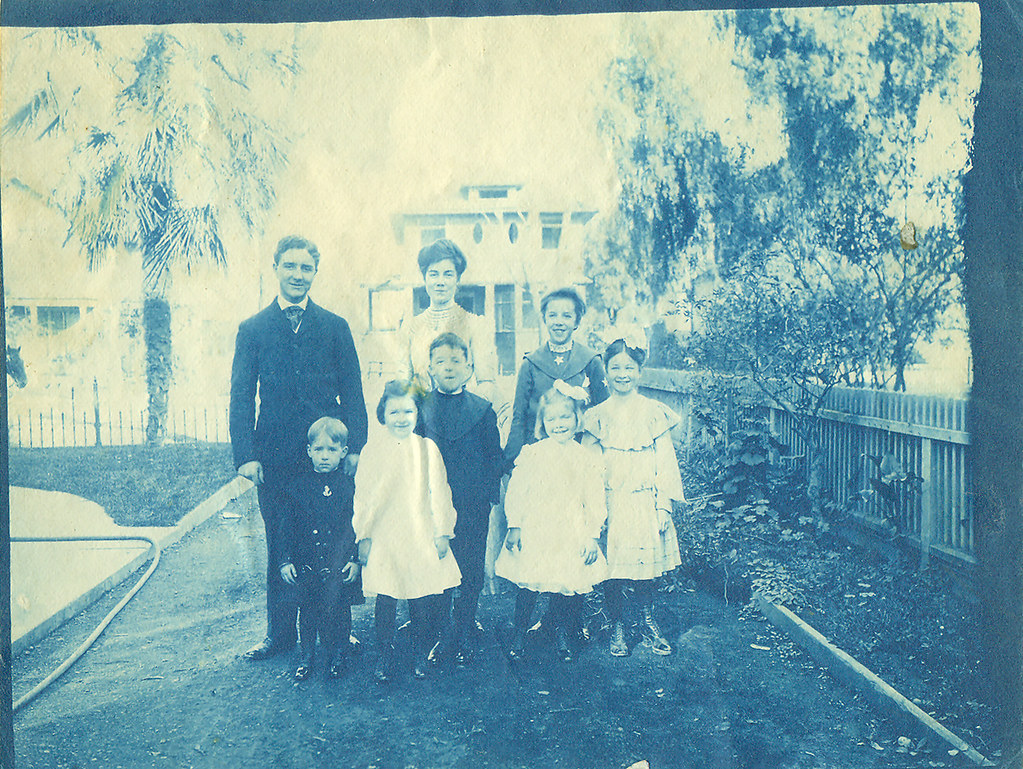
“Happy family cyanotype 2” by simpleinsomnia is licensed under CC BY 2.0 
 .
.
There are two views of children — that they are small people who do not yet know very much or that they are pets who can talk. I prefer the former. One implication is that children and parents are, in a fundamental sense, peers. Obviously they are not equal in what they know or what they can do or how strong they are. But they are not different sorts of people in a way that goes beyond that. Children should usually believe their parents about things the parents know much more about but parents should believe children when that asymmetry is reversed, as it sometimes is. The mere fact that one is parent and the other child does not determine which is right and which wrong when they disagree; that is determined, as between adults, by which has better arguments, more evidence.
One implication of treating children as people not pets is that you have to keep promises to them, as to other people. Another is that if you assert something to them you have the same obligation you would have if you said it to an adult to defend it or, if you find you cannot, admit that you can’t.
I once heard an elderly man tell a child who disagreed with him on something that he should never contradict his elders. The statement struck me as not merely wrong but blasphemous. The elder was probably correct on what they disagreed about but the appropriate response is to demonstrate that, at worst decline to argue it, not to imply either that truth is determined by seniority or that it is discourteous to point out errors to a status superior. I am reasonably sure that neither of my parents ever told me to believe something just because they said so or refused to entertain arguments against their views. The son of my first marriage, who spent summers with me and my wife when he was growing up, told a friend that his project for that summer was to get my wife to say “because I told you so.” I doubt that he succeeded.
Treating your children as your peers is easier if you sometimes interact with them in contexts where they demonstrably are at least your equal. I was the first member of our family to play World of Warcraft, so when my wife and our children, then eleven and fourteen, joined the game I was more skilled, had a higher level character, more in-game resources. They improved over time and there was a long period, during which we sometimes played separately, sometimes as a family team, were all on about the same level. By the time I eventually quit the game some years later we all had top level characters and all three of them had become more skilled at the game than I was.
Going back to my childhood, the nearest equivalent that occurs to me is ping-pong. We had a table in the basement on which my father and I played. We equalized the contest with a sliding handicap, a number of points I started each game with. Every time he won the handicap went up, every time I won it went down. Over a period of years, as I got better, the handicap went down, eventually to zero, I think occasionally below zero. The family also played bridge together, there being conveniently four of us.
I spent a lot of time arguing with my father on a wide range of subjects. Someone who met us skiing on Colorado when I was in high school told a friend of mine that we spent all our time arguing and I won half the arguments. I don’t think the latter was true, but if my father won a majority of the arguments he won them fair.