Quotulatiousness

November 2, 2021

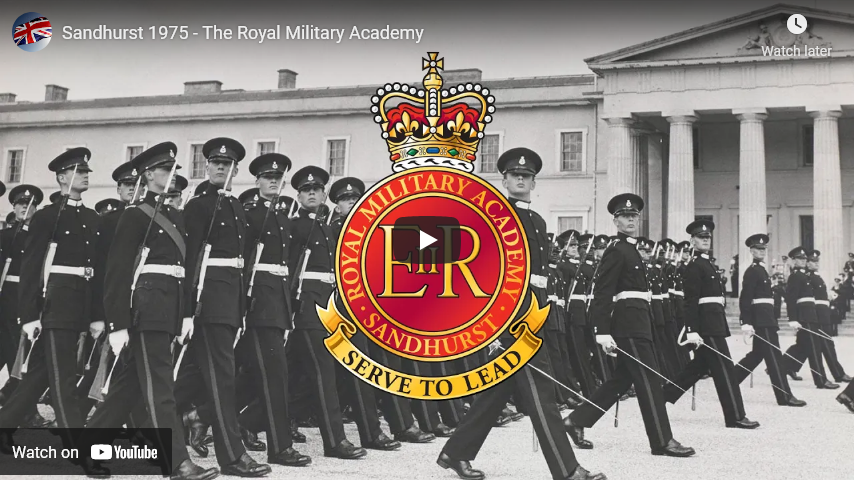
Sandhurst 1975 – The Royal Military Academy

Filed under: Britain, Education, History, Military — Tags: , , , , , — Nicholas @ 04:00

British Army Documentaries
Published 21 Feb 2021

Filmed in 1975, this documentary is set at Sandhurst, the officer training academy. It follows a group of young men preparing for a life of leadership in the Army. These “managers of violence” will be expected to perform to the very highest of traditions of the British Army and be prepared to apply their professionalism on British soil should the need arise.

© 1975

This production is for viewing purposes only and should not be reproduced without prior consent.

This film is part of a comprehensive collection of contemporary Military Training programmes and supporting documentation including scripts, storyboards and cue sheets.

All material is stored and archived. World War II and post-war material along with all original film material are held by the Imperial War Museum Film and Video Archive.

Election day in Virginia

Filed under: Education, Government, Politics, USA — Tags: , , , , — Nicholas @ 03:00

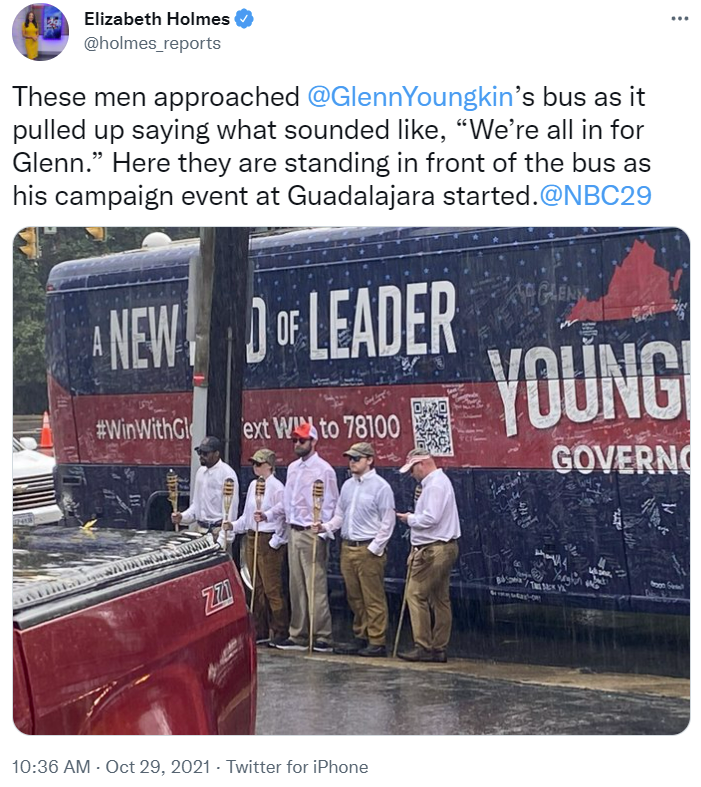
Mark Steyn writing about the Tuesday state elections being held in Virginia, which certainly seemed to become much more competitive as larger concerns about the school system energized a lot of parents, and a Republican-in-name-only group plays dirty tricks on the Republican candidate for governor:

“Republican” group trolls Republican candidate in the Virginia election campaign, October 2021.

Tuesday is what less evolved societies than Virginia still quaintly call “Election Day”. The Democrat candidate, the unlovely Clinton bagman Terry McAuliffe, claims that “we are substantially leading on the early vote”. In the fullness of time he will also be substantially leading on the late vote, if he isn’t already.

That leaves the votes on Voting Day up for grabs. The Republican candidate, Mr Youngkin, is a squish of no fixed beliefs who will govern as Mitt did in Massachusetts or Pataki did in New York. But he has been handed a winning issue that he would probably not have chosen save for public outrage — the state of Virginia schools in an age of “critical race theory” and trans-mania. It’s bigger even than an education issue: The left is so boundlessly ambitious that it is abolishing biological sex, and if it gets away with it will leave an awful mountain of human wreckage in its wake, bigger even than its other innovations.

Every Virginian should vote on Tuesday — because Youngkin’s campaign is a classic example of Milton Friedman’s dictum: in politics you don’t wait for the right people to do the right thing, you create the conditions whereby the wrong people are forced to do the right thing. That is what parents at school-board meetings have been doing, and they deserve to be rewarded for it.

Virginia is a state where a rapist gets transferred to another school because he/she belongs to a protected class, rapes again, and, when you protest the anal rape of your daughter by a known rapist, you’re the guy who gets thrown to the ground and arrested. Whether one finds the foregoing objectionable shouldn’t really be a Republican/Democrat thing, but such is the moral depravity of the cultural heights that Dems are all in on the convicted sodomizer and only squaresville low-status GOP candidates can muster even pro forma objections. So in 21st-century Virginia insouciance about schoolgirl anal rape is now a partisan thing.

Of course, it remains to be seen whether the state’s election system is sufficiently honest to reflect fairly that public outrage. If at, say, 10pm on Tuesday night Youngkin is narrowly ahead but you wake up on Wednesday morn to find McAuliffe has been the beneficiary of all the 3am votes, well, Republicans will be forgiven for suspecting that “fortifying” the “two-party system” into something rather more streamlined is here to stay.

I say that as an immigrant who never feels more foreign than on America’s hideously chaotic yet oddly purposeful election nights. But then in Northern Virginia a quarter of the population is now foreign-born, and half of those arrived in the last twenty years. That’s a remarkable statistic for a so-called “Old Dominion”. Demography is destiny, and in an ever more tightly circumscribed public discourse there are decreasing opportunities even to raise the topic.

How to Adjust the Depth of a No.4 Plane | Paul Sellers

Filed under: Tools, Woodworking — Tags: , , — Nicholas @ 02:00

Paul Sellers
Published 16 Jul 2021

The depth adjustment could not be simpler once you have adjusted the lateral adjustment lever so that the blade cutting edge is parallel to the sole.

This adjustment determines the depth of cut for different thicknesses. I take this seriously when I make my adjustments and the more you practice, the more it will become second nature to you. This quick video will get you started and demystify this very efficient adjuster.

——————–

Want to learn more about woodworking?

Go to Woodworking Masterclasses for weekly project episodes: http://bit.ly/2JeH3a9

Go to Common Woodworking for step-by-step beginner guides and courses: http://bit.ly/35VQV2o

http://bit.ly/2BXmuei for Paul’s latest ventures on his blog

——————–

Instagram: http://bit.ly/2oWpy7W

Twitter: http://bit.ly/33S7RFa

Pinterest: http://bit.ly/35X5uTf

QotD: The foreign journalist’s best local source, the cabbie

Filed under: Education, Media, Quotations — Tags: , , , — Nicholas @ 01:00

It was often said that a journalist writing about a foreign country ought to stay either three days or three years: the former for strength of impression, or that latter for depth of knowledge.

I was a three-day man in that period of my life when newspapers would occasionally ask me to report on some revolution, civil war, social upheaval or other unusual event (I once went on a daytrip to India from Europe).

Given the circumstances, I gathered much of my information from the taxi-driver from the airport to the hotel where all the other journalists were staying. They did likewise, and in many an article, even in serious publications, a journalist has acted as a mere amanuensis for a taxi-driver.

I am far from decrying this genre of journalism: in my experience, taxi-drivers are exceptionally sensible and level-headed men, intelligent and well-informed but not educated, or rather not indoctrinated into believing the most obvious nonsense by having attended western-type establishments of supposedly higher learning.

Knowing that a journalist is a bird of passage, they did not fear, even in dictatorships, to speak the truth as they saw it: and generally they had seen a lot. With the advent of the mobile phone that hears everything and erases nothing, they may since have become more cautious. I don’t know: no one sends me anywhere these days.

Theodore Dalrymple, “On Taxi Cab Drivers, Barbers, and Learning the Truth”, The Iconoclast, 2021-06-21.

November 1, 2021

Indochina and The Battle of Dien Bien Phu

The History Guy: History Deserves to Be Remembered
Published 29 Sep 2017

The History Guy remembers how decolonization led to proxy war and the Battle of Dien Bien Phu in what is now known as Vietnam.

The episode discusses and presents historical photographs and film footage depicting events during a period of war, which some viewers may find disturbing. All events are described for educational purposes and are presented in historical context.

The History Guy uses images that are in the Public Domain. As photographs of actual events are often not available, I will sometimes use photographs of similar events or objects for illustration.

Patreon: https://www.patreon.com/TheHistoryGuy

The History Guy: Five Minutes of History is the place to find short snippets of forgotten history from five to fifteen minutes long. If you like history too, this is the channel for you.

Awesome The History Guy merchandise is available at:
https://teespring.com/stores/the-hist…

The episode is intended for educational purposes. All events are presented in historical context.

#DienBienPhu #militaryhistory #thehistoryguy

If it wasn’t Black Magic, perhaps it was … Orange Magic!

Filed under: Books, Humour, Media, Politics, USA — Tags: , , — Nicholas @ 03:00

In the weekly book post at Ace of Spades H.Q., OregonMuse reports on the case of poor Gary Lachman who is still apparently suffering the aftereffects of the Trump Years:

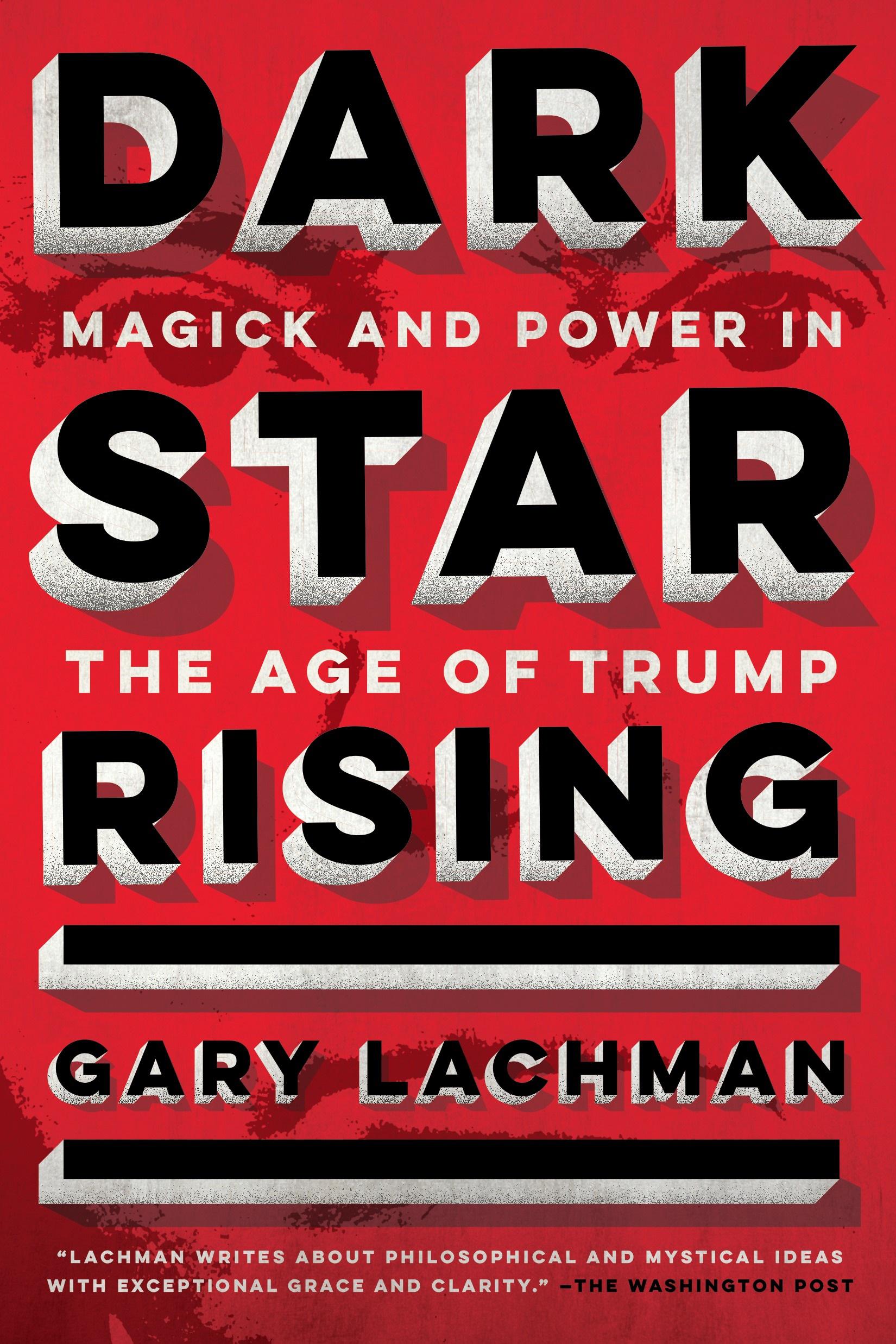
Author Gary Lachman is a man whom Donald Trump evidently broke very, very badly. Trying to process the reasons why the Bad Orange Man is living rent-free in his head 24/7, he came up with Dark Star Rising: Magick and Power in the Age of Trump, a book wherein he argues that there can be only one explanation for Trump’s astonishing election victory in 2016 and his domination of the political landscape: dark magic.

Get a load of this:

    Within the concentric circles of Trump’s regime lies an unseen culture of occultists, power-seekers, and mind-magicians whose influence is on the rise. In this unparalleled account, historian Gary Lachman examines the influence of occult and esoteric philosophy on the unexpected rise of the alt-right.

AHAHAHAHAHAHAHAHA!!! You know this is going to be good:

    Did positive thinking and mental science help put Donald Trump in the White House? And are there any other hidden powers of the mind and thought at work in today’s world politics? In Dark Star Rising: Magick and Power in the Age of Trump, historian and cultural critic Gary Lachman takes a close look at the various magical and esoteric ideas that are impacting political events across the globe. From New Thought and Chaos Magick to the far-right esotericism of Julius Evola and the Traditionalists, Lachman follows a trail of mystic clues that involve, among others, Norman Vincent Peale, domineering gurus and demagogues, Ayn Rand, Pepe the Frog, Rene Schwaller de Lubicz, synarchy, the Alt-Right, meme magic, and Vladimir Putin and his postmodern Rasputin.

As I said, Trump really, really broke this guy. And including Pepe the Frog in the same rogues’ gallery as Norman Vincent Peale is particularly choice.

There is only one way to fight the magic of the Bad Orange Man and his Evil Legions of Darkness: with magic of your own. Fortunately, there is a book that tells you how to do just that. I’m talking about Magic for the Resistance: Rituals and Spells for Change by Michael Hughes:

    The resistance is growing, and it needs your help. This book provides spells and rituals designed to help you put your magical will to work to create a more just and equitable world … Magic for the Resistance offers a toolkit for magical people or first-time spellcasters who want to manifest social justice, equality, and peace.

    Includes spells for: Racial justice, women’s rights, LGBTQ+ rights, antifascism, environmentalism, immigration, refugee support, nonviolence.

Apparently not included are spells for: setting fire to federal buildings, destroying small businesses, throwing Molotov cocktails at cops, beating up old men in wheelchairs, and shouting down public speakers who are saying things you don’t like.

Although, I guess they don’t really need magic to do those things.

Hughes is the creator of the internationally viral Mass Spell to Bind Donald Trump and All Those Who Abet Him, the largest and longest-running magical working in history.

We laugh at this, but considering the trajectory of the 2020 election, who knows, maybe it worked.

Britain’s Last Ditch: Wartime Changes to No4 Lee Enfield

Filed under: Britain, Cancon, History, Military, USA, Weapons, WW2 — Tags: , , , — Nicholas @ 02:00

Forgotten Weapons
Published 14 Jul 2021

http://www.patreon.com/ForgottenWeapons

https://www.floatplane.com/channel/Fo…

Cool Forgotten Weapons merch! http://shop.forgottenweapons.com

When we think of “last-ditch” rifles, we normally think of 1945 and the very end of World War Two. For the British, however, the lowest ebb of the war was in 1941 and 42, and it is during that period that the Lee Enfield was at its crudest. British ordnance instituted a number of simplifications to maximize weapons production. In particular:

– Walnut replaced with kiln-dried birch and beech for furniture
– Two-groove barrels replacing five-groove ones
– A vastly simplified 2-position flip sight in place of the original fine micrometer style
– Simplified bolt release, designated the No4 MkI* (which was only produced in the US and Canada)
– Aluminum buttplates
– Much reduced standards of fit and finish, leading to really ugly machine marks and haphazard markings.

Most of these changes would be walked back later in the war as Britain’s footing became more solid, but they make a very interesting period of changes for the collector to study.

Contact:
Forgotten Weapons
6281 N. Oracle 36270
Tucson, AZ 85740

QotD: Latin

Filed under: Education, History, Quotations — Tags: , , — Nicholas @ 01:00

Any English speaker who calls Latin easy is either a genius or a fool. It is a synthetic Indo-European language that communicates in ways very different from English. Nouns are divided into at least five classes, each of which has five or six or seven cases – singular and plural – to express meanings that we express by adding prepositions. Pronouns have their own declensions. Except for the perfect passive tenses, verbs are generally inflected. Because the Classical grammar is a snapshot of a language in rapid and profound change, there are duplications and irregularities everywhere. The future tense, in particular, is broken, and has been reconstructed in every language I know that descends from Latin. Add to this an elaborate syntax, an indifference to what we regard as a normal order of words, and a vocabulary that is naturally poor, but expanded by allowing most common words to bear different meanings that must usually be inferred from their context.

This being said, anyone who denies the language is worth learning is a barbarian who deserves to live in the illiterate swamp that we nowadays call civilisation. Without denying the importance of the Greeks, Rome stands at the origin of our literature and law and religion. Latin was, until the late seventeenth century, the normal language of learning and international communication. Directly or indirectly, Latin has given English around sixty per cent of its words. I am not sure if anyone can write English well who is ignorant of Latin. I do not believe anyone can appreciate or notice the full register of our own classical literature without some knowledge of Latin. A further point is that, even today, a qualification in Latin is taken as proof of general intelligence. In short, Latin is a struggle, but a struggle worth undertaking.

Sean Gabb, “A Review of Latin Stories (2018)”, Sean Gabb, 2018-12-23.

« Newer Posts

Powered by WordPress