
Quotulatiousness

May 5, 2014

“[M]ost Canadian law societies report members to police. The [LSUC] does not.”

Filed under: Cancon, Law — Tags: , , , , — Nicholas @ 08:17

The Toronto Star‘s Kenyon Wallace, Rachel Mendleson and Dale Brazao investigate the Law Society of Upper Canada (LSUC) and find it does not report members for criminal activity to the police:

They treat client trust accounts as their personal piggy banks, facilitate multi-million-dollar frauds and drain retirement savings of the elderly.

While most lawyers caught stealing from their clients are reprimanded, suspended or disbarred by the profession’s regulator, the vast majority avoid criminal charges, a Star investigation reveals.

The Star found that more than 230 lawyers sanctioned for criminal-like activity by the Law Society of Upper Canada in the last decade, stole, defrauded or diverted some $61 million held in trust funds for clients.

Fewer than one in five were charged criminally. Most avoided jail.

“I truly believe there are two laws — a set of rules and regulations for lawyers and a different set for everyone else,” said Richard Bikowski, who was fleeced out of $87,500 by now-disbarred Toronto lawyer Lawrence Burns.

Unlike the law societies in most other provinces, the Law Society of Upper Canada does not, as a rule, report suspected criminal acts by its members to police, no matter how much money lawyers steal.

[…]

Of the more than 1,000 discipline decisions made by the law society in the last 10 years, the Star identified 236 cases in which lawyers were sanctioned for offences that were characterized by our analysis as criminal, including theft, fraud, breach of trust, forgery and perjury.

The Star could find criminal charges for only 41 of these lawyers. In more than half of cases where criminal charges were laid, the law society sanction came after. Of those bad lawyers sentenced criminally, the punishments were generally lenient, ranging from house arrest to community service. The Star found that only 12 went to jail.

Why do so many lawyers who steal from their clients avoid criminal justice?

A big reason is that the law society in practice does not report alleged criminal offences by its members to police.

The Constitution-free zone near the US border

Filed under: Law, Liberty, USA — Tags: , , , , , — Nicholas @ 07:48

A recent decision by a federal appeal court expands the already very broad opportunities for police and border agents to stop and search travellers near the US border:

A federal appeals court just ruled that the police have a legal right to stop, search and arrest you for innocent behavior including driving with your hands at the ten-and-two position on the steering wheel at 7:45 p.m., taking a scenic route and having acne.

To the Tenth U.S. Circuit Court of Appeals, these factors added up to fit the profile of a person smuggling undocumented immigrants and drugs. The court said, “Although the factors, in isolation, may be consistent with innocent travel … taken together they may amount to reasonable suspicion.”

In other words, the police can now stop you for no reason at all. Law enforcement just needs to add a sinister context to your behavior, and off you go to jail. The court endorsed this expansion of aggressive police behavior in USA v. Cindy Lee Westhoven, No. 13-2065.

[…]

Incredibly the court found that this scenario created a reasonable suspicion for an “investigative stop.” By inserting a context that would make every driver guilty, the court upheld this belligerent law enforcement:

The officer said he spotted the car because “her arms were ‘straight and locked out’ at a ‘ten-and-two position on the steering wheel,’ — as everyone is taught in driver’s ed in high school. He was also suspicious because the road was used primarily by locals in New Mexico, and Westhoven had Arizona plates. She had acne scarring, “indicating to him she might be a methamphetamine user.” He also thought the shopping was better in Tucson than Douglas, so this was also “suspicious.”

“The dark tinted windows on Ms. Westhoven’s truck raised Agent Semmerling’s suspicion that she might be concealing something or someone in the back of her truck,” the court added.

The time happened to be between a 6-to-8 p.m. border patrol shift change, and the cop inferred that Westhoven was a smuggler trying to exploit that two-hour window. Westhoven was nervous, taking long pauses and shaking — which apparently signaled criminality.

The final nail for Westhoven was that she had two cell phones visible in the car. The cop said this was a common practice for drug smugglers. It is also common for people who have a business phone and a personal phone.

Dien Bien Phu and the end of French Indochina

Filed under: Asia, France, History, Military — Tags: , , , — Nicholas @ 07:16

BBC News Magazine looks back 60 years to the end of French colonial government and the military defeat at Dien Bien Phu which made it inevitable:

Sixty years ago this week, French troops were defeated by Vietnamese forces at Dien Bien Phu. As historian Julian Jackson explains, it was a turning point in the history of both nations, and in the Cold War — and a battle where some in the US appear to have contemplated the use of nuclear weapons.

“Would you like two atomic bombs?” These are the words that a senior French diplomat remembered US Secretary of State John Foster Dulles asking the French Foreign Minister, Georges Bidault, in April 1954. The context of this extraordinary offer was the critical plight of the French army fighting the nationalist forces of Ho Chi Minh at Dien Bien Phu in the highlands of north-west Vietnam.

The battle of Dien Bien Phu is today overshadowed by the later involvement of the Americans in Vietnam in the 1960s. But for eight years between 1946 and 1954 the French had fought their own bloody war to hold on to their Empire in the Far East. After the seizure of power by the Communists in China in 1949, this colonial conflict had become a key battleground of the Cold War. The Chinese provided the Vietnamese with arms and supplies while most of the costs of the French war effort were borne by America. But it was French soldiers who were fighting and dying. By 1954, French forces in Indochina totalled over 55,000.

[…]

Saturday 3 April 1954 has gone down in American history as “the day we didn’t go to war”. On that day Dulles met Congressional leaders who were adamant they would not support any military intervention unless Britain was also involved. Eisenhower sent a letter to the British Prime Minister Winston Churchill warning of the consequences for the West if Dien Bien Phu fell. It was around this time, at a meeting in Paris, that Dulles supposedly made his astonishing offer to the French of tactical nuclear weapons.

In fact, Dulles was never authorised to make such an offer and there is no hard evidence that he did so. It seems possible that in the febrile atmosphere of those days the panic-stricken French may simply have misunderstood him. Or his words may have got lost in translation.

Dien Bien Phu map

“He didn’t really offer. He made a suggestion and asked a question. He uttered the two fatal words ‘nuclear bomb’,” Maurice Schumann, a former foreign minister, said before his death in 1998. “Bidault immediately reacted as if he didn’t take this offer seriously.”

According to Professor Fred Logevall of Cornell University, Dulles “at least talked in very general terms about the possibility, what did the French think about potentially using two or three tactical nuclear weapons against these enemy positions”.

Bidault declined, he says, “because he knew… that if this killed a lot of Viet Minh troops then it would also basically destroy the garrison itself”.

In the end, there was no American intervention of any kind, as the British refused to go along with it.

Fukushima, radiation, and FUD

Filed under: Environment, Japan, Media — Tags: , , , — Nicholas @ 06:54

James Conca on a recent UN report that isn’t getting attention:

It’s always amazing when a United Nations report that has global ramifications comes out with little fanfare. The latest one states that no one will get cancer or die from radiation released from Fukushima, but the fear and overreaction is harming people (UNIS; UNSCEAR Fukushima; UNSCEAR A-68-46 [PDF]). This is what we’ve been saying for almost three years but it’s nice to see it officially acknowledged.

According to the report, drafted last year but only recently finalized by the U.N., “The doses to the general public, both those incurred during the first year and estimated for their lifetimes, are generally low or very low. No discernible increased incidence of radiation-related health effects are expected among exposed members of the public or their descendants. The most important health effect is on mental and social well-being, related to the enormous impact of the earthquake, tsunami and nuclear accident, and the fear and stigma related to the perceived risk of exposure to ionizing radiation. Effects such as depression and post-traumatic stress symptoms have already been reported.”

In addition, the report states, “Increased rates of detection of [thyroid] nodules, cysts and cancers have been observed during the first round of screening; however, these are to be expected in view of the high detection efficiency [using modern high-efficiency ultrasonography]. Data from similar screening protocols in areas not affected by the accident imply that the apparent increased rates of detection among children in Fukushima Prefecture are unrelated to radiation exposure.”

So the Japanese people can start eating their own food again, and moving back into areas contaminated with radiation levels similar to many areas of the world like Colorado and Brazil, which includes most of the exclusion zone. Only a few places shouldn’t be repopulated.

But if you want to continue feeling afraid, and want to make sure others keep being afraid, by all means ignore this report on Fukushima. But then you really can’t keep quoting previous UNSCEAR policy and application of LNT (the Linear No-Threshold dose hypothesis) to support more fear.

Note – LNT is a leftover Cold War ideology that states all radiation is bad, even the background radiation we are bathed in every day, even the 3,200 pCi of radiation in a bag of potato chips (yes, potato chips have the most radioactivity of any food, but they taste sooo good!).

Of course, if you’ve been actually following the events from three years back, this report will contain few surprises.

May 4, 2014

Quarterback boom or bust metrics

Filed under: Football — Tags: , , — Nicholas @ 11:31

At the Daily Norseman, CCNorseman has been working on developing a set of metrics for determining the chances of NFL success for prospective draft picks at the quarterback position:

This past off-season I have been scouring current and past scouting reports to try to develop a metric that we can use to evaluate quarterback prospects. I started by developing a metric to evaluate the traits of successful quarterbacks. I cataloged the traits found in pre-draft scouting reports of an elite list of 25 successful quarterbacks that have been drafted since 1998, and based the metric on those traits that were most common among that pool of players. In other words, I attempted to answer the question, “What common traits did the most successful quarterbacks in the NFL have coming out of college?” Then I went back and re-evaluated the “success metric” based on excellent feedback from the readers here at the Daily Norseman. I also developed a second metric to evaluate the traits of quarterback busts. It was the same process, except that I catalogued the common traits of the 17 quarterback busts since 1998 and based the bust metric on those traits that were most common among those players. That led me to the final Boom or Bust metric, which you can also find in that second link (and is listed below). The last step in this process is what you’ll find here: verifying the accuracy of the metric. I have gone back and run the metric on quarterbacks drafted in the 1st round of past drafts to see how successful it would have been at predicting the future successes of those players. The short of it is: it’s more accurate than a random guess. It’s not fool-proof mind you, but over the course of seven drafts from 2004 through 2010, it would have accurately predicted which 1st round quarterbacks would bust and which would be serviceable or better 73% of the time. Why did I only go back to 2004? Well, I really wanted to use at least two scouting reports for every quarterback when testing the metric to ensure better accuracy, but the farther back in time I went, the harder and harder it was to find reliable scouting reports online. I wasn’t able to track down more than one reliable scouting report for the quarterbacks drafted in 2003 and earlier, so there really is no other reason than that. I stopped at 2010, because a quarterback needs at least 4 years in the league to qualify as a bust or not, and those quarterbacks drafted in 2011 and later haven’t had a full 4 years yet.

[…]

It’s worth pointing out that in this particular data set (2004-2010), the Bust Metric by itself was almost as accurate overall as the combined metric in predicting the future of these quarterbacks and was 68% accurate by itself (although they each had slightly different results on a per quarterback basis). The success metric by itself was a little less accurate, correctly predicting the future only 61% of the time. In any case listed below are the 19 first round quarterbacks drafted between 2004 and 2010, with their metric scores from their pre-draft scouting reports and pre-draft prediction. I have taken some leeway in assigning the outcome score to this. My biggest concern in all of this is to ensure that if the metric predicts the quarterback to be in the bust category that they truly are a bust. After that, we can end up splitting hairs all day about what makes a quarterback “average” or “successful” or not. In other words, if the metric predicts that a quarterback will be merely league average, but he turns out to be a successful one then I’ll still call it a win for the metric, because it didn’t predict that quarterback to bust. I think teams are mostly concerned with not having their 1st round quarterback bust (like JaMarcus Russell or Ryan Leaf), than whether or not they get a Jason Campbell versus Aaron Rodgers type. I have given each quarterback an outcome label of “yes”, “maybe” or “no”. A “maybe” label essentially means that the player has performed reasonably well, but still has enough time left in their career to qualify for their prediction label. In those cases, the quarterback receives half-credit for their outcome.

How to start a wine cellar (not applicable in Ontario)

Filed under: Business, Cancon, Wine — Tags: , , — Nicholas @ 10:21

In rational jurisdictions — where you don’t have a government-mandated monopoly supplier — following the advice of Will Lyons makes a lot of sense. For obvious reasons, wine fans in Ontario can only stare in envy at the concept of competitive pricing for wine and not being limited to what the government chooses to bring in for sale:

IF YOU ENJOY WINE, are starting to take more than a passing interest and have perhaps bought the odd reference book about vino varieties, it might be time to think about beginning your very own wine cellar.

The worst habit you can get into is to stop off at your local wine shop once a week and pick up the odd few bottles. A much better approach is to buy by the dozen or a six pack, as most wine merchants will offer a discount on a mixed case. Better still is to select two or three wine merchants, order their catalogs or look online and, when you’re in the mood, spend some time selecting your favorite wines and comparing prices. I like to do this on the weekend, with a cup of tea and all the catalogs spread out over the kitchen table.

But a cellar isn’t just a few cases of your favorite wine. It may sound like a cliché but a good cellar requires a bit of forethought and planning to provide pleasurable drinking over the long term. I like to break wine collecting into three categories: wines for immediate drinking, wines to lay down that will improve with age, and investment wines — those special bottles whose value will steadily increase year on year.

I started my own cellar soon after I left university and began working in the wine trade. I well remember buying a case of northern Rhône Syrah to lay down — I still have four bottles — and six bottles of a well-known New Zealand Sauvignon Blanc producer. I now buy most of my wine twice a year: during the bin end sales at the beginning of the year, when merchants are unloading old stock at discounted prices, and when a wine is offered En Primeur (wine futures). This is where the wine is put up for sale from the barrel, months before it is bottled and shipped. The advantages are that you can guarantee an allocation of your chosen wine, you can choose the size of the bottle it is shipped in and also secure it at a discounted price. However, the latter isn’t always guaranteed — Bordeaux 2010 being a case in point. Many of the wines are cheaper now than when they were when released En Primeur.

This is why the 220 girls in Nigeria are not big news in the West

Filed under: Africa, Media, Religion — Tags: , , , , — Nicholas @ 10:03

In the Guardian, Nick Cohen says that the girls have not been “abducted” — they’ve been enslaved:

Terrorists from a religious cult so reactionary you don’t have to stretch the language too far to describe it as fascistic attack a school. The assault on a civilian target, filled with non-combatant children, has a grotesque logic behind it. They call themselves “Boko Haram”, which translates as “western education is forbidden”. The sect regards learning as oppression. They will stop all teaching that conflicts with a holy book from the 7th century and accounts of doubtful provenance on the life and sayings of their prophet written hundreds of years after he died.

A desire for sexual supremacy accompanies their loathing of knowledge. They take 220 schoolgirls as slaves and force them to convert to their version of Islam. They either rape them or sell them on for £10 or so to new masters. The girls are the victims of slavery, child abuse and forced marriage. Their captors are by extension slavers and rapists.

As you can see, English does not lack plain words to describe the foulness of the crimes in Nigeria, and no doubt they would be used in the highly improbable event of western soldiers seizing and selling women.

Yet read parts of the press and you enter a world of euphemism. They have not been enslaved but “abducted” or “kidnapped”, as if they will be released unharmed when the parties have negotiated a mutually acceptable ransom. Writers are typing with one eye over their shoulder: watching their backs to make sure that no one can accuse them of “demonising the other”.

Turn from today’s papers to the theoretical pages of leftwing journals and you find that the grounds for understanding Boko Haram more and condemning it less were prepared last year.

Without fully endorsing Boko Haram, of course, socialists explained that it finds “resonance in the hearts of many poor and dispossessed” people, who are revolted by “the corruption and flamboyant lifestyle of the elites”. Islamism is recast as a rational reaction to local corruption and the global oppression of “neoliberalism”, one of those conveniently vague labels that can mean just about anything.

Three Japanese fencers and 50 opponents

Filed under: Japan, Sports — Tags: , — Nicholas @ 00:02

H/T to Tim Harford for the link.

The Battle of the Atlantic

Filed under: Cancon, Germany, History, Military, WW2 — Tags: , , , — Nicholas @ 00:01

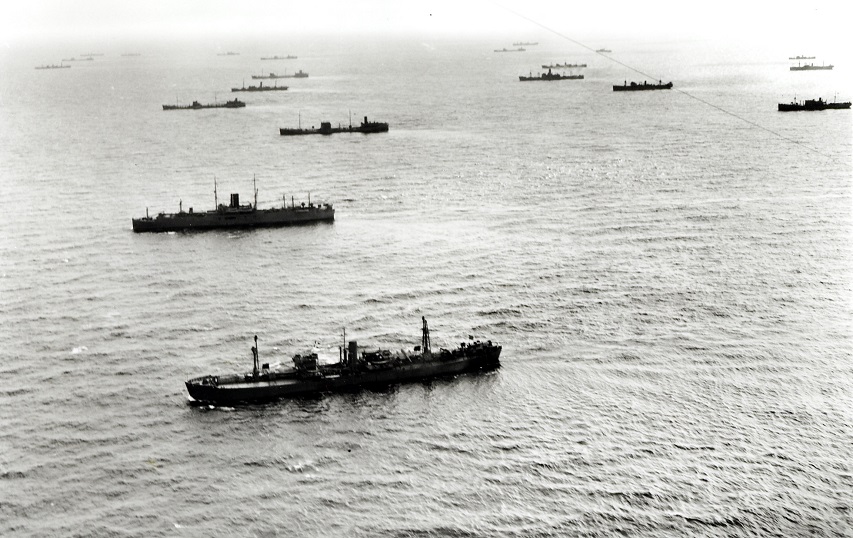
On the first Sunday in May every year, we remember the Battle of the Atlantic, one of the major contributions to allied victory in World War 2, and the Canadian part in that multi-year battle:

The Battle of the Atlantic campaign was fought at sea from 1939 to 1945 with the strategic outcome being sea-control of the North Atlantic Ocean. It was the longest, largest, and arguably the most complex campaign of the Second World War. Over the course of 2,075 days, Allied naval and air forces fought more than 100 convoy battles and perhaps 1,000 single ship actions against the submarines and warships of the German and Italian navies. Enemy vessels targeted mainly the convoys of merchant ships transporting material and troops vital to safeguarding the freedom of the peoples of North America and Europe.

On any given day, up to 125 merchant vessels were sailing in convoy across the North Atlantic. It was during these treacherous, stormy crossings that Canada’s navy matured and won the mantle of a professional service. Our navy escorted more than 25,000 merchant vessels across the Atlantic. These ships carried some 182,000,000 tonnes of cargo to Europe — the equivalent of eleven lines of freight cars, each stretching from Vancouver to Halifax. Without these supplies, the war effort would have collapsed.

Thousands of Canadian men and women – members of the Royal Canadian Navy (RCN), the Merchant Navy (MN) and the Royal Canadian Air Force (RCAF), mostly volunteers from small town Canada – had to face situations so perilous they are difficult for us to imagine. As Canadians, we should be proud of their courage.

Although largely unprepared for war in 1939, Canada’s navy grew at an unparalleled rate eventually providing 47 percent of all convoy escorts. Rear Admiral Leonard Murray, who as Commander-in-Chief Northwest Atlantic from March 1943, would become the only Canadian to hold an Allied theatre command during the war and direct the convoy battles out of his headquarters in Halifax.

During the Second World War the RCN grew from 13 vessels to a strength of nearly 100,000 uniformed men and women and nearly 400 vessels, the fourth largest navy in the world. It had suffered 2,210 fatalities, including six women, and had lost 33 vessels. It had destroyed or shared in the destruction of 33 U-Boats and 42 enemy surface craft. In partnership with Canada’s maritime air forces and merchant navy, it had played a pivotal and successful role in the contest for seaward supremacy.

Merchant ships of Convoy HX188 en route to Britain. Photo: Library and Archives Canada PA-115006

Merchant ships of Convoy HX188 en route to Britain.
Photo: Library and Archives Canada PA-115006

May 3, 2014

Mike Zimmer’s first Vikings mini-camp has even veterans nervous

Filed under: Football — Tags: , , , — Nicholas @ 09:37

As a brand-new head coach, Mike Zimmer is allowed to have a few more early team practices and training sessions than established coaches under the NFL’s bargaining agreement. The first mini-camp was held this week, from Tuesday to Thursday, and even the veteran players were approaching it like the first day on the job:

Matt Cassel has been around the NFL block a few times in his 10 seasons as a quarterback. Not much surprises him anymore, and yet he found himself unable to sleep the night before the Vikings minicamp this week.

“I was excited, jittery,” he said.

Chad Greenway felt those same butterflies. The veteran linebacker compared it to being a rookie or college freshman again.

“It was straight-up nerves,” he said.

Captain Munnerlyn arrived in town as a key offseason acquisition who’s supposed to help fix a shipwrecked defense, and even he felt a weird uneasiness.

“With a new coach, it’s a clean slate for everybody,” he said. “That means every position is open. Except for the running back position.”

Good call. We’ll go out on a limb and suggest that Adrian Peterson probably didn’t need to impress the new coaching staff in order to keep his job. But everyone else convened at Winter Park this week with an overarching sense of anxiety not normally evident at a routine offseason workout.

Imagine your first day with a new boss, one who’s known for his no-nonsense personality and brutal honesty. And salty language.

“You’re on edge and trying to make a good first impression,” Greenway said. “You know the draft is coming in a week. They’ll probably make some decisions based off of this camp.”

If Mike Zimmer’s first on-field introduction made players nervous and uncomfortable, that’s a good thing. This organization had become too lethargic under the previous regime. The atmosphere at Winter Park became stale as losses piled up last season.

Fat’s negative health impact reconsidered

Filed under: Food, Health, Science — Tags: , , , — Nicholas @ 09:19

Hmm. Today seems to be health news day. In the Wall Street Journal, Nina Teicholz looks at the dubious science behind the saturated fat demonization we’ve all seen in so many health stories:

“Saturated fat does not cause heart disease” — or so concluded a big study published in March in the journal Annals of Internal Medicine. How could this be? The very cornerstone of dietary advice for generations has been that the saturated fats in butter, cheese and red meat should be avoided because they clog our arteries. For many diet-conscious Americans, it is simply second nature to opt for chicken over sirloin, canola oil over butter.

The new study’s conclusion shouldn’t surprise anyone familiar with modern nutritional science, however. The fact is, there has never been solid evidence for the idea that these fats cause disease. We only believe this to be the case because nutrition policy has been derailed over the past half-century by a mixture of personal ambition, bad science, politics and bias.

Our distrust of saturated fat can be traced back to the 1950s, to a man named Ancel Benjamin Keys, a scientist at the University of Minnesota. Dr. Keys was formidably persuasive and, through sheer force of will, rose to the top of the nutrition world — even gracing the cover of Time magazine — for relentlessly championing the idea that saturated fats raise cholesterol and, as a result, cause heart attacks.

[…]

Critics have pointed out that Dr. Keys violated several basic scientific norms in his study. For one, he didn’t choose countries randomly but instead selected only those likely to prove his beliefs, including Yugoslavia, Finland and Italy. Excluded were France, land of the famously healthy omelet eater, as well as other countries where people consumed a lot of fat yet didn’t suffer from high rates of heart disease, such as Switzerland, Sweden and West Germany. The study’s star subjects — upon whom much of our current understanding of the Mediterranean diet is based — were peasants from Crete, islanders who tilled their fields well into old age and who appeared to eat very little meat or cheese.

As it turns out, Dr. Keys visited Crete during an unrepresentative period of extreme hardship after World War II. Furthermore, he made the mistake of measuring the islanders’ diet partly during Lent, when they were forgoing meat and cheese. Dr. Keys therefore undercounted their consumption of saturated fat. Also, due to problems with the surveys, he ended up relying on data from just a few dozen men — far from the representative sample of 655 that he had initially selected. These flaws weren’t revealed until much later, in a 2002 paper by scientists investigating the work on Crete — but by then, the misimpression left by his erroneous data had become international dogma.

Take every salt report with a pinch of salt

Filed under: Food, Health, Science — Tags: — Nicholas @ 09:11

Salt is bad for you, as we’ve been told for years and years. It raises your blood pressure and makes you more prone to strokes and other nasty health issues. Except … perhaps not:

The more salt we eat, the more water our body retains. This increases blood pressure, at least until our kidneys flush out the salt and water. Those who see salt as a problem believe that the effect on blood pressure is more lasting, and that if too much salt is ingested over a long period of time it will cause hypertension and perhaps death. A much-cited study carried out by America’s National Institutes of Health in 2001, called the DASH-sodium study, found that participants put on diets that were lower in sodium than the control group ended up with significantly lower blood pressure. This study forms the basis for many of the public-health pronouncements that demonise salt. America’s dietary guidelines, based on “a strong body of evidence”, put salt at the top of the list of things to avoid.

The body of evidence, though, is rather weaker than the American government lets on. The DASH study is one of many that have looked at the effects of salt intake on health. Others have failed to produce similar results. The English study mentioned above finds a correlation, but other factors — such as a simultaneous decline in smoking — seem more likely to account for the improved health outcomes. In 2011 two meta-analyses, which look at the results from many different studies, were published by the Cochrane Collaboration, a non-profit that reviews medical evidence. The first found that reducing salt intake leads to lower blood pressure, but concluded that there is “insufficient evidence” that this will lead to fewer premature deaths or a lower incidence of heart disease. The second concluded, rather simply, that “we do not know if low salt diets improve or worsen health outcomes.” The authors went on to say that “after more than 150 [randomised controlled trials] and 13 population studies without an obvious signal in favour of sodium reduction, another position could be to accept that such a signal may not exist.”

Some researchers go a step further, claiming that reducing salt intake actually increases a person’s risk of dying. The body needs some amount of sodium; if it gets too little the kidney secretes an enzyme called renin that can lead to hypertension. Some studies have found that low sodium levels were associated with increased risk of heart failure. Others suggest that a low sodium-to-potassium ratio may be the key to heart health. Much depends on the individual. The evidence is inconclusive, yet public-health officials have long presented the link between salt and heart disease as if it were fact. Such confidence is not warranted. There are plenty of reasons to avoid a full English breakfast, but salt may not be one of them.

I am not a number!

Filed under: Business, Cancon, Humour — Tags: , — Nicholas @ 07:58

We had a call from Rogers (our ISP/cable provider) last night to discuss our current internet plan (we’ve been bumping up against our data cap lately, even though we increased it from 60GB to 80GB only a few months ago). I pointed out that my son’s internet bill while he was away at university came to about the same as our bill with Rogers, but that his data cap was 250GB. I asked if Rogers could come close to offering me that in Brooklin, since Cogeco is clearly able to turn a profit while offering folks in Peterborough a much higher data cap.

Rogers couldn’t quite match the offer, but for a slightly higher monthly bill we’ll now have a 270GB cap and higher (nominal) upload/download speeds. After this, I got an email that showed I’m not just a number to Rogers … I’m {$/process_data/xmlData/CRCFormatRequest/CustomerInfo/FullName$} instead:

Rogers internet service quote glitch

QotD: The educational machinery that produces the modern twenty-something

Filed under: Bureaucracy, Business, Education, Quotations — Tags: , — Nicholas @ 00:01

When conservatives complain that children are not being taught anything in public schools, they’re half right: They’re not being taught anything useful. They’re taught how to conform. That’s really the point of so many of the stupid rules in modern schooling, people learn to obey the irrational.

This translates into the corporate world in two ways. Those leaving the educational system are outwardly rebellious and undisciplined, even slovenly. Inwardly they’re perfect conformists. They haven’t the slightest notion of principles or integrity, it’s been beaten out of them by the public schools. They are desperate to fit in and conform in a way that is common among teenagers, but used to fade away as people entered their twenties and thirties. As a cranky old executive once observed to me, the young people aren’t so much soft as weak. Passionate about trivia and indifferent toward the fundamentals of life and work.

Richard Anderson, “In Praise of Grumpy Men”, The Gods of the Copybook Headings, 2014-05-01

May 2, 2014

PC “credentials” as a “positional good”

Filed under: Economics, Media, Wine — Tags: , , , , — Nicholas @ 14:56

Kristian Niemietz agrees with much of the pro-free speech coverage in sp!ked, but suggests that the real reason for politically correct attitudes are not quite as presented:

Over the past few years, spiked online magazine has consistently and robustly defended the principle of free speech against the censorship demands of the politically correct, whatever quarter they may come from. It is great, of course, that there is at least one magazine in which the phrase ‘I believe in free speech’ is unlikely to be followed by a ‘but…’, and more likely to be followed by an ‘even for…’. But while I fully support the spiked line, I also think the spiked authors sometimes misinterpret the intentions of the ‘PC brigade’, and would like to offer an alternative interpretation rooted in boring, old-fashioned textbook economics.

Spiked authors believe that PC is driven by a loathing for ordinary people. According to spiked, PC brigadiers view ordinary folks as extremely impressionable, easily excitable, and full of latent resentment. Exposure to the wrong opinions, even isolated words, could immediately awaken the lynch mob. PC, then, is about protecting ‘the vulnerable’ from the nasty tendencies of the majority population.

But if PC was not really about protecting anyone, and really all about expressing one’s own moral superiority, PC credentials would be akin to what economists call a ‘positional good’.

A positional good is a good that people acquire to signalise where they stand in a social hierarchy; it is acquired in order to set oneself apart from others. Positional goods therefore have a peculiar property: the utility their consumers derive from them is inversely related to the number of people who can access them.

Positionality is not a property of the good itself, it is a matter of the consumer’s motivations. I may buy an exquisite variety of wine because I genuinely enjoy the taste, or acquire a degree from a reputable university because I genuinely appreciate what that university has to offer. But my motivation could also be to set myself apart from others, to present myself as more sophisticated or smarter. From merely observing that I consume the product, you could not tell my motivation. But you could tell it by observing how I respond once other people start drinking the same wine, or attending the same university.

If I value those goods for their intrinsic qualities, their increasing popularity will not trouble me at all. After all, the enjoyment derived from wine or learning is not fixed, so your enjoyment does not subtract from my enjoyment. I may even invite others to join me – we can all have more of it.

But if you see me moaning that the winemakers/the university have ‘sold out’, if you see me whinging about those ignoramuses who do not deserve the product because they (unlike me, of course) do not really appreciate it, you can safely conclude that for me, this good is a positional good. (Or was, before everybody else discovered it.)

« Newer PostsOlder Posts »

Powered by WordPress


