Quotulatiousness

October 20, 2011

Timer now started for how quickly Quebec forces Harper to override shipbuilding contract awards

Filed under: Cancon, Economics, Military, Politics — Tags: , , , , , , — Nicholas @ 12:08

The National Post editorial board has lots of nice things to say about the federal government’s attempt to take politics out of the huge shipbuilding contract process:

On Wednesday, the Tory government released its Solomonic decision regarding which shipyards will build $33-billion in new military and non-military vessels over the next two decades. The evaluation of bids for the largest government procurement contract since the Second World War was handled by senior bureaucrats, rather than cabinet ministers. Even the announcement of the winning contractors was made by Francois Guimont, the top civil servant from Public Works and Government Services, rather than his minister or the minister of National Defence, as would have been the case with past contracts of this magnitude.

Of course, that’s not to say there will be no political backlash from the decision. Irving Shipbuilding of Halifax will be given $25-billion to build new joint support ships, Canadian Surface Combatants — a sort of destroyer-frigate hybrid — and offshore patrol vessels capable of sailing off all three of Canada’s coasts — east, west and Arctic. Seaspan Marine of Vancouver will build science vessels for the Coast Guard and for the Fisheries department, plus icebreakers worth a total of $8-billion. That means Davie Shipyard in Levis, Que. was left without a major shipbuilding contract (though Davie is still eligible to bid on a further $2-billion contract to provide smaller government boats, such as Fisheries patrol vessels). It must have been tempting for the Tories to intervene in the contract-award process and toss Quebec a bigger bone. Their recent decision to expand the grasp of the official languages commissioner to several airlines, and their willingness to give new seats to Quebec in the House of Commons (despite the fact Quebec was not underrepresented there), just because Ontario, B.C. and Alberta were getting more, shows the Tories have become very concerned about their appeal to Quebec voters.

You can guarantee that many Quebec politicians will benefit for having yet another stick to beat the federal government with — this would be true in all scenarios except the one where the Quebec shipyard got both contracts. It would be an even better deal for the taxpayers (and perhaps even the Royal Canadian Navy) if the contracts hadn’t been restricted to Canadian shipyards: it wouldn’t fly politically, but it would almost certainly have been better bang for the billions of bucks.

July 22, 2011

“When they opened up the container they said it was like a murder scene, But it smelled phenomenal”

Filed under: Australia, Randomness, Wine — Tags: — Nicholas @ 09:54

Wine disaster caused by a forklift:

More than A$1m ($1.07m; £664,000) of wine has been destroyed in a forklift accident in Australia.

The 2010 Mollydooker Velvet Glove shiraz sells for A$185 a bottle ($199; £122), the AFP news agency said.

Winemaker Sparky Marquis told reporters he was “gut-wrenched” that 462 cases of wine had been smashed while being loaded for export to the United States.

“When they opened up the container they said it was like a murder scene,” he said. “But it smelled phenomenal.”

June 2, 2011

When shipyards produce pork instead of effective ships for the Navy

Filed under: Military, Politics, USA — Tags: , , , , — Nicholas @ 12:07

Shipbuilding for the navy has traditionally been a good source of pork for politicians to dole out as their political fortunes require. The US Navy is having monumental problems with the quality of ships, but the problem isn’t easy to fix:

The U.S. Navy continues to have serious problems with shoddy shipbuilders. The latest incident involved a support ship, the 12,000 ton, 172 meter (534 foot) long radar ship, the Howard O. Lorenzen. The ship recently failed its acceptance tests. The Lorenzen was built to carry a special, billion dollar, radar used to track ICBM tests. This tracking activity also supports verification of missile and nuclear weapons treaty compliance. The Lorenzen replaces a similar ship that is over 30 years old. The acceptance tests found serious problems with the steering, electrical system, damage control, anchor control, and aviation (helicopter) facilities. The yard that built the Lorenzen, VT Halter Marine, builds military and civilian ships, and has had problems with some of the other military ships it has built recently. Like the Lorenzen, the other ships were late, over budget and suffered quality control problems.

[. . .]

While the admirals are correct in blaming the shipyards for many of the problems, the navy shares a lot of the blame as well. It is, after all, the navy that draws up the contracts, and supplies inspectors during construction. However, inspectors are regularly deceived and lied to (about the quality of work and supervision and known defects being fixed). While Congressional interference can be blamed as well, in the end, it’s the navy that has the most to say, and do, about how the ships are built. The problem is, admirals who stand up and take on the contractors and politicians put their careers on the line. The ship builder deploys a large number of lobbyists and has many key politicians as allies.

[. . .]

The problems with nuclear subs and carriers were minor compared to the LPD 17 travails. Still, the sheer extent of the problems, across so many ships, is very disturbing. This may be why a growing number of admirals are willing to take career risks, and try for some fundamental reform, and finally fix the “system” that turns out more problems than warships. Victory is not assured. The shipyards and their suppliers have powerful allies in Congress. All that money translates into votes that gets incumbent politicians reelected. Congress is not inclined to attack this kind of patronage and pork, since nearly all members of Congress depend on it. The admirals can openly complain, but offended legislators can quietly cripple the careers of those critics. The smart money is betting against the good guys here. So far, the smart money is right. But the bad builder mess is so vast, expensive and messy that even many politicians are calling for some fundamental changes.

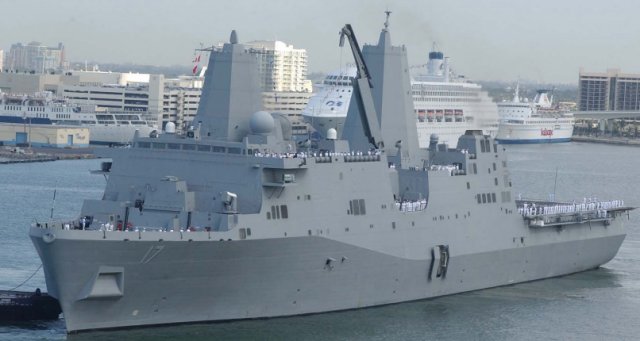
The poster children for defective ships is the San Antonio LPD 17 class of amphibious ships.

May 25, 2011

How to cope with rapidly changing technology, Victorian style

Filed under: Britain, History, Military, Technology, Weapons — Tags: , , , — Nicholas @ 00:04

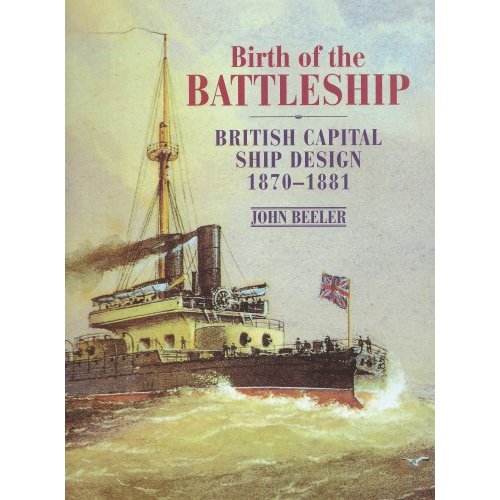
I just finished reading John Beeler’s Birth of the Battleship: British Capital Ship Design 1870-1881, which looks at a time where all the accepted norms of the previous three hundred years were all upset overnight.

In 1815, the Royal Navy was the unchallenged Mistress of the Seas: the most powerful navy in the world. France, the greatest threat to England and her trading empire, had just been destroyed as a military and naval power. The United States had survived the war, but had effectively been neutralized on the sea through much hard fighting. No other rival appeared close to challenging England’s primacy.

Fifty years later, the stasis is being broken technologically. Wind power is giving way to steam. Solid shell cannon are starting to give way to both larger and more complex weapons. Iron is starting to supplant oak as the material of choice for shipbuilding. The renowned duel between USS Monitor and CSS Virginia (formerly the USS Merrimac) sets all the major navies of the world busy considering how to protect their existing fleets and merchant vessels against the new threat of the ironclad.

The English government is suddenly faced with the stark reality that their entire fleet has become or is about to become obsolete. Neither Monitor nor Virginia are ocean-going ships, but the message is clear that no wooden vessel has a prayer of survival against the modern steam-powered ironclad. And even the greatest economic power in the world can’t replace an entire fleet overnight.

The Admiralty couldn’t depend on past experience for guidance, as everything they’d done for hundreds of years was now undecided: what kind of ships do you need to build? How will they be armed? How will they be armoured? How will they be propelled? Bureaucracies are, by nature, not well equipped to face challenges like this. The Royal Navy, from the late 1860’s until the late 1880’s struggled with finding the correct answer, or combination of answers, to meet the needs of the day.

I admit that my interest in British Imperial history fades very quickly after 1815 and only starts to pick up again in the 1870’s, and what little I’d retained of the reading I’d done left me with much disdain for the obvious pattern of muddle and stop-gap planning that clearly defined the Royal Navy’s approach to maintaining the fleet during that time period. I was very wrong in my assumptions, but I was far from alone.

To start with, I assumed that the retention of full sailing rig on steam-powered ships proved the raw incompetence of the Admiralty and their ship designers. What I failed to understand was that there were really two different navies operating under the same flag: the home fleet — close to home port with easy access to coal, drydock, and re-supply — and the colonial fleet which had none of those advantages. Merchant vessels of the 1850-1870 era could depend on refuelling at each end of their scheduled journeys (between fully equipped ports), while the Royal Navy could not. The steam engines of that time period were very inefficient and prone to breakdown: lose your engine in the Indian Ocean or the South Atlantic and you were almost certain to be lost. Sail was essential for Royal Navy ships outside home waters.

Iron as armour was a major step forward, but not without costs: it is far heavier than wood and because you needed it to protect the above-the-waterline essentials of the ship, it made it much harder to ensure that the ship would be stable and sufficiently buoyant in heavy seas (see the story of HMS Captain for an example of what could happen otherwise). It’s always been a rule of thumb in military affairs that you can’t protect everything: by trying to protect everything, you spread your forces (or your armour) too thin and you end up being too weak everywhere. This holds true especially for ship’s armour.

At the same time that you need to add armour to protect the ship, you also need to mount heavier, larger guns. Between placing your order with the shipyard for a new ship, the metallurgical wizards may have (and frequently did) come up with bigger, better guns that could defeat the armour on your not-yet-launched ship. Oh, and you now needed to revise the design of the ship to carry the newer, heavier guns, too.

The ship designers were in a race with the gun designers to see who could defeat the latest design by the other group. It’s no wonder that ships could become obsolete between ordering and coming into service: sometimes, they could become obsolete before launch.

The weapons themselves were undergoing change at a relatively unprecedented rate. As late at the mid-1870’s, a good case could be made for muzzle-loading cannon being mounted on warships: until the gas seal of the breech-loader could be made safe, muzzle-loaders had an advantage of not killing their own crews at distressingly high frequency. Once that technological handicap had been overcome, then the argument came down to the best way to mount the weapons: turrets or barbettes.

To the modern eye, the answer is obvious, but to the men responsible for making the decisions, it was far from obvious that the turret was the better answer. Turrets are heavier than barbettes and required clearer fields of fire (few masted-and-rigged ships could also carry turrets), and also generally required the turret to be mounted higher on the superstructure, which made the ship more top-heavy than an equivalent barbette vessel.

The other weapon controversy at the time was what the primary weapons of the battlefleet would be: gun, torpedo, or ram. The argument for the ram was the weakest, although CSS Virginia had done more damage to the Union fleet with her ram than with her guns. The torpedo was still in the transition stage from something that had to be physically pushed against an enemy ship (like a ram with an explosive charge) and the more modern notion of a self-propelled, unmanned weapon. Perhaps the argument was sealed by the accidental sinking of the HMS Victoria less than a decade later (a less-than-charitable interpretation of the event was fictionalized in Kind Hearts and Coronets in 1949).

In some ways it’s remarkable that the hidebound bureaucrats could keep up in the world’s first real arms race . . . and not only keep up, but stay (slightly) ahead. Each new class of battleship had to be equal to or better than the latest French, German, or Italian ships, yet also stay within fairly strict length, breadth, and displacement limits without going (too far) over budget. Oh, and also be capable of adaptation to whatever new naval gun had been introduced in the time between the ships being laid down and being brought into commission.

To the modern eye, even of someone who followed the general trend of naval technology, the Royal Navy of the early 1880’s looks like a random collection of misfit ships. What isn’t apparent is how much worse the picture could have been. Aside from the bombardment of Alexandria, the Royal Navy of Victoria’s reign exercised a policing rather than a strictly military role: they didn’t need to fight too often because they were clearly stronger than any potential adversaries.

May 14, 2011

The woes of the USS San Antonio

Filed under: Military, USA — Tags: , , , — Nicholas @ 09:54

What do you do when you buy a lemon? What if the lemon isn’t the anomaly, but the standard?

Some warships are cursed. They just don’t work right. When this happens to an automobile, you call it a lemon. But a defective warship is a more serious matter, and the U.S. Navy now fears it has an entire class of ships that is cursed. For the last five years, ever since the USS San Antonio, the first of the LPD 17 class amphibious ships entered service, there has been one problem after another. It began during sea trials, and there is no end in sight. Worse, all four subsequent LPD 17s to enter service exhibit similar problems. Most of the woes were created by poor workmanship and inadequate quality control by the builder. Contributing to these problems there are some poor design decisions and inadequate maintenance practices by the crew. But most of the problems occurred in the shipyard, while the ships were being built. The U.S. Navy sees this as symptomatic of what is wrong with the handful of yards that build most of American warships. This is especially embarrassing when compared to how well foreign shipyards produce similar warships.

Originally, the plan was for twelve LPD 17s to replace 41 smaller, older and worn out amphibious ships. Five LPD 17s have been built, four are under construction and another has been ordered. When the USS San Antonio entered service it was suddenly discovered that the builders had done a very shoddy job. It took the better part of a year to get the ship in shape. The second of the class, the USS New Orleans, was also riddled with defects that required several hundred million dollars to fix. This pattern of shoddy workmanship, incompetent management and outright lies (from the ship builders) continued, and resulted the order being cut to eleven ships. To add insult to injury, the last ship in the class is being named after politician John P. Murtha, who is generally hated by soldiers and marines for the way he politically exploited and defamed the troops who served in Iraq and Afghanistan. This is particularly painful because the LPD 17s carry marines into combat.

Many consider the San Antonio class as a poster child for all that’s wrong with American warship construction efforts. The ships are being delivered late, and hundreds of millions of dollars over budget. The list of problems with the ships is long, embarrassing and seemingly without end. Although the San Antonio did get into service, it was then brought in for more inspections and sea trials, and failed miserably. Repairs are still underway to catch all the shipyard errors.


Detail from original image at Wikimedia.org.

Even more information on the long list of issues with the lead ship of the class here. According to the official website, the ship is “currently under going engine maintenance at Earl Industries shipyard in Portsmouth, VA”.

April 19, 2011

The “super-organism” that is eating the Titanic

Filed under: History, Science — Tags: , , — Nicholas @ 00:17

This is absolutely fascinating:

In 2000, Roy Cullimore, a microbial ecologist and Charles Pellegrino, scientist and author of Ghosts of the Titanic discovered that the Titanic — which sank in the Atlantic Ocean 97 years ago — was being devoured by a monster microbial industrial complex of extremophiles as alien we might expect to find on Jupiter’s ocean-bound Europa. What they discovered is the largest, strangest cooperative microorganism on Earth.

Scientists believe that this strange super-organism is using a common microbial language that could be either chemical or electrical — a phenomenon called “quorum sensing” by which whole communities “sense” each other’s presence and activities aiding and abetting the organization, cooperation, and growth.

The microbes are consuming the wreck’s metal, creating mats of rust bigger than a dozen four-story brownstones that are creeping slowly along the hull harvesting iron from the rivets and burrowing into layers of steel plating. The creatures also leave behind “rusticles,” 30-foot icicle-like deposits of rust dangling from the sides of the ship’s bow. Structurally, rusticles contain channels to allow water to flow through, and they seem to be built up in a ring structure similar to the growth rings of a tree. They are very delicate and can easily disintegrate into fine powder on even the slightest touch.

March 29, 2011

“Steampunk” industrial machinery

Filed under: History, Railways, Randomness, Technology — Tags: , , , — Nicholas @ 08:06

This is a set of Hulett ore unloaders in Cleveland in the late 1980’s and early 1990’s shortly before they were finally retired. You can readily see how the Victorian imagination could lend itself to monstrous walking engines, given the huge mechanical marvels to be seen working along the dockside.

H/T to Robert Netzlof for the link.

March 17, 2011

Steam narrowboat

Filed under: Britain, History, Technology — Tags: , , — Nicholas @ 09:40

H/T to Eric Kirkland, who noted:

Please note the compulsory requisites for ‘proper’ canal cruising:
1) The flat cap
2) The grey beard
3) The mucky overalls
4) Bloomin’ great boots
Prior to the current ‘Elf and Safety regime there would also be
5) Roll ups permanently attached to the lower lip or a blazing briar full of Ogdens’ Flake

January 13, 2011

USN considers decommissioning USS Enterprise

Filed under: Military, USA — Tags: , , , — Nicholas @ 07:57

In the new atmosphere of austerity, the US Navy is having to look at economies, including the possibility of retiring the USS Enterprise:

Meanwhile, the navy is facing budget cuts, and growing costs for new ships. The first of the new Ford-class (CVN-21) aircraft carriers will go for at least $14 billion (this includes R&D for the entire CVN-21 class). The current Nimitz-class carriers cost $4.5 billion each. Both classes also require an air wing (48-50 fighters, plus airborne early-warning planes, electronic warfare aircraft, and anti-submarine helicopters), which costs another $3.5 billion. Thus the thinking is that smaller carriers will be cheaper to build and operate (smaller crews) and carry the same number of warplanes (because most of them will be smaller UAVs).

Meanwhile, the cash crunch is getting serious. So the navy also wants to decommission its oldest aircraft carrier, the USS Enterprise (CVN 65) three years early, in 2012. Originally, the Enterprise was going to stay in service until the USS Ford was ready in 2015. But changes in aircraft weaponry, namely smart bombs and targeting pods, have reduced the need for eleven carriers. The navy believes ten will get the job done. Plus, the Enterprise, as the world’s first nuclear powered carrier, will also be the first to be decommissioned. That will mean removing eight nuclear reactors. Unlike later nuclear carriers, which had only two reactors, the Enterprise was designed so that one reactor replaced one of the steam boilers of a non-nuclear power plant. The navy has decommissioned nuclear powered surface ships before, having retired nine nuclear powered cruisers in the 1990s. This was done because these ships were more expensive to operate and upgrade. So the costs and savings are known.

The Enterprise was an expensive design, and only one was built (instead of a class of six). While a bit longer than the later Nimitz class, it was lighter (92,000 tons displacement, versus 100,000 tons). The Enterprise was commissioned in 1961, almost 40 years after the Langley entered service (1923).

November 1, 2010

Shipping at Age-of-Sail speeds

Filed under: Asia, China, Economics, Germany — Tags: — Nicholas @ 12:40

In an attempt to save fuel, shipping lines have been ordering their ships to go slower. Some of them are now slower than 19th century clipper ships:

For those who haven’t followed the situation closely, many container ships right now have practiced ‘slow steaming’ due to a glut of ships being built worldwide.

Essentially, they are sailing at speeds well below their potential in order to reduce the supply of ships in the market, and thus support shipping rates.

The way this works is that the slower a ship sails, the fewer times it can make a round trip per year. Thus purposely sailing slowly reduces the effective supply of ships. It’s a response to insufficient shipping demand relative to the size of the global container shipping fleet.

Yet these poor shipping companies have taken this practice to such an extreme that many ships are now sailing at speeds slower than old clipper ships from the 1800’s.

H/T to Monty:

Overcapacity in shipping means lower demand for the finished goods overall. This is also a prime reason why export-driven economies (China, Germany) are in for a pretty dramatic adjustment soon. They’ve been counting on an economic recovery in America and Europe to soak up all that excess production, but it looks like things are going to stay weak for at least another six months to a year.

March 26, 2010

Somali pirates

Filed under: Africa, Military — Tags: , , , — Nicholas @ 09:03

Strategy Page has a useful round-up of information on the pirates and their operating methods:

The piracy has been a growing problem off the Somali coast for over a decade. The problem now is that there are thousands of experienced pirates. And these guys have worked out a system that is very lucrative, and not very risky. For most of the past decade, the pirates preyed on foreign fishing boats and the small, often sail powered, cargo boats th[at] move close (within a hundred kilometers) [to] the shore. During that time, the pirates developed contacts with businessmen in the Persian Gulf who could be used to negotiate (for a percentage) the ransoms with insurance companies and shipping firms. [. . .]

Big ships have small crews (12-30 sailors). Attacking at night finds most of the crew asleep. Rarely do these ships have any armed security. Ships can post additional lookouts when in areas believed to have pirates. Once pirates (speedboats full of armed men) are spotted, ships can increase speed (a large ship running at full speed, about 40+ kilometers an hour, can outrun most of the current speed boats the pirates have), and have fire hoses ready to be used to repel boarders. [. . .]

Now that the pirates have demonstrated their ability to operate far (over 700 kilometers) from shore, it’s no longer possible to just use naval patrols and convoy escorts. This works in the Gulf of Aden, but father off the Somali coast, there is simply too much area to patrol. With ocean going mother ships, the pirates can operate anywhere in the region. Between the Gulf of Aden, and the Straits of Malacca to the east (between Singapore and Indonesia), you have a third of the worlds shipping. All are now at risk. Convoys for all these ships would require more warships (over a hundred) than can be obtained.

« Newer Posts

Powered by WordPress


