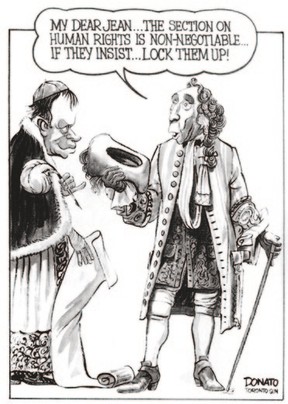
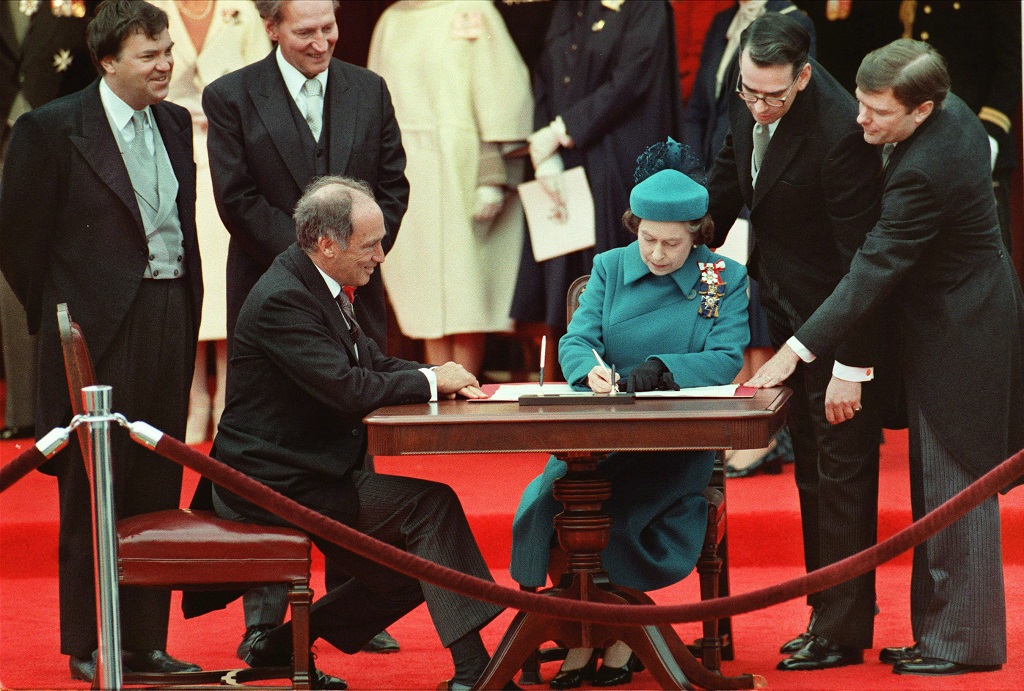
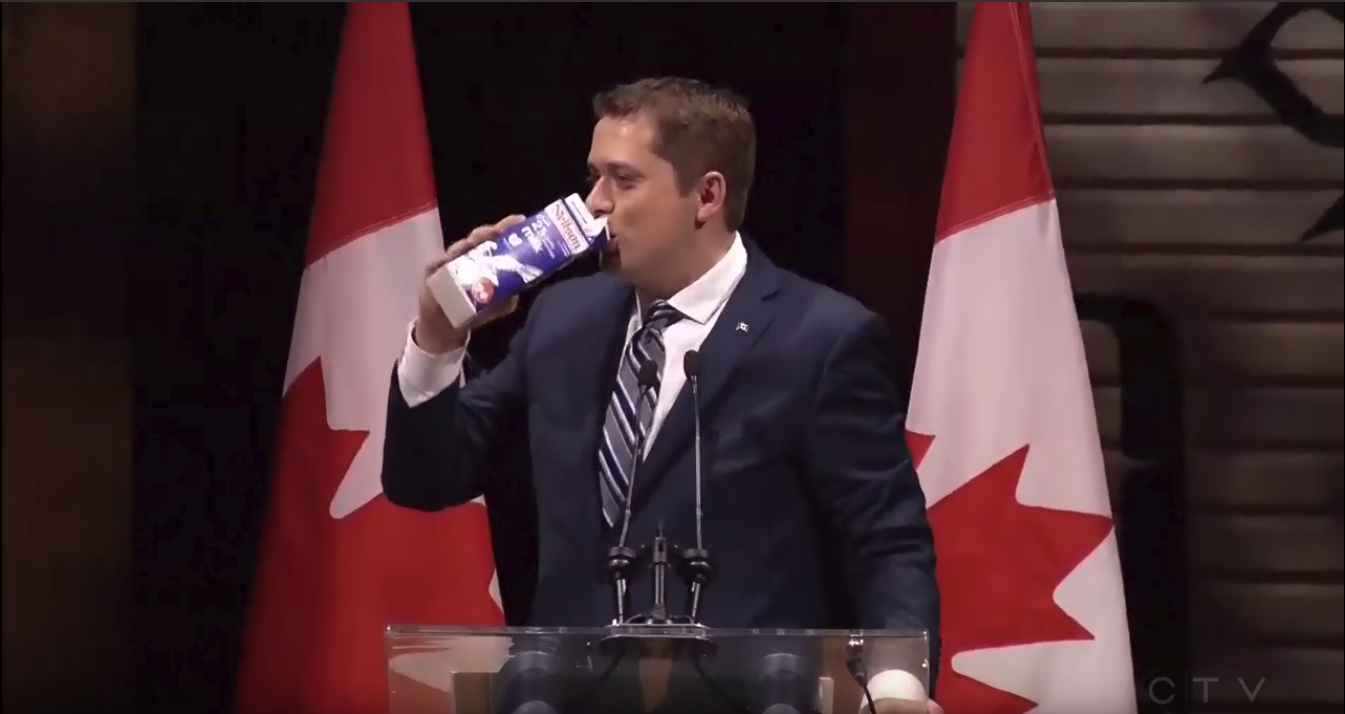
To be honest, I wasn’t a fan of the Charter of Rights and Freedoms when it was forced down our throats in 1982, on the basis that if Pierre Trudeau thought it was a good idea then it must be the opposite. All these years later, although I’m still not a huge fan, I support the provinces who now need to combat Mark Carney’s minority Liberal government’s attempt to use the Supreme Court to limit or eliminate the provinces’ use of the notwithstanding clause:
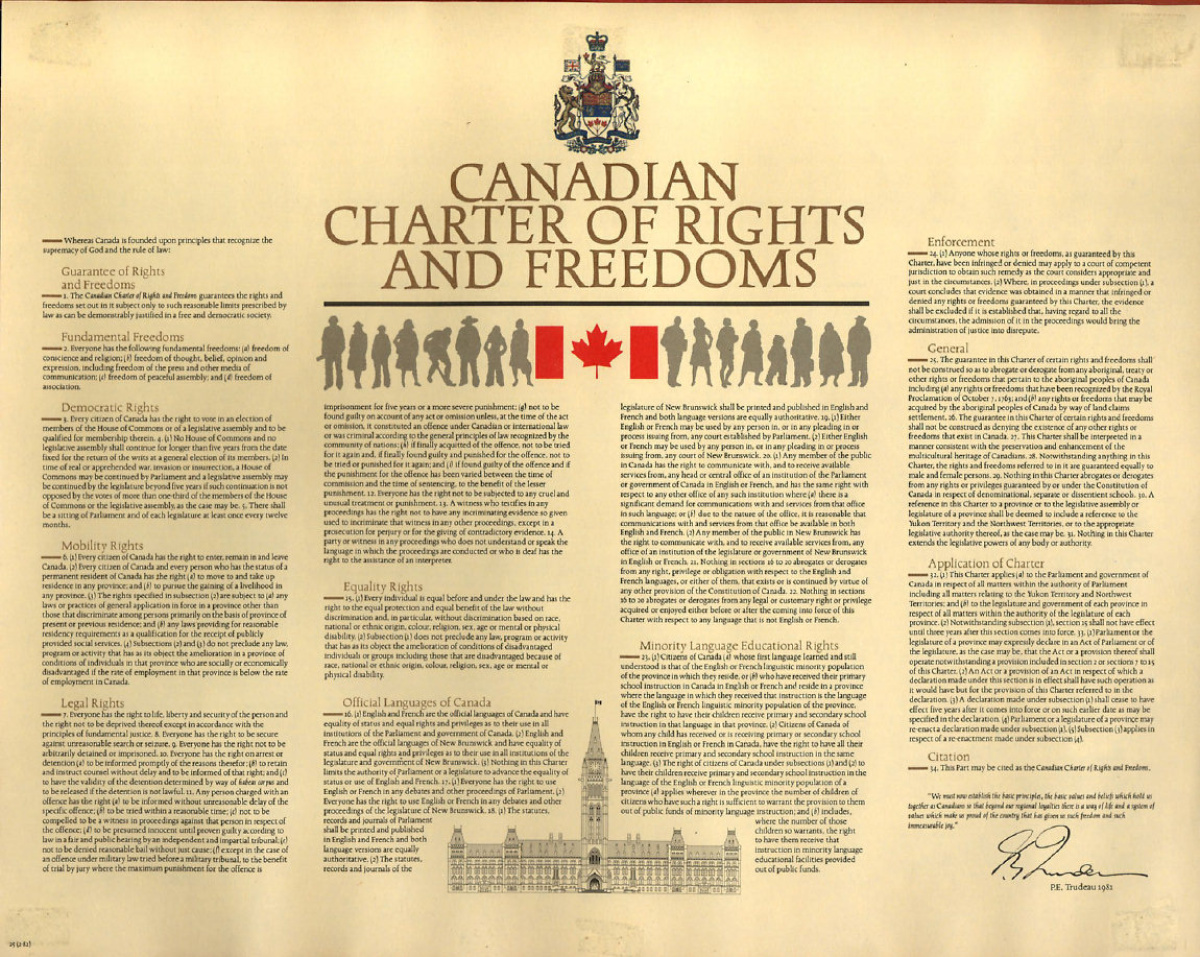
You might be hearing a lot about the notwithstanding clause these days and wondering what is going on. The fact is, the Carney government is trying to change the constitution via a Supreme Court case on Bill 21 – a heinous bill in my opinion – but not an excuse to scrap or weaken the notwithstanding clause.
We’ve been here before with this debate before and I’m still of the same position, leave the clause alone.
It was in 2018 that Ontario Premier Doug Ford was looking to use the notwithstanding clause to shrink the size of Toronto city council. He should never have had to do this, but a lower court ruled that Ford’s actions were unconstitutional.
Which is really weird because the constitution is clear, municipalities are creations of the province. A provincial government can merge municipal governments, they can even abolish them if they wish.
Eventually, a higher court overturned the very politically driven decision against Ford, but for a time, he seemed to need the notwithstanding clause, otherwise known as section 33 of the Charter of Rights and Freedoms.
I’ll never understand why some claim the notwithstanding clause is against the Charter when it is part of the Charter.
On the social media site formerly known as Twitter, Sean Speer notes the Liberals seem to be taken by surprise at the negative reactions to their plans:
I suspect that non-conservatives are a bit surprised by the magnitude of the reaction to the Carney government’s factum on the notwithstanding clause. That’s mainly because I think liberals and progressives don’t quite understand how much the past decade or two of judicial activism has come to animate Canadian conservatism. Even as a somewhat moderate conservatism, I admit to being radicalized on these issues.
The Carter decision on MAID was a key moment in this evolution. Not necessarily because of the issue per se — though a lot of us oppose it. But mainly because it was such a naked example of judicial lawmaking. The clearest case that it’s just power and politics all the way down.
After having ruled that there was no right to physician-assisted death in the Charter, just over twenty years later the Supreme Court unanimously decided there was indeed such a right.
There had been no constitutional amendment in the meantime. Parliament had considered the issue and carefully and consistently voted against it. And yet nine judges decided that the right should exist and so they created one.
If the judiciary isn’t merely protecting constitutionally-prescribed rights but manufacturing them based on the political preferences of judges themselves—if it’s in effect just politics from the bench — then we might as well have the politicians who we’ve duly elected to be making these decisions for us.
Before Carter I would have said that I was broadly supportive of S.33 as part of our constitutional order but today it’s much bigger part of my core political identity as the only check we have on judicial politicking.
The Carney government’s factum then isn’t just objectionable because it threatens to constrain the notwithstanding clause but precisely because it invites the Supreme Court to once again alter the constitution in its own image.
Brian Peckford, the last surviving signatory to the patriation of the Constitution in 1982:
Tragically, it is not surprising that we see this further emasculation of our 1982 Constitution.
It has been ongoing almost since its inception. Witness the 1985 Court Opinion twisting the meaning of the opening words: “the Supremacy of God”.
And the constant distortions ever since, accelerated during the false covid crisis.
This is The Tyranny of The Judiciary —The Destruction Of Parliamentary Democracy!
How important is Section 32 — the notwithstanding clause?
There would be no Constitution Act 1982 — no Charter of Rights and Freedoms without Section 32.
When PM Trudeau Sr. tried to unilaterally Patriate the Constitution and failed miserably because of the Provinces’ opposition before the Courts, he validated the suspicion most Premiers had about the Federal Government and its intentions during that time. The ability of the Provinces to continue democratically to initiate specific exemptions was crucial to solidify the federal nature of this country.
The Supreme Court was right in Sept 1981 in denying the Federal Government such sweeping powers.
None of the 10 First Ministers who signed the Patriation Agreement intended for this Section to be amended in any other way except by the Amending Formula that was achieved for the first time in our history in that Agreement.
The Federal Justice Minister’s action to ask the court is wrong — totally against the intent of those who authored the Patriation Agreement and defies and denigrates one of major accomplishments of 1982, The Amending Formula, a crucial part of the earlier 1981 Agreement, the foundation document, “The Patriation Agreement”.
The Canadian Press carries this:
OTTAWA — The federal government’s request to Canada’s top court for limits on the notwithstanding clause isn’t only about Quebec’s secularism law, Justice Minister Sean Fraser said on Thursday.
In a media statement, Fraser said he hopes the Supreme Court’s eventual decision “will shape how both federal and provincial governments may use the notwithstanding clause for years to come”.
Excuse me, Mr Fraser, this is the job, the solemn responsibility, for Canada’s Elected First Ministers and Their elected Parliaments not the Judiciary. Making law is the job of the elected, interpreting law the role of the Judiciary.
This brazen action of the Federal Government would enlarge the Judiciary power to make law — it deciding the powers of The Governments of this Nation.
Ironic in the extreme it is to ponder that Canada sought for decades to find an amending formula — self criticizing itself for not having a legitimate avenue for Constitutional Change.
Now that it has such an avenue instead of using it, it cowardly asks The Court?
Should not a majority of the Provinces have to agree — that’s what the Supreme Court said in 1981?
Hence, the Supreme Court, consistent with it predecessor views of 1981 should refrain from hearing the matter, and inform the Governments that it is they who have the power through the legitimate constitutional process present in the Constitution to make such significant change ie the powers of the Governments, adhering to Section 38, the Amending Formula.