Quotulatiousness

April 17, 2020

“Diary Of An Unknown Soldier” – Lost in the Great War – Sabaton History 063 [Official]

Filed under: Britain, France, History, Media, Military, WW1 — Tags: , , — Nicholas @ 04:00

Sabaton History
Published 16 Apr 2020

The bells rang on Armistice Day 1920 in the 11th hour, and two minutes of silence followed. One minute for the soldiers that had fought in the Great War and had come back. The second for those who did not. Those unfortunate souls that had been left behind. They had died like so many others, but had been denied a final resting place due to the violence of war. They had vanished, without a trace, without an identity. Those men where the Unknown Soldiers.

Support Sabaton History on Patreon: https://www.patreon.com/sabatonhistory

Listen to “Diary of an Unknown Soldier” on the album The Last Stand:
CD: http://bit.ly/TheLastStandStore
Spotify: http://bit.ly/TheLastStandSpotify
Apple Music: http://bit.ly/TheLastStandItunes
iTunes: http://bit.ly/TheLastStandItunes
Amazon: http://bit.ly/TheLastStandAmz
Google Play: http://bit.ly/TheLastStandGooglePlay

Watch the official lyric video of “Diary Of An Unknown Soldier” here:
https://www.youtube.com/watch?v=Jhkz5…

Check out the trailer for Sabaton’s new album The Great War right here: https://www.youtube.com/watch?v=HCZP1…

Listen to Sabaton on Spotify: http://smarturl.it/SabatonSpotify
Official Sabaton Merchandise Shop: http://bit.ly/SabatonOfficialShop

Hosted by: Indy Neidell
Written by: Markus Linke and Indy Neidell
Directed by: Astrid Deinhard and Wieke Kapteijns
Produced by: Pär Sundström, Astrid Deinhard and Spartacus Olsson
Creative Producer: Joram Appel
Executive Producers: Pär Sundström, Joakim Broden, Tomas Sunmo, Indy Neidell, Astrid Deinhard, and Spartacus Olsson
Post-Production Director: Wieke Kapteijns
Edited by: Iryna Dulka
Sound Editing by: Marek Kaminski
Maps by: Eastory – https://www.youtube.com/c/eastory

Archive by: Reuters/Screenocean https://www.screenocean.com
Music by Sabaton.

Sources:
– National Library of Scotland
– National Library of France
– Imperial War Museum: Q 10378, Q 100373, Q 57227, Q 100624, Q 53727, Q 29155, ART 3991 a, Q 109517, Q 100928, Q 100699, Q 100913, Q 45814, Q 23706, Q 14963, Q 31518, Q 31494, RAF-T 3129, Q 31514, Q 909, Q 87441, Documents.5323, Q 100486, Q 48929A, Q 78614

An OnLion Entertainment GmbH and Raging Beaver Publishing AB co-Production.

© Raging Beaver Publishing AB, 2019 – all rights reserved.

From the comments:

Sabaton History
2 days ago
Something different this time. Since we already have two episodes about the fighting in the Argonne, we thought this time we’d talk about the sacrifice and the legacy of the “Unknown Soldier”. Of those who fought and died but were not fortunate enough to have a last known resting place. We hope you still enjoy the episode!

April 3, 2020

QotD: Canadian senators

Filed under: Cancon, Politics, Quotations — Tags: , , , , — Nicholas @ 01:00

When I heard that Sen. Tommy Banks had died of leukemia at age 81, I thought maybe the newspaper notices ought to be left to the people who knew him better — and in Edmonton that number comes to thousands upon thousands of people. I interviewed Banks a few times as a young political reporter. I think every such person has learned the procrastinator’s trade secret that if you’re doing an issues story, senators are easier to get hold of on a short deadline than elected MPs, and a lot easier than cabinet ministers, especially if you’re an unknown lightweight.

This, at least, used to be the case. I am not sure whether it applies to the Brave New Senate that now exists after the somewhat cynical appointments of Stephen Harper and the experimental renovations of Justin Trudeau. But if you have ever wondered why political beat writers and old codger columnists often have surprisingly positive sentiments about the Senate, which nine-tenths of the people reading these words despise, this is probably one reason: a senator might call you back soon enough to be of some use.

And there’s another, related reason. In phoning a senator to chat about issues because you can’t get a “real” politician to return your inquiry, you would (or, anyway, I would) sometimes find surprisingly strong evidence that the Senate quietly lives up to its original constitutional promise. Spared the effort of endless electioneering and toilsome constituent service, senators do have time for deep study of projects and problems, and some freedom to develop independent opinions. I do not say that most of them use the time and the freedom, but it was, and I’m sure it still is, fairly easy to avoid the duds.

Colby Cosh, “R.I.P. Senator Tommy Banks, a figure from Edmonton’s pantheon”, National Post, 2018-01-26.

January 16, 2020

“… he returned to settle in a 250-year-old farmhouse in Wiltshire which he named ‘Scrutopia'”

Filed under: Britain, History, Media, Politics — Tags: , , , — Nicholas @ 03:00

In Quillette, Barbara Kay remembers Sir Roger Scruton:

Scruton’s breadth of knowledge was astonishing. None of his enemies could dispute that. He wrote whole books with complete authority on religion, architecture, opera, the environment, Islam, philosophy. But running through them all was a guilt-free love for, and fidelity to his — our — cultural inheritance. He loved his own home, England, and he would not repudiate it for its disfiguring historical warts, which seemed to preoccupy almost everyone else. It was Scruton who gave us the word “oikophobia” — hatred of one’s home — which is the hallmark of progressivism. He was out of sync with the hey-hey-ho-ho-western-civ-has-got-to-go zeitgeist. It didn’t help that he was the son of a lowly schoolmaster and had gone to the Royal Grammar School High Wycombe, a selective public high school.

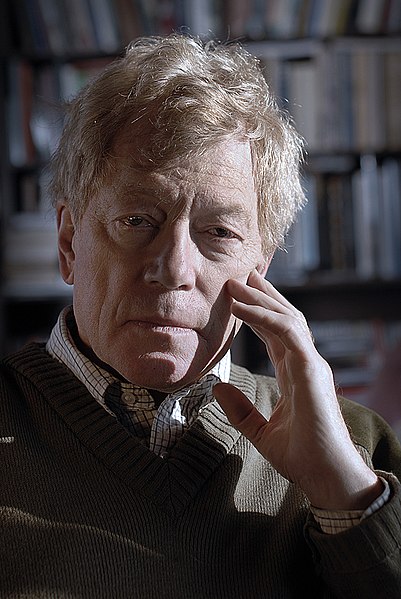
Sir Roger Scruton
Photo by Pete Helme via Wikimedia Commons.

Feeling isolated, like Andrew Sullivan and Christopher Hitchens before him, Scruton drifted “across the pond” to breathe the friendlier air of the last western redoubt where conservative thought finds a welcoming hearth. From 1992 to 1995, he taught a philosophy course at Boston University, and he spent a second stint in America from 2004 to 2009. But the pull of his beloved England proved too great, and he returned to settle in a 250-year-old farmhouse in Wiltshire which he named “Scrutopia.”

[…]

Among those who expressed their gratitude to Scruton in his final year were the governments of Poland and Hungary, who garlanded him with honors for the role he’d played in overthrowing the Communist regimes that had blighted their countries before the fall of the Berlin Wall. This recognition followed his receipt of the Czech Medal of Merit (First Class), presented to him by Vaclav Havel in 1998. At great risk to himself, Scruton had smuggled banned books across the Iron Curtain and helped dissidents organize an underground university, even arranging for degrees to be awarded by the Cambridge theology department. Among his other achievements, he was on the right side of history.

I cherish the memory of a brief conversation I had with Scruton after his Ottawa talk, in which he had expanded on the idea of decency, a concept of great interest and importance for me, especially in retrospect, for Scruton was himself a supremely decent man, although that did not save him from the postmodern jackals. I remember he said decency was easy to regulate in small towns, because you can’t be happy in a small town without a willingness to conform to standards. But these standards aren’t written down. There is no need. Everyone knows what they are. You know you’ve transgressed them when you receive disapproving glances or are cold-shouldered.

Compelled conformity — not legislated, God forbid, but enforced by social pressure — looks stifling to progressives, but in its own way it can be a great comfort, knowing the rules of what is and isn’t decent, and, through them, belonging. We all want to belong, but healthy belonging is sensitive to scale. We’re not made for globalization. We’re made for homes and homelands. If people don’t have homes to keep them rooted, feeling they belong in a good way, they will find fake homes that are tethered to ideas and theories, and then they often belong in a bad way. These are Scrutonesque musings.

Conformity and its effects, good and bad, absorbed Scruton. He once described the entire trajectory of his life as a constant movement toward “that impossible thing: an original path to conformity.” Like so many other of his gnomic utterances, it forces one to stop and think, really think, about what it means. And you know it means something worth thinking about because Roger Scruton never thought or spoke or wrote bullshit. He left that to his critics.

January 14, 2020

Sir Roger Scruton, RIP

Filed under: Britain, History, Politics — Tags: , , , , — Nicholas @ 03:00

Douglas Murray on the life and work of the British philosopher:

Doubtless there will be some talk in the coming days of “controversy”. Some score settling may even go on. So it is worth stressing that on the big questions of his time Roger Scruton was right. During the Cold War he faced an academic and cultural establishment that was either neutral or actively anti-Western on the big question of the day. Roger not only thought right, but acted right. Not many philosophers become men of action. But with the “underground university” that he and others set up, he did just that. During the ’70s and ’80s at considerable risk to himself he would go behind the Iron Curtain and teach philosophy to groups of knowledge-starved students. If Roger and his colleagues had been largely leftist thinkers infiltrating far-right regimes to teach Plato and Aristotle there have been multiple Hollywood movies about them by now. But none of that mattered. Public notice didn’t matter. All that mattered was to do the right thing and to keep the flame of philosophical truth burning in societies where officialdom was busily trying to snuff it out.

Sir Roger Scruton
Photo by Pete Helme via Wikimedia Commons.

Having received numerous awards and accolades abroad, in 2016 he was finally given the recognition he deserved at home with the award of a Knighthood. Yet still there remained a sense that he was under-valued in his own country. It was a sense that you couldn’t help but get when you travelled abroad. I lost count of the number of countries where I might in passing mention the dire state of thought and politics in my country only to hear the response “But you have Roger Scruton”. As though that alone ought to be enough to right the tiller of any society. And in a way they were right of course. But the point did always highlight the strange disconnect between his reputation at home and abroad. Britain has never been very good with philosophers of course, a fact that Roger thought partly correct, but his own country’s treatment of him was often outrageous. As events of the last year reiterated, he might be invited onto a television or radio programme or invited to a print interview only for the interviewer to play the game of “expose the right-wing monster”. The last interview he did on the Today Programme was exactly such a moment. The BBC might have asked him about anything. They might have asked him about Immanuel Kant, or Hegel, or the correct attitude in which to approach questions of our day like the environment. But they didn’t. They wanted cheap gotchas. That is the shame of this country’s media and intellectual culture, not his.

But if there was a reason why such attempts at “gotchas” consistently failed it was because nobody could reveal a person that did not exist. course Roger could on occasion flash his ideological teeth, but he was also one of the kindest, most encouraging, thoughtful, and generous people you could ever have known. From the moment that we first met – as I was just starting out in my career – he was a constant guide as well as friend. And not just in the big things, but in the small things that often matter more when you’re setting out. Over the years I lost count of the number of people who I discovered that he had helped in a similar way without wanting anyone to notice and expecting no reward for himself.

Theodore Dalrymple describes him as “swimming always against the tide”:

He showed great moral courage throughout his career, swimming against the intellectual tide of his time regardless of the deprecation, insult, denunciation, and even hatred directed at him. For a long time, his very name among much of the British intelligentsia was a byword for political atavism or evil, as if he had been a radical advocate of tyranny and pogroms rather than a defender of freedom and civilized values. At the time of his coming to public notice, much of the intelligentsia refused to believe that a highly gifted and knowledgeable man could also be a conservative. Their own rejection of all that was traditional seemed so self-evidently right to them that they thought that the only possible explanation for someone who valued tradition was obtuseness, moral turpitude — or both.

Scruton’s work was so broad-ranging that the term Renaissance Man seems hardly inappropriate. He published books on Kant and Spinoza, on Wagner’s Tristan and Isolde, on the aesthetics of music and architecture, on animal rights, on wine, on hunting, on the importance of culture, on the nature of God, on man’s relations with animals, and on many other subjects. He wrote novels and short stories of distinction, and two operas. The words of Dr. Johnson’s epitaph for Oliver Goldsmith come to mind: he left scarcely any style of writing untouched, and touched nothing that he did not adorn.

This is not to say that many people, or indeed anyone, would agree with all that he wrote, scarcely to be expected in view of his immense output. He accepted disagreement with equanimity, as the natural and laudable condition and consequence of freedom. Unlike many of his detractors, who affixed labels to him and then believed in their veracity, he was fair-minded to those with whom he disagreed and whose ideas he believed had had a disastrous effect on Western society. In the two editions of his book about thinkers of the New Left, for example, he praised them generously for whatever he considered praiseworthy in them. He paid them the honor of reading their work with attention, trying hard to decipher what it meant (by no means easy, given their frequent resort to high-sounding, multisyllabic verbiage), and refuting what was sufficiently intelligible to be refutable.

January 12, 2020

Neil Peart, RIP

Filed under: Cancon, Liberty, Media — Tags: , , , , , — Nicholas @ 03:00

I was very saddened to see the news, but it explains why the band retired:
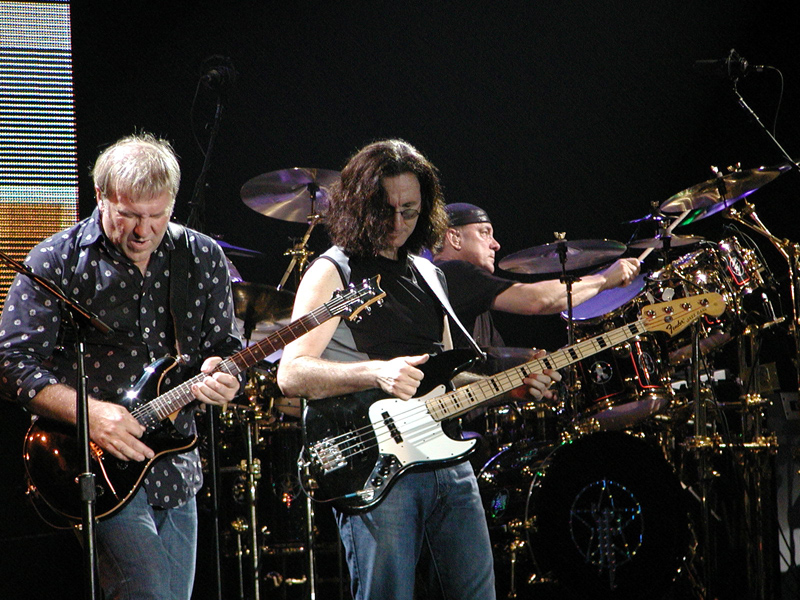
Rush in concert, Milan 2004.
Photo by Enrico Frangi, via Wikimedia Commons

Neil Peart, the virtuoso drummer and lyricist for Rush, died Tuesday, January 7th, in Santa Monica, California, at age 67, according to Elliot Mintz, a family spokesperson. The cause was brain cancer, which Peart had been quietly battling for three-and-a-half years. A representative for the band confirmed the news to Rolling Stone.

Peart was one of rock’s greatest drummers, with a flamboyant yet precise style that paid homage to his hero, the Who’s Keith Moon, while expanding the technical and imaginative possibilities of his instrument. He joined singer-bassist Geddy Lee and guitarist Alex Lifeson in Rush in 1974, and his musicianship and literate, philosophical lyrics — which initially drew on Ayn Rand and science fiction, and later became more personal and emotive — helped make the trio one of the classic-rock era’s essential bands. His drum fills on songs like “Tom Sawyer” were pop hooks in their own right, each one an indelible mini-composition; his lengthy drum solos, carefully constructed and packed with drama, were highlights of every Rush concert.

In a statement released Friday afternoon, Lee and Lifeson called Peart their “friend, soul brother and bandmate over 45 years,” and said he had been “incredibly brave” in his battle with glioblastoma, an aggressive form of brain cancer. “We ask that friends, fans, and media alike understandably respect the family’s need for privacy and peace at this extremely painful and difficult time,” Lee and Lifeson wrote. “Those wishing to express their condolences can choose a cancer research group or charity of their choice and make a donation in Neil Peart’s name. Rest in peace, brother.”

A rigorous autodidact, Peart was also the author of numerous books, beginning with 1996’s The Masked Rider: Cycling in West Africa, which chronicled a 1988 bicycle tour in Cameroon — in that memoir, he recalled an impromptu hand-drum performance that drew an entire village to watch.

Peart never stopped believing in the possibilities of rock (“a gift beyond price,” he called it in Rush’s 1980 track “The Spirit of Radio”) and despised what he saw as over-commercialization of the music industry and dumbed-down artists he saw as “panderers.” “It’s about being your own hero,” he told Rolling Stone in 2015. “I set out to never betray the values that 16-year-old had, to never sell out, to never bow to the man. A compromise is what I can never accept.”

Update: At AIER Peter C. Earle pays tribute to Peart’s life and work.

The announcement of the death of Rush drummer Neil Peart came as a tremendous shock. Having only retired about four years ago, so many fans of Rush (myself included) had convinced ourselves that this was a temporary hiatus, and that in a year or two – eventually, at any rate – there would be an announcement of a new album, a short tour, or some other project. Surely musicians of their virtuosity and passion couldn’t stay away from the studio or stage for long. But now we know we were wrong, and we know why.

It was revealed that Neil had been battling a brain tumor for over three years. Characteristically, he, his family, and friends (among the closest of whom, Rush vocalist/bass player Geddy Lee and guitarist Alex Lifeson) upheld his desire for privacy. I haven’t done the math as to whether Neil’s illness was likely a causative factor in the decision to retire, or whether it seems to have come along not long after the decision to retire.

[…]

In his role as the lyricist of Rush, Peart took on such topics as pernicious nationalism (“Territories”), mass hysteria (“Witch Hunt”), the division between constructive and destructive belief (“Faithless”), the fall of Communism (“Heresy”), conflict and power (“The Trees”), the horrors of totalitarian rule (“2112,” “Red Sector A”) and many allusions to individual liberty (“Tom Sawyer,” “Anthem,” “The Analog Kid,” “Finding My Way,” “Caravan”). He did so via lyrics which artfully and passionately evinced those sentiments; sentiments which early on suggested Objectivist perspectives, but over time developed into what he called “Bleeding Heart” libertarianism:

    I call myself a bleeding heart libertarian. Because I do believe in the principles of Libertarianism as an ideal – because I’m an idealist. Paul Theroux’s definition of a cynic is a disappointed idealist. So as you go through past your twenties, your idealism is going to be disappointed many many times. And so, I’ve brought my view and also – I’ve just realized this – Libertarianism as I understood it was very good and pure and we’re all going to be successful and generous to the less fortunate and it was, to me, not dark or cynical. But then I soon saw, of course, the way that it gets twisted by the flaws of humanity. And that’s when I evolve now into … a bleeding heart Libertarian. That’ll do.

Neil, through his lyrics, managed to do what so many lyricists and writers – even, perhaps especially, so many libertarian intellectuals – fail to do: make liberty neither an alien fixture, a flat slogan, or a utopian slog. It is a way of thinking and living, and one which not only doesn’t ignore, but embraces the flaws and frailty of humanity, tempering realism with hope and optimism.


August 27, 2019

So much for nil nisi bonum

Filed under: Liberty, Media, Politics, USA — Tags: , , , , , — Nicholas @ 03:00

The old Latin phrase De mortuis nihil nisi bonum encourages us to only speak well of the dead. The recent death of libertarian billionaire David Koch has brought forth a torrent of vituperation from many people in media and politics, as James Piereson and Naomi Schafer Riley record:

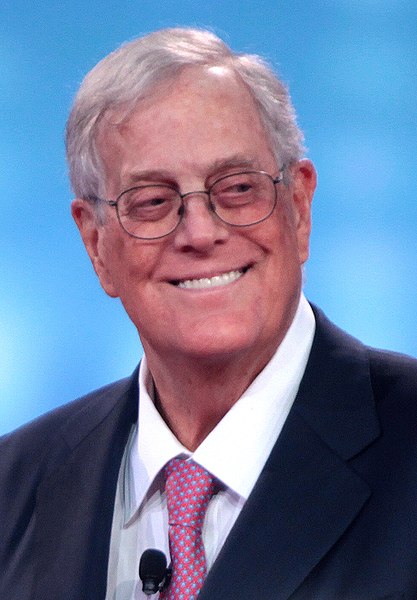
David Koch speaking at the Defending the American Dream Summit in Columbus, Ohio, 21 August 2015.
Photo by Gage Skidmore via Wikimedia Commons.

“Yesterday David Koch of the zillionaire Koch brothers died … of prostate cancer. I guess I’m going to have to reevaluate my low opinion of prostate cancer.” That was Bill Maher last Friday night, joking before his approving audience. Maher went on to say, “The Amazon is burning up. I’m glad he’s dead.” Maher is not known for his kindness toward those with whom he disagrees. In that sense, he reflects the thinking of a growing number of progressives and leftists who openly despise conservatives and libertarians. David Koch, along with his brother Charles, have for decades been targets of harsh rhetoric from the far Left.

What is it about David Koch that inspired such hatred? “We live in the world that he helped build, and it is on fire,” wrote Sarah Jones in New York, denouncing Koch’s “monstrous legacy.” In Esquire, Charles Pierce writes: “Except for his surviving brother, Charles, no man had a worse effect on American politics since the death of John C. Calhoun. Every malignancy currently afflicting us can be traced in one way or another into their wallets, and that’s not even to mention the lasting damage they’ve done to the planet as a whole.”

This is the kind of language that religious cults reserve for heretics and apostates — and in many ways, David and Charles Koch were blasphemers to the liberal orthodoxy. They believed in smaller government and thus criticized the welfare state, excessive taxation, and a great deal of government regulation. At the same time, they criticized America’s wars abroad, along with high levels of defense spending, and were sympathetic to the causes of gay rights and gay marriage. They were consistent in their views across a range of issues, antagonizing liberals but also vexing conservatives. The claim that David Koch was a reflexive right-winger is a caricature of his beliefs.

The Kochs believed in smaller government. Whether it was gay marriage or land wars in Asia, they consistently argued that less government intervention would produce freer and happier people. Their support for drug legalization and abortion rights irked plenty of conservatives, but it drove few over the edge as their support for lower taxes and greater school choice did for liberals. Perhaps nothing irked liberals more, though, than the Kochs’ fight for less environmental regulation. Blaming Charles and David Koch for singlehandedly destroying the rainforests or raising the temperature of the earth seems to be a common theme among critics — an attribution of immense power beyond the capacity of any man or family or company.

June 8, 2019

QotD: Labour’s celebration at Thatcher’s death

Filed under: Britain, History, Politics, Quotations — Tags: , , — Nicholas @ 01:00

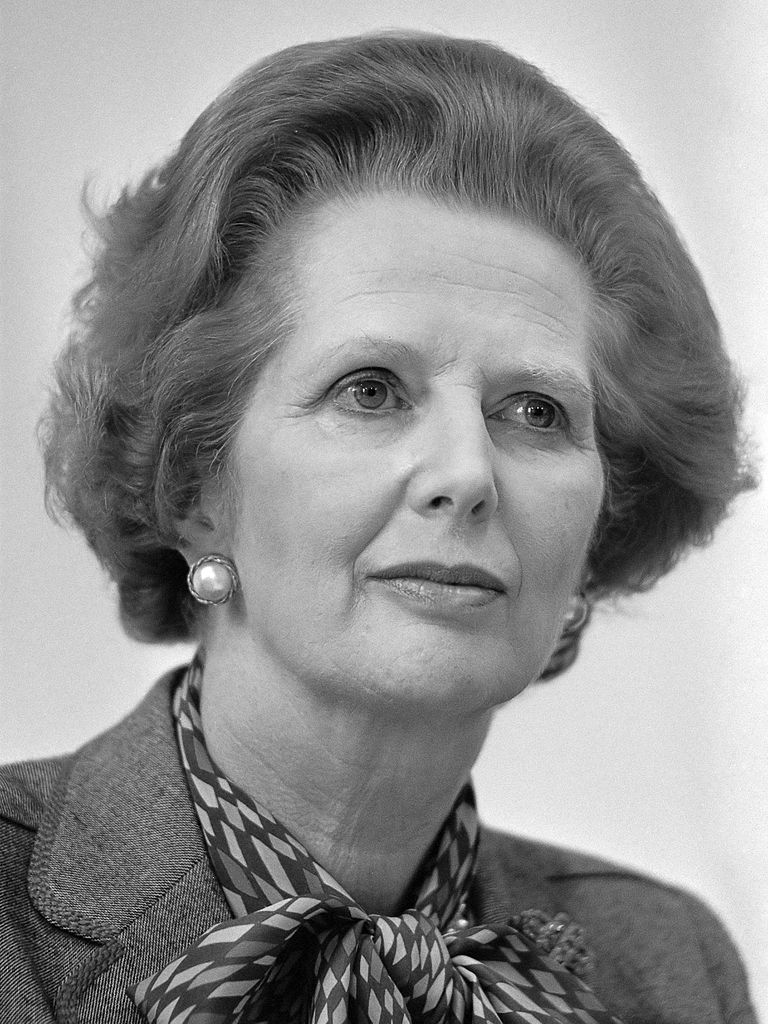
A few hours after Margaret Thatcher’s death on Monday, the snarling deadbeats of the British underclass were gleefully rampaging through the streets of Brixton in South London, scaling the marquee of the local fleapit and hanging a banner announcing “THE BITCH IS DEAD”. Amazingly, they managed to spell all four words correctly. By Friday, “Ding Dong! The Witch Is Dead”, from The Wizard of Oz, was the Number One download at Amazon UK.

Mrs Thatcher would have enjoyed all this. Her former speechwriter John O’Sullivan recalls how, some years after leaving office, she arrived to address a small group at an English seaside resort to be greeted by enraged lefties chanting “Thatcher Thatcher Thatcher! Fascist fascist fascist!” She turned to her aide and cooed, “Oh, doesn’t it make you feel nostalgic?” She was said to be delighted to hear that a concession stand at last year’s Trades Union Congress was doing a brisk business in “Thatcher Death Party Packs” – almost a quarter-century after her departure from office.

Of course, it would have been asking too much of Britain’s torpid left to rouse themselves to do anything more than sing a few songs and smash a few windows. In The Wizard of Oz, the witch is struck down at the height of her powers by Dorothy’s shack descending from Kansas to relieve the Munchkins of their torments. By comparison, Britain’s Moochkins were unable to bring the house down: Mrs Thatcher died in her bed at the Ritz at a grand old age. Useless as they are, British socialists were at one point capable of writing their own anti-Thatcher singalongs rather than lazily appropriating Judy Garland blockbusters from MGM’s back catalogue. I recall in the late Eighties being at the National Theatre in London and watching the crowd go wild over Adrian Mitchell’s showstopper, “F**k-Off Friday”, a song about union workers getting their redundancy notices at the end of the week, culminating with the lines:

    I can’t wait for That great day when F**k-Off Friday
    Comes to Number Ten.

You should have heard the cheers.

Mark Steyn, “The Uncowardly Lioness”, SteynOnline.com, 2019-05-05.

February 17, 2019

Lyndon LaRouche, RIP

Filed under: Politics, USA — Tags: , , , , , , — Nicholas @ 03:00

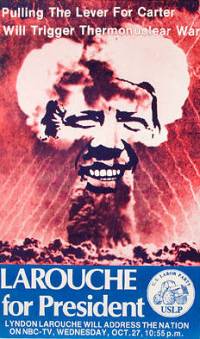
When I was first active in the Ontario and federal Libertarian parties in the mid-1970s, I’d sometimes get accused of being a follower of Lyndon LaRouche. Not by fellow Libertarians, I hasten to add, but by random members of the public. At that time I’d never heard of LaRouche, and I have no idea why some Canadians thought he had anything at all to do with libertarian philosophy or politics. He was, as Jesse Walker points out, pretty much the definition of an ANTI-libertarian in US politics:

Ordinarily I’m fond of cranks, maybe excessively so. You say extremist; I say charmingly kooky freethinker. You say cult; I say fascinating young religion. You say lunatic conspiracy theory; I say spooky new addition to America’s homegrown mythology. But even my tolerance has its limits, and one of those limits is Lyndon LaRouche.

LaRouche, who died Tuesday at age 96, was a despicable old fraud, and the warmest feeling I’ve ever been able to conjure for his devotees is pity. Fiercely authoritarian in both his political ideals and his personal life, LaRouche fed his followers a stream of lies, psychological abuse, and paranoid fantasies. Those fantasies featured a big cast of villains, from the queen of England to Aristotle to “Dope, Inc.” to gay people, not to mention whichever follower or ex-follower was the designated scapegoat of the moment. One such scapegoat, Ken Kronberg, committed suicide after the denunciations turned his way.

LaRouche didn’t limit his abuse to the people who chose to cast their lot with him. He aimed it outwards too — most infamously during “Operation Mop-Up,” when his followers in several cities used fists, bats, chains, and nunchuks to attack members of the Communist Party and other leftist groups. When those assaults began in 1973, LaRouche considered himself a part of the radical left; Operation Mop-Up, he hoped, would establish his “hegemony” over the competition. But a few years later he was aligning himself with Klansmen and the far-right Liberty Lobby. He had a habit of flipping positions like that.

He also had a habit of running for president — first as the 1976 nominee of the U.S. Labor Party, then as a recurring contender for the Democratic nomination. His biggest successes came in the North Dakota primary of 1992 and the Michigan primary of 2000, when he managed to outpoll everyone else on the ballot. This sounds less impressive when you learn that (a) in both cases, for quirky reasons, none of the major candidates were actually on the ballot, and (b) LaRouche still managed to lose both primaries. In North Dakota he was beaten handily by some write-in votes for Ross Perot, and in Michigan he was outvoted by “uncommitted.”

Most people’s direct encounters with LaRouchism came in one of two ways. The first was to stumble on one of the candidate’s prime-time infomercials, in which he’d inform viewers that Walter Mondale is a Soviet agent, that the government should “quarantine” people with AIDS, or whatever other idea had caught his fancy at the moment. (LaRouche pushed his AIDS idea with a front group called — I swear I am not making this up — PANIC, for the Prevent AIDS Now Initiative Committee.) The second was to run into his followers as they handed out literature in public places. My most memorable encounter with LaRouchie leafletters was in Ann Arbor in the early ’90s, where they had made a big sign that said “EATING ARAB BABIES ISN’T KOSHER.” (I’ve heard people call LaRouche a “coded” anti-Semite. In that case you didn’t have to work hard to crack the code.)

So, LaRouche’s ideas were all over the authoritarian map, but he must have been a really dynamic, engaging speaker to fascinate so many different people for so many years, right? One of those orators that just grabs the attention and plays on it like a fine musical instrument?

There are LaRouche TV specials that consist of nothing but LaRouche himself talking, but I didn’t want to inflict one of those on you. You know why? Because when he’s not saying something utterly crazy, the man is boring. Lyndon LaRouche was a child of the American Weird, but he was too dull to excel even at raving like a lunatic.

September 4, 2018

“So now we know what ‘the resistance’ really is. It’s the establishment”

Filed under: Government, Media, Politics, USA — Tags: , , , — Nicholas @ 03:00

Brendan O’Neill on the funeral of “maverick” Republican senator John McCain:

So now we know what ‘the resistance’ really is. It’s the establishment. It’s the old political order. It’s that late 20th-century political set, those out-of-touch managerial elites, who still cannot believe the electorate rejected them. That is the take-home message of the bizarre political spectacle that was the burial of John McCain, where this neocon in life has been transformed into a resistance leader in death: that while the anti-Trump movement might doll itself up as rebellious, and even borrow its name from those who resisted fascism in Europe in the mid 20th-century, in truth it is primarily about restoring the apparently cool, expert-driven rule of the old elites over what is viewed as the chaos of the populist Trump / Brexit era.

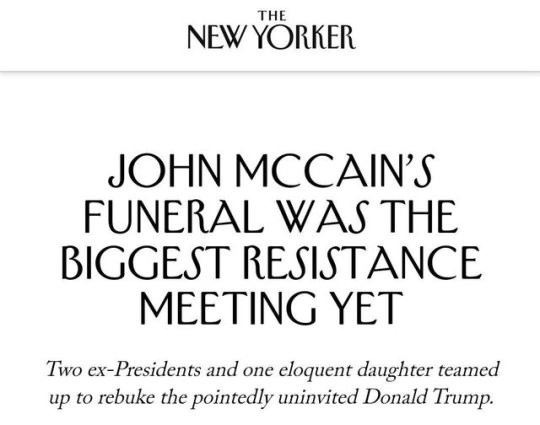
The response to McCain’s death has bordered on the surreal. The strangest aspect has been the self-conscious rebranding of McCain as a searing rebel. In death, this key establishment figure in the Republican Party, this military officer, senator, presidential candidate and enthusiastic backer of the exercise of US military power overseas, has been reimagined as a plucky battler for all that is good against a wicked, overbearing political machine. ‘John McCain’s funeral was the biggest resistance meeting yet’, said a headline in the New Yorker, alongside a photo of George W Bush, Bill Clinton, Hillary Clinton, Al Gore, and soldiers from the US Army, the most powerful military machine on Earth. This is ‘the resistance’ now: the former holders of extraordinary power, the invaders of foreign nations, the Washington establishment.

The New Yorker piece, like so much of the McCain commentary, praises to the heavens the anti-Trump theme of McCain’s funeral. McCain famously said Trump couldn’t attend his funeral. And that in itself was enough to win him the posthumous love of a liberal commentariat that now views everything through the binary moral framework of pro-Trump (evil, ill-informed, occasionally fascistic) and anti-Trump (decent, moral, on a par with the warriors against Nazism). Even better, though, was the fact that orators at the funeral, including McCain’s daughter Meghan and both Bush and Obama, used the church service to slam Trumpism, without explicitly mentioning it, and in the process to big-up what came before Trumpism, which of course was their rule, their politics, their establishment. The Washington political and media set might seem bitterly bipartisan, said the New Yorker writer, but it is also ‘more united’ in one important sense – ‘in its hatred of Donald Trump’.

[…]

The religious allusions, the talk of vengeance against Trump, the misremembering of McCain’s life so that it becomes a moral exemplar against the alleged crimes of Trumpism, exposes the infantile moralism of the so-called resistance. Albert Burneko, assessing some of the madder McCain commentary, says there is now a ‘condition’ that he calls ‘Resistance Brain’, where people display an ‘urge to grab and cling on to anything that seems, even a little bit, like it might be the thing that Finally Defeats Donald Trump’. Even if the thing they’re grabbing on to is actually a bad thing. Like a seemingly endless FBI investigation into the elected presidency. Or George W Bush, whose moral rehabilitation on the back of Anti-Trumpism has been extraordinary. Or neoconservatism: this was the scourge of liberal activists a decade ago, yet now its architects are praised because they subscribe to the religion of Anti-Trumpism. Being against Trump washes away all sins.

February 9, 2018

John Perry Barlow, RIP

Filed under: Liberty, Media, Technology — Tags: , , , , , — Nicholas @ 05:00

Gareth Corfield on the death of John Perry Barlow, author of the Declaration of the Independence of Cyberspace:

John Perry Barlow, a co-founder of the US Electronic Frontier Foundation, and also a lyricist for the Grateful Dead, has died aged 70.

Barlow passed away “quietly in his sleep” yesterday, according to the EFF, which he helped set up in 1990.

“It is no exaggeration to say that major parts of the Internet we all know and love today exist and thrive because of Barlow’s vision and leadership. He always saw the Internet as a fundamental place of freedom, where voices long silenced can find an audience and people can connect with others regardless of physical distance,” said the foundation’s executive director, Cindy Cohn.

The BBC reported that Barlow had been ill for several years but “few details were given about his medical problems”.

In the history of the Internet, Barlow will be forever remembered for his 1996 Declaration of the Independence of Cyberspace.

“I declare the global social space we are building to be naturally independent of the tyrannies you seek to impose on us. You have no moral right to rule us nor do you possess any methods of enforcement we have true reason to fear,” wrote Barlow, a bold vision of the future that, sadly, did not come to pass.

The EFF defended Barlow against the inevitable criticisms of the Declaration, with Cohn acknowledging that he was “sometimes held up as a straw man for a kind of naive techno-utopianism” but insisting that he understood “new technology could create and empower evil as much as it could create and empower good”.

I wasn’t a fan of the Grateful Dead, but I read his Declaration soon after it was released and found it inspiring (if not particularly realistic, even then). Few people can have a significant role in a single endeavour, but Barlow was undeniably prominent in the music scene and the early internet community. We’re all poorer for his passing.

February 2, 2018

Castro’s son “Fidelito” is dead

Filed under: Americas — Tags: , , , — Nicholas @ 05:00

BBC News just reported:

The 68-year-old son of Cuban revolutionary Fidel Castro, Fidel Ángel Castro Díaz-Balart, has died in Havana after taking his own life, according to state media.

He was found on Thursday morning and is said to have suffered from depression.

Popularly known as “Fidelito”, he was first born son of the former president, who died in November 2016.

Castro Díaz-Balart worked as a nuclear physicist and an adviser to the Council of the State of Cuba.

January 26, 2018

Ursula K. Le Guin, RIP

Filed under: Books — Tags: , , — Nicholas @ 05:00

I’m sorry to say that I’ve never read any of her work, but this obituary by Jude Karabus (especially this section) makes me think I missed out:

A lot of her work – like that of all the literary greats – had to do with thought experiments: What if the relationship between power and gender were different; what if you didn’t – for good or for bad – have to think about whether you wanted to have sex with someone when you interacted with them? What of the profit motive and humankind’s uneasy relationship with war, the environment and its own nature. Her work was, of course, unflinchingly feminist, humanist also.

There is a yellowed, slightly dog-eared copy of 1974’s The Dispossessed, complete with art nouveau-style illustration, on the shelf of the William Morris Gallery in London. It has a placard beneath it that reads something like: “This is the type of thing Morris was banging on about”. (Morris was a 19th-century English textile designer and social activist who brought art to the ‘lower’ classes by mass-producing tiles, wallpaper and other fine furnishings.)

It seems an odd choice by the curator; it’s the only book in the display that wasn’t literally written by a Morris compatriot or a known influence on him, and she was born years after he died. They were certainly of similar political bent, wanted to make art affordable etc, but only if you squint a little. The book was also written before I was born. There’s probably a connection I didn’t understand; perhaps the cover art was “a Morris” (he also painted and wrote poetry) – the terse note propped up against it doesn’t make it clear. But I like to think the curator was grabbed by the throat by her prose, like I was, and was simply looking for any excuse to say: “Here. Sit down. Read this! No really. Read this.”

A quick overview of the life and work of William Morris here.

October 29, 2017

QotD: Mencken’s revised view of Coolidge

Filed under: Economics, Politics, Quotations, USA — Tags: , , , , — Nicholas @ 01:00

In what manner he would have performed himself if the holy angels had shoved the Depression forward a couple of years — this we can only guess, and one man’s hazard is as good as another’s. My own is that he would have responded to bad times precisely as he responded to good ones — that is, by pulling down the blinds, stretching his legs upon his desk, and snoozing away the lazy afternoons…. He slept more than any other President, whether by day or by night. Nero fiddled, but Coolidge only snored…. Counting out Harding as a cipher only, Dr. Coolidge was preceded by one World Saver and followed by two more. What enlightened American, having to choose between any of them and another Coolidge, would hesitate for an instant? There were no thrills while he reigned, but neither were there any headaches. He had no ideas, and he was not a nuisance.

H.L. Mencken, The American Mercury, 1933-04.

September 14, 2017

The art of leadership and other secrets

Filed under: Humour, Military — Tags: , , , , — Nicholas @ 03:00

In Taki’s Magazine, Steve Sailer remembers the late Jerry Pournelle, including a helpful leadership tip he once shared:

I didn’t meet Jerry until 1999, but I’d known his son Alex in high school. The Pournelle family asked me to go with them to Kansas City in August 1976 to the science-fiction convention at which Heinlein, the central American sci-fi writer of the 20th century, received his lifetime achievement award. (But I had to be at college that week.)

But Jerry, one of the great Southern California Cold Warriors, had a remarkable number of careers, starting as a teenage artillery officer during the Korean War, which deafened him in one ear. (At the lunch table, he’d choose his seat carefully to position his one remaining good ear next to his guest.)

He once recalled a question from the Army Officer Candidate School test:

    Q. You are in charge of a detail of 11 men and a sergeant. There is a 25-foot flagpole lying on the sandy, brush-covered ground. You are to erect the pole. What is your first order?

The right answer is:

    A. “Sergeant, erect that flagpole.”?

In other words, if the sergeant knows how to do it, then there’s no need for you to risk your dignity as an officer and a gentleman by issuing some potentially ludicrous order about how to erect the flagpole. And if the sergeant doesn’t know either, well, he’ll probably order a corporal to do it, and so forth down the chain of command. But by the time the problem comes back up to you, it will be well established that nobody else has any more idea than you do.

He also quotes Dave Barry’s breakdown of Pournelle’s monthly columns for Byte magazine:

In 1977 Jerry paid $12,000 to have a state-of-the-art personal computer assembled for him, supposedly to boost his productivity. By 1980 that led to his long-running “Chaos Manor” column in Byte magazine in which he would document his troubles on the bleeding edge of PC technology. As fellow word-processing aficionado Dave Barry explained jealously, Jerry got paid to mess around with his computers when he should be writing:

    Every month, his column has basically the same plot, which is:

    1. Jerry tries to make some seemingly simple change to one of his computers, such as connect it to a new printer.

    2. Everything goes hideously wrong…. Sometimes there are massive power outages all over the West Coast. Poor Jerry spends days trying to get everything straightened out.

    3. Finally…Jerry gets his computer working again approximately the way it used to, and he writes several thousand words about it for ‘Byte.’

    I swear it’s virtually the same plot, month after month, and yet it’s a popular column in a magazine that appeals primarily to knowledgeable computer people.

I like to imagine Steve Jobs circulating “Chaos Manor” columns to his executives with scribbled annotations suggesting that some people would pay good money to not have to go through all this.

September 9, 2017

Dr. Jerry Pournelle, 1933-2017

Filed under: Books — Tags: , — Nicholas @ 08:14

I saw this brief notice at Instapundit last night and shared it with my Facebook friends:

ALEX POURNELLE TEXTS:

    Hi
    I’m afraid that Jerry passed away
    We had a great time at DragonCon
    He did not suffer. Please feel free to post this news.

Rest in peace, Jerry. You will be missed.

I met Dr. Pournelle at SF conventions a couple of times, but you can’t say you knew someone on the basis of fleeting contacts like that. We did have a few minutes of discussion at one convention on the topic of why Harrison Ford’s portrayal of Indiana Jones was/was not a faithful characterization of how most people viewed archaeologists … which was highly entertaining. Although I enjoyed his SF writing, I actually thought of him more as a computer journalist, as I was a huge fan of his Chaos Manor columns in Byte magazine. As with George Orwell’s “As I please” columns, Pournelle didn’t let himself be limited to just bits and bytes and the range of topics was sometimes far outside the normal range for the magazine.

Here is his Wikipedia page.

« Newer PostsOlder Posts »

Powered by WordPress