
iChaseGaming
Published on 10 Sep 2018A Know Your Ship episode talking about C & D class destroyers, in particular HMS Crescent and Diana and their later service as part of the Royal Canadian Navy HMCS Fraser and Margaree. Enjoy!
October 5, 2018
Know Your Ship #50 – C and D Class Destroyers – HMS Crescent & Diana, HMCS Fraser & Margaree
Comments Off on Know Your Ship #50 – C and D Class Destroyers – HMS Crescent & Diana, HMCS Fraser & Margaree
September 26, 2018
The last British carriers before the Queen Elizabeth class
This is a long, long thread from @EngageStrategy, so I’m putting it below the fold for those who aren’t interested and don’t want to scroll down for hours…
It covers the near-death experience of British carriers in the 1960s (the cancellation of the last fleet carriers), the odd evolution of the “through deck command cruisers” (Invincible, Illustrious, and Ark Royal), the development of the Harrier, and the very near-run thing that was the carriers’ share of combat duty during the Falklands War.
Comments Off on The last British carriers before the Queen Elizabeth class
September 25, 2018
Is the UK military situation really as dire as this new book portrays?
In the Daily Mail, there’s an excerpt from a new book on the British military by Michael Ashcroft and Isabel Oakeshott, White Flag? An Examination Of The UK’s Defence Capability:
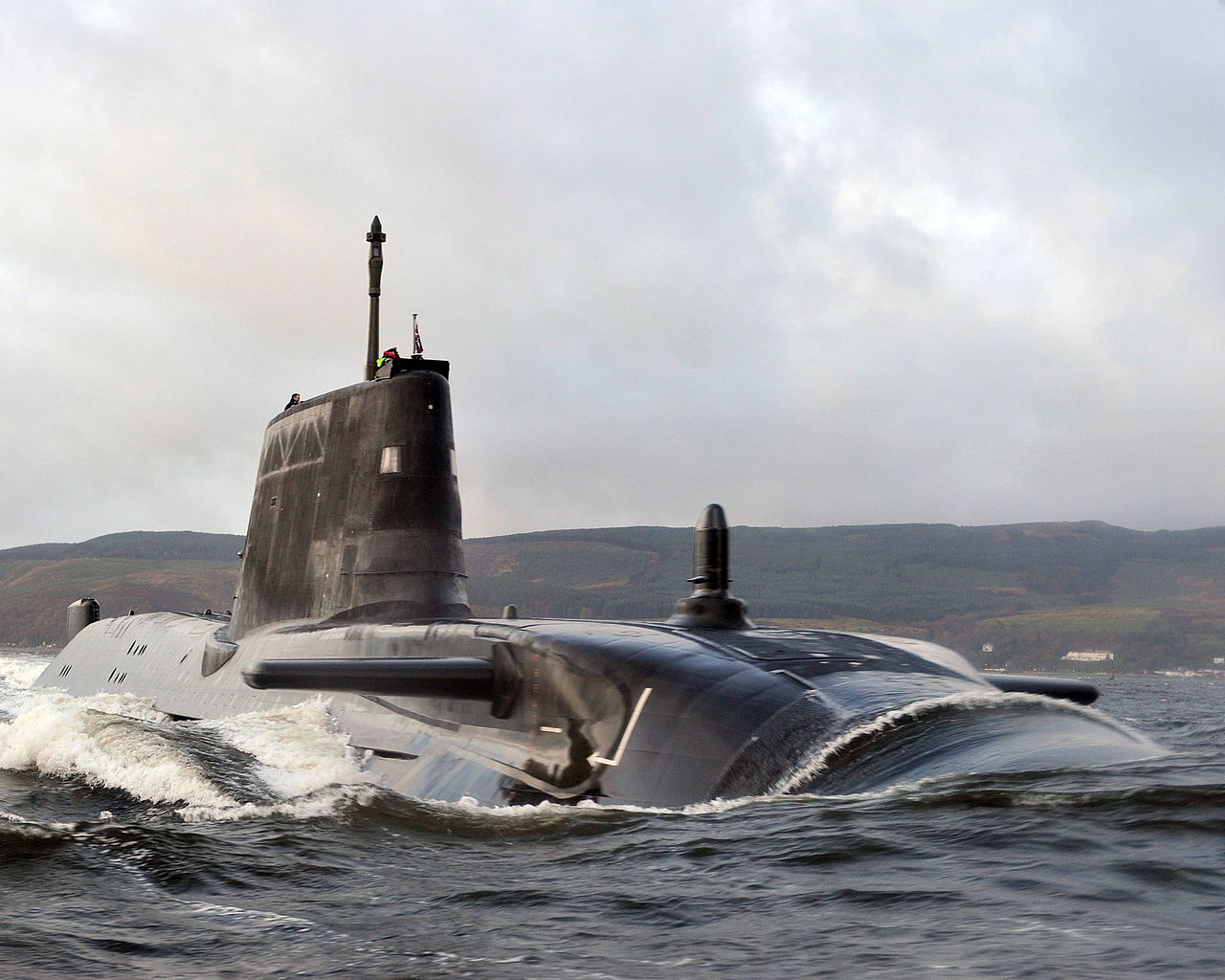
HMS Astute (S119), lead ship of her class, sails up the Clyde estuary into her home port of Faslane, Scotland.
MOD photo, via Wikimedia Commons.
Bluntly, at a time of international crisis, when the prime minister wanted to take a stand against the illegal use of chemical weapons, our Armed Forces did not have what was needed for a full-throttle response.
Naturally, ministers preferred voters to imagine that submarines were on their way to the action. The truth about our limited capability might have fuelled creeping fears that the UK has run up the white flag.
This was one of the many shocks we had during our wide-ranging investigation into the state of this country’s defence capabilities. Thanks to remorseless cuts imposed by successive governments, the Army, Navy and RAF all struggle to meet day-to-day commitments to protect this country and play their part in collective security through Nato and other defence alliances — let alone prepare for serious potential new threats.
The particular problem this time was probably down to maintenance issues.
Hulls need cleaning to stop them rusting, engines need overhauling and nuclear reactors need to be flushed.
When you don’t have very many ships, taking one or two out of circulation leaves quite a gap — in this case, one that could not be filled.
And the fact is that we don’t have enough ships any more. Or aircraft. Or tanks. Or military personnel. Not since Defence became a soft target for governments looking to cut spending.
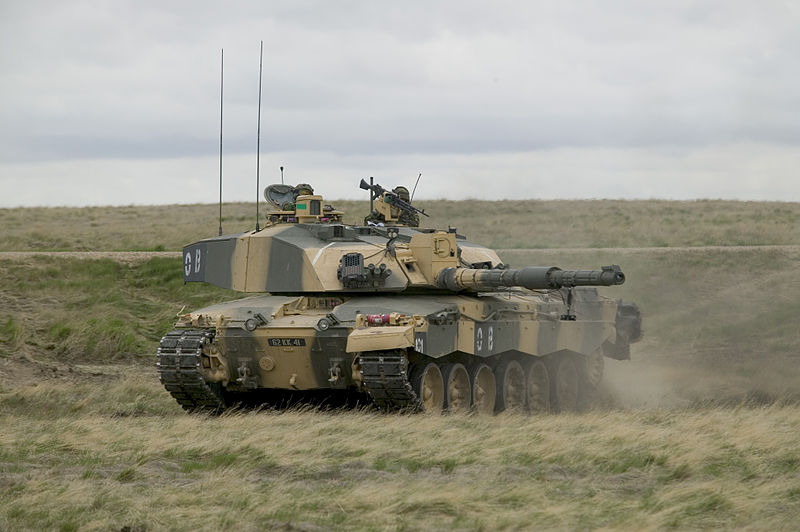
A British army Challenger 2 Main Battle Tank, of 1 Royal Regiment of Fusiliers (1RRF), is shown returning to base after completing a firing mission as part of Exercise MedMan.
1RRF Battle group were based at the British Army Training Unit Suffield (BATUS) in Canada.
MOD photo by Mike Weston via Wikimedia Commons.
What this means on the front line is illustrated by the small but fierce battalion of 800 UK troops stationed at a remote base in the Baltic state of Estonia as a crucial part of Nato’s defences against a Russian attack. They are on their guard at all times, scouring the bleak horizon for anything suspicious.
Inside a vast metal hangar is a fleet of Challenger tanks. The Army wanted to send 18 but the MoD cut this back to ten, of which only eight can be operational because two will always be in for repairs.
Asked if this would be enough if the Russians came over the border, the men we met there shrugged and laughed. They know full well that the Russians could throw as many as 22 tank battalions — that’s more than 650 tanks — at them.
A war-gaming exercise concluded that Nato forces would be ‘woefully inadequate’ in the event of an invasion: the Russians would be in Tallinn, the Estonian capital, within 60 hours.
No wonder the men themselves refer to their assignment as ‘Operation Tethered Goat’. Hopelessly outnumbered, they would be brushed aside, sacrificed to the predatory Putin, like the goat swallowed by the T. rex in Jurassic Park.
September 15, 2018
Battle of Saipan – Suicide Island – Extra History – #2
Extra Credits
Published on 13 Sep 2018This series is brought to you by World of Tanks PC. Check out the game at the link below and use the invite code FORAGER for extra goodies. https://redir.wargaming.net/r06pve1j/…
As the ruthless clash of the Saipan invasion drags on into the second week, a unique and unlikely hero emerges. Marine scout Guy Gabaldon can speak Japanese. He deserts his post, not once but twice, to reach out to the enemy soldiers and civilians.
Comments Off on Battle of Saipan – Suicide Island – Extra History – #2
September 10, 2018
HMS Victorious Receives New Strike Force (1966)
British Pathé
Published on 13 Apr 2014Full title reads: “Moray Firth. ‘Victorious’ Receives New Strike Force”.
Moray Firth, Scotland.
Air view Royal Navy warship, the aircraft carrier HMS Victorious at sea refuelling from tanker. Air view ditto. Angle shot as Buccaneer fighter jets flies overhead. LV Interior of bridge. SV The Captain DL Davenport talking to Senior Officer. CU The Captain.
LV As Buccaneer comes in and lands on Victorious. LV As wings fold up. GV As it moves to side of ship. Air view as another plane comes in and lands. LV As it misses the arrester wire and overshoots. SV Men watching. Air view as the plane comes in again. CU As it hooks the arrester wire. LV As the plane comes to a halt. CU The arrester wire comes back for next plane. LV Next plane coming in. CU As it hooks wire. LV As it comes to halt.
LV The FDO (Flight Deck Officer) signalling for catapult mechanism to be fixed to aircraft. LV The aircraft preparing for take off. SV As the plane is hooked up. LV Firemen standing ready. Steam is rising from catapult mechanism. CU Firemen. CU FDO signals for take off. LV As the aircraft takes off. SV Buccaneer with wings folded on deck. GV The deck packed with Buccaneers.
(Original Neg.)
FILM ID:1795.16A VIDEO FROM BRITISH PATHÉ. EXPLORE OUR ONLINE CHANNEL, BRITISH PATHÉ TV. IT’S FULL OF GREAT DOCUMENTARIES, FASCINATING INTERVIEWS, AND CLASSIC MOVIES. http://www.britishpathe.tv/
Comments Off on HMS Victorious Receives New Strike Force (1966)
September 8, 2018
British tabloids try to stir up trouble with Argentina … again
Sir Humphrey tries to talk the tabloid press in off the ledge over some terrible reporting from the Falkland Islands:
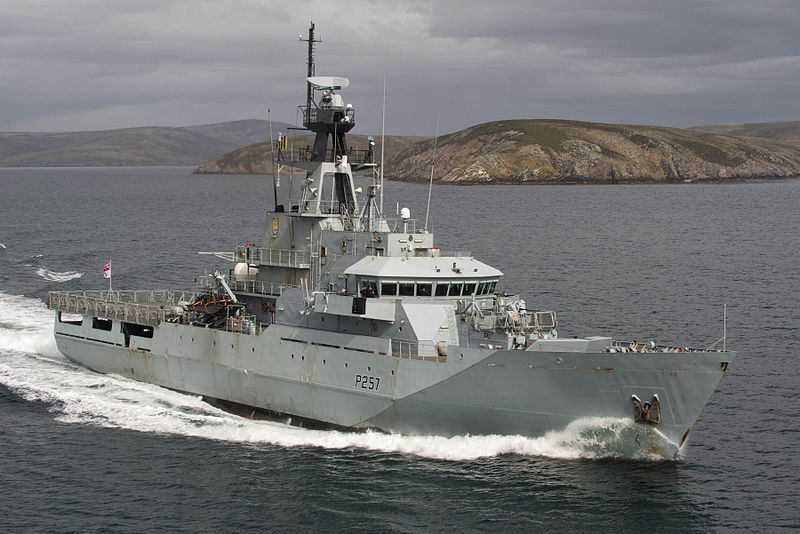
River Class Patrol Vessel HMS Clyde is pictured exercising at sea. HMS Clyde patrols the territorial seas and monitors the airspace around the Falkland Islands whilst conducting routine visits and reassurance to the many small settlements found throughout the islands.
Photo via Wikimedia Commons.
This week it was revealed that an Argentine survey vessel had been reported near the Falkland Islands, and that the local patrol ship HMS Clyde had reportedly been sent to investigate. This simple story led to a barrage of negative news suggesting that the RN had ‘confronted’ the vessel which was apparently looking for oil.
One of the greatest success stories in the last few years for British foreign policy has been the way a formerly tense and difficult relationship with Argentina has so rapidly been reset to become a genuinely productive one. Under the Kirchner regime, which used foreign policy gripes as a means of distracting attention from domestic woes, the relationship between Argentina and the UK was far less productive and strong than it could, or should, have been.
[…]
It is therefore immensely depressing to see some utter rubbish being spouted in the newspapers about what may or may not have happened off the Falkland Islands. The reality is far more simple than is being reported – the vessel in question was a scientific research ship conducting operations near the Burwood bank. Extremely bad weather forced a course change, which brought the vessel closer than planned to the Falkland Islands. (Full source can be found HERE).
The UK and Argentina operate a sensible arrangement to notify each other of movements in certain areas to reduce concerns and maintain effective communications. This agreement means that both nations provide 48hrs notice when a naval vessel will be within 15nm of the others coast line (noting territorial waters usually extend out to 12nm). Usually vessel movements and operational plans are known well in advance, and it is possible to communicate this in a timely fashion. Sometimes though, this doesn’t always go to plan – for instance when a vessel is changing course unexpectedly due to the weather.
On this occasion, it appears to have been the case that the Argentine authorities notified the UK of the vessels course and presence as soon as they were aware of its situation. The vessel herself is not one that is normally covered by these notification arrangements anyway (being a civilian research vessel).
What may have happened is that the UK may have identified an unknown vessel in the local area that they were not expecting to see (noting these waters are reasonably quiet) and began the process of sending HMS Clyde to investigate. As soon as it was clear that in fact this was an entirely legitimate presence, she returned to her normal duties. It is not even clear that HMS Clyde sailed, let alone went close to the Argentine vessel. As the Argentines themselves made clear, no overflight or challenge was made, and normal business continued as the weather improved.
Comments Off on British tabloids try to stir up trouble with Argentina … again
September 2, 2018
HMS Eagle: Royal Aircraft Carrier (1969) | Extra! | British Pathé
British Pathé
Published on 13 Apr 2014This Pathé ‘Extra!’ segment depicts the carrier HMS Eagle in 1969, which was the 15th in a long line of Royal Navy ships to carry that name. This particular ship was an Audacious-class aircraft carrier that hosted all manner of planes from the de Havilland Sea Vixen to the McDonnell Douglas Phantom.
#BritishPathé #RoyalNavy #RAF #Ships #Navy #Military
(FILM ID:2221.15)
Extra ! HMS Eagle.Aerial shot of the aircraft carrier HMS Eagle of the Royal Navy. M/S of radar tower. Several shots of jet aircraft on the deck of the ship including Sea Vixens, Gannets and Phantoms. Shots of jet plane taxiing on runway. M/S to L/S of Sea Vixen taking off from the deck. M/Ss of three men working in the control tower. M/Ss of pilot sitting in cockpit of jet on the deck. Good shot of deck crew at work preparing jet plane for takeoff. L/Ss of Phantom aircraft taking-off. L/S and M/S of the aircraft in-flight. L/S of deck of ship. An aircraft lands on the deck of the ship. M/S of arrester wire. Another shot of plane landing. M/S of Westland Wessex helicopter hovering nearby. Air to air shot of phantom in-flight. M/S shots of plane landing. L/Ss of the aircraft carrier.
Comments Off on HMS Eagle: Royal Aircraft Carrier (1969) | Extra! | British Pathé
August 27, 2018
Critique of a retro-futuristic battleship design
At Naval Gazing, a bit of informed criticism of a September 1940 Popular Mechanics article on the future of battleships:
I recently ran across the following spread from a 1940 edition of Popular Mechanics. It’s an interesting study in the way that outsiders get warship design very, very wrong.
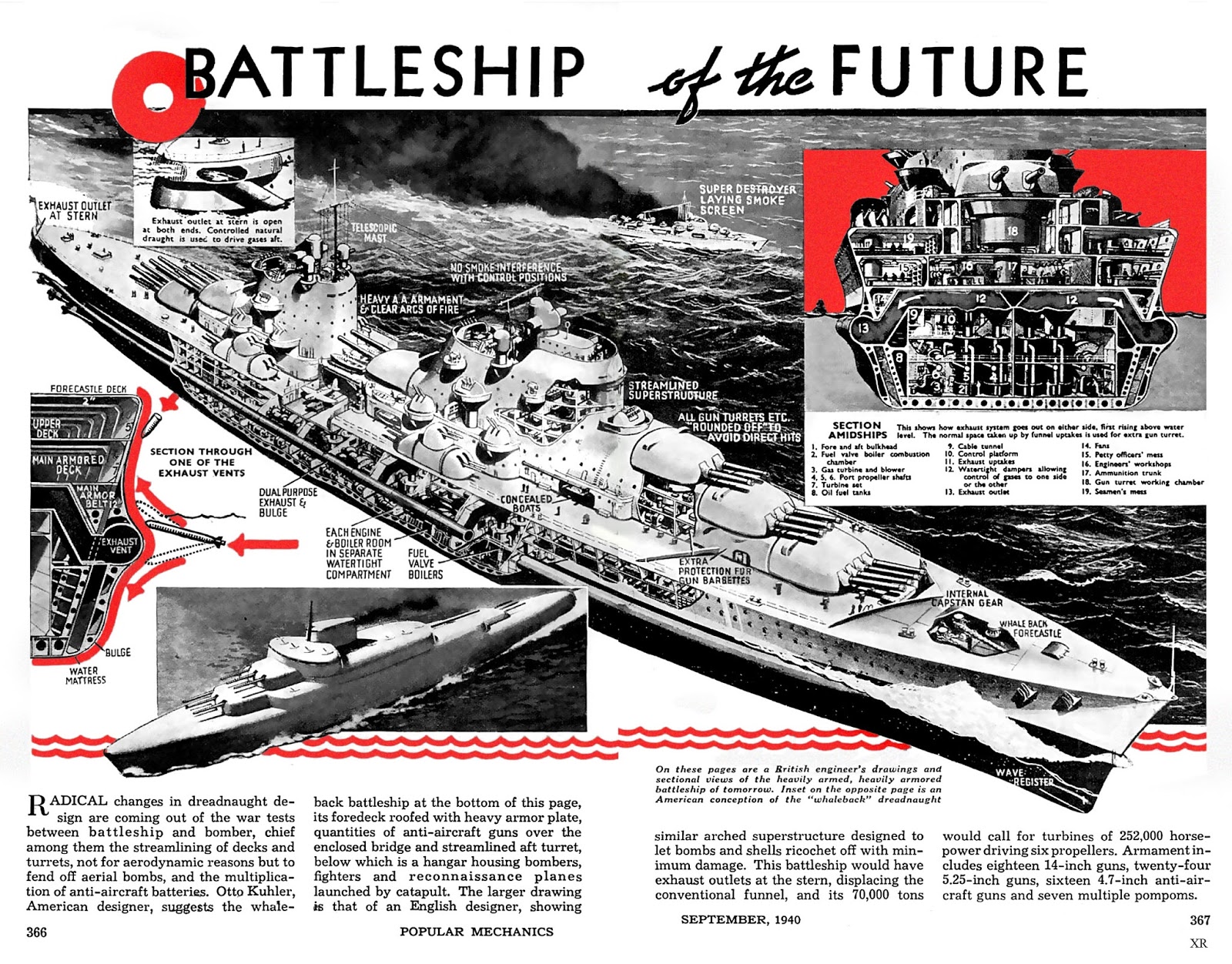
Click to see full-size image.
Comments Off on Critique of a retro-futuristic battleship design
August 25, 2018
Why was Italy so Ineffective in WWII? | Animated History
The Armchair Historian
Published on 27 Jul 2018Potential History’s Video: https://youtu.be/QB2GINNs3Aw
Our Patreon: https://www.patreon.com/armchairhistory
Our Twitter: https://twitter.com/ArmchairHist
Sources:
The Rise and Fall of the Third Reich, William L. Shirer
Fascist Italy’s Military Struggles from Africa and Western Europe to the Mediterranean and Soviet Union 1935-45, Frank Joseph
Hitler’s Italian Allies: Royal Armed Forces, Fascist Regime, and the War of 1940-1943, MacGregor Knox
Comments Off on Why was Italy so Ineffective in WWII? | Animated History
August 14, 2018
German Submarine Warfare in World War 1 I THE GREAT WAR Special
The Great War
Published on 13 Aug 2018Find out more about War2Glory: https://war2glory.com/
Submarines played a vital part in Germany’s WW1 strategy. They would disrupt allied shipping despite the British Naval Blockade and ensue fear across the Atlantic and Mediterranean Sea.
Comments Off on German Submarine Warfare in World War 1 I THE GREAT WAR Special
August 3, 2018
Australian women and the military
Like many other western nations, the Australian government has mandated higher quotas for women in the Australian Defence Forces (ADF), and it’s the military’s job to make it work:
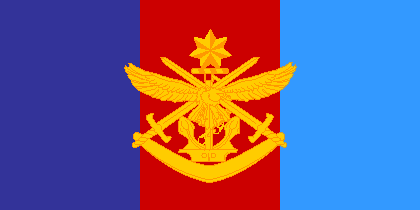
The Australian Defence Force (ADF) is comprised of the three military services: the Royal Australian Navy, the Australian Army, and the Royal Australian Air Force, all of which have been subject to increasing criticism in recent years for being dominated by straight white men. This, it is alleged, makes them, ipso facto, a petri dish for ‘toxic masculinity.’ That allegation has been lent apparent weight by the reporting of multiple gender-related scandals including the ADFA sex scandal, Jedi Council, various hazing rituals, death symbols, and HMAS Success, to name a few.
Some of this criticism has been so strident that past and present military leaders have had no choice but to commission reports and inquiries into standards and practices within the ADF, and to implement various culture change initiatives including Pathway to Change, New Generation Navy, Adaptive Army, and New Horizon. All of these initiatives place significant emphasis on greater integration of women into the respective services but offer limited reasoning other than catch-phrases like ‘diversity,’ ‘equity,’ and ‘modernising.’
All three services are now working toward a target of female representation by 2023. The Navy and Air Force are working toward 25 percent, and the Army is working toward 15 percent. The progress toward these targets, among other commentary on gender issues in the ADF, is detailed in the annual “Women in the ADF” report.
[…]
Concerns with preferential treatment do not end at the recruitment process. Fitness standards for service personnel also differ according to gender, as well as service and age. This means equally-aged men and women in each service are expected to attain different standards of fitness. This, in itself, represents a challenge since both genders complete fitness tests together and are therefore directly exposed to this double-standard from their first day of service. In spite of this policy, many servicewomen elect to continue their fitness assessment to the same level as their male colleagues which is one small contribution to reducing the cultural divide.
The rejection of preferential treatment in the ADF is not just isolated to annual fitness tests. In fact, the 2012 “Review into the Treatment of Women in the Australian Defence Force” led by then-Australian Sex Discrimination Commissioner Elizabeth Broderick includes the following passage:
ADF women strongly believe that when they are singled out, it makes it harder for them to fit in. Highly resistant to any initiative being directed solely at them, ADF women view identical—not differential—treatment as the path to delivering equality. This is most likely in part to avoid the backlash that inevitably trails any treatment perceived as ‘preferential’…
Despite acknowledging this, many of Broderick’s recommendations included gender-specific initiatives that risk being perceived as further preferential treatment, driving a greater wedge between male and female ADF personnel. Perhaps the most troubling recommendation is the targeted recruitment and transfer of women to male-dominated professions that have less female uptake. In practise, this risks techniques akin to coaxing in the recruitment process if these roles are not the preferred choice of female candidates.
Comments Off on Australian women and the military
July 31, 2018
The Utah Navy: Clearfield Navy Supply Depot, updated
The History Guy: Five Minutes of History
Published on 5 Aug 2017The History Guy examines the unique role of Utah and the Clearfield Navy Supply Depot in the war in the Pacific. Episode one of History Guy: Five Minutes of History is now available in HD.
Comments Off on The Utah Navy: Clearfield Navy Supply Depot, updated
July 30, 2018
Forgotten History: World’s Biggest Black Powder Cannon – a 100-Ton Gun
Forgotten Weapons
Published on 10 Jul 2018http://www.patreon.com/ForgottenWeapons
The largest muzzleloading black powder cannons ever built were the Armstrong 100-ton guns which saw service with the Italian Navy and with British coastal fortifications on Malta and Gibraltar. They were purchased by the Italians first, to outfit a pair of new super battleships, each vessel having two turrets with two of these guns in each. To avoid being outclassed, the British ordered two guns for installation to protect the Grand Harbor of Malta and two more to protect Gibraltar. Today one survives at each location, and we are visiting the Rinella Battery in Malta, which was built to house one of the Maltese guns.
These guns had a maximum range of 8 miles, and was capable of piercing 15 inches of iron armor at 3 miles. It had a 17.7 inch (45cm) bore fired a 2000 pound (900 kg) shell with a 450 pound (200kg) charge of black powder. The gun itself weighed approximately 102 tons, and with its cradle and a shell the whole assembly came in at 150 tons.
Aside from the massive scale of the piece, the most interesting part of its design is actually the loading machinery. Because of the titanic size of the gun and ammunition, Armstrong designed a fascinating hydraulic reloading facility which makes up the body of the fortress in which the gun is set. A pair of steam engines drove a pair of hydraulic accumulators, which provided hydraulic pressure to move the gun on its carriage, to douse the barrel after firing, to hoist ammunition into position for loading and power a 60-foot (18m) ramrod to mechanically ram the charge and shell into place. Two mirror-image reloading galleries under the fortification operated in turn, giving the gun a sustained rate of fire of 1 round every 6 minutes – at least until its 120-round barrel life was exhausted.
I am grateful for the Malta Tourism Authority’s assistance in helping to make this visit and video possible, and would also like to give special thanks to Simon, our awesome reenactor guide!
If you enjoy Forgotten Weapons, check out its sister channel, InRangeTV! http://www.youtube.com/InRangeTVShow
Comments Off on Forgotten History: World’s Biggest Black Powder Cannon – a 100-Ton Gun
July 12, 2018
Great Blunders of WWII: Japan’s Mistakes at Midway
Anthony Coleman
Published on 3 Nov 2016From the History Channel DVD series “Great Blunders of WWII”
Comments Off on Great Blunders of WWII: Japan’s Mistakes at Midway
July 8, 2018
Western Approaches – the bunker from which they won the war
Lindybeige
Published on 17 Jun 2018The command bunker ‘Western Approaches’ is now a museum in Liverpool. I was invited to take a look before it re-opened.
Support me on Patreon: https://www.patreon.com/LindybeigeThe Museum’s website: http://www.liverpoolwarmuseum.co.uk
Many thanks to Richard MacDonald for inviting me and showing me around (you saw him plugging the big fuse in).
Lindybeige: a channel of archaeology, ancient and medieval warfare, rants, swing dance, travelogues, evolution, and whatever else occurs to me to make.
Comments Off on Western Approaches – the bunker from which they won the war


