Quotulatiousness

July 7, 2018

The Incel Rebellion will (almost certainly) be streamed

Filed under: Health, Politics, USA — Tags: , , , , , — Nicholas @ 05:00

Fraser Myers looks at the incel ?movement? (not quite sure if that’s the right word to encapsulate that group of people, honestly) and explains some of the more commonly used terms by and about incels:

Incels are ‘involuntary celibates’ – men frustrated with their inability to find a sexual partner. Estimates on the size of the incel community vary from thousands to hundreds of thousands. The forum ‘r/incels’ on Reddit had 41,000 members when it was banned in November 2017 for violating the site’s rules on violent content.

Incel forums, like the website incel.me and the message board /r9k/ on 4chan, are awash with anonymous declarations of self-pity, self-loathing and, at times, a violent misogyny directed at the women deemed responsible for their loneliness. Behind a great deal of mindless chatter and ‘shitposting’ is a shared understanding of how they came to be despised by the opposite sex, alongside a bewildering array of slang terms to describe and explain the various states of ‘inceldom’.

According to the incels, there is a ruthless sexual hierarchy, and as ‘beta males’, they find themselves at the bottom. The foil to the incel is a ‘Chad’ – a confident, attractive man with multiple sexual partners, comprising usually attractive but supposedly shallow women, known as ‘Stacys’. Chads are envied and despised in equal measure. Then there are the ‘normies’ (normal people), hated for their herd-like mentality and mocked for their ignorance of incel culture. ‘Blackpilling’ refers to the acceptance that the traits you are born with mean you are destined to be romantically unsuccessful. The term is a play on the moral dilemma presented by the 1999 film, The Matrix, in which Neo is offered a blue pill to remain in a world of illusion and a red pill to see the world as it truly is – ‘redpilling’ is a central trope in online men’s rights’ activism, while blackpilling is the incel equivalent. Physical traits such as height, facial features or penis size (sometimes posted with accompanying pictures), are said to play a big role in the incels’ low status, while a large number of them also blame self-diagnosed mental-health problems, particularly autism-spectrum disorders.

But while many incels are open about their flaws, ultimately the blame is laid on the women who overlook them. Women are seen as effectively slaves to their biology, guided by so-called ‘hypergamy’: an attraction to higher-status men linked to evolutionary psychology. Some parts of the so-called manosphere – a loose constellation of male-dominated online subcultures, including men’s rights activists and pick-up artists – believe that evolutionary psychology can be used to a man’s advantage, that certain techniques can be deployed to overcome a lack of attractiveness and confidence to manipulate women into bed or into a relationship. Incels reject even this bleak view and insist that beta males accept their place in the social-pecking order.

This belief in a rigid social hierarchy inevitably produces problems when it comes to race. ‘Ricecels’ (incels of Chinese and South East Asian origin) and ‘currycels’ (of South Asian descent) are often found posting photos of ‘proof’ of a theory called ‘JBW’, that in order for them to be successful with women they should ‘just be white’. Some white incels look upon black men with envy for their perceived sexual success, while a minority rail against any kind of ‘race mixing’ – even as a form of escape from inceldom.

In addition, incels speak of an ‘80:20 rule’ when it comes to sexual competition: the most attractive 20 per cent of men are said to be sought after by the most attractive 80 per cent of women, with the least attractive 80 per cent of men left to compete for the remaining 20 per cent of women. In previous eras, this situation would have supposedly been prevented by institutionalised monogamy. Some incels call explicitly for a return to a patriarchal society. Today’s world of relative sexual freedom, contraception, no-fault divorce and dating apps, on the other hand, is blamed for offering an abundance of opportunities for Chads and women, at the expense of incels.

May 3, 2018

QotD: Resisting the black dog

Filed under: Health, Quotations — Tags: , — Nicholas @ 01:00

Last week I was having a bad day — nothing tragic, just adult life’s vicissitudes — when I got an email from a complete stranger that knocked me on my ass.

I’ll call this guy John. John recently survived a brush with suicidal depression and anxiety. John’s story is both terrifying and inspiring because he faced that depression without a job, without medical insurance, and (until he reached out for help) without a support network, and came out on the other end. John took a leap of hope, sought help from a loved one, got treatment, and got through the crisis. Is he happy all the time? I doubt it. Who is? But he’s managing the illness successfully and living his life.

John thanked me for writing openly about my experiences with severe depression and anxiety and how they have changed my life. He expressed a sentiment that I also experienced as a powerful deterrent to getting help: the fear that medication, or hospitalization, and therapy somehow mark you as other and lead to the end of your plans and ambitions forever. It’s not true. It helps, John said, to see other people who have fought mental illness, taken the plunge into serious treatment, and come out the other side continuing to pursue their careers and families and lives. John thanked me for writing, and said I made a difference for him and helped him imagine recovery as a possibility. I’m going to remember that on my worst days, when I’m down on myself.

People who have fought mental illness — people who are still struggling with it, every day — can change people’s lives by offering hope.

Depression and anxiety are doubly pernicious. They don’t just rob you of your ability to process life’s challenges. They rob you of the ability to imagine things getting better — they rob you of hope. When well-meaning people try to help, they often address the wrong problem. “Your relationship will work out if you just talk,” or “I’m sure your boss doesn’t actually hate you,” or “things will look up and you’ll find another job” may all be true, and may all be good advice. But they don’t address the heart of mental illness. A depressed or anxious person isn’t just burdened with life’s routine problems. They’re burdened with being unable to think about them without sheer misery, and being unable to conceive of an end to that misery continuing, endlessly, in response to one problem after another. Solving the problems, one by one, doesn’t solve the misery.

The hope you can offer to someone who is depressed or anxious isn’t your problems will all go away. They won’t. That’s ridiculous (though certainly it’s much easier to solve or avoid problems when you’re not debilitated). The hope you can offer is this: you will be able to face life’s challenges without fear and misery. The hope isn’t that your life will be perfect. The hope is that after a day facing problems you’ll still be able to experience happiness and contentment. The hope is that you’ll feel “normal” again.

Ken White, “Why Openness About Mental Illness is Worth The Effort And Discomfort”, Popehat, 2016-08-09.

April 29, 2018

QotD: Impostor Syndrome

Filed under: Health, Quotations — Tags: , , , — Nicholas @ 01:00

… the list of people who sometimes worry about being uncovered as an impostor is as impressive as it is long. Having to live with a nagging fear of being “found out” as not being as smart or talented or deserving or experienced or (fill-in-the-blank) as people think is a common phenomenon. So common, in fact, that the term “Impostor Syndrome” was coined to describe it back in the 1980’s. Indeed, researchers believe that up to 70% of people have suffered from it at some point. Myself included.

Apart from serial narcissists, super low achievers and outright crazies, no one is immune to the self-doubt that feeds Impostor Syndrome. But what matters most is not whether we occasionally (or regularly) fear failing, looking foolish or not being ‘whatever enough’; it’s whether we give those fears the power to keep us from taking the actions needed to achieve our goals and highest aspirations. Unfortunately, too often people do just that.

Impostor Syndrome is the domain of the high achiever. Those who set the bar low are rarely its victim. So if you are relating to what I’m sharing, then pat yourself on the back because it’s a sure sign that you aren’t ready to settled into the ranks of mediocrity. Rather, you’re likely to be a person who aims high and is committed to giving your very best to whatever endeavour you set your sights upon. A noble aim to be sure.

But giving your best is not the same as being the best. Likewise, there’s a distinct difference between trying to better yourself and being better than every one else. Overcoming the Imposter Syndrome requires self-acceptance: you don’t have to attain perfection or mastery to be worthy of the success you’ve achieved and any accolades you earn along the way. It’s not about lowering the bar, it’s about resetting it to a realistic level that doesn’t leave you forever striving and feeling inadequate. You don’t have to be Einstein to be a valuable asset to your organization and to those around you. Nor do you have to attain perfection to share something with the world that enriches people’s lives in some way.

Margie Warrell, “Afraid Of Being ‘Found Out?’ How To Overcome Impostor Syndrome”, Forbes, 2014-04-03.

April 18, 2018

Stossel: Jordan Peterson on Finding Meaning in Responsibility

ReasonTV
Published on 17 Apr 2018

Jordan Peterson is an unlikely YouTube celebrity. The Canadian psychologist lectures about things like responsibility. Yet millions of young people watch his videos, line up to hear his speeches, and buy his book 12 Rules for Life. It was number one on the Amazon bestseller list for a month.

———

John Stossel asks: What could make a book about responsibility take off?

“People have been fed this diet of pabulum, rights, and impulsive freedom,” Peterson tells Stossel. “There’s just an absolute starvation for the other side of the story.”

The other side of the story, according to Peterson, is that “it’s in responsibility that most people find the meaning that sustains them through life. It’s not in happiness. It’s not in impulsive pleasure.”

Peterson instead advises: “Adopt responsibility for your own well-being, try to put your family together, try to serve your community, try to seek for eternal truth….That’s the sort of thing that can ground you in your life, enough so that you can withstand the difficulty of life.”

Many leftists hate Peterson. They attack him for saying people should be “dangerous.” Peterson explains to Stossel that he means people should have the capacity to be dangerous, but control it.

“People who teach martial arts know this full well,” Peterson says. “If you learn a martial art you learn to be dangerous, but simultaneously you learn to control it.”

Advice about that, and responsibility, bring Peterson big audiences.

—–

The views expressed in this video are solely those of John Stossel; his independent production company, Stossel Productions; and the people he interviews. The claims and opinions set forth in the video and accompanying text are not necessarily those of Reason.

March 28, 2018

Ideological Possession

Filed under: Politics — Tags: , , — Nicholas @ 03:00

Robin Koerner offers some information on how to diagnose and treat the widespread scourge of ideological possession:

As someone who has long been writing about the threat posed by this all too prevalent epistemic disease, I am delighted to see the attention that is now being paid to it.

Ideological possession is to healthy political discourse as scientism is to science.

The most important thing to know about diagnosing ideological possession is that you can’t do it by looking at the content of the possessing ideology.

As I have said elsewhere, it’s not the content of your belief that makes you dangerous, it’s the way you believe it.

Any ideology has the potential to be deadly when advanced by those who are so sure of their own knowledge and moral outlook that they would impose it against the protestations of those affected by it. To the ideologically possessed, the imposition can always be justified because “it’s the right thing to do,” “it will start working if we keep at it,” “the complaints are coming from bad people,” and so on. (Yes. The logic is as circular as it seems.)

[…]

To protect oneself from the terrible epistemic disease of ideological possession, epistemic nutrition and exercise are extremely effective.

With respect to the former, the regular consumption of great thinkers like J.S. Mill (“He who knows only his own side of the case knows little of that”), George Orwell (“To see what is in front of one’s nose needs a constant struggle”), and Dostoevsky (“Nothing is easier than to denounce the evildoer. Nothing is more difficult than to understand him”) will keep you in good epistemic health. Supplement these basics with a more varied diet of thinkers with whom you disagree on things that matter, and you’ll be in even better shape.

With respect to the latter, a comfortable regime of epistemic exercise — which takes a little time and effort but is immediately rewarding — involves maintaining real friendships with people who have very different assumptions, experiences, and declared moral and political priorities from your own.

The good news is, if you’re chasing Truth hard enough, it is very unlikely that this particular disease will ever catch up with you.

March 25, 2018

Conscientious Objectors – Water – “Wastage” I OUT OF THE TRENCHES

Filed under: Cancon, Europe, History, Military, WW1 — Tags: , , , — Nicholas @ 04:00

The Great War
Published on 24 Mar 2018

Chair of Wisdom Time!

March 23, 2018

Who’s gaslighting who?

Filed under: Media, Politics, USA — Tags: , , , , — Nicholas @ 03:00

Nick Gillespie on the gaslighting of America:

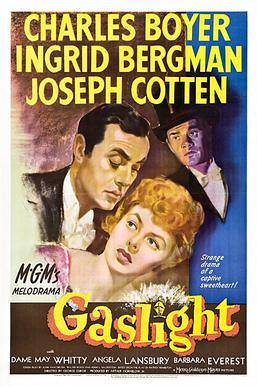
The election of Donald Trump hasn’t just brought a poorly mannered reality TV star into the Oval Office and our newsfeeds. It has also popularized the concept of gaslighting, or tricking rational people into thinking they’re insane. The phrase is a reference to a 1944 movie in which Charles Boyer tries to convince his young bride, played by Ingrid Bergman, that she’s nuts so he can cover up a murder and search for jewels hidden in the house they share (the house’s gas lamps flicker due to Boyer’s late-night searches, hence the title).

Go Google “Donald Trump is gaslighting America” and you’ll find a constantly growing list of stories from outlets ranging from CNN to Teen Vogue to Vanity Fair to Refinery 29. The common thread is some variation on the theme that Trump’s brazen lies, misstatements, and rhetorical sleights of hand are designed to drive us all batshit crazy by contradicting what we plainly see happening to the United States of America. At rock bottom, Trump’s detractors believe there is simply no way that he could have legitimately won the 2016 election, especially against Hillary Clinton, of whom President Obama said, “I don’t think that there’s ever been someone so qualified to hold this office.”

Yet it’s not Donald Trump who is gaslighting us, but Hillary Clinton, whose complete and utter refusal to take responsibility for her loss is at the heart of what’s so weird about contemporary America. You read it here first: Trump is the effect and not the cause of the ongoing mudslide that is the daily news. Ever since about 11 p.m. ET on November 8, 2016, Clinton and her allies in the media have worked overtime to provide increasingly fanciful explanations for her failure to beat the least-credible candidate ever in American history. Sometimes the apologias are conscious, sometimes not, but nobody really wants to accept what happened (in fact, even Trump himself couldn’t believe it for a while, which helps explain why his transition was so incompetent). The result is a non-stop barrage of stories, some more credible than others, that Trump’s win was the result of some sort of sinister machination that has undermined our democracy. Following from this interpretation every aspect of his behavior, from his bro-ing out with Vladimir Putin to his indifferent spelling and capitalization while tweeting, is just one more sign that we are living in a world gone stark, raving mad.

To be fair, Trump trades in delusion, such as his insistence that violent crime is at or near all-time highs, that massive voter fraud was the only reason he lost the popular vote, and that his inauguration was the most-viewed ever. These sorts of patently false statements do indeed constitute attempts at gaslighting. So, too, do his unconvincing denials about a sexual relationship with the porn star known as Stormy Daniels, his doctor’s statement that he only weighs 239 lbs. (giving rise to the “Girther” movement), and his fanciful stories about how Japanese car makers use bowling balls in quality-assurance tests. Against such a backdrop, even the president’s so-far-not-contradicted denial that his campaign colluded with Russia seems like a form of gaslighting. In fact, everything he says seems like it’s intended to drive us insane or at least seriously question basic reality.

March 10, 2018

Carl Jung, “the Madame Blavatsky of psychotherapy”

Filed under: Books, Health, History — Tags: , , , , , — Nicholas @ 03:00

A few notes on Carl Jung, by Anthony Daniels (more often known by his pen name, Theodore Dalrymple), commenting on a biography from several years ago:

What exactly were [Jung’s] achievements? Oddly enough, although this biography is more than 800 pages long (649 of them are text, each of them so closely printed that they are the equivalent of two normal pages), by the time you finish it you will nevertheless be hard put to say. You will know a lot about the petty quarrels and squabbles in which Jung repeatedly engaged, and about the details of his domestic life, but relatively little about why any of these things matter in the first place. The author therefore assumes not only a familiarity with Jung’s ideas, and a sympathy towards them, but that the reader also assumes that Jung is worthy of such a lengthy biography. This is not an assumption I share, and though the book is written in serviceable prose, it contains not a single humorous remark. From very early on, therefore, I picked it up with some words that Macaulay wrote in a review of a two-volume biography of Lord Burleigh echoing through my mind like the insistent snatch of a tune (I quote from memory): Compared with the labour of reading these volumes, all other labour, the labour of thieves on the treadmill, the labour of children in the mines, the labour of slaves on the plantation, is but a pleasant recreation. That Miss Bair has been diligent is indisputably true; that her diligence has been wisely applied, unfortunately, is a more open question.

Some men are born charlatans, some achieve charlatanry, and some have charlatanry thrust upon them. Jung was decidedly not born a charlatan — or at least, he was not one throughout the whole of his career. True, he grew up in a family with a more than average number of table-rappers, which no doubt inclined him later to the study of the esoteric (for it certainly never occurred to him to wonder why the esoteric was, in fact, esoteric), and was subjected in his youth to that Teutonic windiness which comes so easily, though no means inevitably, to those who think and write in the German language. There is nothing quite like esoteric windiness for creating a penumbra of profundity, to which bored society ladies are drawn like flies to dung: and this no doubt explains how he became the Madame Blavatsky of psychotherapy. At the same time, however, he received a thorough grounding in classics as well as in science, spoke four languages fluently, could read Latin as if it were his native tongue, was not bad at Greek, and contributed several expressions to our daily discourse — complex, collective unconscious, archetypes, animus and anima, persona, introvert and extrovert — which by itself is far more than most of us will ever achieve. This is not the same as saying, however, that he contributed to human knowledge: for it is perfectly possible to give names to non-existent entities.

[…]

One of his patients, who has gone down in history as the solar-phallus man, thought (among many other strange things) that there was a phallus that emerged from the sun, and that by causing this solar appendage to move, he controlled the weather, particularly the wind. Jung subsequently discovered, in his reading about ancient myths, that there was a Persian Mithraic belief of exactly the same kind as his patient’s. Now his patient was not a well-educated or widely read man, so it seemed to Jung impossible that he had learnt of the Mithraic myth from external sources. He therefore concluded that the form of myths was almost — as we should now put it — hard-wired into the human psyche, and he called these forms archetypes. The collective unconscious was full of such archetypes.

Jung was a preternaturally unclear writer and thinker: he would never say anything clearly when obfuscation would do. Whether this was from lack of talent or an unconscious appreciation that clarity led to the possibility of contradiction and even refutation, no one can say, but the precise nature of archetypes, their ontological status as it were, has remained unclear ever since. At any rate, the solar-phallus man’s delusion, which he quoted for the rest of his long life, was the rock on which his theory was built: a somewhat inadequate basis for an entire, far-reaching theory about the mental life of all of humanity. But Jung’s theorizing was always like an inverted pyramid: a mountain of speculation resting on a pin-prick of fact.

There were obvious problems with the theory of archetypes. The theory suggested itself to Jung because of the exact, or very close, correspondence between the madman’s delusion and the original Mithraic myth: but how close did correspondences have to be before they were manifestations of archetypes, which were more platonic forms than actual contents of the mind? Only an analyst can say, of course, and there is no public criterion other than the analyst’s authority.

February 24, 2018

QotD: The use of the [awkward silence] in conversation

Filed under: Health, Quotations — Tags: , — Nicholas @ 01:00

And then there’s [awkward silence]. I learned this one from the psychoanalysts. Nobody likes an awkward silence. If a patient tells you something, and you are awkwardly silent, then the patient will rush to fill the awkward silence with whatever they can think of, which will probably be whatever they were holding back the first time they started talking. You won’t believe how well this one works until you try it. Just stay silent long enough, and the other person will tell you everything. It’s better than waterboarding.

The only problem is when two psychiatrists meet. One of my attendings tried to [awkward silence] me at the same time I was trying to [awkward silence] him, and we ended up just staring at each other for five minutes until finally I broke down laughing.

“I see you find something funny,” he said. “Tell me more.”

Scott Alexander, “3/4”, Slate Star Codex, 2016-07-12.

February 22, 2018

Dieting and mental health

Filed under: Food, Health — Tags: , — Nicholas @ 05:00

Kaitlin Ugolik discusses her own recent experience of trying a new diet:

We don’t often discuss the mental impact of restrictive diets like Whole30 (no “inflammatory” foods), keto (low carb, high fat) or paleo (foods supposedly eaten during the Paleolithic era). People like to tout the weight loss and mood-boosting effects of these diets, but experts say they can push some of us toward disordered eating.

I tried Whole30 this January, and at first I kind of enjoyed it. I tend to get overwhelmed by options and confused about what’s the latest “right” thing to eat for breakfast, so it was nice to have guidelines. It gave me an excuse to make smoothies and try some new dinner recipes, too.

A few days in, though, I started noticing some disconcerting thoughts. I was reading the labels on everything and starting to think of anything that had any kind of processed sugar — cane sugar, brown rice syrup, anything — as “bad.” I also noticed that some of Whole 30’s carceral language was starting to stick in my head. Foods are labeled as “compliant” or “non-compliant,” for example. Knowing several people who have struggled with eating disorders, I wondered if diets like this, that say you can’t even eat beans or quinoa, might be a gateway to disordered eating for some people. The consensus among the experts I spoke to is that they are.

“All weight-loss diets work against learning to eat ‘normally’ according to appetite cues, which is also called intuitive eating,” said Karen Koenig, a Florida-based social worker who counsels people with eating disorders. “The more we restrict eating—by food type, weighing food, or by counting calories or fat grams—the more we ignore and override our body’s signals for hunger, satisfaction and fullness.”

While some people do benefit from restrictive diets because of their choice-limiting nature, like I did at the beginning, many have a hard time not taking it to the extreme. Most people are taking part in these diets as part of some kind of goal, whether it’s to lose weight, clear up their skin, or just feel better. If (and more likely when) it doesn’t work, it’s normal for anyone to get frustrated. But for people who are already prone to anxiety and obsessive thinking (*raises hand*) or those who have “addictive personalities,” a detox or diet can actually lead to something much more dangerous.

February 2, 2018

Castro’s son “Fidelito” is dead

Filed under: Americas — Tags: , , , — Nicholas @ 05:00

BBC News just reported:

The 68-year-old son of Cuban revolutionary Fidel Castro, Fidel Ángel Castro Díaz-Balart, has died in Havana after taking his own life, according to state media.

He was found on Thursday morning and is said to have suffered from depression.

Popularly known as “Fidelito”, he was first born son of the former president, who died in November 2016.

Castro Díaz-Balart worked as a nuclear physicist and an adviser to the Council of the State of Cuba.

January 27, 2018

QotD: “Hate” laws and other redundant bits of legislation

Filed under: Law, Media, Quotations — Tags: , , — Nicholas @ 01:00

As a customary principle of politics, whether “electoral” or “appointive,” I think it unwise to adjust legislation, or offer to adjust it, in response to behaviour by the criminally insane. This confers too much power on them. Verily, it is a mark of our present social condition that “reforms” are guided more and more by the hardest and strangest cases. […]

The need, specifically, for new “hate laws” is zero, at most. Murder has never been an expression of affection, to any individual or group; specific hatreds have always been considered in the interpretation of motives. We have enough crimes already, without inventing redundant ones in accord with the latest fashions. The intention behind them is never exemplary of mental and moral hygiene.

Which points again to the deeper “problematic” (one tires of the misuse of this word) in politics as practised today. We not only legislate in response to the transient behaviour of the criminally insane. Worse, our legislators, though arguably sane to start with, get in the habit of indulging insanity, even within themselves.

David Warren, “Orlando”, Essays in Idleness, 2016-06-14.

December 27, 2017

QotD: Psychology

Filed under: Health, Humour, Quotations — Tags: , , — Nicholas @ 01:00

Psychology is nothing at all like a science and those who practice it are nothing at all like scientists. Mostly they’re liberals. No two shrinks ever agree on a diagnosis, and official definitions of various mental illnesses are a grammatical and logical laugh riot. The great truth of life is that understanding character is an art, best left to master novelists and story-tellers.

L. Neil Smith, “Why the Left-Wing Seems Insane (Mostly Because They Are)”, Libertarian Enterprise, 2016-05-08.

December 25, 2017

Filling Trenches – General PoWs – Blindness I OUT OF THE TRENCHES

Filed under: Europe, History, Military, WW1 — Tags: , , , , — Nicholas @ 04:00

The Great War
Published on 23 Dec 2017

Ask your questions: http://outofthetrenches.thegreatwar.tv

December 14, 2017

QotD: Terrorism and mental illness

Filed under: Quotations, Religion — Tags: , , , — Nicholas @ 01:00

In the West, the conviction that you must kill people in order to receive 72 virgins in paradise would be considered a mental illness. In Islam, it’s a mainstream belief. 89% of Pakistanis believe in genies. But then again genies are present in Islamic scripture. 89% of Tunisians believe in witchcraft. 72% of Iraqis believe in the “evil eye”. 1 in 5 Afghanis have witnessed an exorcism. Half of Pakistanis believe in fairies.

Saudi religious police have a special Anti-Witchcraft Unit and there are actual witch trials. Majorities of Muslims don’t believe that Muslims carried out the 9/11 attacks. 40% of Pakistanis believe that fathers have a right to kill their daughters if they engage in premarital sex. Half of British Muslims think that the Jews are in league with the Freemasons. A third believes that Princess Diana was murdered to stop her from marrying a Muslim.

Ideas and behaviors associated with mental illness in the West are mainstream in parts of the Muslim world which exist in a pre-rational medieval universe brimming with conspiracy theories, paranoid delusions, lack of personal responsibility, erratic emotions and an inability to apply reason to reality.

Western psychiatric benchmarks don’t mean much in the Muslim world where witchcraft is a major problem, Jewish conspiracy theories abound and genies are responsible for psychiatric problems. Killing your daughter or just non-Muslims in general is socially approved behavior. The Muslim world has fundamentally different social norms than we do. And that means very different concepts of sanity.

Misattributing Muslim terrorism to madness is convenient, but meaningless. It’s a way for us to avoid dealing with the difficult questions posed by Islam. And that avoidance is also a form of insanity.

Daniel Greenfield, “Insane Muslim Terrorists”, Sultan Knish, 2016-05-13.

« Newer PostsOlder Posts »

Powered by WordPress