
The Great War
Published on 29 Sep 2018Support Othais on Patreon: https://www.patreon.com/CandRsenal
Indy and Othais talk about the different kinds of machine guns that were used during World War 1.
October 1, 2018
Machine Guns Of World War 1 I THE GREAT WAR Special feat. C&Rsenal
Comments Off on Machine Guns Of World War 1 I THE GREAT WAR Special feat. C&Rsenal
September 29, 2018
8mm M1915 Chauchat Fixing and Range Testing
Forgotten Weapons
Published on 9 Sep 2018http://www.patreon.com/ForgottenWeapons
Well, my 8mm French Chauchat finally cleared transfer, as did my application to reactivate it. This was a “dewat”, or “Deactivated War Trophy” – a machine gun put on the NFA registry but modified to be non-firing. This is not the same as legal destruction, as the receiver of the gun remained intact. The method of deactivation on such things can very significantly; in this case the chamber was plugged with weld, the bolt face welded up, and the barrel extension welded to the receiver. I did have an intact spare bolt and barrel assembly, however.
I removed the weld holding the barrel assembly in place, cleaned it up a bit, and dropped in my new parts.
Legal note: this was done after the receipt of an approved Form 5 from ATF, complete with tax stamp.
Today I took it out to the range for the first time, to see if any further work would be needed. And yeah, there was a bit of tweaking necessary. The feeding and extraction are solid, but the ejection requires some work. So, after swapping in a better extractor, I headed back to the range for another test run.
This time it ran great, with the exception of one bad magazine (3 of 4 being 100% reliable is better than I expected, given their age and construction). So now, I have a fully functioning Chauchat and three known-good magazines. Next up? Two-gun match! Stay tuned…
If you enjoy Forgotten Weapons, check out its sister channel, InRangeTV! http://www.youtube.com/InRangeTVShow
Comments Off on 8mm M1915 Chauchat Fixing and Range Testing
September 20, 2018
The Last Lee Enfield: the L42A1 Sniper
Forgotten Weapons
Published on 31 Aug 2018More info: https://www.forgottenweapons.com/the-…
http://www.patreon.com/ForgottenWeapons
When the British military adopted the FAL (L1A1 SLR) in 1960, they adopted the 7.62x51mm NATO cartridge along with it. While the Bren guns were converted to the new cartridge, efforts at converting the Lee Enfield into a precision rifle were not successful at the time. However, civilian target shooters and the British NRA would work on perfecting that conversion for use in competition, and would ultimately produce very accurate 7.62mm rifles built on Lee Enfield actions – accurate enough that the military took notice. Copying the competition rifles, the British military would adopt the L42A1 in 1970, an Enfield action converted to 7.62mm NATO with a shortened and free-floated stock and hand guard and a heavy profile barrel. A total of 1,080 L42A1 rifles would be converted from existing No4 MkI(T) sniper rifles, and they would serve in the front lines of the British military until 1992, when they were replaced by the Accuracy International L96A1.
If you enjoy Forgotten Weapons, check out its sister channel, InRangeTV! http://www.youtube.com/InRangeTVShow
Comments Off on The Last Lee Enfield: the L42A1 Sniper
September 17, 2018
American Rifles & Shotguns of World War 1 I THE GREAT WAR Special feat. C&Rsenal
The Great War
Published on 15 Sep 2018Othais from C&Rsenal tells Indy all about American rifles and shotguns from World War 1.
Comments Off on American Rifles & Shotguns of World War 1 I THE GREAT WAR Special feat. C&Rsenal
September 10, 2018
American Handguns of World War 1 I THE GREAT WAR Special feat. C&Rsenal
The Great War
Published on 8 Sep 2018Check out Othais’ channel: youtube.com/candrsenal
Indy and Othais take a look at the US service pistols of World War 1.
Comments Off on American Handguns of World War 1 I THE GREAT WAR Special feat. C&Rsenal
September 8, 2018
A key statistic in the debate over gun violence in Toronto … turns out to be an invention
Matt Gurney on an important claim in the controversy about guns and crime in Toronto — that will probably not get anything like as much coverage because it doesn’t support the prohibitionists’ narrative:
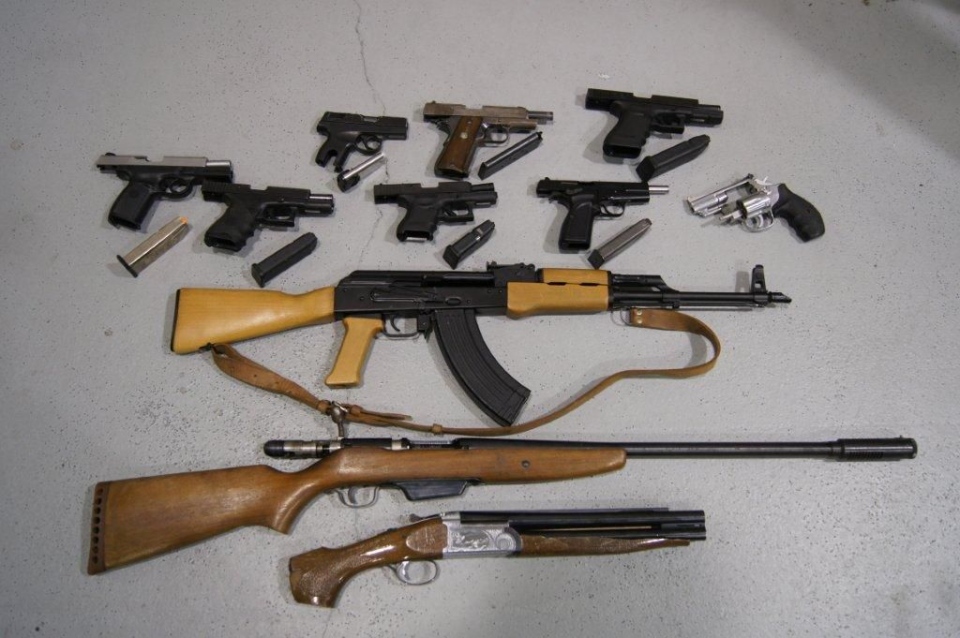
Earlier this summer — a summer that has seen Toronto wracked by gun violence — a report came out that suggested lawful Canadian gun owners were to blame for at least some of the violence. The article was originally published by the Canadian Press, and was widely republished elsewhere, including at the CBC, the National Post, a dozen local newspapers, CTV News, and, yes, here at Global News. Since then, it has been widely cited in other news stories covering the issue, including in The Toronto Star and The Globe and Mail. The report was everywhere.
Here’s the problem. Newly released stats show clearly that it was wrong.
The article was based around an interview with a Toronto Police Services detective, Rob Di Danieli. Det. Di Danieli told the Canadian Press that Canadians who were lawfully licensed to purchase and possess firearms were increasingly a public safety issue. “They go get their licence for the purpose of becoming a firearms trafficker,” Di Danieli told the CP. “A lot of people are so ready to blame the big bad Americans, but we had our own little problem here.”
The CP article hangs on this revelation from the detective. It notes, in various places, “The number of guns obtained legally in Canada but are then sold to people who use them for criminal purposes has surged dramatically in recent years compared to firearms smuggled from the United States, Toronto police say,” and, “In recent years [investigators say they] have noticed a stark shift in where guns used to commit crimes are coming from,” and, “Legal Canadian gun owners are selling their weapons illegally, Di Danieli said, noting that police have seen more than 40 such cases in recent years.”
[…]
At the time the CP story first ran, there were no publicly available stats to support (or contradict) what di Danieli had told them. But now, those numbers are publicly available, thanks to Dennis R. Young, an Alberta-based researcher who filed a Freedom of Information request with the Toronto police and published their reply on his website. And these stats tell a very different story.
September 7, 2018
Suomi m/31 – Finland’s Excellent Submachine Gun
Forgotten Weapons
Published on 17 Aug 2018More info: https://www.forgottenweapons.com/suomi-m-31-finlands-excellent-submachine-gun/
http://www.patreon.com/ForgottenWeapons
Designed by Aimo Lahti, the Suomi m/31 submachine gun is in my opinion one of the standout submachine guns of the World War Two era. Despite its hefty weight (10.4lb / 4.7kg) and lack of a good pistol grip stock, it still manages to be tremendously controllable and accurate, with a very high rate of fire (about 900 rpm).
For a detailed written description of the history and development of the weapon, I would refer you to the excellent article by Jaeger Platoon: http://www.jaegerplatoon.net/MACHINEP…
If you enjoy Forgotten Weapons, check out its sister channel, InRangeTV! http://www.youtube.com/InRangeTVShow
Comments Off on Suomi m/31 – Finland’s Excellent Submachine Gun
August 25, 2018
Swedish Antiaircraft Artillery: Bofors 40mm Automatic Gun M1
Forgotten Weapons
Published on 24 Aug 2018Note: In the video I mistakenly describe this as a two-stamp NFA gun. It is actually deactivated, and thus does not require a tax stamp. Sorry for the mistake!
http://www.patreon.com/ForgottenWeapons
The Swedish Bofors company developed their 40mm antiaircraft gun in the 1930s, and it would go on to be one of the most successful weapon designs in modern history. Used by both sides in WWII and in all theaters, improved versions of the 40mm Bofors gun continue to serve in military front lines to this very day. In the US, they comprise part of the armament on the AC-130 Spectre gunships, for example.
This particular gun is a WW2 vintage piece, made in Sweden. Most of the examples used by the United States were made under license by Chrysler, the car company. Something like 60,000 were produced during the war, mostly for naval use. These guns would be a mainstay of American vessels’ air defense against Japanese Kamikaze attacks.
If you enjoy Forgotten Weapons, check out its sister channel, InRangeTV! http://www.youtube.com/InRangeTVShow
Comments Off on Swedish Antiaircraft Artillery: Bofors 40mm Automatic Gun M1
August 18, 2018
Mythbusting with the .30-06 American Chauchat: Reliability Test
Forgotten Weapons
Published on 28 Jul 2018http://www.patreon.com/ForgottenWeapons
Everyone knows, of course, that the Chauchat is the worst gun ever, and can’t normally get through an entire magazine without malfunctioning. Well, let’s try that out … and with an even worse culprit; an M1918 Chauchat made for the AEF in .30-06.
If you enjoy Forgotten Weapons, check out its sister channel, InRangeTV! http://www.youtube.com/InRangeTVShow
Comments Off on Mythbusting with the .30-06 American Chauchat: Reliability Test
August 11, 2018
Cobray Terminator at the Range: The Worst Shotgun Ever
Forgotten Weapons
Published on 21 Jul 2018http://www.patreon.com/ForgottenWeapons
Most of the guns made by Cobray are pretty awful, but one can at least understand the market they were made for. The Terminator is different, because it really is rather incomprehensible who would have actually thought that a single shot, open bolt 12 gauge shotgun with a terrible stock would be a good thing to spend money on. Really the only explanation I can come up with is that it looks industrial and mean, and I suppose some people would have bought it just for that.
Having taken one to the range now, my suspicions of its terribleness have been fully confirmed. It actually is painful to shoot, and the open bolt slamfire mechanism does a great job of magnifying the inevitable flinch it will give you. It’s clunky and annoying to reload, and also to unload after firing. I never did figure out why it was failing to fire so much for me, unless it was simply a short firing pin with deep-set primers. To be honest, I don’t really care. I’m just happy to be able to send it back to the generous (if perhaps sadistic) viewer who loaned it to me.
If you enjoy Forgotten Weapons, check out its sister channel, InRangeTV! http://www.youtube.com/InRangeTVShow
Comments Off on Cobray Terminator at the Range: The Worst Shotgun Ever
August 6, 2018
OSS “Stinger” Covert Cigarette Guns
Forgotten Weapons
Published on 16 Jul 2018http://www.patreon.com/ForgottenWeapons
During World War Two, the OSS (Office of Strategic Services) was the primary US clandestine operations organization. It was responsible for making all sorts of unique weapons, including these “Stinger” cigarette guns. They were single shot disposable .22 Short pistols.
The first pattern was contracted and manufactured entirely by the OSS, and 25,000 of them were manufactured early in the war. They proved to have a myriad of minor to moderate problems, though, including failures to fire and burst barrels. A second version was produced by the Ordnance Department in 1944, with a strengthened and improved design, and 25,500 of those were made.
I have not found any documentation of these being actually used, but then again not much documentation exists on the use of any OSS weapons. These sorts of things were often provided to infiltration agents who might never be heard from again, or dropped to partisan or resistance groups who weren’t exactly writing field reports on their gear.
Many thanks to the collector who provided me access to these!
If you enjoy Forgotten Weapons, check out its sister channel, InRangeTV! http://www.youtube.com/InRangeTVShow
Comments Off on OSS “Stinger” Covert Cigarette Guns
August 4, 2018
Rhodesia Made Their FALs Great With This One Weird Halbek Device!
Forgotten Weapons
Published on 14 Jul 2018http://www.patreon.com/ForgottenWeapons
The Halbek Device was a clamp-on muzzle brake designed by two Rhodesians, Douglas Hall and Marthinus Bekker. It was patented in Rhodesia in 1977 and in the US in 1980, and manufactured in small numbers for the Rhodesian military. I have seen these occasionally, and doubt they are actually very effective. But during a filming trip to South Africa I had a chance to actually try one on a select-fire R1 FAL, complete with high speed camera to find out for sure. So, let’s see what they really do…
If you enjoy Forgotten Weapons, check out its sister channel, InRangeTV! http://www.youtube.com/InRangeTVShow
Comments Off on Rhodesia Made Their FALs Great With This One Weird Halbek Device!
July 27, 2018
Toronto’s proposed handgun ban is a feelgood/do nothing distraction
Every time there’s a tragedy, there are calls from the local media for politicians to “do something”. Politicians are hard-wired to want to “do something” even without prompting. They want (and need, for electoral purposes) to be seen to be “doing something”, if only to divert any blamecasting away from themselves. The most recent tragedy was a senseless shooting on Toronto’s Danforth in the Greektown district. The shooter, who was either killed by police or committed suicide shortly after the attack, was apparently not a legal gun owner, and under current gun laws would not have been able to obtain a handgun. So, in the wake of the tragic deaths and injuries, Toronto city council jumped into action to be seen “doing something”. Chris Selley explains why the proposed ban of handgun and ammunition sales in the city will not make a difference, except to punish non-criminals:
The whiz-bang solution on everyone’s lips — from Mayor Tory to city councillors to the Toronto Star’s and Globe and Mail’s editorial boards and the usual activists — is to ban handguns. Tory admits there is no “magic wand” that will solve Toronto’s gun problem. But still he asks: “Why does anyone in this city need to have a gun at all?”
The idea has a very superficial appeal. We all wish the Danforth shooter hadn’t managed to get a hold of a gun. Toronto is having a bad year for shootings — not much worse than last year, but at the wrong end of a distinct and steady five-year-trend. (At this point in 2014 there had been 101 shootings and 127 fatalities; so far in 2018 there have been 228 shootings and 308 fatalities.) It is understandable (if not entirely creditable) that the Danforth shooting would have rapidly intensified demands for something to be done: the victim count was high, and it happened in a wealthy part of town where it would have been easy to pretend there wasn’t a problem at all.
Still, the limitations of a “handgun ban” are both many and obvious. When Canadian police forces occasionally report on the sources of crime guns, they often find the vast majority have been smuggled across the border. In Toronto nowadays, the number is reportedly more like 50 per cent; the rest of the supply comes from licensed handgun owners who sell them on illegally — a spectacularly risky thing to do, as any used in crimes would be instantly traced back to the registered owner, but apparently worth it to some.
But we all know how permeable the Canada-U.S. border is. If we made it impossible to own a handgun legally in Canada, is there any reason to suspect the cross-border flow couldn’t regain its market share? Furthermore, CTV reported Wednesday that the Danforth shooter’s handgun was prohibited — i.e., it could never have been licensed in Canada — and that he had obtained it from some gang associates. If true, his carnage illustrates the limitations of handgun bans better than it does their efficacy.
Comments Off on Toronto’s proposed handgun ban is a feelgood/do nothing distraction
July 18, 2018
Why use clips when you can use magazines?
Lindybeige
Published on 27 Jun 2018Why did soldiers in World War Two get issued with clips of ammunition instead of magazines? The reasons are quite practical. Support me on Patreon: https://www.patreon.com/Lindybeige
My thanks to Bloke on the Range for the use of his rifles and costume.
Lindybeige: a channel of archaeology, ancient and medieval warfare, rants, swing dance, travelogues, evolution, and whatever else occurs to me to make.
▼ Follow me…
Twitter: https://twitter.com/Lindybeige I may have some drivel to contribute to the Twittersphere, plus you get notice of uploads.
website: http://www.LloydianAspects.co.uk
Comments Off on Why use clips when you can use magazines?
July 13, 2018
QotD: Decline of the mainstream media
What happened to that instinct to go find the story that the “powers that be” wanted buried? Yeah, I know how the Internet has slashed into the paid-advertising model that supported “objective” daily newspapers. But don’t you think the ongoing loss of audience and credibility of the “legacy media” might also have something to do with the fact their little drones now all recite the “Leftist line” in unison — never challenge any of the sacred cows?
That what remains of the American and European “news media” would become captive to the screeching Collectivist/Globalist Left was predictable. First our colleges and now even the government youth propaganda camps (“public high schools”) have been captive to unionized Leftists pushing a thinly disguised Marxist agenda — Franz Fanon, Noam Chomsky and the like — for 45 years now. Public schools which quite purposely turn out graduates who are just barely literate enough to follow their marching orders, by the way, with most of a troublemaker’s innate sense of curiosity long since ground out of them.
(Real research is such a grind. We SO much more prefer the classes where we get good grades for just shouting our opinions about racism and oppression and stuff. And now we even get a free field trip to the state Capitol to shout it out for gun control! … even though we wouldn’t know a muzzle brake from a stripper clip, and couldn’t tell you who wrote the Bill of Rights or why he (or they) believed a citizenry armed with military-grade weapons is somehow “necessary to the security of a free state.” … Or even where that phrase appears.)
With the exception of a few pretty network news readers with great hair, no one ever went into journalism for the money. The sense since Woodward and Bernstein took down Richard Nixon was that journalists had a mission to take down greedy white “deplorable” politicians (and if we can’t find any, we’ll invent some. “If you’re for enforcing the existing immigration laws like every other nation on earth, you’re a racist!”)
The problem is not just a political “leaning.” The problem is that today’s crop of journalists are so incurious it never occurs to them to notice that their assignment editors are taking orders from owners and publishers who are on the same globalist/mind-control team as virtually all of those bought-and-paid-for politicians they’re supposed to be “exposing.” The big corporate guys don’t really care which politicians get taken down, since they’ve bought the “D”s AND the “R”s — they own Chuck Schumer and Nancy Pelosi AND Mitch McConnell and Lindsey Graham and Trey Gowdy. It’s Kabuki, it’s a Punch-and-Judy show to make people feel they’ve got a real choice.
Vin Suprynowicz, “On Reporters Who Ask No (Unapproved) Questions”, Libertarian Enterprise, 2018-06-03.
Comments Off on QotD: Decline of the mainstream media


