
Writing in Reason, Brendan O’Neill laments “the state’s intervention into private life”:
Is it acceptable to have drunk sex? Most people who aren’t citizens of the Islamic State or followers of some frigid Christian group will answer with an emphatic: “Hell, yeah.” Not only is it acceptable, they’ll think; it’s good, one of life’s great pleasures, a rare moment when you can ditch the pesky rational thinking required in everyday life and instead abandon yourself — mind, soul, and genitals — to a moment of dumb, beautiful joy.
Well, enjoy it while you can, folks. Because like everything else pleasurable in the 21st century — smoking in a bar, complimenting a lady on her looks, drinking a bucket-sized Coke — drunk sex is under attack from that new caste of killjoys who wouldn’t recognize fun if it offered to buy them a drink (“unwanted sexual advance.”) Drunk sex is being demonized, even criminalized: turned from something that can be either wonderful or awkward into, effectively, rape. They warned us for years, “Don’t drink and drive.” Now it’s, “Don’t drink and fuck.”
[…]
On both sides of the Atlantic, campuses that were once hotbeds of anti-The Man radicalism have become conveyor belts of conformist policymaking, particularly in relation to anything that has what these prudish heirs to Andrea Dworkin consider to be the rancid whiff of s*x. And what kind of sex do they loathe most? Drunk sex.
Numerous colleges now insist that it isn’t possible to consent to sex if you’re three sheets to the wind, which means that all sexual acts carried out under the influence are potential crimes. The University of Georgia warns students that sexual consent must be “voluntary, sober, imaginative, enthusiastic, creative, wanted, informed, mutual, honest.” There are many problematic words in that — “imaginative”? Can’t we consent to sex unimaginatively, maybe by saying “Oh, go on then”? — but the most problematic is “sober.” Apparently sex must always be booze-free.
[…]
It’s hard to know what is most repulsive about this creeping criminalization of shit-faced sex. Is it the way it infantilizes women with its sexist implication that they are less capable of negotiating sexual encounters while drunk than men, hence the drunk man must shoulder responsibility for these apparently depraved shenanigans? This echoes the temperance movements of the late 19th century, which likewise warned dainty ladies that getting blotto would lead to sexual misadventure and downfall. Or is it the way it demonizes men, turning even the sweet, utterly non-violent young lad who has to have eight vodkas to buck up the courage to sleep with his beau into that most heinous of criminals: a rapist? Or is it the fact that its aim is to deprive us of one of the great hoots of human life: stupid sex, where you don’t know or care what is going on, where the condom is, or even if she’s on the Pill? That moment of madness, that instant when feeling takes over and your brain has a night off, that time when you can’t string a sentence together but somehow you can still have sex… seriously, students, you should try this.
The big problem is the shift in recent years from talking about rape to “sex without consent.” Rape is a violent word that describes a conscious act by a wicked man (usually) to defy a woman who says no and to force sex on her. Disgusting. Lock him up. But “sex without consent” is a totally different phrase: it’s more passive, signalling an act that doesn’t require criminal intent and which can cover everything from rape as it was once understood to drunk sex, drugged-up sex, or regretted sex. We’ve gone from punishing those who rape to casting a vast blanket of suspicion over anyone who has sex. But the fact is — and please don’t hate me — sex isn’t always 100 percent consensual. Especially after booze. Sometimes it’s instinctual, thoughtless, animalistic. Sometimes it just happens. It’s sex without consent — that is, without explicit, clearly stated, sober consent — but it ain’t rape. It’s sex.
 If you haven’t been following along at home (and I don’t blame you if you haven’t), Minnesota Vikings running back Adrian Peterson only played in one game last season, due to media and fan outcry after he was charged over a beating he performed on one of his children. When I first heard about it, I thought it was a tempest in a teapot … that the mother of one of Peterson’s several children was trying to get her 15 minutes of media fame. Once I saw the photographs of the child’s injuries (taken a few days after the beating), I completely changed my mind. The child’s mother was totally right to raise this issue and Peterson did need to go to court over the incident.
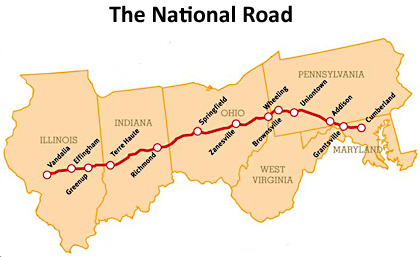 Professional painters in the 1800s prepared house paint by mixing linseed oil with white lead paste. About 90% of Americans lived in rural areas in the mid-1800s, and subsistence farmers could make linseed (flaxseed) oil, but few had access to white lead, so they mixed linseed oil with red rust to kill fungi that trapped moisture and increased wood decay. Red barns are still a tradition in most USA farming regions but white barns are the norm along the path of the old National Road. Why?
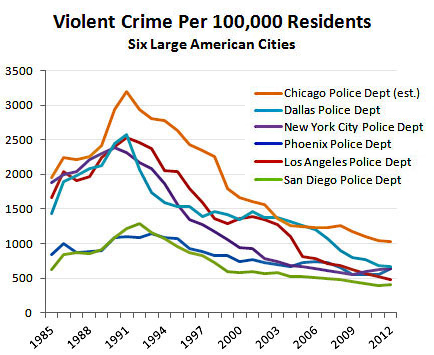 So here’s the thing: this is almost certainly wrong. Not even controversial. Just wrong: broken windows policing may well have been helpful in reducing New York’s crime rate, but there’s flatly no evidence that it’s been pivotal. It’s true that crime in New York is down more than it is nationally, but that’s just because crime went up more in big cities vs. small cities during the crime wave of the 60s through the 80s, and it then went down more during the crime decline of the 90s and aughts. Kelling and Bratton can dismiss this as ivory tower nonsense, but they should know better. The statistics are plain enough, after all.
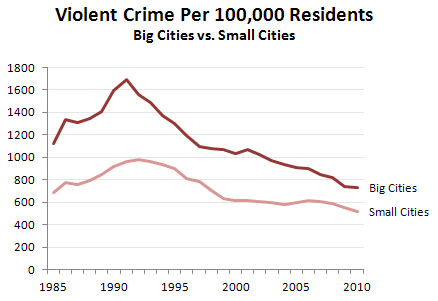 Take a look at the two charts on the right. The top one shows crime declines in six of America’s biggest cities. As you can see, New York did well, but it did no better than Chicago or Dallas or Los Angeles, none of which implemented broken windows during the 90s. The bottom chart is a summary of the crime decline in big cities vs. small cities. Again, the trend is clear: crime went up more during the 80s in big cities, but then declined more during the 90s and aughts. The fact that New York beat the national average is a matter of its size, not broken windows.

