
Quotulatiousness

June 13, 2019

American anarchism

Filed under: Business, Politics, USA — Tags: , , , , — Nicholas @ 05:00

Not all anarchists are bomb-throwers, as Christopher Schwarz explains:

The idea of pairing anarchism and design work seems – on its face – to be a ridiculous marriage. After all, design is about creating things from scratch, and anarchism is about burning everything down, right?

Well, no. Anarchism – particularly the American flavor of it – is woefully simplified and misunderstood by people on both the left and the right of the political spectrum. The truth is that most of the furniture designers and graphic designers I’ve worked with in my career possess strong anarchistic tendencies. They just don’t know what to call their urges and beliefs.

I’ve been an aesthetic anarchist for more than 25 years, after first encountering the concept in graduate school (thanks Noam Chomsky), then observing one of my cousins, Jessamyn West, an anarchist librarian. There’s a chance you might be one, too. And while I’m certain that you probably should be working on something far more pressing and billable for work at McCorp, reading this short article isn’t going to hurt anything….

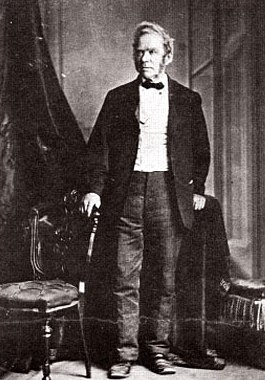
The face of American anarchism. Josiah Warren is considered the father of American anarchism. Among his many accomplishments was the founding of the Cincinnati Time Store, where you traded your labor for goods. No money.
Photo via Wikimedia Commons.

The Briefest Description Ever of American Anarchism

America’s individualist anarchism is not about the violent overthrow of the government and its institutions. Period. Full stop. Instead, it is a tendency to eschew the enormous organizations – churches, states and corporations – that we have created during the last 250 years.

Why do this? While working with others is generally a good thing, there is some threshold upon which an organization becomes so large that it is capable of inhumane behavior – war, slavery, environmental destruction, mass extinctions or even just failing to treat its employees and contractors fairly. These are things that individuals are (mostly) incapable of accomplishing.

Anarchists like myself avoid working with these massive and dehumanizing institutions. I don’t want to burn them down, but I also don’t want to prop them up by shopping in their stores, praying in their cathedrals or voting in their elections.

That doesn’t mean I’m opposed to making money, that I’m an atheist or that I’m uninvolved in my community. I just decline to work, pray and serve others via these institutions. Working with them gives them power, while working with the family architectural firm a few blocks away helps your neighbors in every way imaginable.
January 31, 2019

QotD: Top-down solutions

Filed under: Books, Government, History, Quotations — Tags: , , — Nicholas @ 01:00

The closest analogy I can think of right now – maybe because it’s on my mind – is this story about check-cashing shops. Professors of social science think these shops are evil because they charge the poor higher rates, so they should be regulated away so that poor people don’t foolishly shoot themselves in the foot by going to them. But on closer inspection, they offer a better deal for the poor than banks do, for complicated reasons that aren’t visible just by comparing the raw numbers. Poor people’s understanding of this seems a lot like the metis that helps them understand local agriculture. And progressives’ desire to shift control to the big banks seems a lot like the High Modernists’ desire to shift everything to a few big farms. Maybe this is a point in favor of something like libertarianism? Maybe especially a “libertarianism of the poor” focusing on things like occupational licensing, not shutting down various services to the poor because they don’t meet rich-people standards, not shutting down various services to the poor because we think they’re “price-gouging”, et cetera?

Maybe instead of concluding that Scott is too focused on peasant villages, we should conclude that he’s focused on confrontations between a well-educated authoritarian overclass and a totally separate poor underclass. Most modern political issues don’t exactly map on to that – even things like taxes where the rich and the poor are on separate sides don’t have a bimodal distribution. But in cases there are literally about rich people trying to dictate to the poorest of the poor how they should live their lives, maybe this becomes more useful.

Actually, one of the best things the book did to me was make me take cliches about “rich people need to defer to the poor on poverty-related policy ideas” more seriously. This has become so overused that I roll my eyes at it. “Quantitative easing could improve GDP growth…but instead of asking macroeconomists, let’s ask this 19-year old single mother in the Bronx!” But Scott provides a lot of situations where that was exactly the sort of person they should have asked. He also points out that Tanzanian natives using their traditional farming practices were more productive than European colonists using scientific farming. I’ve had to listen to so many people talk about how “we must respect native people’s different ways of knowing” and “native agriculturalists have a profound respect for the earth that goes beyond logocentric Western ideals” and nobody had ever bothered to tell me before that they actually produced more crops per acre, at least some of the time. That would have put all of the other stuff in a pretty different light.

Finally, I understand Scott is an anarchist. He didn’t really try to defend anarchism in this book. But I was struck by his description of peasant villages as this unit of government which were happily doing their own thing very effectively for millennia, with the central government’s relevance being entirely negative – mostly demanding taxes or starting wars. They kind of reminded me of some pictures of hunter-gatherer tribes, in terms of being self-sufficient, informal, and just never encountering the sorts of economic and political problems that we take for granted. They make communism (the type with actual communes, not the type where you have huge military parades and kill everyone) look more attractive. I think Scott was trying to imply that this is the sort of thing we could have if not for governments demanding legibility and a world of universal formal rule codes accessible from the center? Since he never actually made the argument, it’s hard for me to critique it. And I wish there had been more about cultural evolution as separate from the more individual idea of metis.

Overall, though, I did like this book. I’m not really sure what I got from its thesis, but maybe that was appropriate. Seeing Like A State was arranged kind of like the premodern forests and villages it describes; not especially well-organized, not really directed toward any clear predetermined goal, but full of interesting things and lovely to spend some time in.

Scott Alexander, “Book Review: Seeing Like a State”, Slate Star Codex, 2017-03-16.

January 14, 2019

Lysander Spooner and the US postal system

Filed under: Government, History, Liberty, USA — Tags: , , , — Nicholas @ 03:00

Naomi Mathew recounts the battle between anarchist Lysander Spooner and the United States Post Office:

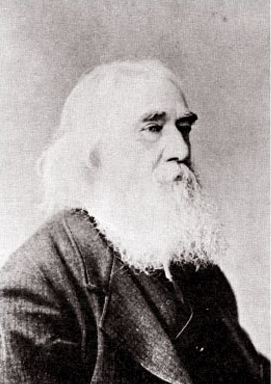
This is a story about a philosopher, entrepreneur, lawyer, economist, abolitionist, anarchist — the list goes on. As his obituary summarizes, “To destroy tyranny, root and branch, was the great object of his life.” Although he is rarely included in mainstream history, Lysander Spooner was an anarchist who didn’t merely preach about his ideas: He lived them. No example illustrates this better than Spooner’s legal battle against the US postal monopoly.

Born in 1808 in Athol, Massachusetts, Lysander Spooner was raised on his parent’s farm and later moved to Worcester to practice law. Eventually, he found himself in New York City, where business was booming — but not for the Post Office.

The Postal System of the 1840s

In Spooner’s day, government subsidized the cost of building infrastructure used for mail routes. Postage rates paid for these subsidies, which in turn made the rates expensive. For example, in 1840 it cost 18.75 cents, over a quarter of a day’s wages, to send a letter from Baltimore to New York.

Corruption was another issue facing the post office. Positions appeared to change after each election cycle, indicating political cronyism. Congress was also under pressure from the coach contractor lobby, and favorable postage routes were often given to contractors with political connections. Thanks to a legal monopoly it had enjoyed since the Confederation, the Post Office remained the sole legal mail business despite its skyrocketing costs and corruption.

In his book Uncle Sam, The Monopoly Man, William Wooldridge describes how high postal costs led some to defy postal laws: Traveling individuals doubled as temporary, private postmen. By the 1840s, these illicit services were chipping into government revenues. Eventually, a court ruled it legal for individuals (but not companies) to carry mail. As a result, underground mail enterprises sprung up. Agents covertly used the existing rails, coaches, and steamboats to transport letters. It is estimated that in 1845, a third of all letters were transported by private mail firms.

May 20, 2018

Black Army of Ukraine – Togoland in WW1I OUT OF THE TRENCHES

Filed under: Africa, Europe, Germany, History, Military, Russia, WW1 — Tags: , , , , — Nicholas @ 04:00

The Great War
Published on 19 May 2018

Chair of Wisdom Time!

March 22, 2018

Feature History – Spanish Civil War

Filed under: Europe, History, Military — Tags: , , , , — Nicholas @ 02:00

Feature History
Published on 12 Mar 2017

Hello and welcome to Feature History, featuring The Spanish Civil War, zero mic etiquette, and a super subtle political lesson.

March 5, 2018

The economic failure of Iain Banks’s Culture stories

Filed under: Books, Economics — Tags: , , , , , — Nicholas @ 03:00

ESR points out the weak spot in the Culture series of novels:

There’s a lot of buzz about Iain Banks’s Culture universe lately, what with Elon Musk naming his drone ships in Banksian style and a TV series in the works.

I enjoyed the Culture books too, but they were a guilty pleasure for me because in a fundamental way they are bad SF.

They’re bad SF because the Culture’s economics is impossible. That ship hits a rock called “Hayek’s Calculation Problem” and sinks – even superintelligent Minds can’t make central planning work, because without price signals and elicited preferences you can’t know where to allocate resources. What you get is accelerating malinvestment to collapse.

This is what happened to the Soviet Union in the late 1980s. Hayek predicted it fifty years in advance. Huge factories in Siberia destroyed wealth by producing trucks nobody needed from resources that would have been better spent on other things – but nobody could know that because there weren’t any price signals. Eventually the SU wore out its pre-Communist infrastructure, fell down, went boom.

The problem is epistemic and fundamental – can’t be solved by good intentions or piling on computational capacity. An SF writer is every bit as obligated to know what won’t work in economics as he is not to make elementary blunders about chemistry and physics. The concept of “deadweight loss” matters as much as “entropy”.

Banks’s lifelong friend and fellow Trotskyite Ken McLeod actually managed not to flunk this. In a long and revealing interview about the genesis of one of his early series (the “October Revolution” books IIRC) he once revealed that for years he read free-market economics on the know-your-enemy principle, then woke up one day realizing he couldn’t refute them. Subsequently his books took a decidedly libertarian turn. This demonstrates that Marxists can clean up their shit; alas, Banks never made it that far.

August 7, 2016

QotD: “… there were no good guys in the Spanish Civil War”

Filed under: Europe, History, Politics, Quotations — Tags: , , , , , , — Nicholas @ 01:00

Pio Moa’s thesis is that the Spanish Civil War was not a usurping revolt against a functioning government, but a belated attempt to restore order to a country that had already collapsed into violent chaos five years before the Fascists landed in 1936.

I’ve studied the history of the Spanish Civil War enough to know that Moa’s contrarian interpretation is not obviously crazy. I had an unusual angle; I’m an anarchist, and wanted to grasp the ideas and role of the Spanish anarchist communes. My conclusions were not pleasant. In short, there were no good guys in the Spanish Civil War.

First, the non-anarchist Left in Spain really was pretty completely Stalin’s creature. The volunteers of the International Brigade were (in Lenin’s timeless phrase) useful idiots, an exact analogue of the foreign Arabs who fought on in Baghdad after Iraqi resistance collapsed (and were despised for it by the Iraqis). They deserve neither our pity nor our respect. Insofar as Moa’s thesis is that most scholarship about the war is severely distorted by a desire to make heroes out of these idiots, he is correct.

Second, the Spanish anarchists were by and large an exceedingly nasty bunch, all resentment and nihilism with no idea how to rebuild after destroying. Wiping them out (via his Communist proxies) may have been one of Stalin’s few good deeds.

Third, the Fascists were a pretty nasty bunch too. But, on the whole, probably not as nasty as their opponents. Perceptions of them tend to be distorted by the casual equation of Fascist with Nazi — but this is not appropriate. Spanish Fascism was unlike Communism or Italian and German Fascism in that it was genuinely a conservative movement, rather than a attempt to reinvent society in the image of a revolutionary doctrine about the perfected State.

Historians and political scientists use the terms “fascist” and “fascism” quite precisely, for a group of political movements that were active between about 1890 and about 1975. The original and prototypical example was Italian fascism, the best-known and most virulent strain was Naziism, and the longest-lasting was the Spanish nationalist fascism of Francisco Franco. The militarist nationalism of Japan is often also described as “fascist” .

The shared label reflects the fact that these four ideologies influenced each other; Naziism began as a German imitation of Italian fascism, only to remake Italian (and to some extent Spanish) fascism in its own image during WWII. The militarist Japanese fascists took their cues from European fascists as well as an indigenous tradition of absolutism with very similar structural and psychological features

The shared label also reflects substantially similar theories of political economics, power, governance, and national purpose. Also similar histories and symbolisms. Here are some of the commonalities especially relevant to the all too common abuse of the term.

Fascist political economics is a corrupt form of Leninist socialism. In fascist theory (as in Communism) the State owns all; in practice, fascists are willing to co-opt and use big capitalists rather than immediately killing them.

Fascism mythologizes the professional military, but never trusts it. (And rightly so; consider the Von Stauffenberg plot…) One of the signatures of the fascist state is the formation of elite units (the SA and SS in Germany, the Guardia Civil in Spain, the Republican Guard and Fedayeen in Iraq) loyal to the fascist party and outside the military chain of command.

Fascism is not (as the example of Franco’s Spain shows) necessarily aggressive or expansionist per se. In all but one case, fascist wars were triggered not by ideologically-motivated aggression but by revanchist nationalism (that is, the nation’s claims on areas lost to the victors of previous wars, or inhabited by members of the nationality agitating for annexation). No, the one exception was not Nazi Germany; it was Japan (the rape of Manchuria). The Nazi wars of aggression and Hussein’s grab at Kuwait were both revanchist in origin.

Fascism is generally born by revolution out of the collapse of monarchism. Fascism’s theory of power is organized around the ‘Fuehrerprinzip‘, the absolute leader regarded as the incarnation of the national will.

But…and this is a big but…there were important difference between revolutionary Fascism (the Italo/German/Baathist variety) and the more reactionary sort native to Spain and Japan.

Eric S. Raymond, “Fascism is not dead”, Armed and Dangerous, 2003-04-22.

March 6, 2016

QotD: The difference between liberals and libertarians

Filed under: History, Liberty, Quotations — Tags: , , — Nicholas @ 01:00

Until about 1910, in both England and America, a liberal could be defined as someone who believed in limited government under the rule of law, and who opposed state regulation of interactions between consenting adults. Since then, the word has been applied to various kinds of statists – some of them rather totalitarian. One day, it may come back to us. But there really is no point in sharing a word with people like Nick Clegg and Hillary Clinton. For this reason, we grabbed the word libertarian back in the 1960s. It had been coined by, and was first attached to, leftist anarchists in the 19th century. However, they did little with it after about 1917, and it was almost bona vacantia when we took it up.

There is a further difference between us and the old liberals. Twentieth century statism was so frightening that many of us lost all faith in even a limited state of the 19th century kind. I don’t know what proportion of self-defined modern libertarian are anarchists. But it might easily be half.

Sean Gabb, quoted in “Wayne John Sturgeon talks to Sean Gabb of the Libertarian Alliance”, Sean Gabb, 2013-08-26.

March 9, 2015

The Anarchist Cookbook

Filed under: Books, Liberty, Media, Technology, Weapons — Tags: , — Nicholas @ 02:00

I first found a copy of this book at a friend’s place in Toronto in the late 1970s and wondered a) how it had managed to get published in the first place and b) how it had found its way into Canada (of all places). In Harper’s Magazine, Gabriel Thompson talks about the author’s attempts to get the book out of circulation:

Written by nineteen-year-old William Powell, The Anarchist Cookbook included sections such as “Converting a shotgun into a grenade launcher” and “How to make TNT.” The book’s message wasn’t subtle. In the forward, Powell expressed “a sincere hope that it may stir some stagnant brain cells into action.” The final sentence reads: “Freedom is based on respect, and respect must be earned by the spilling of blood.” When it was published, in January 1971, Powell was young and angry in a country where the young and angry had started to blow things up. But by the time the bomb detonated in the Bronx — marking the first of many connections between the book and real-world carnage — Powell had become a father and converted to Christianity and was having reservations about what promised to be his life’s most enduring legacy.

Powell is now a sixty-five-year-old grandfather. He still speaks with a slight English accent from a young childhood spent in London and has the professorial habit, before answering a question, of raising his eyeglasses to his forehead and pausing a beat to think. In 1979, he left the United States and has made his home in outposts throughout the world: Dar es Salaam, Tanzania; Jakarta, Indonesia; Kuala Lumpur, Malaysia. He has become a respected leader within the field of international schooling, heading several schools before launching an organization called Education Across Frontiers, which seeks to support international students with special needs. A recent book of Powell’s is entitled Becoming an Emotionally Intelligent Teacher. Much of his work has been funded by the U.S. Department of State.

When I first contacted Powell, he didn’t sound interested in revisiting the past. “The AC story is old and I’m not sure I can add much to it,” he wrote. This wasn’t surprising — he rarely speaks to the media. But as we continued to exchange emails and then talk over Skype, I learned that he had recently been working on a memoir. He later shared the manuscript, much of which deals with the circumstances that led him to his writing the book, along with his inability to fully get out from beneath its shadow. “The book has hovered like an awkward question on the rim of my consciousness for years,” he wrote, “and has the annoying habit of popping into mind every time I am about to be absolutely certain about something.”

[…]

Powell’s politics were vaguely left but sharply antiauthoritarian. He considered the older Hancock, a dedicated anarchist, “a trail guide” to the chaos of the times, where people were taking to the streets, marching and publicly burning draft cards, with some promising to “bring the war home.” Hancock was a member of the Industrial Workers of the World, and told Powell about a plan the group once discussed to post recipes as broadsides throughout the city, instructing passersby on how to make everything from Molotov cocktails to LSD. Nothing came of it, but Powell filed the idea away in his head, intrigued by the possibility. Together, they attended a number of antiwar protests. At Grand Central Station, they watched police attack people with clubs. During the melee, officers shoved a Village Voice reporter into a glass door, bloodying his face. Hancock went out and purchased two motorcycle helmets for future demonstrations. The scene was turning heavy.

Dropping out of school meant that Powell was eligible for Vietnam, and he met three times with the Draft Board’s psychiatrist. While he’d been granted extensions — he showed up drunk and on speed and mouthed off during interviews — by 1969 he felt the walls closing in. “Get your ass prepared for Vietnam” is how he remembers the last interview had concluded. He didn’t believe in the war, didn’t want to move to Canada, and certainly didn’t want to spend time in prison. His personal life was slowly stabilizing: he had a girlfriend and, after a long struggle, finally kicked his speed habit. He purchased a used typewriter for twenty-five dollars and dreamed of becoming a writer. Yet the government seemed intent on tearing everything away by sending him across the globe to an early grave. (His fears were, in fact, unfounded: the government eventually classified him as 4-F, or unacceptable for military service, for reasons he never discovered.) On a return trip from a demonstration in Washington, D.C., Powell concluded that peaceful protest was too easily ignored to be effective; he decided instead to write a book that expanded on the broadside idea he’d heard from Hancock, teaching ordinary people how to blow things up.

December 9, 2014

Colby Cosh on the recent “unprecedented” terror attacks

Filed under: Cancon, Europe, History, Politics — Tags: , , , , — Nicholas @ 00:03

In his latest Maclean’s article, Colby Cosh talks about the recent “freelance” terror attacks on Canadian soil and points out that no matter what the reporters say, they’re hardly “unprecedented”:

There has been much discussion about how to think of the type of freelance Islamist terrorist that has recently begun to belabour Canada. What labels and metaphors are appropriate for such an unprecedented phenomenon? I possess the secret: It is not unprecedented. This has been kept a secret only through some odd mischance, some failure of attention that is hard to explain.

I discovered the secret through reading about 19th-century history, particularly the years from the 1848 revolutions to the outbreak of the First World War in 1914. The key was Bismarck, the Prussian minister-president who unified Germany. If you want to learn about Bismarck, you will probably pick up a book by some historian of international relations, such as A.J.P. Taylor. That’s the right place to start. But it means you can read a lot about Bismarck before finding out about the time in May 1866 when a guy shot him.

Ferdinand Cohen-Blind, a Badenese student of pan-German sentiments, waylaid Bismarck with a pistol on the Unter den Linden. He fired five rounds. None missed. Three merely grazed his midsection, and two ricocheted off his ribs. He went home and ate a big lunch before letting himself be examined by a doctor.

[…]

The point is not that Bismarck was particularly hated, although he was. The point is that this period of European (and American) history was crawling with young, often solitary male terrorists, most of whom showed signs of mental disorder when caught and tried, and most of whom were attached to some prevailing utopian cause. They tended to be anarchists, nationalists or socialists, but the distinctions are not always clear, and were not thought particularly important. The 19th-century mind identified these young men as congenital conspirators. It emphasized what they had in common: social maladjustment, mania, an overwhelming sense of mission and, usually, a prior record of minor crimes.

In my Origins of WW1 series, I quoted from The War That Ended Peace (which I still heartily recommend):

Margaret MacMillan describes the typical members of the Young Bosnians, who were of a type that we probably recognize more readily now than at any time since 1914:

    [They] were mostly young Serb and Croat peasant boys who had left the countryside to study and work in the towns and cities of the Dual Monarchy and Serbia. While they had put on suits in place of their traditional dress and condemned the conservatism of their elders, they nevertheless found much in the modern world bewildering and disturbing. It is hard not to compare them to the extreme groups among Islamic fundamentalists such as Al Qaeda a century later. Like those later fanatics, the Young Bosnians were usually fiercely puritanical, despising such things as alcohol and sexual intercourse. They hated Austria-Hungary in part because they blamed it for corrupting its South Slav subjects. Few of the Young Bosnians had regular jobs. Rather they depended on handouts from their families, with whom they had usually quarreled. They shared their few possessions, slept on each other’s floors, and spent hours over a single cup of coffee in cheap cafés arguing about life and politics. They were idealistic, and passionately committed to liberating Bosnia from foreign rule and to building a new and fairer world. Strongly influenced by the great Russian revolutionaries and anarchists, the Young Bosnians believed that they could only achieve their goals through violence and, if necessary, the sacrifice of their own lives.

The “peaceful century” from the defeat of Napoleon to the outbreak of the First World War was far from peaceful — we only see it as such in contrast to the bloodbath of 1914-1918. And terrorists of a type we readily recognize from the front pages of the newspapers today were prefigured exactly by the anarchist revolutionaries of a century ago.

November 8, 2014

I am apparently a “Right-Leaning Anarchist Isolationist Cosmopolitan Liberal”

Filed under: Personal, Politics, Randomness — Tags: — Nicholas @ 09:28

Yet another of those “answer this set of questions and we’ll tell you what you believe” tests. According to 5 Dimensional Policial [sic] Compass, I am:

You are a: Right-Leaning Anarchist Isolationist Cosmopolitan Liberal

Collectivism score: -33%
Authoritarianism score: -100%
Internationalism score: -67%
Tribalism score: -33%
Liberalism score: 33%

H/T to John Donovan, who is a “Left-Leaning Anti-Government Non-Interventionist Nationalist Liberal”. Splitter!

May 10, 2014

QotD: Ideal government

Filed under: Government, Liberty, Quotations — Tags: , — Nicholas @ 14:03

The ideal government of all reflective men, from Aristotle to Herbert Spencer, is one which lets the individual alone — one which barely escapes being no government at all. This ideal, I believe, will be realized in the world twenty or thirty centuries after I have passed from these scenes and taken up my home in Hell.

H.L. Mencken, “Le Contrat Social”, Prejudices, Third Series, 1922

June 17, 2013

Collectivism, voluntary and mandatory

Filed under: Liberty, Politics — Tags: , , — Nicholas @ 09:16

In the latest Libertarian Enterprise, Paul Bonneau makes a case for — gasp — collectivism. Well, certain kinds of collectivism:

This is of course a disease of the political “right”; those on the left generally embrace collectivism so there is nothing hypocritical about their behavior. Sometimes their honesty is refreshing, even when I don’t agree. Anyway it’s easier to make an argument directly against collectivism, than it is to first have to convince the person you are talking to that he is advocating collectivism — and then arguing against it. Thus, collectivist leftists are easier to deal with than are collectivist rightists in denial. This is assuming any argument needs to be made, of course; generally I don’t have any dispute with collectivism per se, but only against the imposition of it on me and mine. If someone wants to live as a cog in a commune, who am I to complain? How is it my business?

To know how not to be a collectivist, for those rightists who are interested in that, we first have to know what collectivism is. Merriam-Webster online says:

    Collectivism

    1: a political or economic theory advocating collective control especially over production and distribution; also : a system marked by such control

    2: emphasis on collective rather than individual action or identity

Already we can see some problems. This is such a broad definition that it includes, for example, members of a church getting together to voluntarily build a church school, at least by the second definition. Few reasonable people of any stripe would have a problem with such actions; indeed, any free/anarchist country would crucially depend on large amounts of voluntary collective action for society to function. What we really mean when we argue against collectivism is the first definition, particularly the political aspect. In that case, people are forced to participate in the schemes of others.

This point raises a question. When leftists say they support collective action, are they thinking of the voluntary sort, against which no reasonable person would argue? Is that the picture they have in their mind as they speak? Perhaps we are wrong to argue against collectivism at all, since we are in fact voluntary collectivists; and what we should be arguing against is coercion. Coercion would be much harder for a leftist to defend — assuming he goes along with it at all (which might or might not be so). Maybe we should remove “collectivism” from the libertarian Lexicon of Bad Things. Maybe we should force leftists to argue for coercion, which is really what we object to, rather than collectivism, which we don’t — that is, to draw him out from behind his usual euphemistic veil. Maybe I should change the title of this article!

May 31, 2013

The congenital defect of politics

Filed under: Books, Bureaucracy, Government, Politics — Tags: , , , — Nicholas @ 08:56

Jonah Goldberg talks about a new book from Kevin Williamson:

Kevin Williamson’s new book is quite possibly the best indictment of the State since Our Enemy, the State appeared some eight decades ago. It is a lovely, brilliant, humane, and remarkably entertaining work.

Though he sometimes sounds like a reasonable anarchist, Williamson is not in fact opposed to all government. But he is everywhere opposed to anything that smacks of the State. There’s an old line about how to carve an elephant: Take a block of marble and then remove everything that isn’t an elephant. Williamson looks at everything we call the State or the government and wants to remove everything that shouldn’t be there, which is quite a lot. In what may be my favorite part of the book, he demolishes, with Godzilla-versus-Bambi ease, the notion that only government can provide public goods. In fact, most of what government provides are nonpublic goods (transfer payments, subsidies, etc.), and a great deal of what the market provides — from Google and Wikipedia to Starbucks rest­rooms — are indisputably public goods.

[. . .]

Williamson’s core argument is that politics has a congenital defect: Politics cannot get “less wrong” (a term coined by artificial-intelligence guru Eliezer Yudkowsky). Productive systems — the scientific method, the market, evolution — all have the built-in ability to learn from failures. Nothing (in this life at least) ever becomes immortally perfect, but some things become less wrong through trial and error. The market, writes Williamson, “is a form of social evolution that is metaphorically parallel to bio­logical evolution. Consider the case of New Coke, or Betamax, or McDonald’s Arch Deluxe, or Clairol’s Touch of Yogurt Shampoo. . . . When hordes of people don’t show up to buy the product, then the product dies.” Just like organisms in the wild, corporations that don’t learn from failures eventually fade away.

Except in politics: “The problem of politics is that it does not know how to get less wrong.” While new iPhones regularly burst forth like gifts from the gods, politics plods along. “Other than Social Security, there are very few 1935 vintage products still in use,” he writes. “Resistance to innovation is a part of the deep structure of politics. In that, it is like any other monopoly. It never goes out of business — despite flooding the market with defective and dangerous products, mistreating its customers, degrading the environment, cooking the books, and engaging in financial shenanigans that would have made Gordon Gekko pale to contemplate.” Hence, it is not U.S. Steel, which was eventually washed away like an imposing sand castle in the surf, but only politics that can claim to be “the eternal corporation.”

The reason for this immortality is simple: The people running the State are never sufficiently willing to contemplate that they are the problem. If a program dedicated to putting the round pegs of humanity into square holes fails, the bureaucrats running it will conclude that the citizens need to be squared off long before it dawns on them that the State should stop treating people like pegs in the first place. Furthermore, in government, failure is an exciting excuse to ask for more funding or more power.

January 29, 2013

Taking the fight against CCTV surveillance to the streets of Berlin

Filed under: Europe, Germany, Government, Liberty — Tags: , , , , — Nicholas @ 10:00

TechEye looks at the “gamification” of resistance against CCTV surveillance in Berlin:

A group of German activists has come up with an intriguing campaign to counter state surveillance — turning the destruction of CCTV cameras into a game.

Dubbed ‘Camover’, the aim of the game is simple: destroy as many CCTV cameras as possible.

Once your target is destroyed, you can upload a video of the act to YouTube for internet points and kudos. The rules say players should come up with a name starting with ‘command’, ‘brigade’, or ‘cell’, followed by the name of a historical figure, then destroying as many CCTV cameras as possible.

“Video your trail of destruction and post it on the game’s website,” the activists suggest, but warn that the homepage is continuously being shut down. It’s recommended that players conceal their identities, but this is “not essential”.

« Newer PostsOlder Posts »

Powered by WordPress


