Quotulatiousness

August 16, 2015

Farewell to the Vulcan … in infra-red

Filed under: Britain, History, Military — Tags: , , — Nicholas @ 04:00

Ashley Pomeroy attended the Yeovilton Air Day event, one of the last flying events for the last of the Vulcans. She took along her camera to capture some rather interesting images:

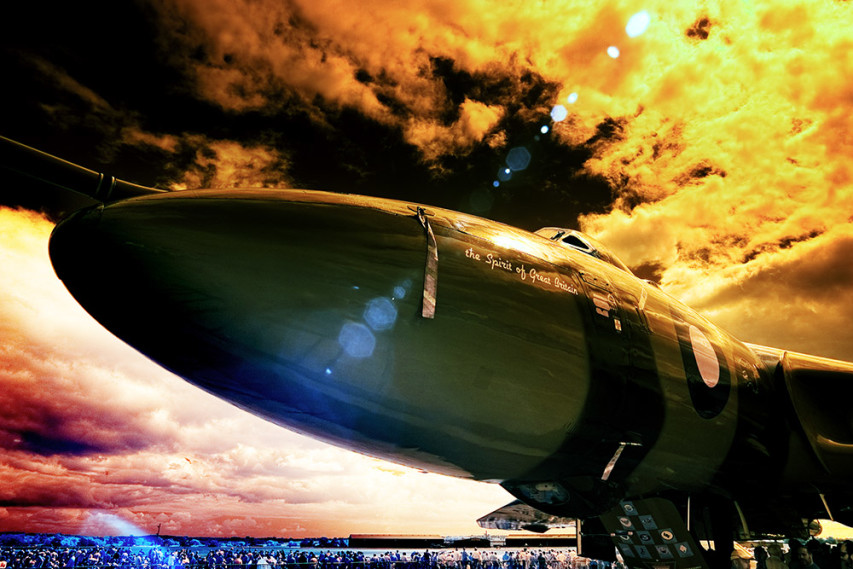
Vulcan in IR 1

Off to the Yeovilton Air Day, with an infrared camera and a bottle of pop. This year the Avro Vulcan retires for the third and final time. Like Lazarus, it was raised from the dead; and like Lazarus it is fated to die again, this time forever.

I used an infrared camera - there is no shortage of Vulcan photographs taken with visible light - in part because the results are dramatic but also because I was curious to see what would happen.

I used an infrared camera – there is no shortage of Vulcan photographs taken with visible light – in part because the results are dramatic but also because I was curious to see what would happen.

The Vulcan entered service in the 1950s. Its original mission was to incinerate Russians – tens of thousands of them – with our nuclear bombs. In practice this never came to pass, and the only people incinerated by Vulcans were Argentine ground crew, six of them, during the Falklands War of 1982. The Vulcan was retired from service almost immediately afterwards. It remained in flight as a display aircraft until 1993, at which point the expense of keeping a jet bomber in the air became too great.

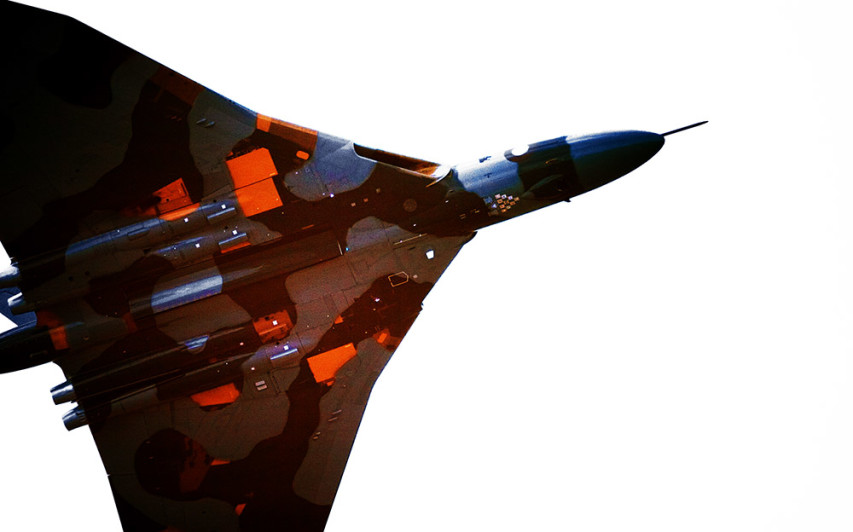
In this shot, for example, you can see that some of the panels were made of a different material from the rest of the airframe, or perhaps they used a fundamentally different paint.

In this shot, for example, you can see that some of the panels were made of a different material from the rest of the airframe, or perhaps they used a fundamentally different paint.

[…]

What’s it like to see a Vulcan dancing in the sky? In an airshow context the experience is somewhat muted, because regulations prevent it from flying overhead. The pilot can only make long passes parallel with the crowd line plus some wingovers. The Vulcan’s low wing loading gave it superb high-altitude performance – I imagine that the likes of the F-86 or MiG-15 would have found it an incredibly hard gun target – but this doesn’t help at an airshow. Nonetheless, when the pilot gunned the engines it was like being punched in the chest, and I could feel a collective grin from the crowd, although I was too far from the car park to hear the car alarms going off.

August 8, 2015

Tom Kratman on “killer ‘bots”

Filed under: Military, Technology, Weapons — Tags: , , , — Nicholas @ 03:00

SF author (and former US Army officer) Tom Kratman answers a few questions about drones, artificial intelligence, and the threat/promise of intelligent, self-directed weapon platforms in the near future:

Ordinarily, in this space, I try to give some answers. I’m going to try again, in an area in which I am, at least at a technological level, admittedly inexpert. Feel free to argue.

Question 1: Are unmanned aerial drones going to take over from manned combat aircraft?

I am assuming here that at some point in time the total situational awareness package of the drone operator will be sufficient for him to compete or even prevail against a manned aircraft in aerial combat. In other words, the drone operator is going to climb into a cockpit far below ground and the only way he’ll be able to tell he’s not in an aircraft is that he’ll feel no inertia beyond the bare minimum for a touch of realism, to improve his situational awareness, but with no chance of blacking out due to high G maneuvers..

Still, I think the answer to the question is “no,” at least as long as the drones remain under the control of an operator, usually far, far to the rear. Why not? Because to the extent the things are effective they will invite a proportional, or even more than proportional, response to defeat or at least mitigate their effectiveness. That’s just in the nature of war. This is exacerbated by there being at least three or four routes to attack the remote controlled drone. One is by attacking the operator or the base; if the drone is effective enough, it will justify the effort of making those attacks. Yes, he may be bunkered or hidden or both, but he has a signal and a signature, which can probably be found. To the extent the drone is similar in size and support needs to a manned aircraft, that runway and base will be obvious.

The second target of attack is the drone itself. Both of these targets, base/operator and aircraft, are replicated in the vulnerabilities of the manned aircraft, itself and its base. However, the remote controlled drone has an additional vulnerability: the linkage between itself and its operator. Yes, signals can be encrypted. But almost any signal, to include the encryption, can be captured, stored, delayed, amplified, and repeated, while there are practical limits on how frequently the codes can be changed. Almost anything can be jammed. To the extent the drone is dependent on one or another, or all, of the global positioning systems around the world, that signal, too, can be jammed or captured, stored, delayed, amplified and repeated. Moreover, EMP, electro-magnetic pulse, can be generated with devices well short of the nuclear. EMP may not bother people directly, but a purely electronic, remote controlled device will tend to be at least somewhat vulnerable, even if it’s been hardened,

Question 2: Will unmanned aircraft, flown by Artificial Intelligences, take over from manned combat aircraft?

The advantages of the unmanned combat aircraft, however, ranging from immunity to high G forces, to less airframe being required without the need for life support, or, alternatively, for a greater fuel or ordnance load, to expendability, because Unit 278-B356 is no one’s precious little darling, back home, to the same Unit’s invulnerability, so far as I can conceive, to torture-induced propaganda confessions, still argue for the eventual, at least partial, triumph of the self-directing, unmanned, aerial combat aircraft.

Even, so, I’m going to go out on a limb and go with my instincts and one reason. The reason is that I have never yet met an AI for a wargame I couldn’t beat the digital snot out of, while even fairly dumb human opponents can present problems. Coupled with that, my instincts tell me that that the better arrangement is going to be a mix of manned and unmanned, possibly with the manned retaining control of the unmanned until the last second before action.

This presupposes, of course, that we don’t come up with something – quite powerful lasers and/or renunciation of the ban on blinding lasers – to sweep all aircraft from the sky.

July 18, 2015

Want to bone up on India’s armed forces?

Filed under: India, Military — Tags: , , — Nicholas @ 04:00

If so, you’ll want to read all of Shashank Joshi‘s recommendations (full disclosure … I haven’t actually read any of the linked sites myself):

Peter Mattis’ explanation of what one should read to be an expert on China’s People’s Liberation Army (PLA) made me wonder: What might a similar list look like for India-watchers? Western interest in India’s armed forces is considerably slighter, largely because India looms far smaller in U.S. strategic thinking and is viewed as a potential partner rather than probable military adversary. But there’s a large and growing volume of writing on Indian military affairs, almost all of it in English, with cutting-edge books or articles appearing every month. So where should one begin?

Each service has its own doctrine and/or strategy — most recently the army in 2004, the navy in 2009 (remarkably, it is not available online), and the air force in 2012 (the official link is — perhaps aptly — perpetually broken, but you can get it here) — but these are of limited use, not least because they’re not written in close coordination with other services or with a coherent national military strategy in mind. So most analyses depend on secondary texts, occasional statements by serving officers, and writing by retirees.

June 12, 2015

Rex Warneford Destroys A Zeppelin – Austria Digs Into the Mountains I THE GREAT WAR – Week 46

Filed under: Britain, Europe, History, Italy, Military, Russia, WW1 — Tags: , , — Nicholas @ 02:00

Published on 11 Jun 2015

Reginald Warneford is important to Britain’s war effort. Not just because he shot down a German zeppelin, but because he is made a hero in times when heroes are needed. He receives a Victoria Cross soon after his victory because the commanders know about the average life span of pilots in World War 1. Meanwhile, the Austro-Hungarian army digs into the alpine rocks to fend of the Italian Attackers and Gallipoli continues to be a butchery without any progress.

June 7, 2015

QotD: Air power on D-Day

Filed under: Europe, France, Germany, History, Military, WW2 — Tags: , , — Nicholas @ 01:00

Allied fighter-bombers continued to attack not only front-line positions, but also any supply trucks coming up behind with food, ammunition and fuel. The almost total absence of the Luftwaffe to contest the enemy’s air supremacy continued to provoke anger among German troops, although they often resorted to black humour. “If you can see silver aircraft, they are American,” went one joke. “If you can see khaki planes, they are British, and if you can’t see any planes, then they’re German.” The other version of this went, “If British planes appear, we duck. If American planes come over, everyone ducks. And if the Luftwaffe appears, nobody ducks.” American forces had a different problem. Their trigger-happy soldiers were always opening fire at aircraft despite orders not to because they were far more likely to be shooting at an Allied plane than an enemy one.

Anthony Beevor, D-Day: The Battle for Normandy, 2009.

May 21, 2015

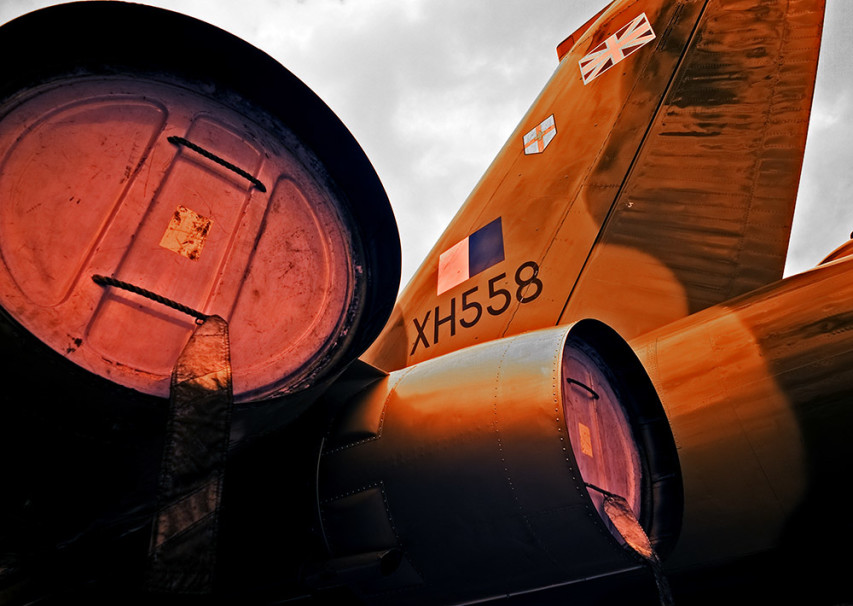
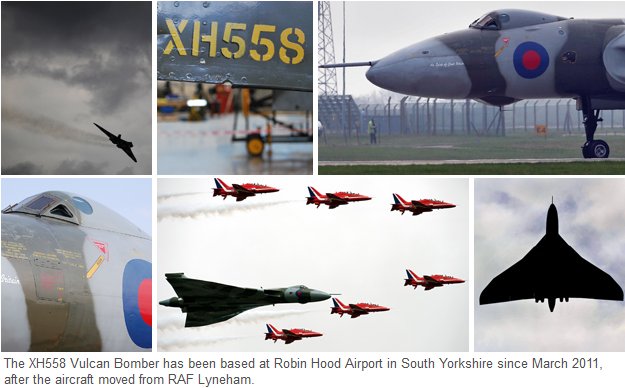
This year will be the last in the air for XH558, the last of the Avro Vulcan bombers

Filed under: Britain, Military — Tags: , , — Nicholas @ 04:00

At The Register, Lester Haines explains why the trust that operates XH558 is having to ground the aircraft permanently:

RAF Vulcan XH558

The Vulcan To The Sky Trust has announced “with considerable sadness” that this summer will be the public’s last chance to catch Avro Vulcan XH558 thundering through British skies, as the legendary V-bomber will be permanently grounded at the end of this flying season.

The trust explains that the axe will fall because “three expert companies on whom we depend – known as the ‘technical authorities’ – have together decided to cease their support at the end of this flying season”.

It elaborates:

    At the heart of their decision are two factors. First, although we are all confident that XH558 is currently as safe as any aircraft flying today, her structure and systems are already more than ten percent beyond the flying hours of any other Vulcan, so knowing where to look for any possible failure is becoming more difficult. These can be thought of as the ‘unknown unknown’ issues, which can be impossible to predict with any accuracy. Second, maintaining her superb safety record requires expertise that is increasingly difficult to find.

Keeping XH558 in the air has been an epic undertaking, and not without wing-and-a-prayer moments involving last-minute injections of cash.

May 12, 2015

The Sky Was The Limit – World War 1 In The Air I THE GREAT WAR

Filed under: Europe, History, Military, Technology, WW1 — Tags: , , — Nicholas @ 05:00

Published on 11 May 2015

World War 1 saw several completely new technologies develop rapidly. The airplane itself was only a few years old but pioneering engineers soon saw its potential for military use. For recognisance and later as fighter or bomber, World War 1 had huge impact on aviation and warfare in general. This special episode gives you an idea about the obstacles that had to be overcome.

March 1, 2015

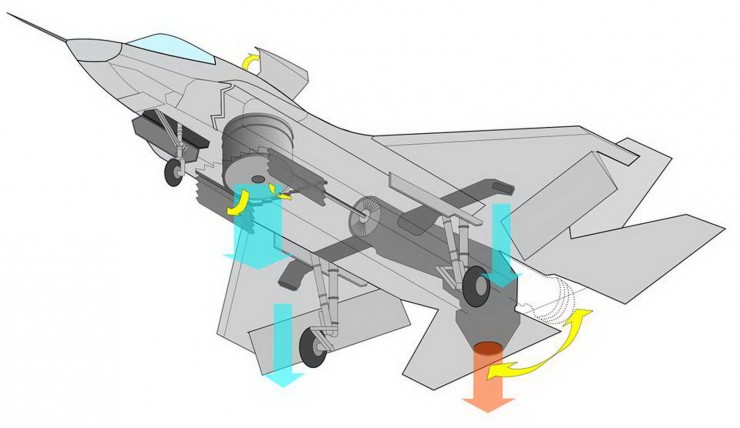
“The F-35 will cost more than the Manhattan Project every year for the next fifty years”

Scott Lincicome would like to point out to the contending Republicans hoping to become the GOP’s presidential candidate that defence spending is not immune to the massive overspending problem common to big government:

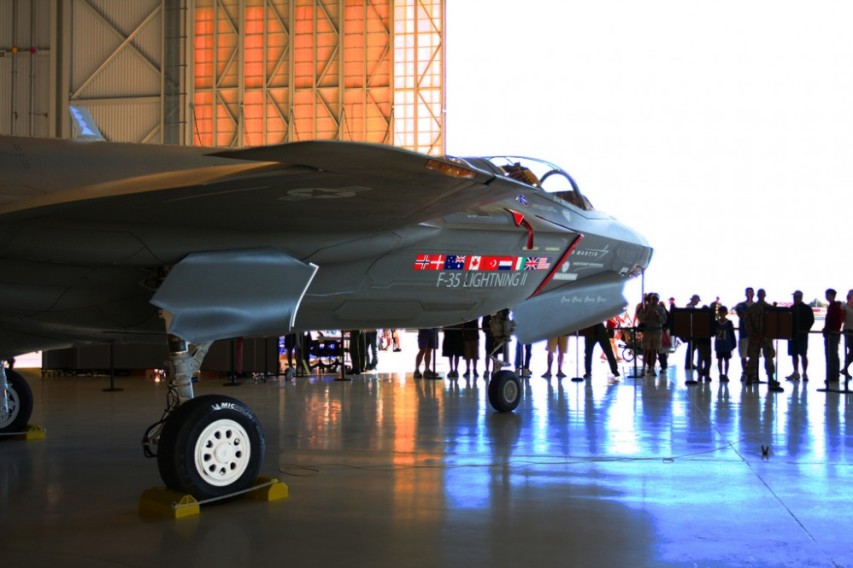
F-35 on display

Over the next 20 months, a clown-car-full of Republican politicians will vie for their party’s presidential nomination. As the candidates crisscross the nation, each will undoubtedly call for smarter, leaner, and (hopefully) smaller government. However, there is one government program that, despite being a paragon of government incompetence and mind-bending fiscal incontinence, will most likely be ignored by these champions of budgetary temperance: the F-35 Joint Strike Fighter. In so doing, these Republicans will abandon their principles and continue a long, bipartisan tradition of perpetuating the broader problems with U.S. defense spending that the troubled jet symbolizes.

During the Obama years, the Republican Party magically rediscovered its commitment — at least rhetorically — to limited government and fiscal sanity. Criticizing the graft, incompetence, and cost of boondoggles like the 2009 stimulus bill, green-energy subsidies, or Obamacare, GOP politicians not only highlighted these programs’ specific failings, but also often explained how such problems were the inevitable result of an unwieldy federal government that lacked discipline and accountability and was inherently susceptible to capture by well-funded interest groups like unions or insurance companies.

They railed against massive bureaucracies, like the Department of Energy, that paid off cronies with scant congressional oversight. And, in the case of well-publicized debacles like the botched, billion-dollar Healthcare.gov roll-out, many Republicans were quick to note that the root of the problem lay not in one glitchy website, but the entire federal procurement process, and even Big Government itself

[…]

One wonders, however, if these Republicans’ philosophical understanding of Big Government’s inherent weaknesses extends to national defense and, in particular, the F-35. According to the latest (2012) estimate from the Pentagon, the total cost to develop, buy and operate the F-35 will be $1.45 trillion — yes, trillion, with a “t” — over the next 50 years, up from a measly $1 trillion estimated in 2011. For those of you keeping score at home, this means that the F-35’s lifetime cost grew about $450 billion in one year. (Who says inflation is dead?)

That number — $1.45 trillion — might be difficult to grasp, especially in the context of U.S. defense spending, so let me try to put it in perspective: the entire Manhattan Project, which took around three years and led to the development of the atom bomb, cost a total of $26 billion (2015), most of which went to “building factories and producing the fissile materials, with less than 10% for development and production of the weapons.” By contrast, the F-35 will cost $29 billion. Per year.

For the next 50 years.

February 16, 2015

Operation CRABSTICK

Filed under: Cancon, History, Military, WW2 — Tags: , — Nicholas @ 02:00

Think Defence looks back at an anti-invasion project to deny airfields to German forces along the southeast coast of England after the Dunkirk evacuation and onset of the Battle of Britain:

A method was also sought to deny the runway to enemy gliders and transport aircraft and so the Canadian Pipe Mine was devised by the 1st Canadian Tunnelling Company. 50-70mm steel pipes were inserted into the ground using hydraulic pipe pushing equipment and laid in a criss cross pattern about 6ft under the surface. They were subsequently filled with explosives, usually a blasting gelignite called ‘Polar Blasting Gelignite’ which was very powerful.

They were also called McNaughton Tubes after the GOC of 1 Canadian Division who according to his biographer got the idea for using hydraulic rams from bootleggers who used the method for creating an offsite distribution point for their whiskey!

Only 9 airfields were identified for mining initially but this rose to include other locations, by the end of 1942, after the threat of invasion had receded, 30 locations were mined, not all of them airfields. It is estimated that over 40,000ft of pipe mines were installed.

During the war some of the pipe mines were made safe and removed because of the deterioration of the explosive filler but most were left in situ. After the war Canadian engineers were tasked with removal but it seems from reading different sources that records were incomplete and some doubt exists whether the clearance activity was completed. Additional clearance efforts were made, one that resulted in the death of a Ukrainian worker at one of the locations.

WW2 Canadian pipe mine

February 13, 2015

Britain’s next defence review

Filed under: Britain, Military — Tags: , , , — Nicholas @ 08:01

Think Defence looks at the 2015 iteration of the British defence review process:

There is a pre defence review ritual that everyone with an interest indulges in. It starts with a few gentle discussions on Great Britain’s ‘place in the world’, the scale of our global ambition and obligations as a G8 regional power with a seat with our name on at the UN.

After a suitable period has elapsed the discussion then veers into areas of risk and threat but even during this phase the mood is still good natured.

Phase 3 gets heated because it is the first stage at which money is usually involved and therefore consideration of how the diminishing cake is sliced up between the services.

It is during this phase that negotiations and backroom deals kick in and the inevitable ‘test the water’ leaking to sympathetic journalists.

The final phase happens when it is all over and then as the implications of actual decisions made become clearer the bitterness sets in which can last for decades (see moving Australia and CVA01 for a good example).

If you start with the money and define a fixed budget you still get into the same argument and all that happens then is people tend to shape the first phases so that, oh look, my answer was right all along.

Start with risks and threats and the answers will always have to be tempered by the time it comes back around to budgets. Each review is rapidly made redundant by ‘events dear boy’ and the cycle starts again.

There are no easy answers and to think so is rather foolish, if there was an easy method, everyone would be doing it.

[…]

The ‘punching above our weight’ theme needs to be ruthlessly struck from the vocabulary because not only does it lead to illogical equipment decisions and hollowed out forces it fundamentally results in the talk loud small stick foreign policy that we seem unable to wean ourselves off.

You can only get away with this for so long until others start to realise you are bluffing and I believe this is where we are now, even our allies are starting to realise that our big talk isn’t backed up, despite having the worlds most advanced x or y, they are of little practical value if you only have a handful. Fur coat and no knickers could be an apt description of much of the UK’s defence capabilities, as painful as it may be for us all to recognise, and so I think there is a fundamental need to reassess ‘our place’.

February 9, 2015

The SR-71 “Blackbird”

Filed under: Military, Technology, USA — Tags: , , — Nicholas @ 02:00

At Sploid, Jesus Diaz shares some photos from the secret assembly line that built the SR-71 aircraft:

SR-71 assembly line

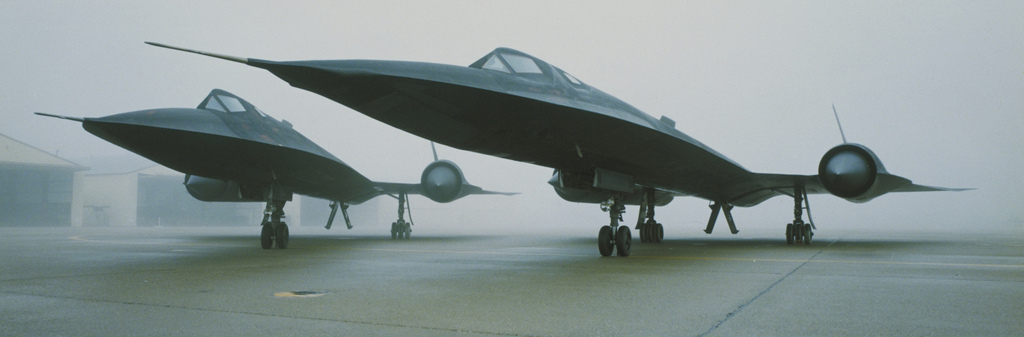
Built and designed in the 1960s after the A-12 Oxcart, the SR-71 Blackbird is still the fastest, most vanguardist air-breathing airplane in the history of aviation. These once classified photos reveal how Lockheed built both birds in secret, in California. They look taken at the Rebel base in Hoth.

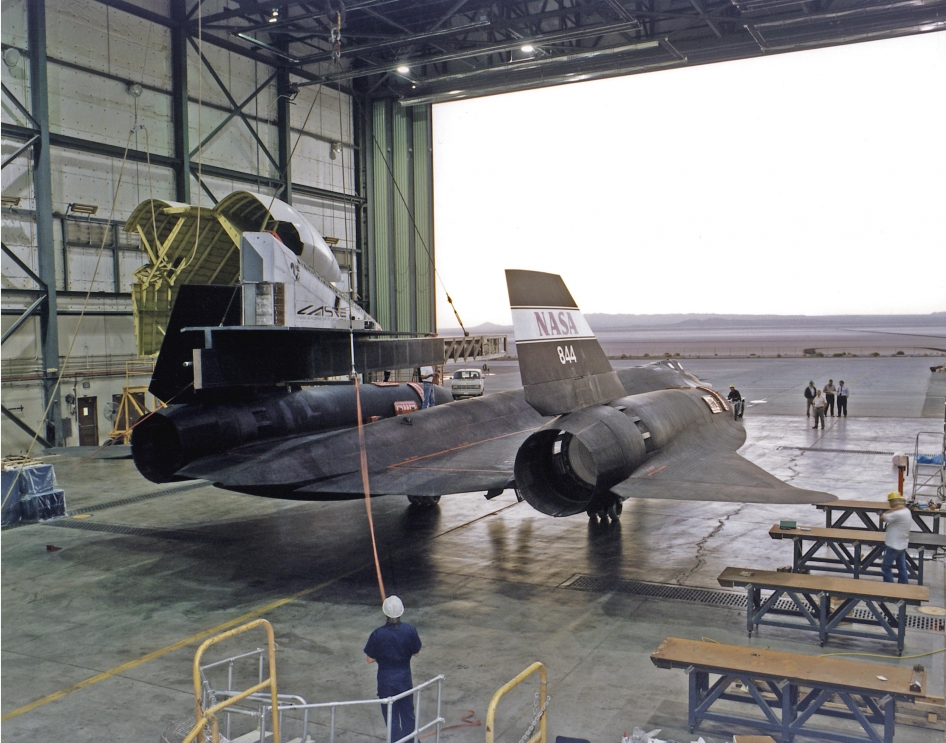
The Blackbirds kept flying long after their retirement from the USAF. One of them stayed at NASA: Here's a photo from the Armstrong Flight Research Center (then Dryden) of an SR-71 being retrofitted for test of the Linear Aerospike SR Experiment (LASRE).

The Blackbirds kept flying long after their retirement from the USAF. One of them stayed at NASA: Here’s a photo from the Armstrong Flight Research Center (then Dryden) of an SR-71 being retrofitted for test of the Linear Aerospike SR Experiment (LASRE).

SR-71 pair portrait

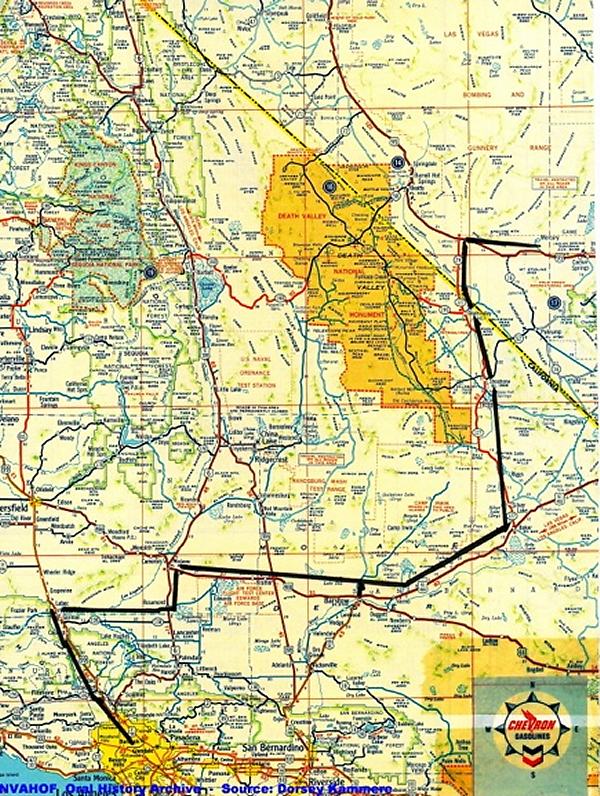
H/T to Dave Owens for the link, and also a H/T to Jeff for linking to another photo story about how the aircraft were transported from Lockheed’s Skunk Works to Area 51.

Lockheed Skunk Works to Area 51

February 6, 2015

The Avro Arrow

Filed under: Cancon, History, Military, Technology — Tags: , , , , — Nicholas @ 02:00

Published on 2 Feb 2015

The Avro Canada CF-105 Arrow was a delta-winged interceptor aircraft, with nuclear rockets and missiles, designed and built by Avro Canada as the culmination of a design study that began in 1953. The Arrow is considered to have been an advanced technical and aerodynamic achievement for the Canadian aviation industry. The CF-105 (Mark 2) held the promise of near-Mach 2 speeds at altitudes of 50,000 feet (15,000 m) and was intended to serve as the Royal Canadian Air Force’s primary interceptor in the 1960s and beyond. But when it was canceled it was a ruin for Canada’s pride. – https://en.wikipedia.org/wiki/Avro_Canada_CF-105_Arrow

January 14, 2015

What Was The Bloodiest Battle Of World War 1? – OUT OF THE TRENCHES #6

Filed under: Europe, Germany, History, Military, WW1 — Tags: , , — Nicholas @ 04:00

Published on 12 Jan 2015

“Indy is answering your questions again. In this episode of OUT OF THE TRENCHES he is explaining how airplanes got armed with machine guns and what was the bloodiest battle of WW1.

December 8, 2014

The Luftwaffe attack at Bari in 1943

Filed under: Europe, Germany, History, Italy, Military, WW2 — Tags: , , — Nicholas @ 00:03

Patrick K. O’Donnell discusses one of the Luftwaffe‘s most deadly attacks and why most people have never heard of it:

Americans remember December 7 as Pearl Harbor Day, but most Americans have never even heard of the “Little Pearl Harbor,” which occurred in Bari Harbor, Italy, on December 2, 1943. More than 100 Luftwaffe bombers mounted a surprise attack on Allied ships moored in the harbor. Their bombs sank or rendered inoperable 28 of these ships. Nearly a thousand Allied troops were killed or wounded. along with hundreds of civilians.

Unbeknownst to those in the port, one of the ships carried liquid death in its belly. The American freighter John Harvey was secretly carrying mustard agent, in violation of international agreements that banned its use. President Franklin Roosevelt had covertly ordered the shipment of 100 tons of mustard agent to Italy for retaliation in the event that the Germans used chemical warfare against the Allied troops. The incident was covered up and remained a secret for decades.

When the German bombs hit the John Harvey, the ship’s hold immediately exploded with devastating violence, killing all those who knew about the mustard [gas]. Deadly liquid and gas flew high into the air and then slowly settled back down into the harbor, coating everything and everyone in the vicinity. Casualties would mount over the coming days and weeks as the agent slowly and painfully claimed the lives of many who had survived the initial attack.

Mustard gas was one of the nastiest relics of the attempts to break the trench lines during the First World War. Wikipedia says:

The sulfur mustards, or sulphur mustards, commonly known as mustard gas, are a class of related cytotoxic and vesicant chemical warfare agents with the ability to form large blisters on the exposed skin and in the lungs. Pure sulfur mustards are colorless, viscous liquids at room temperature. When used in impure form, such as warfare agents, they are usually yellow-brown in color and have an odor resembling mustard plants, garlic, or horseradish, hence the name. Mustard gas was originally assigned the name LOST, after the scientists Wilhelm Lommel and Wilhelm Steinkopf, who developed a method for the large-scale production of mustard gas for the Imperial German Army in 1916.

Mustard agents are regulated under the 1993 Chemical Weapons Convention (CWC). Three classes of chemicals are monitored under this Convention, with sulfur and nitrogen mustard grouped in Schedule 1, as substances with no use other than in chemical warfare. Mustard agents could be deployed on the battlefield by means of artillery shells, aerial bombs, rockets, or by spraying from warplanes.

November 11, 2014

In memoriam

Filed under: Britain, History, Military, WW1, WW2 — Tags: , , — Nicholas @ 00:02

A simple recognition of some of our family members who served in the First and Second World Wars:

The Great War

  • A Poppy is to RememberPrivate William Penman, Scots Guards, died 1915 at Le Touret, age 25
    (Elizabeth’s great uncle)
  • Private David Buller, Highland Light Infantry, died 1915 at Loos, age 35
    (Elizabeth’s great grandfather)
  • Private Walter Porteous, Northumberland Fusiliers, died 1917 at Passchendaele, age 18
    (my great uncle)
  • Corporal John Mulholland, Royal Tank Corps, died 1918 at Harbonnieres, age 24
    (Elizabeth’s great uncle)

The Second World War

  • Flying Officer Richard Porteous, RAF, survived the defeat in Malaya and lived through the war
    (my great uncle)
  • Able Seaman John Penman, RN, served in the Defensively Equipped Merchant fleet on the Murmansk Run (and other convoy routes), lived through the war
    (Elizabeth’s father)
  • Private Archie Black (commissioned after the war and retired as a Major), Gordon Highlanders, captured at Singapore (aged 15) and survived a Japanese POW camp
    (Elizabeth’s uncle)
  • Elizabeth Buller, “Lumberjill” in the Women’s Land Army in Scotland through the war.
    (Elizabeth’s mother)
  • Trooper Leslie Taplan Russon, 3rd Royal Tank Regiment, died at Tobruk, 19 December, 1942 (aged 23).
    A recently discovered relative. Leslie was my father’s first cousin, once removed (and therefore my first cousin, twice removed).

In Flanders fields the poppies blow
Between the crosses row on row,
That mark our place; and in the sky
The larks, still bravely singing, fly
Scarce heard amid the guns below.

We are the Dead. Short days ago
We lived, felt dawn, saw sunset glow,
Loved and were loved, and now we lie
In Flanders fields.

Take up our quarrel with the foe:
To you from failing hands we throw
The torch; be yours to hold it high.
If ye break faith with us who die
We shall not sleep, though poppies grow
In Flanders fields.

Lieutenant Colonel John McCrae, MD Canadian Army Medical Corps (1872-1918)

« Newer PostsOlder Posts »

Powered by WordPress